Delayed a Year and a Half, Finally Delivered: Hands-On with the Dnsys X1 Hip Assist Exoskeleton — Talking About "The First Step Between Ordinary People and Iron Man"
In early 2023, I placed an order on Kickstarter for a hip assist exoskeleton; it wasn't until late November 2024 that it finally arrived in my hands. A year-and-a-half delay is nothing unusual in hardware crowdfunding — what's rare is that it ultimately made it through mass production and actual delivery. Over the past week, I ran 5 kilometers in it, rode a bike, and pushed a cart up the stairs. In this article, I want to take a serious look at the machine itself, and also at consumer-grade exoskeletons as a category: just how far away are they from ordinary people like us?
Judging by the crowdfunding timeline, form factor, and specs, this machine is none other than the Dnsys X1 — a consumer-grade exoskeleton whose active assist joints sit at the hip joints.
A Crowdfunding Delivery a Year and a Half Late: An Exoskeleton with "Active Hip Drive"
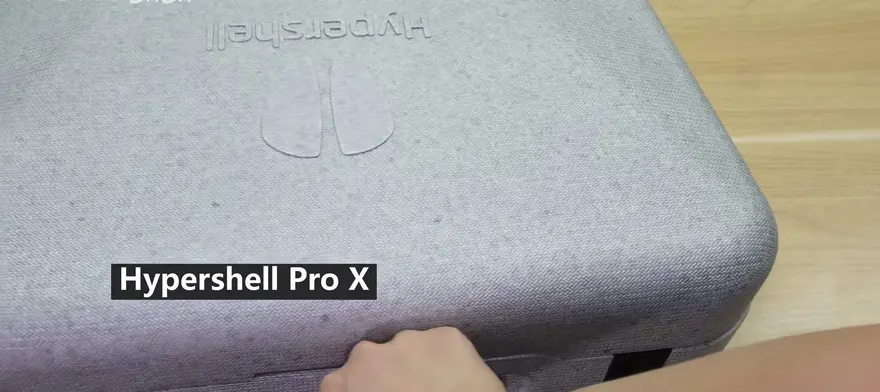
In the consumer-grade exoskeleton category, Kickstarter has practically become the default launch stage. This is also the second crowdfunding project I've backed that ultimately got fulfilled—the previous one being Bambu Lab's X1C 3D printer. Opening the big box, the contents were surprisingly lean: one large battery, the exoskeleton main unit, cables, and a manual—no separately purchased accessories of any kind. In the video, I half-jokingly staged a "fake unboxing"—after all, I'd already taken the device for several spins long before the camera started rolling.
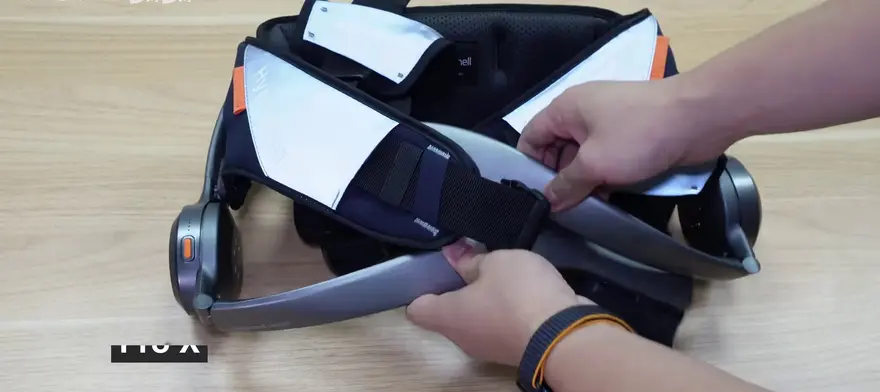
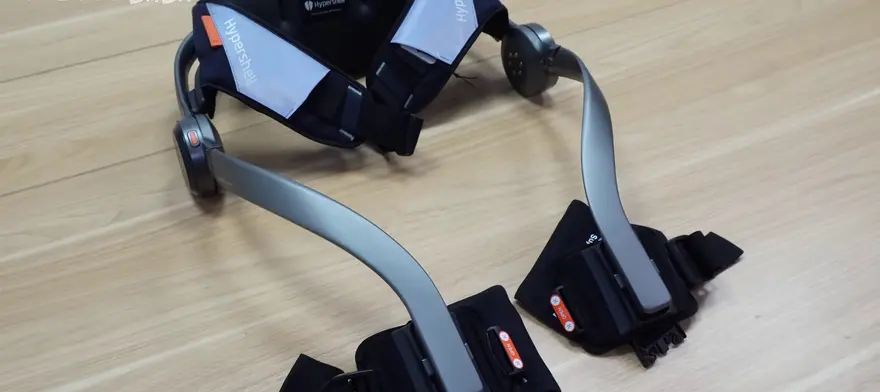
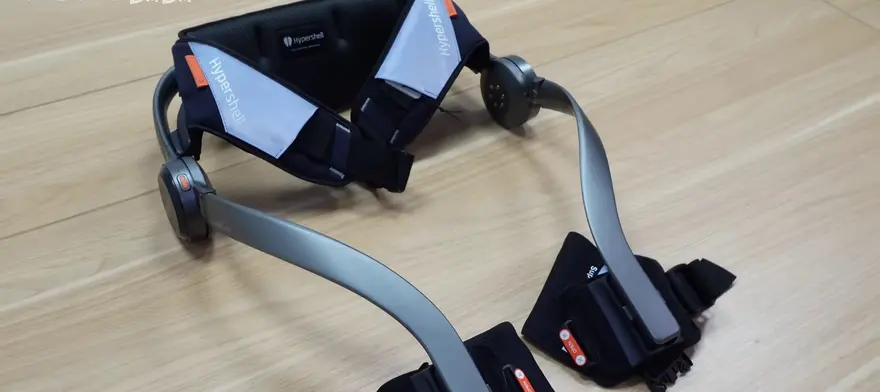
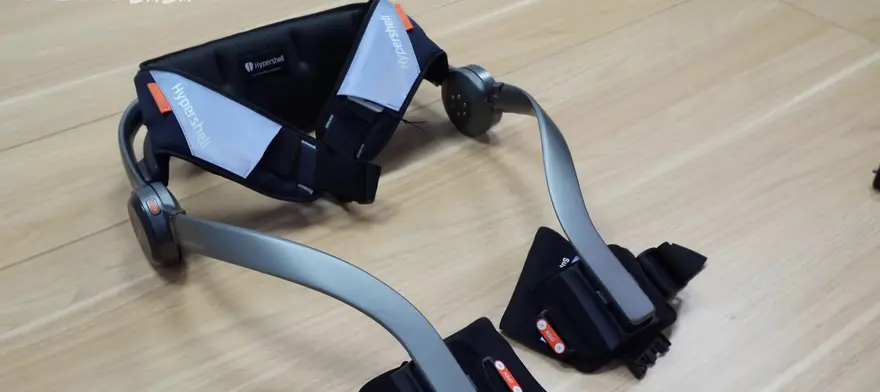
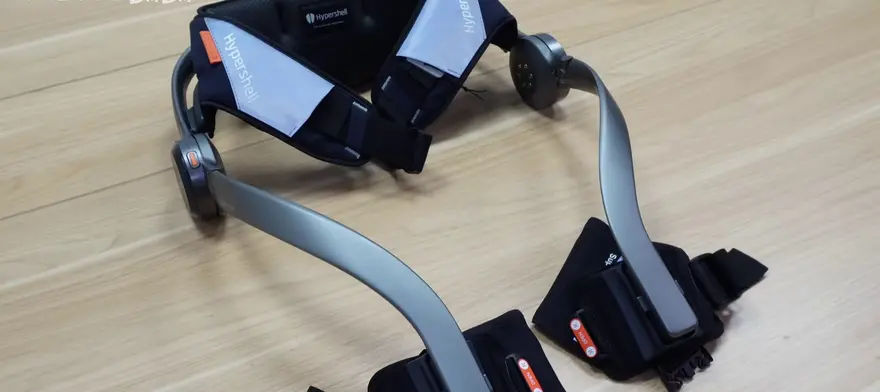
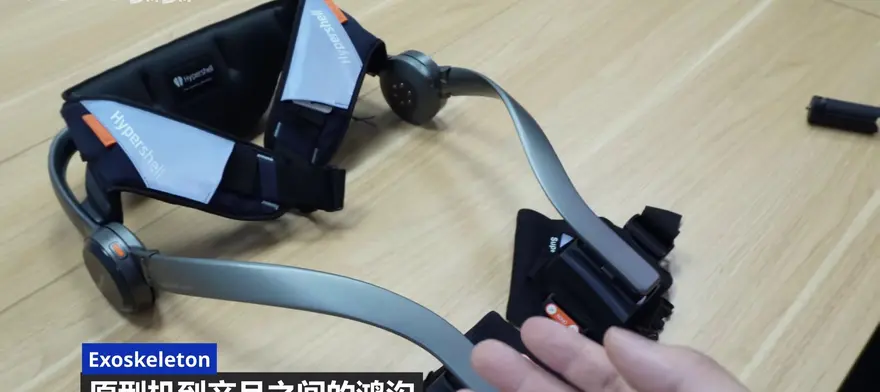
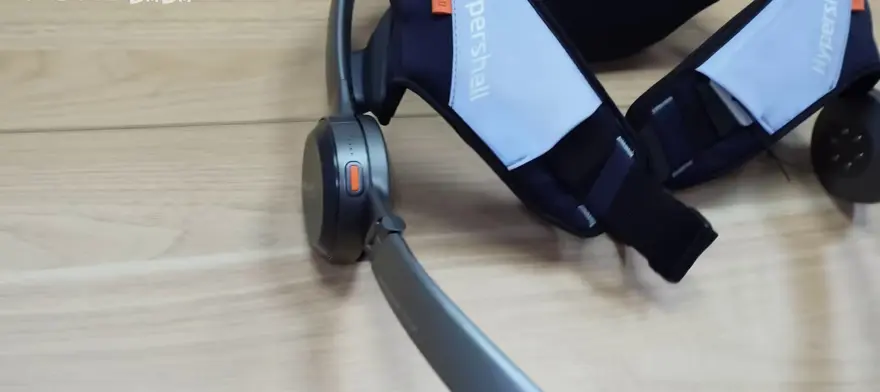
Structurally, it follows an "active hip + passive lower-limb" approach: two motors are mounted on either side of the hips, responsible for actively outputting assist torque, while all the remaining joints are passive joints that simply follow the body's movement. Concentrating the motors and power at the hip joints is the mainstream solution among today's consumer-grade exoskeletons—it's the spot where actuation delivers the highest payoff with the least interference with gait, rather than taking on the knee joint, where both control difficulty and risk are considerably higher.
Battery specs: 14.4V / 5000mAh, approximately 72Wh (mentioned in the video)
Delivery timeline: crowdfunded in early 2023 → mass production and retail launch at the end of November 2024, delayed by roughly a year and a half (mentioned in the video)
One thing worth noting: the video doesn't provide specific figures for overall weight, endurance, or joint torque. The creator simply put the detailed spec sheet up on screen, saying he cares more about the "real-world experience." I share that attitude—for a consumer-grade exoskeleton, no matter how impressive the spec sheet looks, nothing matters more than whether "you'd actually be willing to wear it on a regular basis."

Suited Up in Under 30 Seconds: Fit and Discretion Are Its Foremost Product Strengths
The two most common Achilles' heels of consumer-grade exoskeletons are "complicated donning" and "standing out too much"—and on both counts, the X1 delivers a remarkably good answer.
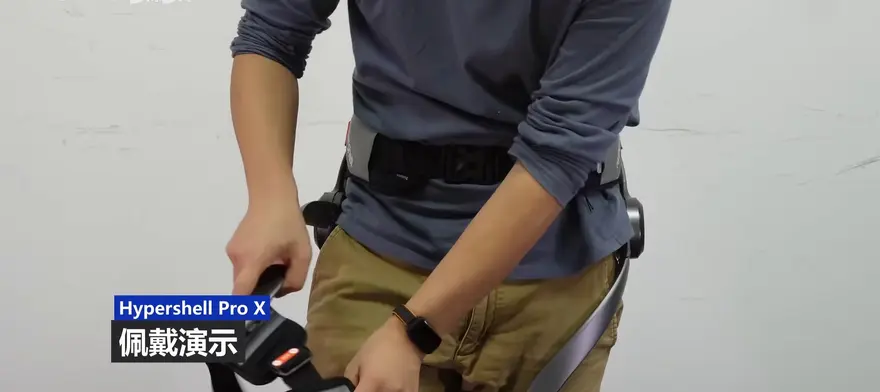
Its main body consists of a leg frame with passive joints, active motors on either side of the hips, and a lumbar/back fixation structure, all held snug against the body by straps. In practice, putting it on is simply "slide your legs in, pull tight, and buckle"—done in under 30 seconds, roughly on par with putting on a slightly fussy pair of cycling shorts.
What's even more impressive is the fit: even on a build like mine with fuller thighs, the leg frame sits completely flush, with zero gaps. This directly delivers two benefits. The first is discretion—the entire unit comes in gray, and paired with gray activewear, it's practically invisible on the street. On my running test day, I deliberately recorded a clip from a pedestrian overpass: only a handful of passersby actually noticed the exoskeleton—far more were curious about the camera I was holding up. The second is portability—as a wearable device, it takes up neither space nor hands. No case to lug around when heading out: just put it on and go, and when you're not wearing it, simply hang it in the car.
Donning time: under 30 seconds (mentioned in the video)
"It's already as compact as it can possibly be—it fits almost perfectly against your entire body." (mentioned in the video)
By comparison, whether it's hardcore DIY "steel prosthetic limbs" or fully enclosed medical exoskeletons, none of them are in the same league as this generation of consumer-grade products when it comes to everyday wearability. This is the first signal that consumer-grade exoskeletons have truly crossed the "toy threshold."
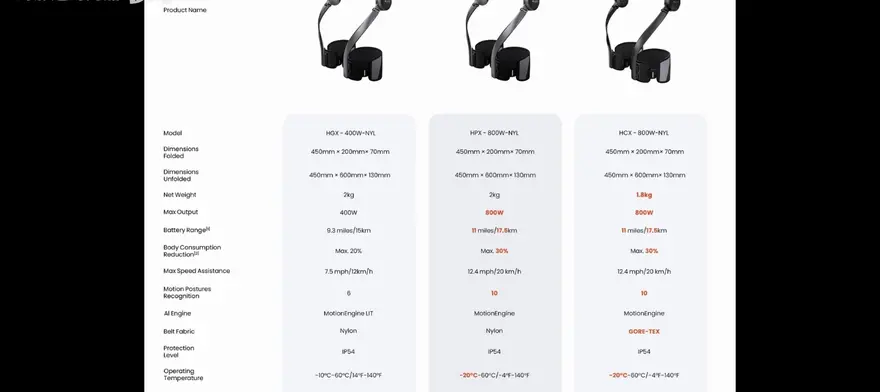


Running Test: "Human-Machine Break-In" with the LSTM Algorithm
The test protocol was simple: set off at 7:45 AM for a 5 km jog, and compare how pace changed while keeping heart rate at a similar level.
Test conditions: started running at 7:45 AM, 5 km jog, with pace compared on the premise of a similar heart rate (as mentioned in the video)
The X1 ships with an algorithm built on LSTM (Long Short-Term Memory networks) that continuously learns from motion sensor data — such as the IMU — along with the motor's input and output. Interestingly, even the author himself isn't sure how deep this learning actually goes: does it merely perform "motion mode classification" (recognizing whether you're walking, running, or cycling), or does it go a step further and fine-tune the assist on every single stride? The answer to that question directly determines whether "the longer you wear it, the smoother it feels" is mysticism or genuine capability.
The subjective verdict: the break-in period is real. By roughly the 4 km mark, "I had gotten used to it, and it had gotten used to me" — I could nail the timing of its power assist, and running felt noticeably lighter; judging by pace alone, there was clearly an improvement.
"By around 4 km, once I'd gotten used to it and it had gotten used to me, I could make good use of the moments when it kicks in its assist, and running feels easier." (as mentioned in the video)
Another easily overlooked variable is attention. The break-in during earlier hiking trips was far easier — hiking is essentially walking, so you have plenty of mental bandwidth to sense the device and sync with it; when running, you simply can't spare any brainpower for it, leaving the algorithm to actively adapt to you. That also explains why "motion mode recognition + continuous learning" is a hidden barrier to entry for consumer-grade exoskeletons: how well the sensors, algorithm, and motor are matched shapes the experience more than any single spec ever could.



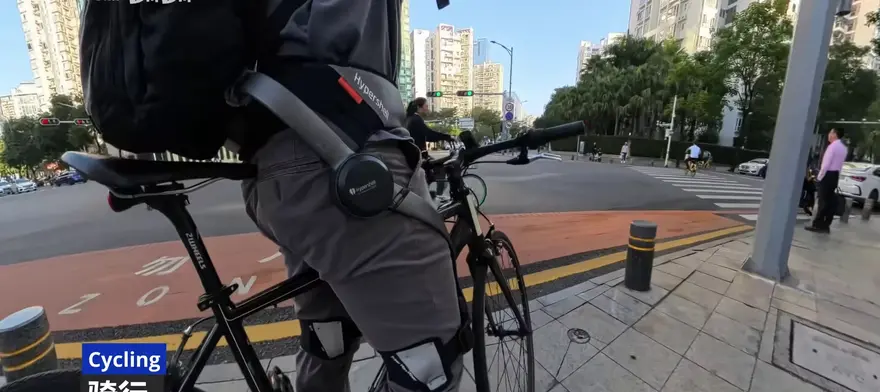
Cycling and Stair Climbing: Where the Assist Feels Most "Uplifting"
If running's assist was "subtle and understated," cycling's is "instant and unmistakable."
The assist while cycling is far more noticeable than while running: your legs keep making their normal circular motion, but your muscles barely have to exert any force—with every pedal stroke, the exoskeleton automatically applies downward pressure and upward lift, as if someone had strapped a metronome to your hip joint. Even smarter is the fallback logic: the moment you stop moving your legs, it tries to detect it, and once it confirms your legs have stopped, the assist stops too—no awkward "machine dragging the human along" moments.
"When you're cycling, basically your legs are moving, but your muscles aren't exerting any effort." (mentioned in the video)
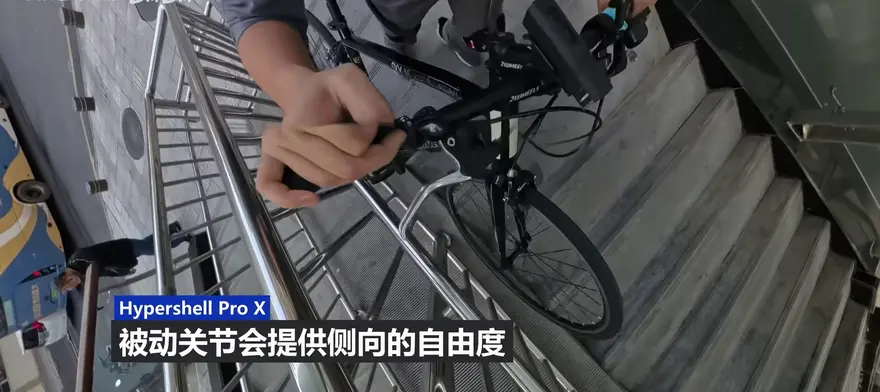
There are minor flaws too: when mounting and dismounting the bike, the frame restricts your movement a little, but as long as you lift your leg a bit higher, you can still get on and off just fine. The pattern recognition is equally reliable—the cycling scenario was clearly identified correctly, and "the feeling of pushing hard is really comfortable." The most convincing detail: normally, when I cycle to that staircase, I'm left panting just pushing the bike up; this time, the whole climb felt noticeably lighter. And the discretion while cycling was even better than it was on running day.
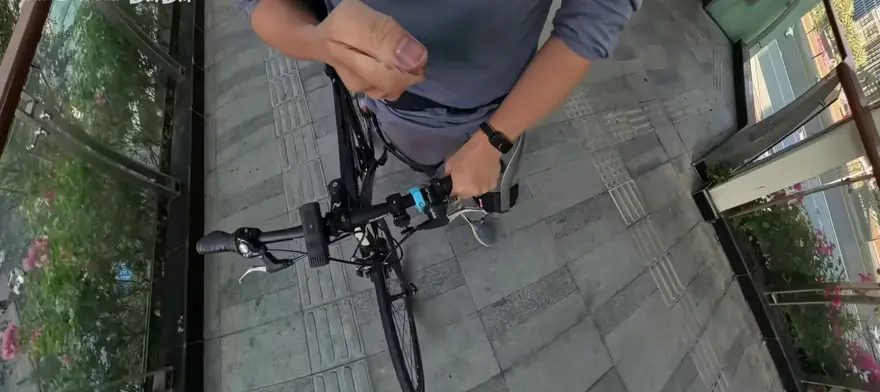
By the way, here's a convenience unique to wearables: camera gear ties up one of your hands—for riskier moves like descending a pedestrian overpass, I still had to stow the Insta360 away (filming while riding, the audio in the footage was a bit spotty; if it doesn't work out, I'll dub over it in post); whereas the exoskeleton, when not being worn, can simply be hung on the bike. This "zero attention required" quality may well be the deciding factor in whether it can become an everyday device.


Why It's Nearly Impossible to DIY a Usable Exoskeleton on Your Own
Having covered the hands-on experience, let me explain why I ultimately chose to "buy" rather than "build."
I'm the kind of person who loves high-tech gadgets and tinkers with plenty of DIY projects in my spare time—designing 3D-printed model aircraft, for example. The exoskeleton has always been the thing I most wanted to build with my own hands, but after repeated evaluations, the conclusion is brutal: on my own, it's simply not doable. What you see is just two motors; behind them lies the design of the entire support structure, a body-conforming exterior, and the motor and electronic control systems—each demanding an enormous amount of effort to fine-tune.
Search "exoskeleton DIY" online or YouTube, and you'll find those projects are a long way from "truly usable"—a mess of loose wires and stick-like frames, rather than this kind of body-conforming curved design. A reader in the comments section who has built a DIY exoskeleton put it spot-on: this is cross-disciplinary engineering, and it's extremely hard for a single person to pull off.
"Many DIY projects fall far short of being truly usable—a tangle of loose wires and stick-like structures, rather than this kind of closely conforming curved design." (as mentioned in the video)
So for the average enthusiast, crowdfunding is realistically the only viable path. I placed my order after seeing a friend share the project on WeChat Moments. That said, stay clear-eyed: crowdfunding platforms themselves aren't all that reliable—Kickstarter especially. Whether a project ever ships rests almost entirely on the founder's sense of responsibility and execution. This machine arrived a year and a half late, which already counts as "a close call that ended safely." The whole saga of missed deadlines is itself a lesson in risk education: when you back a hardware crowdfunding campaign, you're not paying a "purchase price"—you're providing "R&D funding."
From Single Motor to Dual Motor: A Trade-Off That Adds Up
Back to the hardware design itself. The X1's motors sit right at the hip joints, outputting left and right torque at the joint to enable independent assist for each leg. This placement is a deliberate choice: it only assists the hip joint's forward-and-back flexion and extension, without introducing any extra twisting or lateral forces on the body.
The most intuitive proof shows up when walking: when I walk normally, the structure behind my lower back stays completely still. On the early single-motor version, however, that rear structure would swing up and down wildly—that "machine hijacking your gait" feeling is precisely the inherent flaw of the single-motor approach.
"When I walk normally, the back doesn't move at all. On the original single-motor version, the back would swing up and down like crazy." (as mentioned in the video)
Interestingly, I had already noticed this drawback before deciding to back the crowdfunding campaign, yet I still chose to support it. For me, it came down to the difference between "having it and not having it," between "experiencing it and not experiencing it"—and at the time, the price was, by my standards, "almost impossibly cheap."
The current production version has switched to dual motors, and the overall design has gone through extensive iteration, so the price is naturally a fair bit higher than during crowdfunding. I believe the math works out: the assist scheme has evolved from "single-point drive" to "independent left-right control." What you sacrifice is price; what you gain is respect for your gait—and that is precisely what a wearable device like an exoskeleton should prioritize above all else.


It's Not a Rehabilitation Exoskeleton: The Real Boundaries of a Consumer-Grade Product
If you search for "exoskeleton," you'll also run into another category of products: nearly full-coverage lower-limb exoskeletons that move slowly and pack bulky motors. That category is designed as walking assist / rehabilitation exoskeletons for people with mobility impairments—mostly medical-grade—and is far less relevant to able-bodied everyday users.
"That kind of exoskeleton is even further removed from able-bodied everyday people like me." (mentioned in the video)
Drawing this boundary clearly matters: consumer-grade exoskeletons serve "augmentation for healthy people." They can't replace your muscles, and they certainly shouldn't be treated as medical devices. Take my real-world usage over the past week as an example—I basically don't wear it for walking on flat ground; I do use it when running; I bring it along as a conversation piece when meeting up with engineering friends offline; and when I actually go hiking and trekking, it genuinely proves useful.
Usage scenarios in the creator's own words (mentioned in the video): basically not worn for walking on flat ground; used while running, hiking, and trekking; carried as a portable "conversation piece" when talking with engineering friends.
This also answers the most practical question of all: "If you spend a few thousand yuan on it, will you actually use it every day?" My answer: it's not an all-day, must-have essential, but a clearly scenario-defined "augmentation plugin"—for cycling commutes, weekend hikes, and group run training. Only by thinking this through before you hit "order" will you avoid getting swept away by the "Iron Man dream."
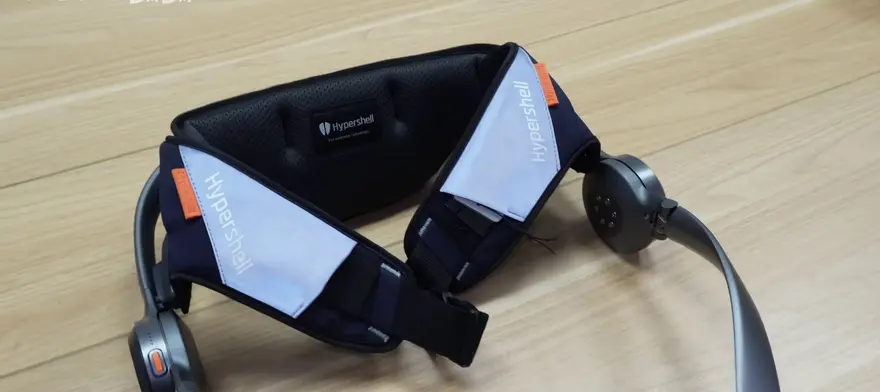

The First Step Between Ordinary People and "Iron Man"
Finally, let me share my honest take.
I believe everyone — whether back in childhood or even now — loves that full-body Iron Man-style armor. For engineering students, the electromechanical systems densely packed across that suit are practically a "killer" dream; everyone wants one. But none of us can leap from zero straight to Iron Man in a single bound.
"The exoskeleton is the first step between ordinary people and Iron Man." (as mentioned in the video)
Active or passive, no matter how rudimentary the design, it's nearly impossible for an ordinary person to design and build such a complete system alone without powerful AI assistance. That's why a portable, miniaturized consumer-grade exoskeleton is such a great starting point — it turns that "dream" from mere wishful thinking into a first step you can actually take.
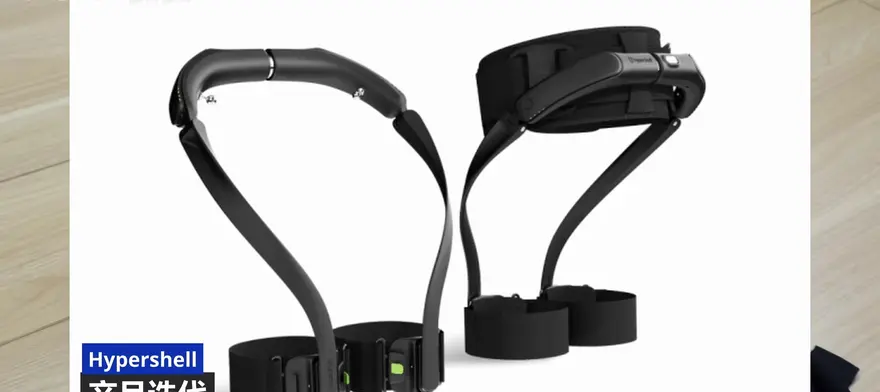
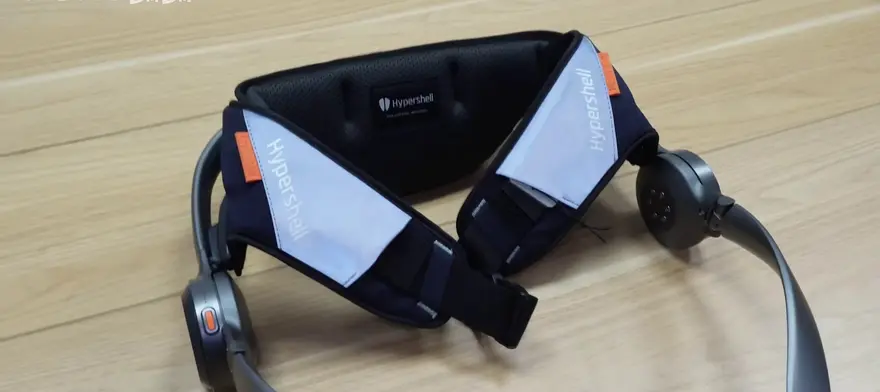
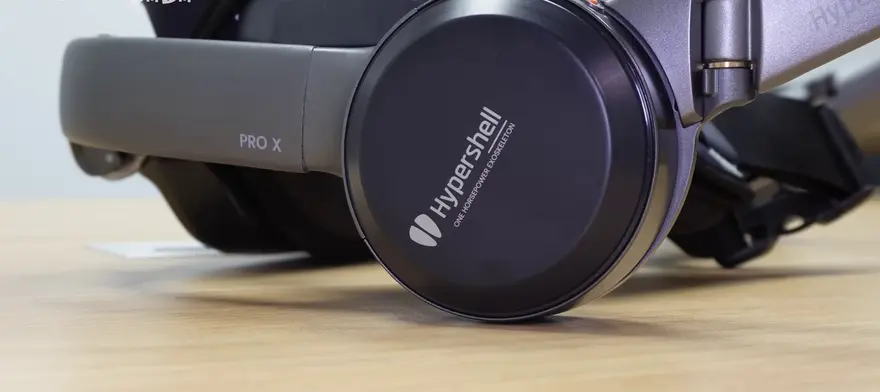
Viewed from an industry perspective, the pacing of this category is also fascinating: on overseas crowdfunding platforms, brands like Dnsys and Hypershell have already turned "hip assist + crowdfunding debut" into a standard playbook; in China, companies like Aosha and Chengtian mostly enter through industrial and medical scenarios. For the consumer-grade market to fully take off, two things are probably still missing: further price reductions, and — as fiercely debated in this video's comments section — a more convincing answer to the question of "should the assist go to the hip joint or the knee joint." Either way, from pressing the crowdfunding button in early 2023 to actually stepping out the door wearing an exoskeleton that can handle both running and cycling by the end of 2024, that year-and-a-half wait was worth it.



Top Community Comments
@TravelingShell (76 likes):
No support for the knees, ankles, or soles of the feet — this thing just feels like dead weight!
Takeaway: This comment hits the biggest controversy surrounding the hip assist approach — it only does work at the hip joint, while the knees, ankles, and soles are left completely unprotected. For users expecting "full-body support," a device that only pushes the hip joint can indeed come across as "dead weight." Beneath this lies the debate between two design routes: "augmentation exoskeletons" versus "support exoskeletons" — the former helps healthy users save effort, while the latter bears load for patients. Once product positioning blurs the two, this kind of expectation gap is exactly what you get.
@VR180SyncPro (66 likes):
This product doesn't provide an external knee joint — what it assists is the gluteus maximus. The human gluteus maximus is the strongest muscle in the body and needs no external assistance at all. The knee joint, on the other hand, is the weakest and most wear-prone joint, wearing out before the muscles even fatigue. Many young people already suffer from excessive meniscus wear, and an exoskeleton that assists the glutes without supporting the knee joint will only lead to more severe knee wear.
Takeaway: This is the most professionally grounded health concern in the entire comment section. Hip assist fundamentally works by supporting the hip extensors (the gluteus maximus) and hip flexors, while the weakest, most strain-prone part of the human body is the knee joint. What this commenter is worried about is "muscular compensation" — once the exoskeleton shares the load that the glutes should be carrying, does more of the exercise load shift onto the knees? Consumer-grade exoskeletons today generally lack the long-term medical evidence needed to answer concerns like this. "Does it actually protect you, or amplify the risk?" is a question manufacturers must answer with data.
@HT_workshop (53 likes):
Same here. I've DIY'd an exoskeleton myself, and all it could really do was move. I actually majored in mechanical engineering precisely so I could build exoskeletons one day, but once I got into it, I realized this is a cross-disciplinary field that draws on knowledge from several disciplines, and it's extremely difficult for a single person to build one.
Takeaway: Firsthand confirmation from a DIY builder in the trenches: even with a formal mechanical engineering background, a homemade exoskeleton can only "move" — it falls far short of being truly "usable." This fully corroborates the video's judgment that "personal DIY is nearly impossible." An exoskeleton is a cross-disciplinary integration of mechanics, electronic control, algorithms, materials, and human factors engineering — and this engineering barrier is precisely the real moat for consumer-grade manufacturers.
One-Sentence Summary
The Dnsys X1 pushes "snug fit, discreet wear, and out-of-the-box usability" into the top tier of today's consumer-grade exoskeletons — the closest attempt yet at a truly "everyday-wearable" device on the hip assist route. It's a great match for running, cycling, and hiking enthusiasts, as well as engineering geeks willing to pay for "the first step toward Iron Man." But if what you're after is knee protection or mobility assistance, it simply can't deliver — and it should absolutely never be purchased as a rehabilitation device.
About this article: part of Chinese-Made Exoskeleton Review Archive — an independent, regularly updated English archive of reviews of consumer exoskeletons made in China, edited from publicly available video transcripts. Not an official manufacturer page.
For inquiries and purchasing, contact lonlonago@foxmail.com. More in Reviews · All articles.