China’s "Legs": The Hypershell consumer-grade exoskeleton—why can it be affordable, wearable, and stable for everyday users?
When was the first time you seriously considered installing a motor on your legs?
Was it when your knees suddenly gave out on the stairs? When you felt unable to keep up while hiking with family? Or when you saw friends with mobility challenges whose lives were constrained by their legs—wanting to stand but unable to stay steady, wanting to walk but unable to move, wanting to go out but first having to check if someone could accompany them?
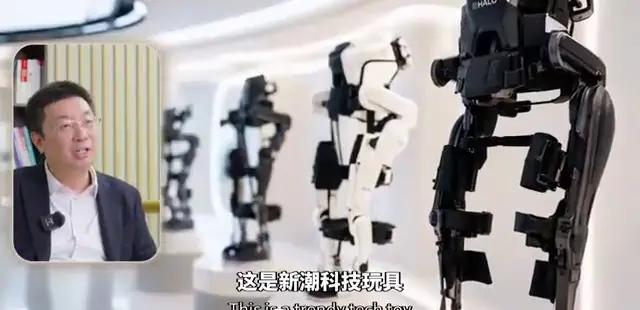
This video is about a consumer-grade exoskeleton that has already entered mass production in 2026, is publicly available for purchase, can be bought by ordinary people, and can be delivered this November—from Hypershell (mentioned in the video narration). It is not a rehabilitation device costing hundreds of thousands in a hospital, nor a lab prototype only fit for an exhibition booth, and certainly not a movie-style combat suit toy; it does something very foundational and essential:
Assist human movement, reduce leg load, lower physical exertion, protect knee joints, make walking easier, make climbing less taxing, and better protect the legs on the way down (mentioned in the video).
When we shift our focus from "fighting gravity" to "tackling aging and functional decline," you begin to see the true value of consumer-grade exoskeletons like Hypershell: not turning healthy people into "superhumans," but helping everyday users take walking back into their own hands.



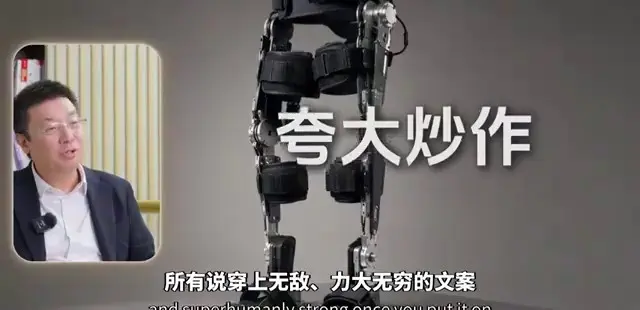
I. Setting the Tone First: It Addresses "Lower-Limb Weakness," Not "Superhero" Powers
The most rare and commendable aspect of this video is how it brings expectations back down to earth first.
"It cannot identify superhuman strength, but it can shore up the weaknesses of human legs" (mentioned in the video).
Translating this into more engineering-focused terms: Hypershell's goal is not to create an external device with "infinite strength," but to build an assistive exoskeleton / walking assist exoskeleton—providing continuous, stable, and controllable support and assistance when your legs feel heavy, your knees are strained, or you feel unsure about standing up.
Its boundaries of capability are also clearly defined (emphasized in the video):
- It will not allow people to fly or burrow underground, nor will it allow people to "carry hundreds of kilograms," nor will it grant movie-like magical abilities;
- What it can do is: support the lower-limb, assist in force generation, stabilize the knees, coordinate the gait, assist with squatting and standing, and cushion the impact of walking (mentioned in the video).
In other words, treat it as a "partner that understands your gait": it does not walk for you; it allows you to expend less energy, suffer fewer injuries, and hesitate less while walking.
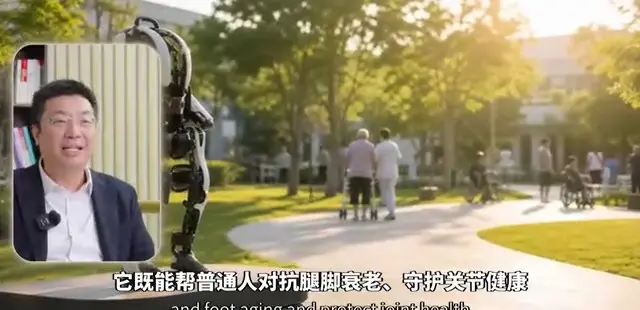
For healthy individuals, wearing it serves as anti-aging, knee protection, and reduces the physical burden on the body; for friends with weak legs, lack of leg strength, or mild mobility impairments, wearing it means regaining the confidence to stand and the freedom of walking assist (mentioned in the video).

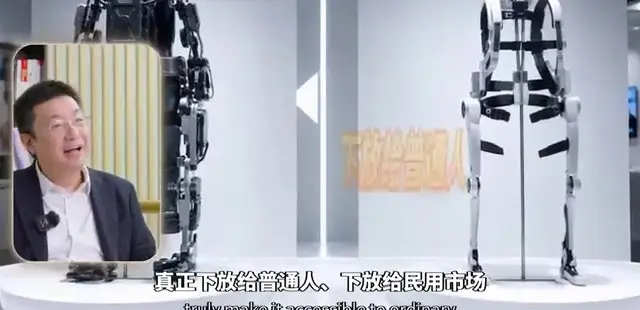


II. Two misconceptions that need to be corrected: Misconception One—"It's not an Iron Man toy"; Hypothesis Two—"It's not just about helping middle-aged outdoor enthusiasts save effort"
This video puts a lot of effort into "correcting misconceptions" because it noticed that about 90% of influencers across the web are just following the trend, hyping two things: it is a miraculous tool for saving effort outdoors, and it is a piece of gear for middle-aged hikers. But few people spell out the most core layer of value—it can help people with mobility disorders stand up again, and it does so delivering value in a consumer-grade way.
Misconception One: It’s not an Iron Man toy; it doesn’t create superheroes—it directly compensates for functional deficits
Whenever marketing copy says "invincible once worn" or "boundless strength," it’s basically hype. Hypershell’s positioning is refreshingly modest:
Assist power delivery, steady walking, reliable support when standing up, no panic on downhills (as mentioned in the video).
It feels more like a "civil technology power-assist device," with the core goal of making everyday movements more effortless, stable, and enduring.
Misconception Two: It’s not merely an effort-saving device for middle-aged outdoor enthusiasts; it’s also the hope for people with limited mobility
In the past, many "low-cost exoskeletons" had an awkward problem: they could only "lift the leg," helping swing the leg forward, but they could not support the body, let alone assist with standing.
Hypershell, however, gives the video creator the confidence to put "assist standing" front and center, because it adopts:
Dual-width, dual-side four-motor coordinated design—capable of both dynamic assistance while stepping and static load-bearing support (as mentioned in the video).
This point is critical:
- Dynamic stepping: Provides joint torque when walking, reducing muscle compensation and fatigue;
- Static load-bearing: Offers support while standing, rising, or waiting while standing, giving you the safety of feeling "you can stand securely."
Only by achieving both simultaneously can it move from "a toy that saves effort" to "a reliable walking assist tool."


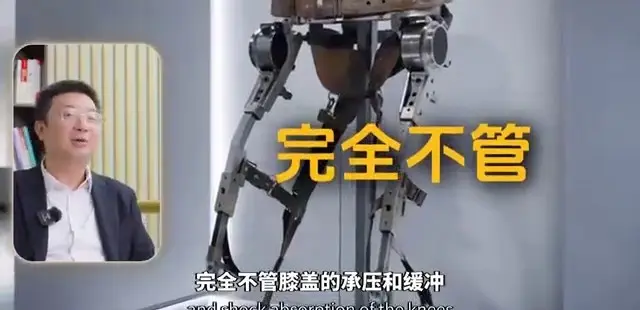
3. Why This is "High-End Tech Filtering Down": From Industrial/Military and Medical Rehab to Consumer-Grade
For a long time, the concept of "mechanical exoskeletons" has been far removed from the daily lives of ordinary people. Basically, there are only two categories that you can see or hear about:
- Industrial/Military Exoskeletons: Designed for tasks like factory loading, heavy-duty logistics operations, firefighting rescue, and special operations. They tend to be bulky, structurally complex, and expensive, often costing hundreds of thousands per unit (as mentioned in the video).
- Medical Rehabilitation Exoskeletons: Used for post-operative rehabilitation and individuals with mobility impairments. These are mostly rehabilitation exoskeletons (medical-grade), characterized by high professional requirements, intensive intervention, and strict procedures, making them inherently difficult to integrate into mass-market life.
What Hypershell aims to do is take high-end medical and industrial-grade exoskeleton technologies and, for the first time, truly "filter down" these capabilities to the consumer market:
"This is not a rehabilitation device costing hundreds of thousands in a hospital, nor is it a laboratory prototype meant only for display, nor is it unattainable future technology" (as mentioned in the video).
This "filtering down" is not just about price reduction; it involves three much more challenging tasks:
- Lightweighting: Ensuring users can wear it and are willing to wear it, rather than getting tired and wanting to take it off after just one session;
- Ease of Wearing/Removal: Designed for daily use with a low-friction fitting process;
- Wearing Comfort: Materials, structure, and force application points must be redesigned, rather than simply downsizing industrial parts to label them consumer-grade.
This is also the core standard for judging whether a product is a true "consumer-grade exoskeleton": not how powerful it is, but whether ordinary people can—and will—wear it long-term, stably, and willingly.


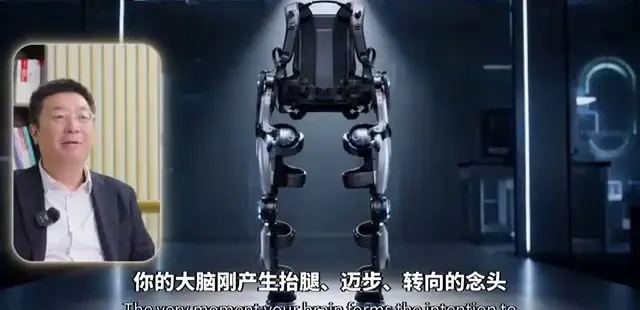
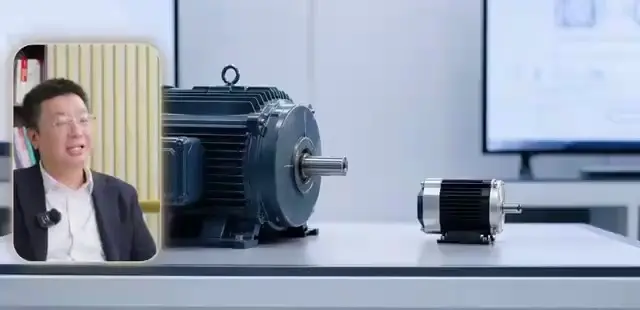
IV. The "Watershed" in Technology and Experience: Synergy of Dual-Hip, Dual-Side, and Four Motors
The most hardcore part of this video boils down to one point: dual-hip, dual-side, four-motor synergy.
Why is the "hip" so important? Because the hip is the key hub for lower-limb power and stability. When walking, climbing, standing up, or standing still, many pivot points for force are located here.
The video describes it as follows:
"The dual-hip, dual-side, four-motor collaborative design provides both dynamic assist for stepping and static load-bearing support; this is the core key to helping people with disabilities or weak legs stand up and stand" (mentioned in the video).
Breaking it down, it can be understood as two sets of capabilities operating simultaneously:
- Dynamic Assist (Walking Gait)
- The sensor (IMU / pressure sensor) detects your intent;
- The servo motor provides assist at critical phases;
- The goal is to reduce the instantaneous burden on the knee and hip joints, allowing you to "use less force and walk further."
- Static Support (Standing / Standing Up)
- Provides extra load-bearing and stability during the standing phase;
- Enables those who "dare not stand or cannot stand steadily" to dare to take the first step;
- This is why it possesses the value of "standing assist."
The video also reminds us of a detail easily overlooked:
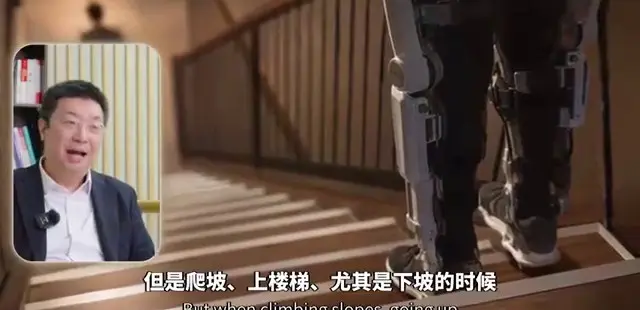
It doesn't make you "multiply your strength out of thin air," but rather steadily supports you during high-cost actions like squatting, standing, and traversing slopes (mentioned in the video).
In other words, what it optimizes is not "explosive power," but "endurance" and "sense of security."




V. Bringing It Into Real Life: It Doesn’t Change Fate, but It Changes the Hardship of Daily Routines
The most compelling part of the video is how it pulls “machine legs” out of geek fantasy and ground them back into real-world pain points.
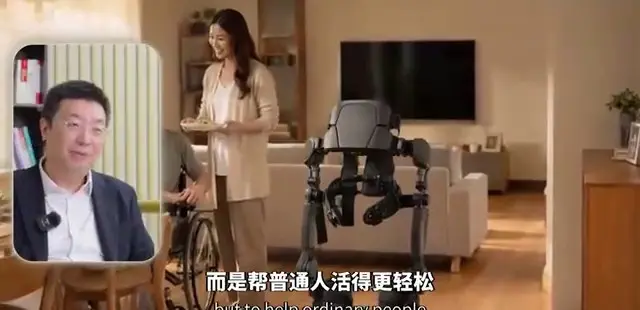
If you are over 40 or 50 and have watched family members’ mobility decline; if you’ve seen people around you slowly lose the ability to walk freely due to weak legs, knee pain, or limited mobility; if you’ve seen someone stuck in a wheelchair, struggling to stand up, unable to go out, with life completely constrained by their legs (as mentioned in the video).
You may understand why a consumer-grade exoskeleton like Hypershell deserves serious attention: it turns “whether you can stand, whether you can walk, whether you can go outside” from something “left to fate” into something “supported by a tool.”
Who Is It Most Suited For?
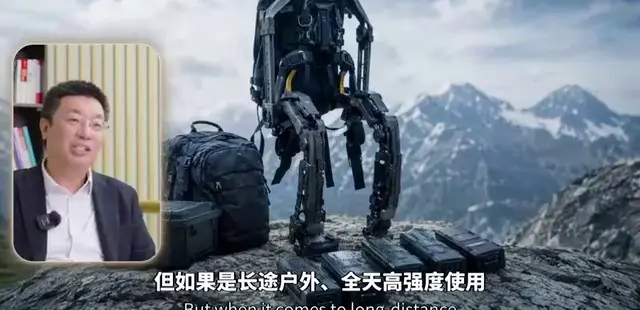
- Healthy middle-aged people / outdoorsy users: hiking, climbing, camping, long-distance walking. It’s not about making you run faster, but about letting you “still have legs in the second half” of the journey.
- People whose knees/lower limbs get fatigued easily: climbing stairs, standing for long periods, or commuting on foot a lot. It provides continuous assistance and cushioning, reducing physical exhaustion and joint pressure.
- People with mild mobility impairment (weak legs, insufficient force, unstable gait): gaining support and walking assist under safe conditions.
- A “caregiver supplement” for senior scenarios: the video emphasizes not “replacing people,” but enabling people to participate in life with better quality.


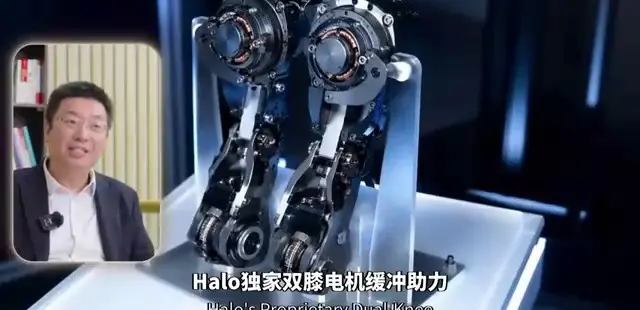

VI. Hands-On Experience and Buying Reminders: Beyond Specs, Look for “Wearable for the Long Haul”
For a consumer-grade exoskeleton, the biggest issue is not performance, but being “unwearable.”
Many assume that stiffer is always better, but the real entry threshold is the combined experience of weight, fit, heat dissipation, battery life / runtime, and noise. Will you actually want to put it on every day (author’s opinion)?
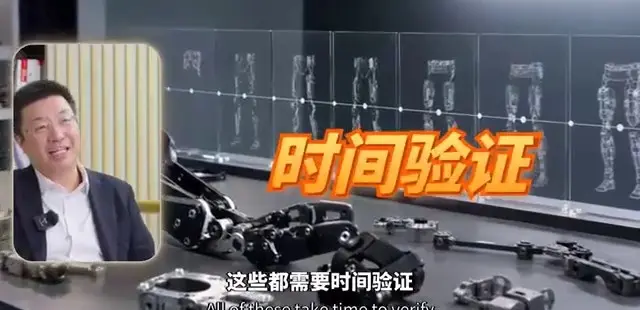
Because this is a video script, many specific parameters—such as weight, battery life / runtime, joint torque, and max payload / load capacity—were not fully disclosed. Here we only extract verifiable points:
- Positioning: A consumer-grade exoskeleton available to the public (the video emphasizes that “ordinary people can buy it with money”).
- Delivery: The video states mass production in 2026, and units will be in hand this November (as mentioned in the video).
- Structure and form: Dual-sided hip structure, four motors working in coordination (as mentioned in the video).
- Boundary of core capabilities: Walking assist, support for standing, and assistance for squatting and standing up—not a “superpower” experience (repeatedly emphasized in the video).
You should pay extra attention to the following (pre-purchase advice):
- Whether it is quick to put on and whether it adapts to different heights and body types;
- Whether you experience friction, pressure, or abnormal noise while walking;
- Whether it feels stuffy or overheats after long-term use;
- Safety protection: whether it provides fall protection and whether it offers self-balancing assistance (different vendors adopt different solutions; check the product definition).
This kind of device is most at risk of “impressive specs, but it gets tossed into a corner after one wear” (author’s opinion).
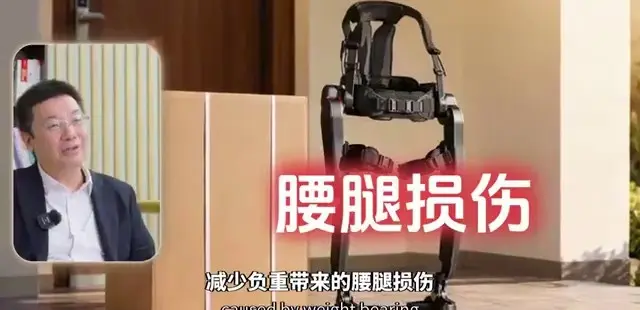

VII. Mass Production and Mainstream Adoption: What It Sells Is Not Just a “Device,” but “Certainty”
The video repeatedly stresses one word: certainty.
- For healthy users: the certainty of easier walking, less effort on climbs, and better leg protection on descents;
- For people with limited mobility: the certainty of standing with support, getting help when stepping, and not pinning their hopes on “feeling okay today” when going out;
- For consumers: the certainty of being able to buy it, receive the shipment, use it, and get help when needed.
“In 2026, mass production is already in place and it is publicly on sale; ordinary people can buy it with money and will be able to get it in November this year” (mentioned in the video).
This is highly meaningful for the entire category: consumer-grade exoskeletons are moving from “launch-event products” to “delivery products.” When logistics, after-sales service, fitting, repair, and software upgrades form a closed loop, the category can truly begin to retain long-term users.

VIII. Closing thoughts: The ultimate goal of technology is not to manufacture gimmicks but to safeguard every ordinary person’s right to walk.
Our generation was taught from childhood that “body is the capital of revolution,” yet few told us the body is also an asset subject to depreciation. In our youth we can run, jump, hike, or stay up all night with little concern, but only after reaching midlife do we realize that the most precious wealth in life is not a house, a car, or savings, but a body that remains flexible, pain-free, and ready to move (as mentioned in the video).
For many as they grow older, the greatest regret is not the lack of money; instead, it is the decline of mobility: an inability to walk long distances, a fear of distant travel, a hesitation to explore, bodily restrictions, and a life lived at a discount (as mentioned in the video).
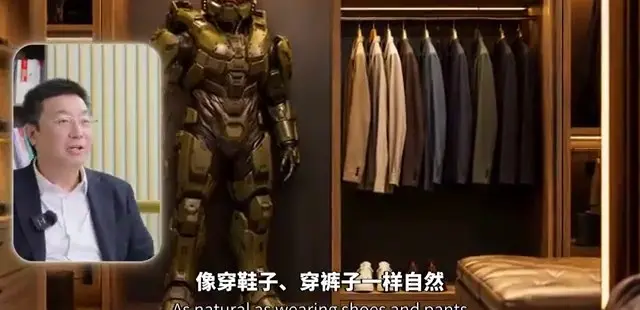
At present, “machine legs” such as the Hypershell look like a novelty—high-end gear. But three, five, or ten years from now they could well become commonplace in ordinary life, just like smartwatches, Bluetooth earbuds, and fitness trackers (video perspective). By then, consumer-grade exoskeletons will boast friendlier prices, longer battery life / runtime, greater comfort, and more comprehensive functions (video outlook).
Humanity has finally begun to use machines to safeguard the legs, compensate for physical shortcomings, and counter the effects of aging, giving everyone the opportunity to stand freely and walk with confidence (video quote). This is not the endpoint of science fiction; it is the genuine starting point of an era in which everyday people can augment their bodies (video quote).



Top Community Comments
(Comments are empty) — suggesting this video is too emotionally intense, making viewers more likely to do a “watch and leave” ending rather than stay to discuss the details (Author’s take: what ignites audiences is the anxiety and hope around freedom of movement, but when it comes to price, fit, and after-sales service, more community-style discussion is still needed).
The video repeatedly stresses “doesn’t build a superhero, it just shores up weaknesses” (video excerpt). — This reflects user fatigue with the “exoskeleton = Iron Man” narrative; they care more about whether the product positioning is honest (Author’s take).
The video’s strongest selling point is that it “can help people stand” (video excerpt). — This hits the most real pain point for people with mobility challenges and their caregivers: not necessarily going faster, but being able to “stand up and go outside” (Author’s take: walking assist).
The video warns that “any copy claiming you’re invincible once you put it on is pure exaggeration” (video excerpt). — This reflects consumers’ vigilance toward over-the-top marketing, and hints that manufacturers should do less gimmickry and more verifiable user experiences (Author’s take).
The video says mass production is set for 2026, and the units will be available this November (video excerpt). — This shows users’ top concern is delivery and timing: for a consumer-grade exoskeleton, what matters isn’t the PPT—it’s supply chain and after-sales service (Author’s take).
The video notes that it brings high-end industrial/medical tech down to ordinary people (video excerpt). — This raises an industry question: Could consumer-grade exoskeletons become what many hope will be the next “new personal device” after smartwatches (Author’s take)?
One-Sentence Summary
Hypershell's video is essentially breaking open real room for the "consumer-grade exoskeleton"—it explicitly rejects the "armor narrative," bringing the value back to daily needs like walking assist, helping you stand, anti-aging, and protecting the knees. It's recommended for healthy middle-aged people who want to take the strain off their knees, outdoor hiking enthusiasts, and those whose daily living range is constrained by limited mobility; but don't treat it as magic. Considering it a personal device that requires serious experience and long-term use is the right way to approach it.