Giving Everyday People "Superpowers": An In-depth First Test of the Aosha VITREX X consumer-grade exoskeleton—The Perfect Blend of Hardcore Specifications and Real-World Experience
If in recent years, embodied AI was merely a flashy concept confined to laboratories and tech exhibitions, then by 2026, our focus has shifted. Moving beyond the classic saying of "mapping the dragon and guarding the tiger"—which asks how machines can become human-like—we are now turning our attention to a concrete proposition much closer to daily life: How can we "wear" motors, AI perception, and control capabilities onto the human body to directly provide walking assist and mobility support?
Just recently, Aosha Intelligence, a brand that has long been deeply committed to this field, introduced their heavyweight new release—the VITREX X. This is not just a conventional wearable device; it is a consumer-grade wearable robot billing itself as "next-generation outdoor AI gear." Is it more gimmick than substance, or can it truly make an average person experience the thrilling sensation of being "like a tiger with wings"? Recently, Daofeng Team partnered with Aosha Intelligence for a collaborative creation and a deep hands-on test. Below, we will dissect this consumer-grade exoskeleton from its hardware parameters down to its real-world physical feel, revealing the true capabilities of this device.
Core Hardware: "Brute-Force Aesthetics" Rivaling Robot Dogs, with a 50 N·m Torque System Anchored to Your Thighs
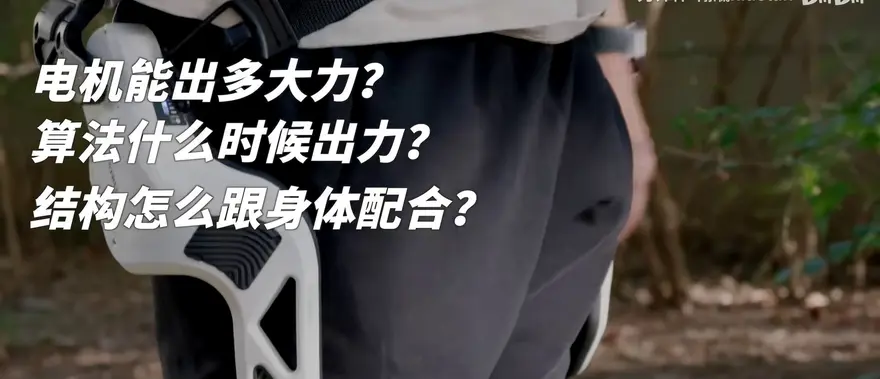
Before diving into any exoskeleton, we must confront the most fundamental question of physics: how much force can the motor actually generate?
Over the past two years, we have reviewed numerous cutting-edge consumer-grade and industrial robot dogs. Their joint torque typically tops out around 40 N·m—a level of power strong enough to enable a 15-20kg robot dog to execute high-burst maneuvers like backflips and massive leaps. In the Aoshao VITREX X, however, the manufacturer has adopted an extremely aggressive, "brute-force" strategy for stacking hardware specs.
Core parameters mentioned in the video: The joint torque of the VITREX X’s brushless motors can reach up to 50 N·m.
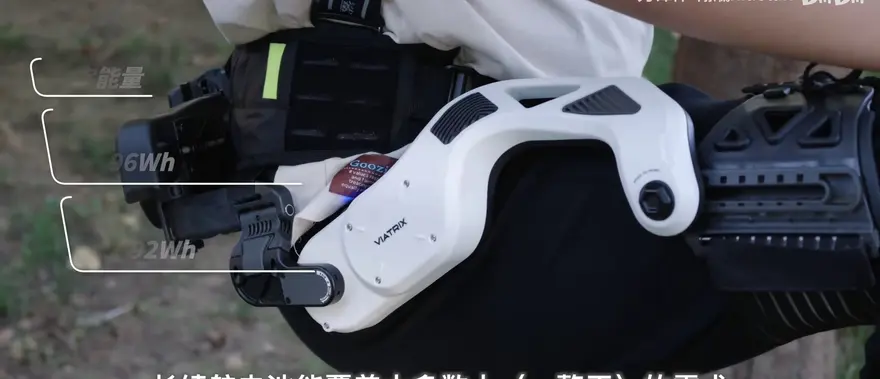
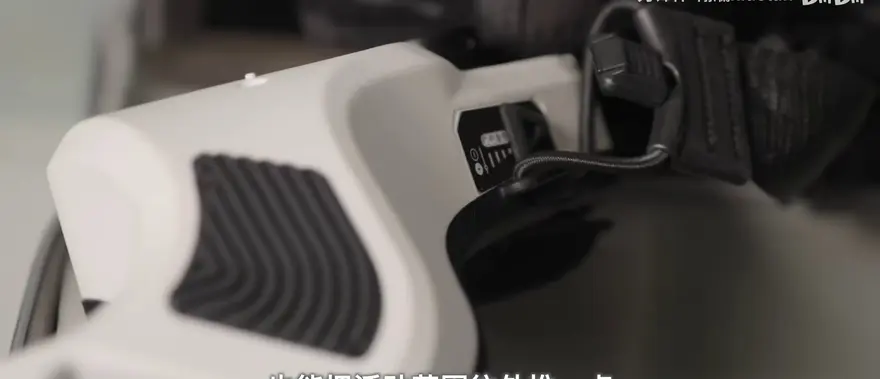
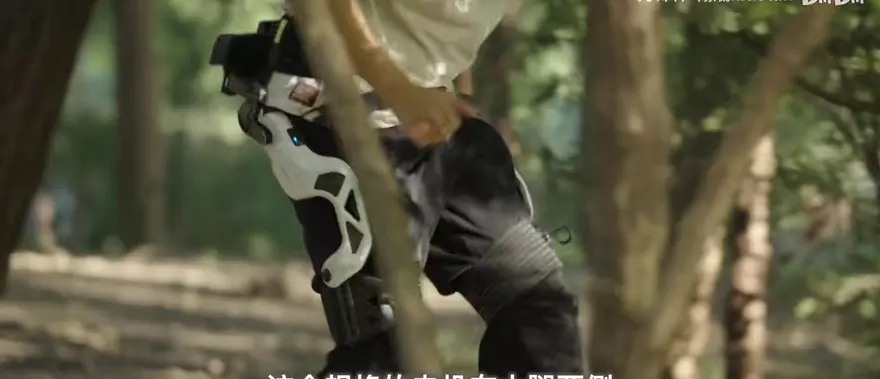
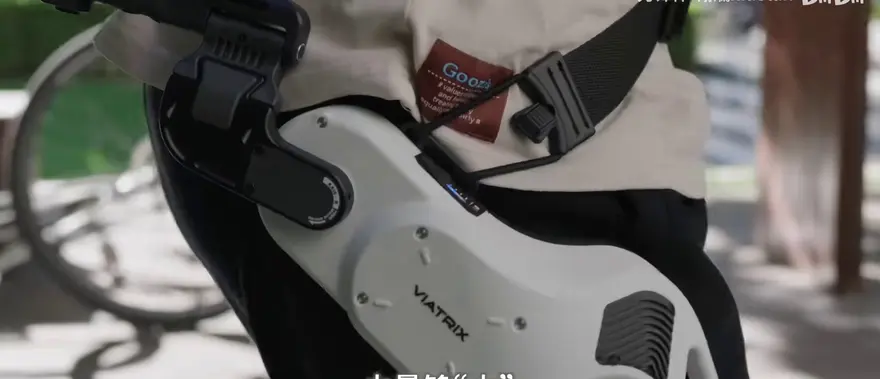
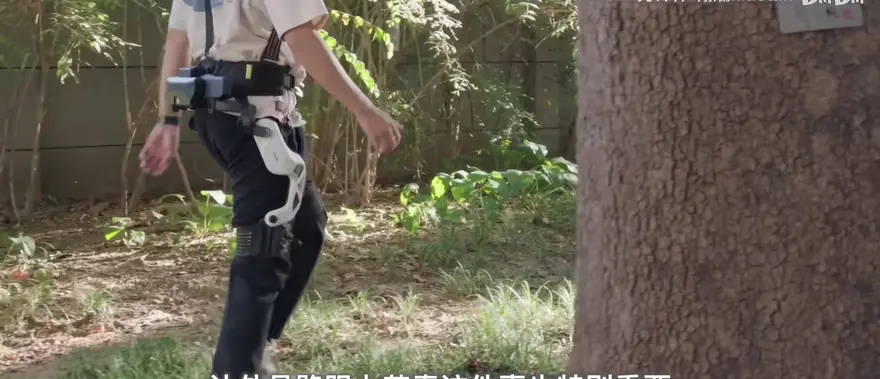
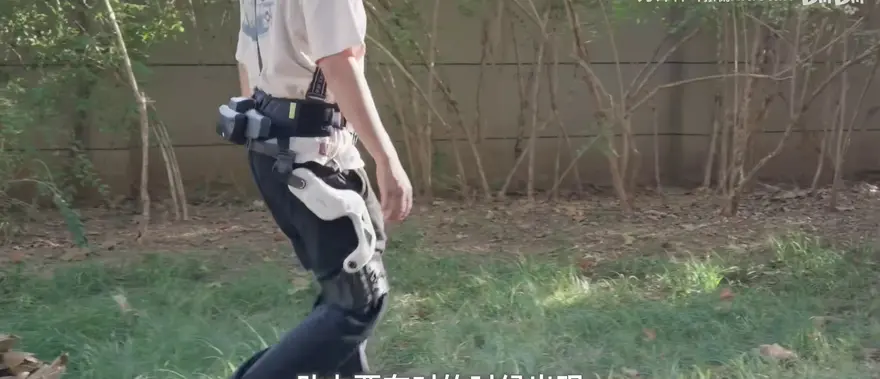
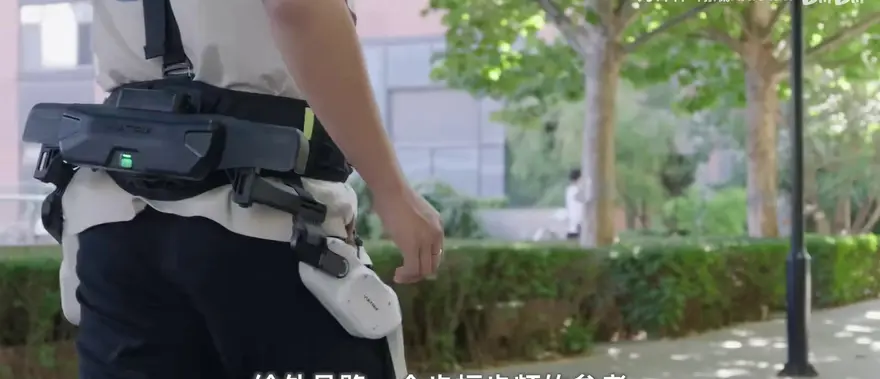
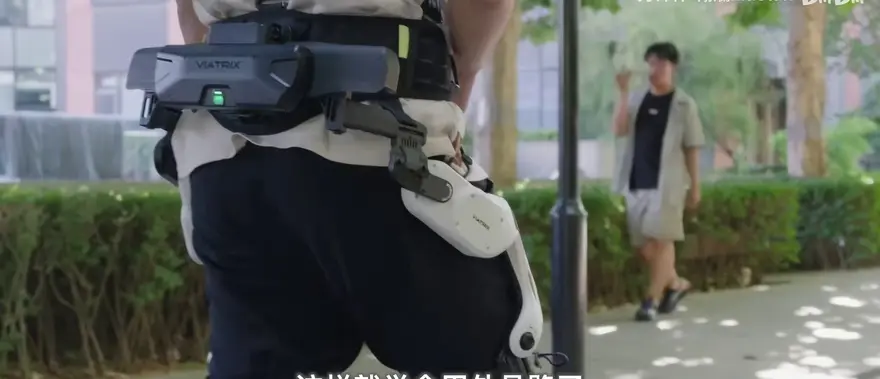
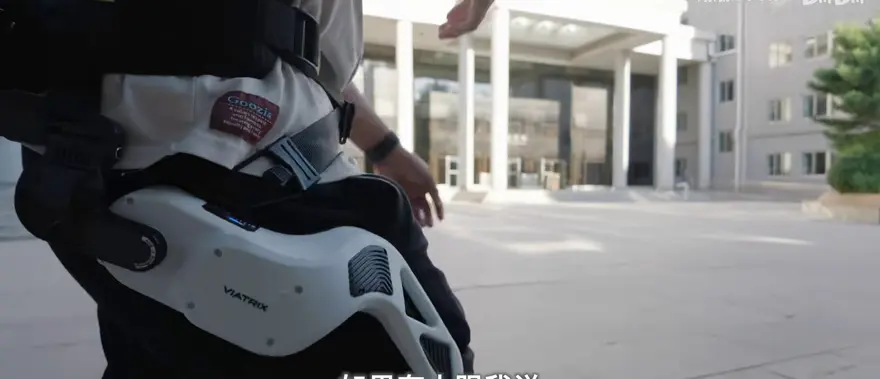
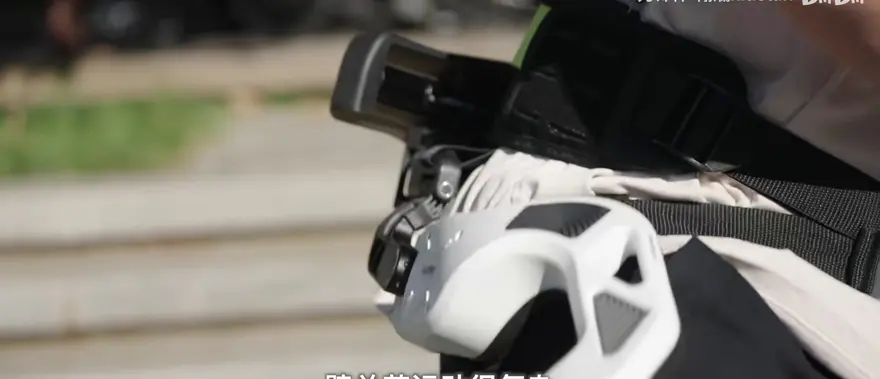
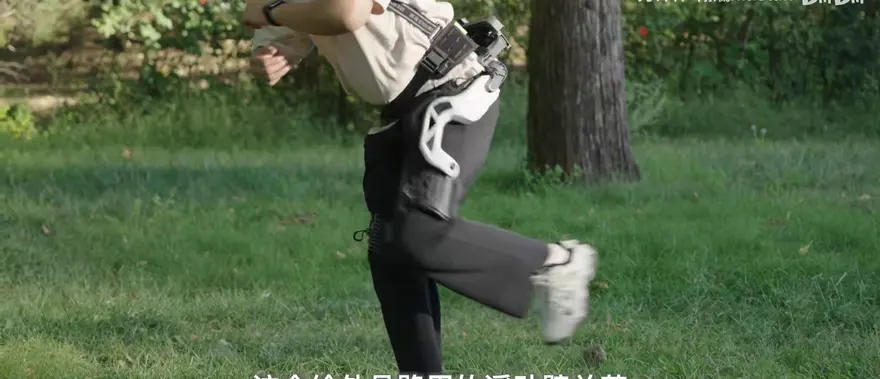
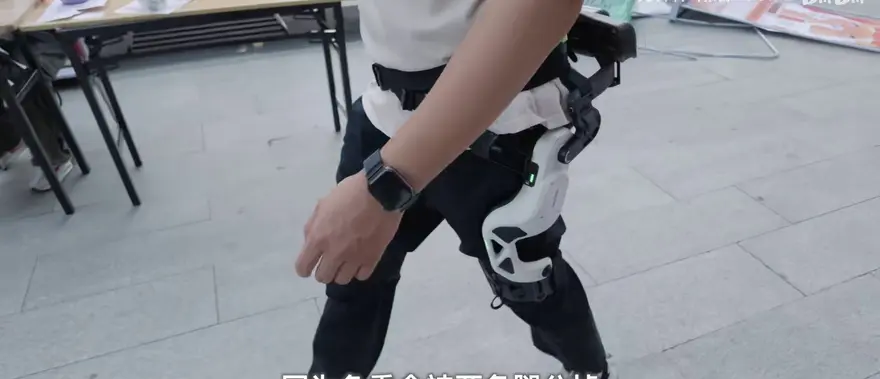
This track-like mechanical structure is mounted directly on both sides of the legs, delivering a continuous upward pushing force while hiking and climbing stairs. As a robotics editor who tests these machines long-term, the most intuitive reaction to actually strapping on the VITREX X can be summed up in two words: "huge and incredibly satisfying." This thrill isn't merely a byproduct of kinetic energy. Rather, when you're ascending a mountain, your thigh muscles no longer have to fire repeatedly as they normally would. The motor steps in precisely when needed, creating the thrilling illusion that "this steep incline was conquered with absolutely no effort."
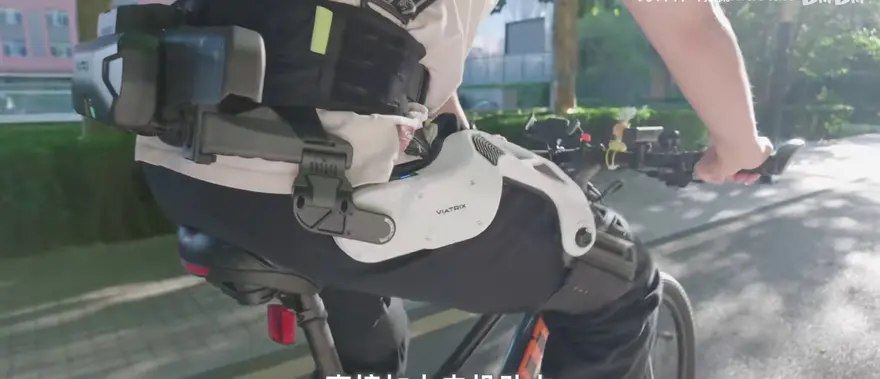
Furthermore, the application scope of this VITREX X lower-limb exoskeleton extends far beyond trekking assist. Through its expandable mechanical interfaces, it can even be paired with a standard bicycle to inject direct motor assist into your ride. When tackling continuous, grueling uphills on long-distance cycling routes, this direct, thigh-level lifting support is an absolute lifesaver.



AI Algorithms: A 0.5-millisecond "brain and nerves" that refuses to fight you instead of helping
Strength alone isn't enough. In robotics, brute force never solves every problem. If the assist engagement isn't properly timed, it won't just fail to help you—it will literally fight you, severely disrupting the naturalness of your gait.
"To get a truly satisfying experience, sheer power isn't enough. The assist must kick in at exactly the right moment. Otherwise, it's not an assist, it's a fight." This was the core takeaway from our joint creative team during testing.
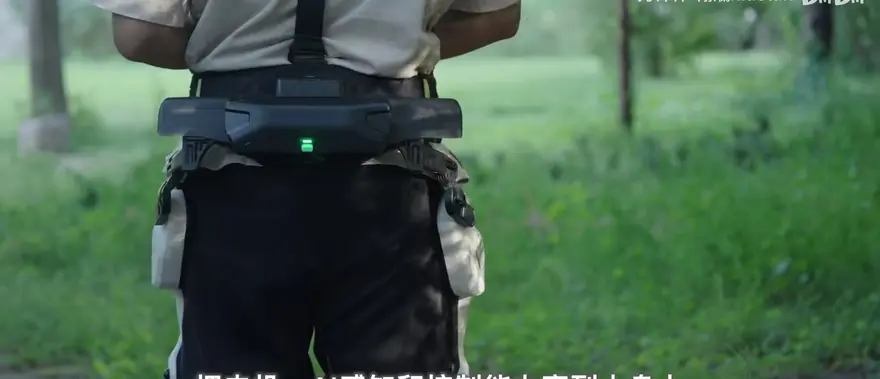
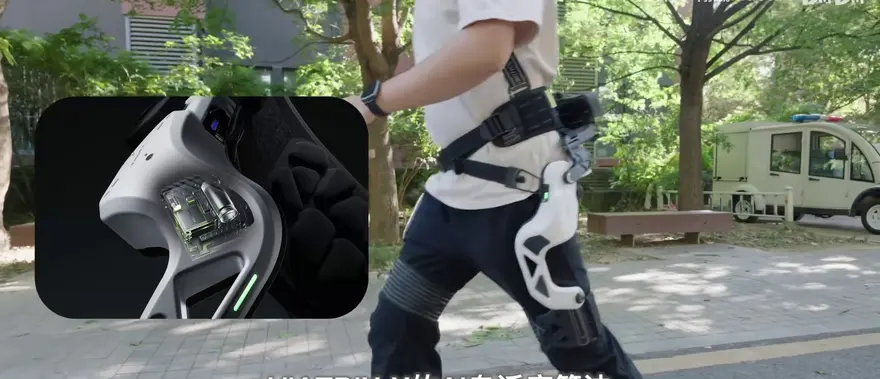
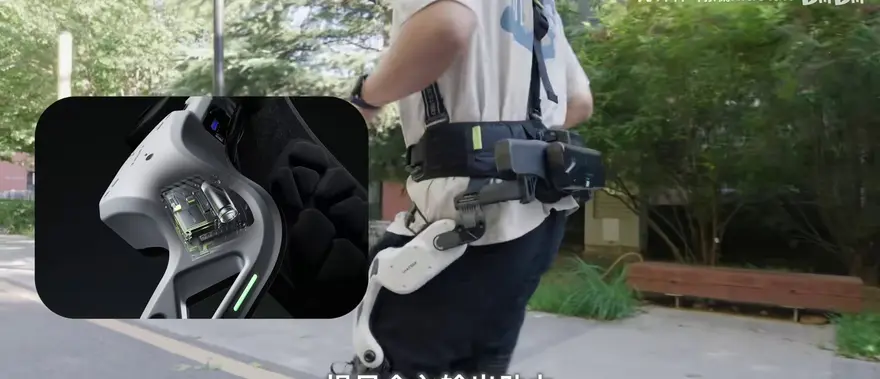
This brings us to VITREX X's true strength at the algorithmic level. Its "AI Natural Movement Algorithm," combined with a multimodal recognition chip, captures changes in your body posture in real time and anticipates your movement intent ahead of time. In other words, the moment you lift your leg, it already knows where you're going.
Response parameters mentioned in the video: VITREX X's response time (from intent perception to motor assist delivery) is between 0.5 and 1 millisecond.
To grasp just how impressive that figure is, consider this comparison: when we play mobile games, we consider 10 to 20 milliseconds of network latency perfectly smooth and normal. VITREX X's response time, however, is a tenth—or even a twentieth—of that. When worn, that millisecond-level predictive intervention translates into a very specific feeling: this device is incredibly responsive, with assistance that feels perfectly synced to your motion—as though it were a natural extension of your legs. Once you're accustomed to that kind of intelligent assist, going back to carrying loads without it feels, quite simply, like stepping back into the stone age.


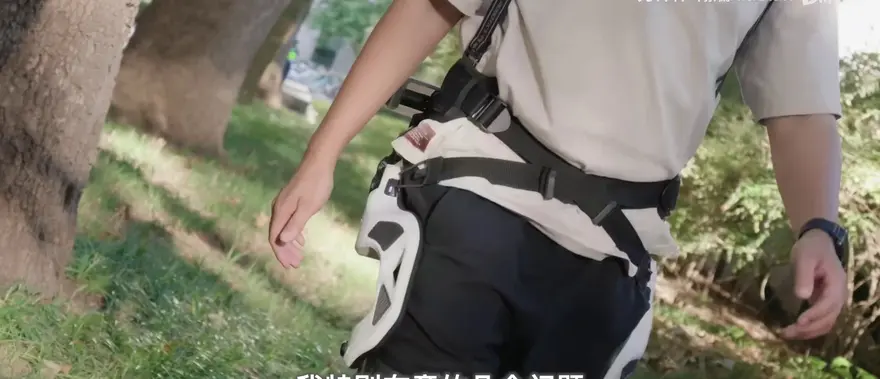
Mechanical add-ons: Float360 floating wide joints make the exoskeleton "disappear" on the body
If hardware and algorithms are the soul of VITREX X, then its mechanical structure is the body. What's the biggest fear for an exoskeleton? Becoming too rigid and constraining the wearer's natural movements (like the characters in the mecha-style show "Iron Armor Little HeroYou always need to warm up before exercise, right? If someone tells me, 'You can't put on the exoskeleton before warming up,' I think that would be a total letdown." This slightly cheeky comment pinpoints the biggest difference between today's consumer-grade exoskeletons and traditional medical or heavy-industrial exoskeletons: consumer-grade products must unconditionally adapt to human movement.
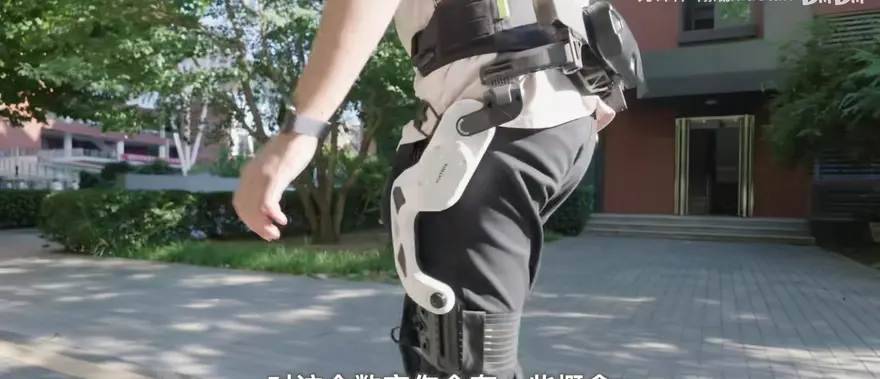
Human motion at the joints is highly complex and constantly changing. To meet this challenge, VITREX X introduces a striking structural design—the Float360 floating wide joint. This joint system, specifically engineered for exoskeletons, is designed to resolve the alignment between the worn device and natural human motion. Whether you are taking long strides, squatting to pick up an object, or jogging with short steps, a wide range of lower-limb movements can be executed smoothly, without any stiff, "machine-dragging-you-along" sensation.
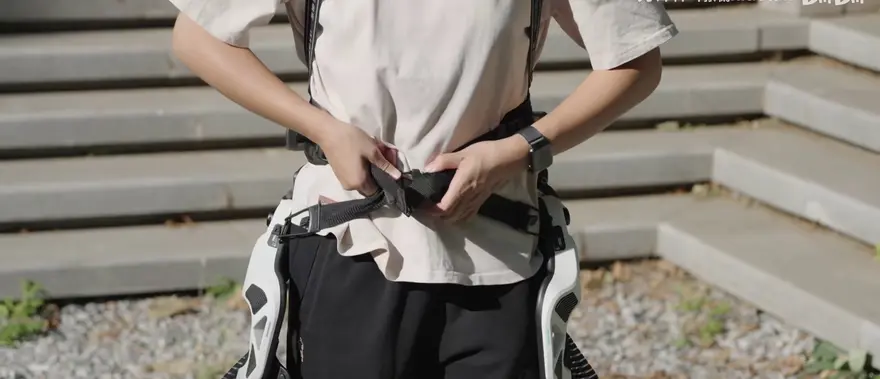
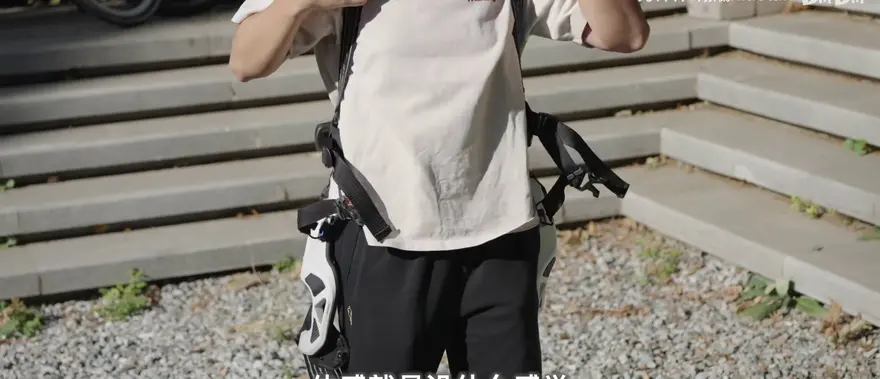
In terms of wearing comfort, VITREX X also features a clever weight-distribution design. The device's weight does not pressing entirely on the waist; instead, through mechanical linkages and a harness system, it is shared across both legs and the shoulders. In real use, the exoskeleton's own weight feels almost negligible, and you won't experience that heavy, "sack strapped to your waist" burden. This sense of lightness—barely noticing it's there—is a key prerequisite for it to enter everyday life.
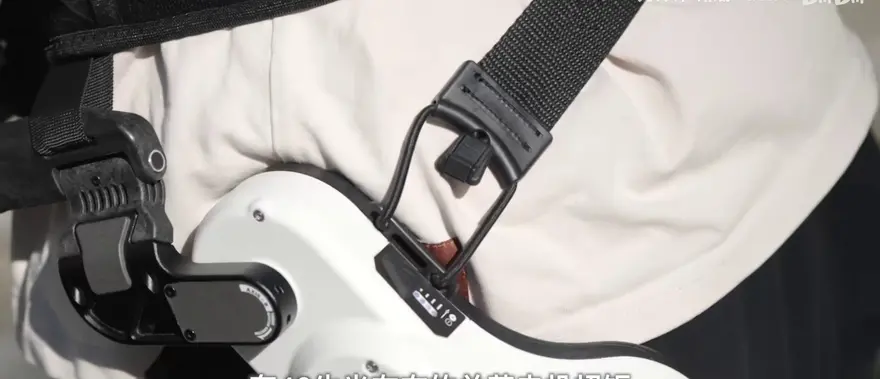
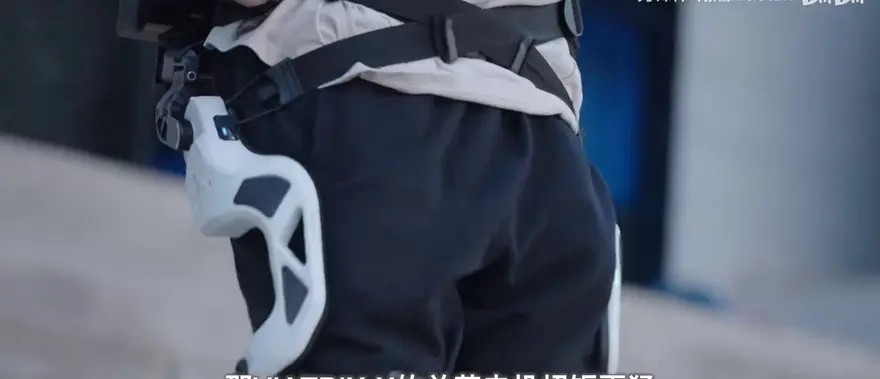
Battery Life System: Dual Battery Specs and Boost Mode – No More Mid-Trip Disasters
As an electric-powered robot, no matter how ingeniously its structure is engineered, it amounts to a dead, heavy piece of scrap metal when the power is out. "If it dies on the trail, it’s an absolute nightmare." This is undeniably the most genuine pain point for all outdoor enthusiasts.
The truth is, battery life has always been an openly acknowledged challenge in the consumer-grade exoskeleton industry. Unlike medical rehabilitation exoskeleton (Rehabilitation exoskeleton, such as select product lines from Cheng Tian, Keng Qin, and Tanluzhe, which primarily operate in specific clinical rehabilitation settings), brands focusing on outdoor activities like Ao Shark and Hypershell require their devices to possess extreme outdoor survival capabilities.
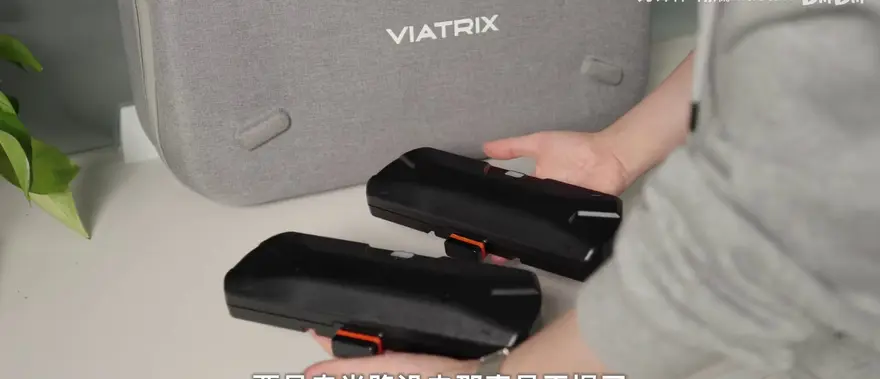
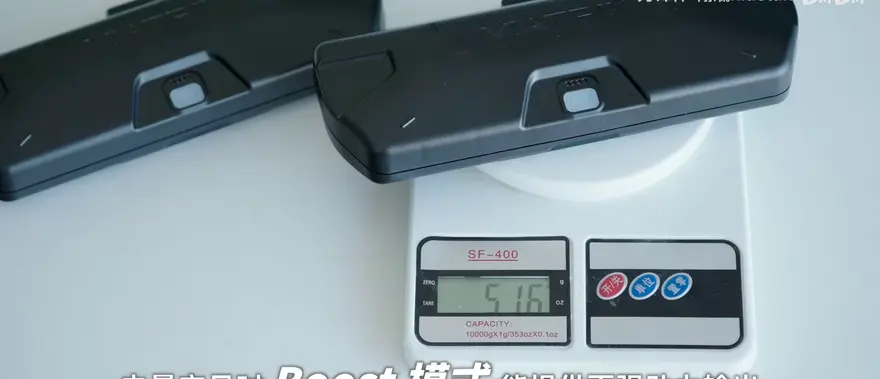
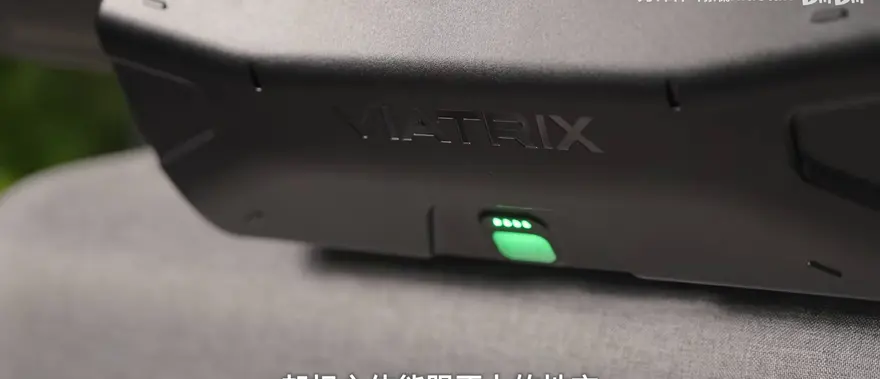
The VITREX X presents a mature, proven solution to this: a dual battery specification system. It offers both standard battery life and extended runtime battery pack options, featuring hot-swappable designs that allow for easy replacement out in the wild. During operation, the system continuously performs automated energy management, utilizing algorithms to optimize the energy output of the motor, effectively letting a single battery go much further. The extended runtime battery is designed to meet the demands of a single-day extreme trek for most veteran outdoor enthusiasts, completely eradicating battery anxiety.
It is worth noting that when battery levels are sufficient, you can activate the Boost mode. Under this mode, the device delivers a more robust assist output, further amplifying the push-you-forward sensation and the effortless feeling of tackling uphill climbs—making it perfect for heavily loaded hiking scenarios where short bursts of physical exertion are needed. Of course, the exact Endurance hours corresponding to different battery packs will be fully detailed in our upcoming hardcore teardown and long-term review.
Scenarios and Audience: Pioneering Activity Boundaries, Pushing Open the "Outdoor Door" for Ordinary People
Why are we making such a big fuss about a consumer-grade exoskeleton right now?
Behind this lies the ultimate humanistic care showcased by technology. Before products like the AoJing VITREX X emerged, mountain hiking and long-distance heavy-duty off-roading were often the privilege of those with high physical fitness and youthful strength. However, the birth of products like the VITREX X shows us another possibility.
"I hope these devices can allow ordinary people without professional training to push their range of movement a bit further."
Yes, with this steel shell, physical fitness is no longer the ceiling limiting our exploration of nature. It allows an enthusiast who usually only walks in parks to follow those hardcore hikers to distant, hidden lands they have always wanted to visit but hesitated to go to due to worries about keeping up physically.
This is no longer a tool in the traditional sense, but an amplifier and boundary expander for human physical capability. As an assistive exoskeleton, the greatest social value of the AoJing VITREX X lies in turning heavy outdoor gear—which can easily weigh tens of pounds—into a joy that everyone can enjoy. This is not only the goal of AoJing but also the trillion-dollar consumer blue ocean that many entrants like Haier and Yuanye are jointly targeting.

Long-Term Review Plan: More Scenarios and More Demanding Usage Tricks Coming Soon
This photo-and-text feature is a quick, focused review of the VITREX X. Across the dimensions above, you can get an initial sense of what makes it effective—and why it works so well. But this device’s potential is definitely not limited to that.
Next, (we’re teasing what’s next), we’ll be releasing a deep, long-term review of the VITREX X. We’ll take it out to more demanding terrains, test more hardcore use cases, including slip resistance in rain and snow, as well as advanced usage techniques such as oscillators. Can an exoskeleton truly become humanity’s most intimate cybernetic prosthetic? Stay tuned.
Top Community Comments
**@Reader: I hope it can solve the walking difficulties of elderly people.
Interpretation: This comment reflects a common misconception in public understanding of “exoskeletons.” Many people’s first reaction is the scenario of a rehabilitation exoskeleton (medical-grade, not consumer-grade) or an assistive / walking-assist exoskeleton. But VITREX X is primarily positioned for hiking / trekking assist, designed to help healthy users go further—not to restore walking ability for impaired elderly users. While the technology will inevitably expand into eldercare, at this stage it is mainly an “off-road powerhouse for healthy people.”
**@Reader: Mark my name as Mecha No. 0.0001?
Interpretation: A comment full of geek humor. In the consumer-grade exoskeleton and robotics world, early adopters often play a dual role as “testers” and “spiritual shareholders.” The “Mecha No. 0.0001” phrasing shows how hardcore tech enthusiasts passionately embrace and feel personally invested in this cutting-edge new species.
@bandbadboy: Wipe out 0 comments
Interpretation: A classic meme, but it also reveals the “first to comment” rush that hardcore tech review videos often trigger online. Clearly, plenty of young users and mecha fans are watching these products with eager anticipation.
**@Reader: 0.5 ms of latency? That’s faster than my cat’s reaction!
Interpretation: The user uses a vivid comparison to echo our praise for the product’s algorithms. This ultra-low latency is exactly the critical technical bottleneck that determines whether a wearable device feels helpful—or ends up taking over.
**@Reader: Don’t just talk—take it out next week and hike the Aotai route.
Interpretation: This is the most authentic hardcore demand from outdoor enthusiasts. For a device emphasizing assist and battery life / runtime, they don’t need lab data—they need reliability reports under extreme conditions. That’s also the ultimate test our long-term review must answer.

One-Sentence Summary
The Weitrex X is a consumer-grade exoskeleton that pairs a brute-force 50 N·m of joint torque with sub-0.5-millisecond AI predictive response, featuring an exceptional free-floating joint design and an immersive weight-distribution experience. It comes highly recommended for outdoor enthusiasts who are passionate about hiking/trekking assist, seek to expand their physical boundaries, and are eager to invest in cutting-edge cyber-tech.