An 18-Year-Old Founder Says “Bring Exoskeletons Down to the 3000 Tier”: Yuanjidian Wants to Slash Consumer-Grade Exoskeleton Prices with Its Own Joint System
The consumer-grade exoskeleton space is getting more crowded lately: some teams focus on hiking / trekking assist, others on lower-limb exoskeletons and assistive / walking-assist exoskeletons, and still others compete on lumbar / back assist. But the startup we’re talking to today starts with a bold claim: exoskeletons priced at 7,000–8,000 RMB are too expensive—a reasonable price should land at 3,000–4,000 RMB.
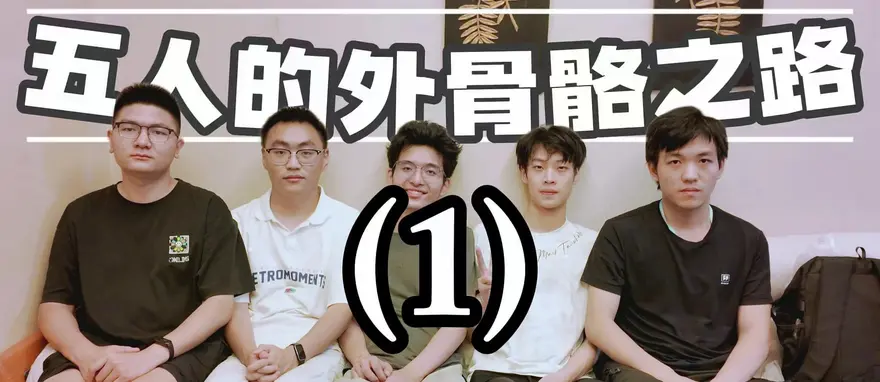
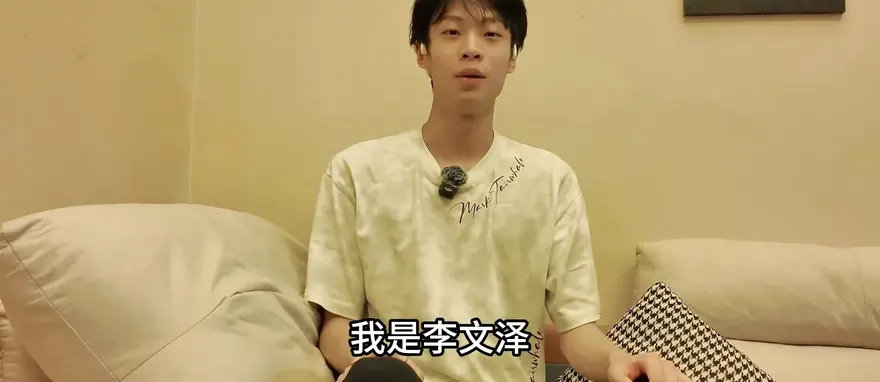
The guest in this forum interview is Li Wenze, the head of Beijing Yuanjidian Technology Co., Ltd., who just turned 18 this year. Yuanjidian’s product line begins with bionic humanoid products and full-body exoskeletons, and it also brings its own integrated joint system combining a motor and sensors. In his view, driving down exoskeleton prices is something his generation should push forward.
“I hope that in the future this market is 3,000 to 4,000, not 7,000 to 8,000.”

"Nothing on the market satisfies me—we should build something different"
Li Wenze came straight to the point: the things currently on the market don’t satisfy him. What they want to build are more compelling products—bionic humanoids—and a self-developed full-body exoskeleton.
When asked about the team’s composition, his answer was very much “go it alone”:
- A mechanical engineer
- An embedded engineer in charge of writing code
- Himself, handling marketing
Five people in total.
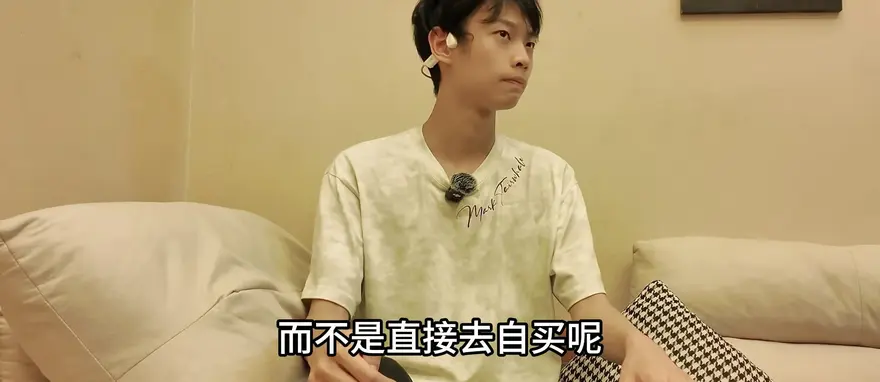
Building exoskeletons with a five-person setup—this lean startup lineup partly explains why they chose the technical path of “first perfecting the joint modules.”

Two Main Lines: exoskeleton and Self-Developed Joint Modules, Future Robot Plans Placed on Hold
Yuan Jidi's current main business lines are now very clear: this year is focused on exoskeleton and self-developed joint modules. As for sales of "robots" further down the road, he indicated that they will not have any practical use within the next year or two, so that priority has been placed further back.


Here is a quote worth standing out as its own paragraph:
"The sales of robots are expected to have no use within the next one to three years." — Mentioned in the video
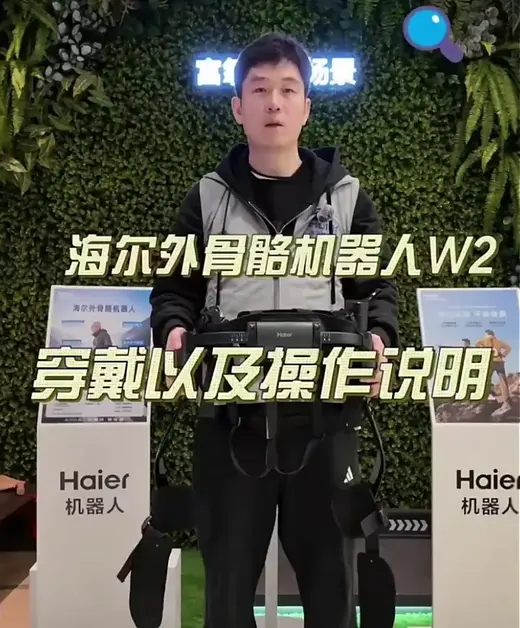
At the event, Li Wenze was equally candid. He noted that brands such as TOREAD, Chengtian, Kenqing, Aoshark, Haier, Yuanye, Hypershell, and Dnsys have already emerged in the exoskeleton industry, meticulously segmenting the market for walking assist and assistive exoskeleton products across tracks like hiking / trekking assist, lower-limb exoskeleton, and joint torque (joint torque). He, however, has chosen a route starting from upstream core components.

Why Develop Our Own Joints Instead of Using Off-the-Shelf Ones?
The forum moderator pressed: Why not directly outsource the motors instead of developing our own joint modules?
Li Wenze's answer boils down to three points:
- Compatibility: Self-developed joint modules can be perfectly adapted to the dimensions of our own exoskeleton models.
- Price: It allows us to achieve a lower price.
- Supply Chain Security: We do not want to rely on third-party motors for our products, risking being "choked" if they cut off supply.
"This is a crucial element, which is why I say we must develop it in-house. It is a foundational core barrier," mentioned in the video.

This represents a highly typical startup logic in the exoskeleton industry: the joint module—comprising sensors (IMU / pressure sensor), servo motor (servo / brushless motor), reducers, and control systems—accounts for the bulk of the complete unit's cost. By keeping control of the upstream supply chain, we ensure that pricing and product iteration remain unconstrained.


The Biggest Obstacle on the In-House Development Road: Bus Protocols
The biggest hurdle that kept their team burning the midnight oil during the in-house development process was the bus protocol. This term sounds highly engineering-focused, but in a multi-joint exoskeleton, it directly dictates stability.
"The bus protocol is incredibly complex. Take EtherCAT or FDCAN, for example—operating at a full 5-megabit rate. Currently, ordinary setups mostly use 2.0-rate CAN, but we want a 5-megabit, fully utilized CAN / FDCAN."—Mentioned in the video
He specifically pointed out that the EtherCAT bus is highly complex and requires connection through a wiring harness, which forced the team to work overtime to tackle these challenges. In contrast, solutions commonly used by consumer-grade exoskeletons on the market often employ slower, simpler CAN communication. However, for him, a bus that eliminates joint soreness and offers high real-time performance is the watershed moment for future product experiences.

The most fascinating aspect of this section is that a startup team did not play down the difficulties, choosing instead to admit that they were pushed to burn the midnight oil by bus protocols—and that is more valuable than any marketing rhetoric.
Already Recruiting Talent at the World Robot Conference, and Also Securing Clients for "Brain-Driven" Tech
At the latest World Robot Conference, Yuanji Dian showcased this self-developed key module.

Inquiries from on-site visitors were constant, and truly qualified clients actually showed up. Li Wenze recalled:
"At that time, someone told me they were very interested in our key module. They work on brains [brain-computer interfaces] and need to 'remove muscles' to drive their robots, so they found me, added me on WeChat, and we started communicating." — Mentioned in the video
The subtext here is that the value of the joint module extends beyond proprietary complete devices; it could become a "modular capability" sold to other teams requiring muscle-like drive. A second possibility for the business model of an exoskeleton startup has emerged here: manufacturing joints upstream and complete devices downstream—walking on two legs.
Product Progress: The Exoskeleton is "Just Waiting on Mold Opening"
As for the exoskeleton unit itself, Li Wenze's progress report was quite clear:
"Our exoskeleton is currently just waiting on mold opening. The current code and algorithms are already quite refined; we just need to tweak them slightly before we can move to mass production." — Mentioned in the video
To give the audience a more intuitive sense of the current stage, Li Wenze demonstrated the prototype debugging work taking place on-site. Currently, the structural components of the complete machine are undergoing CNC machining at CNM. Although final injection molding (mold opening) has not yet been performed, the core mechanical framework and code algorithms are already integrated.
He further explained that progress currently focuses on two core stages:
- Mold opening for the main structural components;
- Mold opening for parts in the sensor positions;
Once mold opening is completed, the product can go on sale.
Redefining the consumer-grade exoskeleton with a price under 4,000
Regarding the pricing, which is of utmost concern to everyone, Li Wenze gave a budget ceiling:
"The price won't be too high, probably just within 4,000 RMB."
His target price range is explicitly set between 3,000 to 4,000 RMB, positioning it against current mainstream products on the market selling for 7,000 to 8,000 RMB. He described this as "redefining the category," stating that "three to four thousand" is a price point that makes it affordable for more people.
Even the launch channels have been planned out in advance:
"First, we need to obtain national standard certifications and qualifications... Once the qualifications are secured, we can list the product. If the price is low enough, we'll list it on Taobao; secondly, we will sell through our own social media accounts."— Mentioned in the video
This passage actually reveals a significant signal: the device won't just be sold to the geek circle. The combination of Taobao and social media indicates that it is aiming for the mass, consumer-grade market.
For the Elderly: Safety Comes First, GPS + Voice Assistant + Emergency Alerts
In the roadmap of future upgrades, Li Wenze puts “safety” in the highest position. For older users, the primary issue of an exoskeleton is safety, rather than how much joint torque it can generate.
He proposes three directions:
- GPS positioning;
- Voice assistant: because elderly users may not remember “what a single tap does,” voice interaction is the most essential;
- Emergency call function + children receive information via an app.
“For the intelligence of an exoskeleton, and when it comes to elderly customers, a voice assistant is very necessary. We will consider a voice assistant, GPS positioning, or an emergency call function to ensure the safety of the elderly.” — Mentioned in the video
He also adds a sharp perspective: for adult children who are often away, receiving relevant information about their parents at home via an app is a very valuable selling point.
It is worth noting that, in walking assist scenarios for the elderly, fall protection and self-balancing (fall protection / self-balancing) are high-end features that such products cannot avoid. This differs from medical-grade rehabilitation exoskeletons (rehabilitation exoskeleton), which typically face stricter certification and clinical data requirements; Yuanji Dian leans toward a route closer to consumer electronics.
Yet this path is not without thresholds. He admits that subsequent intelligent features will be led by himself, but his standards are strict:
“First, it must be safe; second, it cannot misinterpret what I say—if one word causes a misjudgment, leading to casualties, that would be very bad.” — Mentioned in the video
For exoskeleton products, a prerequisite for purchase is passing national standards certification and qualifications, which also underscores that safety is the lifeline.
Industry View: Being the Disruptive "Catfish"
The question the host threw out at the end was very pointed: If, after driving down the price, everyone starts a price war, where is your moat?
Li Wenze's answer carried the posture of one "willing to be a pawn for the industry": his vision is to make exoskeletons cheaper. If more manufacturers are willing to do so, it means his intention has been achieved.
"You can understand it this way: I am a new pioneer, a living catfish dropped into a shoal of fish to stir things up, forcing everyone to lower their prices to serve a wider audience. That's the general idea." —Mentioned in the video
He reiterated his stance once more:
"I hope that technology serves the people and serves more people."
In other words, he does not view a "price war" as a negative; instead, he sees proactively slashing prices as a way to push the industry forward. In today's exoskeleton market, this stance is actually a bit provocative, but it is also the most distinctive hallmark of such young entrepreneurial teams.
An Opening for In-Person Experience: Zhongguancun, Beijing
Audiences eager to get an early in-person experience now have a clear path to follow:
- Visiting Zhongguancun, the headquarters of Yuanjidiante Company;
- Following this, a large group of trial users will also be invited for hands-on experiences.
The show also announced on-site during this segment that they will collect data from these trial users to gather feedback. It is clear that the consumer-grade exoskeleton track is moving from launch events to laboratories, and now, into the homes of everyday people.
Top Community Comments
@ArcherSchedule: [Eating melon]
This is the classic "wait and see" attitude—viewers don't care how beautiful your specs are; they only care if the price can actually be brought down.
@Exoartisans: If you are interested, you can go check out @Yuanqidian Tech.
The comment section being "orchestrated" for traffic by the brand indicates that accounts with self-developed joint modules have already locked onto the exoskeleton hype, hoping to fish for clues on technological upgrades.
@LittleLiver0v0: Looking forward to the interviews with the other big shots! [Cheer] [Star eyes]
The audience is very interested in the narrative of "young people building exoskeletons," which also suggests that these longitudinal interviews have the potential to become a series.
@CyberBuyer: If this can be mass-produced under 4,000 RMB, I am willing to be one of the first guinea pigs, but the premise is that the sensor scheme doesn't get downgraded.
This comment reflects a psychological threshold for users: when buying consumer-grade exoskeletons, they fear cheap plastic builds and "stripped-down" sensors more than high prices.
@HardcoreOldZhang: Self-developed joint modules remind me of the early days of DJI, when they also focused on motors and electronic speed controllers first.
Veterans look at "supply chain autonomy." Comparing this to DJI's historical motor strategy is a very high-level recognition for Yuanjidian.
@ZhongguancunBrotherZhang: Can rehabilitation exoskeletons for the elderly integrate fall protection as a gimmick? Don't let it be another "intelligence tax."
Ordinary users are naturally wary of the "intelligence tax" regarding elderly products. They expect hard requirements like fall protection and emergency SOS to become hard metrics, rather than just marketing talk.
@GeekOldWang: There are so many people making exoskeletons, but he is the first one brave enough to publicly say, "I want to be the catfish."
Turning a business strategy into an industry manifesto is a very aggressive expression for young people.
@MasterOfDebate: An 18-year-old founder + a price under 4,000 RMB; with this config, I suggest looking at elderly fall protection and rated max payload before hyping it up.
A calm voice of skepticism: The price is a selling point, but the threshold for exoskeletons is safety, fall protection, and joint torque — not just the price.
@ElderlyObserver: When making products for the elderly, voice and emergency calls are bonus points, but how about fall protection for the elderly?
This point hits the deep technical waters directly—compared to self-balancing and fall protection for the knee and ankle joints, a voice assistant is more like an appetizer.
One-Sentence Summary
The positioning of this episode is “the first shot in the price war of consumer-grade exoskeletons.” Yuanjidian dares to sell at the 3000–4000 yuan price bracket, self-develops joint modules, and tackles the bus protocol. Essentially it is leveraging supply chain influence to punch through the traditional price tiers of exoskeletons. Who is this for? People watching the exoskeleton industry—to see how a post-00s founder tries to take the hill of “price” and “in-house R&D.” Players who want to buy a consumer-grade exoskeleton—use the product’s progress (just before molding) to plan your schedule.