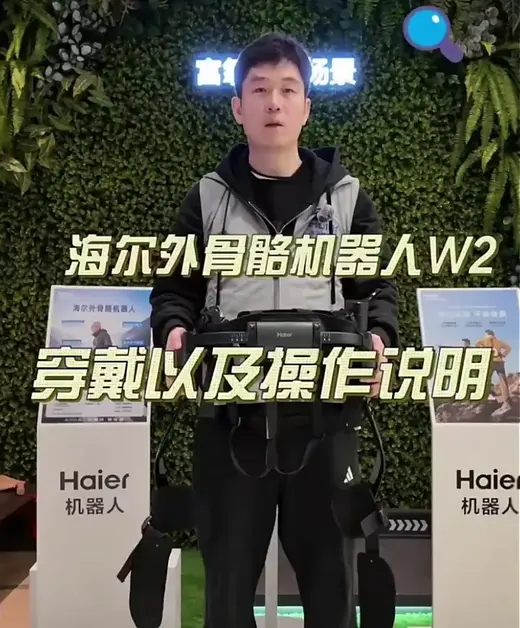
45% Uphill Assist, 60% Downhill Impact Reduction: Hands-On Test of the Yuan Ye Power Knee Knee-Joint Exoskeleton — Give Your Knees a Buff Before Taking Mom and Dad Out for the National Day Holiday
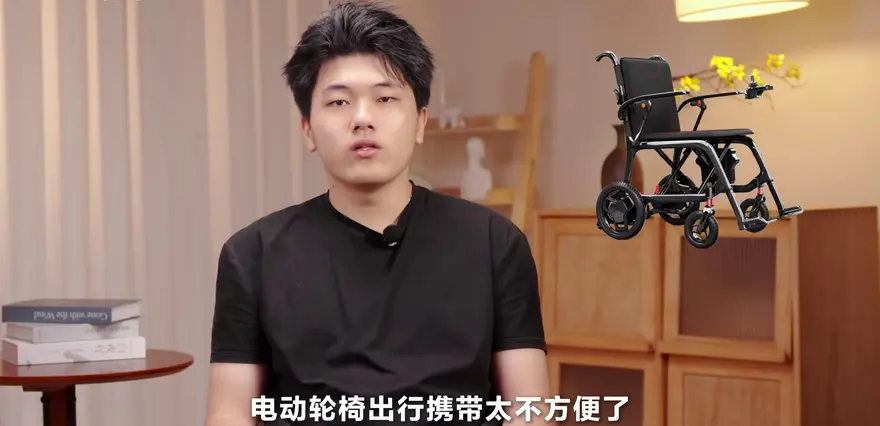
Each year as the National Day holiday approaches, I find myself caught in the same dilemma: a rare long break makes me want to take my parents out for a trip, yet I worry that prolonged walking and climbing up and down stairs will exhaust them and wear them out on the road. To solve this problem, I searched through trekking poles, knee braces, and even electric wheelchairs — but the first two can only "protect" without "unloading," and the latter is far too inconvenient for travel, so I crossed it off my list early on. That is, until I discovered Yuan Ye Technology's Power Knee knee-joint exoskeleton: is it just an overhyped gimmick or a genuine game-changer? I decided to skip the spec sheet and bring along my colleague's elderly parents for a real-world test, simulating authentic National Day travel scenarios.
1. The Pain Point: What Blocks Family Trips Isn't the Flight Ticket, It's the Stairs
This episode's hands-on test started from one honest truth:
"80% of the misery during National Day trips comes from uphill climbs and stairs." (mentioned in the video)
Trekking poles and knee braces offer protection, but they don't actually reduce the pressure on your knees; electric wheelchairs are inconvenient to take on the road. So I turned my attention to a category that's been gradually entering the mainstream in recent years—consumer-grade exoskeletons.
Let me clarify a concept first: consumer-grade exoskeletons and the rehabilitation exoskeletons used in hospitals are not the same thing. Rehabilitation exoskeletons are mostly medical-grade devices designed for rehabilitation training scenarios; consumer-grade assistive exoskeletons like Power Knee target healthy or mildly mobility-impaired people, with the core value of "uphill assist, downhill cushioning, and everyday effort-saving."
To verify whether it's a "true wonder," I didn't just stare at spec sheets—I brought in a colleague's elder relative, an uncle whose knees had already started "sounding the alarm," for a full-day simulated test in the park.
II. First Impressions & Donning: Nylon + Aluminum Alloy, Three Minutes to Wear
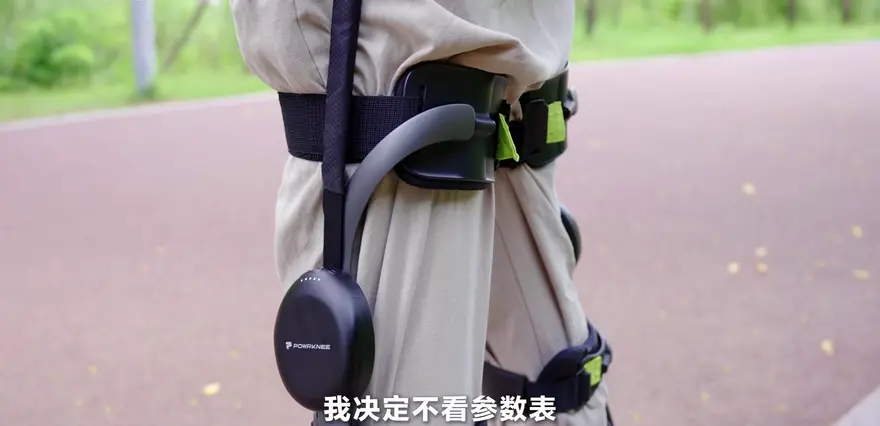
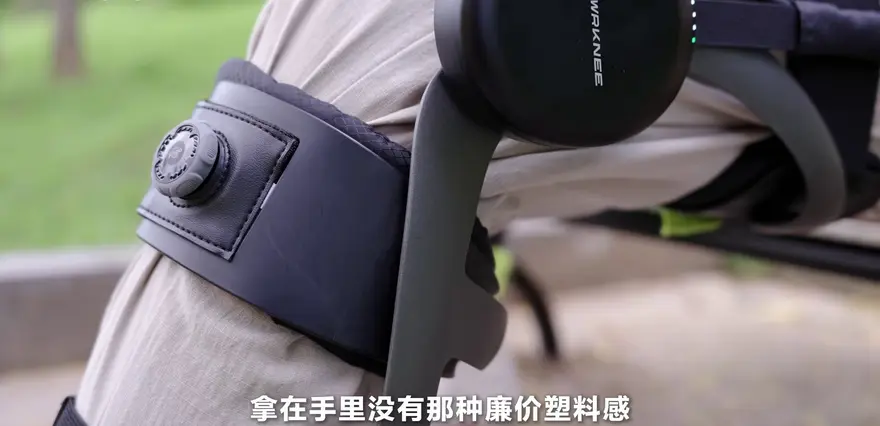
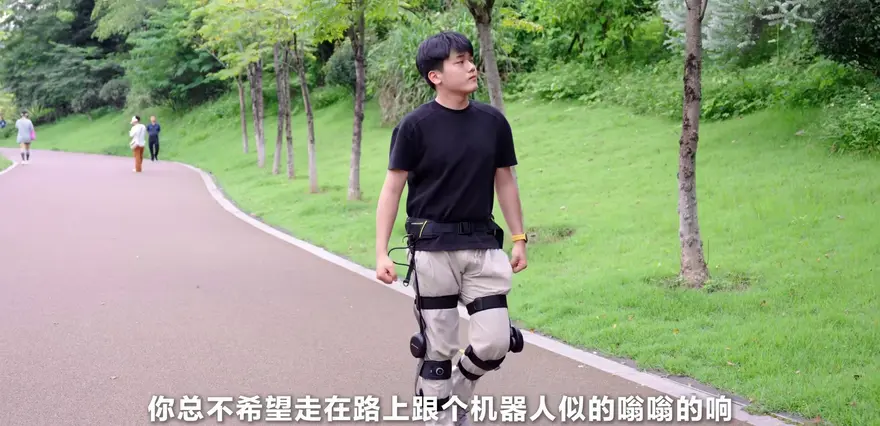
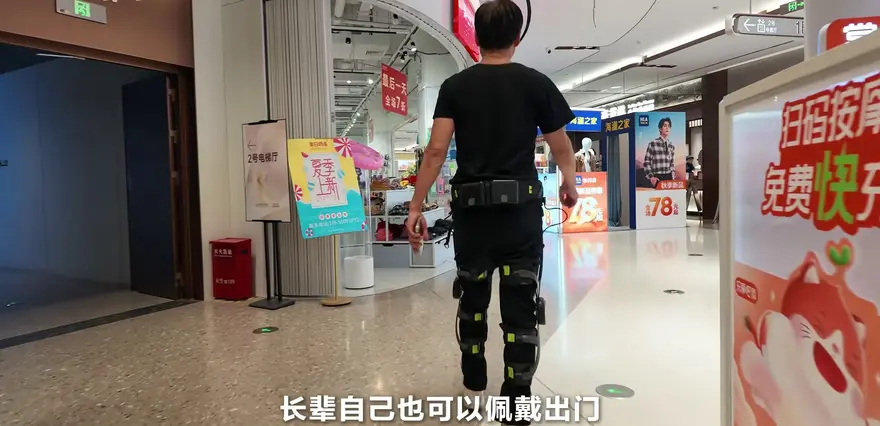
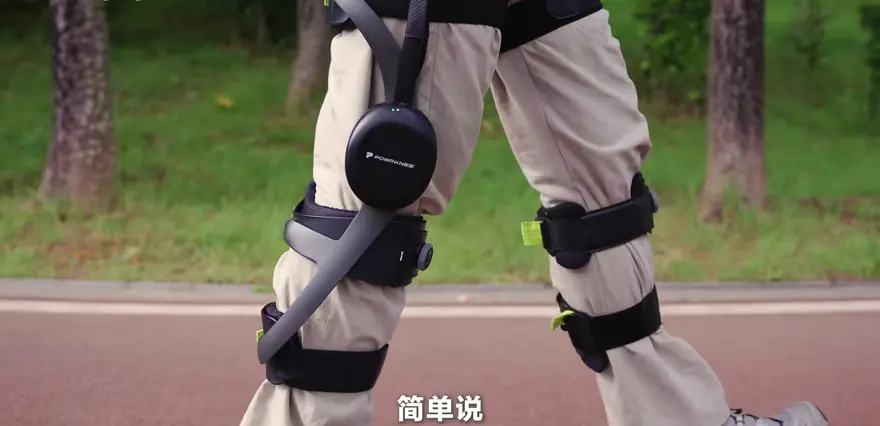
Let's start with the first impression. The entire Pro version consists of two leg components, a waist belt, and a battery, made from nylon + aluminum alloy materials. It doesn't feel like cheap plastic in hand, and the workmanship at the joints is quite solid.
The entire Pro version: two leg components + waist belt + battery, nylon + aluminum alloy materials (mentioned in the video).
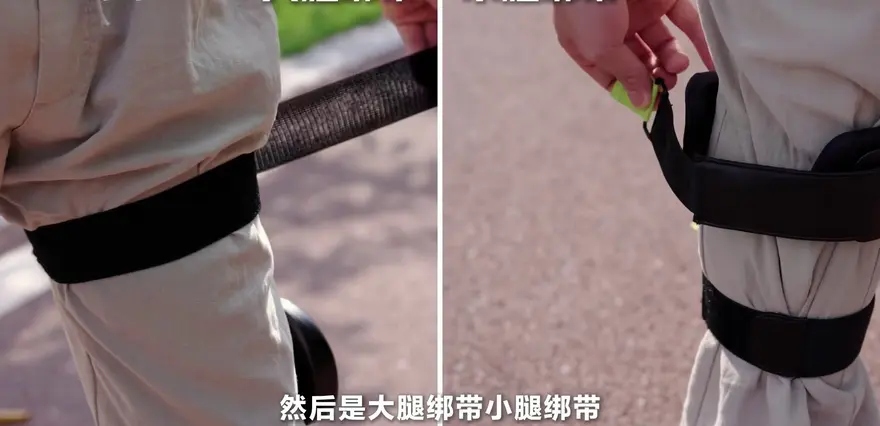
Donning is simpler than I imagined: first secure the waist belt, then the thigh straps. Three positions, one click and tighten, less than three minutes start to finish.
Donning process: "Three positions, one click and tighten, less than three minutes start to finish." (mentioned in the video)
After putting it on and activating the assist, you stop feeling its weight after walking for a bit. My uncle's actual verdict: more comfortable than a knee brace.
My take: for elderly users, the barrier to donning matters more than any spec. If they can't put it on, put it on correctly, or wear it comfortably, no matter how strong the assist, it counts for zero. The three-minute wear time means seniors can don it themselves and head out independently — this is the prerequisite for a consumer-grade exoskeleton to truly "be used."
3. Interaction & Intelligence: Independent Gear Shifting for Each Leg, a Single Power Button for the Entire Trip
A few design details deserve special mention.
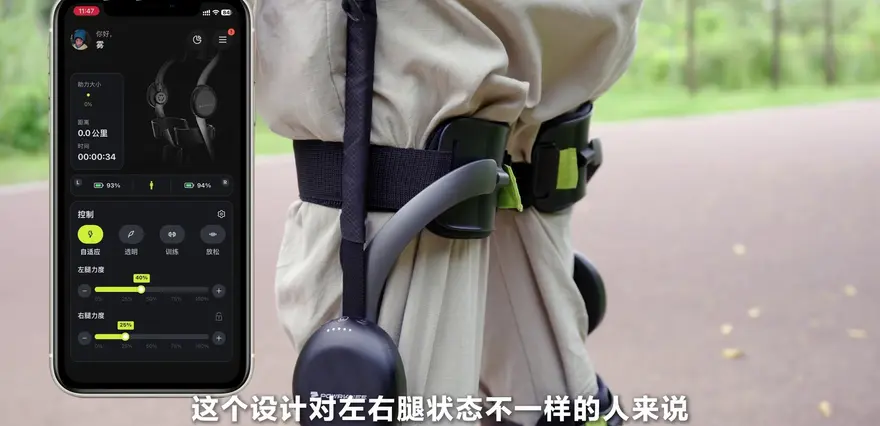
First, the left and right legs can be adjusted to independent assist gears. This is incredibly practical for users whose legs are in different conditions (such as an old knee injury on one side, or weaker muscle strength on one side) — it's not a one-size-fits-all kind of assist.
Second, quiet. After power-on, the motor runs almost silently — you can barely hear it, and walking outdoors feels completely unobtrusive. You don't want to buzz like a robot while strolling down the street — and that matters a great deal for everyday use.
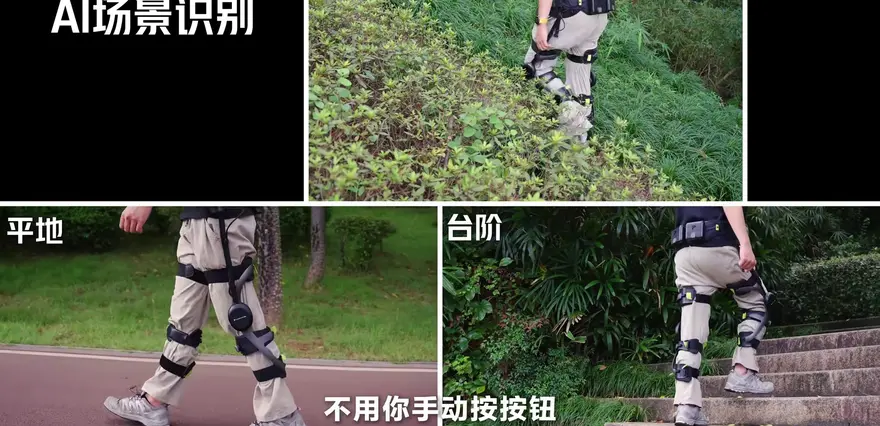
Third, and what I consider the most critical: AI scene recognition. On uphill slopes, flat ground, and stairs, the device automatically switches its assist strategy — no manual button pressing required. Relying on the sensors built into the body for AI motion prediction, the elder only pressed a single power button the entire time, leaving everything else to the device's own judgment.
The Pro version runs at an 800Hz control frequency with millisecond-level response — "Simply put, it knows your next step before your legs do." (mentioned in the video)
This is hugely meaningful for elders: they generally struggle with electronic products, and "zero learning cost" means it not only dramatically lowers the barrier to travel for seniors, but also makes everyday outings like grocery shopping or a stroll in the park effortlessly manageable.
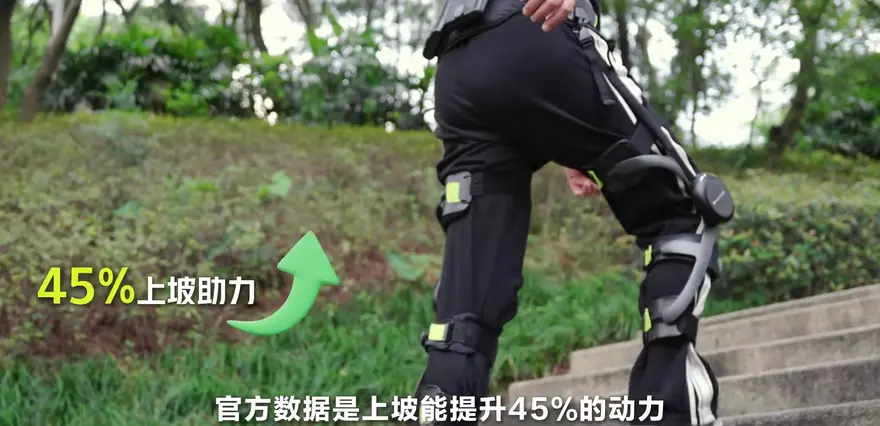
IV. Uphill Field Test: Official 45% Power Boost, Feels Like "Someone Pushing You From Behind"
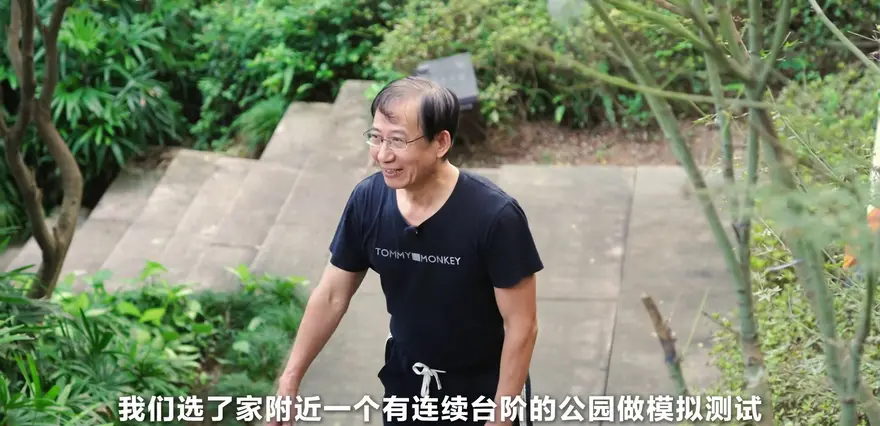
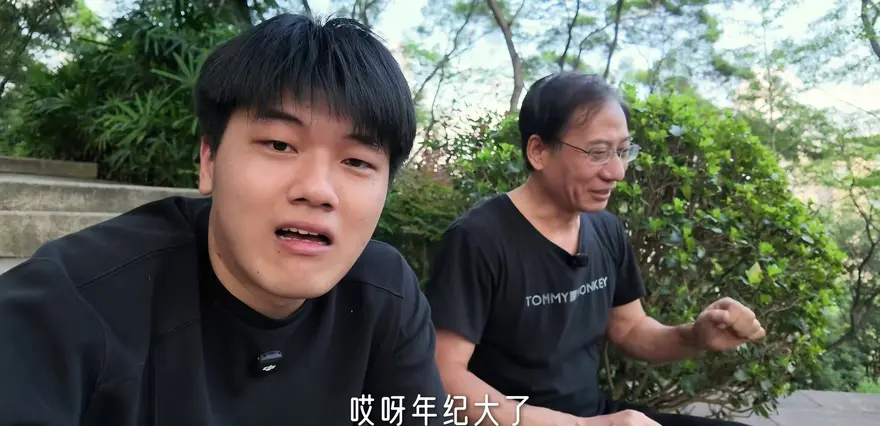
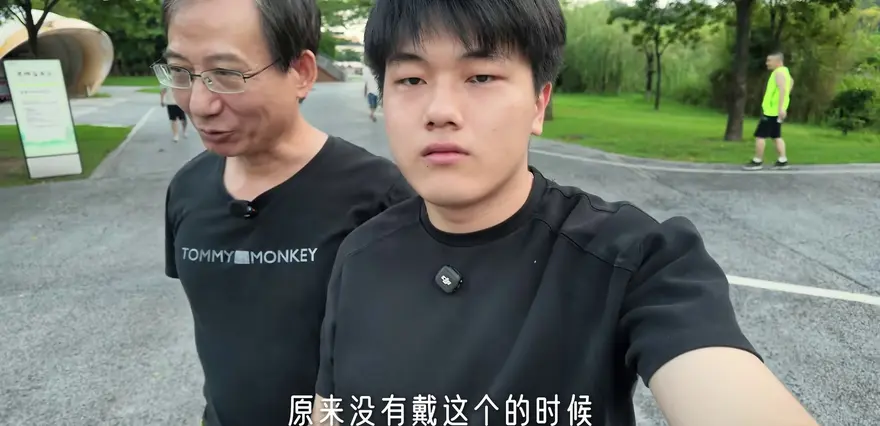
We picked a park near home with a continuous flight of stairs for our simulated test. First, we had our uncle climb a stretch without the device: by the time he reached the top, he was holding his left knee, legs aching again — "At my age, my legs aren't as nimble; just a few steps and they start aching."
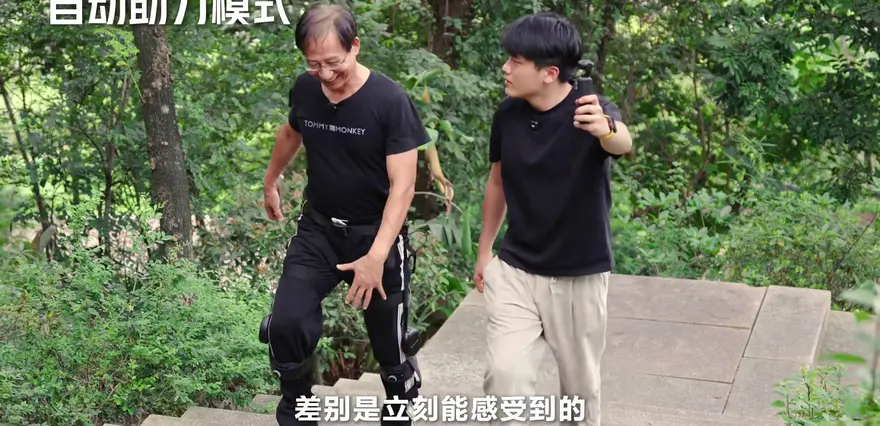
After a 10-minute rest, he put on the Power Knee, switched to automatic assist mode, and climbed the same stretch of stairs. The difference was immediately noticeable.
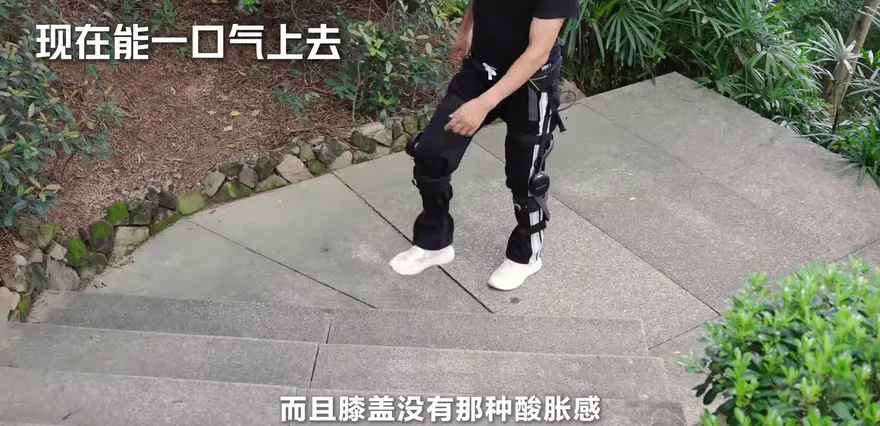
Uphill assist: Official data shows a 45% power boost (mentioned in the video). The author couldn't precisely replicate this percentage in the park, but the perceived effect is credible: the same stretch of stairs that usually requires a mid-way rest stop could now be climbed in one go, with no soreness or swelling in the knee.
Uncle's description was vivid: "When climbing up, it felt like someone pushed me from behind. Not a stiff yank — it follows the rhythm of your effort, delivering assist right as you step onto the stair. It's well-timed with your footwork, very comfortable."
My take: The "sense of timing" of the assist matters more than its "force." Whether 45% is impressive depends on whether the device can deliver force at the exact moment your foot pushes off — and that's exactly the value of the 800Hz control frequency + AI motion prediction. Deliver the force too late, and it becomes a "sluggish drag"; deliver it on time, and it becomes a "push from behind."

5. Downhill Buffering: A More Valuable Feature Than Uphill Assist
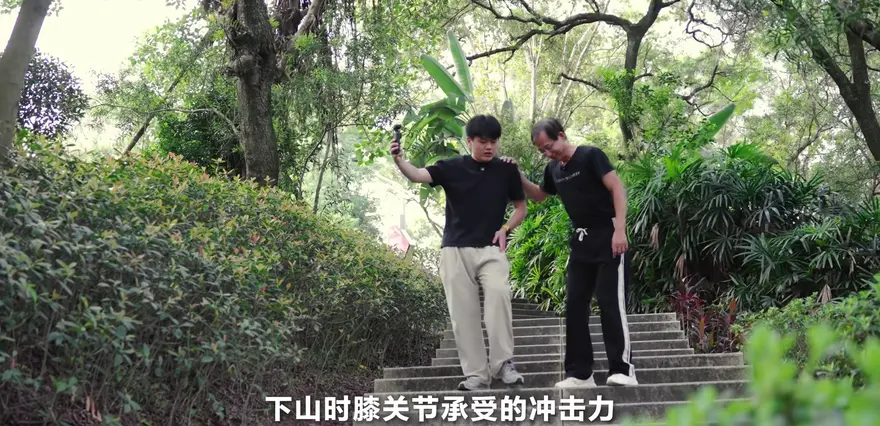
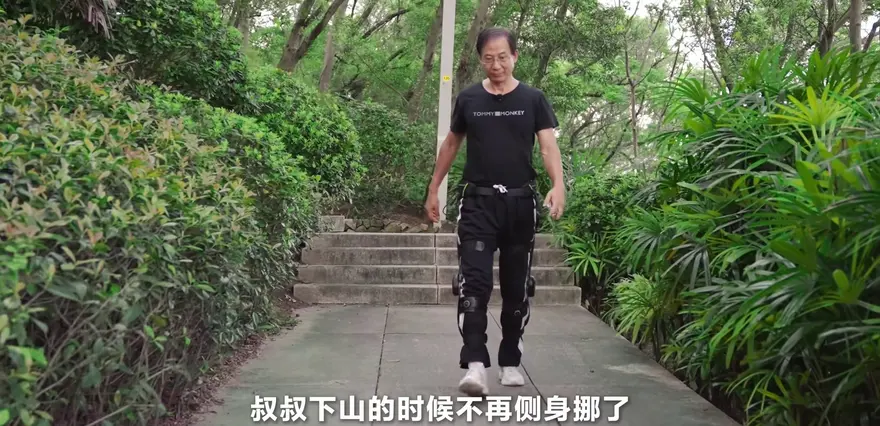
During testing, I noticed my uncle has a habitual movement when descending: he turns sideways and shuffles down step by step. What many people don't realize is that downhill is actually harder on the knees than uphill.
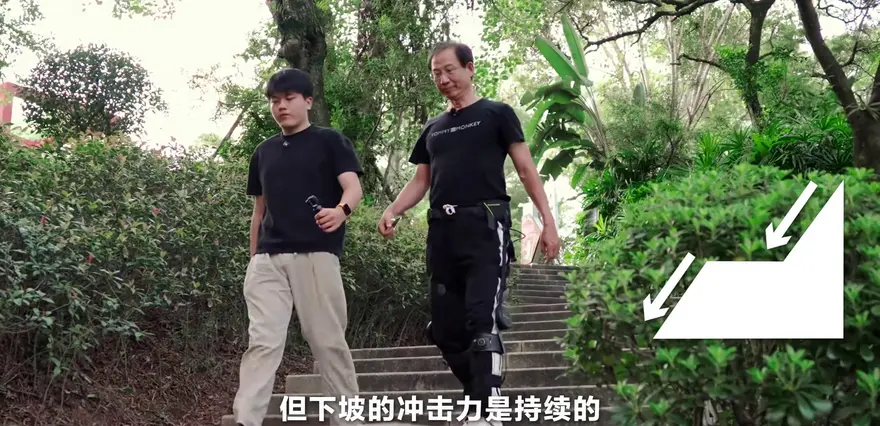
When descending, the impact force on the knee joint can reach 6–7 times body weight. That's exactly how the meniscus and cartilage get worn down, step by step. (Mentioned in the video)
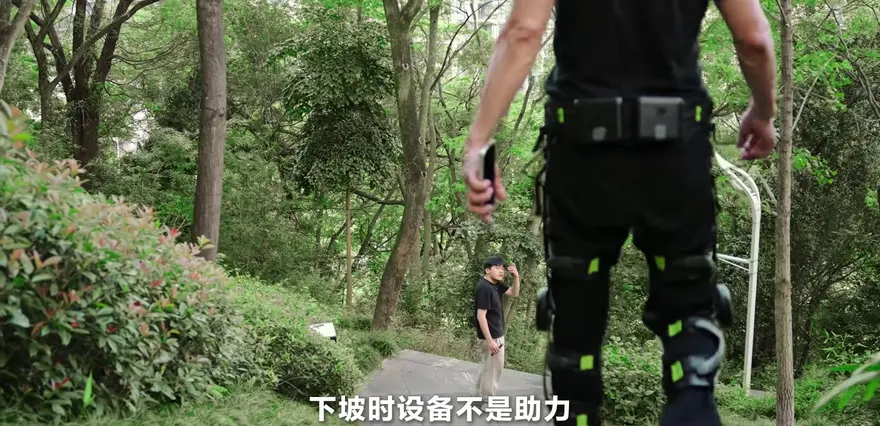
Wearing the Power Knee on the descent, the test results were even more pronounced than on the uphill. On downhill, the device isn't doing assist—it's doing buffering: the moment your leg bends and lands, it delivers a reverse supportive force that "catches" the impact.
Downhill buffering: official data shows a 60% reduction in impact (mentioned in the video). This figure is credible in terms of feel—my uncle no longer shuffles sideways on the descent, and his gait coming down the slope returned to normal.
My view, and the judgment I'm most convinced by in this entire hands-on test: for the elderly, downhill buffering is actually more important than uphill assist. On the uphill, at worst you just walk slower and rest more, but on the downhill the impact force is continuous—every single step is wearing down the joints. On National Day trips to mountain areas and scenic spots, this scenario is something you face every day—and the value of Power Knee in this scenario is the most tangible of all.
VI. Flat Terrain & Battery Life: 32% Energy Reduction, 5 Hours of Runtime — Enough for a Full Day at the Scenic Spot
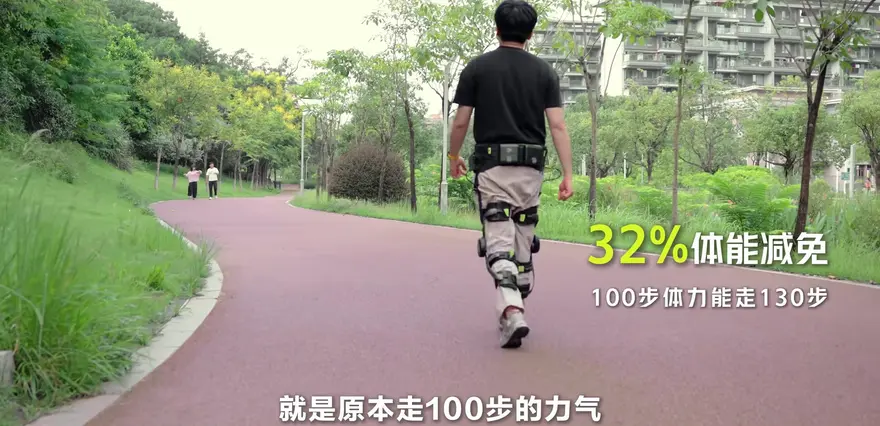
Another pain point of National Day trips: after walking on flat ground all day, by afternoon your legs feel like lead. We ran a two-hour fast-walking test on flat terrain.
Flat-terrain gait energy expenditure reduced by 32% (Pro version, official data, mentioned in the video) — "The effort it used to take to walk 100 steps now gets you roughly 130 steps."
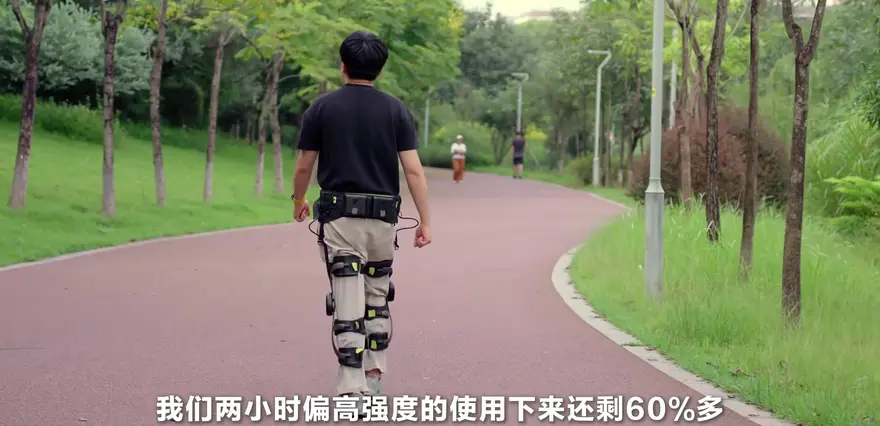
2900mAh battery; Pro version official runtime is 5 hours or 32 km; in real-world testing, after 2 hours of relatively high-intensity use, over 60% remained (mentioned in the video). Comfortably enough for a full day exploring a scenic spot during the National Day holiday.
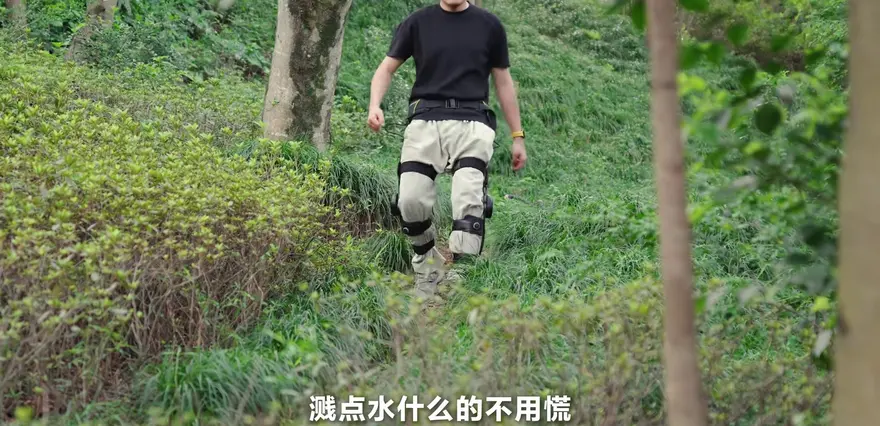
Fast charging fills it up in under 90 minutes; IP54 protection rating (mentioned in the video), so a little rain or splashes are nothing to worry about — sufficient for everyday outdoor scenarios.
My take: the rated 5-hour / 32 km runtime paired with 90-minute fast charging is adequate for a "day trip"; but if you're planning a two-day trek or a multi-day itinerary, you'll want to plan ahead for a spare battery or a mid-route top-up strategy. IP54 sits at "adequate but not impressive" — splash-resistant, sure, but don't expect to wade across a river wearing it.

7. Easily Overlooked Details: Sit-to-Stand Assist and Massage Mode
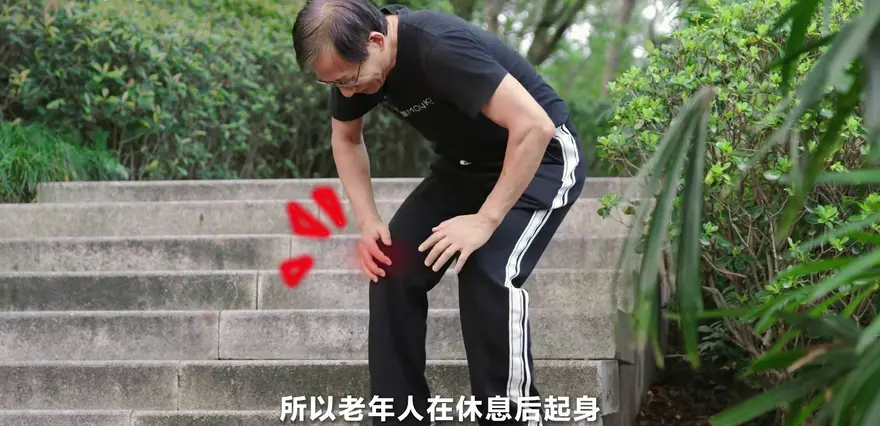
There is another easily overlooked action — yet one of the most painful for seniors: standing up after sitting down. The moment the knees engage to rise, pain shoots through them, which is why many older adults try to stand "in one go" after resting — because if they fail to get up, they have to endure that pain all over again. Think about it: on a full day out during the National Day holiday, how many times do you sit down and stand back up?
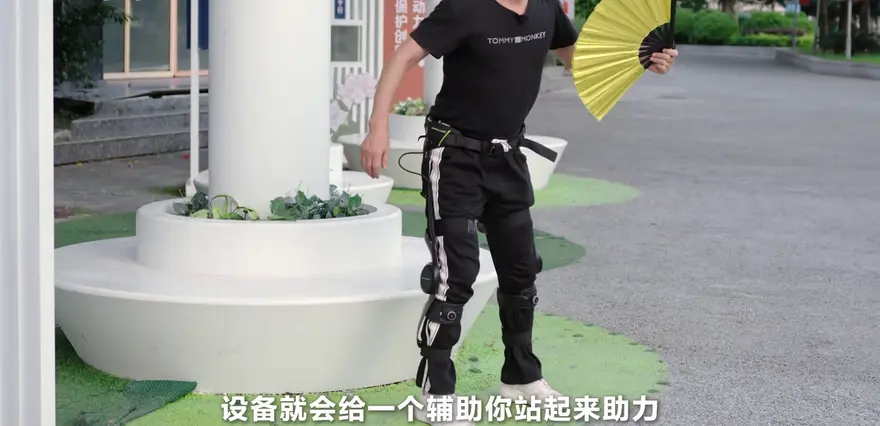
When wearing Power Knee, simply tapping the side twice triggers an assistive push to help you stand — no extra buttons to press. This feature seems unremarkable, but for elders with limited leg mobility, it is a function they rely on several times every day.
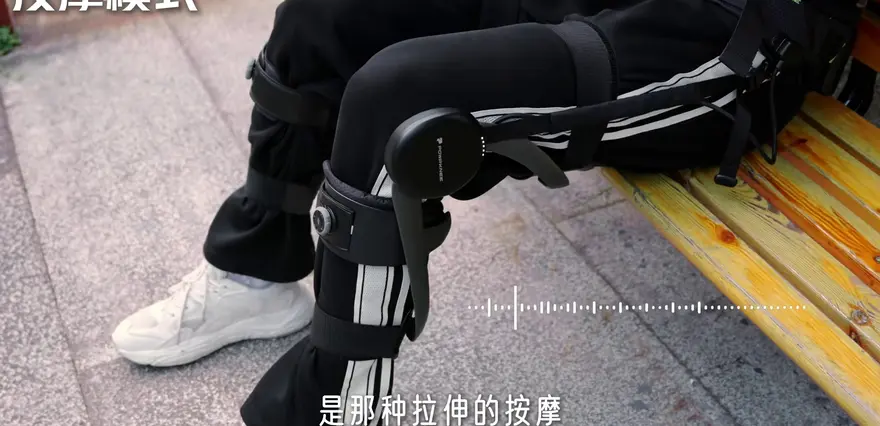
After walking until you're tired and stopping to rest, Power Knee also offers a massage mode: the motor drives the knee joint through flexion and extension movements, creating a sensation similar to passive stretching — not the vibrating type of massage. My uncle's feedback: "This massage feels really comfortable — it's a stretching kind of massage, like it's stretching the muscles in my leg. My legs don't feel as swollen or sore afterward."
My take: Sit-to-stand assist and massage mode are exactly the kind of features that are inconspicuous on a spec sheet but used at high frequency in real life. The gap between a genuine consumer-grade exoskeleton and the "electric knee brace" type of products that merely ride the buzzword often hides in these details.

VIII. Opinion: The Tipping Point of Consumer-Grade Exoskeletons, and the Questions Still Left Unanswered
After a full day of testing, let's return to the question from the start: taking your parents on a National Day trip — can their knees hold up? I think Power Knee offers one option.
"It can't turn your parents back into 20-year-olds, but it lets them climb stairs without gripping the handrail, descend the mountain without shuffling sideways, and makes family outings something other than the young ones playing up ahead while the elderly wait behind." (mentioned in the video)
"The value of some things isn't found in the spec sheet — it's in what your parents say after climbing a flight of stairs: 'Hey, this actually works.'" (mentioned in the video)
Looking across the industry, there's no shortage of companies building exoskeletons in China: Chengtian, Aoshark, and others are more deeply rooted in industrial and rehabilitation scenarios, while brands like Yuanye, Hypershell, and Dnsys are bringing consumer-grade assistive exoskeletons into outdoor and home settings. For this category to truly go mainstream, three hurdles still need to be cleared: price, weight and ease of wearing, and "what happens when the battery runs out."
Price 7999 yuan (mentioned by @Reader in the comments section; the video itself did not quote a price).
Two reminders are also in order. First, the video does not disclose hard specs such as joint torque or overall weight, so before placing an order, I'd recommend an in-person try-on to confirm the weight is acceptable. Second, this is an "assist" tool, not a "treatment" — for elderly whose knees already have structural issues, consult a doctor before purchasing. A consumer-grade exoskeleton is not the same as a medical-grade rehabilitation exoskeleton; don't conflate the expectations of the two.
As I was leaving, I teased my uncle: "Climb another mountain together next holiday?" He waved his hand with a smile: "I'll pass." He declined in words, but that day's step count and his expression didn't lie. National Day is almost here — if you're also torn about whether to take your parents out, maybe try adding a buff to their knees.
Top Community Comments
"TL;DR: 7,999." — @Tianzi-i (45 likes)
Interpretation: A single line that captures the comment section's biggest fixation — price. 7,999 yuan (as mentioned in the comments) is not a trivial sum for "filial-piety spending," which means that, at this stage, the product reads more as "a gift the kids pay for" than a tool seniors would buy for themselves.
"When will this kind of tech that benefits seniors get cheaper? It has to be more affordable before more elderly people will give it a try." — @Qingtian-Shenme-Shihou-Hui-Lai (8 likes)
Interpretation: This captures the core tension in popularizing consumer-grade exoskeletons — the demand is real, but price keeps the very people who need it most locked out. Scale-driven cost reduction → price cuts → demand expansion is the critical loop that determines whether this category can move volume.
"If the battery dies, you still have to haul it off." — @Chen-Ti-Mou-Jian (3 likes)
Interpretation: This flags two concerns the video glosses over: battery-life anxiety and device weight. Once an exoskeleton runs out of power, it can flip from "assist" to "dead weight," which becomes a burden for seniors — exactly why spare batteries / fast-charging solutions and low-weight design matter so much.
"How much does it weigh? Won't older people get tired wearing it all day?" (High-frequency question in the comments, consolidated)
Interpretation: The video mentions "after walking a while you stop feeling the weight," but never gives an actual device-weight figure. For elderly users, weight and center-of-gravity distribution directly determine wearing comfort — essential info to confirm before placing an order.
"Is this the same thing as the rehabilitation exoskeletons in hospitals?" (High-frequency question in the comments, consolidated)
Interpretation: Many viewers conflate consumer-grade assistive exoskeletons with medical-grade rehabilitation exoskeletons. The former is a daily assistive tool; the latter is a medical device — mismatched expectations easily lead to "bought it, useless" negative comments. Category education remains an industry-wide challenge.
"Can the battery be removed? Can you take it on high-speed rail and planes?" (High-frequency question in the comments, consolidated)
Interpretation: The removability and travel-compliance of the 2,900mAh battery (mentioned in the video) directly determine whether the core scenario of "taking Mom and Dad on a cross-province trip" holds up. The official team should spell this out clearly on the product detail page.
One-Sentence Summary
YuanYe Power Knee is a consumer-grade knee-joint exoskeleton that folds "uphill assist, downhill cushioning, and stand-up assistance" into everyday use: it's suited for adult children to buy for parents whose knee strength is declining but who still want to get out and walk — handy for National Day getaways, daily strolls, and grocery runs alike; but the 7999 yuan price (mentioned in the comments) and the nagging concerns over battery life and weight mean it still sits firmly in the "filial-piety premium" stage — whether it's worth it ultimately comes down to that one line Mom or Dad mutters after climbing a flight of stairs: "Hey, this actually works."