Hip Assist in the 10,000-Yuan Tier at Just 2.19kg: Chengtian GoGo HPRO Review — The Medical-grade Exoskeleton Finally Goes Mainstream
Introduction: When exoskeletons are no longer confined to hospitals
Mention exoskeleton, and the image likely popping into your head is an Iron Man-style suit of armor, bulky mechanical legs moving slowly, or that medical device in the hospital rehabilitation department charged by the hour. For a long time, such equipment has cost hundreds of thousands or even millions, creating an invisible wall between it and ordinary households.
```
Many people's first impression is still stuck in hospital rehabilitation equipment; they feel it is far removed from ordinary families, and the price often ranges from tens of thousands to hundreds of thousands.
```


However, domestic manufacturer ChengTian Tech recently placed a "family-friendly" consumer-grade exoskeleton on JD.com shelves—the GoGo HPRO. It focuses on assistive / walking-assist exoskeleton capabilities, pulling the price down to under 10,000 RMB. Viewers have asked in the backend: at the 10,000 RMB price point, is this thing a gimmick or truly useful? Combining our hands-on video experience, we will discuss it across four dimensions: wearing, assistance, safety, and applicable scenarios.
First, Know the Cards: Who Is Chengtian Technology?
Before buying any exoskeleton, check the vendor’s credentials. With consumer products, the biggest risk is a consumer-electronics team cobbles together an exoskeleton—with power and safety thought up on the fly.
Chengtian Technology is not a crossover newcomer. It started with medical-grade rehabilitation exoskeleton development, is a national-level “Little Giant” enterprise recognized for specialization, refinement, differentiation, and innovation, and is one of the drafting teams behind industry standards for exoskeleton robots. The company holds hundreds of independent intellectual property rights (the video mentions 500+), and its devices have accumulated over 3.5 billion steps of safe walking (as cited in the video), serving millions of professional mobility sessions.
```
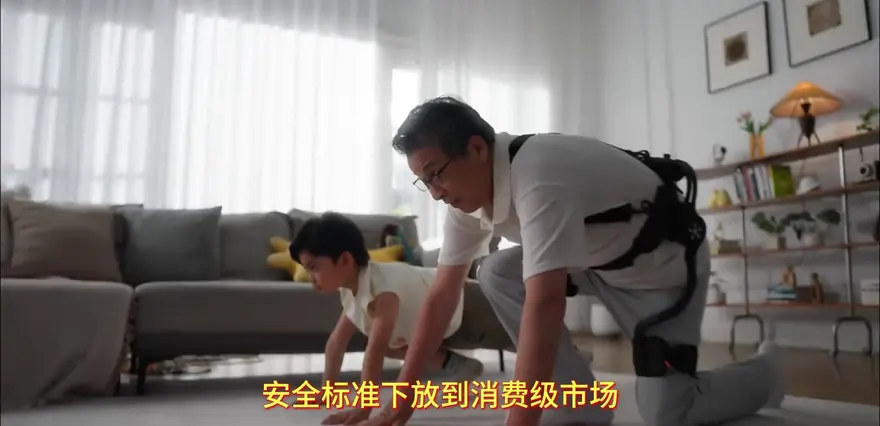
This time, GoGo HPRO brings hospital-grade technology and safety standards into the consumer-grade exoskeleton market.
```
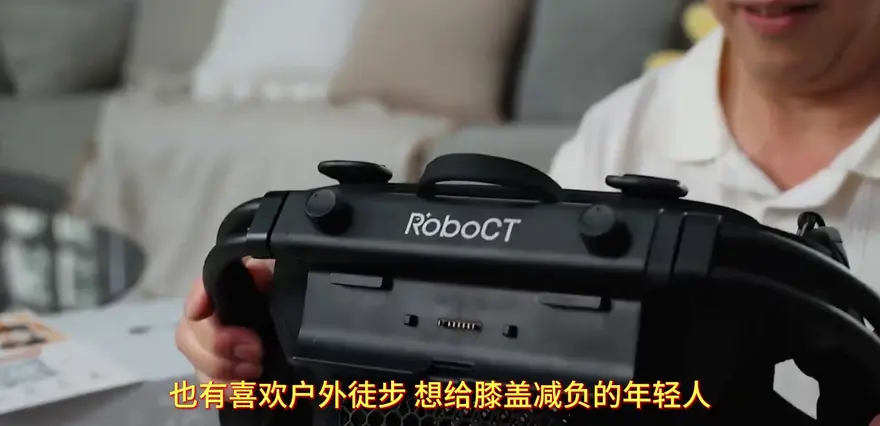

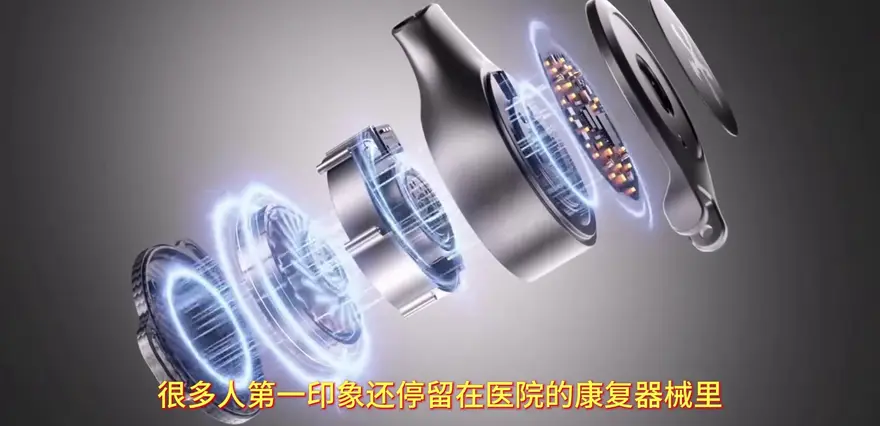
In plain terms: this team isn’t reinventing the basics—they’re taking control logic and safety redundancy already validated in hospitals and packaging it into a consumer product. That step-change advantage is the core moat that sets GoGo HPRO apart from other consumer-grade exoskeletons on the market.
Power and Tuning: Speed and Stability—No Longer a Trade-Off
Anyone who has tried an assistive exoskeleton knows that the biggest pitfall in this category is 'not walking properly'. Either the power is sufficient but the response is slow, dragging you downwards the moment assistance kicks in and leaving you feeling awkwardly hauled along; or the response is fast but the power is weak, making it feel like the walking assist is entirely inactive when tackling an incline or climbing stairs, even disrupting your natural gait and making you more exhausted the further you walk.
GoGo HPRO strikes a highly appealing balance between the two. First, let's look at the hard specs (all as mentioned in the video):
Peak output of 1000W, with a max joint torque of 36N·m.
Millisecond-level response time (the video mentions '1 millisecond'), syncing the assistance instantly the moment you lift your foot.
 )
 )
 )
 )
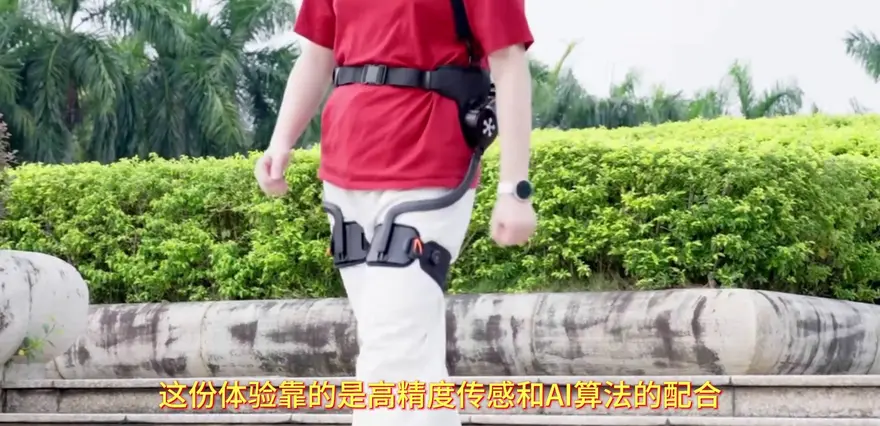
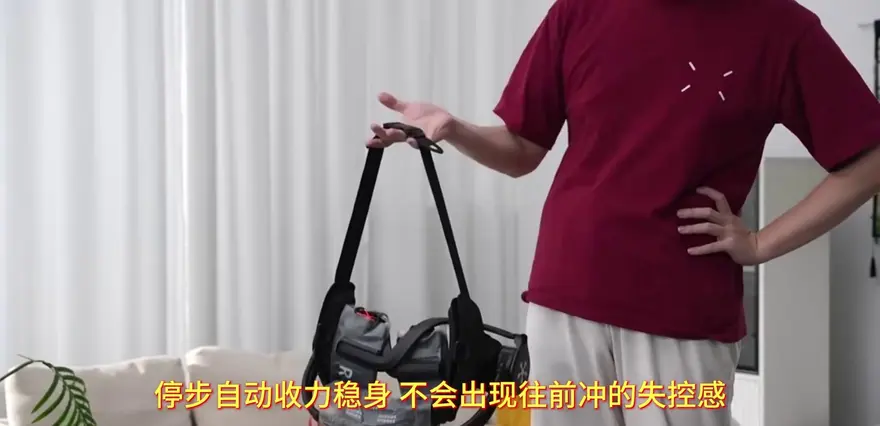
For high-output scenarios like climbing slopes or ascending stairs, the 36N·m of torque reserve is more than enough; meanwhile, the millisecond-level response means you barely feel the algorithm 'thinking', making the walking assist feel as though it grows directly from your muscle memory. The secret lies in the synergy between high-precision sensors (IMU / pressure sensor) and a proprietary gait prediction algorithm—delivering assistance exactly when the foot lifts, and automatically retracting the force to stabilize your posture upon impact, eliminating any out-of-control forward lunging. For older adults experiencing declining leg muscle strength, this kind of 'seamless intervention' is exactly what is most difficult to achieve, yet also exactly what is most needed.
Lightweight & Wearable: Can 2.19kg Legs Be Worn All Day?
No matter how powerful the motor is, an exoskeleton that’s too cumbersome to wear is just dead weight. The historical problem with lower-limb exoskeletons has been bulk—devices weighing a dozen kilograms or more, requiring ten minutes to don for five minutes of use.
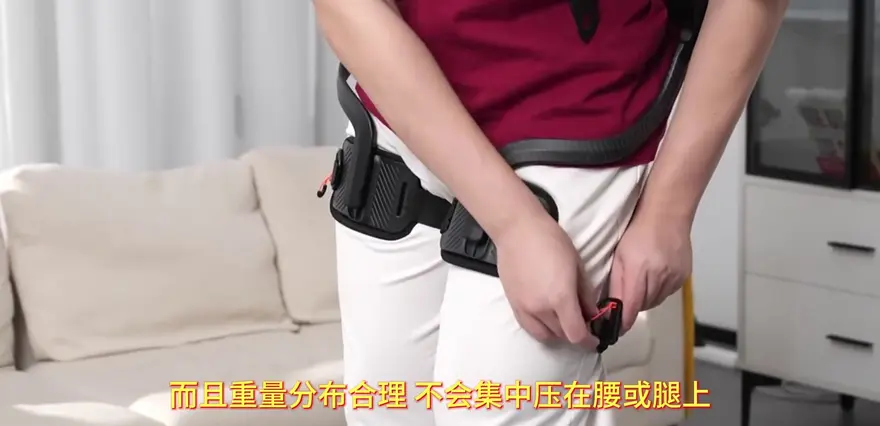
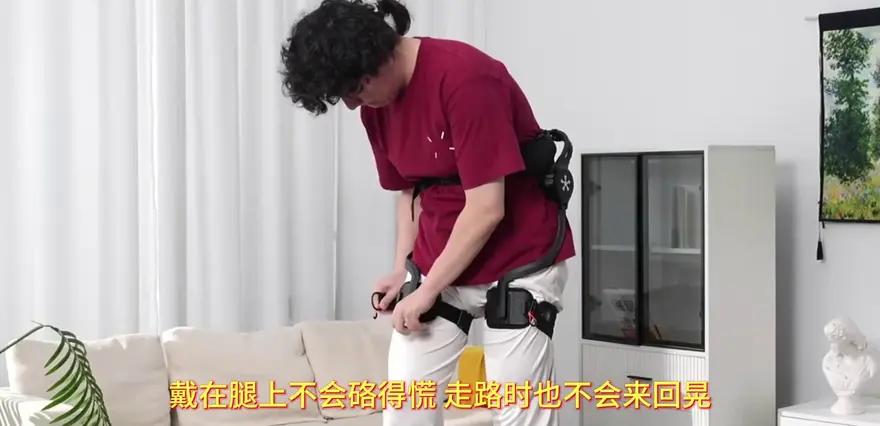
GoGo HPRO introduces a remarkably restrained set of specs: overall weight is 2.19 kg (as noted in the video), placing it in the top tier among consumer-grade exoskeletons with similar power output. The true highlight lies in its weight distribution strategy—rather than concentrating mass at the lumbar / back assist area or a single leg, the system distributes load across zones to deliver a balanced, upper-body-like sensation to the wearer.
```
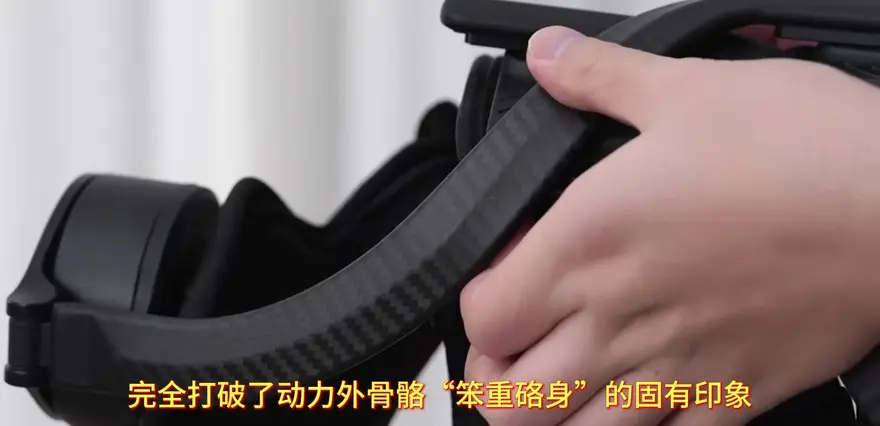
The core leg feel leverages an S-shaped carbon fiber bionic structure, whose curves align with the force dimensions of the human lower limbs.
```



Several details deserve elaboration:
- The adjustable cuffs employ a 3D bionic woven fabric, offering strong support and detachability—even extended summer wear won’t trap excessive sweat.
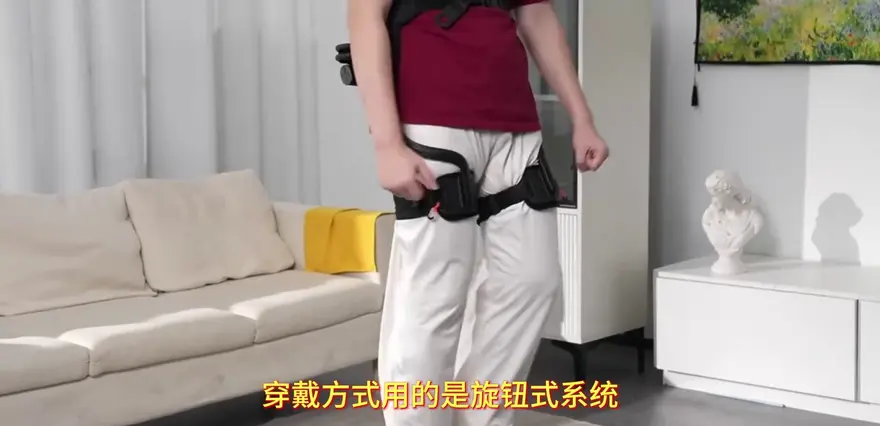
- The donning mechanism features a quick-adjust dial system: one twist conforms to your leg profile, a single pull releases it—making it accessible even for seniors with limited dexterity to operate independently, a factor critical to the target demographic.
- The housing fabric is a professionally outdoor-grade, scratch-resistant matte material; its matte-black finish avoids any “medical device” look, sparing users the psychological burden of conspicuous wear.
The most common pitfall of medical-grade devices isn’t underperformance, but abandonment due to the stigma of illness. GoGo HPRO’s restrained, everyday aesthetic fundamentally challenges that psychological barrier.
Scene Coverage: More Than Just a Device for Pacing Around Flat Ground
Being able to leave the backyard is the watershed moment between a consumer-grade exoskeleton and a medical-grade exoskeleton. GoGo HPRO (mentioned in the video),, auto:.
- Flat walking mode: For casual walking and shopping, it provides consistent follow-along deceleration, focusing on reducing pressure on the knee joint.
- Uphill / stairs: The assist mode automatically switches, delivering a clear boost at the moment you lift your leg. The video explicitly notes there is a noticeable push when pushing off the leg, so you do not need to use all your body strength to step up. For people with weaker knees, this is a direct benefit.
- Downhill: It provides damping to buffer motion, stabilizing the center of gravity so you do not worry about failing to brake.
What truly sets it apart from a piece of fitness equipment are two designs that are friendly to specific user groups.
First, it supports unilateral assist settings. If one leg is weaker—such as after surgery—the assist intensity for that side can be adjusted independently. That means it partially covers capabilities often associated with lower-limb exoskeletons in post-stroke or single-side weakness scenarios.
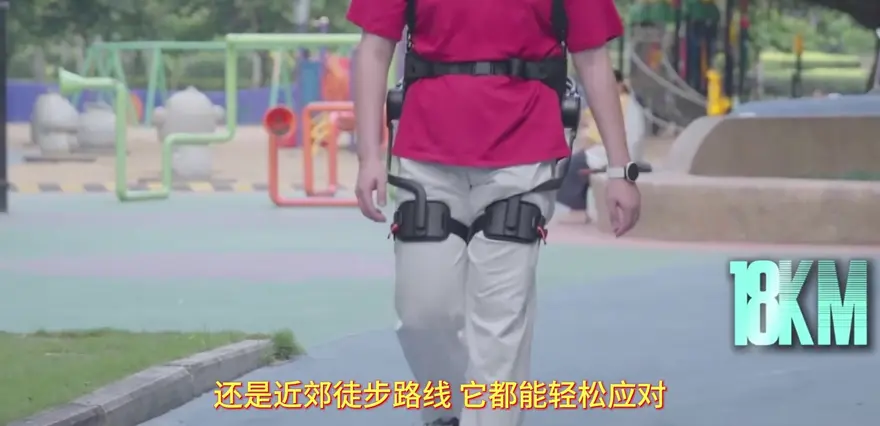
Second, its use-case potential is broad. Stairs in older multi-story neighborhoods, ramped trails in parks, and nearby hiking routes were all demonstrated in the video. For younger users, it is a trekking-focused physical add-on that reduces knee wear. For older users, it is a walking-assist tool that can expand their range of motion and improve quality of life. One device, multiple user groups, and enough real utility to back up the the positioning of being suitable for the whole family—not just as a slogan.
Battery Life and Safety: For Wearable Devices, the Bottom Line Is “Never Put the User at Risk”
An exoskeleton is a powered wearable device that carries the user’s personal safety; in evaluating these products, battery life and safety always rank higher than the flashy specs on the parameter sheet.
```
Combined battery life / runtime of 36 km (the video mentions “over 18 km,” as noted in the original specs).
```




In the pace of everyday walks and short outings, one charge lasts several days—there’s no need to keep it tethered to a charger. For older users whose memory tends to slip, “not having to constantly remember to charge” is itself part of the product design.
The safety side builds in a triple-redundancy architecture:
- An AI algorithm automatically checks proper wearing; if motion exceeds safe limits, protection triggers immediately, and when necessary the motor actively locks.
- A fully sealed, IP54-rated enclosure plus smart BMS power management delivers rainproof, dustproof, and overheat protection.
- A companion app adds connectivity, with one-tap emergency SOS—when seniors head out alone, there are multiple feedback pathways between the caregiver’s side and the device. Together with the earlier-mentioned user-identity detection and gait prediction algorithms, this design is not “just to pass compliance”; it leaves a safety net for the user in the worst-case scenarios.

Four Things to Know in Advance
While highlighting its advantages, the video also points out four things you should think through before purchasing:
- Limited First-Batch Gifts (First 100 Buyers Only). The original battery and portable backpack have significant value. Once this window is missed, they won't be available, so prospective buyers need to time their purchase carefully.
- There are boundaries to the "clever design" of 2.19kg. While its lightweight design leads the industry in power-to-weight ratio, carrying a load for long periods still creates a noticeable physical sensation. It is better suited for short trips and scheduled exercise rather than all-day continuous wear.
- Limited adjustability of the knob-tightened straps. The fit may be compromised for users with very thick or very thin legs. It is important to confirm if the leg circumference range fits you before purchasing—this is a critical shopping detail often overlooked by intermediary channels.
- Scarcity of offline experience points. Most cities lack "try-before-you-buy" options, relying instead on a seven-day no-reason return policy as a safety net. It is recommended to make full use of this policy, especially for elderly users where family members should receive the package, test the device, and decide whether to keep it.




These limitations shouldn't necessarily be considered flaws, but they define the true boundaries of this product: It solves the "5-kilometer journey after leaving home," not "living your life for you."
Overall Review: The Best-Balanced Machine in the Current Consumer-Grade Exoskeleton Market
Returning to the question from the beginning: at the 10,000-yuan tier, is the GoGo HPRO really worth it? Looking at the four dimensions of medical background, power tuning, safety redundancy, and extreme lightweight design, it indeed has no obvious shortcomings in its price segment. It is the best-balanced machine in the current consumer-grade exoskeleton market—dragging traditional medical devices out of the "white zone" and into the realm of "something ordinary people can actually wear out." It is a premium product that perfectly balances professionalism, practicality, and price.
```
It doesn't just aim for a passing grade to re-teach the elderly how to walk, but rather makes the things they are already able to do a little bit easier.
```


For families with clear walking assist needs, this positioning of "possessing both medical-grade technical backing and real-world daily applications" perfectly hits the core pain points of rigid demand. When buying it with a 10,000-yuan budget, the core deciding factor remains how well the budget aligns with your specific usage scenarios.
Top Community Comments



"Can this go straight from medical rehabilitation to disability use?" (@user comment)
Insight: As rehabilitation exoskeleton designs migrate into consumer-grade products, the most forward-looking question is whether they can be adopted by older adults. Supporting single-side adaptation for users with unilateral leg weakness means a consumer-grade exoskeleton shouldn’t be “a walking-assist toy only for young people.” In the scenarios shown in the video, you can feel that most audiences care about real-world needs—not "a fan-made mini science explainer for an assistive exoskeleton.I want to buy one for my parents for family outings—is it worth it at this price?" (@user comment) Insight: This comment captures a major consumer mindset: when buying for parents, the core is “does it solve the problem,” not “are the specs good.” In consumer exoskeleton purchasing decisions, the first hurdle is whether the product can be accepted and used in real family life. The biggest plus for GoGo HPRO is that older adults can put it on and take it off by themselves, and that it feels like a “practical teaching aid” rather than an overly techy gadget—these are the must-haves for gifting scenarios.
"Is this a must-buy for families focused on reducing knee wear and protecting outdoor hikes?" (@user comment)
Insight: This comment nails the second core scenario: it’s not only for older adults; outdoor enthusiasts also need something that protects the knees. For younger users, adding hip assist to hiking gear makes protection value more tangible than ordinary knee pads—especially for hiking / trekking assist use.
"Will it still work safely if a child is holding the user’s hand while walking?" (@user comment)
Insight: This question highlights the most hidden constraint in everyday use: if fall protection isn’t done well, it can be more dangerous than not wearing anything. The multiple safety mechanisms and IP54 design mentioned for GoGo HPRO are essentially answering this concern—active fall protection is more valuable than passive padding.
"With the stock battery and backpack as launch gifts, will the first 100 slots be 'packed'?" (@user comment)
Insight: The perceived value of launch gifts for consumer products can be a reverse indicator: early adopters grab them as a way to judge brand credibility; if they don’t get them, it can feel like the brand is just clearing inventory. Limited-time bundles provide a reasonable purchase motive, but they also add a mental barrier for people who simply want to experience the product.
"There aren’t enough offline experience points—I’d only place an order after seven days of no-questions returns... Older adults may feel awkward trying it on, while younger users might just return it anyway." (@user comment)
Insight: This comment gets straight to the channel weakness of consumer-grade exoskeletons: leg-fit adjustment, near-zero learning curve for wearing, and safety protection are hard to fully convey through online images and text. Whoever can close the offline experience gap through a “no-reason returns” trial will gain a clear advantage in conversion.
"At 2.19kg, it reduces leg load—but wearing it for seven days, won’t people complain?" (@user comment)
Insight: Lightweight design is a balancing act: choosing to reduce weight means trade-offs. In scenarios where you can’t back out, “where the weight is placed” isn’t the real focus—“how to make users willing to wear it outside” is.
One-Sentence Summary
GoGo HPRO is a sincere effort by Chengtian to bring medical-grade technology to the consumer market. Its most successful aspect isn't the specs, but the product philosophy of "making an exoskeleton that can actually be worn outside." Rather than creating a "flight-like mobility" illusion for parents over the age of 60, it provides a little extra leeway to every pair of legs looking to go wandering outside. It is ideal for those with mandatory mobility needs for their parents, outdoor hiking enthusiasts, and anyone wanting to experience a consumer-grade exoskeleton but not sure where to start to add to their consideration list.
About this article: part of Chinese-Made Exoskeleton Review Archive — an independent, regularly updated English archive of reviews of consumer exoskeletons made in China, edited from publicly available video transcripts. Not an official manufacturer page.
For inquiries and purchasing, contact lonlonago@foxmail.com. More in Reviews · All articles.