Shenzhen's Exoskeleton Duel: Hypershell vs. Dnsys — Who's Wearing Sci-Fi Into Everyday Life?
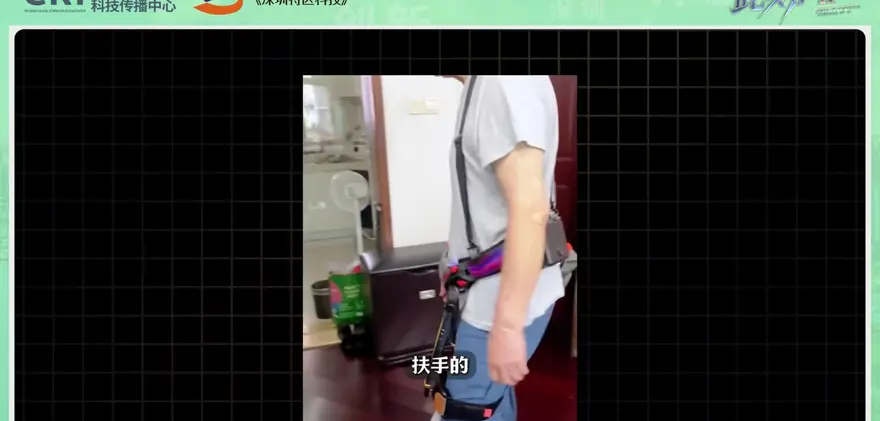
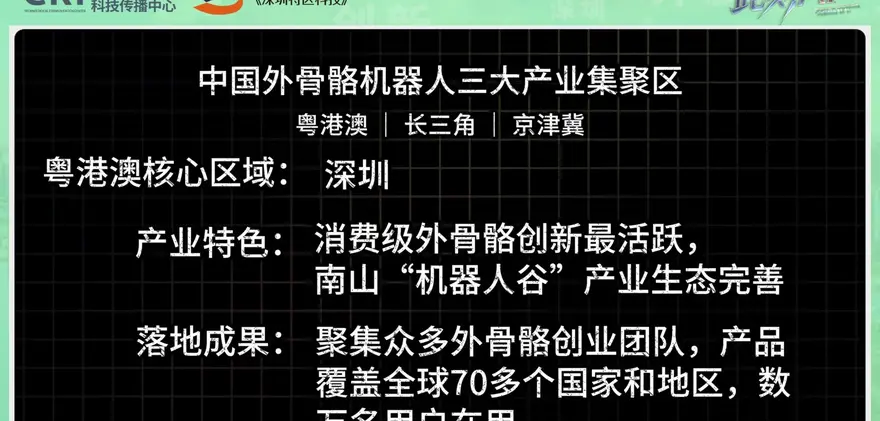
The exoskeleton is not a new concept. For the past three decades, it has lived inside hospitals and rehabilitation centers, helping patients with spinal cord injuries and strokes stand back up. But what turned it from medical equipment into a consumer product is Shenzhen.

In 2026, Shenzhen officially brought exoskeletons into its age-friendly subsidy program, with individuals receiving a 15% subsidy on purchases. Elderly people living alone wear them to the supermarket to buy groceries and carry rice and flour home; young people put them on for hiking, trekking, and outdoor adventures; at scenic spots, they've become a consumer item lined up right next to the cable car tickets.
"It took the exoskeleton 30 years to walk out of the hospital, and another 3 years to walk into everyday life." — mentioned in the video
These three seemingly unrelated scenes point to the same underlying fact: Shenzhen's exoskeleton industry has quietly started to take off. Today we'll pick two representative Shenzhen companies — Hypershell and Dnsys — and break them down item by item, to see who goes one layer deeper on which dimension.
1From Rehabilitation to Daily Life: The Exoskeleton's Thirty-Year Pivot
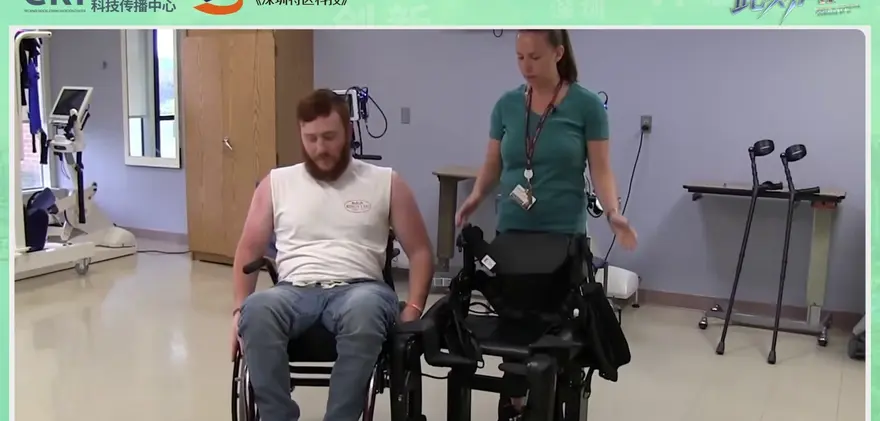
Exoskeletons started out as medical-grade equipment, built for rehabilitation exoskeleton scenarios like spinal cord injury and post-stroke hemiplegia. The mission was to "help those who couldn't stand to stand again"—but at the cost of being bulky, expensive, and dependent on professional tuning.
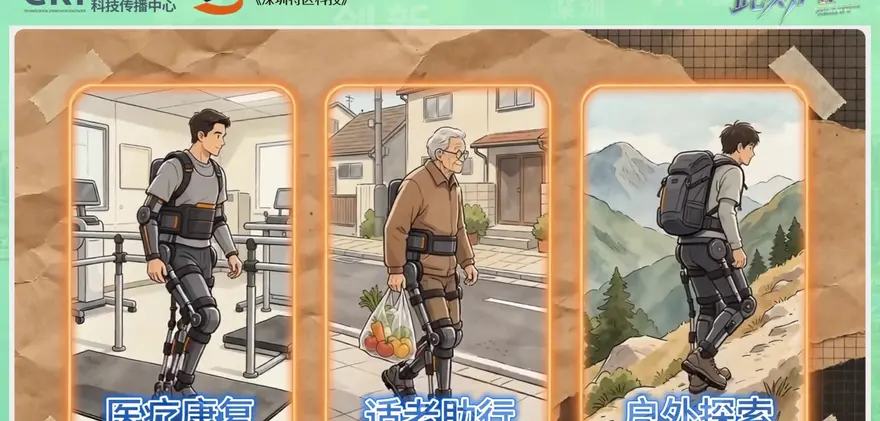
What Shenzhen did was drag it out of the medical context and redefine it as a consumer product:
- For elderly people living alone: walking assist + shopping load-bearing, brought under age-friendly subsidies;
- For young outdoor enthusiasts: assistive gear for hiking, trekking, and long-distance traversal;
- For scenic-area visitors: an hourly-rental "cable-car alternative."
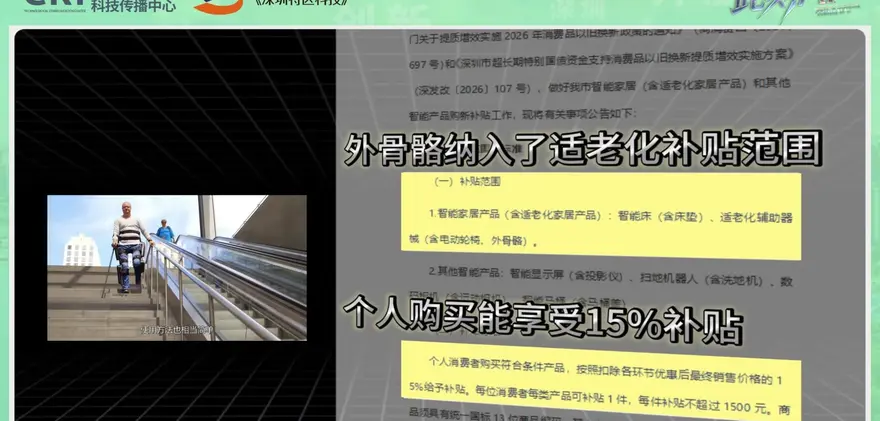
In 2026, Shenzhen brought exoskeletons into the scope of age-friendly subsidies, with individual purchases enjoying a 15% subsidy.—mentioned in the video
This means the exoskeleton, for the first time, runs on a dual engine of "government endorsement + personal consumption," instead of leaning solely on medical procurement. That is the underlying logic that lets the whole industry take off.
2The Weight War: 1.7kg vs 980g, a Folding-Umbrella-Grade Exoskeleton
The hardest part of an exoskeleton isn't "how much assist it delivers," but "whether you're willing to keep wearing it once it's on." Weight determines whether it's gear or a burden.
| Parameter | Hypershell | Kenqing |
|---|---|---|
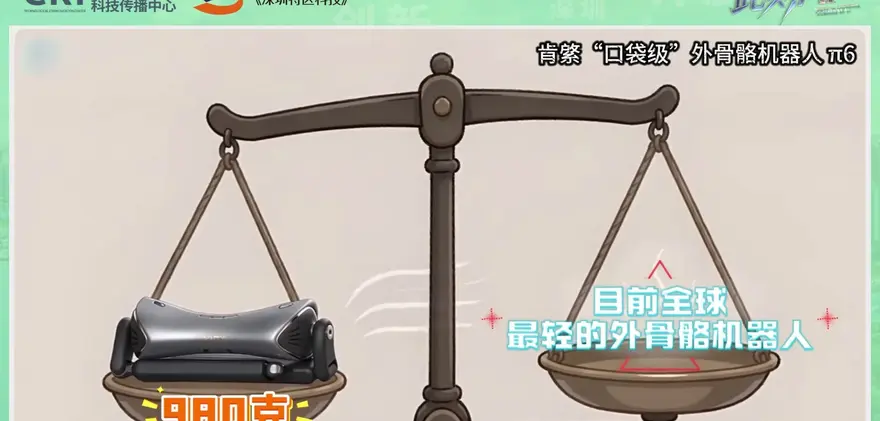
| Weight | 1.7 kg | 980 g |
| Perceived Feel | Lighter than a gaming laptop | The world's lightest exoskeleton robot |
| Portability | Commuting, shopping with no sense of load | Folds up like an umbrella, fits into a backpack |
Hypershell's 1.7kg is a remarkably restrained figure; once you put it on, you "barely feel any load," and it never feels like a burden whether you're shopping, commuting, or climbing stairs. This weight benchmarks the logic of everyday wearable devices — you have to be able to live your life wearing it.
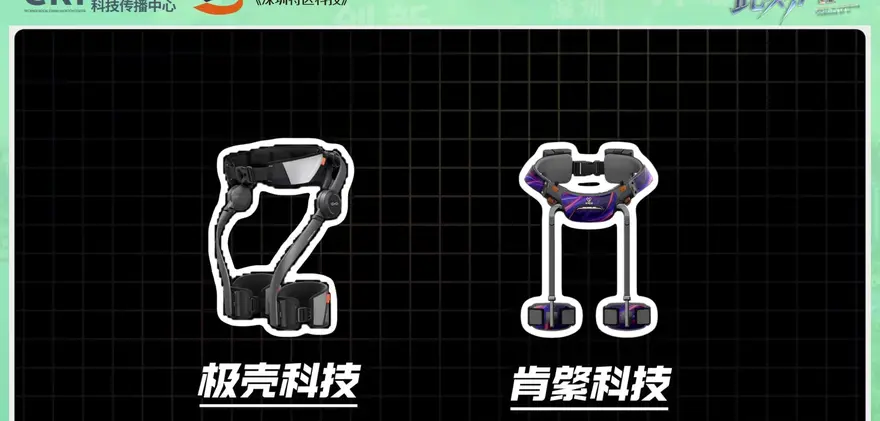
Kenqing, on the other hand, has pushed the number down to 980 grams, making it currently the world's lightest exoskeleton robot. Its design philosophy is closer to that of a "folding umbrella":
Folded up, it's like a folding umbrella — you can slip it straight into a backpack. When traveling, put it on, and at the foot of the mountain, take it out and wear it. — Mentioned in the video
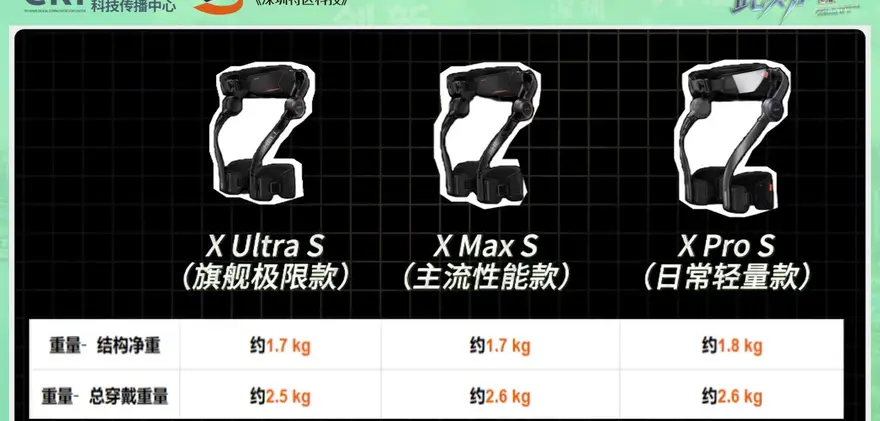
The two are actually answering two different questions: Hypershell asks "can you keep wearing it all the time," while Kenqing asks "can you carry it with you anytime." For commuters, the former fits better; for outdoor enthusiasts, the latter is deadlier — after all, an extra kilogram in your backpack on a long-distance trek is a fundamentally different experience.
3Power and Torque: The Physics of Pushing You Forward
Power and torque are the core "hard power" of an exoskeleton. They determine whether the exoskeleton "walks with you" or "pushes you forward."
| Parameter | Hypershell | Kenqing |
|---|---|---|
| Top-spec power | 1000 W | 800 W |
| Joint torque | — | 16 N·m |
| Load capacity | High power delivers strong pushing force | Pushes 30 kg loads effortlessly |
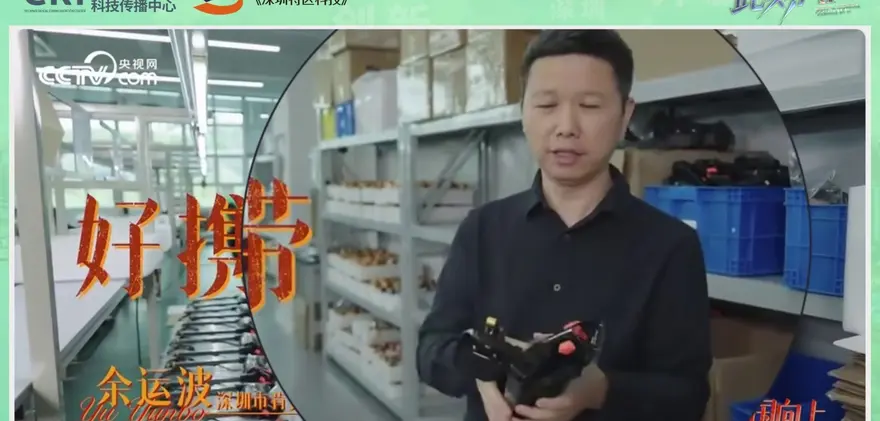
Hypershell's 1000W top spec delivers the most direct sensation: "when climbing, it's genuinely pushing you forward." Your legs only need to exert half their usual effort — uphill becomes flat ground, and flat ground feels close to a light jog. This is a sprint-style assist logic — making walking feel brisk and light.
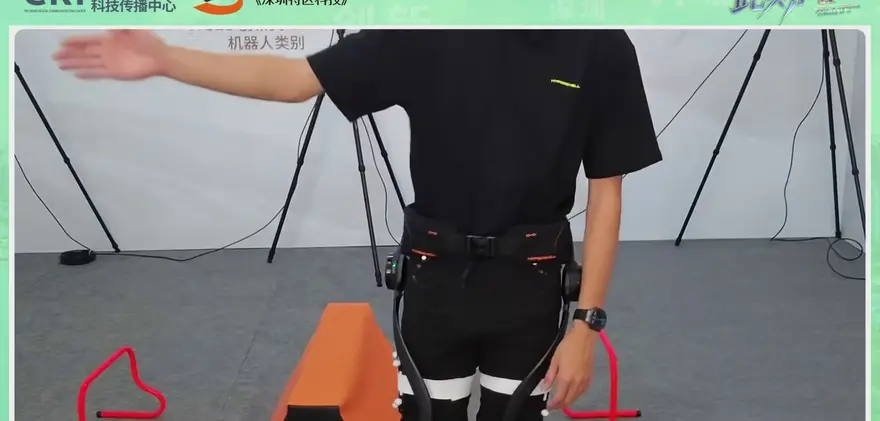
Hypershell's top-spec 1000W genuinely pushes you forward on climbs; your legs only need to exert half their usual effort. — mentioned in the video
Kenqing takes a different path: 800W + 16 N·m of joint torque, capable of pushing 30 kg loads. Its logic isn't about helping you sprint — it's about helping you carry.
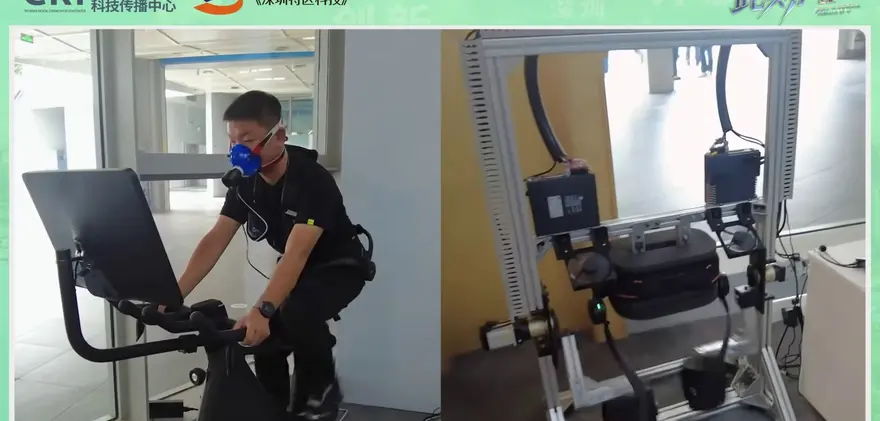
Kenqing's 800W and 16 N·m handle a 30 kg load with no problem. If you strap on a 10 kg hiking pack and trek for seven or eight hours, your knees won't take a beating. — mentioned in the video
One is about "speed," the other is about "carrying." If you're a competitive outdoor enthusiast, Hypershell suits your taste better; if you're into load-bearing hiking and long-distance trekking, Kenqing's torque logic is friendlier.
4 | Battery Life: 30 km vs 40 km — the extra 10 km is the deciding factor
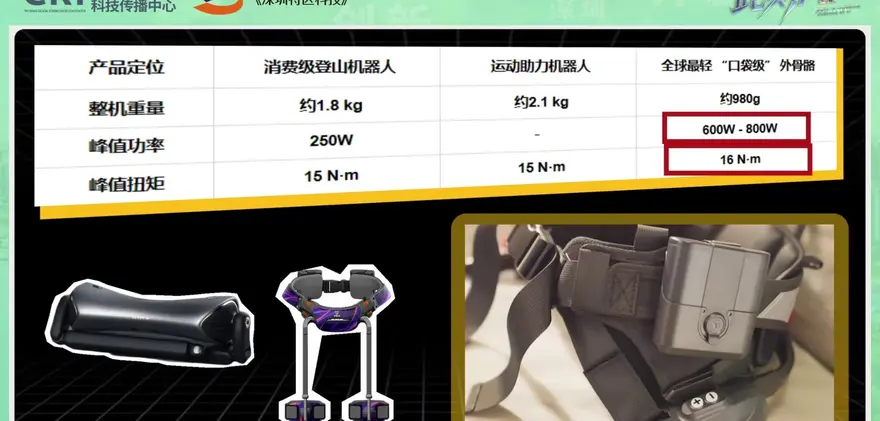
Battery life is the most easily overlooked yet most critical parameter of an exoskeleton. No matter how powerful the assistive force, if an exoskeleton runs out of power in two hours, it's just a more expensive dead weight.
| Parameter | Jiqiao | Kenqing |
|---|---|---|
| Max battery life | 30 km | 40 km |
| Real-world reference | Half-marathon distance | 10 km more than Jiqiao |
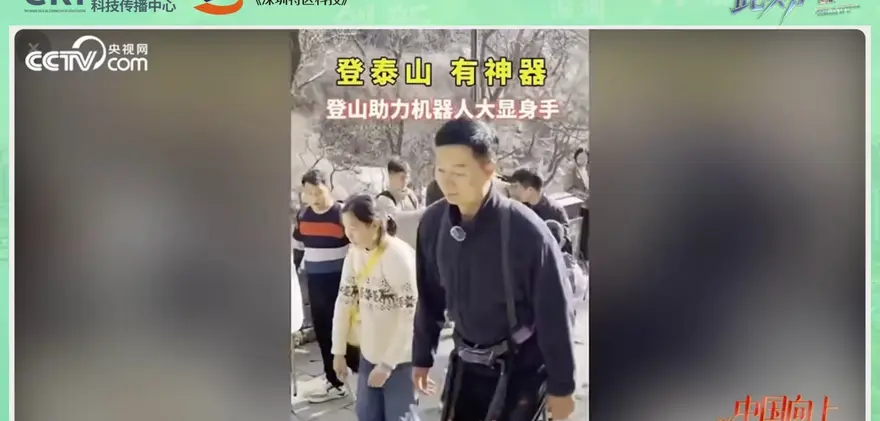
Jiqiao's 30 km is roughly the distance of a half marathon. The video offers a very Shenzhen-flavored analogy:
"Even if you walk from Futian to Nanshan and back, it's still enough." — mentioned in the video
For urban commuting and short outdoor trips, 30 km is more than enough.

But the extra 10 km from Kenqing takes on far greater significance in outdoor scenarios:
"Those extra 10 km are exactly what let you confidently complete a full day on mountain trails." — mentioned in the video
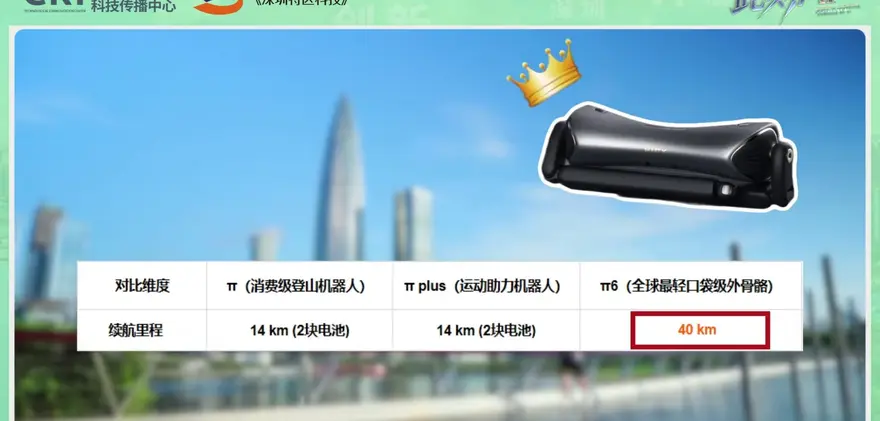
This point is crucial: on high-altitude treks above 5,000 meters, or full-day traverses lasting over a dozen hours, battery life isn't about "is it enough" — it's about "do you dare". An extra 10 km means you dare to go farther, dare not to turn back halfway.
5 | Response Speed: Intent Recognition vs AI Prediction
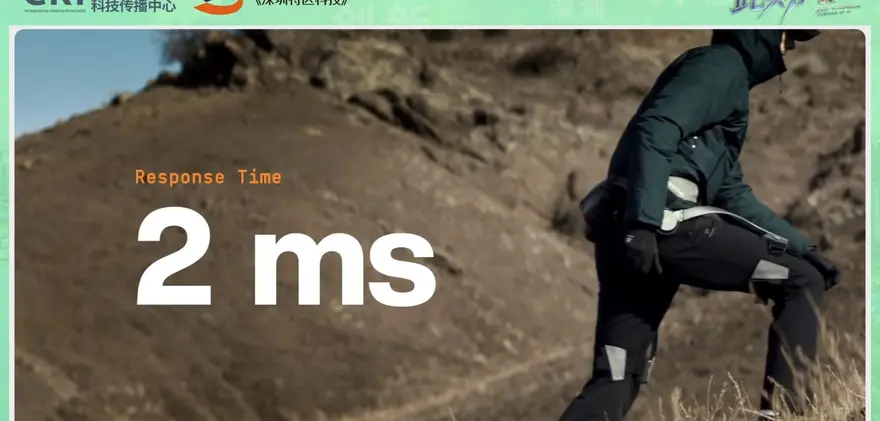
If power and battery life are the "hard specs," response speed is the soul of an exoskeleton — it determines whether the exoskeleton is "your legs" or "a machine strapped to your body."
| Spec | Hypershell | Kenqing |
|---|---|---|
| Response Speed | 0.31 s | 30 ms |
| Technical Approach | Intent recognition (you move, it moves) | Quad-core AI processor, real-time terrain recognition |
| Experience Difference | No rushing, no lag | Adds force on uphill, decelerates on downhill |
Hypershell's 0.31 seconds means "the moment you have the thought of lifting your leg, it has already caught up." What it reads is your movement intent — you move, it moves, no rushing, no lag. This is a "follow-along" logic.
Hypershell's 0.31s response reads your movement intent — you move, it moves, no rushing, no lag. — Mentioned in the video
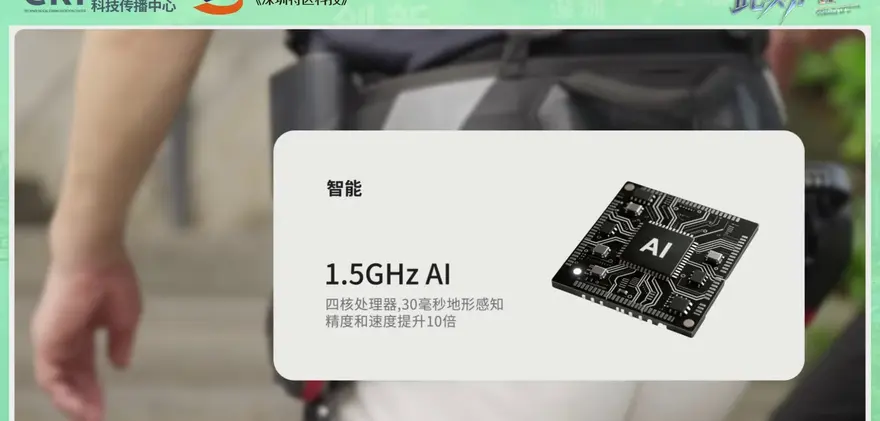
Kenqing's 30 milliseconds is several times faster than a blink, but its real killer feature isn't "fast" — it's prediction. Equipped with a quad-core AI processor, it can recognize terrain in real time and automatically adjust assist: adding force on uphill, helping you decelerate on downhill.
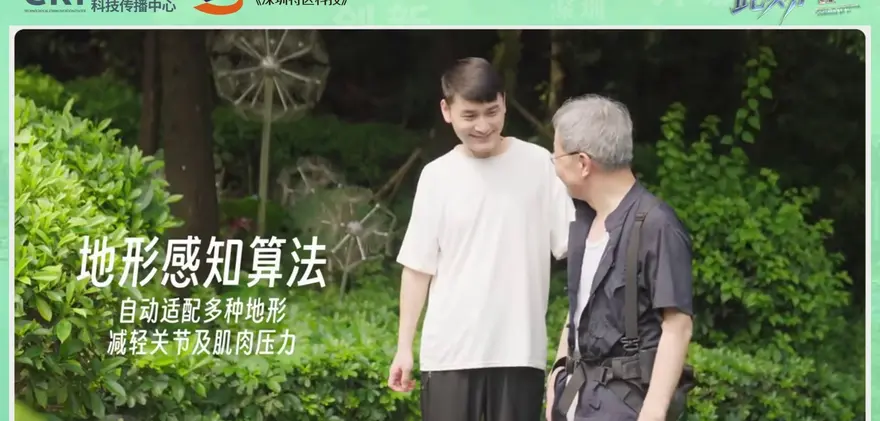
Kenqing's 30ms response, quad-core AI processor recognizes terrain in real time, adds force on uphill, decelerates on downhill. — Mentioned in the video
The summary in the video is spot-on: "One is fast in response, the other is fast in prediction." Hypershell follows in sync the moment your movement occurs; Kenqing predicts the terrain before your movement happens. The former is more "natural," the latter is more "smart" — these are two distinctly different technical approaches.
6 | Effort-Saving Performance: 42% vs 30%, Every Breath Is the Distance Between Life and Death
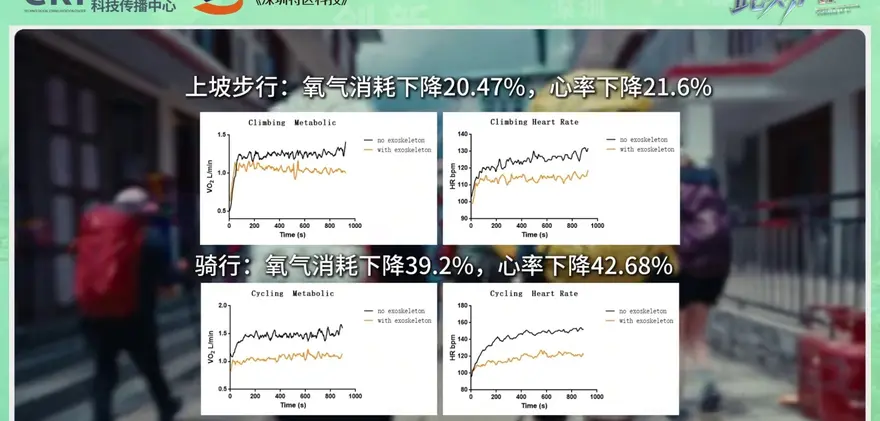
Specs aside, it ultimately comes down to one question: how much effort can it actually save?
| Parameter | Hypershell | Kenqing |
|---|---|---|
| Luggage Load Reduction | 42% | — |
| Oxygen Consumption Reduction | 39% | — |
| Effort Saving | — | 30% |
| Typical Scenario | Top choice for Everest climbers | Knees don't hurt after climbing Mount Tai |
Hypershell's data is more "hardcore": 42% load reduction and 39% less oxygen consumption. These aren't lab figures but real feedback from hardcore outdoor enthusiasts—many Everest climbers wear exactly this.
At an altitude of five or six thousand meters, every breath saved could be the distance between life and death. — mentioned in the video
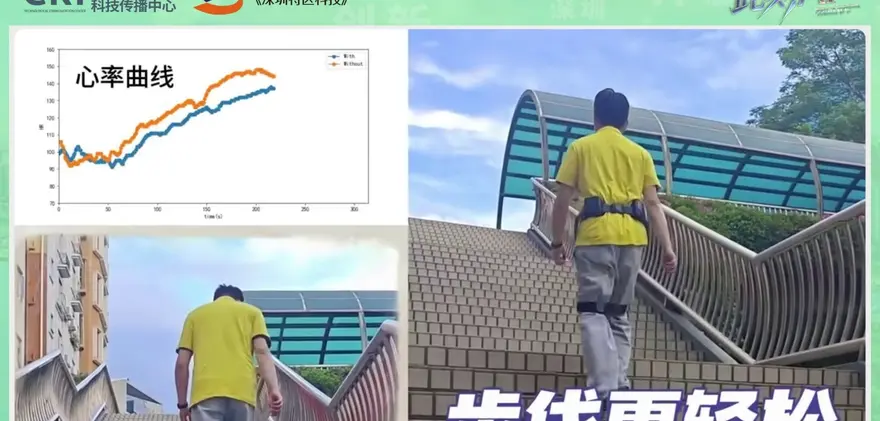
This may sound like marketing copy, but in high-altitude, oxygen-deprived environments, it is a physical fact: a 39% reduction in oxygen consumption means you can walk considerably farther at 6,000 meters, and your "safety margin" is stretched that much longer.
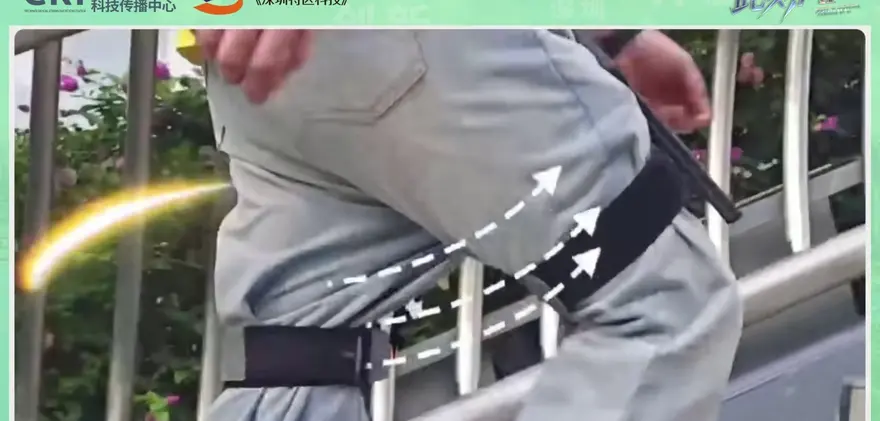
Kenqing's 30% effort saving may sound less dramatic, but its scenario is more accessible:
Some tourists say their knees don't hurt at all after climbing Mount Tai. For ordinary people, being able to walk normally the day after a hike—that's the greatest value of an exoskeleton. — mentioned in the video
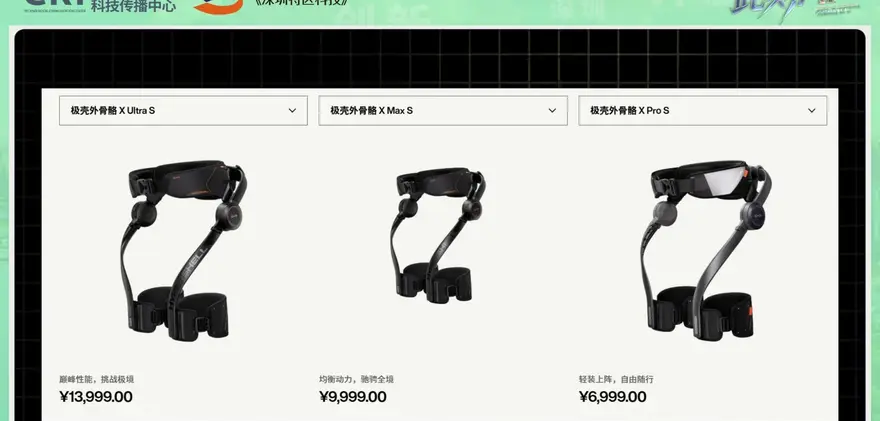
These two sets of data actually reflect two product philosophies: Hypershell serves hardcore players who "can already walk but want to go farther," while Kenqing serves ordinary people who "want to walk but can't." The former represents the performance ceiling; the latter, the experience floor.
7 | Price and Business Model: Buy-to-Own vs. Scenic-Spot Rental
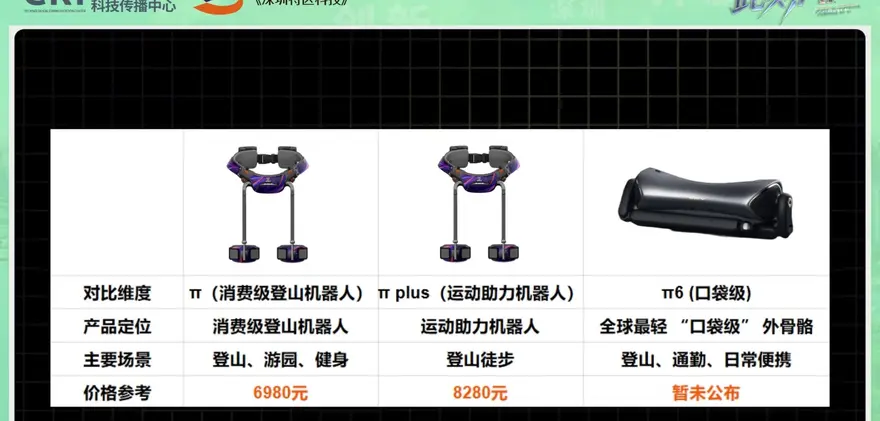
Price is the most sensitive nerve for consumer-grade exoskeletons. No matter how good the product is, if you can't afford it, it's just tech news.
| Parameter | Hypershell | Kenqin |
|---|---|---|
| Price Range | ¥6999 – ¥13999 | ¥6000 – ¥9000 (Kenqin Pai series) |
| E-commerce Positioning | From a phone to a flagship phone | Close to Hypershell |
| Rental Model | — | Scenic spot ¥80 / 3 hours |
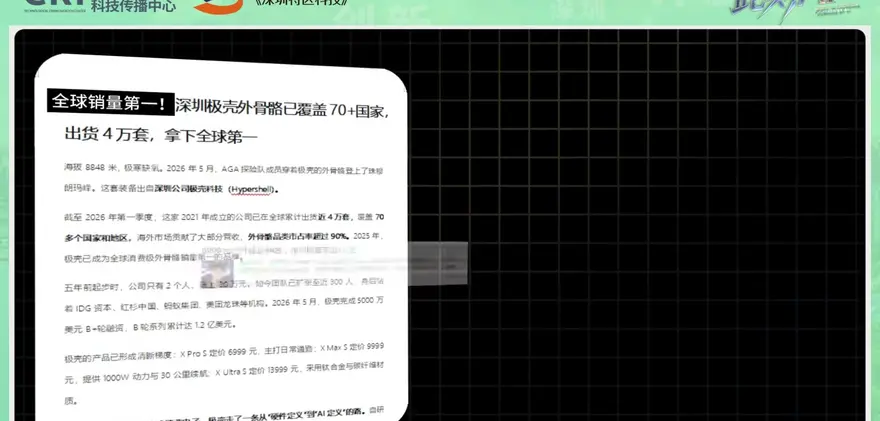
Hypershell's price range of ¥6999–13999 is roughly the cost of a phone to a flagship phone. The video's verdict is blunt:
For almost the price of a phone to a flagship phone, you can buy it and wear it freely at home. — Mentioned in the video

Kenqin's approach is more "Chinese-style" — beyond e-commerce sales, it also offers hourly rentals at scenic spots:
At a scenic spot, you rent it once for 80 yuan for 3 hours, about the same as a cable car ticket. — Mentioned in the video
This pricing strategy is brilliantly clever: ¥80 / 3 hours positions it exactly against scenic-spot cable car tickets. For one-off tourists, it's an "experience consumption"; for scenic-spot operators, it's a steady cash flow. That's why Kenqin, after going viral at Mount Tai, was able to rapidly expand to Mount Huang, Mount Emei, Mount Hua, and Zhangjiajie.
8 | Shipments & Channels: 40,000 Units vs. National Scenic Areas
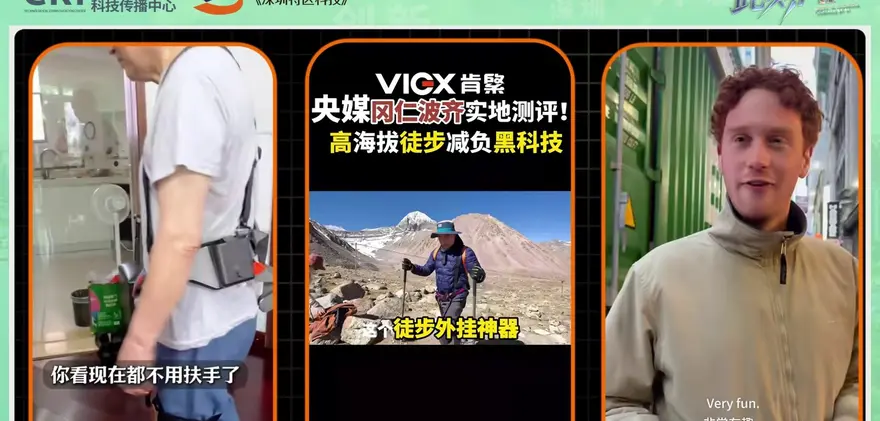
| Metric | Hypershell | Kenqing |
|---|---|---|
| Cumulative Shipments (as of 2026 Q1) | Nearly 40,000 units | — |
| Coverage | 70+ countries and regions worldwide | Multiple domestic scenic areas |
| Industry Position | World's best-selling consumer-grade exoskeleton platform | Benchmark for the scenic-area rental model |
| User Profile | Hardcore outdoor enthusiasts | 62% are seniors aged 60+ |
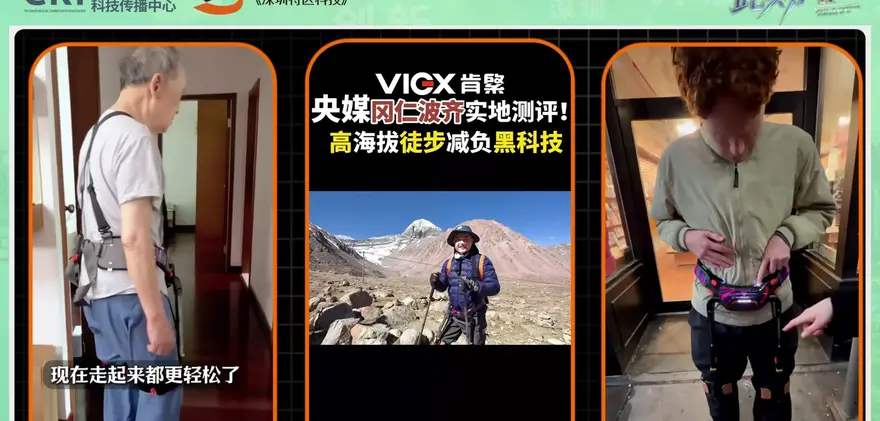
Hypershell's 40,000-unit shipments and coverage across 70+ countries cement its position as the "world's best-selling consumer-grade exoskeleton platform." This is a global brand + hardcore users playbook.
As of Q1 2026, Hypershell had shipped nearly 40,000 units, covering 70+ countries and regions worldwide, making it the world's best-selling consumer-grade exoskeleton platform. — cited from the video
Kenqing, after going viral at Mount Tai during the 2025 Spring Festival, has steadily expanded to Huangshan, Emeishan, Huashan, and Zhangjiajie — its business now spans multiple scenic areas across the country. This is a domestic channel + mass-market users playbook.
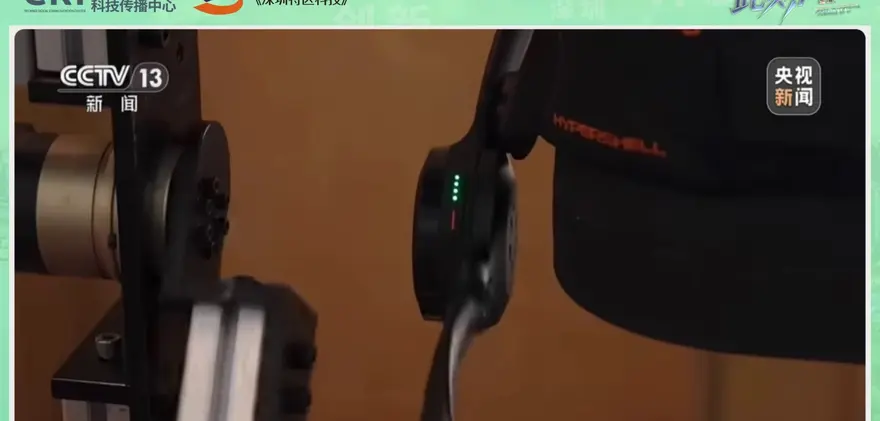
The single most noteworthy data point is this:
Among tourists using exoskeletons, 62% are seniors aged 60 and above. — cited from the video
This number completely overturns the stereotype that "exoskeletons are toys for the young." It shows that in scenic-area rental scenarios, exoskeletons truly serve the silver-haired crowd — those whose knees have started to protest, yet refuse to give up on seeing the world.
9 | Why Shenzhen: A Win for the Supply Chain
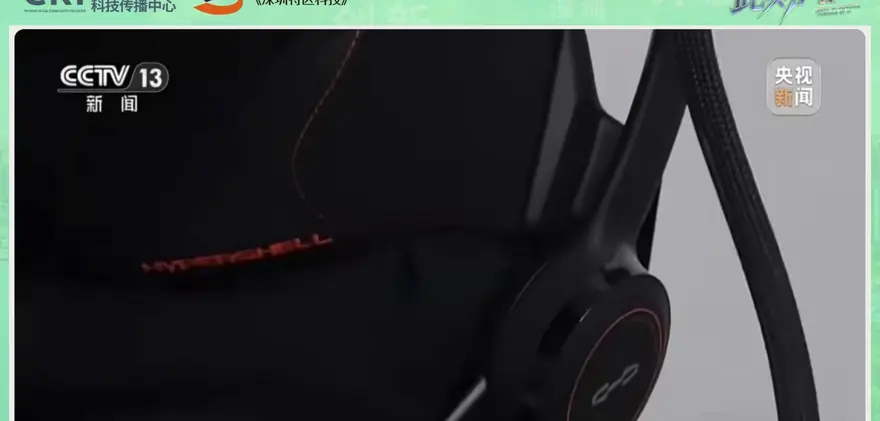
Why Shenzhen? The video offers a very pragmatic answer: the supply chain across the Greater Bay Area is remarkably complete.
"Exoskeletons are a highly interdisciplinary engineering effort. In Shenzhen, we can assemble experts and partners from every relevant field, along with the raw materials and suppliers we need, in a remarkably short time." — mentioned in the video
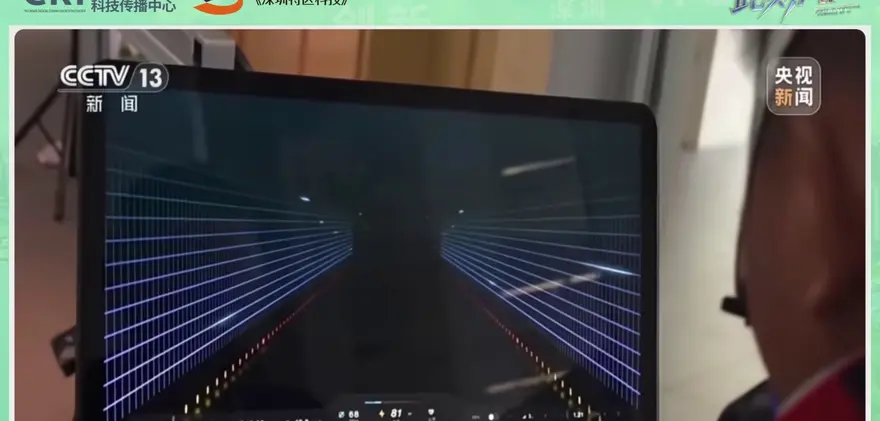
An exoskeleton is not a single-technology product. It spans mechanical structures, servo motors, sensors (IMU/pressure), batteries, AI algorithms, carbon fiber materials, and more. If any single link gets stuck, the iteration of the whole device grinds to a halt.
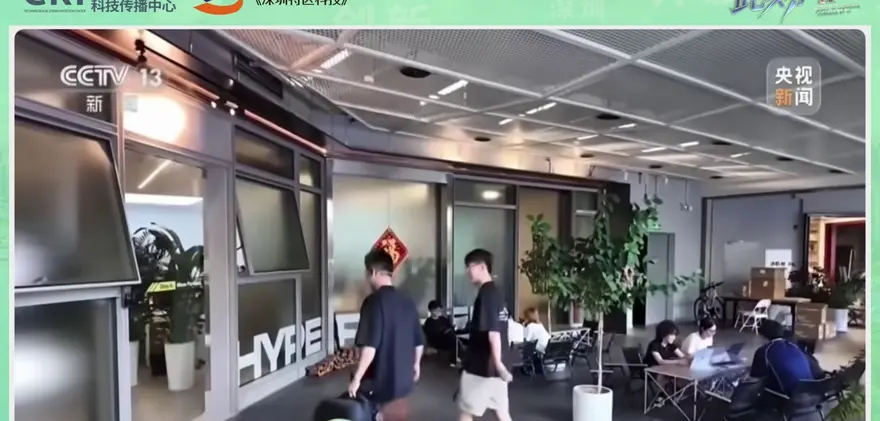
What Shenzhen offers is not a "policy dividend" but a hardware iteration speed:
"Parts that used to require prototyping — you can have the sample in hand by evening after sending the order out in the morning." — mentioned in the video
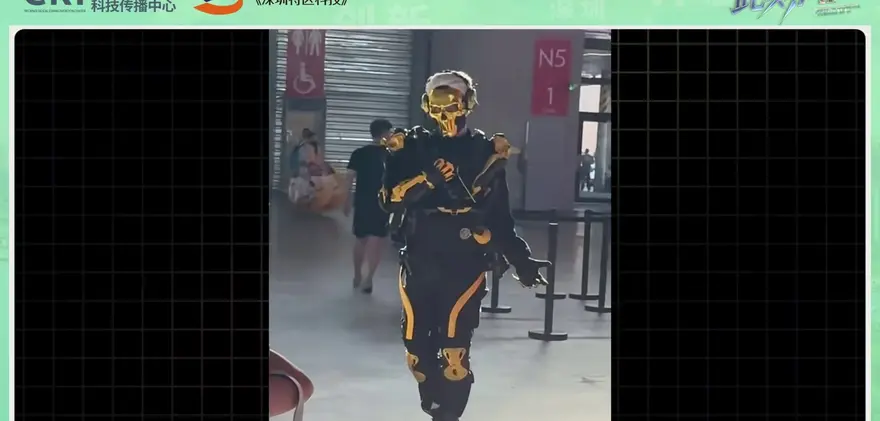
For hardware people, this is almost a "black magic" level of advantage. Elsewhere, taking a part from blueprint to prototype can take weeks; in Shenzhen, order in the morning, sample by evening. This iteration speed is what allows a complex product like an exoskeleton to go from concept to the consumer market in just three years.
"Shenzhen has turned the gear from science-fiction films into something ordinary people can afford and actually use every day." — mentioned in the video
This is perhaps the most accurate summary of Shenzhen's exoskeleton industry: what it delivers is not a "technological breakthrough" but "technological inclusion."
Top Community Comments
@Ah-La-Oh-En-Ah (15 likes): The biggest problem right now is that exoskeletons are being built as high-end products! As a result, the people who need them can't afford them, and the people who don't need them treat them as toys.
This comment hits the core contradiction of consumer-grade exoskeletons — the word "consumer-grade" is currently more about pricing than genuine mass accessibility. A starting price of 6,999 RMB remains a luxury for the lumbar-disease patients and elderly who truly need it. Kenqing's scenic-area rental model is, in effect, a partial response to this contradiction, but rental ≠ ownership.
@They-Call-Me-Ai-Mu-Ti (11 likes): A while back I had a lumbar disc herniation and thought, "technology changes life," so I'd look into getting an exoskeleton. Then I looked at the prices — all starting at 6,800 RMB, easily breaking past 10,000. And the battery life can't support an eight-hour workday; even the 10,000–20,000 RMB ones are only half-body, with the load points all on the knees. A full-body exoskeleton that actually reaches the ground starts at 40,000–50,000 RMB, and anything beyond that means adding the manufacturer on WeChat for a custom order.
This comment is one of the most information-rich user feedbacks in this episode. It exposes three real pain points: battery life can't sustain an 8-hour workday, half-body models shift the load points onto the knees, which ironically damages the knees instead, and full-body models jump straight to 40,000–50,000 RMB. The "no more knee strain" promise from the video doesn't hold up for this lumbar-disease user — there's still a clear mismatch between product form factor and genuine medical needs.
@i-Pie (8 likes): This has genuine medical value; it can prevent muscle atrophy in the elderly and improve the quality of life for people in their later years.
This comment offers an angle that is often overlooked: the medical value of exoskeletons extends beyond "walking assist" to include slowing muscle atrophy. But it also raises a controversy — if an exoskeleton long-term replaces muscle force output, will it paradoxically accelerate atrophy instead? Behind this lies the boundary question between "assist" and "compensation," for which there is currently no industry consensus.
These three comments collectively point to one core issue: consumer-grade exoskeletons currently sit in an awkward zone between "outdoor toy" and "light rehabilitation aid." The people who truly need them (lumbar-disease patients, those with severe age-related decline) can't afford them or can't access them; the people who treat them as toys don't need them to solve real problems. The 15% age-friendly subsidy in Shenzhen mentioned in the video is a first step toward breaking the deadlock, but there's still a long road from here to "the people who need them can afford them."
One-Sentence Summary
Hypershell and Kenqing represent two routes for Shenzhen's consumer-grade exoskeletons — the former builds "the world's leading hardcore outdoor brand" with 1000W of power and 40,000 units shipped, while the latter crafts "an affordable walking assist device for the silver-haired generation" with a 980g weight, 40km battery life, and a scenic-spot rental model. If you're a hardcore outdoor enthusiast, Hypershell is the ceiling for performance; if you're a casual trekker or a silver-haired user, Kenqing's rental model lowers the barrier to entry. Yet neither has truly answered the core question of "whether those who need it can afford it" — the very hurdle that consumer-grade exoskeletons must clear in their next phase.
About this article: part of Chinese-Made Exoskeleton Review Archive — an independent, regularly updated English archive of reviews of consumer exoskeletons made in China, edited from publicly available video transcripts. Not an official manufacturer page.
For inquiries and purchasing, contact lonlonago@foxmail.com. More in Buying Guide · All articles.