How Good Is D-Wolf's Exoskeleton in Real Life? From the 680 kg Hardiman to the Shelved TALOS, "Overload" Still Needs Another 20–30 Years
If you play Delta Force, there's no resisting D-Wolf's exoskeleton. Plenty of players joke that half of D-Wolf's strength lies in the G18, and the other half in that sci-fi "cheat code" of an exoskeleton — since launch, the slide-shooting playstyle took off, and the combo of the G18 plus D-Wolf's powered exoskeleton was, for a while, the undisputed meta in extraction matches.
But as fun as it is, one question keeps nagging at many players: does something like this actually exist in real life? In this piece, we'll go from the game's lore all the way to real-world military tech, and break it down once and for all — exactly where does this exoskeleton, the one that has brought so much joy to countless players, actually stand in the real world, and just how wide is the gap between the game and reality?
1. First, the Lore: What Does Luna's Exoskeleton Actually Give Her in the Game?
Delta Force is set in the year 2035. Luna didn't originally have this rig — according to the lore, she suffered a leg injury while protecting civilians during a mission. To help her return to the battlefield, GTI had this powered exoskeleton custom-built for the celebrated hero.
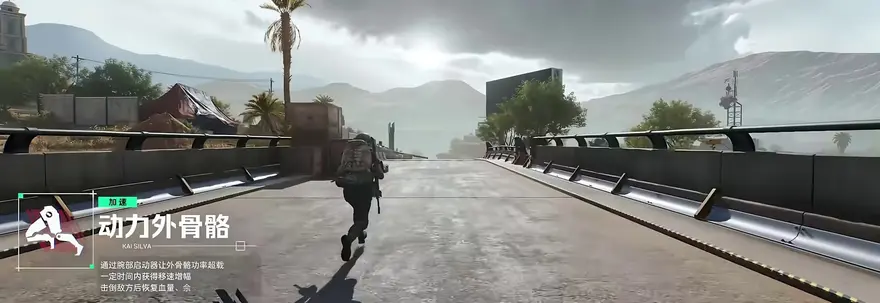
In terms of in-game performance, once Luna activates her exoskeleton's "Overdrive," her movement speed increases and her slide distance gets longer — and eliminating enemies extends the Overdrive duration. That's the underlying logic behind the "slide" playstyle.
In-game lore (as mentioned in the video): With Overdrive active, Luna gains increased movement speed and slide distance, and eliminating enemies extends the Overdrive duration.

Bottom line first: the kind of movement speed boost you see in the game is difficult to achieve with today's technology. But placed in the near-future setting of 2035, this premise is hardly far-fetched — because the concept of the exoskeleton is far older than most people imagine.

Many people assume exoskeletons are a cutting-edge technology of just the past few years. In fact, as far back as the 1970s, US-based General Electric (GE) built the first true powered exoskeleton prototype.
2. The 680 kg Hardiman: Fifty Years Ago, the Industry Already Hit Every Pitfall
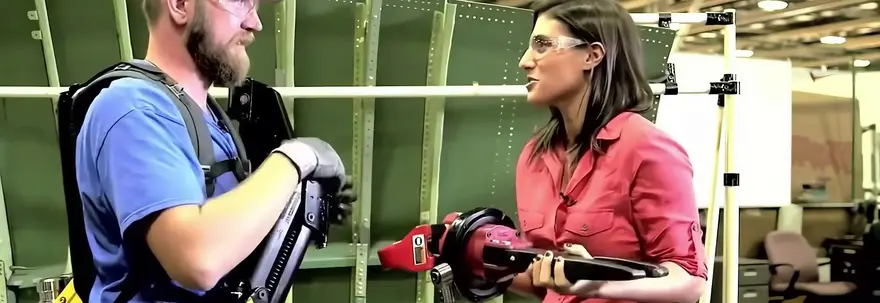
In the 1970s, GE unveiled the Hardiman powered exoskeleton prototype, capable of lifting 150 kg — numbers that still wouldn't be embarrassing today. The problem? The entire device weighed 680 kg, could only operate in a fixed position inside the lab, and had zero practical value in the field.
As mentioned in the video: Hardiman could lift 150 kg, but the entire device weighed 680 kg, could only be used in a fixed position in the lab, and had no real-world practical value.


Hardiman's significance wasn't that it "worked" — it was that, in one shot, it exposed every core contradiction of powered exoskeletons: energy, self-weight, and reliability. For the next fifty years, everything the industry did was, at its core, a battle against these three problems.
Today, real-world military exoskeletons have split into two completely different paths: passive exoskeletons and powered (active) exoskeletons. The former is now the most mainstream form across the world's militaries — and also the category most easily overlooked by the general public.
3. Passive Exoskeletons: The Military's Mainstream Choice—and the Most Misunderstood Category
A passive exoskeleton has no battery and no motor. Relying purely on mechanical structure—elastic elements and hydraulic struts—it transfers the weight of the user's load directly to the ground through leg frames. Its core purpose boils down to one thing: lightening the soldier's burden.
China's passive load-carrying exoskeletons have long since been publicly revealed, in both lower-limb and full-body versions, and are mainly issued to logistics troops, border defense units, and special operations units. From hauling ammo crates to carrying communications gear to long-range patrols, they handle it all—with a very pronounced load-reduction effect.
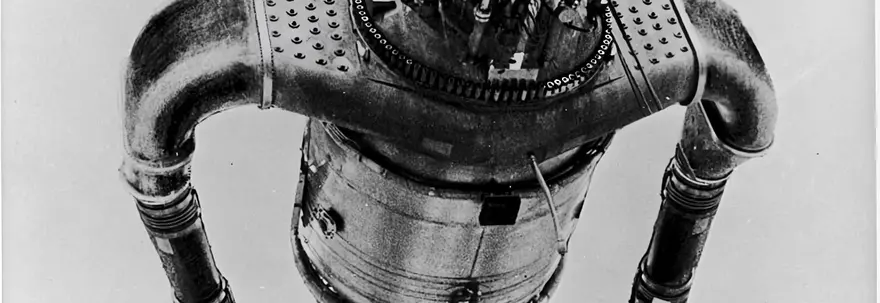

But it must be said plainly: a passive exoskeleton only delivers a "carry heavy loads without getting tired" effect. It absolutely cannot make you run faster or jump higher. On the contrary, because the added mechanical structure restricts joint movement, your body's agility actually drops—sprinting, crawling, and quick squat-and-stand motions all take a hit.
As mentioned in the video: the essence of a passive exoskeleton is "making a 50 kg load feel like 20 kg on your back," not letting you march along at a brisk clip while carrying 50 kg.

Put simply, it's a load-reduction tool, not a power source. It has no extra power to begin with—how could it possibly help you accelerate? The in-game effect where D-Wolf sprints at boosted speed with a rifle slung on his back is something a passive exoskeleton simply cannot do.
Let me add a personal observation here: this is also the concept most frequently misrepresented in consumer-grade exoskeleton marketing. A purely mechanical structure can only transfer and cushion loads—it cannot conjure energy out of thin air. So when you see a product labeled "passive" or "purely mechanical" while advertising a "speed boost," feel free to swipe right past it.

4. The Death of TALOS: Why the Full-Body Powered "Iron Man Suit" Was Scrapped After Just Seven Years
Now, some might say that the powered exoskeletons in video games—complete with motors, batteries, and an overload mode you can trigger—are what the public truly imagines as the "mech suit." But in reality, we're still nowhere near that level.
The most famous case is the U.S. TALOS (Tactical Assault Light Operator Suit) program. Pitched back then as a "real-life Iron Man suit," it officially launched in 2013 with one goal: a full-body powered exoskeleton featuring bulletproof armor, a power system, life support, and situational awareness—a suit that would let soldiers carry heavy loads, stop bullets, run and jump, boosting combat effectiveness across the board.


After a full seven years, the program was officially cancelled in 2020, with not a single core bottleneck solved:
First, the energy Achilles' heel. Driving powered joints across the entire body, on top of armor and electronics, placed extreme demands on the battery. The best military lithium batteries of the era delivered just 1-2 hours of runtime on a full charge—and only at a low walking speed. Under intense activity, the battery died within an hour. You can't exactly send soldiers into battle hauling generators.
Mentioned in the video: The best military lithium batteries of the TALOS era offered only 1-2 hours of runtime on a full charge (at low walking speed), draining within an hour under intense activity.
Second, the weight backfire. Armor, motors, batteries, and sensors all added up to a total system weight approaching 40 kg—meaning the soldier first had to carry 40 kg of gear before any additional payload even entered the conversation. A huge share of the power went into dragging the exoskeleton itself, making the whole concept terrible value.
Mentioned in the video: The full TALOS system (armor + motors + battery + sensors) weighed nearly 40 kg.
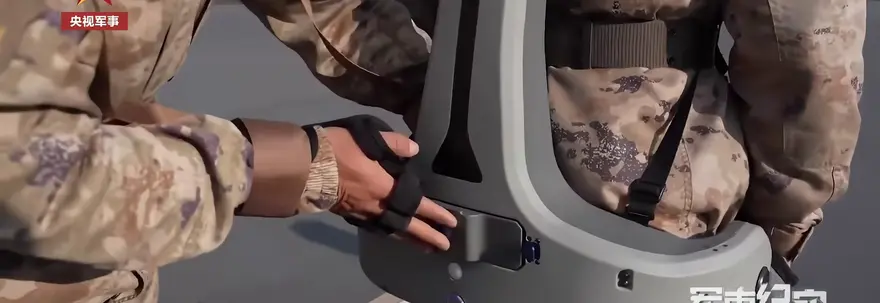
Finally, serious reliability concerns. Battlefield conditions—sand, mud, impacts, extreme temperatures—made the precision motors and hydraulic sensors highly prone to failure. If a joint jams or power cuts out mid-combat, that's not equipment anymore; that's a burden.
In the end, the TALOS program was split into multiple sub-projects, developing lower-limb power, torso protection, and individual soldier sensing separately—no longer forcing an all-in-one full-body suit.

My take: the cancellation of TALOS wasn't a failure—it was an expensive tuition payment for the entire industry. It spent seven years proving one thing: until energy density sees a breakthrough, the "full-body power + armor" route is a dead end. That conclusion directly shaped the form factor of every exoskeleton product today.
5. The Real-World State of Powered Exoskeletons: Walking with a 50 kg Payload Counts as Meeting the Bar
After TALOS, powered exoskeleton programs around the world have largely converged on lower-limb assist. America's XOS 2, Russia's "Warrior" (Ratnik) series, and the multiple powered exoskeleton projects China has publicly disclosed all share the same core functions: walking assist and load-carrying support.

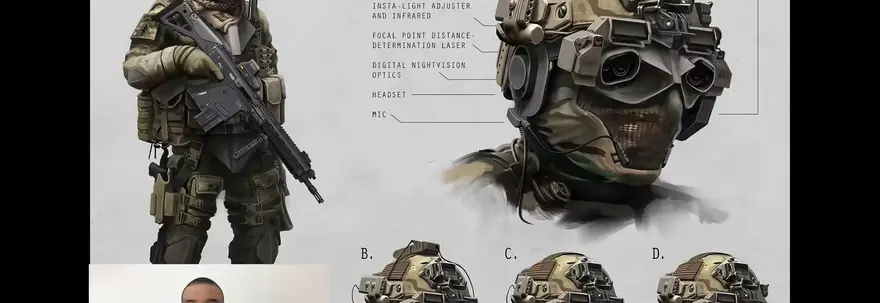
So what can they actually do? The benchmark laid out in the video is refreshingly pragmatic:
As mentioned in the video: today's in-service powered exoskeletons can carry a 50 kg payload while walking normally on flat ground and conserving the wearer's stamina, or assist combat medics in moving the wounded—letting one person do the work of two. The most advanced models can go up and down stairs normally and clear obstacles smoothly—and that counts as technically meeting the standard.

Note the contrast: in the game, overloaded Red Wolf gets "fast movement." In reality, the most advanced powered exoskeleton is considered technically up to standard as long as it can smoothly climb stairs and get over obstacles. What separates the two isn't one generation of technology—it's an entire era.
Want to move fast while overloaded, just like in the game? Simply not possible. It's not that the motors can't cut it—servo motors and brushless motors have made major gains in power density in recent years, and the joint torque available for hip and knee assist has long been more than sufficient. The real bottleneck is still the energy problem discussed earlier.

6. The Exoskeleton's Real Battlefield: Logistics, Border Defense, and Rescue — Never Frontline Assaults
At this point, some of you might be thinking: if exoskeletons are this "useless," why keep developing them at all?
The truth is, they're not useless — their real-world applications simply don't fully match what you see in games. In reality, exoskeletons were never meant for frontline assaults. Their true battlefield lies in logistics, border defense, and special-operations support scenarios.

- Logistics units: moving ammunition and hauling supplies — with an exoskeleton, a single soldier's efficiency doubles;
- Border defense units: patrolling high-altitude mountains with tens of kilograms of gear across dozens of kilometers — an exoskeleton can dramatically conserve energy;
- Combat medics: carrying the wounded on the battlefield — with an exoskeleton, one person can do the work of two, which means more lives saved;
- Special forces: even they only use exoskeletons to support long-range infiltration — hauling bulky recon and communications equipment. The exoskeleton lightens your load so you still have the stamina to fight once you reach the objective, rather than charging into battle wearing one.
As mentioned in the video: in logistics and load-carrying scenarios, an exoskeleton can double a single soldier's efficiency; when medics transport the wounded, one person can handle the workload of two.


So in terms of its core design, Delta Force equipping D-Wolf with an exoskeleton actually aligns remarkably well with reality — the essence of an exoskeleton is "letting you carry heavy gear and still have the stamina to fight," not turning you into a superhuman. What the game exaggerates is the stats, not the logic.

7. From Military to Consumer-Grade: Lightweight, Localized, and Flexible Designs Are the Main Track
The direction exoskeleton development is heading today isn't a full-body, powered Iron Man — it's lightweight, localized, flexible assistive devices. The video offers a typical example:
As mentioned in the video: a flexible exoskeleton that assists only the lower back weighs less than one kilogram, supports lumbar exertion when lifting, reduces lower-back muscle strain, and delivers a battery life of over ten hours — many countries have already begun small-scale military fielding.

This technical route is precisely the main track for consumer-grade exoskeletons. If you've been following this category over the past couple of years, you've probably noticed:
- Hiking / trekking assist: Brands like Hypershell and Dnsys focus on outdoor scenarios — the former offers hip assist, the latter knee assist. Using IMU and pressure sensors to identify gait phases and deliver assistance at just the right moment, their core selling point is the same: "less effort on long-distance hikes";
- Industrial / material-handling scenarios: Lumbar assist exoskeletons from makers such as Aosha Intelligent are already deployed in logistics and on production lines — the same logic as the "flexible lumbar assist" featured in the video;
- Flexible solutions: Teams like Yrobot are pursuing an even lighter "muscle exoskeleton" route, replacing rigid frames with flexible actuation; full units often incorporate carbon fiber structures to keep overall weight down to the kilogram level.


One special reminder here: rehabilitation exoskeletons are a separate product line. Rehabilitation exoskeletons from makers such as Chengtian Technology are mostly medical-grade, built for rehab institutions and clinical settings to help patients with mobility impairments do gait training — and they must also account for self-balancing and fall protection. Their costs and regulatory barriers are entirely different, so don't lump everything into the same basket just because it says "exoskeleton".
A note on expectation management for anyone looking to pick up a consumer-grade product: what you're buying is "less effort", not "more speed". The value of hip assist and lumbar assist lies in reducing fatigue buildup over long-distance walking and lowering the risk of back injury — not in making you run faster. If you use Red Wolf from the game as your frame of reference, you'll most likely walk away disappointed.
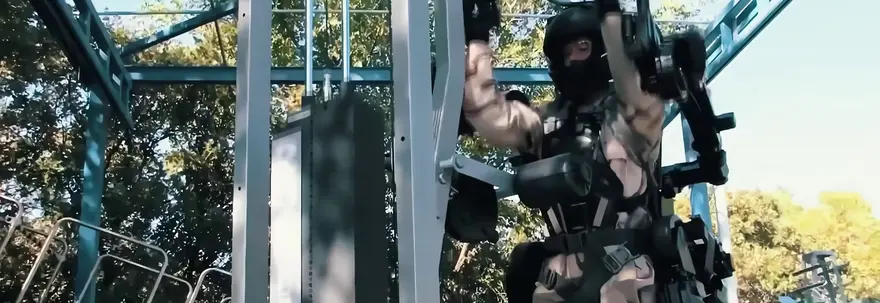
8. D-Wolf in 2035: How Much Longer Do We Have to Wait?
Finally, to answer the question raised at the beginning: how much longer until real life delivers the kind of exoskeleton D-Wolf wears in the game — one that can trigger Overload for rapid maneuvering while still offering long battery life?
As mentioned in the video: based on current battery technology, this kind of exoskeleton still needs at least another 20 to 30 years of development; unless battery technology achieves a revolutionary breakthrough and energy density multiplies several times over, there is simply no way to pack such a compact size and such strong power into a design that still delivers long battery life.
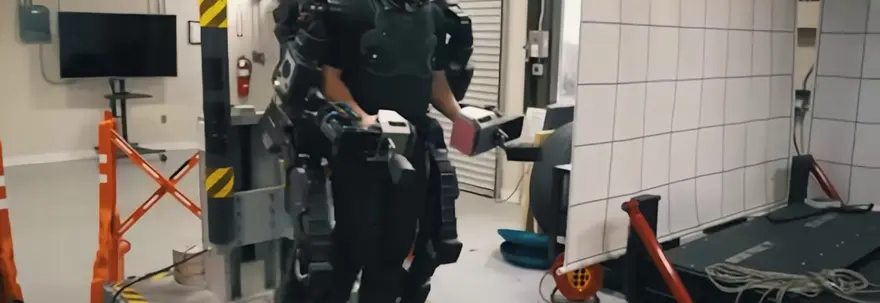
This lines up exactly with the take of one viewer in the comments section: the exoskeleton industry really is paying the price for energy density. Motors, gear reducers, control algorithms, carbon fiber structures — all of these have advanced quickly in recent years; only the battery stands there like a wall. Unless energy density multiplies several times over, the triangle of "compact size + strong power + long battery life" can never hold true all at once.
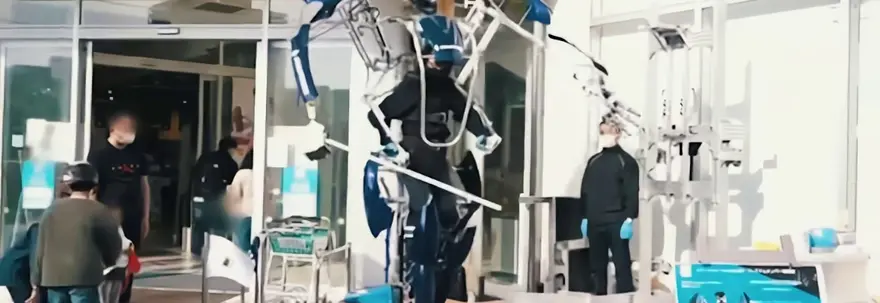
From this perspective, Delta Force setting D-Wolf's exoskeleton in the year 2035 is actually a fairly conservative prediction. Science fiction often overestimates the shape technology will take, but for the exoskeleton category, the game has actually given it a rather restrained timeline.
For everyday consumers, this is actually good news: there is no need to wait 20 or 30 years. Lightweight, localized assistive exoskeletons are already on the market, with real, tangible products available today for hiking, trekking, and load-carrying scenarios. What is truly worth anticipating is which scenario this category will "Overload" in first when battery technology makes its next leap.

Top Community Comments
1. The "Old, Weak, Sick, and Disabled" Joke That Accidentally Nailed It
Aren't these supposed to be Delta Force assault operators? Why are they all the old, weak, sick, and disabled? Mental illness, lumbar muscle strain, bad legs, hemiplegia... it's truly over. [laugh-cry] — @Ahaha_Aha (195 likes)
Our take: This highly-upvoted joke actually lands on a serious fact—one of the origins of the exoskeleton was "limb assistance and casualty support." Red Wolf's backstory of "returning to the battlefield with an exoskeleton after being wounded" maps precisely onto the logic of real-world rehabilitation exoskeletons and walking assist exoskeletons: the game uses "overcoming disability" as a character arc, while in reality, this has always been one of the industry's starting points.
2. Energy Density: Truly the Wall Facing the Entire Industry
Held back by energy density—if we could get a reliable, compact fusion unit as the power core, building a powered exoskeleton with built-in redundancy would actually be within reach [doge] — @ThunderThatPiercesTheFloor (150 likes)
Our take: Fusion is obviously a meme, but the judgment that "energy comes first, mechanics follow" is spot on. Every performance ceiling of powered exoskeletons—battery life, output power, self-weight—ultimately converges on a single parameter: battery energy density. That's exactly where the video's "another twenty to thirty years" conclusion comes from.
3. A Valuable Supplement on Medical Exoskeletons
Actually, there are medical exoskeletons too—semi-active and passive types. With the passive one, the exoskeleton moves you along; with semi-active, you put in a bit of force and the exoskeleton supplies the rest for you [doge] — @VacuumPizza (111 likes)
Our take: This is a solid piece of science communication. Rehabilitation exoskeletons do indeed come in passive (the device drives the patient) and semi-active (the person provides part of the force, the device tops up the remaining assist) variants, and they belong to the medical-grade product line. It's also another reminder that rehabilitation exoskeletons and consumer-grade assistive exoskeletons are two entirely different categories, with completely different specs, regulatory regimes, and pricing systems.
4. Frequent Question in the Comments: Can You Actually Buy One in Real Life?
"Can you actually buy this stuff in real life? How much does it cost?"
Our take: This is the single most frequently asked question in the comments. The answer: yes. Consumer-grade / light-industrial products for hiking assist and lumbar assist are already on the market—from outdoor hip assist / knee assist models in the few-thousand-RMB range to lumbar lifting assist solutions aimed at enterprise customers. The performance, however, belongs to a completely different world from the game's "Overload."
5. Frequent Question in the Comments: Does It Really Save Effort on Hikes?
"If I buy one, will it really make climbing easier? Or is it just an 'IQ tax'?"
Our take: This reflects the "actual gains" question consumers care about most. A reasonable expectation: the hip assist / knee assist from reputable products can noticeably reduce fatigue on long ascents, but it falls far short of the military passive models' "carrying 50 kg feels like 20 kg" effect, and it certainly won't make you run faster. Treat it as an "effort-saving tool" rather than a "cheat code," and you won't be disappointed.
6. Frequent Question in the Comments: When Can We Run as Fast as Red Wolf?
"When will we get an exoskeleton that lets you run as fast as Red Wolf?"
Our take: This matches the video's conclusion—until there's a revolutionary breakthrough in battery energy density, don't expect it for at least another twenty to thirty years. This isn't a motor or algorithm problem; it's an energy problem.
One-Sentence Summary
At its core, this episode is a "game lore deep-dive + exoskeleton industry primer": exoskeletons have long been fielded in the real world, but they take the form of passive load offloading and lower-limb assist—not Red Wolf-style full-body powered mech suits. Until battery energy density makes a breakthrough, "Overload" will have to wait another two or three decades. Recommended for anyone interested in wearable robotics who wants to separate marketing hype from technical reality—especially those considering a consumer-grade hiking/trekking assist or lumbar/back assist exoskeleton: understand how it works first, then open your wallet.