Taking the Yuanye Tech PowerOne Knee Exoskeleton to Finally Help My Dad Summit Beigaofeng
When I brought my dad to Hangzhou last time, he insisted on checking out Beigaofeng. But as soon as we reached the foot of the mountain, he looked up at the seemingly endless flight of stairs, waved his hand, and said, "Forget it, forget it, maybe next time."
It wasn't until that moment that I realized: he's no longer the leggy "superhero" from my childhood memories.
I went back and looked up the data, and the more I read, the heavier my heart felt.
When going downstairs or walking on steep slopes, the knees bear pressure equivalent to 6 to 7 times the body weight.
For a 70-kilogram elderly person, this means that with every step, the knee joint is sustaining an impact of over 400 kilograms.
When it comes to mountain hiking, what tires the elderly out most is never their legs, but their knees.
This time, I did my homework thoroughly and returned to Hangzhou with the massively popular Yuanye Tech PowerOne Knee Exoskeleton. All content is shot purely on the original camera, unbiased and authentic, just to see one thing: can this exoskeleton truly protect my dad's knees and make up for the missed summit from our last trip?



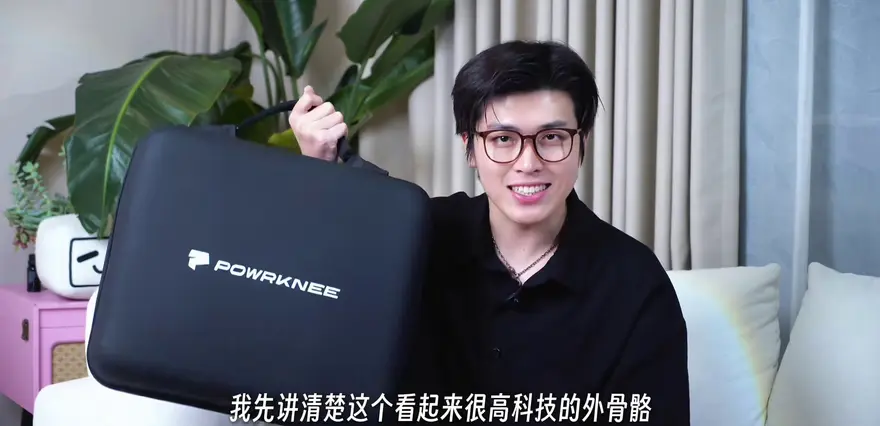
What Exactly Is This “Looks High-Tech” Thing?
First, the conclusion: it's not a knee brace, nor is it the kind of gear that relies on elastic bands to give you “psychological comfort.”
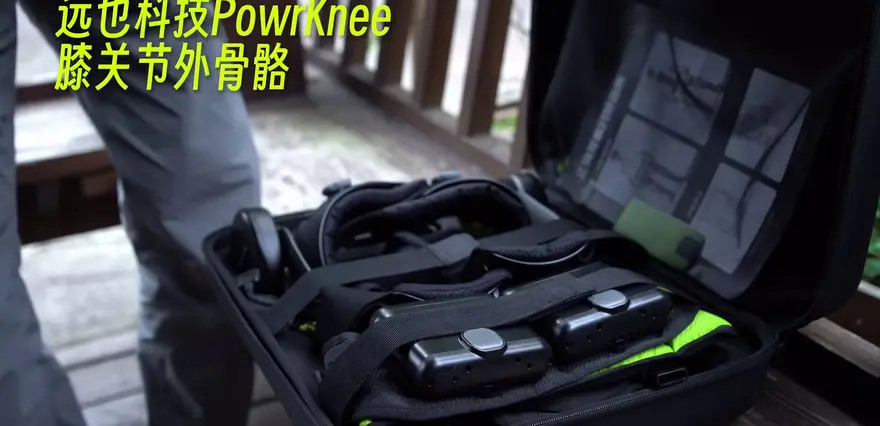
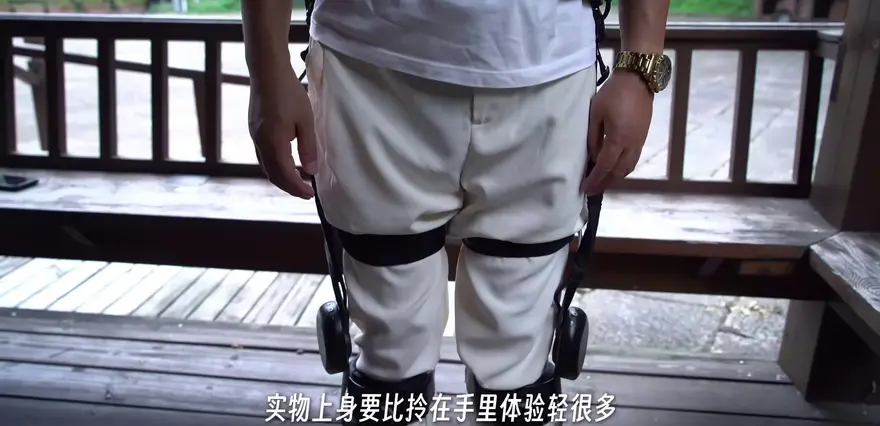
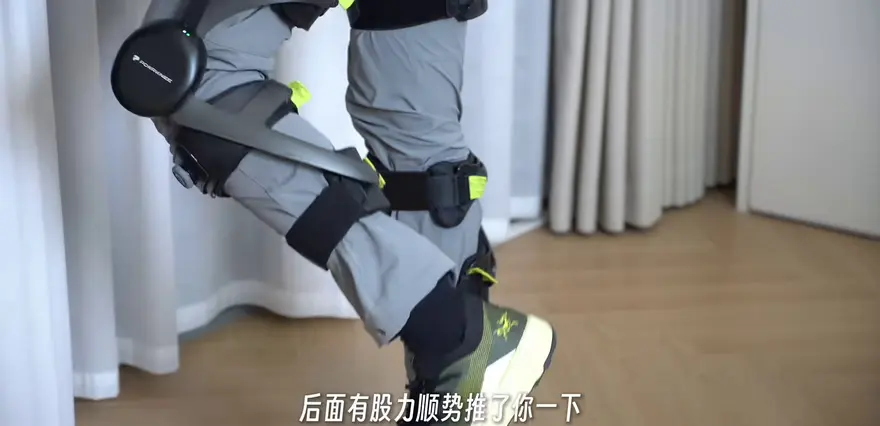
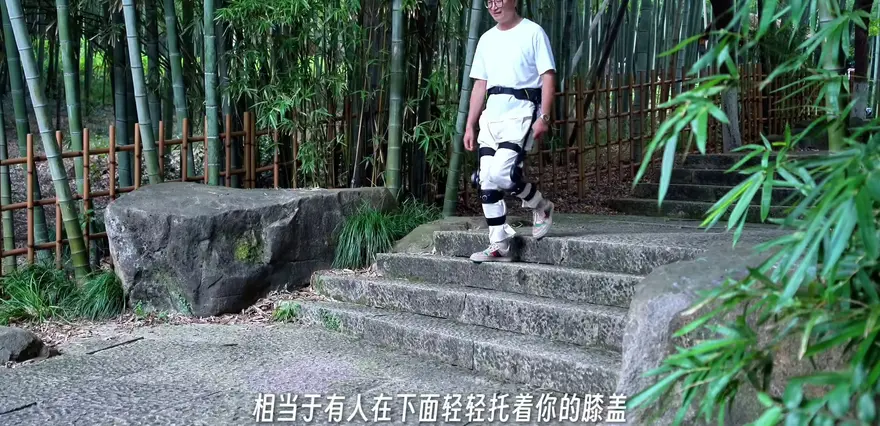
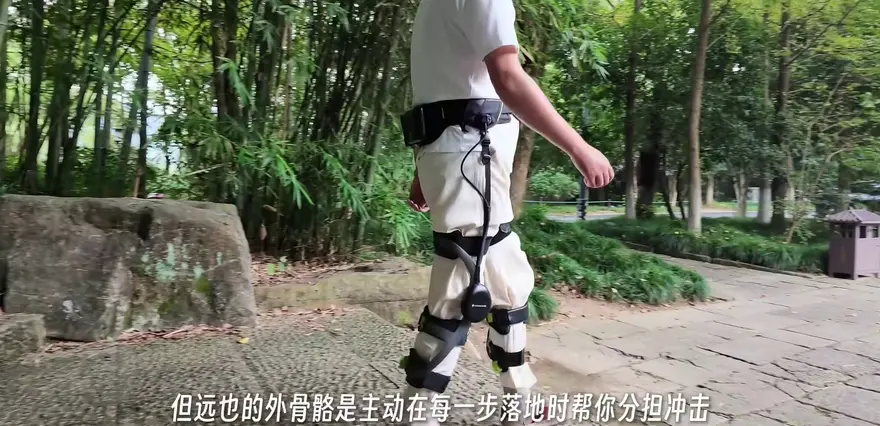
Yuanye Technology PowerOne Knee exoskeleton: mounts two compact smart motors on your knee.
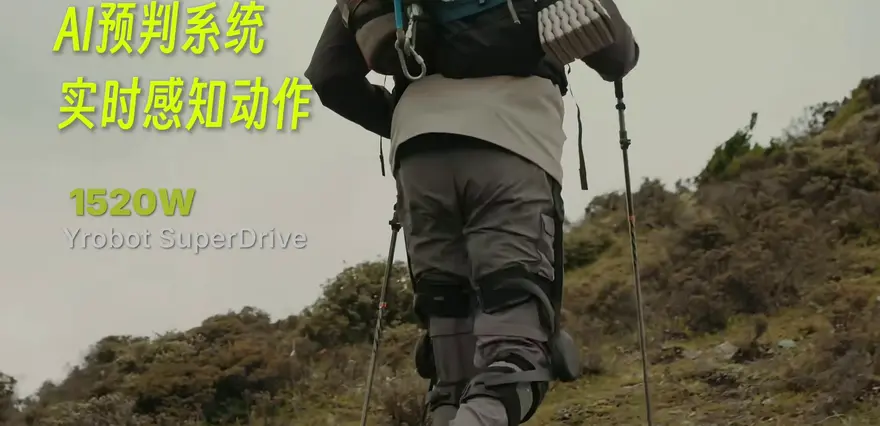
The core idea is a built-in AI prediction system that, via sensors, perceives your movement intent in real time:
- On uphills: it actively adds thrust to help you power up;
- On downhills: it actively cushions at the moment your foot lands to help “shed the load”;
- The switching is fully automatic throughout—no manual operation required.
This “predict-first” approach is actually crucial—if the exoskeleton waits until you've already stepped down to start driving force, it's too late. Truly effective walking assist must already be engaged just before your movement occurs. That's why the product emphasizes AI prediction rather than a simple “detect, then output force” scheme.
The pedigree is equally impressive:
The R&D team is a Harvard University and MIT doctoral team, with over a dozen papers published in top journals such as Science, and is backed by professional investors including Hillhouse and Sequoia China.
In short, this is not a “white-label assembly” consumer-grade exoskeleton, but a product with serious academic credentials and capital recognition. In today's mixed-bag “exoskeleton” market, that in itself serves as endorsement.

First Impressions: Lighter Than Expected, Easier to Wear
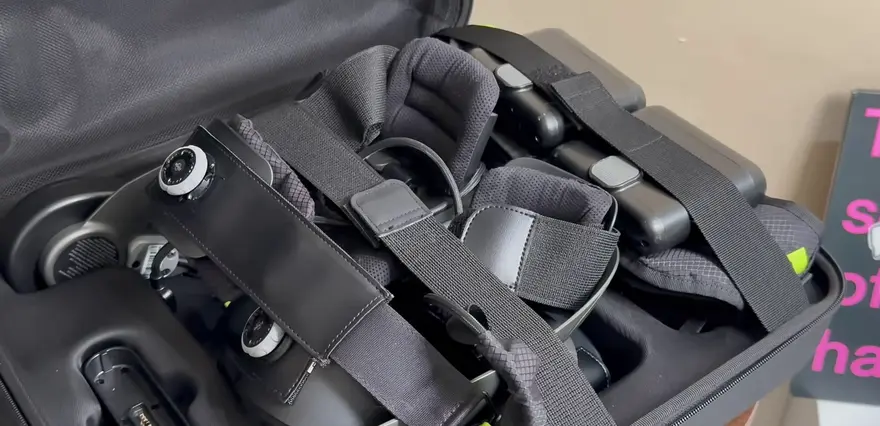
Before taking the product out of the box, I assumed it would be some hardcore gear that would take half an hour to put on. But in real-world testing, getting into it was surprisingly hassle-free:
Pull a strap, click it, and you’re done—no tools required and no need for a second pair of hands.
What truly caught me off guard was how it felt once on my body.
On the body, it feels significantly lighter than when you pick it up.
That comes from its material choices:
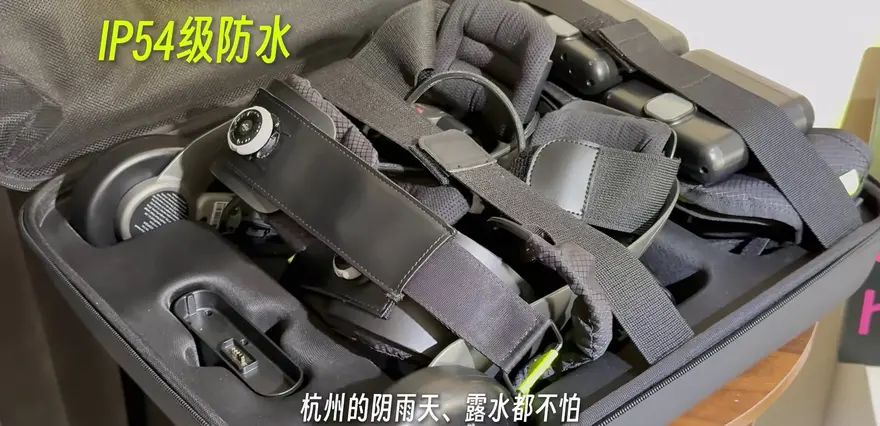
- Carbon fiber + magnesium-alloy structure, light yet tough;
- IP54 water- and dust-proofing, so Hangzhou drizzle or alpine dew is no sweat.
One detail worth unpacking: carbon fiber is used for the load-bearing frame while magnesium alloy reinforces areas near the joint. Such a pairing is unusual in a consumer-grade exoskeleton—market norms lean all plastic (cheap, yet heavy and brittle) or all metal (tough, but bulky). The carbon-magnesium mix strikes a well-balanced middle ground between the classic “weight vs. strength” trade-off.

The Detail That Impressed Me Most: Left and Right Legs Can Be Adjusted Independently
This is the feature I want to praise the most from my entire experience, and it is not even a close second.
The exoskeleton supports independent adjustment of walking assist for the left and right legs.
My father injured his right leg while working when he was young. Over the years, the wear on his right knee has been noticeably more severe than the left side. When walking for a long time, his right leg always gives out first.
The solution is simple: in the companion APP, I independently increased the assist level for my right leg by one step.
Do not underestimate this feature. Most assistive gear on the market applies the exact same force to both sides. However, in reality, almost no human body is perfectly symmetrical in leg strength—old injuries, relying on one side, or congenital differences all cause an uneven distribution of force between the left and right legs. If a piece of equipment only provides an "average force", the stronger leg has to "compromise" for the weaker one, while the weaker leg still fails to get enough support.
PowerOne's left and right independent adjustment fundamentally turns a "standard size" into a "personalized fit". For elderly users, this means the device can adapt to their own physical condition, instead of forcing them to settle for a "standard person" on a design blueprint.

Uphill Field Test: Not Replacing Your Steps, Just "Gently Pushing You Along"
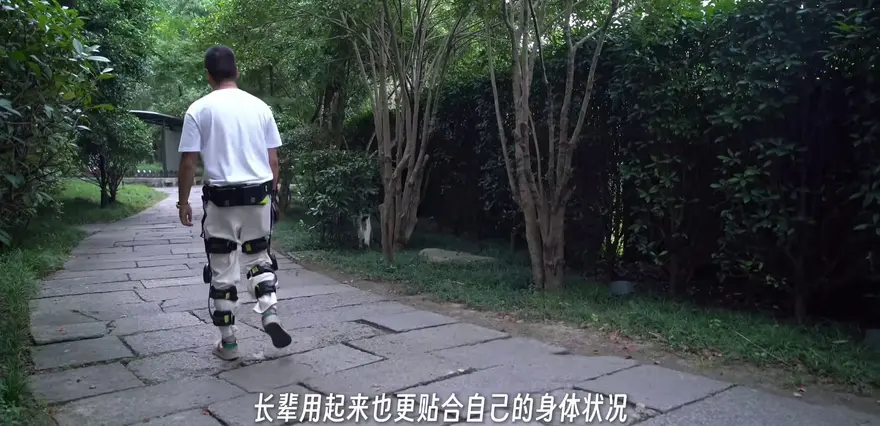
Strapped on the exoskeleton and started the ascent.
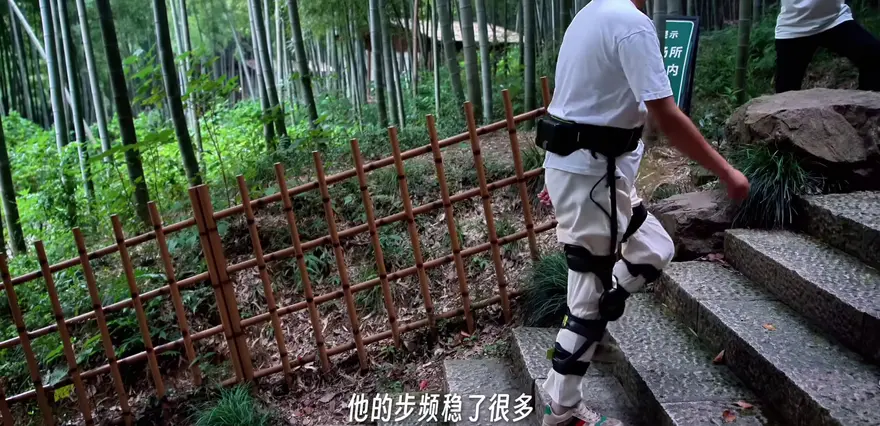
The contrast was striking. Normally, my dad has to grip the railing and rest after climbing just twenty or thirty steps, but this time I could clearly see that:
His gait was much steadier, and he barely paused midway.
I gave it a try myself. The sensation was subtle—
It doesn’t walk for you; instead, the instant you lift your leg, there’s a thrust from behind that gently propels you forward.
This highlights the fundamental difference between an assistive exoskeleton and a mobility scooter. A scooter “replaces your legs” so you don’t have to exert force; a high-quality assistive device “amplifies your effort,” letting you keep walking while making every step feel easier.
According to the manufacturer’s figures:
It can boost walking assist effectiveness by 45% and reduce physical exertion by 40% (source: manufacturer and test data across nine age groups).
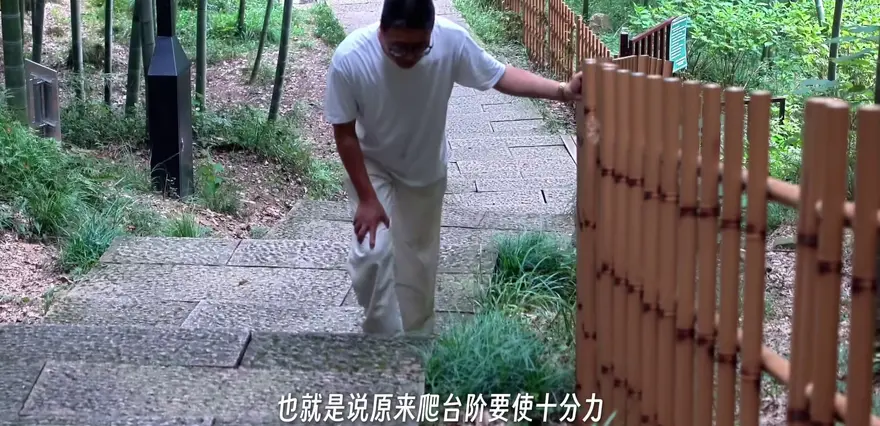
Translated into real-world feel: what used to take a full ten units of effort to climb stairs now requires only six or seven.
When we paused halfway up the mountain, my dad’s comment left a lasting impression on me:
“Coming back and forth without any knee pain—I could keep going for another kilometer or two.”


Downhill Is the Real Test: It "Supports" the Impact of Every Step
Going up is tiring; going down can hurt. For people with sensitive knees, downhill is the stage that really aggravates the knee joint.
The principle is simple:
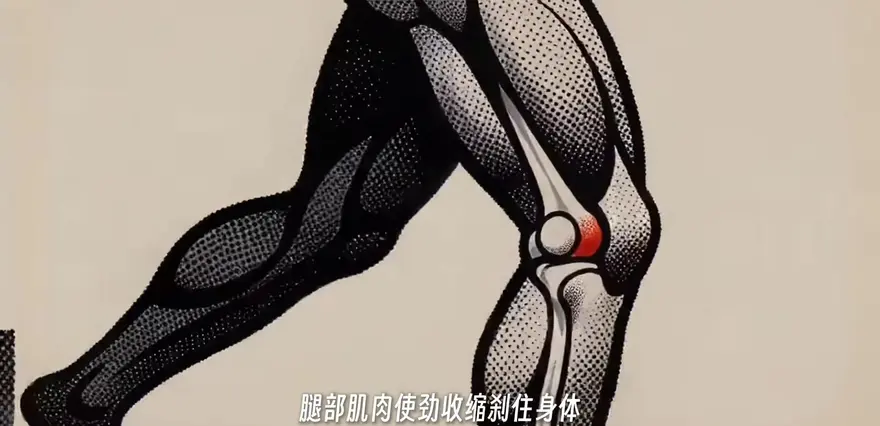
On each step during descent, your body needs to "brake." The leg muscles contract hard, and the impact on the knee joint is greater than when climbing up.
That's why older hikers often walk slowly on descents and grip supports tightly, or even step backward—all to reduce direct impact on the knee joint.
PowerOne's approach here is my favorite piece of design logic in the whole product:
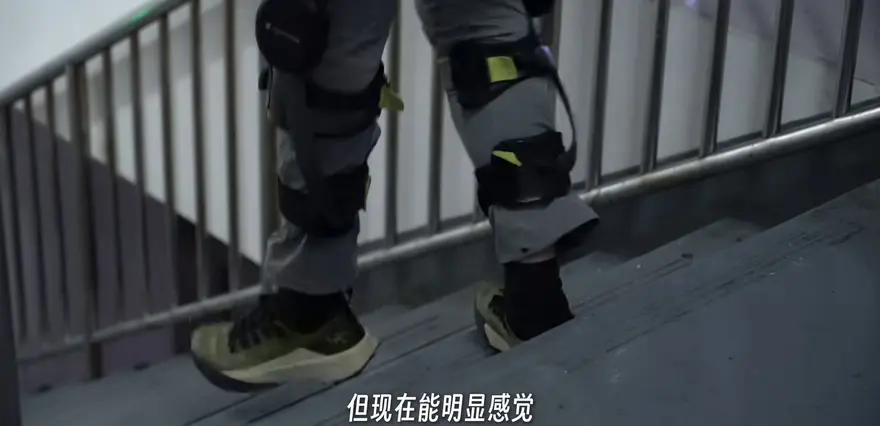
At the instant each foot lands on a downhill step, it proactively delivers an upward cushioning force—like someone gently supporting your knee from below—so the impact doesn't all fall on the joint.
Official data:
Can reduce 60% of joint impact force (Source: official test data).
In my real-world test, the change was visible when my dad walked downhill:
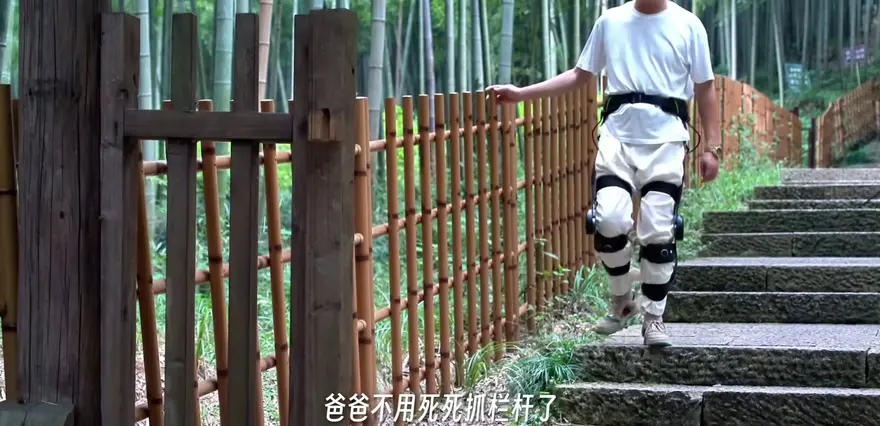
- He didn't clutch the handrail tightly—just rested one hand lightly on it.
- His gait stayed continuous instead of compressing at every single step.
- At the foot of the hill, he said his knee joint—no swelling, no pain.
As someone who hikes often, I also tried continuous stair descents. Normally my knee starts to ache halfway up the stairs; this time I could clearly feel most of the impact being offloaded from the soles to the knee joint.
I want to dwell on this because most "knee braces,trekking poles," and "cushioning insoles" on the market solve the problem with passive cushioning. PowerOne is active and intervenes in real time at every footfall. The physical principles are completely different: one tries to reduce injury; the other actively helps remove the impact in the first place.
A Feature Many Overlook: Assisted Standing + Massage Mode
We reached the halfway point of the climb and sat down for a rest. During the break, I discovered a second practical feature.
My dad is getting older, and his knees are showing signs of wear. It’s not just that they feel strained after a long walk; there’s another detail too:
Getting back up after sitting down is extremely difficult.
This is a pain point that most people don't mention in reviews, but for seniors, it's an everyday reality.
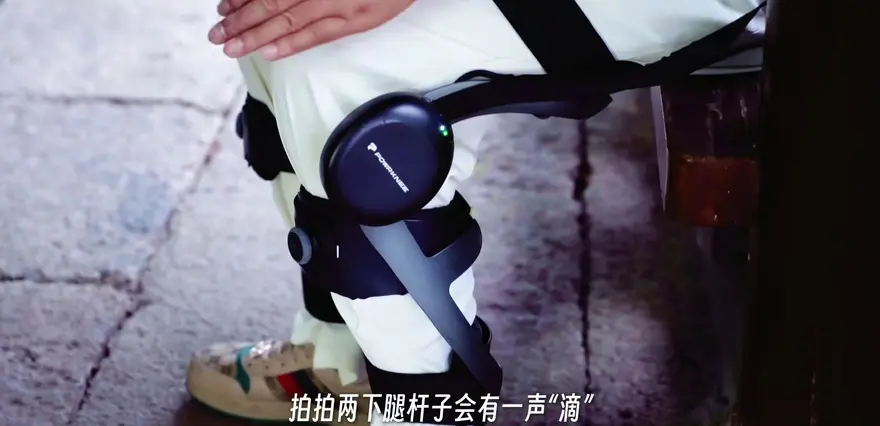
PowerOne's solution is ingenious—giving the leg struts two quick taps while seated triggers the "stand-assist mode":
The moment you start to get up, the exoskeleton provides an upward lifting force, essentially "hoisting" your body up so your knees don't have to strain.
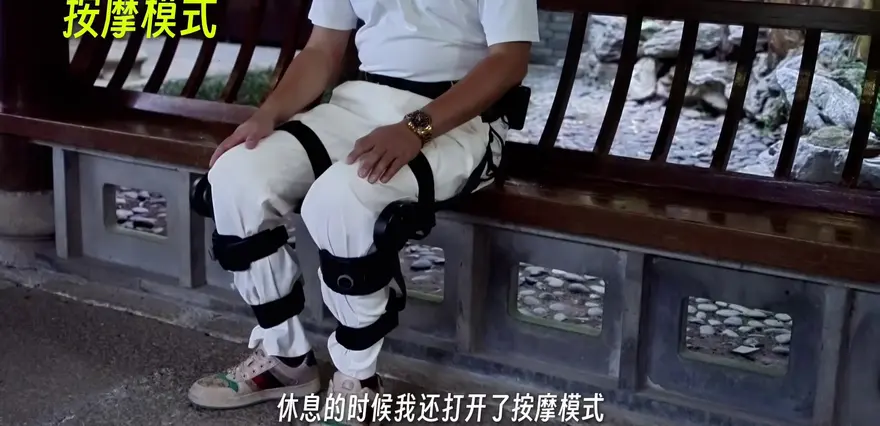
Another detail is the massage mode for during break times:
The motors produce a gentle vibration to relax the leg muscles, allowing for a bit of recovery right during the rest period, which makes the descent down the mountain much more comfortable as well.
These two small features fall into the "not a main selling point, but you can't live without them after using them once" category. The stand assist, in particular, made me realize what it truly means for seniors with declining mobility—it transforms "needing someone to help me up" into "I can stand up on my own." This preservation of autonomy holds a psychological value for seniors that is arguably greater than the few newtons of physical assistance it provides.

Even Flat Ground Is Its Main Stage: Battery Life, Use Cases, and the “Don’t Want to Take It Off” Feeling
After we finished descending, I originally wanted to help Dad take the exoskeleton off, but he waved his hand and said:
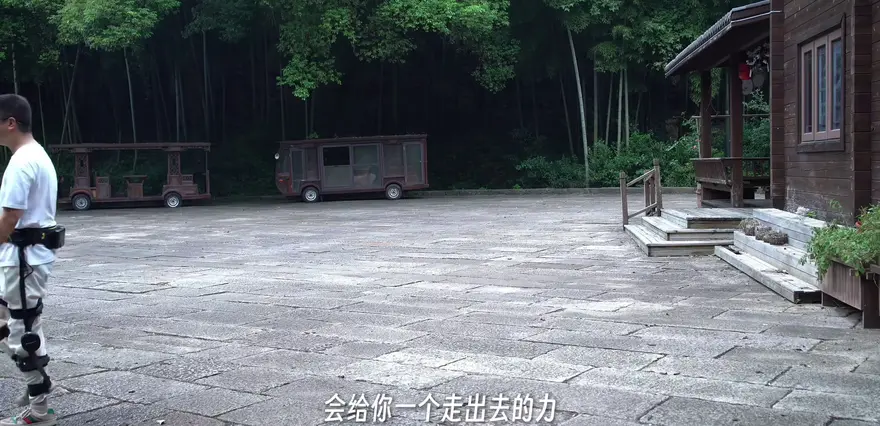
“Don’t take it off yet—it feels really comfortable for everyday walking, and walking on flat ground is easy too. I want to keep wearing it for a while.”
That made me realize something: this product’s real-world use cases are far broader than I first assumed.
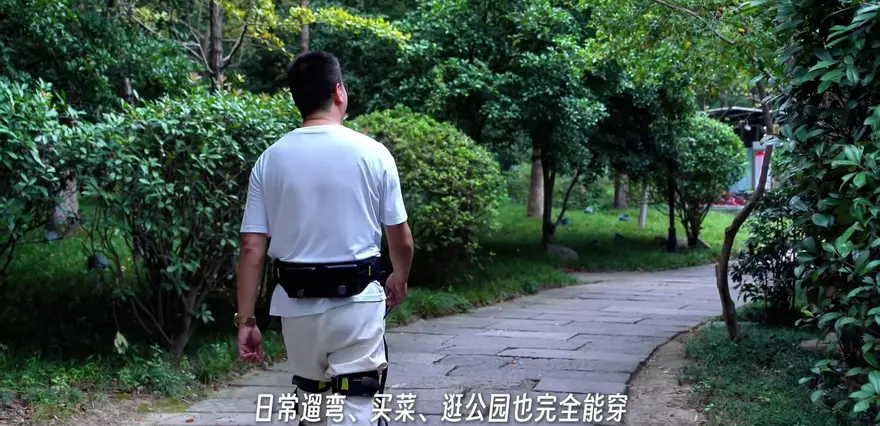
It’s not just for climbing and hiking. When walking on flat ground, the exoskeleton automatically switches to a “flat-ground assist mode,” delivering smooth power output that still feels punchy. Dad said his calves could clearly feel a force that “pushes you forward into your stride.”
This matters—if a device only works in very specific scenarios, its usage rate will be low, and it will eventually end up gathering dust in some corner of the house. But if you can wear it for everyday walking, it becomes useful for grocery runs, park strolls, and walks—its presence and perceived value are completely different.
Then there’s battery life / runtime—one area where consumer-grade exoskeletons often fall short. But PowerOne’s numbers are impressive:
10-hour runtime for daily use, and up to 5 hours of continuous use during intense uphill hiking.
In our real-world testing, after Dad walked a large loop around the core area of West Lake, the battery was still at half.
That means for most one-day sightseeing trips and day hikes, you don’t need to carry a spare battery.

Companion APP: More Than Just Data, It Delivers "Emotional Value"
The companion APP was a surprisingly pleasant bonus in this experience.
Features include:
- Viewing real-time movement data;
- Automatically generating 3D tour trajectories.
The entire route I took with my dad was automatically recorded.
Don't underestimate the importance of this feature. For the younger generation, being able to automatically generate and share a 3D trajectory of a hiking route is social currency in itself. For elders, looking back after a walk to see "how far they walked today, how high they climbed, and what the route looked like" provides a visual sense of achievement, which is actually another form of emotional value.
It pushes the "gear review" narrative from merely "is it functional" to "does it have a human touch."

What It Actually Is—and What It Isn't
Finally, I want to address a matter of perspective.
The concept of the "exoskeleton" in the market has become quite muddled over the past two years. There are medical-grade rehabilitation exoskeletons, industrial-grade assistive exoskeletons for lifting, and consumer-grade walking assist exoskeletons. Many buyers simply do not understand exactly what they are purchasing before making a transaction.
PowerOne falls into this specific category:
A consumer-grade knee joint exoskeleton focused on "uphill assist, downhill braking, and standing support," designed for seniors with compromised knees and hiking enthusiasts.
Therefore, it is not:
- A mobility scooter to replace your legs;
- A medical-grade rehabilitation exoskeleton (that belongs to a separate product line and typically requires a doctor's prescription);
- A mandatory "must-have standard" just because you are getting older.
It is:
- An active assistive exoskeleton that reduces the load on your knees from 6 to 7 times your body weight;
- A system utilizing AI predictive algorithms to provide real-time intervention with every single step;
- A versatile, all-terrain piece of equipment that is easy to put on and take off for both flat roads and rugged trails.
My conclusion is this:
For seniors struggling with knee pain, this is not a tax on intelligence; it is a visible and practical way to lighten the burden on their knees.




Top Community Comments
I was shocked by the statistic showing 6-7 times body weight pressure on the knees; no wonder going downhill is the most painful part for seniors.
This comment hits the nail on the head. Many people simply attribute "seniors being unable to walk well" to "poor physical strength," ignoring the mechanical load on the knee joints. This statistic turns "knee protection" from a vague concept into a quantifiable technical proposition.
I didn't expect it to provide walking assist even on flat terrain; that's a pleasant surprise.
This indicates that most people's initial expectations for this exoskeleton were limited to "hiking gear." The inclusion of walking assist elevates the product from "a niche item for specific scenarios" to "an everyday usable device." The increased frequency of use directly determines its real value.
If you have elderly family members at home, you really should consider this. It's more practical than any health supplement.
This comment touches on a very real consumer psychology: when buying "health" for elders, health supplements often contain a large proportion of psychological comfort. In contrast, a physical piece of equipment that can be seen, used, and discussed is more likely to be utilized by the elders and provide peace of mind to the younger generation.
Will elderly people become dependent on it if worn for long periods?
This is a very professional concern. In fact, the principle of an exoskeleton is different from a "mobility scooter"—it amplifies your own strength, rather than replacing your legs. This is the fundamental difference from electric wheelchairs and other devices, and it is also the core argument supporting the long-term rationality of consumer-grade exoskeletons.
Is this kind of product just collecting an "filial piety tax"?
I understand this vigilance, but watching the actual test data leads to a different judgment. A 6-times body weight impact force doesn't diminish just because of a "family affection filter." Being able to significantly reduce this load by 60 percent is not selling emotion; it is engineering physics.
I want to know if wearing it daily would actually make ordinary people tired.
This is a very practical question. Manufacturers will differentiate "assist levels" and "usage scenarios" during design—for example, entering a gentle mode for daily flat-ground walking. However, the specific physical sensation varies from person to person; it is recommended to try before buying, especially for elders with a history of significant injuries or illnesses.
I'm a bit worried if wearing it long-term might actually be harmful.
The logic behind this question is actually "does continuous external force intervention reduce the body's inherent capabilities?" Theoretically, a consumer-grade exoskeleton should be positioned to "help you exert force correctly" rather than "completely replacing your ability to exert force." The current industry consensus is that intermittent use has a positive effect on muscles, but long-term full-power dependency may need to be regulated under professional guidance.
It really would be hard to justify not buying this for your parents if you're a young person.
Although this comment is short, its tone is spot on: when "filial piety" takes on a physical form, it is no longer just a slogan, but an actionable and verifiable deed. Compared to sending health supplements or gift boxes, a product that can be worn on a dad's legs and accompany him to truly reach the summit is more like "visible companionship."
One-Sentence Summary
This isn’t a pair of “machine legs” that walk on their own—it’s more like a pair of “smart knees” that catch and support your knees when each foot lands, then give you a push when you lift into the next step. For seniors who want to keep getting out and about despite knee trouble, its uphill walking assist and smoother downhill control are the two most convincing features in this category right now.