How to Choose a Consumer-grade Exoskeleton: First Ask if Your Parents Want to Wear It, Then Ask if the Machine is Actually Helpful
Hiking with your parents, halfway up the mountain, your dad sits by the road and says, "You guys go on, I'll wait here."
In that moment, you might be moved—thinking that if you bought a consumer-grade exoskeleton, he wouldn't have to fall behind next time. But once you actually buy it, you discover: the elderly find it troublesome, they aren't used to wearing it, and they want to take it off before even stepping out the door. After spending thousands, or even thirty thousand, the exoskeleton ends up silently sitting in a closet.
"You are trying to solve the problem of 'getting tired after walking for a long time,' but you first need to figure out if it's suitable and if they are willing to wear it. You can't just assume your parents will find it as easy to use as someone else walking briskly.When buying, they focus on power and battery life, but they never tried on the whole set to see how much weight it is or how much space it takes up for storage. Only when taking it outside do they realize it's not as 'convenient' as they imagined."
The gap with exoskeletons usually isn't that the assist isn't strong enough, but rather in the daily experience: wearing and taking it off, straps, storage, and battery life. Therefore, in this video, the creator "Xiatian" brings us back to a more rational framework for judgment: looking at how to choose an assistive exoskeleton, with a focus on daily walking and general outdoor use, rather than confusing it with industrial-grade material handling equipment.



Check Usability First, Then Fit
To determine if a device is ready to be worn, the creator offers five questions. The order matters: can it be used, does it fit properly, does the machine's output keep up with your rhythm, is the battery life sufficient, and whether you need to stretch the budget.
First, usability. Today, we are comparing "consumer-grade walking assist devices." These are essentially assistive exoskeletons, not rehabilitation exoskeletons. Users need to be able to walk independently, lift their legs normally, and maintain balance, while meeting the specific requirements of the model. The machine is responsible for "assist," not "holding you up.If your walking suddenly deteriorates, you frequently fall, or you have late-stage usage needs such as bowel assistance, consult a professional for evaluation first."
When selecting for parents, do not place an order based solely on age, nor is it recommended to rely on just one model's marketing claim that it is suitable for family use—first, confirm if their gait and balance meet the device's limits.
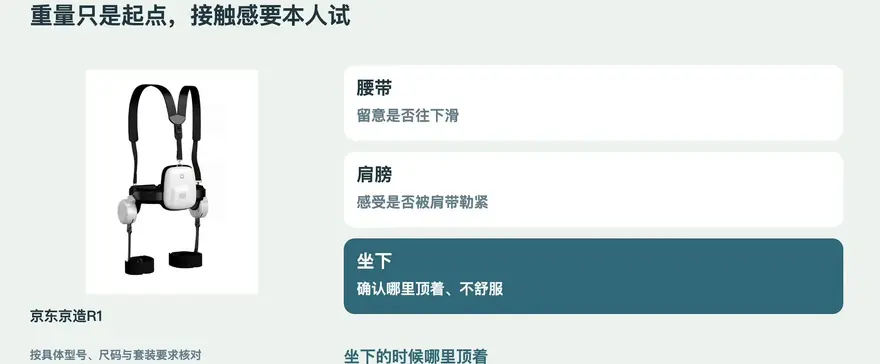
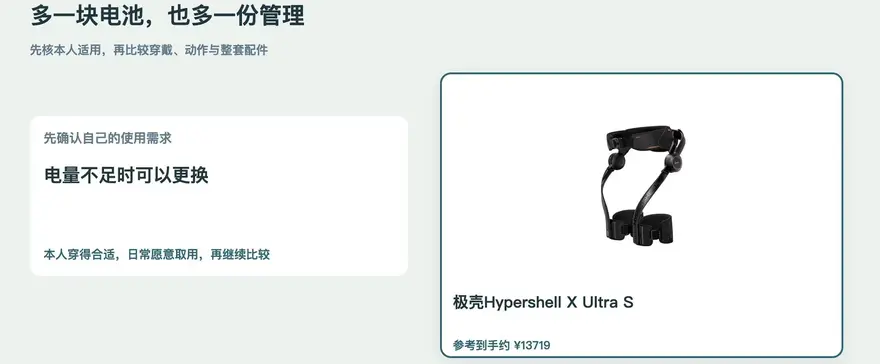
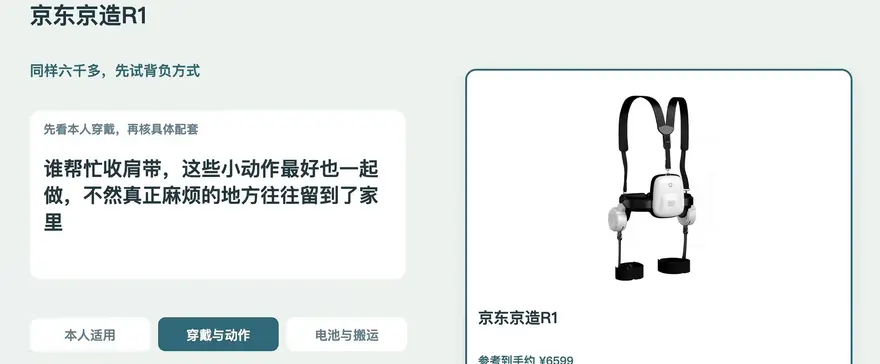
Second, fit. Do not judge solely by the overall weight. A complete unit typically falls in the 2–3 kg range, but the straps, shoulder harnesses, and battery also add to the total weight. Comparing two machines without factoring in the full setup is meaningless. Weight is merely the starting point; what follows is the relationship between the device and your body.
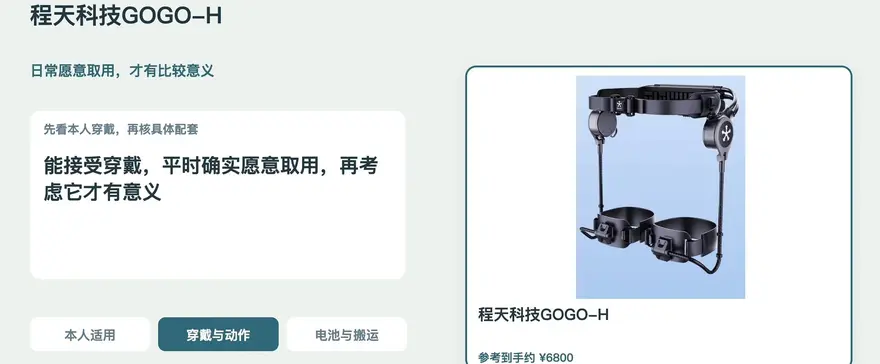
Ultimately, exoskeletons on the market offer two things: the daily experience of wearing and removing them, and the machine's output. Other people's praise isn't absolute; you must judge for yourself after putting it on.
Third, whether the machine's output matches your gait. Strong support for walking straight isn't enough; stopping, turning, and starting again are the daily actions that truly separate whether "you are in control" or "you are being dragged by the machine." If you usually walk slowly, do not deliberately exaggerate your stride just for the sake of device recognition; frequent outdoor users should also avoid temporarily challenging high-difficulty terrain just to show off the device. A proper assist always "follows your steps," rather than forcing you into a different walking style.
Calculate Battery Life Based on Your Daily Routine, Not Just the Spec Sheet
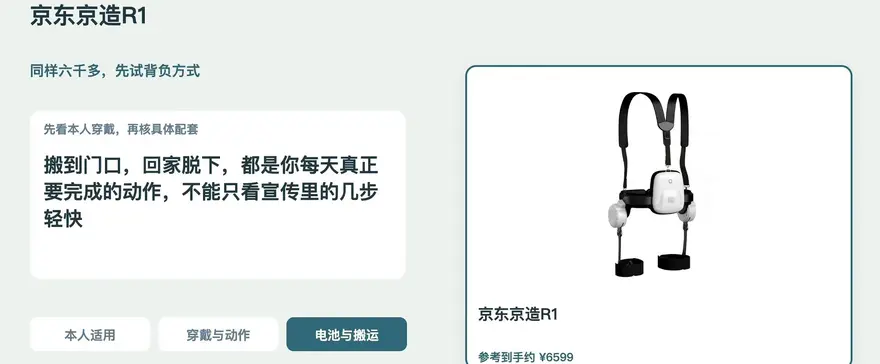
Fourth, the battery. Daily outings involve flat roads, inclines, and the return journey—and climbing uphill is what truly drains power. The UP host's advice is straightforward:
“If you schedule your return trip based on the rated range, you are highly likely to miscalculate halfway up the mountain.”
- For local walks: Don't over-specify for imagined all-day outdoor excursions. A consumer-grade exoskeleton with sufficient battery life that is lighter and more portable is better—carrying one less battery means one less burden.
- For frequent long outings: Consider spare batteries and midway replacement solutions. Of course, this means carrying an extra battery, an extra charging cycle, and ensuring proper storage.
- For neighborhood roaming: You don't need to stockpile a whole bag of accessories for a "possible" future mountain climb. Choose based on your daily action radius; a small margin is enough.

Lastly, the budget decision: "Pro" is not just a label, it's about the configuration
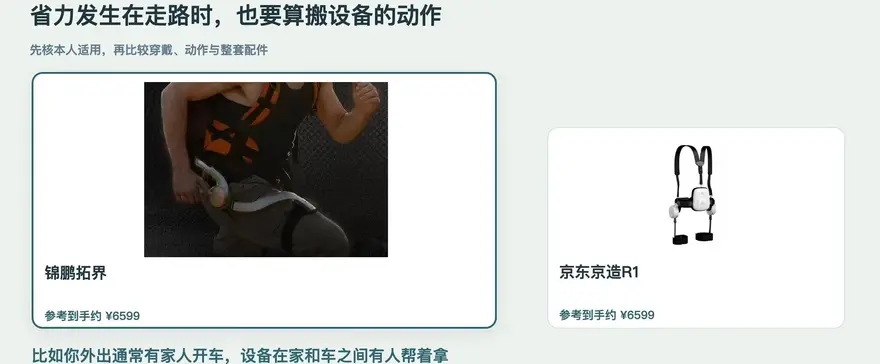
Fifth, whether to upgrade your budget depends on your actual usage intensity. A more tailored fit, the need for spare batteries, frequent load carrying, or wanting to explore different materials can all be valid reasons to spend a bit more. But please remember:
"A 'Pro' or 'Ultra' name doesn't guarantee a more comfortable fit for your parents."
This will be very clear in subsequent models—they are worth the extra money not because the name sounds stronger, but because they actually offer larger batteries, stronger assist, or different materials.
Hands-On Experience: From a "Daily Walking Model" to an "Advanced Light-Hiking Model"
Next, we move on to the hands-on test. The creator brought out two similar machines for comparison: one priced around 6,800 RMB, and the other around 6,500 RMB. While the price difference is minimal, the wearing experience is noticeably different.
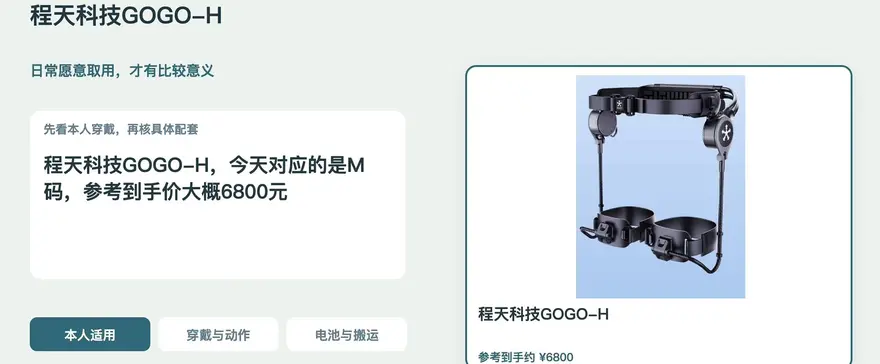
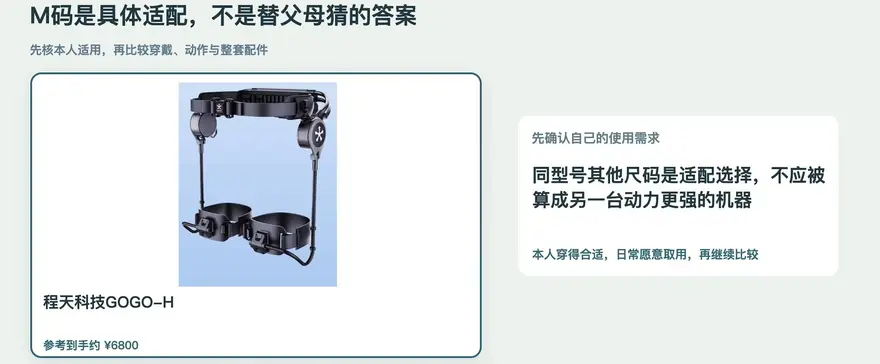
The first category is the top choice for "familiar routes and daily wear": Chengtian Technology GoGo H (Size M), with a reference price of around 6,800 RMB (mentioned in the video). This model is equipped with two motors, has a listed total weight of approximately 2 kg (mentioned in the video; actual weight depends on the specific set), a removable battery, and Bluetooth support. It is considered the "priority choice" because many users do not intend to challenge themselves on long treks with it—instead, they want their parents to walk effortlessly during their daily strolls and avoid tired feet when out and about.
"It's placed first because quite a few people don't intend to 'use the exoskeleton for a challenge'; rather, they just want to walk more easily in their daily lives."
What should you look for when getting hands-on? Three points:
- Ease of putting on and taking off: Getting parents into it is one set of actions, and taking it off is another. Practicing back and forth at home a few times will quietly answer the question of whether it can "be worn consistently in daily life."
- Whether the straps loosen: If you have to walk a bit and then go back to tighten the waist belt, it isn't truly a "fitted" wearing experience.
- Whether the battery can be removed independently: Being removable is a convenience, but it doesn't mean older adults will figure it out on their own. You will need to teach them the charging port locations and operational steps, and ensure they can maintain it easily.
Leveling Up: How to Choose for Light Hiking and Outdoor Use
If your usage extends beyond the neighborhood and you're chasing weekend "light hiking" trails, it's time to step up to a machine that prioritizes greater walking assist and battery life. The creator highlights two pieces of gear as examples:
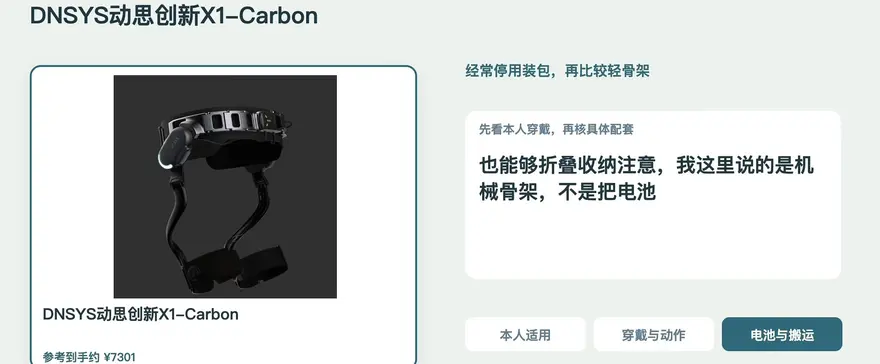
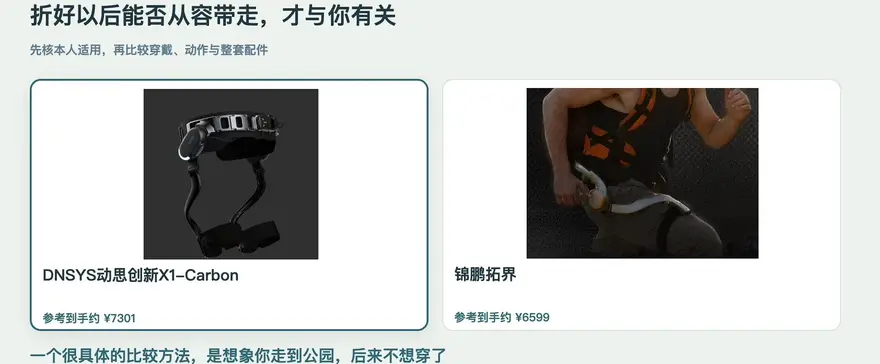
- Dnsys X1-Carbon (Size 10): Referenced in the video, the total weight worn is around 2 kg (the commonly listed spec is ~1.6 kg, with actual weight varying by size). Compared to the lighter, entry-level options mentioned earlier, its range of application and assist profile are better suited for "stop-and-go" outdoor routes.
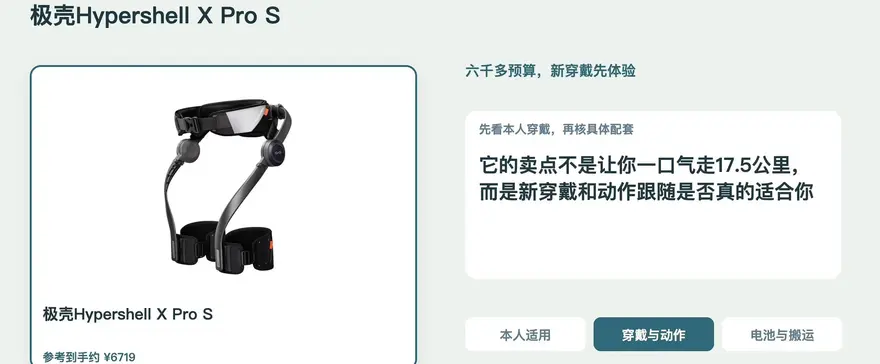
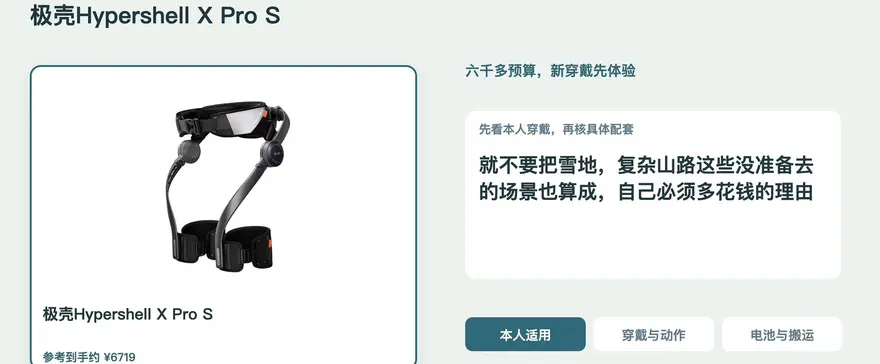
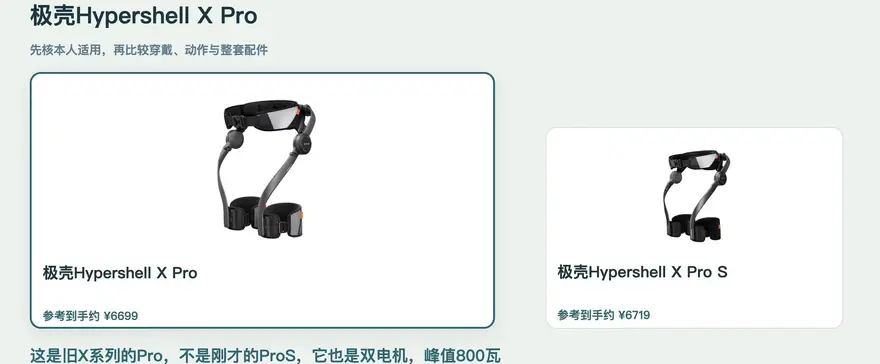
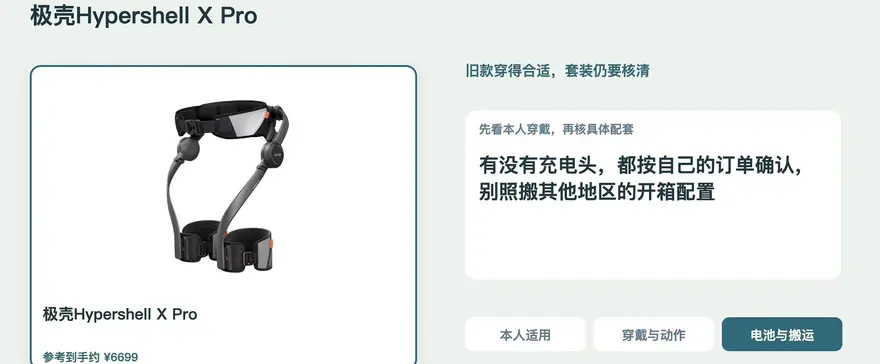
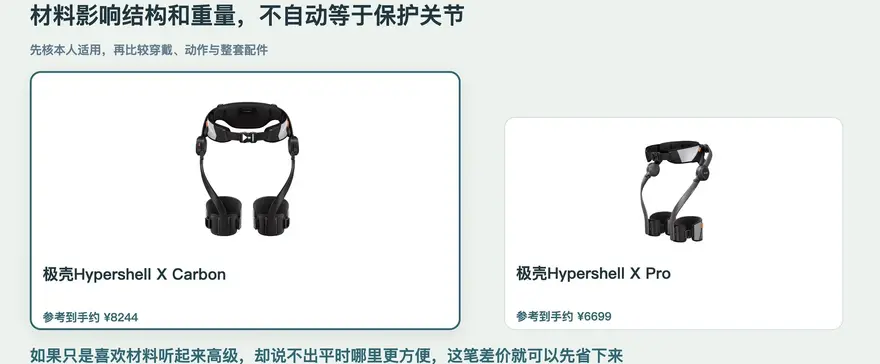
- Hypershell X Pro / Pro S: If you can find a previous-gen model that fits well and includes clear accessories, it's worth considering; the new Pro S emphasizes a refined tuning for "snug fit + assist detection." Hypershell's machines are more inclined to "follow your steps" in terms of lumbar/back and hip assist coordination, making them very friendly for everyday walking and gentle uphills.
Advanced Tier 2: Longer Routes, Longer Battery Life, and Higher Payload Capacity
If you travel more frequently, tackle longer routes, or even need a spare battery, you will need to step up to a more capable, albeit heavier, machine. The content creator outlines three main paths:
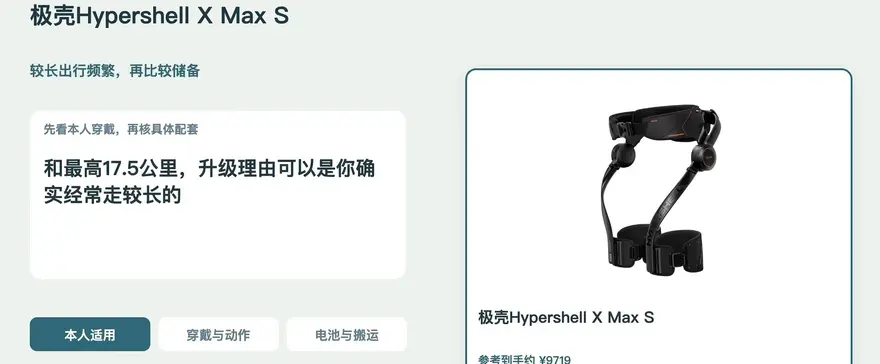
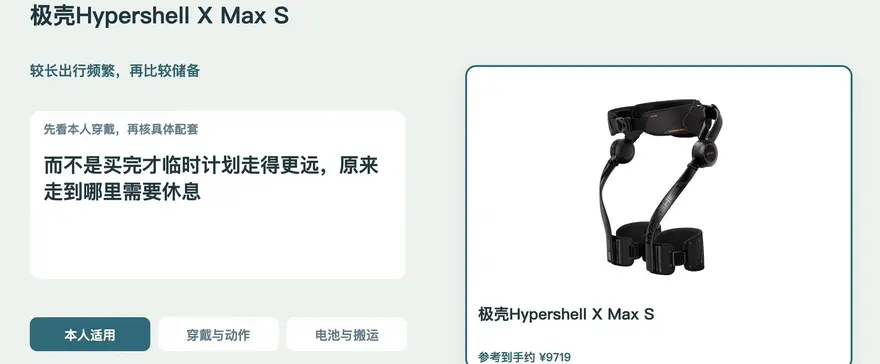
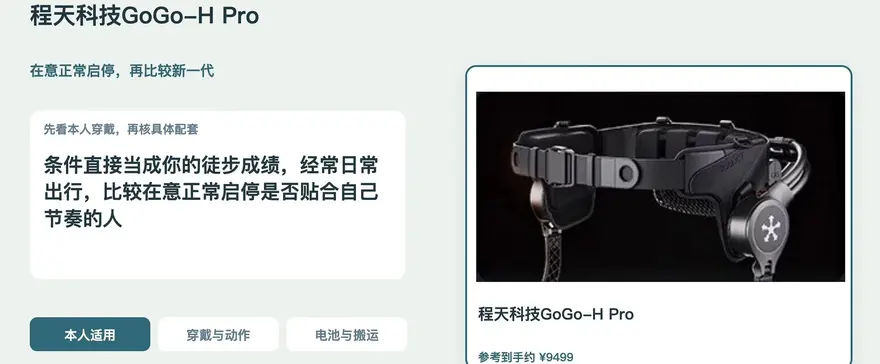
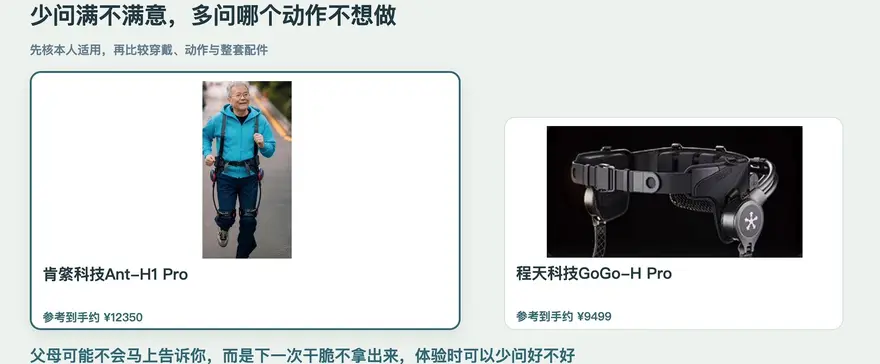
- Hypershell X Max (Standard Travel) + GoGo H Pro (Quick Assist): The X Max is better suited for outdoor long-haul trips, while the GoGo H Pro offers assistance with a more responsive feel. Your choice depends on personal preference.
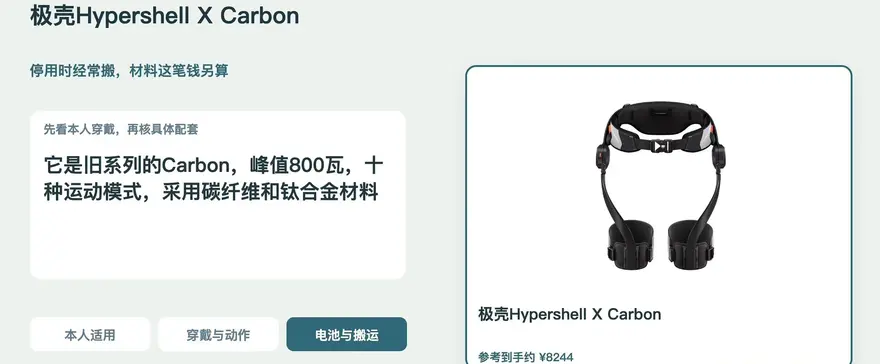
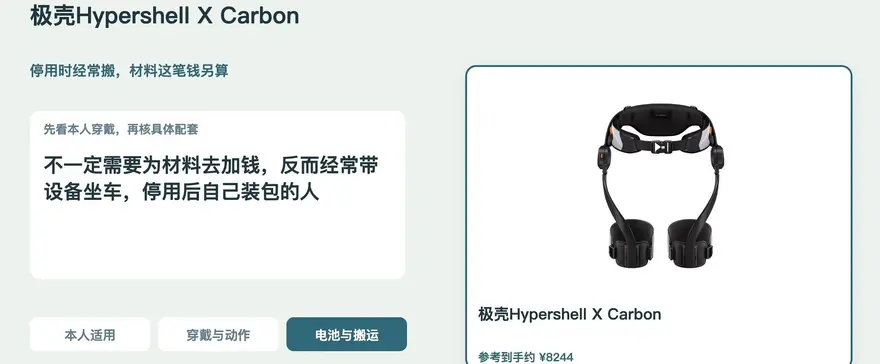
- For those who prioritize storage and portability, look at the Hypershell X Carbon. It emphasizes a lightweight design and foldable storage while maintaining assistance, ensuring it won't become a burden after long hours of walking.
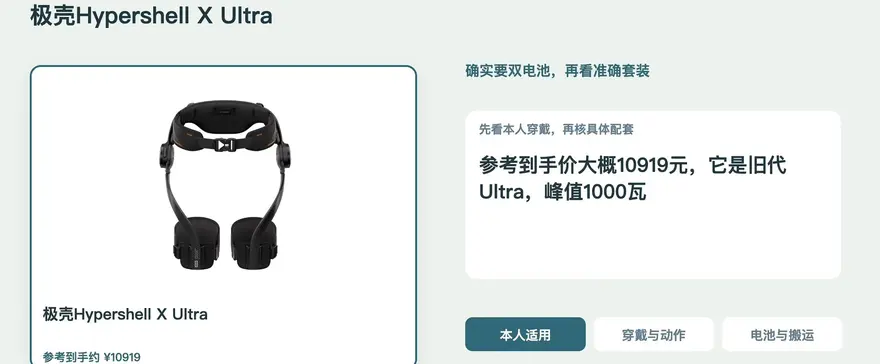
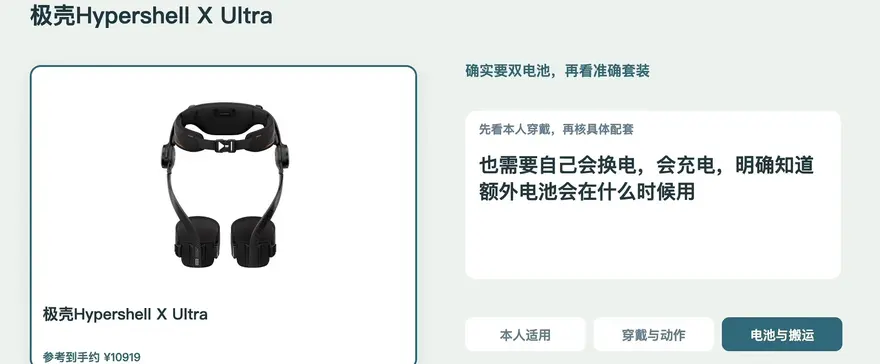
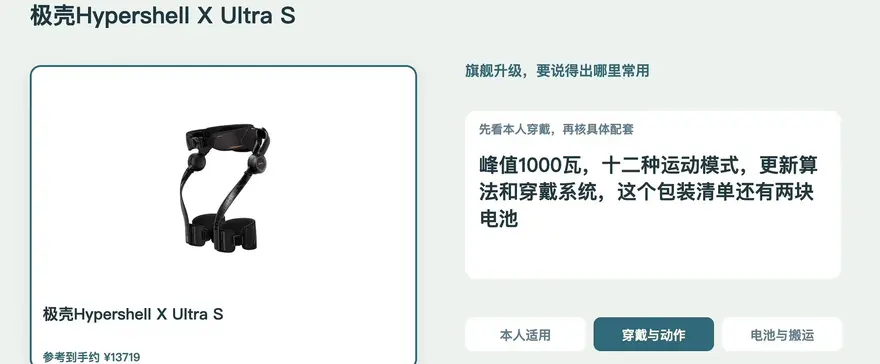
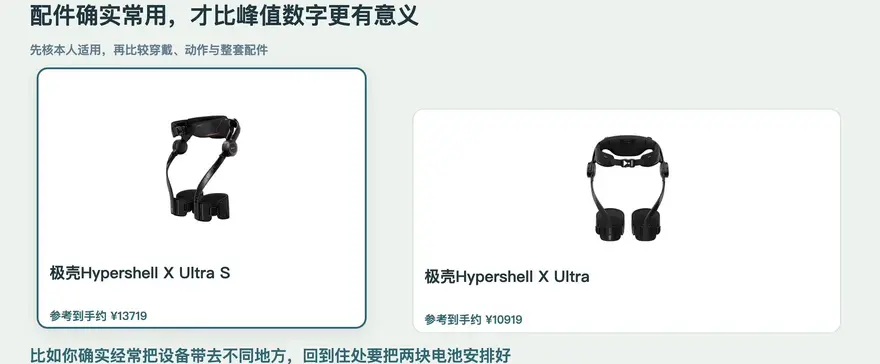
- If you specifically need dual batteries, step up to the Hypershell X Ultra. The video mentions its configuration as HXU-900W-TPU ("900W" here likely refers to the peak power rating of the servo motor, though specific battery life should be based on manufacturer data).
- If you are looking for a true "long endurance version," spend a bit more for the Hypershell X Ultra SP (P904): this is the "high endurance version" of the Ultra, suitable for long hikes, suburban sightseeing, and scenarios requiring stable all-day performance.
"The existence of a high-endurance version is to help you handle variables, not to let you challenge entirely new difficulties."
Budgeting Over 10k: From "Lightweight Picks" to "Reliable Choices"
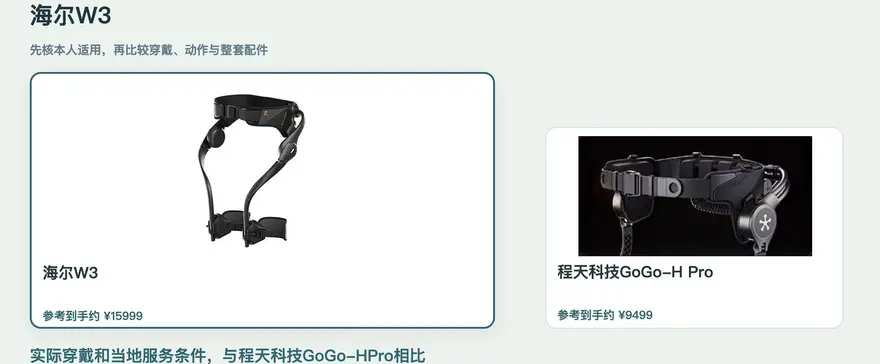
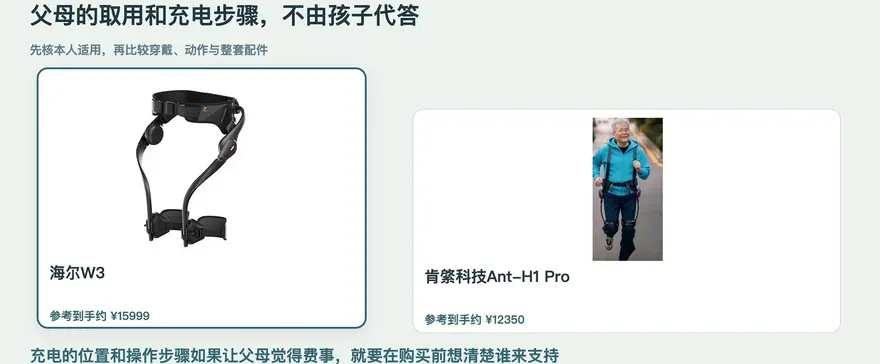
If your budget reaches the 10,000 Yuan mark, the creator also shared his personal preferences. He leans toward the Chengtian NTHE Pro (Size M for height/waist), as well as the Haier W3 (Model details: refer to the manufacturer's final specifications before purchasing). Their advantages include:
- A more stable assist, making them suitable for people sensitive to physical sensations;
- More comprehensive status feedback, allowing for easy adjustments with family assistance;
- A more complete accessory system, ensuring easier access to spare parts for maintenance.
However, please note: this isn't a case of "the more expensive, the better." If your usage scenario is just around your local neighborhood, a lightweight model is more appropriate and more convenient to carry.
The Last Three Things: Document the Unboxing, Save Proof of Warranty, and Storage for Moisture Protection
Regardless of which model you choose, ultimately ensuring a great experience depends on your "post-purchase actions":
- When it arrives, take photos of the nameplate and all accessories, checking them against the order list. Activate the device only after confirming the complete set is correct, and consult customer service to verify the "exact package contents".
- Save the warranty coverage details and repair procedures. Ask clearly about the separate handling processes for the battery, straps, and other accessories. Don't wait until you need a repair to scramble for a contact person.
- Follow the instructions for handling the ports and battery at home, and store them in a dry place. Do not casually discard the packaging and moisture-proof accessories.

"The biggest fear for an exoskeleton is you feeling it is useless, rather than it being too heavy."
Top Community Comments
@Reader (Likes: 1): Is the 1.6 kg weight of the DNSYS X1-Carbon (Size S) the total weight worn on the body?
This comment hits a crucial point: mixing "overall machine weight" and "total ensemble wear weight" can mislead purchasing decisions. The video's host also mentioned that the total system must be calculated as a full setup. When purchasing the X1-Carbon, it is crucial to experience the actual physical burden of the complete assembled gear rather than solely relying on paper specifications.
@Reader (Likes: 0): With a sufficient budget for the Hypershell X Ultra (P904), does it mean I can just extend my hiking route?
This highlights the typical "budget-capability" anxiety: having the budget does not necessarily equate to having the capability. The P904's battery life / runtime version is indeed better suited for long-distance treks, but the purpose of increasing battery life / runtime is to handle unexpected variables, rather than pushing your limits far beyond your routine trails. The relationship between increased trail difficulty and the enhanced battery life / runtime must also be evaluated alongside your personal physical fitness and gait habits.
@Monologueyc (Likes: 0): The code for the Hypershell X Ultra (HXU-900W-TPU) is written as 900W; how should this motor power be interpreted?
This comment brings us back to the fundamental concept of motor power: the 900W figure represents the peak output parameter of the servo motor used to describe maximum assist intensity, which operates on a completely different curve from actual battery life / runtime. Runtime depends heavily on battery capacity and control strategies, rather than being determined by a single metric. Before making a purchase, it is essential to confirm both the total endurance (in hours) and the subjective assist experience, rather than obsessing over a single numerical value.
One-Sentence Summary
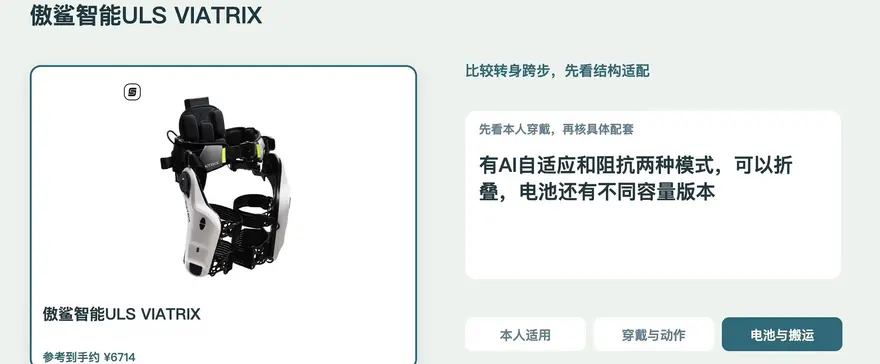
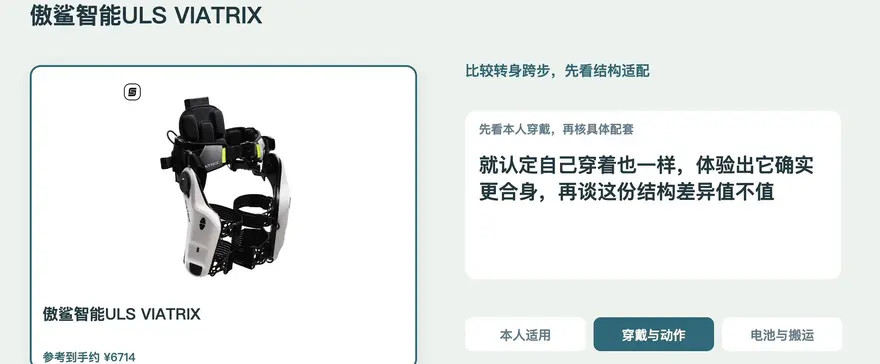
The methodology of this review is straightforward: when it comes to an exoskeleton, put the person before the machine. If you want to help your parents enjoy walking along familiar routes with less effort, start by trying on an everyday model like the Chengtian Technology GoGo H. If they have a wider living radius and frequently head outdoors, upgrade to the Hypershell X Pro / Max / Ultra (including P904), or the Dnsys X1-Carbon and Aoshark ULS VTX. Ultimately, keep in mind that the true value of an exoskeleton lies in taking one more step for you rather than making you stronger. But when chosen correctly, the latter usually happens alongside the former anyway.