Putting on an "Extra Life": Hands-On Experience and Thoughts from a 7.5 km Real-World Run with the Hypershell X Pro Lower-Limb Exoskeleton
Preface: As sci-fi becomes reality, do we really need a pair of "mechanical legs"?
The star of today's hands-on test is a consumer-grade exoskeleton from Hypershell. We got our hands on this product prior to its official launch and put it on immediately, preparing to see just how much of our leg exertion this mechanical structure could take over during a real 7.5 km road run.
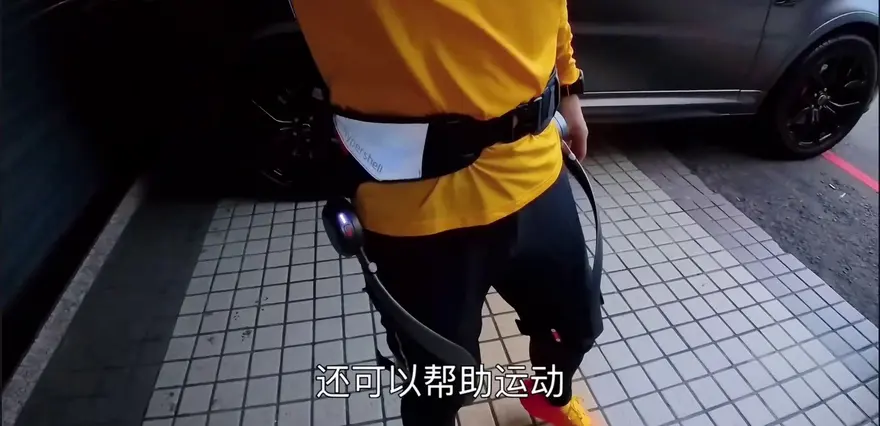
Many people's perception of an "exoskeleton" is still stuck on medical-grade rehabilitation exoskeletons, but the product we are testing today is clearly more hardcore: it's an assistive exoskeleton designed for daily sports and hiking scenarios. After putting it on, I switched the device to its widely acclaimed "dynamic mode" and set the power output to 50% intensity.
"Today we're going to test this, let me show you guys this thing I have on. This is an exoskeleton, and it can help you exercise."
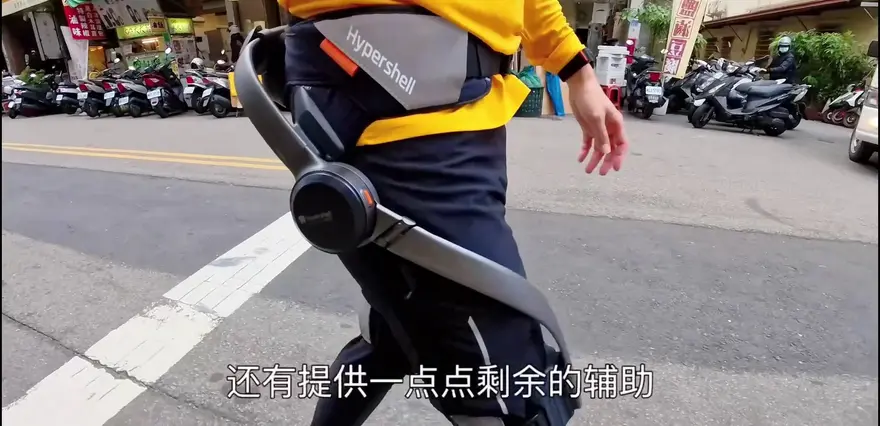
The operating principle of this exoskeleton isn't complex; its core is to provide additional propulsion while you are walking or running, powered by servo motors and sensors equipped on the legs. When you first put it on, it feels like wearing a lightweight carbon fiber brace around your waist. But as you take your first step and the brushless motor hidden within the joint activates, a fascinating sensation begins.



Core experience: thigh “autopilot” and power intervention on uphills
At the start of the trip, we quickly hit an uphill stretch that went on for over a hundred meters. It was the perfect test track for the real capability of this walking-assist exoskeleton.
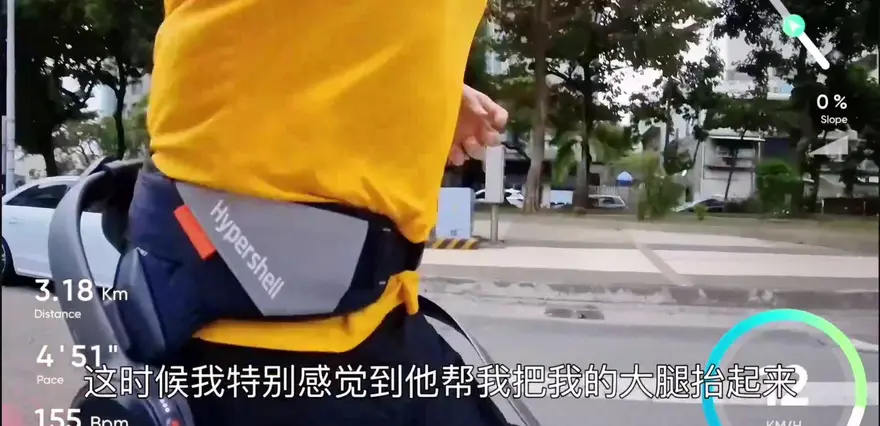
During the ascent, the device’s built-in sensors (IMU / pressure sensor) rapidly captured my forward-leaning posture and gait data. With almost zero latency, the motors responded and began to supply torque, and I could clearly feel an external force lifting my thighs upward. This “thigh-lift” assist logic effectively reduces the eccentric contraction of the quadriceps, making the climb noticeably easier.
“On the uphill, you can really feel it helping—it’s like it’s lifting my thighs for me.”
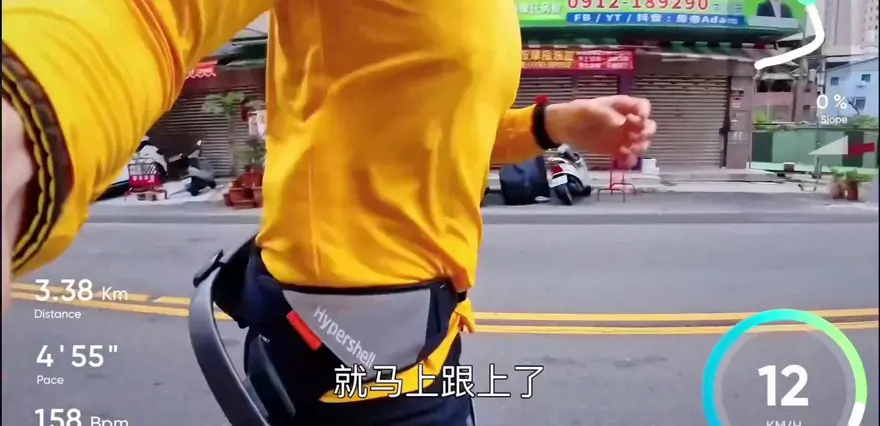
On flat ground, the intervention is more restrained. The device mainly gives a gentle forward push to keep you moving, rather than abruptly taking over your steps. The hip-assist module’s engagement feels natural and doesn’t interfere with changing direction or handling more complex walking patterns.
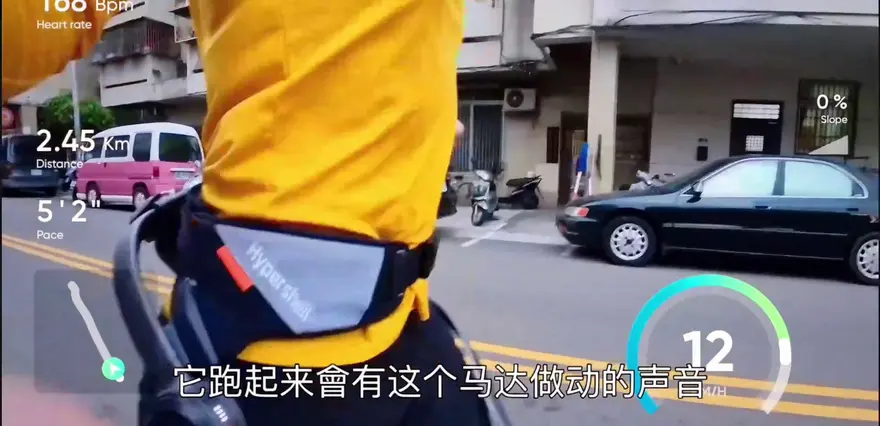
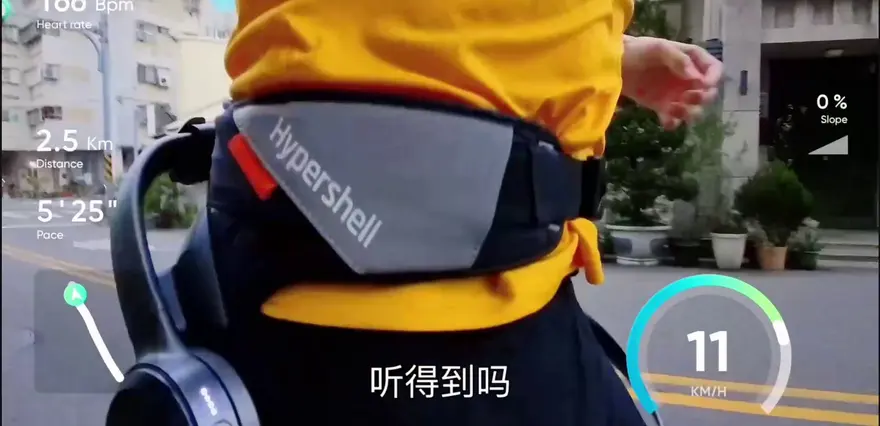
That said, if you switch to the high-intensity mode, the mechanical assist becomes very obvious. During the video test, I intentionally tried the so-called “Hyper mode.” In this mode, the device delivers higher torque for high-intensity movements. When your step rate increases, the motors produce a higher-pitched sound. It may sound a bit over-the-top, but this audible “sound cue” from the mechanism gives users a strong psychological boost—you can feel that a powerful force is backing you up.


Mode Adjustment and Software/Hardware Customization
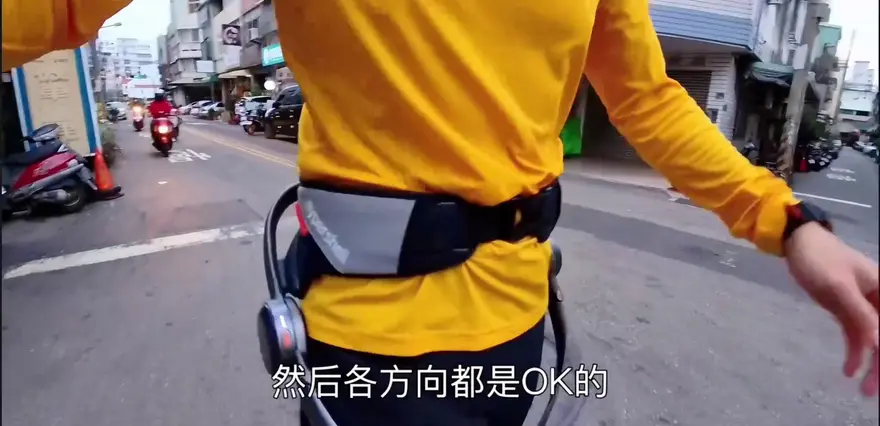
The Hypershell device is not overly complicated in terms of controls, yet on its small body it still retains several physical adjustment buttons.
When walking around town, you can freely switch between what Hypershell calls “Hyper mode” and “Echo mode.” The former provides stronger power output, making it ideal for climbing hills or running fast; while the latter dials the assist down for a gentler, less intrusive feel that’s better for relaxed strolls.
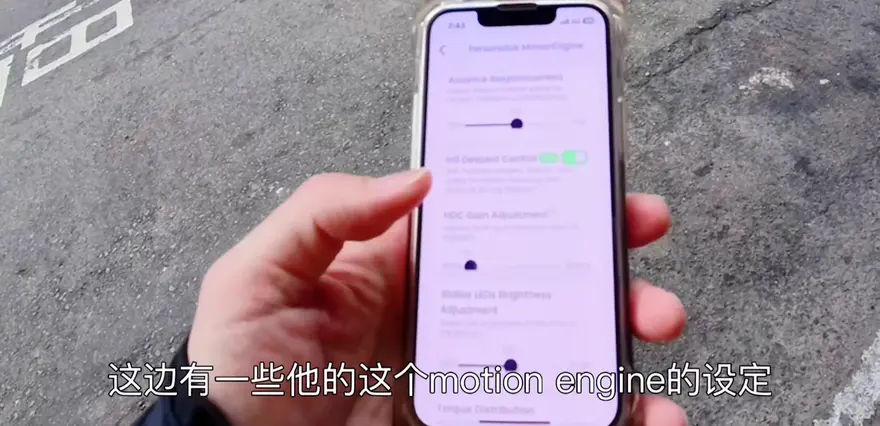
While waiting at a red light, I connected the device via the mobile app and fine-tuned its motion engine. Here, you can toggle Heel Distance Control (HDC) and adjust the motor’s Gain.
“I just turned HDC on—looking forward to seeing what changes next time. The prompt warns that setting the Gain too high can slightly disrupt the smoothness of the gait.”
Additionally, the app lets you independently set percentage outputs for the left and right legs’ joint torque. During this testing phase, I kept both sides at a balanced 50% output, and the setup remained remarkably stable on road runs—gait transitions felt natural, with no noticeable left-right imbalance or tugging.


Adaptability to Complex Terrains: From Flat Ground to Gravel Trails
To more rigorously test its perception capabilities, I explored diverse and complex terrains, ranging from flat concrete paths to dirt trails scattered with gravel.
The most impressive aspect of the system is its recognition of dynamic gait variations. When you deliberately lift your leg to take a prominent step, the exoskeleton instantly predicts your exertion intent and delivers noticeable kinetic feedback. This advanced sensing mechanism keeps the device highly responsive and in sync with your movements in challenging outdoor settings, ensuring it never drags or slows down your walking pace.
However, I did uncover logical limitations in extreme scenarios. When traversing ground fissures or stepping onto a high platform, the sensor's feedback mechanism interprets this as a need for sustained, high-power exertion. Consequently, the motor releases all the assistive force abruptly, resulting in a jerky sensation of being "pushed forward.When I stepped up onto a curb, its reaction was instant, but it likely anticipated I would need to take several more steps, causing the assistive force to continually ramp up—this is a detail users need to be particularly aware of."
This overly conservative power-assist strategy is essentially an algorithmic trade-off between safety and responsiveness. For a consumer-grade exoskeleton that specializes in sports and trekking enhancement, safety redundancies (such as fall protection) are naturally the top priority in algorithm tuning.




The Crucial Metrics: Battery Life and Power Anxiety
Next, let's talk about the battery life, which is what everyone cares about most. Before setting out for this test, I charged the battery to 100%. Over a 7.5-kilometer test course lasting about 55 minutes, it actually ran in Hyper mode for about 35 minutes, after which the remaining power could no longer support the strong power output of the Hyper mode.
Based on the data mentioned in the video, in Hyper mode, it can deliver about 35 minutes of strong power output. In reality, during the latter half of the test, when the battery was drained, the device didn't just shut down entirely; instead, it entered a low-power coasting mode (similar to the power-saving mode on a smartphone), which still provided a slight, baseline level of assistance.
This brings up the trade-off between battery life and weight. In our tests, the device's weight is roughly just over a kilogram (specifically around 1.5 kg). Even when completely turned off, wearing it doesn't create a severe burden, and joint flexibility is retained. However, for professional runners, having the exoskeleton become a pure dead weight halfway through a run will inevitably affect their pace.
We also conducted a runtime estimation for the Echo (low-power) mode during the test. Additionally, the device supports fast charging and discharging technology to meet the needs of short trips. But for longer distances requiring hiking / trekking assist, current battery technology remains the biggest bottleneck in the entire ecosystem.





Full Review of Product Details, Pros, and Cons
Based on high-intensity testing over this period, Hypershell’s product demonstrates the qualities expected of a qualified consumer-grade exoskeleton, while also exposing some industrial-design issues that urgently need improvement.
We summarize its core performance as follows:
Pros:
- High joint flexibility: The flexibility of the leg joints is impressive. It barely interferes with natural skeletal rotation and bending, offering excellent adaptability.
- Natural assist engagement: The leg-lift logic during uphill climbs is highly precise and effectively reduces effort, while the simulated sensation of being pushed from behind feels spot-on.
- Rich mode selection: The wide range of adjustments available through a combination of software and hardware meets various exercise intensity demands.
Cons:
- Obvious battery-life bottleneck: In Hyper mode, 35 minutes of endurance feels tight for long-distance runs of over 7.5 km or hiking/trekking sessions.
- Average adaptation to forward-leaning running gaits: For running postures with a pronounced forward lean and large thigh swing, the device’s sensing and assist intervention can feel slightly delayed.
- Assist logic on uneven surfaces: On complex terrain, the assist output feels somewhat rigid, which can create a jerky or stuttering sensation during jumps or when the foot lands.
Additionally, the tests mentioned features such as a fall-protection emergency mechanism, and the ability to adjust the left and right joint torque as well as the max payload via a smartphone app. However, judging from this hands-on test, there is still room for improvement in its overall performance.




Data Recap & Final Takeaways: Is It a Runner’s “Second Muscle” or Just a Heavy “Tech Toy”?
At the end of testing, we reviewed the device’s data charts to evaluate its real-time performance. One standout metric was the clear reduction in processing time (response latency). This improvement comes thanks to optimized sensor (sensor (IMU / pressure sensor)) algorithms at the core of the system, along with hardware upgrades to the servo motor (servo motor / brushless motor).
As the 7.5 km test wound down, my strongest takeaway was this: it’s evolving from a “bulky add-on” into a true “second muscle” that understands your gait. If, with the drastically reduced response latency, its battery life could double and it could fully address the added weight when the power is off, it would become an indispensable performance assist for every long-distance runner and hiking enthusiast.


Top Community Comments
@Reader (0 likes): The battery life is only 35min, it's really not good enough.
Analysis: Battery life / runtime is currently the most acute weakness of consumer-grade exoskeletons. A 35-minute endurance (in hours) under high load is indeed insufficient to support a long-distance run, such as a half marathon or longer. This is the primary barrier preventing it from transitioning from a geek toy to mainstream athletic equipment.
@Reader (0 likes): Hey buddy, are you in Shenzhen? I'd love to try it out for a fee [starry eyes]
Analysis: This comment reflects the "scarcity" inherent in the current exoskeleton industry. As an emerging wearable device, it generates significant public curiosity. However, the lack of distribution channels and experience stores has led to "experience anxiety" among a large number of potential consumers.
@Reader (128 likes): To be honest, current exoskeletons are more like oversized knee pads. They are okay for going uphill, but once you pick up the pace on a flat run, they just drag you back.
Analysis: This comment pinpoints the awkward positioning of exoskeletons in sports scenarios. When users attempt to significantly increase their pace, the existing dynamic algorithms and mechanical structures struggle to match the limits of human movement. Consequently, the device can easily shift from providing assistance to adding resistance.
@Reader (86 likes): If it had an auto-triggering fall protection feature, I would pay extra for it. It's a must-have for outdoor trail running now.
Analysis: Users are urgently seeking a shift from a singular focus on "strength enhancement" to comprehensive "safety protection." Fall protection can significantly mitigate the risks associated with niche sports, making it a core selling point for the future differentiated competition among exoskeletons.
@Reader (54 likes): I've placed pictures of the two versions side-by-side. The lumbar / back assist module on the old model was too loose and the runtime was only half as long. The improvements on the new model are obvious.
Analysis: Seasoned users are highly sensitive to product iterations. The stability of the lumbar / back assist module directly impacts the efficiency of power transmission. This upgrade has effectively solved a major pain point for long-term users.
@Reader (21 likes): Watching how effortlessly it handles uphills in the video makes me want to take it to trek Mount Siguniang. It would be perfect if the weight could be kept under 1kg.
Analysis: Hiking and trekking assist remain the highest-potential applications for consumer-grade exoskeletons. The user's sensitivity to weight ultimately defines the market ceiling for such products.
One-Sentence Summary
The Hypershell lower-limb exoskeleton is a polarizing "sports assistive device": it delivers an almost unfair mechanical advantage during uphill hiking, but constrained by current battery technology, it remains best suited for short-distance trials and off-road experiences—still some distance away from becoming standard gear for long-distance running.
About this article: part of Chinese-Made Exoskeleton Review Archive — an independent, regularly updated English archive of reviews of consumer exoskeletons made in China, edited from publicly available video transcripts. Not an official manufacturer page.
For inquiries and purchasing, contact lonlonago@foxmail.com. More in Reviews · All articles.