The ¥7,499 "Power-Assisted Legs": Hands-On Hiking Test of the Hypershell X Pro Consumer-Grade Exoskeleton — TESTV Only Gave It 6.75
The story begins with a team-building event: the team's female video editor picked hiking as the activity, and the ones assigned to it fell apart on the spot — "You think I actually want to go?" A solution surfaced just as quickly: someone had long had their eye on a product, the Hypershell X Pro smart exoskeleton. "How about the company approves a bit of budget and we buy one to try it out?" Another colleague was even more direct: "No need — just send me the link, I'll buy it myself."
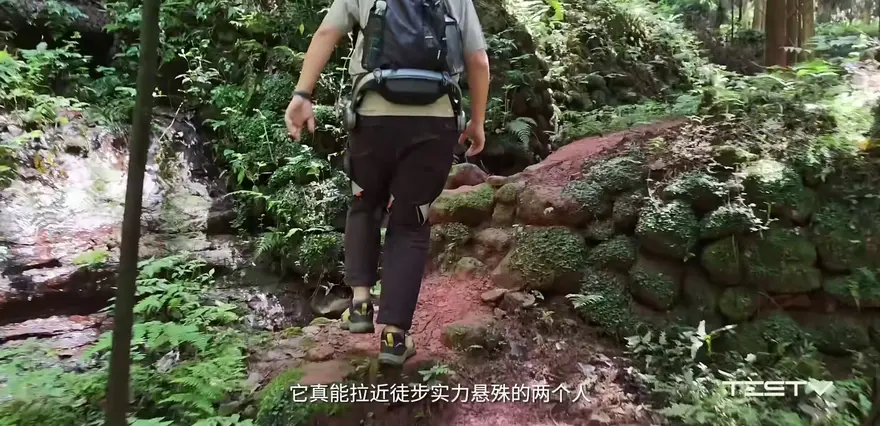
And so came this hiking field test, completed at Dayuandong on the outskirts of Chongqing. In TESTV's words, this is a pair of "power-assisted legs": when you want to walk, it turns your small steps into big strides. This long-form piece strings together the specs, hands-on impressions, gripes, and final score scattered across the video into a single thread — and along the way, answers a more fundamental question: has the consumer-grade exoskeleton truly reached the point where it's "worth buying"?
1. Positioning: Not Rehabilitation, Not Elderly Assist — Laser-Focused on "Outdoor Sports Performance"
First, let's be clear about what this thing actually is. The Hypershell X Pro is a consumer-grade assistive exoskeleton, and structurally it's a classic hip assist (hip-assist) design: motors are mounted on both sides of the hip joints, transferring force through a waist belt and thigh straps — one of the lightest form factors in the lower-limb exoskeleton category. It's an entirely different species from the rehabilitation exoskeletons you find in medical institutions — those are mostly medical-grade devices that address whether a person "can walk at all." Hypershell, by contrast, draws its product boundary very clearly:
"It's not for rehabilitation training, nor is it a walking assist for the elderly — it's about enhancing your performance in outdoor sports." (as mentioned in the video)
It's a smart entry point to pick. The exoskeleton industry today is essentially split into three tiers: Chengtian, Kenqing, and their peers focus on medical rehabilitation; Aosha and similar players hold down the industrial material-handling scenarios at airports and in logistics; while brands like Hypershell and Dnsys — along with traditional outdoor manufacturers such as Toread — have all placed their bets on the consumer scenario of "hiking / trekking assist": a clearly defined pain point (uphill climbs are exhausting), a user base willing to pay, and results you can see with the naked eye.

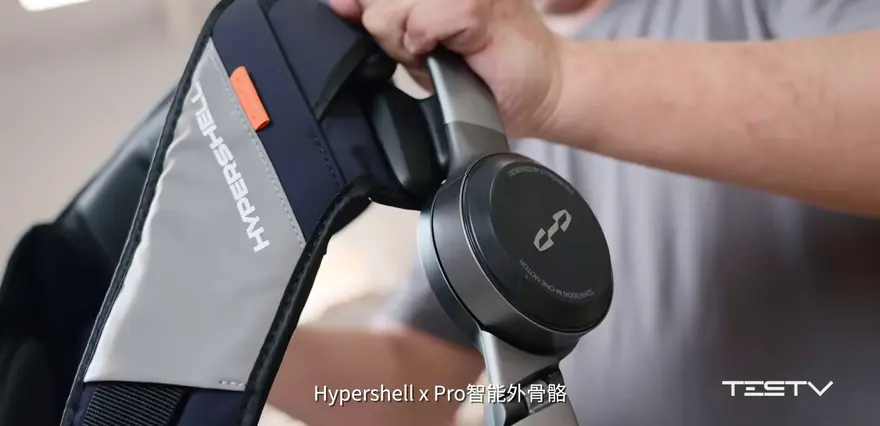
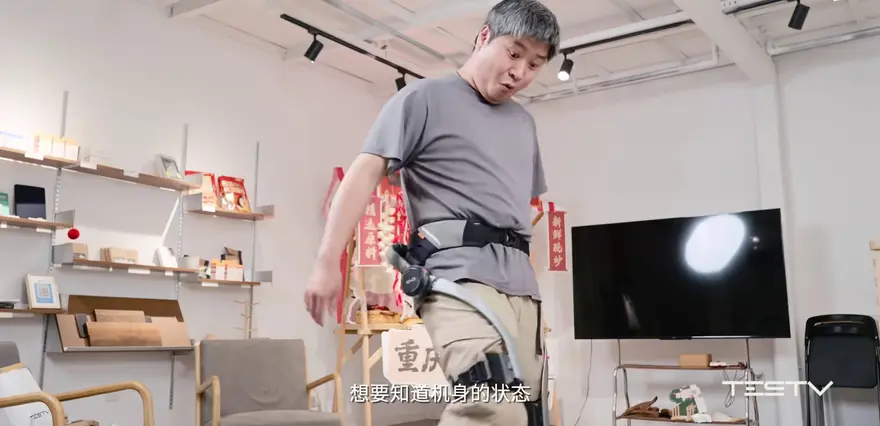
The analogy at the start of the video is worth pulling out on its own: "Any sport gets a whole lot easier once you add a bit of electricity to it." The e-bike is the best point of reference — "not only does pedaling become less tiring, you don't lose any of the joy of riding." Whether the exoskeleton can replicate the e-bike's success comes down to exactly this: it has to save effort, but it can't save away the fun of the sport along with it. Judging from the hands-on tests that follow, at least in hiking scenarios, it has — for now — held that line.
2. Getting Started: Three Buckles, a Quick-Release Battery, and DJI-Style Anti-Mistouch
The reviewer describes the donning process as "unbelievably simple": three buckles, tighten the straps, wrap the waist belt around your waist, and position the thigh straps "two fingers' width above the knee" (as mentioned in the video). The entire process involves no complicated adjustment mechanisms, making it very beginner-friendly.

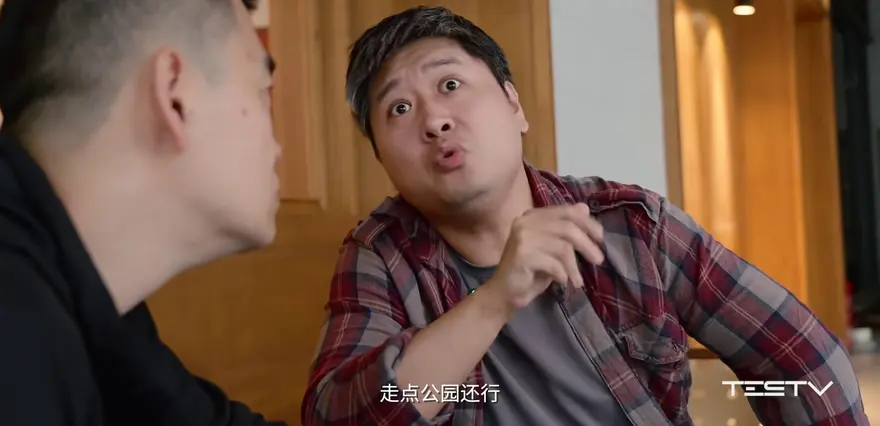
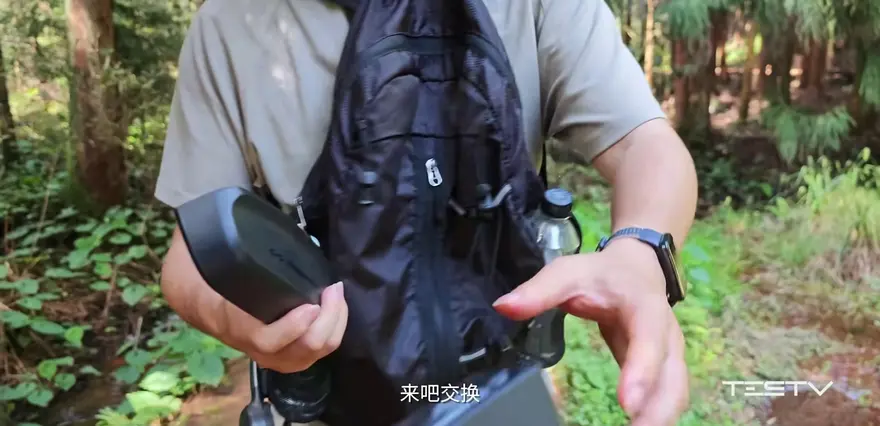
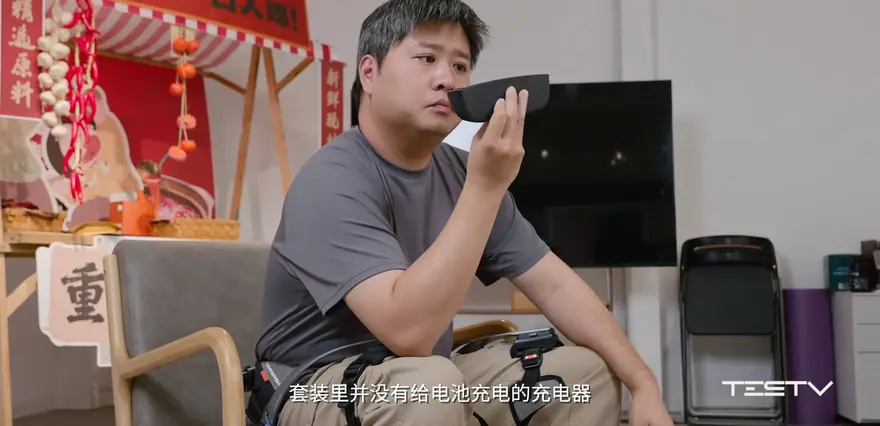
Two details are worth calling out. First, the battery uses a quick-release design with hot-swap support—"out of power? Just swap in a fresh one"—a root-cause fix for battery life anxiety. Second, power on/off adopts a "short press + long press" anti-mistouch design; in the reviewer's own words, it's "just like a DJI drone." The interaction conventions polished by consumer drones are now being inherited by consumer-grade exoskeletons, and that's a good sign. Checking the unit's status requires connecting to the app—getting started is simple and the operation is intuitive.
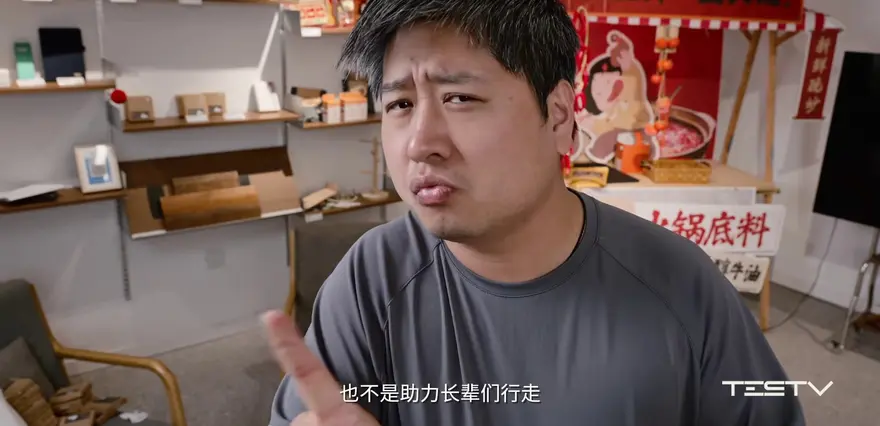
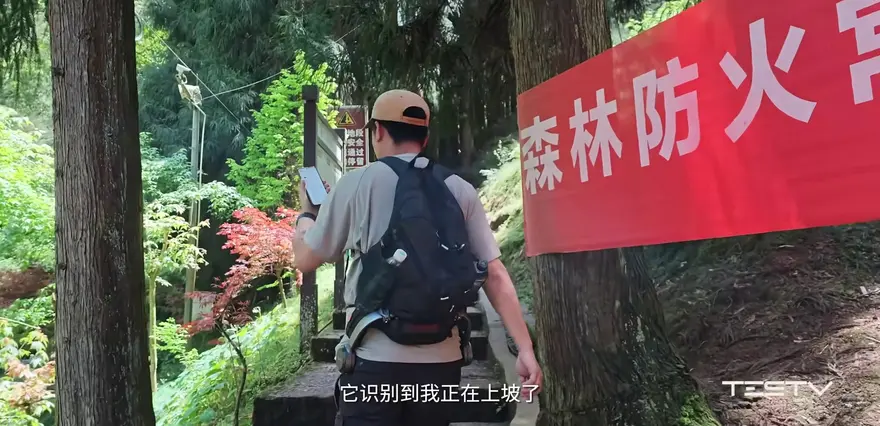
But first, a splash of cold water—the weight:
"This thing already weighs two kilograms without the battery." (as mentioned in the video)
Two kilograms—and two kilograms worn on your legs, at that. The same weight carried on the limbs imposes a higher metabolic cost than carrying it on your back, and this trade-off will keep quietly resurfacing throughout the hands-on experience that follows.
3. Barriers: RMB 7,499 and the Anxiety of "Running Out of Battery Mid-Hike and Turning into Weight Training"
Price is the first hurdle you simply can't avoid.
The dual-battery bundle is priced at RMB 7,499 (as mentioned in the video)
My colleague's first reaction to the price was the classic "How much?" — consumer-grade exoskeletons are currently priced in an awkward zone somewhere between "digital toy" and "outdoor gear."
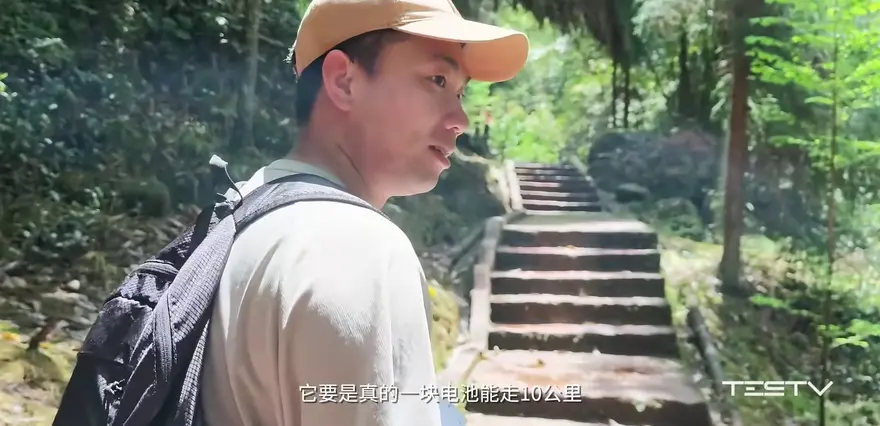
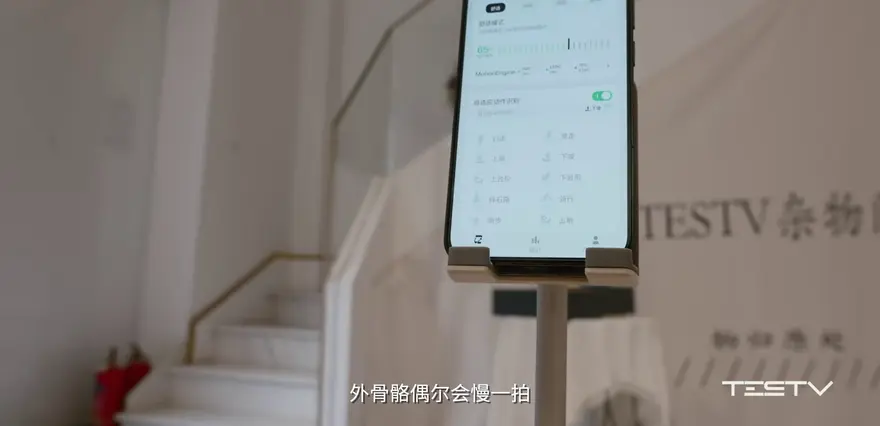
The second hurdle is battery anxiety: "What if it dies halfway up the mountain? Won't I just end up doing weight training?" This is a challenge shared by all battery-powered outdoor gear. Hot-swappable batteries are the official answer: carry a spare and swap it the moment it runs dry — far more realistic than hunting for a power outlet in the mountains. The very existence of the dual-battery bundle also suggests the manufacturer knows full well that a single battery won't last a full day.
Incidentally, there is indeed some markup in the pricing: someone in the comments section has already snagged a brand-new, unopened unit for RMB 5,400 (source: video comments — more on this at the end of the article). For price-sensitive users, waiting for a promotion may feel more comfortable than buying at launch.
4. Test Design: Redemption for the One Who Got "Dropped"
TESTV's testing approach is arguably more interesting than the product itself. Instead of a traditional spec-by-spec comparison, they designed a "social experiment": put two hikers of different skill levels on the same device, and see whether the gap disappears.
One of the chosen participants was Master Xiao, TESTV's number-one "Iron Legs" — a hardcore hiker whose greatest passion is trekking and mountain climbing, with snow-mountain ascents on foot already under his belt. The other was Shumin, who once joined Master Xiao on a snow mountain trip and got thoroughly "dropped." The company put out the word: no work on Friday — go find a hiking route around Chongqing, with the gas money for the round trip on the company. After one round of "gas-station-style" haggling (negotiating from "fill it up — 50" all the way to "make it 95 octane"), Shumin was duly lured into the mountains.

The test's thesis was spelled out very bluntly in the video:
"Whether an exoskeleton can narrow the gap between two hikers of different skill levels — or even let the weaker one pull ahead — is the truest measure of what an exoskeleton can do." (as mentioned in the video)
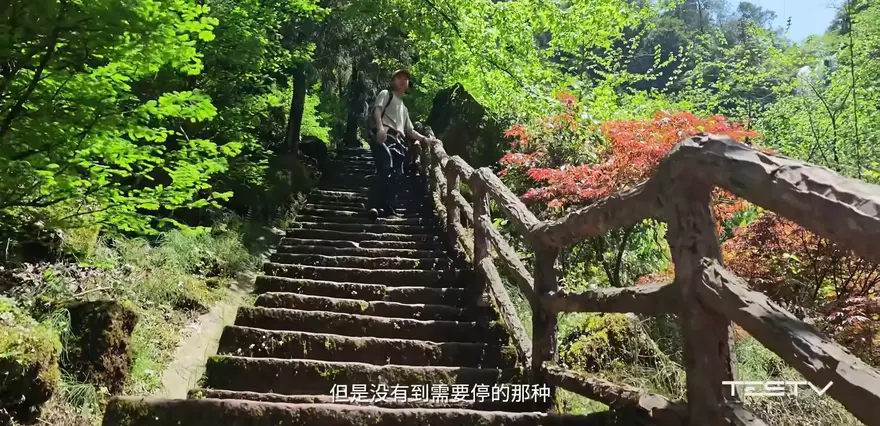
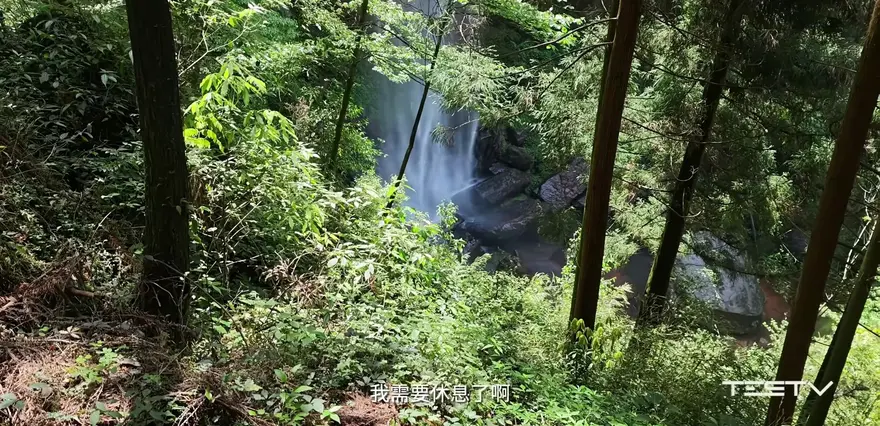
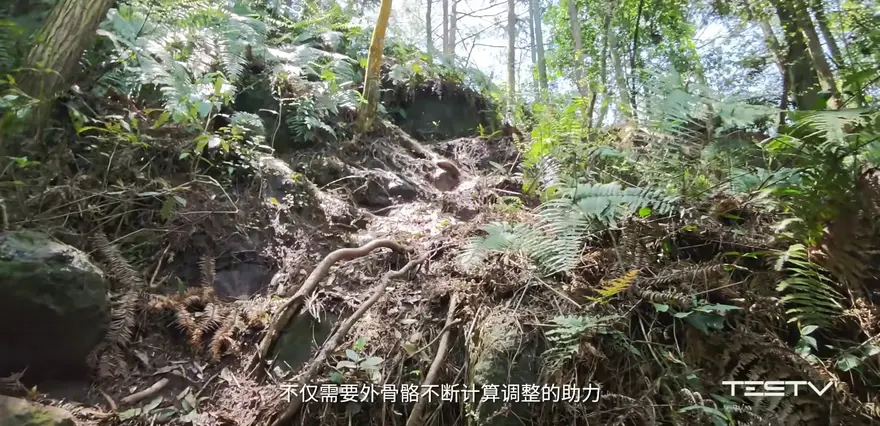
The route was Dayuandong on the outskirts of Chongqing: a hiking loop of over ten kilometers, with climbs and descents split roughly 50/50, and a mix of off-road trail and stone-paved sections along the way (as mentioned in the video). The starting setup: Comfort mode, adaptive motion recognition enabled, battery at 100% — Shumin was "deploying in full Gundam mode."
5. Uphill: Where It Really Proves Itself — A Slope That Used to Take Two or Three Breaks, Summited in One Go
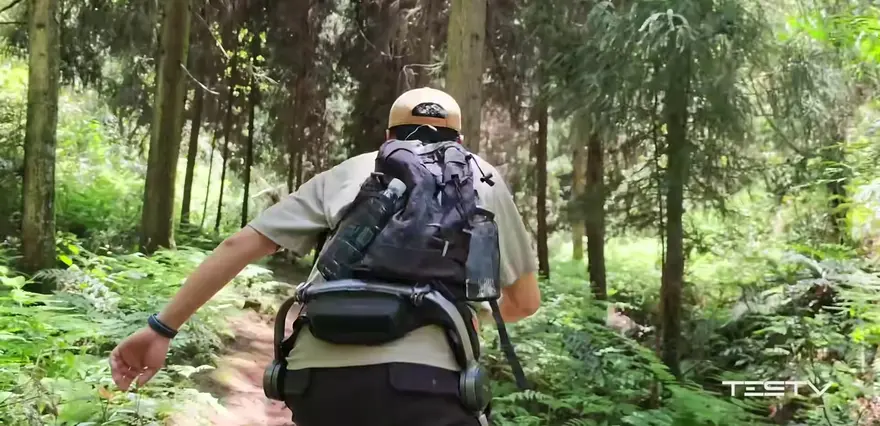
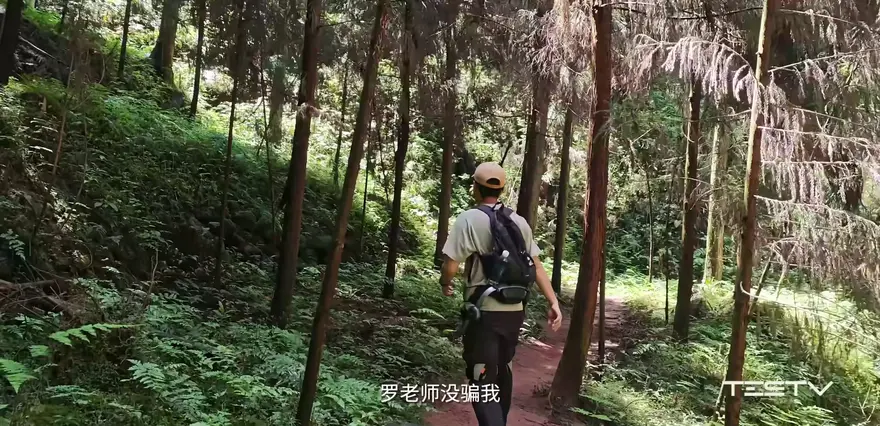
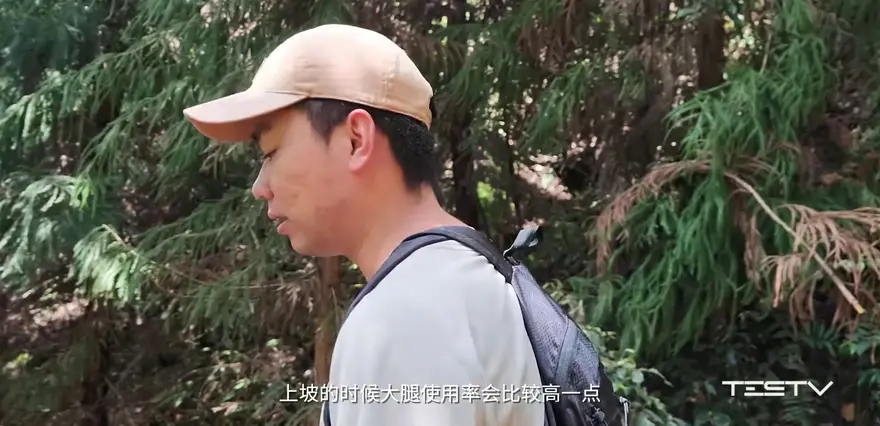
Uphill terrain is this system's moment to shine. Once the device gets moving, it automatically recognizes the terrain — and after it "detects our uphill," the assist kicks in accordingly.
"The uphill assist is hands-down the most noticeable, the most effective — and also the most power-hungry." (as mentioned in the video)
One detail says it all: on a slope that used to call for two or three rest stops, Shumin this time climbed the entire way without a single break — even completely flipping the ability gap with Master Xiao: "Right now I feel like you're practically flying up the trail." The photographer, our designated control group, ended up the most worse-for-wear of the bunch, only managing to catch a breath in between "let me show everyone the waterfall" moments.
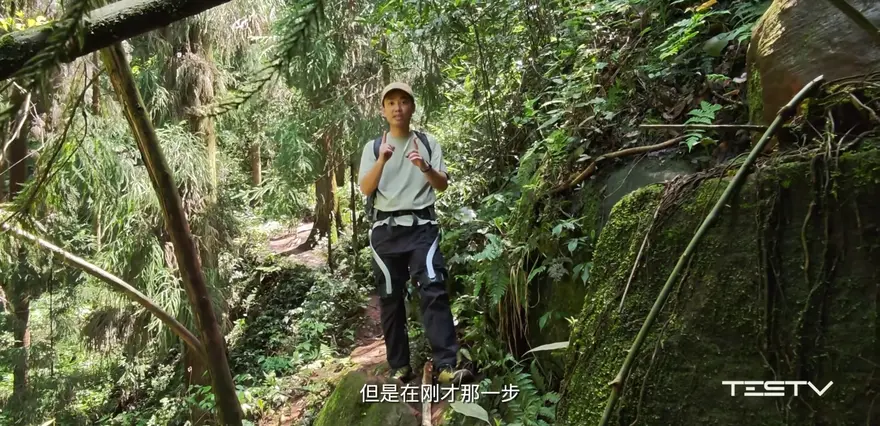
Asked how Shumin felt after finishing the big climb, the answer was refreshingly plain: "Not tired. Really not tired." Of course, it wasn't entirely effortless — the modest addendum being, "Not to the point where I'd need to collapse. Anyway, it just wasn't that tiring."
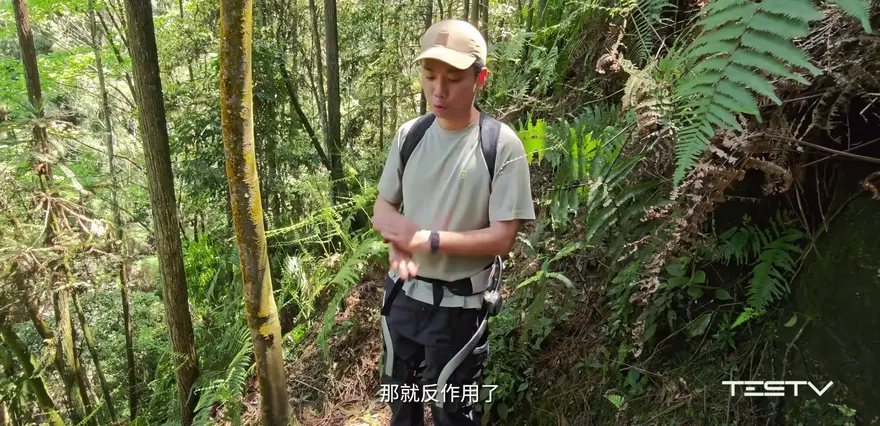
Heat management was another pleasant surprise:
Even with the motor working nonstop, it never got hot — "just a touch warmer than hand temperature." (as mentioned in the video)
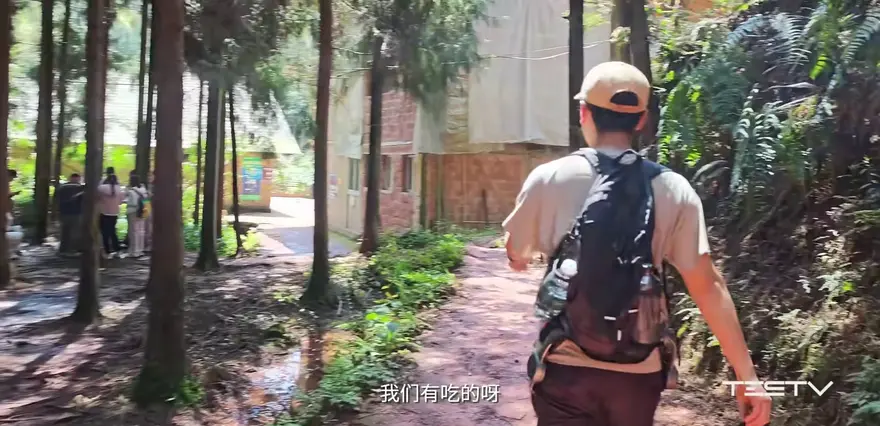
For a device worn against the body and delivering continuous output, thermal control directly determines whether you can actually wear it out the door in summer — and on this front, Hypershell did a solid job. During the mid-hike break, the two even checked each other's backs for sweat, and took the chance to plug the 75 RMB TESTV pure cotton tee — along with that closing verdict: "When it comes to sports, you've still got to trust quick-dry."
6. The Battery Life Ledger: A 2% Drop, an Estimated 8 km Left
Battery life is the most honest metric in hiking scenarios, and the video offers a set of key data points:
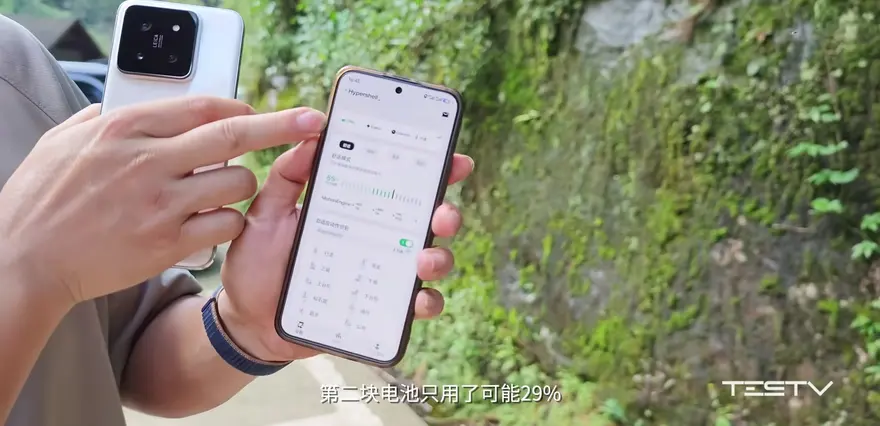
Just after entering Dayuandong and climbing a stretch of slope, the battery percentage dropped from 100% to 98%, and the app estimated 8 km of walking left. (As mentioned in the video)
The uploader's take is pragmatic: "If a single battery can really do 10 km, I think it's still useful." By that estimation logic, one battery should have no trouble covering a 10-plus-km loop trail, and the dual-battery kit doubles the margin on top — plenty for a single-day hike. The real test comes on multi-day, fully loaded trips.

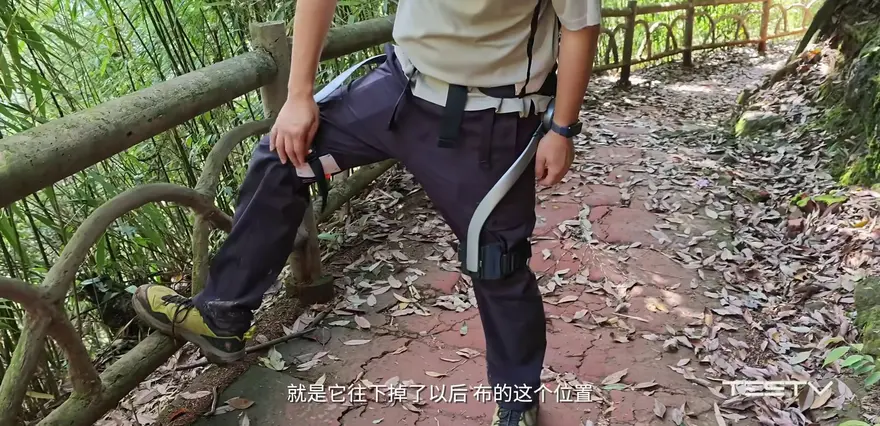
Two usage insights are worth noting. First, during use you rarely need to pull out your phone to check the status — the device continuously and automatically recognizes the conditions the wearer is in and adapts on the fly, essentially relying on its sensors to identify gait and terrain. Second, there's a break-in period between wearer and machine — dial in the motor's assist intensity right from the start, and it "not only makes things more comfortable for the wearer, but also gives it longer battery life." Assist intensity and battery life are linked; the logic is exactly the same as the assist adjustment on an e-bike.
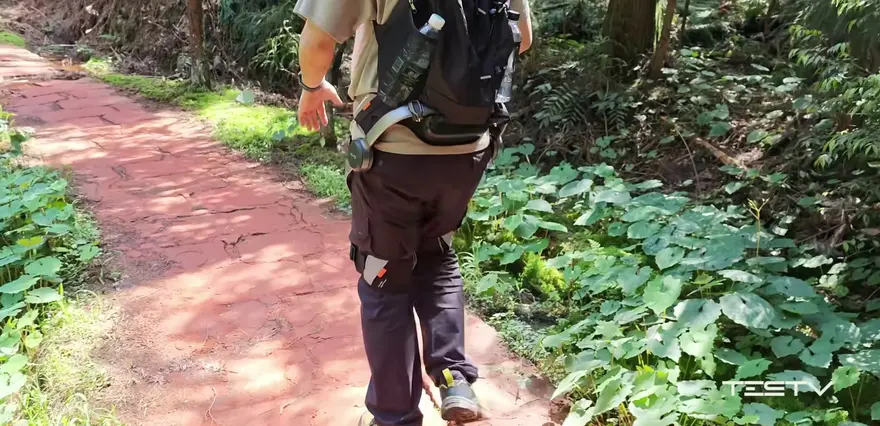
Combined with the hot-swap design, the ultimate answer to battery anxiety looks more like "swapping batteries" than "saving power" — arguably the most mature solution the consumer electronics industry has ever handed down to outdoor gear.
7. Three Gripes: Pockets, Step Height, and the "Half a Beat Behind"
With the praise out of the way, time to lay out the gripes too.
First, the wearing design "eats up" your pockets. The issue surfaced as soon as the exoskeleton was on: the waist belt sits exactly over the jacket's pocket area, so a phone stashed in the pocket gets squeezed — "not very comfortable." Shumin stayed pretty Zen about it: "Worst case, just stash the phone somewhere else" — workable, but it goes on the record.
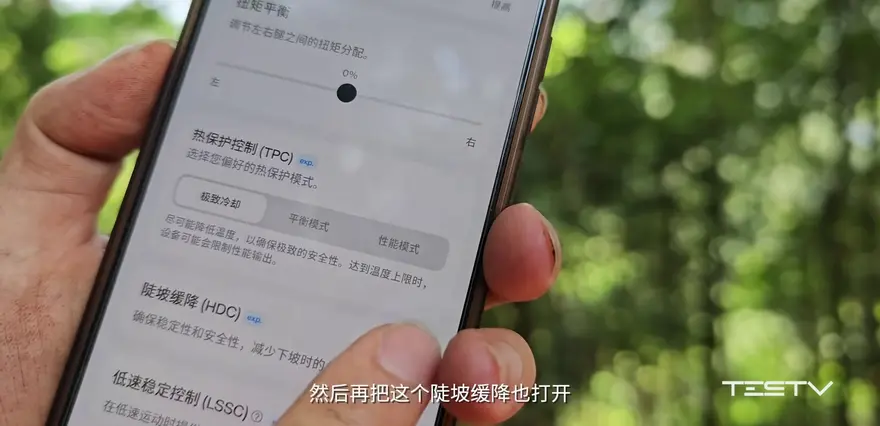
Second, the lift height on steps occasionally runs a bit high. On taller steps, it "lifts me up by exactly the right amount," but on narrower, shallower steps, the assist amplitude feels "a tad too high." Gait adaptation currently relies on a generic sensor-based model, and the granularity isn't fine enough to account for different body types and different road conditions.
Third, mode switching occasionally lags half a beat — the single detail that hurt the real-world experience the most:
During mode transitions, the exoskeleton occasionally lags a beat — my foot is already on the stone-paved path, yet I still feel the stronger assist. (As mentioned in the video)
The uphill assist carrying over into the stone-paved section suggests the terrain-recognition algorithm still has room for tuning. The good news: issues like this can mostly be resolved through OTA updates — firmly in the "software can fix it" category.
8. 6.75: The Product Is Fine — the Problem Is There's Only One
The final score is in:
Hypershell X Pro, TESTV subjective overall score: 6.75. (As mentioned in the video)
The verdict itself, though, has a subtle twist: "The product is fine — it's just that there's only one. We both want to use it. Not enough!" To translate: the product itself passes muster; the real pain point is two people fighting over a single unit. Which leads to the most surreal moment of the entire piece — two grown men seriously drawing up a rotation schedule: "From now on, I'll wear it going up the mountain, and you wear it coming down."
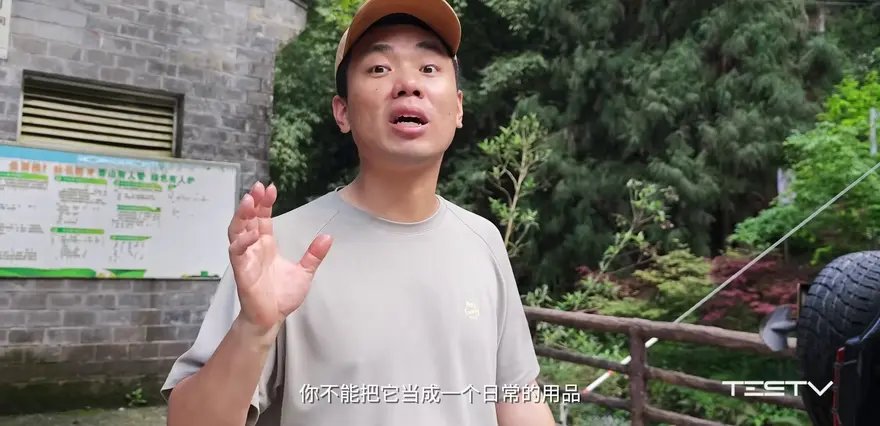
This is probably the best kind of negative review: complaining that there "aren't enough to go around" is itself proof that "put it on and the effort drops" has been validated. As for the measured feel of that 6.75, it fits the usual style of a subjective score — this is certainly not a "must-have miracle gadget" for everyone. Price, weight, pocket conflicts, algorithm granularity — each one is a reminder: this is what a first-generation consumer-grade product looks like.

Here's a straight-up buying recommendation: hikers who head into the mountains every week and get winded on any climb, photographers hauling gear into the backcountry, "back-of-the-pack" folks trying to keep up with the main group — it's worth the price of admission. If you're all about flat-road strolls and park walks, save the money. If you're budget-sensitive, take note of the 5,400 RMB deal price in the comments — waiting won't cost you a thing.

Top Community Comments
@NoLonger_LackingLove (1,302 likes): Hey Sam, thanks to you, I've finally hooked up to the Chiral Network on my end too... So, how's my exoskeleton armor? It should make things a whole lot easier for you. Put it to good use—connect the world.
Commentary: A textbook Death Stranding player interaction. It shows that the public's cognitive anchor for "exoskeleton" is still sci-fi gaming—"Sam's exoskeleton armor" remains this category's biggest cultural common denominator. That means free traffic for manufacturers, but also a comprehension barrier: anyone genuinely ready to place an order first has to separate the all-powerful armor from the game from a real-world "hip assist module."
@UsedToBeAFatKid (1,266 likes): Guys, just safely landed a brand-new, unopened unit for 5,400—bought it for my mom. Absolutely a thumbs-up!!!
Commentary: Two takeaways packed into one comment. First, the actual transaction price of RMB 5,400 sits well below the official RMB 7,499 price of the dual-battery bundle (mentioned in the video), which shows there's plenty of room for channel promotions in this category—the "wait it out" strategy holds up. Second, "bought it for my mom" exposes a mismatch between real demand and official positioning—quite a few consumers are buying it precisely for everyday walking assist for elderly parents, while the brand has clearly stated it is "not for walking assist for seniors." Between consumer-grade and elder-care/rehabilitation exoskeletons lies a large zone of unmet demand.
@MountainSleet_ZSX (547 likes): Hey, Sam! You'll never guess what the engineering department just dug out of the Bridges warehouse... It won't make deliveries for you, nor will it keep your center of gravity balanced for you, but on long treks through the mountains it helps you save a bit of stamina—it really does make things easier. Keep on keeping on.
Commentary: One long stretch of in-game references that nails the product's true boundaries—it isn't a self-balancing "exoskeleton armor," and it offers no fall-protection-style reassurance; at its core, it's a "stamina-saving cheat code." The quip about it being "an outdated 2026 model" is just as sharp: users assume this category will iterate as fast as smartphones, with prices sinking accordingly. That assumption is both an expectation and, for now, the most rational reason to keep watching from the sidelines.
Worth noting: two of the top-liked comments this episode are both Death Stranding memes—the closer consumer-grade exoskeletons get to the mainstream, the heavier the sci-fi filter becomes. For manufacturers, converting "just like Sam's" hype into a rational understanding of specs, battery life, and price is a longer-term challenge than building the product itself.
One-Sentence Summary
The Hypershell X Pro is one of the few consumer-grade exoskeletons that pulls the technology out of rehab clinics and sci-fi films and into your hiking backpack: RMB 7,499 (dual-battery bundle, as mentioned in the video) buys you "small steps turning into big strides" on the climbs — a solid pick for weekly mountain-goers, anyone running low on stamina, or creators shooting with heavy gear. If you stick to flat trails or are price-sensitive, it's worth lurking in the comments section for the RMB 5,400 deal.
About this article: part of Chinese-Made Exoskeleton Review Archive — an independent, regularly updated English archive of reviews of consumer exoskeletons made in China, edited from publicly available video transcripts. Not an official manufacturer page.
For inquiries and purchasing, contact lonlonago@foxmail.com. More in Reviews · All articles.