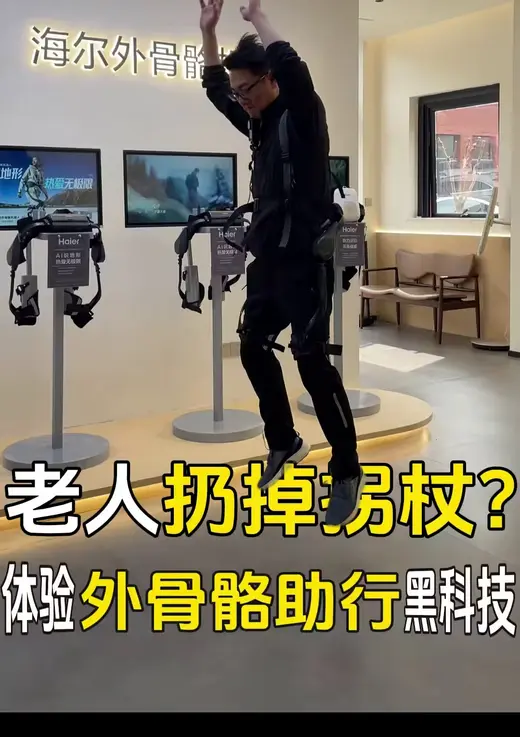
The Ice and Fire of the Robotics Industry: Why I Believe Exoskeletons Are the Breakthrough Opportunity for Ordinary People
Section 0: Opening — Unpacking the Real Landscape of the Robotics Industry
“Is there real opportunity in the robotics arena? Today I want to dig into this industry with you.”
First, here's a straightforward answer: Not only is there opportunity—it’s getting bigger all the time.
As a tech-media professional who has long tracked deep tech, before we zoom into specific consumer-grade exoskeletons, we first need to clarify the grand landscape of today’s robotics industry. In terms of application scenarios and form factors, the broader robotics field can be divided into four main categories:
- Industrial robots: These include familiar examples like ABB or Fanuc's welding robots and robotic arms, operating tirelessly on the assembly line.
- Service robots: These cover what most people encounter daily—robot vacuum cleaners, hotel delivery robots, restaurant food-delivery robots, and various companion robots.
- Special-purpose robots: Typically deployed in extreme or specialized environments, such as firefighting robots, underwater exploration robots, and agricultural crop-protection robots.
- Humanoid robots: This is currently the most talked-about and most media-hyped track.
I remember when I reviewed Unitree robots, massage robots, and other products a while back, I noticed their gait and locomotion were becoming increasingly human-like. But I also started to ask: What does this industry actually mean for everyday people?


I. The Achilles' Heel of Humanoid Robots: Lack of a "Brain" and, More Importantly, Application Scenarios
Currently, nothing is more popular than humanoid robots (including Tesla's Optimus and Boston Dynamics' Atlas). Undeniably, their hardware development is astonishingly fast — joint flexibility, dynamic stability, and power output are actually no longer an issue.
However, as Wang Xingxing of Unitree Robotics frankly admitted: the biggest pain point for humanoid robots right now is actually AGI (Artificial General Intelligence).
"The biggest pain point for robots right now is the AI large model; their intelligence depth is insufficient."
Without the support of AGI, humanoid robots at this stage are essentially extremely expensive "remote-controlled big toys" that rely on instructions. You might tell them to do something, and while they may understand the command, they are often unable to execute it; if you do not remotely control them, they can barely even walk properly (which is also why everyone is building human-like forms, yet they are far from having human-like capabilities).


On the other hand, even if the technology matures, price remains a massive mountain for humanoid robots to enter thousands of households. Elon Musk once declared that the number of robots in the future could reach ten billion, exceeding the total human population. But the reality is that even if a certain product reduces the price to 20,000 yuan, the actual demand from ordinary people is still "far from close.Even if the price drops to 20,000 yuan, the actual demand from ordinary people is still far from close."
Beyond home services, Tesla's Optimus is also targeting industrial production lines. Musk envisions Optimus replacing humans in dangerous, repetitive assembly line jobs. Although there is still a gap in what we currently see regarding embodied empowerment by large models — Optimus is actually just a "trainee" who has recently joined the workforce — once this kind of "dimensionality reduction strike" matures, industrial productivity will undergo a qualitative transformation.


2. Stop Waiting for AGI: The "exoskeleton" Is Today's Game-Changer
Since humanoid robots are currently difficult to implement due to the limitations of AGI development, where is the robotics track that ordinary people can participate in? The answer actually lies in a more pragmatic and hardcore category—exoskeleton.
In the field of medical rehabilitation, assistive exoskeleton, as well as hiking / trekking assist and rehabilitation exoskeleton, actually fall into this category. We can divide "embodied AI" into two parts:
- One category is "humanoid robots," which replace human labor (such as home services, commercial services, industrial production, companionship, etc.);
- The other category is "exoskeleton," which enhance human physical capabilities through mechanical force! Their application scenarios are extremely broad: outdoor sports, medical health, the silver economy demographic (the elderly, hemiplegic patients), as well as professional fields such as military, police, and firefighting.
To better visualize the value of this track, I want to show you a video. Previously, a news story about a "foreign disabled person putting on a Chinese exoskeleton and successfully walking independently under the gaze of family and friends" went viral, with official media such as People's Daily and People's Daily Online sharing it.




In the video, this disabled person takes the first step again with the help of the exoskeleton. When the accompanying family and friends on the scene teared up with excitement, I realized that this is not just a touching video, but a milestone for the exoskeleton industry's "truly changing humanity." An exoskeleton is essentially a steel mecha attached to the human body, using AI algorithms to enhance human motor skills. They do not need to wait for AGI to mature to be implemented.


3. Emotional Value and Business Reality: Where is the Threshold for Mass Adoption?
Compared to humanoid robots, the greatest advantage of exoskeletons is that they are "not constrained by the development bottlenecks of AGI," while catering to an immense and genuinely viable consumer-grade audience. This ensures rapid market growth, authentic demand, and a relatively accessible entry threshold.
"The price of a single exoskeleton can essentially be kept to around 5,000 to 6,000 yuan. It is entirely affordable for an average household. So, beyond the grand narratives, I firmly believe that within the broader robotics industry, we are currently experiencing the inaugural year for consumer-grade exoskeleton adoption."
(The price mentioned above is a market reference estimate cited in the video).


However, as a tech review media, I must highlight a critical flaw in today's consumer-grade exoskeletons: the majority of products on the market are built around lumbar / back assist designs. While padding the waist with a support frame can indeed reduce effort if you are simply carrying heavy loads, for users seeking to regain their walking ability, an over-reliance on lumbar / back assist might ironically foster dependence. We are still far from achieving truly "perfect walking assist."


IV. A Frenzy of Policy and a Rush of Capital: The Real Data Behind a Multi-Billion-Dollar Track
Why has the exoskeleton track suddenly surged so aggressively? The answer lies in the massive policy push!
- Legislation First: On January 2, 2023, Hangzhou released a policy notice to promote the development of the embodied AI robotics industry, becoming the first city in the country to legislate for this sector. This proactive approach to local legislation effectively cements the industry's official status.
- Real Money: The Shanghai municipal government has explicitly stipulated in its "Implementation Plan for Supporting the Development of Embodied AI Robotics" that sales companies for robots can receive rewards of up to 5 million RMB.
- Implementation Subsidies: Many cities, including Chengdu, Qingdao, Wuhan, Xi'an, and Jinan, have included exoskeletons in their "age-friendly home modification subsidy schemes." The government provides direct subsidies when senior citizens purchase an exoskeleton.







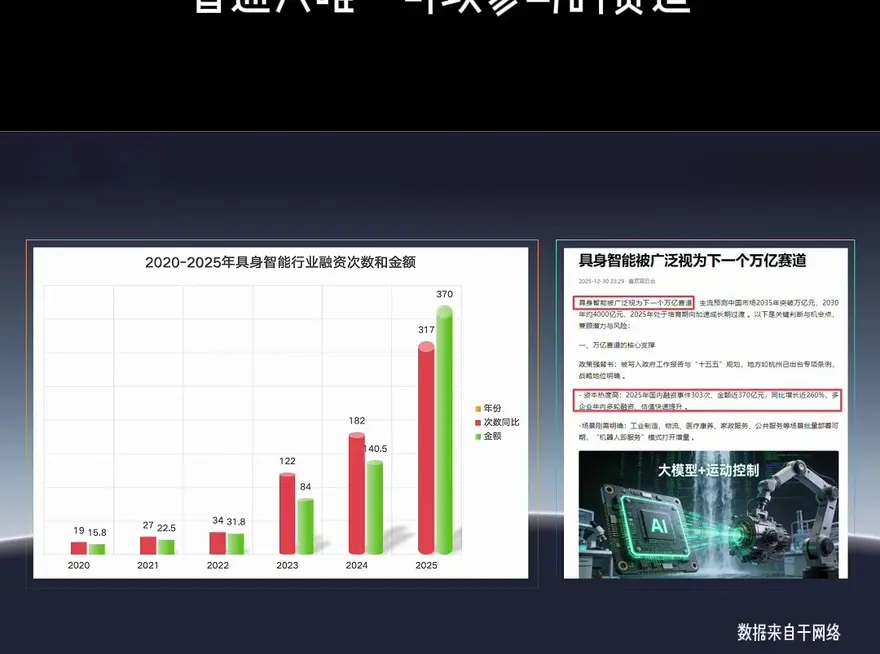
If you're watching the primary market, you'll see that capital is voting with its feet. According to industry statistics, the robotics sector saw 182 funding rounds in 2024, totaling approximately 14.05 billion RMB. By 2025, the number of funding rounds climbed to 317, with the total amount reaching a staggering 37 billion RMB. Behind this exponential growth curve is a strong investor appetite for the immediate, tangible commercialization of embodied AI.
However, setting aside the grand visions for the consumer-grade market, industrial applications are actually experiencing a "grounded" commercial boom.
Another major track I'm bullish on is the penetration of exoskeletons in heavy industry scenarios. Currently, in industries like automotive manufacturing, aviation logistics, and heavy casting, the synergy between the exoskeleton's gait intention recognition and the power delivered by its servo motors has become incredibly mature. When workers wear them to lift heavy objects, the probability of lumbar muscle strain plummets. (As you can see, companies specializing in industrial exoskeletons, such as Aosheng Intelligence, have already proven their business models at major corporations like State Grid and Volkswagen. Foolish bravado is no substitute for strength; in this context, the lifting power of an exoskeleton is pure Cyberpunk Iron Man strength!)

5. More Than Just the Silver-Haired Demographic: Who Is Buying exoskeletons?
An exoskeleton is not just a tech parlor trick; it is an absolute necessity, highly promising, valuable, and meaningful. Its target user base is actually far broader than you might imagine:
- Outdoor Enthusiasts: People who love hiking, trekking, and off-road running can obtain mechanical advantage akin to that of a movie protagonist through this device.
- Sports, Fitness, and Rehabilitation: Whether for light rehabilitation training or to overcome walking disabilities caused by overexertion, external physical intervention is essential.
- Silver Economy and Hemiplegia Patients: For the elderly or those who have lost partial mobility due to stroke-induced hemiplegia, wearing an exoskeleton isn't just for mobility—it serves as an "electronic crutch" that helps rebuild confidence in life.




VI. Geek Picks: Two Domestic Exoskeleton Brands Worth Watching
At the end of this article, I’m sharing two companies that stand out from my “geek veteran” perspective for their outstanding product execution:
1. Kenqing Technology (Shenzhen Kenqing Technology Co., Ltd.) As one of the early movers in the consumer-grade exoskeleton arena, its lower-limb exoskeleton is highly mature in joint torque control and gait following. With solid roots in the medical rehabilitation field and a history of developing rehabilitation exoskeletons, it is now pushing hard into outdoor sports.
2. Toread and other exoskeleton brands (Hangzhou Taiqi Intelligent Technology Co., Ltd. and brands such as Toread) These brands—or their affiliated ecosystems—have gained visibility during major events and have demonstrated strong R&D capabilities. They show real potential in motion algorithms and lightweight design.

Top Community Comments
User A: “If I spend 7,000 RMB, can I just walk on my own? If an elderly person falls, could the device actually drag them down? Feels like an IQ tax.”
Takeaway: This reflects a misalignment in how ordinary consumers perceive the boundary between “safety” and “smartness” in exoskeleton products. Current consumer offerings are not medical-grade aids; they are more about “assist,” and they cannot replace the brain’s judgment.
User B: “The commenter in the second floor is right, but what we should really focus on is the ‘fall protection’ mechanism. Can current sensors lock instantly or provide reverse support the moment a person loses balance?”
Takeaway: It points to a pain point consumer-grade exoskeletons must solve in real-world deployment—mechanical safety redundancy.
User C: “Can someone working on exoskeletons explain the difference from the rehabilitation robots in hospitals? Can I buy one for home to help a hemiplegic elder with gait training?”
Takeaway: This is a typical conceptual misunderstanding. In the article we specifically emphasize the distinction between medical-grade rehabilitation exoskeletons and consumer-grade assistive exoskeletons—the former has certification requirements, while the latter prioritizes everyday assistance.
User D: “A cane or wheelchair can help with mobility too! Isn’t this going to be heavy when going out? Elderly users would carry it along.”
Takeaway: It hits a core product design tension—the balance between weight/footprint and carbon fiber rigidity.
User E: “It’s pretty cool to buy one and shoot videos—like Iron Man!”
Takeaway: Exoskeletons have become a kind of social currency for outdoor enthusiasts. The solid feel of powered joints and collector-grade carbon fiber shells are key factors attracting cultural consumption.
User F: “It’s actually very useful for manufacturing workers. Every time I lift stuff my lower back feels like it’s breaking (think automotive assembly lines).”
Takeaway: It suggests that industrial environments and heavy manual labor are where exoskeletons will first see dominant, necessity-driven adoption.
User G: “I’m worried about the exoskeleton’s lifespan. Since it’s a device worn long-term, do I need to take it in for repairs every now and then like an electric bike?”
Takeaway: It reflects concerns about daily maintenance costs and supply-chain reliability.
User H: “The earlier hype was all capital players inflating short-term profitability.”
Takeaway: When the industry’s burst of momentum fades, repeat purchase rates and real user word of mouth become the deal-enders for investment hype.
One-Sentence Summary
Humanoid robots are still waiting for the AGI awakening; meanwhile, consumer-grade exoskeletons have already stepped into the real world—if you’re curious about mechanical exoskeletons or outdoor geek gear, or you’re a tech-savvy buyer with spending power who cares about elderly health, then an exoskeleton is both a timely investment and an affordable purchase in today’s market.
About this article: part of Chinese-Made Exoskeleton Review Archive — an independent, regularly updated English archive of reviews of consumer exoskeletons made in China, edited from publicly available video transcripts. Not an official manufacturer page.
For inquiries and purchasing, contact lonlonago@foxmail.com. More in Industry · All articles.