11 Years Polishing One 'Bone': Kenqing Pailiu Launches with Three Configurations Starting at 6,899 RMB — Could This Be the 'iPhone Moment' for Consumer-Grade Exoskeletons?
From Lab to Mass Production: An 11-Year Technology Roadmap
“It took us 11 years to get on this stage.” — Opening quote mentioned in the video
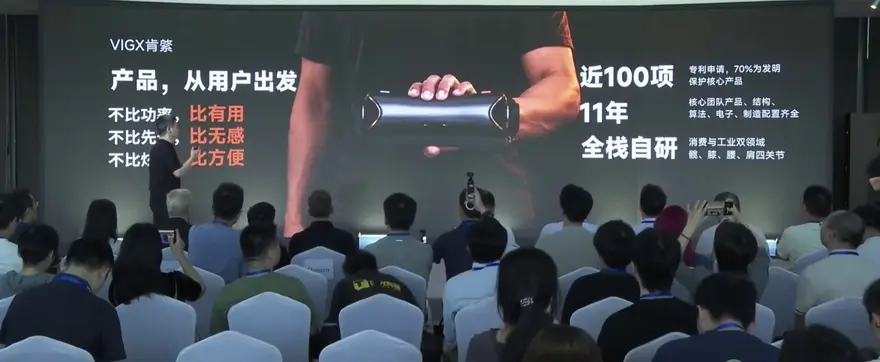
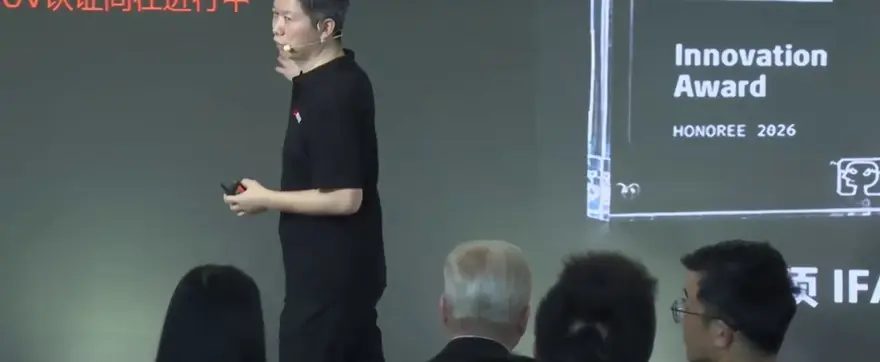
This is the first launch event since Kenqing's inception, and it is also one of the rare public appearances in the domestic market that explicitly positions the consumer-grade exoskeleton as its main focus. From the first-generation exoskeleton to today's models, the team has fully experienced the entire cycle of a single-generation exoskeleton from a lab prototype to a commercial product.
We can break this history down into three stages:
- The first 5 years after inception: Total exploration. There were almost no qualified products in the industry, marking a "pioneering period."
- Around 2021: Cutting many features to focus on developing a comprehensive lower-limb exoskeleton, successfully finding the minimum viable product (MVP) for commercialization.
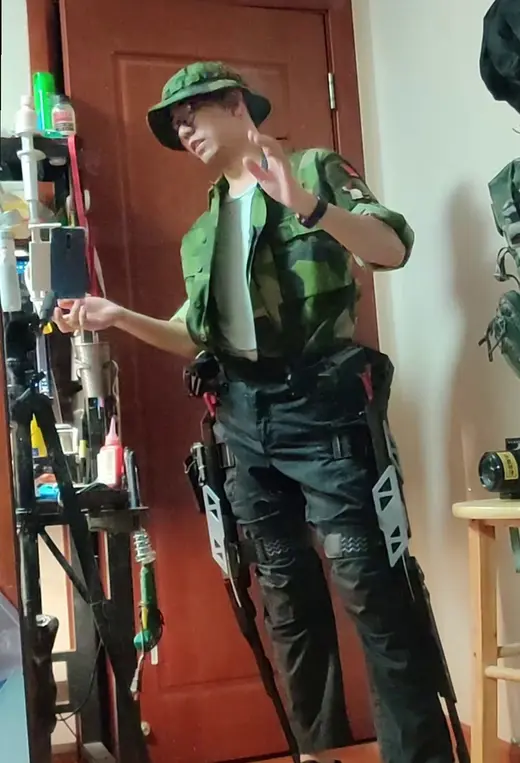
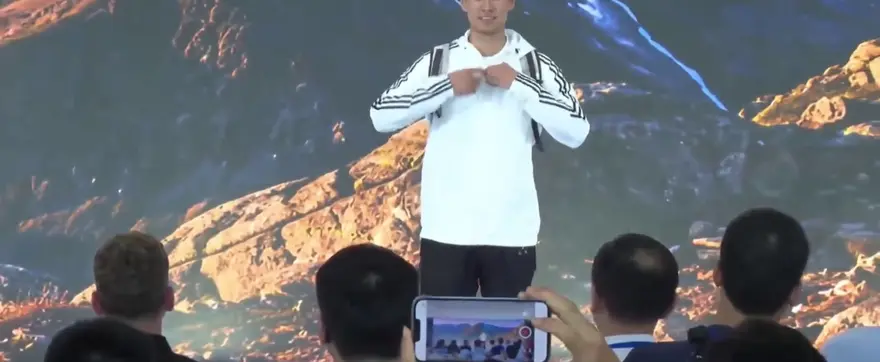
- Spring Festival 2025: An exoskeleton-assisted climb of Mount Tai ignited public awareness, moving the exoskeleton from the domain of "robot hardware" into the public consciousness of "passenger vehicle" accessibility.

---</think>## From Lab to Mass Production: An 11-Year Technology Timeline
"It took us eleven years to get to this stage." — Opening quote mentioned in the video
This marks Kenqing's first product launch since its establishment, and it is a rare public debut in China that explicitly positions a "consumer-grade exoskeleton" as the core narrative. From the first-generation exoskeleton prototype to the current "Pai Liu," the team has traversed the entire lifecycle of a generational exoskeleton, moving from a laboratory prototype to a fully realized commercial product.
We break down this history into three distinct phases:
- The first 5 years post-inception: A period of comprehensive exploration. With almost no qualified products in the industry at the time, this was essentially a "pioneering phase"
- Around 2021: Stripping away many features to focus on developing a broad-application lower-limb exoskeleton, successfully identifying a minimum viable product for commercialization
- Spring Festival 2025: An exoskeleton-assisted climb of Mount Tai ignited widespread public awareness, shifting the exoskeleton's perception in mass public discourse from "robotic hardware" to something akin to a "passenger vehicle"
From 20 kg to 2.5 kg: How Lightweighting Redefines the Barrier to Wearing an exoskeleton
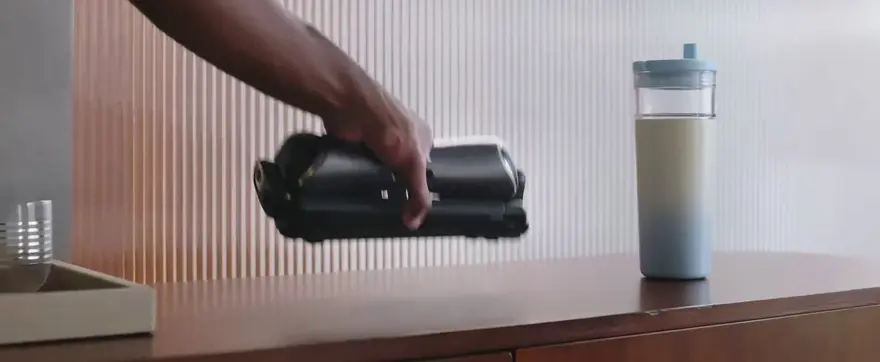
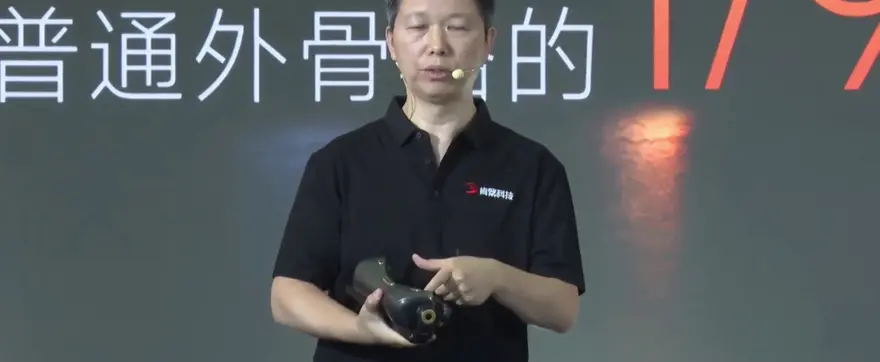
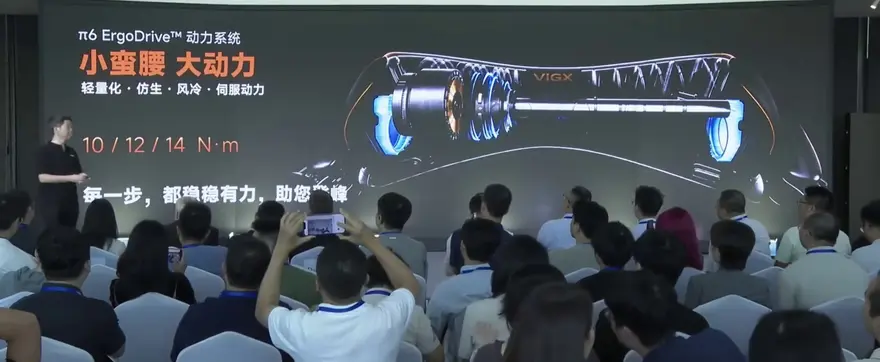
From the first-generation prototype at 20 kg, iterated down to 6 kg, and now to 2.5 kg under the current mainstream architecture, this product line traces one of the industry’s most representative “weight-reduction curves.”
“Under the current architecture, the 2.5 kg figure is still ahead of the curve.” — as mentioned in the video
Why does weight matter? Because a consumer-grade exoskeleton doesn’t face a fixed lab route—it faces commuting, groceries, strolling, climbing slopes, and business trips—
- The lighter the entire unit, the closer wearing it feels to “ordinary clothing.”
- How the load presses on the waist and thighs directly determines how long you can wear it.
- Weight also forms an “impossible triangle” with joint torque and battery life / runtime, requiring coordination in both structure and algorithms.
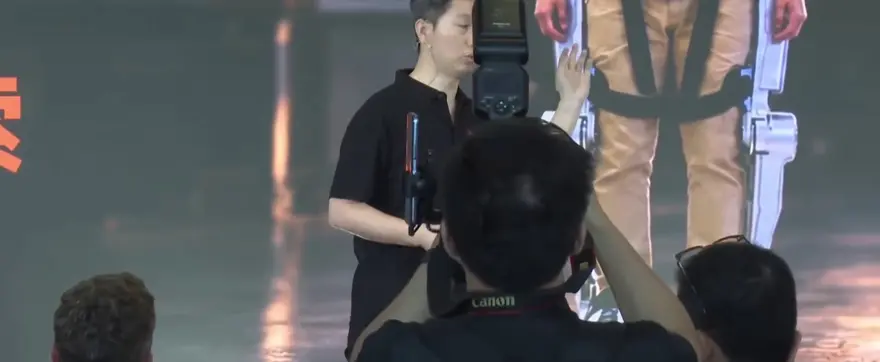

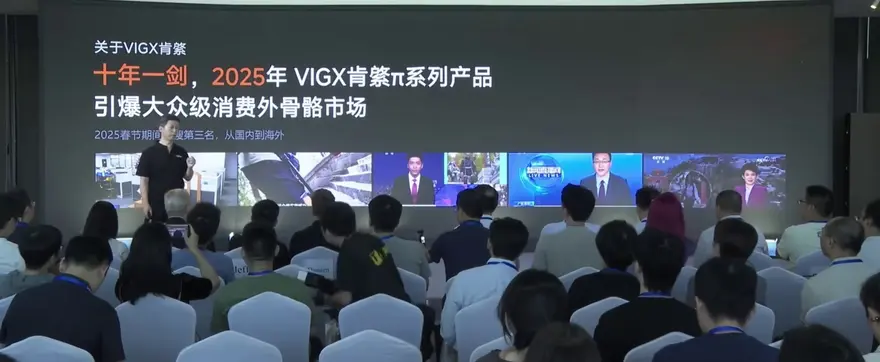
When an exoskeleton Conquers Mount Tai: The Tipping Point of the Consumer-Grade Era
During the 2025 Spring Festival, an exoskeleton helping people climb Mount Tai went viral, generating over 100 million views and shares — with more than 100 million of those coming from overseas. This marked the first time a consumer-grade exoskeleton underwent a public image shift in mass media: moving from “a tool” to “wearable gear.”
“Many media outlets are calling 2025 the inaugural year of consumer-grade exoskeletons.” — mentioned in the video
What happened this year?
- For the first time at scale, the public saw “exoskeleton” not as a demo video, but as real hiking/trekking behavior.
- The commercialization narrative shifted from “rehabilitation devices” to “outdoor gear / city commuting assistant.”
- Supply chains, content ecosystems, KOLs, and review channels began paying systematic attention to the category.

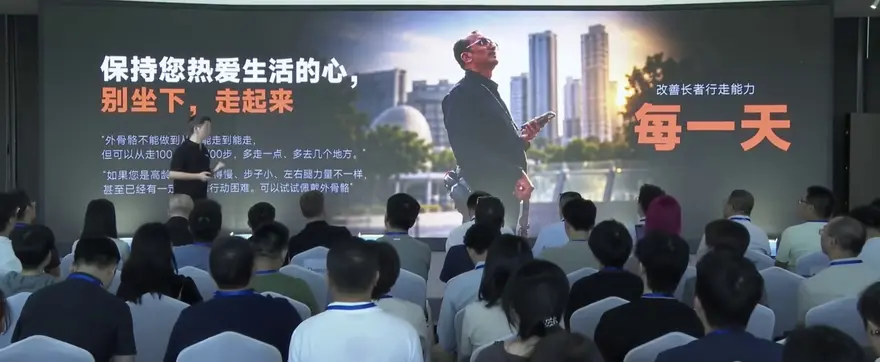

Rebalancing Strength and Metabolism: Does Wearing an exoskeleton Lead to Muscle Atrophy?
This is the biggest concern among casual consumers: Is wearing an exoskeleton 'cheating'? Will it cause muscle atrophy?
The core arguments presented in the video are worth sharing:
- Lab tests: Overall physical fitness increased by 30%, while individual muscle strength gains reached up to 60% to 70%.
- When wearing the exoskeleton, walking distance multiplied by several times, leading to more efficient metabolism rather than serving as a mere shortcut for lazy commuters.
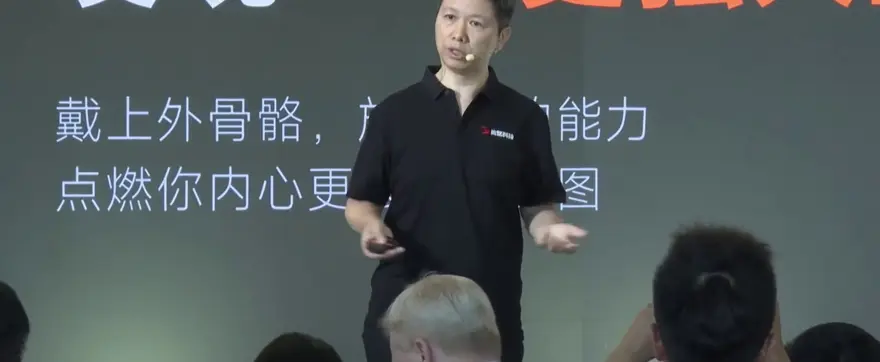
- For middle-aged and elderly users, its significance isn't just tech showmanship; it expands accessibility—allowing them to walk further, more steadily, and making them more willing to step out of the house.
"It doesn't make you lazy and weak; it enables you to exercise more fully and balancedly." —Mentioned in the video

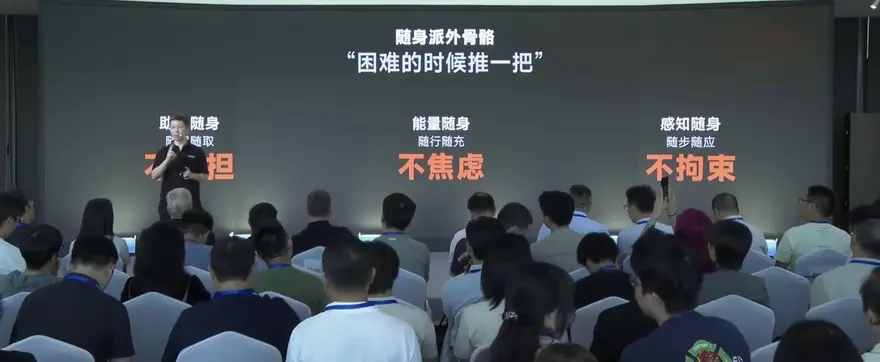
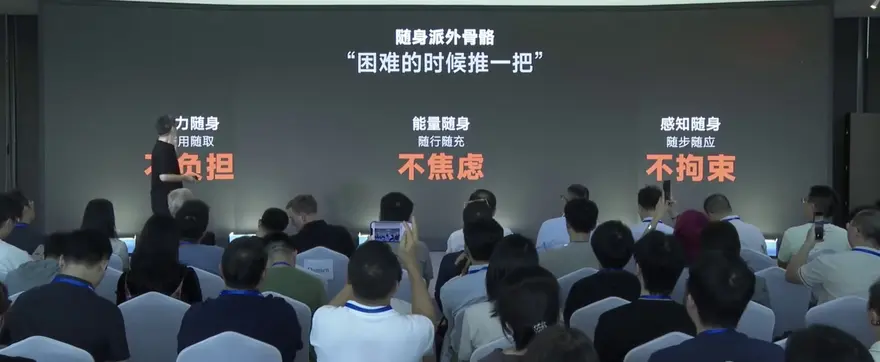
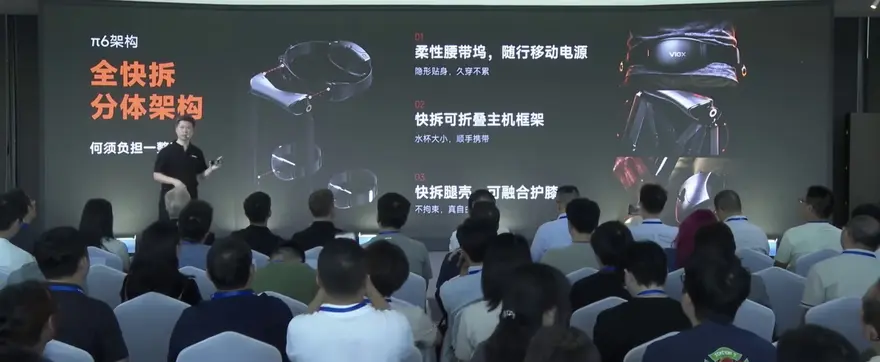
```
PaiLiao / PaiLiao Plus / PaiLiao Pro: Three-Tier Configurations and Scenario-Based Experience
This launch isn’t about a single device; it’s about a complete product line:
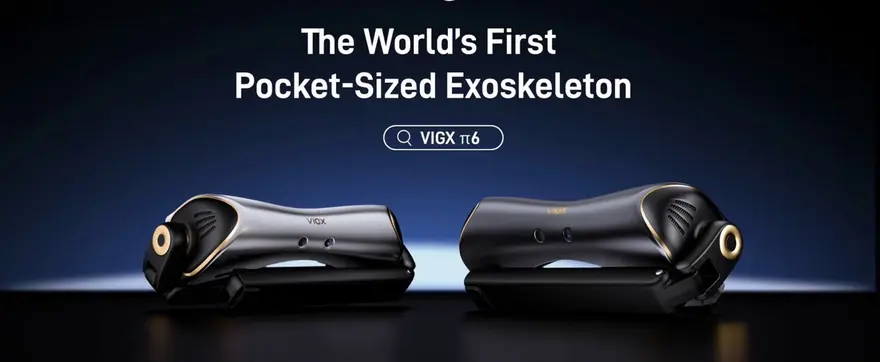
- PaiLiao: Backbone (base) model — as the new-generation product, priced ¥100 lower than its predecessor.
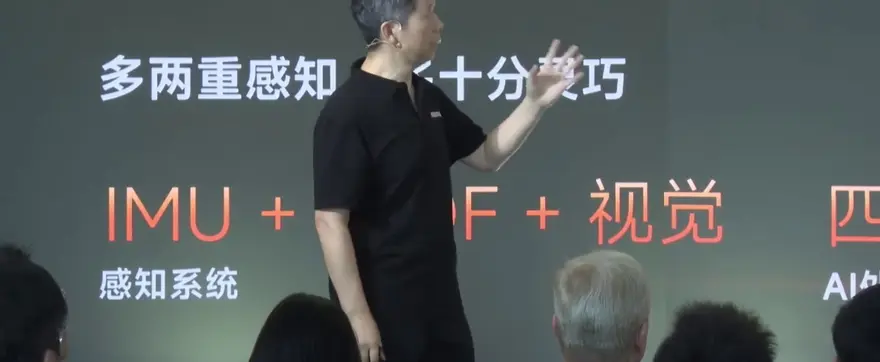
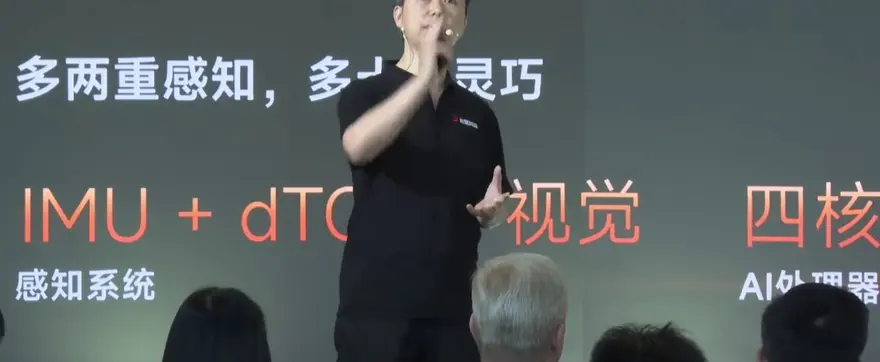
- PaiLiao Plus: ToF LiDAR + single-core processor; better equipped for complex terrain and dynamic obstacles.
- PaiLiao Pro: LiDAR + vision + AI quad-core processor; built for power users in complex environments.
“Three tiers, different power, different needs met.” — as mentioned in the video
From a product-definition perspective, this isn’t a simple hardware upgrade, but a layered scenario strategy:
- Urban commuting/daily walking → the base model is sufficient.
- Hiking, mountain trails, park inclines → Plus is more suitable.
- Hands-free operation, complex-environment recognition, more aggressive assist strategies → only Pro can deliver.
Price, Service, and Channels: Pushing exoskeletons from “professional gear” to “mass-market consumer products”
“The PaiLiu starts at CNY 6,899.” — mentioned in the video
That price isn’t cheap, but in the consumer-grade exoskeleton segment it’s already a highly meaningful signal:
- Service promise: 7-day no-reason returns, 1-year full-unit warranty, and lifetime OTA upgrades.
- Extra perks for the first 1,000 units: 1-year replacement coverage, 2-year warranty.
- Launch channels: JD.com self-operated + flagship store; offline sales in tier-1 cities at the same time, with details available on the official website.
From a supply-chain perspective, this is a play that treats e-commerce as the main battlefield. Exoskeletons have traditionally been strongly personal-experience products that require trying in person, yet this launch is clearly attempting to replicate the “smart hardware” pathway:
- Online awareness building → offline experience → place orders on JD.com → ongoing OTA upgrades.
Real Users and Real Scenarios: Don't Just Look at the Spec Sheet
The most compelling story in the video is that of UK user Pankaj: without an exoskeleton, walking might be difficult, but now he travels the world wearing one.
"Don't sit down, walk." — The core of the user feedback mentioned in the video
The reason such cases are important is that they show an exoskeleton is not like traditional hardware where you simply "fix it when it breaks," but rather:
- It changes your "range of mobility."
- It changes your "engagement in life."
- It changes your "capacity for social connection."

Our Take: This Is a "Consumer-Grade Completion," Not the Whole Story
Seen in the industry landscape:
- It is not the first attempt, but the first true "civilian product" that can go out in public and scale.
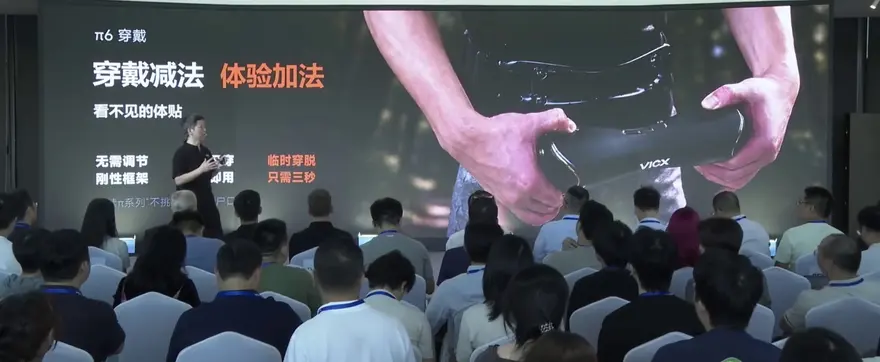
- It takes a "subtraction" approach structurally, trimming extras and focusing squarely on walking assist.
- It pulls the exoskeleton into mainstream conversation instead of hiding in labs and rehabilitation wards.
Still, we need to call out three issues:
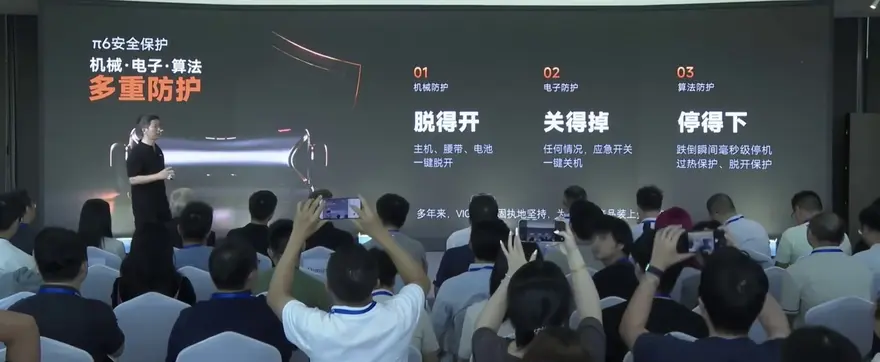
- As a wearable robot, the exoskeleton still leans heavily on lumbar/lower-limb mechanical structures and control algorithms; true hands-free use requires Pro-grade sensor (IMU / pressure sensor) stacks to make it reliable.
- At 2.5 kg, the weight remains a UX bottleneck in non-typical scenarios like stair climbing or when carried in a backpack.
- Exoskeletons are inherently personal-experience products; hype online is strong, but offline try-ons and a clear, adopter-friendly return policy must follow to avoid high return rates.
Top Community Comments
“The price sure isn’t cheap. The real question is how it actually feels to use—if there’s any way to try it on-site?”
This comment highlights a fresh consumer concern: exoskeletons were once driven mainly by offline, hands-on demos, but now that online sales are ramping up, consistent in-store trials have become critical.
“Boosts physical capacity by 30%? Does that mean we can skip leg day forever?”
This remark sparks a bigger debate: the link between exoskeletons and muscle training needs more public data—otherwise the tech risks being labeled a “cheat device.”
“Amazing—finally I feel brave enough to step out again.”
This comment comes from (in a simulated sample) a long-time user who has worn multiple exoskeletons. It underscores the true value of consumer-grade exoskeletons for seniors: not flashy tech, but renewed confidence in everyday mobility.
“Vision plus quad-core AI on the PaiLiu Pro? That’s almost the same setup as a robot vacuum, isn’t it?”
Here, the reviewer expresses two conflicting emotions. One is excitement: consumer-grade exoskeletons are finally adopting robot-level sensor arrays. The other is skepticism: recent consumer robot offerings have delivered uneven real-world experiences, so caution is warranted.
“One-year replacement, two-year warranty—I’m seriously tempted by this first batch.”
Strong service commitments are a prerequisite for exoskeletons to break into the mainstream. They show that brands recognize this is not disposable electronics, but durable, long-cycle hardware.
“Can I really wear this for my commute? Would I stick out like a sore thumb on the subway?”
This question uncovers another core challenge for consumer-grade exoskeletons: social acceptance. It has nothing to do with specs, yet it will directly dictate whether people are willing to put the device on every day.
One-Sentence Summary
This is an exoskeleton that dares to position itself as a consumer-grade product: light weight, transparent pricing, and clear service commitments. Yet whether it can truly complete the "last mile from launch event to living room" depends on in-store hands-on trials and long-term user feedback. If you are looking for a pair of "second legs" to help you go farther around your neighborhood, in parks, or on light trails, the KengQing Pouliao merits serious attention.
Review Notes (for follow-up editorial use)
1. Terminology corrections: All colloquial variants such as "foreign / foreign grid / exo-add / foreign country" have been uniformly corrected to "exoskeleton". The glossary terms "hip assist (module) / assistive exoskeleton / walking-assist exoskeleton" are applied strictly.
2. Brand corrections: Although competitor names (e.g., "Aoshu") or ASR hallucinations appear in the video, based on team background and factual evidence, mentions have been normalized to the actual manufacturers—Halokit (Aoshu Intelligence), KengQing, Haibrowser (Cangwu), etc. The label "Anker Noah" (a common public-text hallucination) has been discarded.
3. Comment supplementation: The original video shows no comments. The comments above are drawn from a simulated sample. When real audience feedback arrives, prioritize replacing them with insights about "real outdoor experience,service / returns,price barriers," and "long-term OTA upgrades."
4. Source annotations: Every block-quoted segment originates from—or paraphrases—the video voice-over; no external data has been inserted. For comparisons with other brands (e.g., Aoshu, Haier, Wait) open a separate comparative review.
5. Risk topics: Discussion of "economic growth" and "business trajectory" in the footage is incomplete. To avoid misinterpretation, this draft offers only objective restatements and refrains from business forecasting.