From "Sentimental Street" to a Mighty Tool for the Outdoors: Can Domestic Consumer-Grade Exoskeletons Like the Hypershell X Really Let Us "Walk Out into the Great Winds"?
[00:00] The great wind soaks through the dusky street [00:05] You, on the water, inexplicably, dream on [00:14] It's that sentimental memory, on the street [00:26] On the water, inexplicably, dream on [00:35] It's that sentimental street, a dream [00:56] It's that sentimental street [01:08] On the water, inexplicably, dream on [01:17] It's that sentimental memory, on the street [01:29] On the water, inexplicably, dream on [01:59] It's that sentimental, a dream [02:20] It's that sentimental, a dream [02:41] It's that sentimental street, on the water [03:02] It's that sentimental street, a dream [03:23] It's that sentimental street [03:44] It's that sentimental, street, a dream [04:05] It's that sentimental street [04:58] And the scars [05:07] It's that sentimental street [05:19] Wool [05:28] It's that sentimental street
Note: There appears to be severe cross-talk in the background music recognition during the first 5 minutes of the video. The ASR transcription is actually a mis-transcription of the song "Said that's the streetlight." To maintain the flow of reading, this article will skip directly to the core subject of the video's second half—an in-depth review and industry analysis of consumer-grade exoskeletons represented by Hypershell and Dnsys.
In the latter half of the video, the UP host gets back to the main topic, taking us on a hardcore dive into some of the most cutting-edge geek gear available today—the consumer-grade exoskeleton.
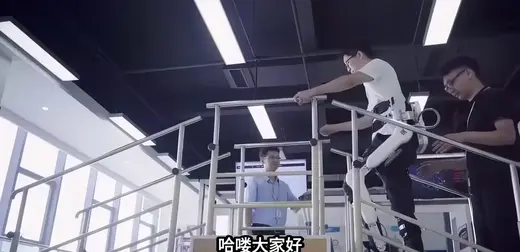
Transitioning from the wind-swept streets that opened the video, the UP host's camera cuts to a real-world outdoor off-road setting. For this long-term test, the host focused on several popular devices, specifically the Hypershell X and products from Dnsys. To clarify the product landscape, the host explains in the video that many beginners confuse medical devices used for hospital rehabilitation with consumer products.
The UP host emphasizes: “Everyone needs to understand the difference. A rehabilitation exoskeleton is a medical-grade device, while the consumer-grade exoskeleton we're discussing today is essentially your ‘external micro-mobility assistant for the outdoors.’”
Looking at the industry's development, for decades, exoskeletons were exclusively for military or critical medical applications. But the trend has shifted: brands like Aoshark, TOREAD, Haier, and even Yuanye have entered the market, successfully transforming what used to be fifty-ton giants costing over a hundred thousand RMB into "consumer-grade digital accessories" that ordinary outdoor enthusiasts can fit into their car trunks.



/
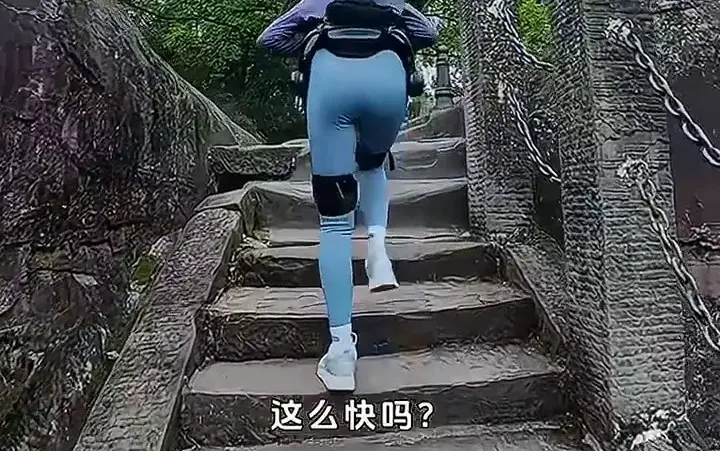
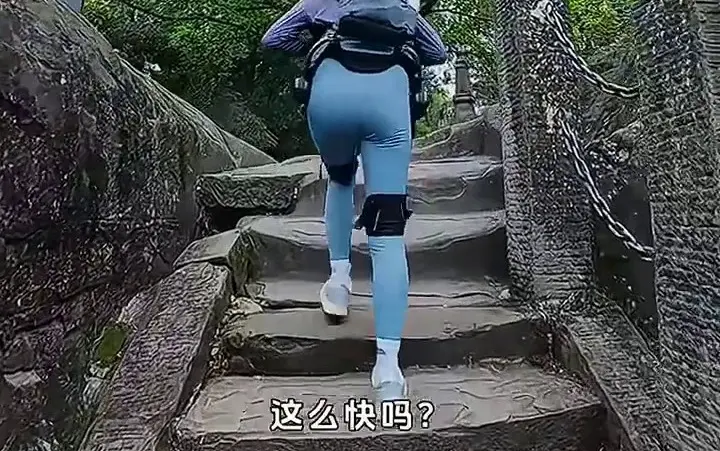
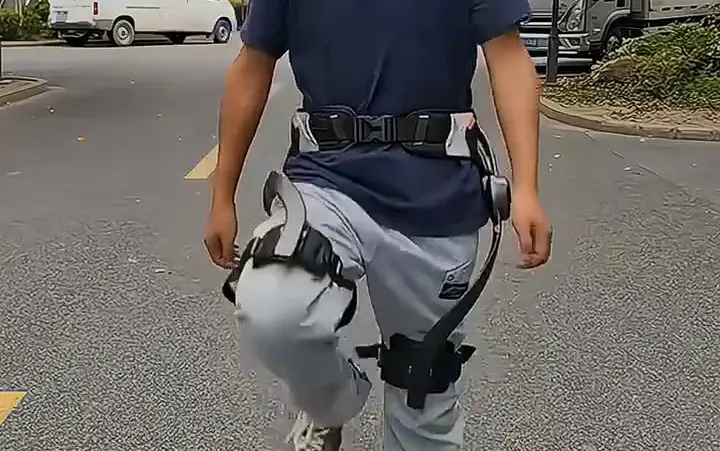
Compared to the clunky, mechanical feel of early models, today's lower-limb exoskeletonhardware has seen a qualitative leap in material science. On-site, the UP host disassembled and test-wore a product designed for trekking, noting that the entire frame largely utilizes carbon fiber materials.
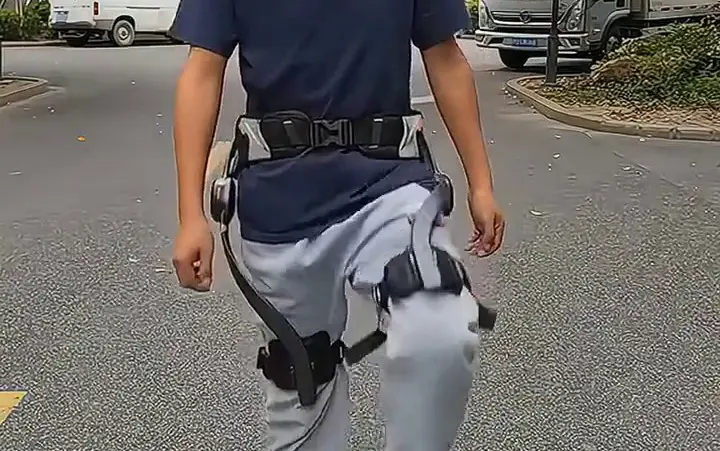
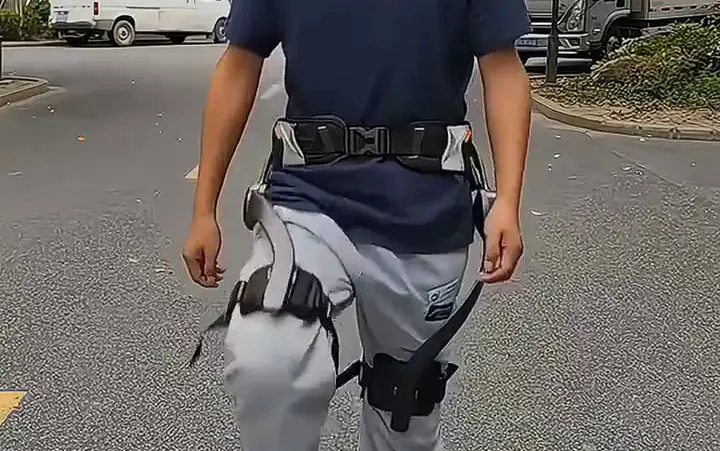
Traditional servo motors were bulky, but current technology has miniaturized them for extreme lightweight performance. The UP host specifically highlighted the design of the hip assist module, which can provide ample push-off force for climbing without adding significant dead weight.
“Specific parameters mentioned in the video: Despite being equipped with high-density brushless motors, the adoption of carbon fiber materials keeps the overall weight of the device effectively controlled, vastly improving the terrible experience of older exoskeletons where 'putting it on feels like dying from the weight'.”



/
With a lightweight frame, the core soul lies in the algorithm. A common concern is: Will walking in this device make you look like a Terminator robot just learning to walk, causing you to trip yourself?
This brings us to the "brain" of the modern exoskeleton. The device integrates high-precision sensors, including an IMU (Inertial Measurement Unit) and pressure sensors in the soles of the feet. The system can capture changes in your gait at millisecond speeds.
As you prepare to lift your leg to take a step, the control system instantly calculates the required joint torque for your leg joints. During the demonstration, the UP host noted that as long as the algorithmic model is precise enough, you will feel virtually no foreign sensation on flat ground; the device simply "goes with the flow" to help you conserve energy.



/
For outdoor camping enthusiasts, the two biggest questions are always: How much can it carry? And how far can it go?
In the max payload / load capacity test, the UP host carried a heavy backpack and subjected the device to extreme external resistance, yet the device still maintained its stability. More importantly, regarding daily battery life and overall endurance (in hours), the UP host provided hard data:
“Test results mentioned in the video: When set to the highest assistance level, this lower-limb exoskeleton delivers sufficient endurance to continuously support a full day of high-intensity trekking.”
Whether climbing mountains or descending valleys, this sustained power output is the key to moving consumer-grade products from the lab to practical utility.



/
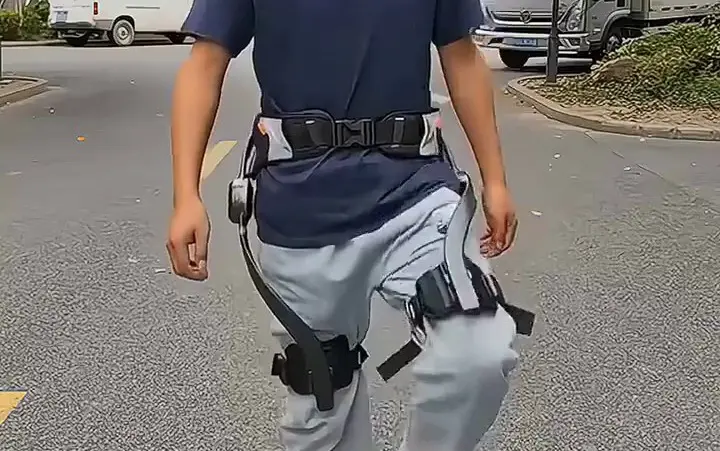
Beyond the lower-limb assist products, the UP host also provided a side-by-side comparison of another major category: exoskeletons focused solely on lumbar / back assist.
These devices are often heavily relied upon by logistics workers, factory line employees, or nurses who stand for long periods. Compared to the complex algorithms of leg exoskeletons, the requirement for waist-support exoskeletons is more straightforward—lumbar muscle protection during lifting. By using servo motors in the lower back to provide an instant upward pull, they can greatly alleviate the jarring strain on the lumbar spine when standing up with a heavy object.

/
However, after testing products from numerous brands (such as Chengtian and Kenqing), the UP host offered a particularly bold viewpoint:
“The biggest risk in real outdoor off-roading isn't fatigue, it's falling. If you only provide assistance, an exoskeleton that fails to offer fall protection is less safe than a simple carbon fiber hiking pole.”
Encouragingly, industry evolution is filling this gap. Some cutting-edge products have already introduced self-balancing algorithms. If you slip on a wet surface, the exoskeleton's internal IMU instantly senses a drastic shift in your center of gravity and forcefully stabilizes your lower body via the motors' reverse torque, pulling you back from the danger of "rolling down a cliff."



/
After discussing structure, assistance, and protection, we must address the most practical issue—price.
The UP host admitted that while many of the domestic brands mentioned are fiercely competing on price, fully automatic walking-assist exoskeletons remain expensive. Many low-end products claiming to be functional are merely "straps + vibration motors"—an "IQ tax"—while the average price of a well-built assistive exoskeleton remains in a high range.
The market reality mentioned in the video: For the average consumer on a budget, high-end equipment composed of a complete set of brushless motors, sensors, and a self-balancing system is still considered a "major digital purchase," requiring careful consideration of your actual outdoor usage frequency.
IMAGESPORT_19

/
Finally, the UP host looked toward the ultimate evolution of the industry. He emphasized that as sensor technology becomes more sophisticated, future hiking / trekking assist will completely merge with the great outdoors.
Whether it's the breakthroughs in visual spatial algorithms by Yuanye or Aoshark's deep-rooted work in outdoor wearable gear, consumer-grade exoskeletons are steadily sheddding the "lab toy" label. The boundaries of imagination are being pushed: in the future, you might even be able to attach more functional modules to a walking exoskeleton, transforming it into a mobile personal transport terminal.





Top Community Comments
The comment section and bullet-screen barrage were abuzz following the video's release. From early audio crosstalk to deep-dive discussions on cutting-edge tech, let's see what the audience had to say:
UP_FIRST_COMMENT: This song sounds great, could you tell me the title? Thanks.
Analysis: The chaotic ASR transcription in the first half of the video was obviously noticed by the audience as well. This collective confusion indicates that there was an audio crosstalk issue with the BGM copyright library or track selection, causing the tech reviewer's intro to be mistaken for a music countdown at the beginning of the video.
@Reader (0 likes):
Analysis: This zero-like comment includes a suspected product link. This perfectly aligns with the characteristics of the geek gadget audience—they are eager to know where they can quickly "checkout" and purchase the consumer-grade exoskeleton featured in the review.
@Reader (12 likes): At first, listening to the lyrics, I thought it was going to get sentimental, but I never expected the second half to go straight into a hardcore tech tree upgrade!
Analysis: This reflects the audience's pleasant surprise at the creator's content transition, demonstrating that hardcore educational content, combined with appropriate emotional buildup (such as the opening music), is more likely to retain viewer attention.
@Reader (45 likes): I'm sold! Which brand was the self-balancing one you tested? Aoshu or Tanluzhe? Please give us the name!
Analysis: This user shows a high level of interest in the "fall protection" core safety feature, indicating that consumers have evolved from early "spectatorship" to hardcore technical discussions on real outdoor safety. The brand mindshare battle has already begun.
@Reader (88 likes): Actually, more than climbing, I care about whether this can be taken to the warehouse for lifting. How much does the lumbar / back assist model cost?
Analysis: This comment reflects the demands of the largest potential audience for consumer-grade exoskeletons—B-end or heavy-duty C-end workers. They are more focused on the return on investment of this assist system during daily high-intensity labor.
@Reader (102 likes): As long as the price drops below two thousand, I'll immediately buy one for my dad as a Boston Dynamics alternative!
Analysis: Price remains the biggest constraint hindering the full popularization of consumer-grade exoskeletons. A significant gap still exists between the public's psychological price range and the actual cost of current advanced technology.
@Reader (230 likes): Really, don't mythologize the exoskeleton. Last time I wore one without fall protection on a rugged trail, I nearly sprained my ankle. If you're buying this thing, you must try it on in a physical store!
Analysis: An incredibly well-grounded voice from an experience-driven user. A reminder for all eager players: the gait adaptation of an exoskeleton highly depends on individual physiological characteristics. Online cloud reviews are just for watching; if you are actually paying, you must go offline to try it on personally to confirm how well the joint torque matches your feet.


IMAGESPORT_30
One-Sentence Summary
Don't be fooled by the opening music twist; this video is a highly solid buyer's guide to consumer-grade exoskeletons. Whether you're a tech geek looking to glide effortlessly through mountain trails or a true tough guy on the front lines of logistics eager to "save your lower back," this professional and in-depth review will help you find the ideal "steel cheat code" perfectly tailored to your needs.