Save Your Stamina for Creativity: Field-Testing a consumer-grade exoskeleton in Yellowstone National Park—Is it a Geek Toy or an Outdoor Productivity Tool?
The "Hidden Burden" of Photographers: Decades of Pounds of Equipment and Depleted Focus
When many people see a stunning wildlife photograph or a magnificent landscape shot, their attention often stays solely on the final image. However, the actual work begins long before the shutter is pressed, during the
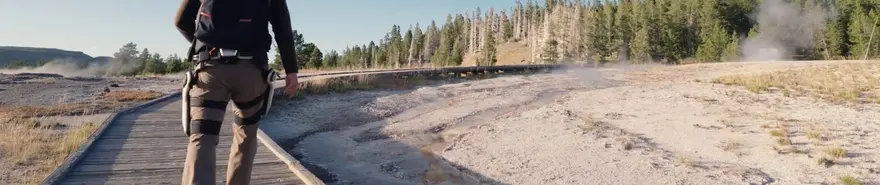 trek while carrying dozens of pounds of equipment.
The true work is not the shooting itself, but the constant movement and judgment.
When we venture into pristine outdoor environments like Yellowstone, everything is not as peaceful as it appears on the surface. To cover the unpredictable shooting demands of the day, photographers must carry extremely cumbersome gear with them.
For ordinary tourists, a gentle slope on the trail might just be an easy journey; but for wildlife photographers carrying massive amounts of equipment, every movement is a test of core strength and willpower. You do not just stay in one shooting position, but constantly adjust your position according to the light, weather, the direction of the geyser steam, and changes in the environment. The daily drain caused by this frequent displacement is often difficult for outsiders to understand.
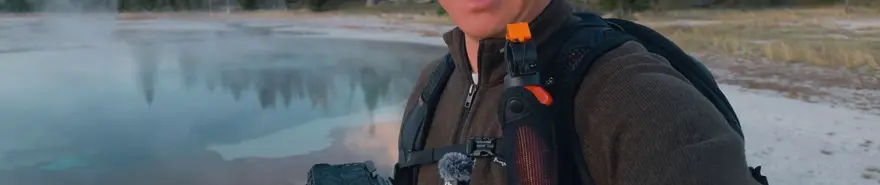
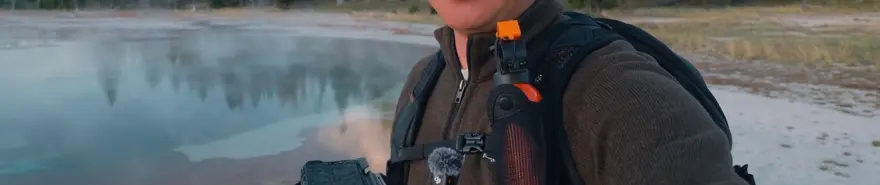
Built for Ridiculous Payloads: When “Future Tech” Meets Heavy Trekking
Reading the slip of the tongue in the transcript—saying “Castle Guider” when it should be “Geyser Guider” (or the name of the device)—makes me laugh. But it also reminds me: the general public’s unfamiliarity with tech often shows up in how they misread and stumble over new terms.
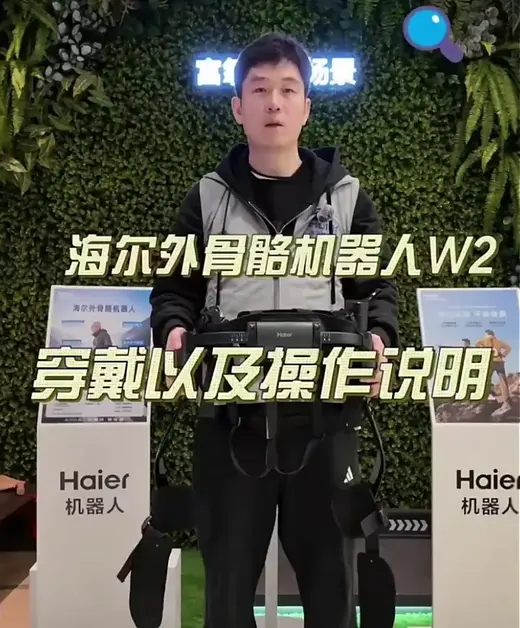
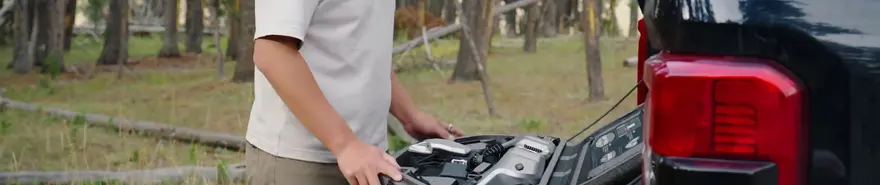
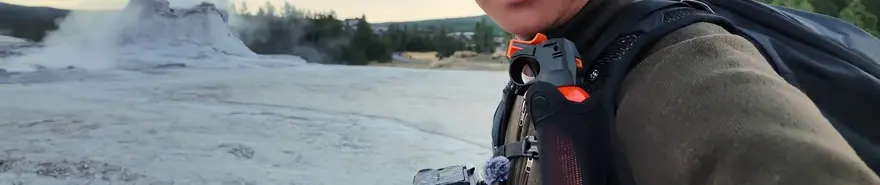
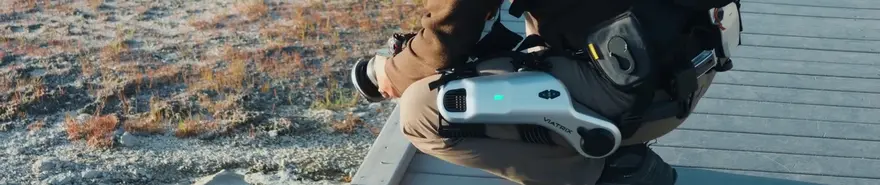
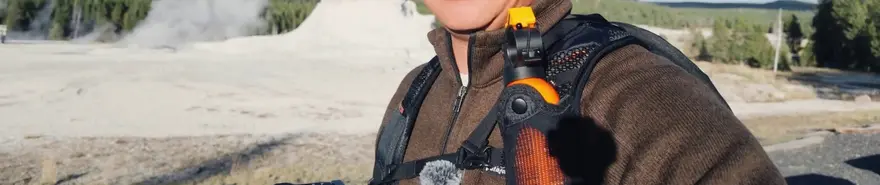
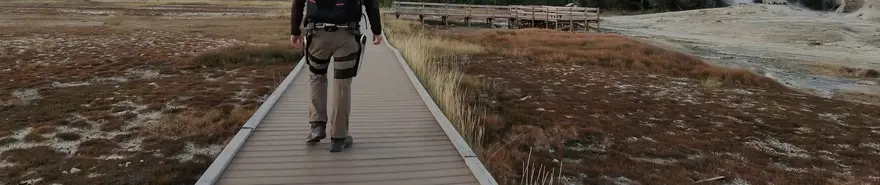
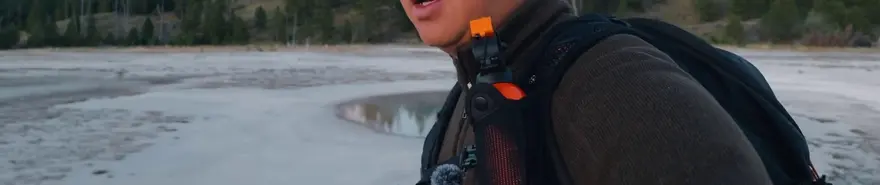
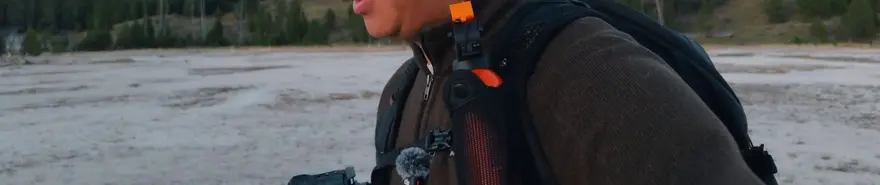
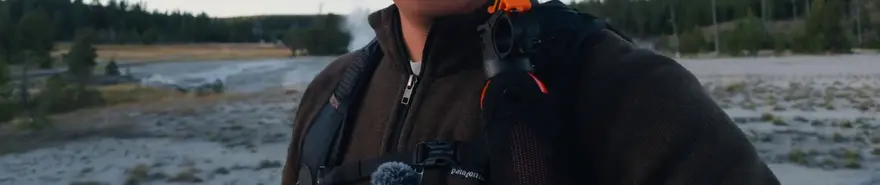
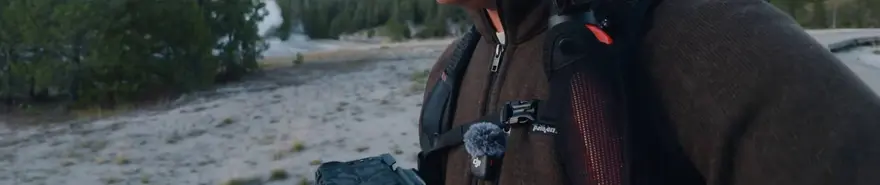
Like the gear setup that appears first in the video: people seeing it for the first time might think it looks a bit over the top—almost like equipment for some kind of futuristic soldier—and feel curious about this so-called “Castle Guider.” But for photographers who work outdoors long-term, every seemingly heavy item is necessary. To capture wildlife’s most authentic behavior, photographers often have to venture deep into the wilderness, which demands an extremely reliable setup: a consumer-grade exoskeleton built for hiking/trekking assist, and a dependable backpack for everything else.
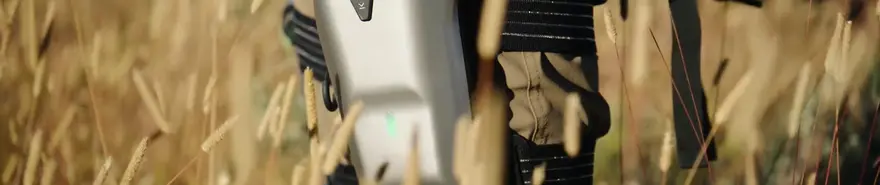
With this full setup on, it’s tens of jin in weight (mentioned in the video).
In real natural environments, many situations are impossible to predict. These pieces of equipment—absolutely not mere decoration—make up the photographer’s entire survival and production kit. And when that total weight presses down on the lower body, it’s not just a test of physical stamina; it becomes a test of whether the load can be properly spread and supported—through hip assist and lumbar/back assist, while keeping joint torque manageable during every step of the gait.
Unveiling the "Future Gear": The Real-World Value of Consumer-Grade Exoskeletons
That's right, he identified it. The "latest little device" that the video creator prominently shared is precisely the consumer-grade exoskeleton that has gradually entered the public eye in recent years.
It is not some future toy. From an industry classification perspective, these products belong to the assISTIVE exoskeleton categories designed specifically for public outdoor scenarios, particularly lower-limb exoskeletons tailored for leg power distribution, or hip assist modules focused on the stepping motion. The core logic revolves around utilizing micro servo motors or brushless motors combined with sensors to apply an upward assistive force every time you take a step.
Help me save my energy for creating.
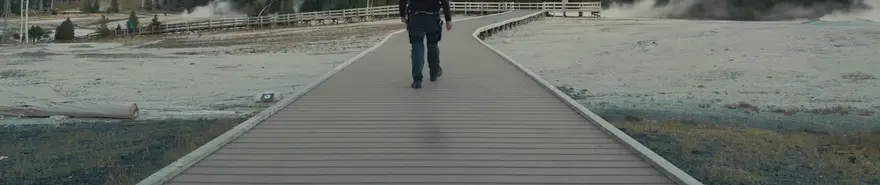
This sentiment perfectly captures the creator's genuine experience while testing the exoskeleton. When hiking in this gear, the device significantly conserves physical stamina. The most tortuous aspect of outdoor filming isn't a single difficult climb, but rather the day-to-day carrying of loads and the waiting on uphill slopes. Prolonged fatigue erodes focus, yet focus is the crucial element for capturing the decisive moment. The role of the exoskeleton is to alleviate the physical burden in this drawn-out battle of endurance.
Into the Heart of Yellowstone: Wildness, Uncertainty, and Equipment's "Self-Balancing"
The most captivating aspect of Yellowstone National Park is precisely its uncertainty. You might walk over ten kilometers in the early morning and see nothing, only to have a story suddenly unfold just as you are exhausted and about to head home. In the pursuit of wildlife, this long wait and search is a true test of patience.
Generally, wildlife is quite afraid of humans. To photograph their authentic habitats without disturbance, photographers must conceal themselves and move with absolute silence and slowness. However, maintaining stability in dense forests and rugged terrain demands extremely fine muscle control. Fortunately, higher-end models of modern exoskeleton products often feature algorithmic self-balancing and even fall protection mechanisms. This enables users to maintain a stable center of gravity even under load, significantly reducing the safety risks of long treks.
The Granularity of Specs and Experience: What Kind of Outdoor Exoskeleton Do We Need?
In the transcript, the creator didn’t expand on the exoskeleton’s exact model (based on context, as the core gear for this event, it might be the stealthy yet powerful Hypershell, or a domestic brand dedicated to exoskeleton development such as Chengtian Technology or Aosheng). But judging from the consumer-grade exoskeleton industry standards, we can infer that a product capable of delivering meaningful benefits during heavy-load hiking would exhibit the following technical characteristics:
First, the structural materials and manufacturing. To reduce the burden carried by the user, the frame of such products typically employs extensive carbon fiber construction, trading for extremely high strength at very low weight. Second, power-system smoothness: the device must identify the user’s gait and, with the help of IMU / pressure sensors deployed along the legs, instantly interpret user intent and apply just the right amount of joint torque.
Finally—and what matters most in outdoor scenarios—battery life and max load. A real field session can run for hours; a device that only lasts one hour is meaningless. A strong solution must offer battery life / runtime that matches a person’s endurance (in hours, as referenced in the video). At the same time, its own max payload / load capacity is critical to deciding whether it can carry heavy camera equipment.
“Let Your Legs Feel the Pull of Gravity, and Let Your Mind Behold the Scenery”
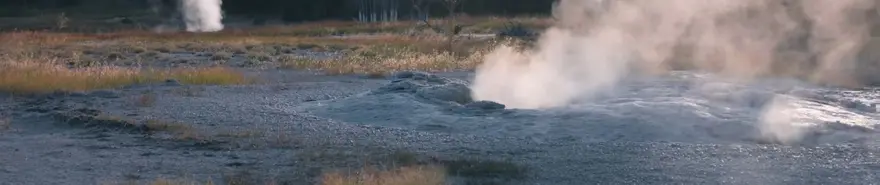
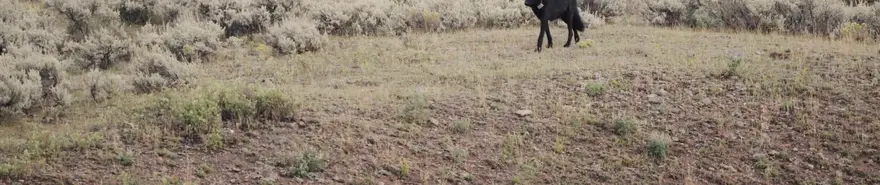
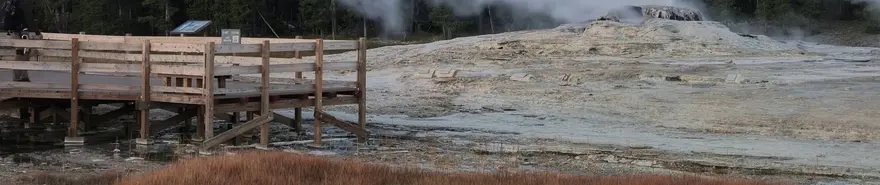
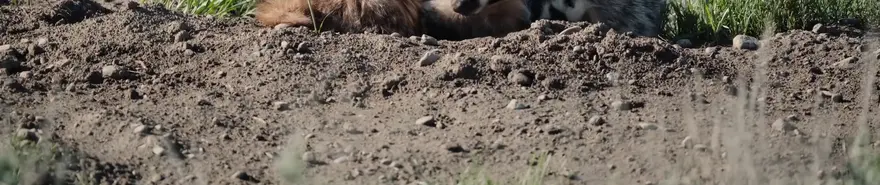
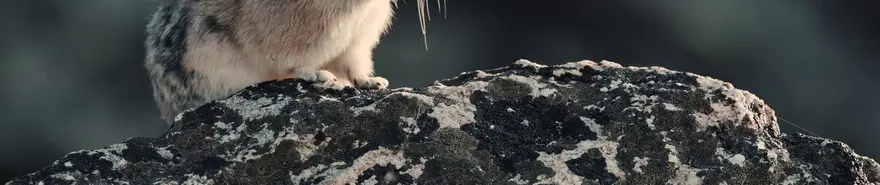
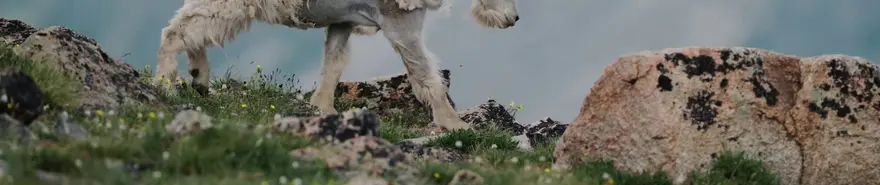
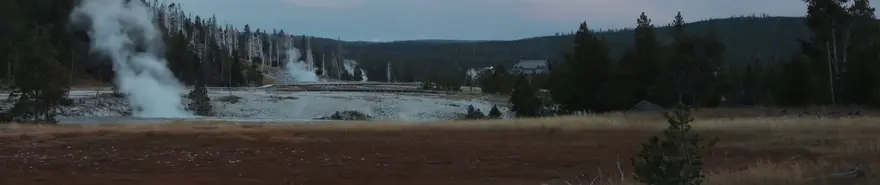
Towards the end of the video, we witness a truly moving moment: during an stroke of incredible luck, the creator encounters a bison wandering beside a geyser. After a long trek and search, thanks to the burden shared by his gear, he is still in excellent form to raise his camera and capture this wild, vibrant moment.
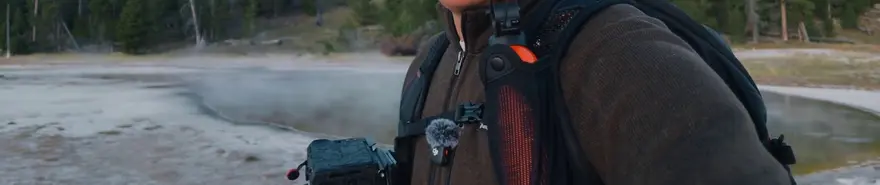
This type of device is by no means designed to mask the pull of gravity your legs feel. Instead, it's meant to be a systems for the long war of attrition, parsing off more physical strength and mental focus for the sake of genuine creation. As the creator shares, it allows you to maintain a perfect state for photography when you spot wildlife.
The "Mid-Game Battle" for consumer-grade exoskeletons: More Than Just Hardcore Gear, It's a Compromise for Creation
It's worth noting that we must strictly distinguish this consumer-grade exoskeleton, aimed at C-end users, from the rehabilitation exoskeleton designed specifically for paralyzed patients or those in recovery, which requires strict medical device certification. The former does not require complex straps or a medical-grade interface; it is more akin to a tech accessory that seamlessly integrates into daily outdoor activities.

Domestically and internationally, numerous brands have emerged to explore this track, including Hypershell, Dnsys, Chengtian, Kenqing, Aoshark, TOREAD, and even Haier and Yuanye. Compared to simply piling on hardware, the current industry consensus revolves around leveraging AI gait algorithms to make the intervention of an assistive exoskeleton feel "invisible." A truly great product doesn't make you feel like you've turned into Iron Man the moment you put it on; rather, it makes you feel as though you can walk whether you wear it or not. But after wearing it for half an hour, you'll be glad you chose it.
Conclusion: A Tech Report Card for Creators
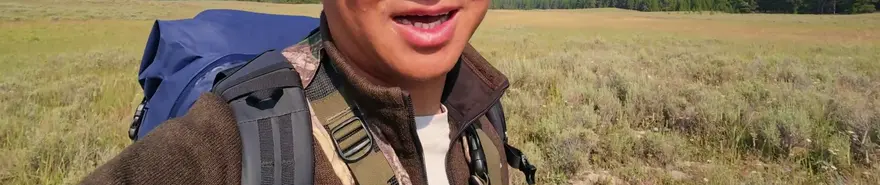
This episode is not merely a scenic tour of Yellowstone, but a field test of "how technology empowers the human body." While exoskeleton devices may not yet allow us to fly or become invisible like in sci-fi movies, in real-world hiking and filming scenarios, they genuinely shed tens of pounds of heavy burdens, preserving the creators' focus.
This also brings up a broader proposition: as more work and hobbies extend outdoors, our bodies perhaps should not be the first consumables to wear out. Through the intervention of technology, enabling humans to go further and more steadily in nature—this is the unique romance of wearable robotics.
Top Community Comments
@cqtsnu: When everyone is wearing an exoskeleton to summit Mount Everest, I'll believe it's not just a gimmick.
Analysis: This comment reflects the biggest concern among mass consumers regarding the consumer-grade exoskeleton—whether it is a genuine need or a mere concept. In reality, while the public demands extremely high universal adoption for consumer products, in specific vertical fields (such as heavy-duty trekking, industrial material handling, and medical rehabilitation), it has already become a tangible productivity tool.
@SlideSlurp: Absolutely stunning!
Analysis: The user was amazed by the pristine scenery of Yellowstone National Park. This pure audiovisual feedback reminds creators that excellent outdoor content has an inherently strong appeal, while the gear serves as the unsung hero behind these beautiful shots.
@Monologueyc: That single shutter click is just the tip of the iceberg...
Analysis: This insightfully reveals the very essence of outdoor and wildlife photography. The audience might only see the moment the shutter is pressed, unaware of the dozens of kilometers of loaded trekking, the tedious hours of patient waiting, and the extreme physical toll taken behind the scenes. This is exactly why we need assistive equipment that preserves our stamina.
One-Sentence Summary
This hands-on test in Yellowstone Park proves that a consumer-grade exoskeleton is by no means a geek toy; rather, it is a productivity tool worthy of investment for serious outdoor creators, with its worth lying in preserving your physical energy for what you love and returning your focus to your craft.