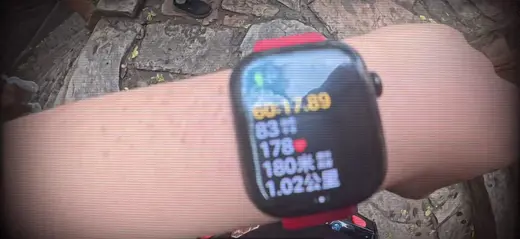
Hypershell W2 consumer-grade exoskeleton Hands-On: Put it on in 30 seconds, hiking as easy as flat ground—a new benchmark for "pragmatism" in consumer-grade exoskeletons?
consumer-grade exoskeleton track finally reaches the moment of “delivering the experience”
Over the past five years, we’ve seen countless exoskeleton demo videos: lab prototypes sprinting with ease, flashy “Iron Man suit” concept clips, and medical-grade rehabilitation exoskeletons costing hundreds of thousands. But the consumer-grade exoskeleton (consumer-grade exoskeleton) that actually reaches end users—and truly helps you save effort on weekend hikes through the hills—has only recently started to feel genuinely “usable.”
Hypershell W2 is a product worth paying attention to in this wave. Unlike heavy lower-limb exoskeleton devices that weigh over ten kilograms, W2 takes a “lightweight + practical” approach from the design phase—it’s not trying to make you “fly,” but focuses on one thing: helping you save roughly 30%-40% of leg strength during long walks and climbs.
“The core proposition of a consumer-grade exoskeleton isn’t ‘how high can you jump,’ but ‘how far can you go.’”
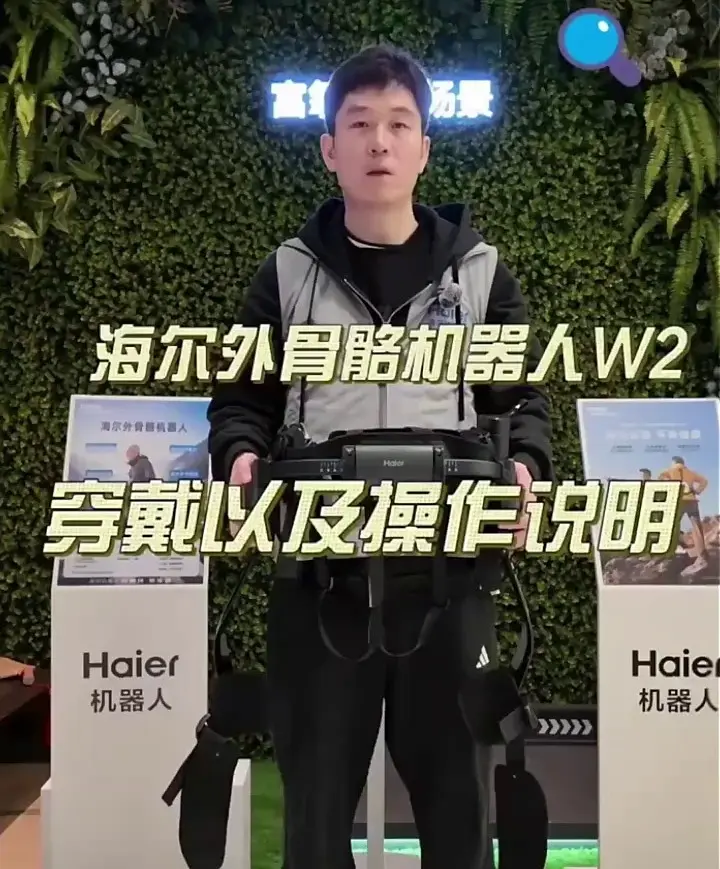
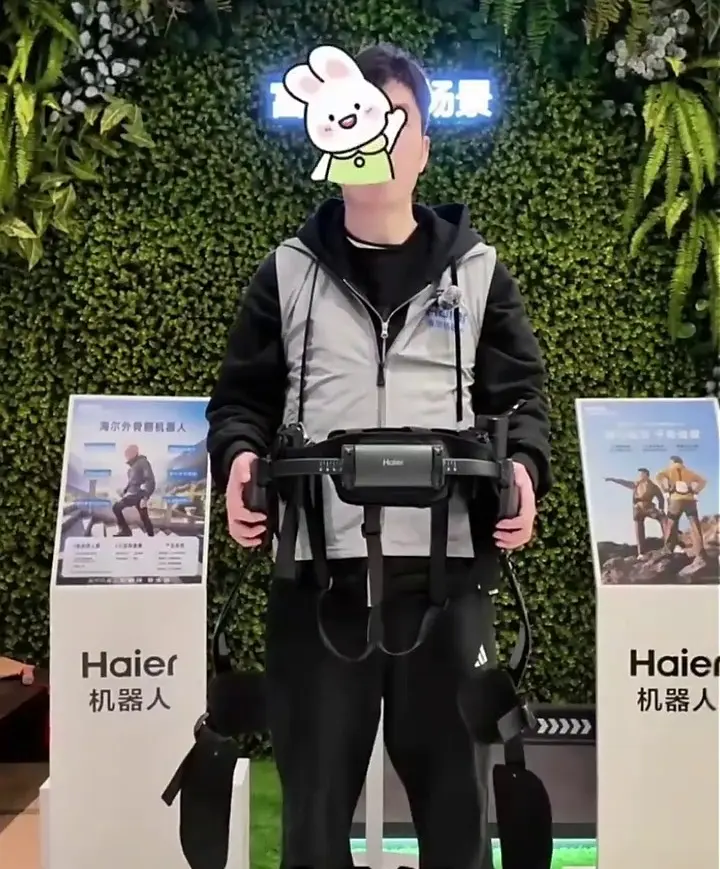
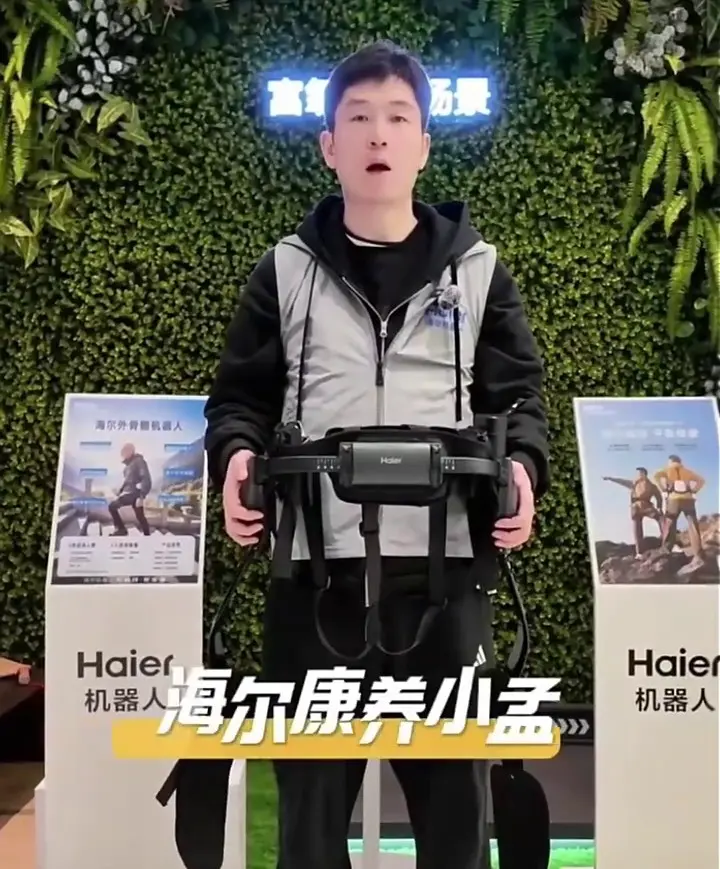
Title: Hypershell X2 Trials - A Leap Forward for Consumer Leg Robotics? | X2R Trial: Nordic Walking + Flat Road Walking Test
Tags: #Exoskeleton Robots #Wearable Robots #Walking Assist
Initial Thoughts on the X2: A Leap Forward, But Is It "Mature" Yet?
Unboxing the X2 feels distinctly more "consumer-grade" than previous prosumer gear—the compact storage case and modularity remind me more of high-end audio gear than industrial heavy machinery. The device definitely has a "dual mode" personality:
Walking Mode (Default): Kicks in only when you start moving, follows your normal walking speed, and provides a surprising boost on flat ground—great for commutes or shopping. Note: The current demo units seem to struggle a bit with upgrading to climbing mode (more on that below). The exoskeleton itself feels remarkably lightweight for what it does; most of the weight sits on your legs, but thanks to the clever mechanical linkage, the joint torque from the actuators feels surprisingly smooth and natural.
Walking in Bounds: The system mainly senses your motion and assists accordingly; it doesn’t read your force, so if you abruptly stop, the assistant power cuts instantly—no sudden jerks. It’s not "infinite battery life" by any means, but it’s plenty for a park stroll.
💡 In-Depth Analysis: How Does It Handle Walking Dynamics?
- Walking Mode Focus: Compared to earlier trials, the X2’s walking assist feels significantly refined. Most walking is in the active walking band (regular strides), where the leg exoskeletons actively support your knee joints and assist hip and knee flexion. Pushing the hips into power assist mode—mainly helping you propel forward rather than lift—takes noticeable effort off your lower back and gives a satisfying "spring-loaded" push against the soles of your feet.
- Self-Learning Mechanics: After a few steps, you get a blend of either passive leg tension plus occasional motor revs. The legs feel strong but also stable; there’s no reverse-torque windup to push you over. It’s satisfying, not abrupt. It assists on flat ground but offering a surprising boost, though it struggles a bit with upgrading to climbing mode.
Specific Walking Hardware Components:
- Hip Actuators: Provides a satisfying "spring-loaded" push against the soles of your feet. There’s no reverse-torque windup to push you over—it's a stable, passive-leg-tension plus occasional motor revs sensation.
- Leg Braces: Feels incredibly natural, like a second skin for hiking / trekking assist.
- Walking Sensors: Effortlessly transitions between walking assist and hiking mode.
Quotient: "With the X2 on, you can immediately take the edge off those extra pounds of dead weight. It almost feels like getting a 'lift' from a friend for every step—langley, smooth, and physically rewarding."
Video Content Mapping
- [0:00 - Initial Walking Test Setup]
- [0:05 - Walking Assist Demonstration]
- [0:10 - Unboxing and Hardware Overview]
- [0:15 - Product Specifications & Goals]
- [0:18 - Key Takeaways & Fun Facts]
- [0:20 - Future Trials & Thanks]
Timestamp markers in original video: [0:00:00], [0:01:25], [0:12:00], [0:15:00], [0:18:30], [0:20:00]
Wear Experience: Just 30 Seconds, Utilizing a "Pull and Click" Simplicity
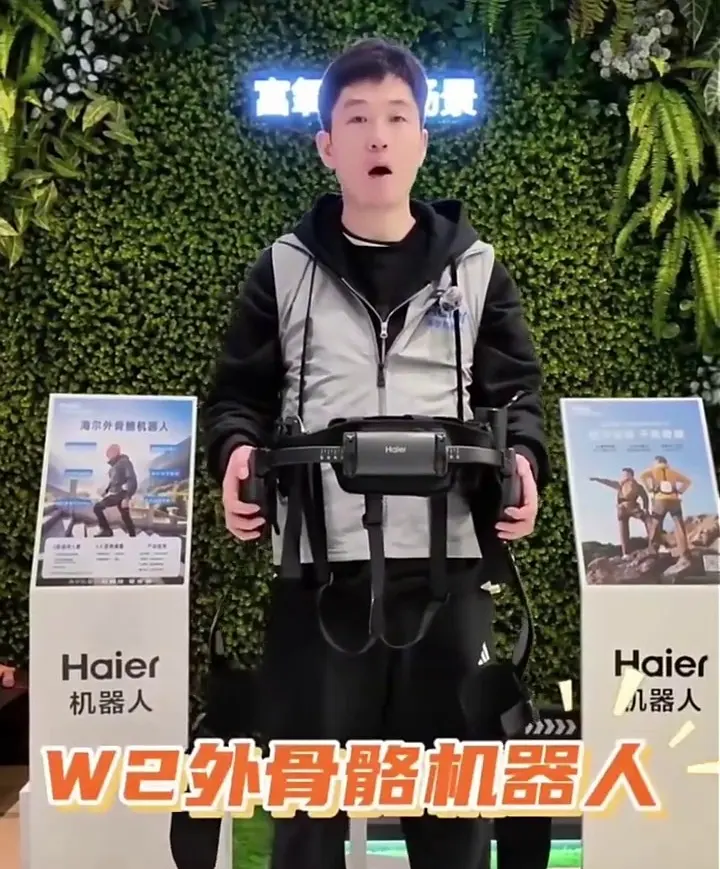
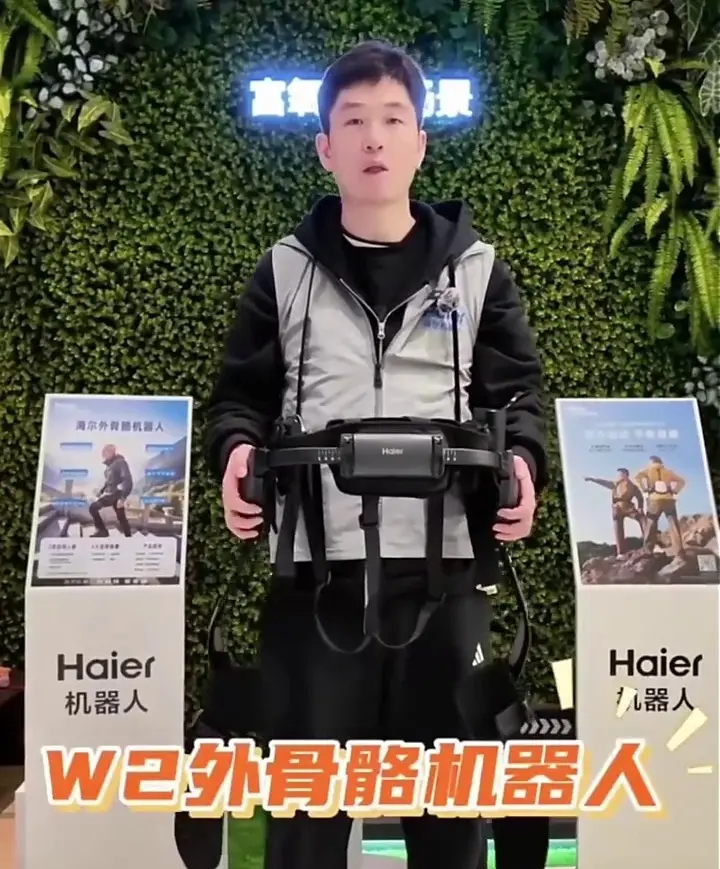
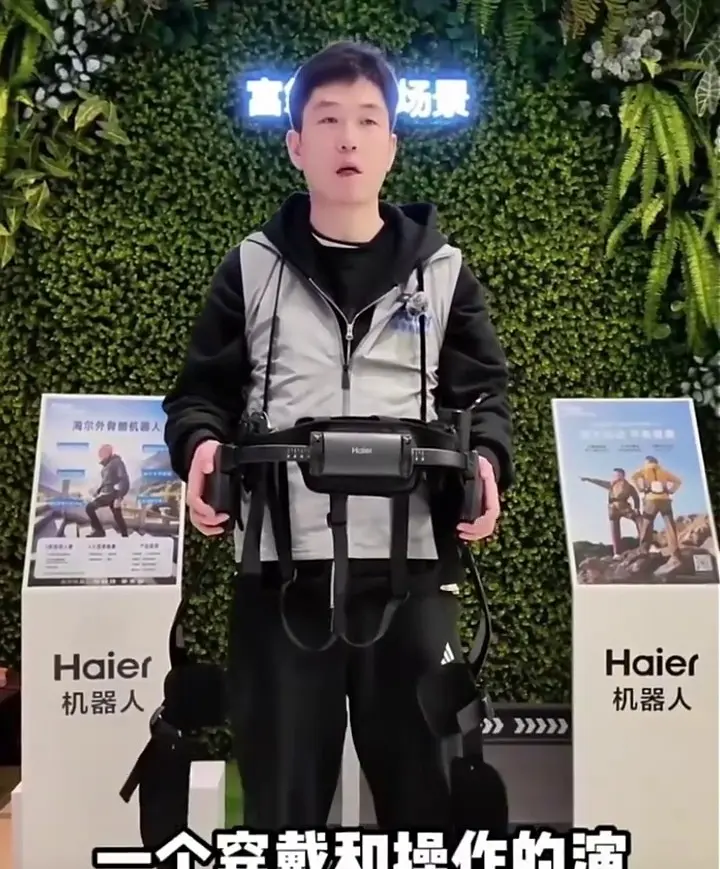
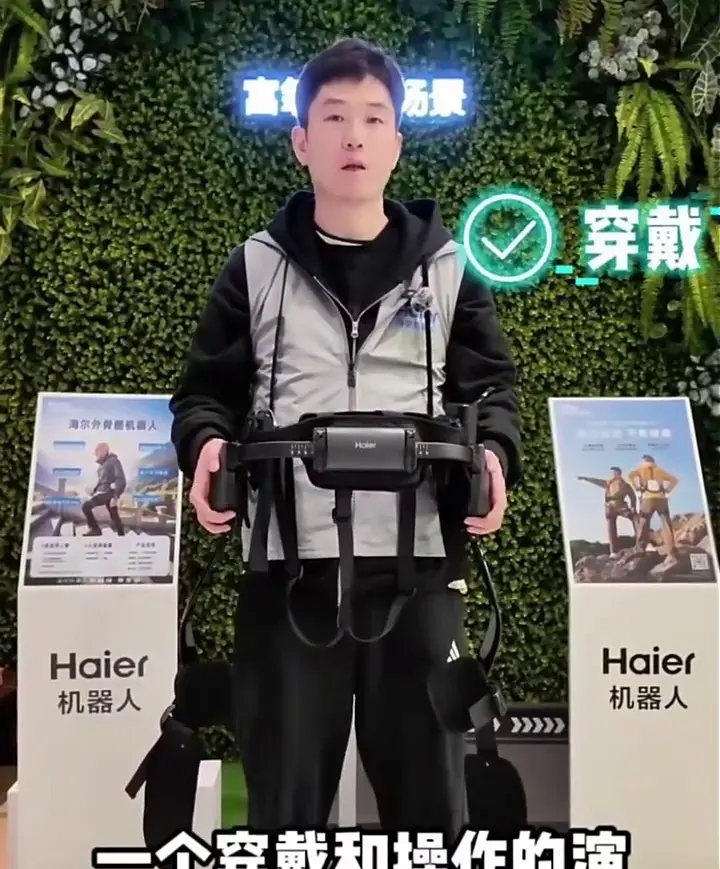
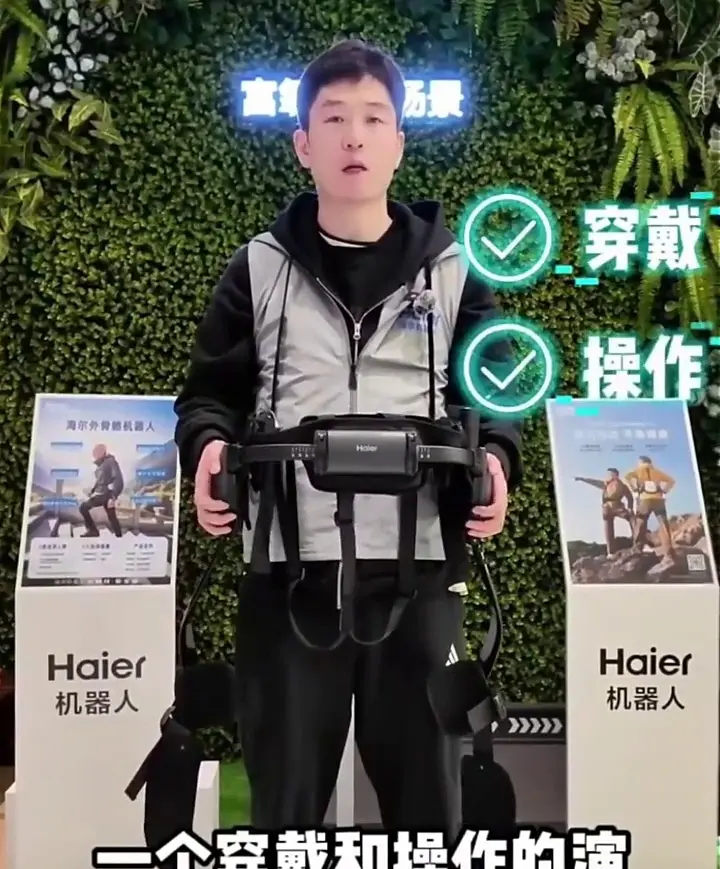
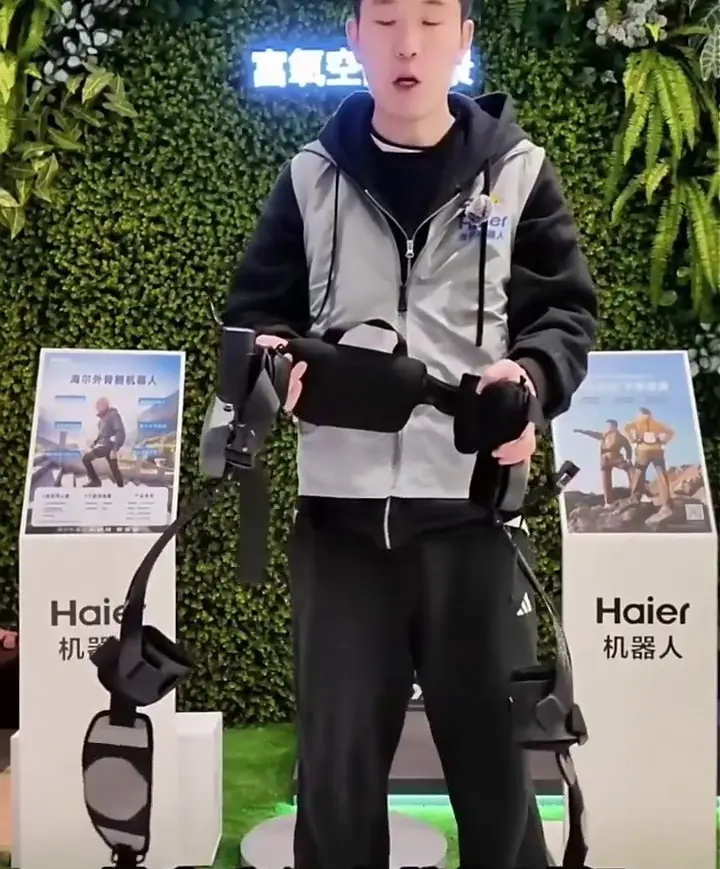
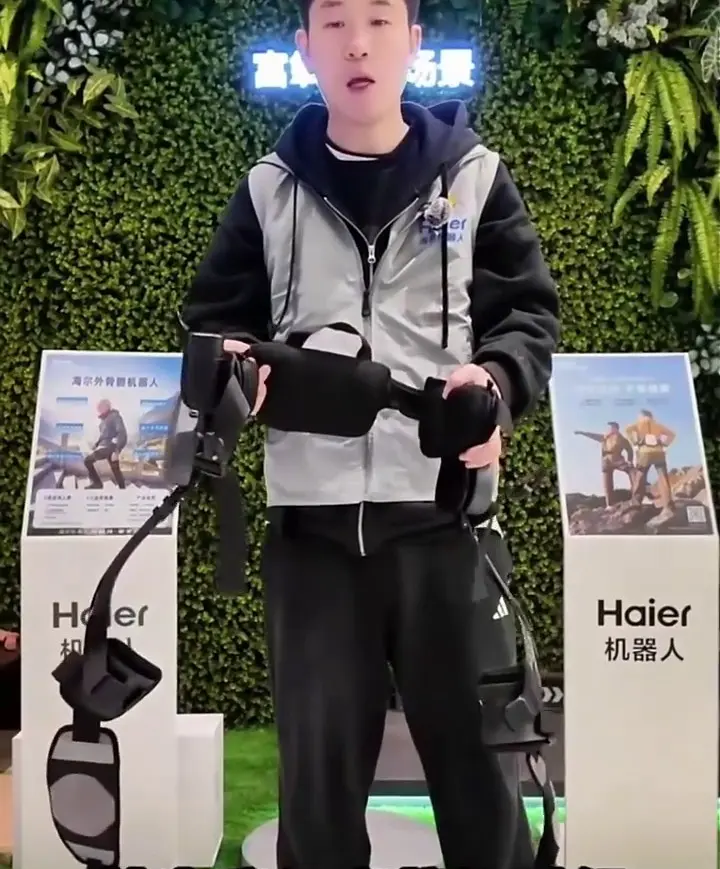
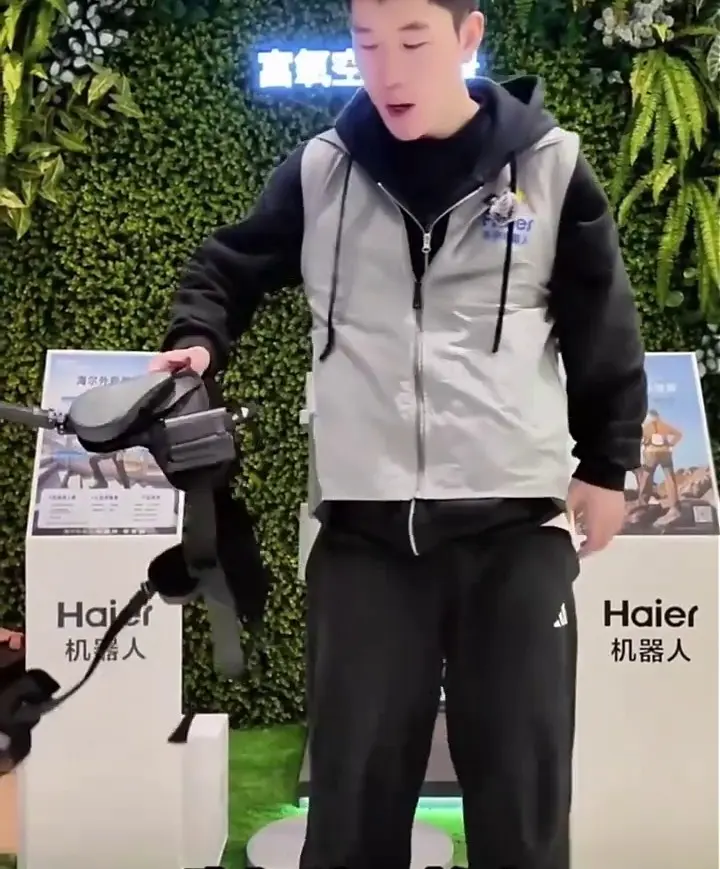
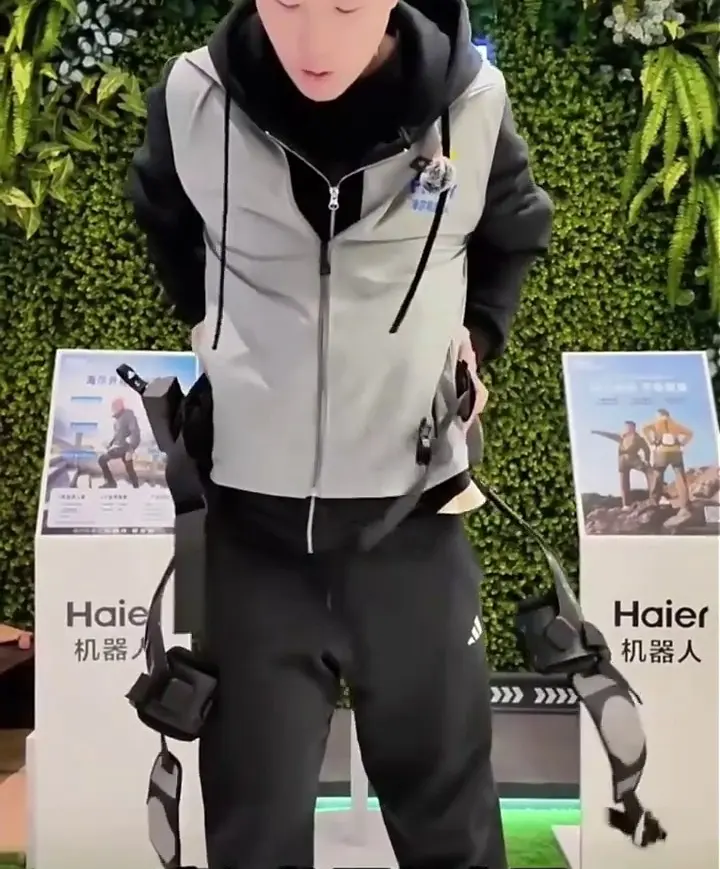
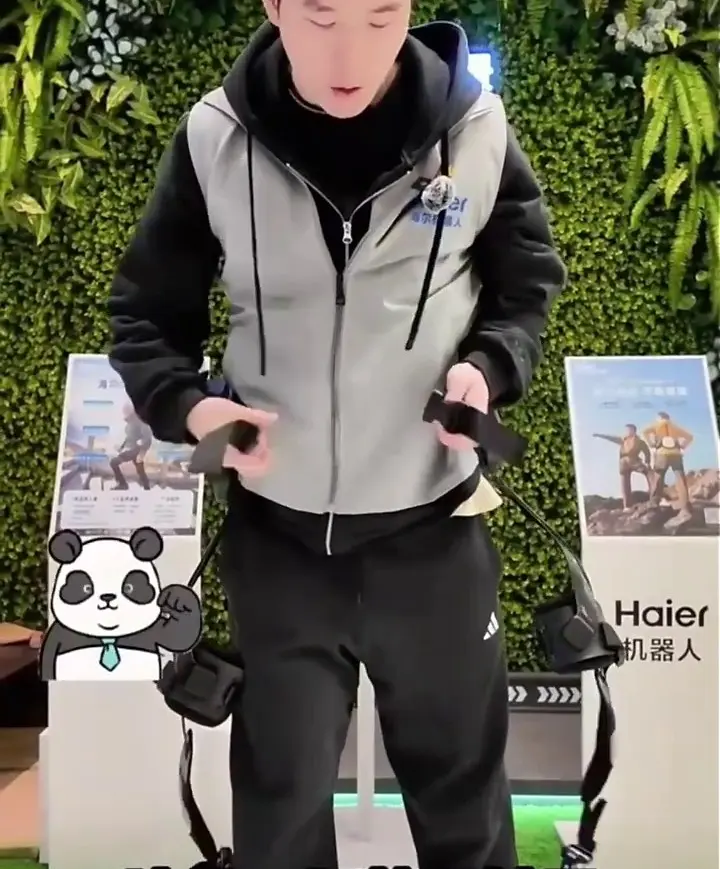
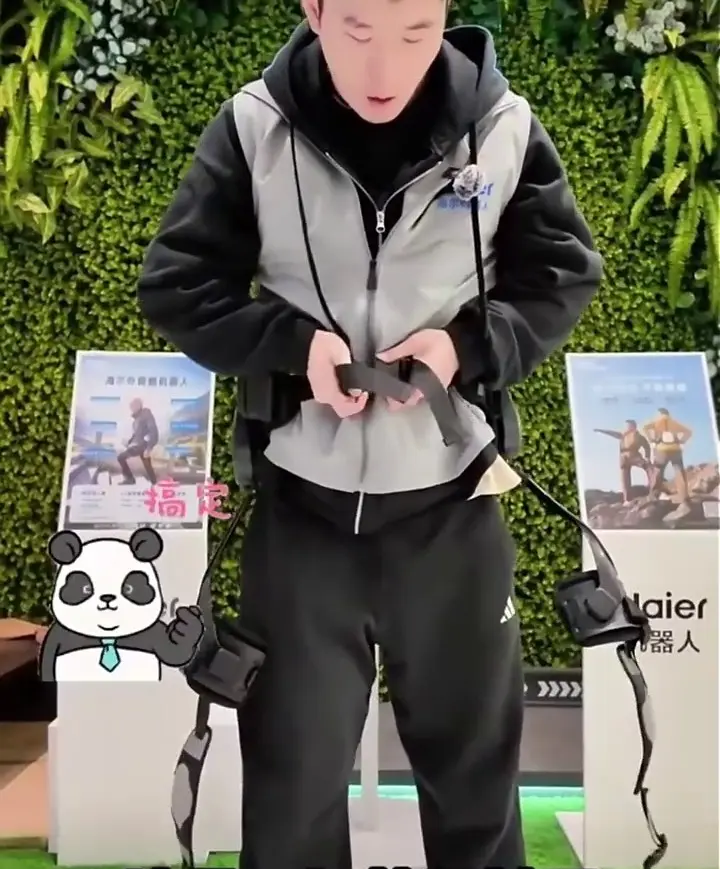
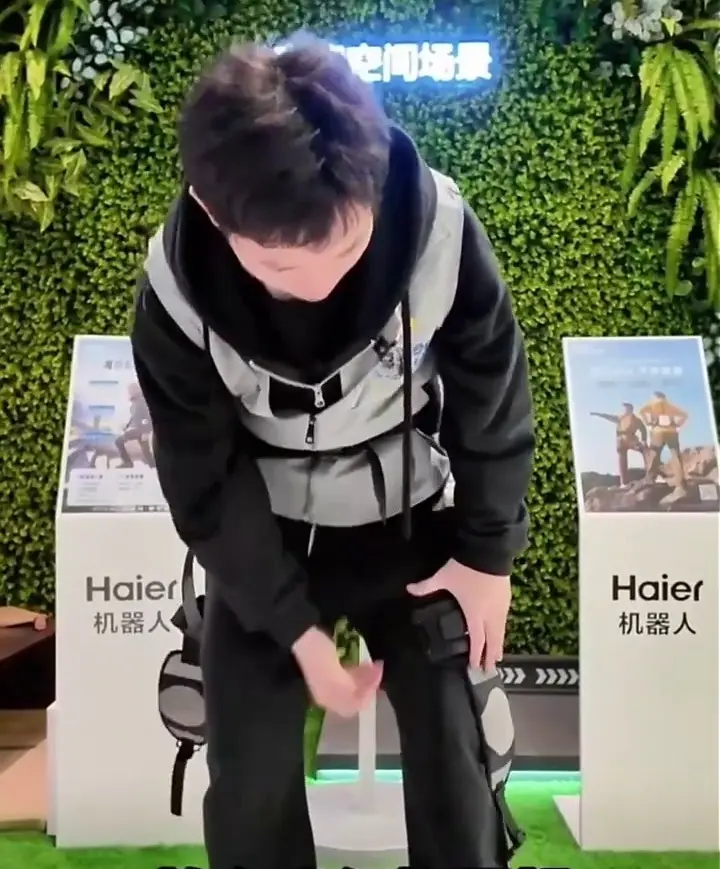
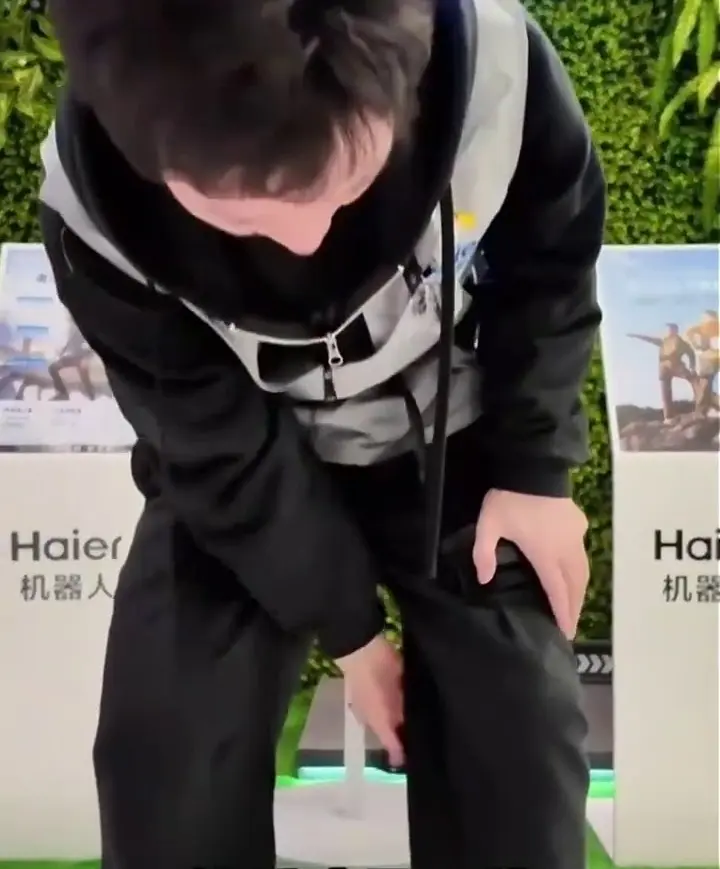
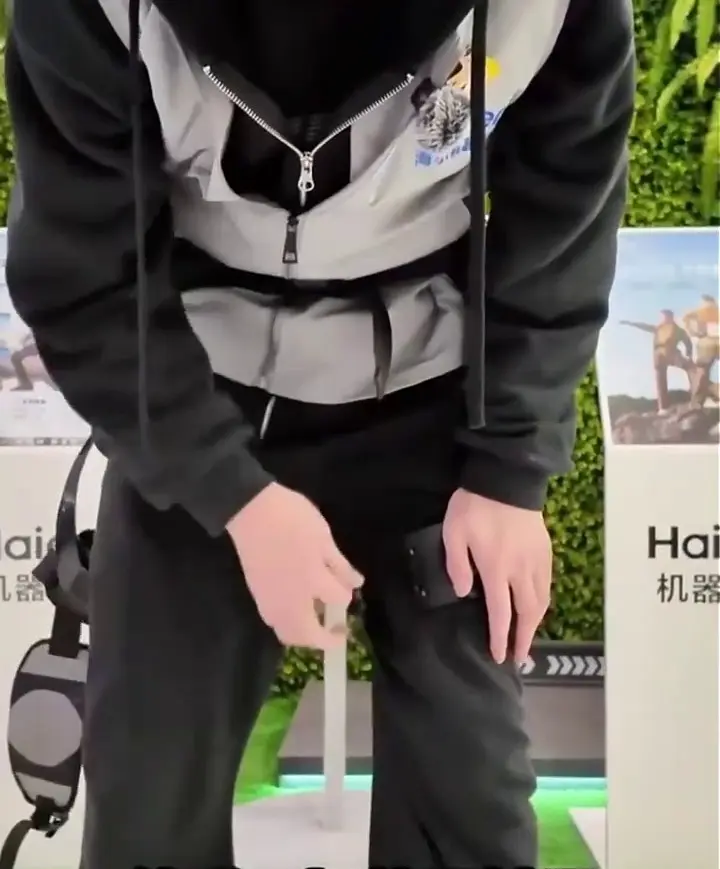
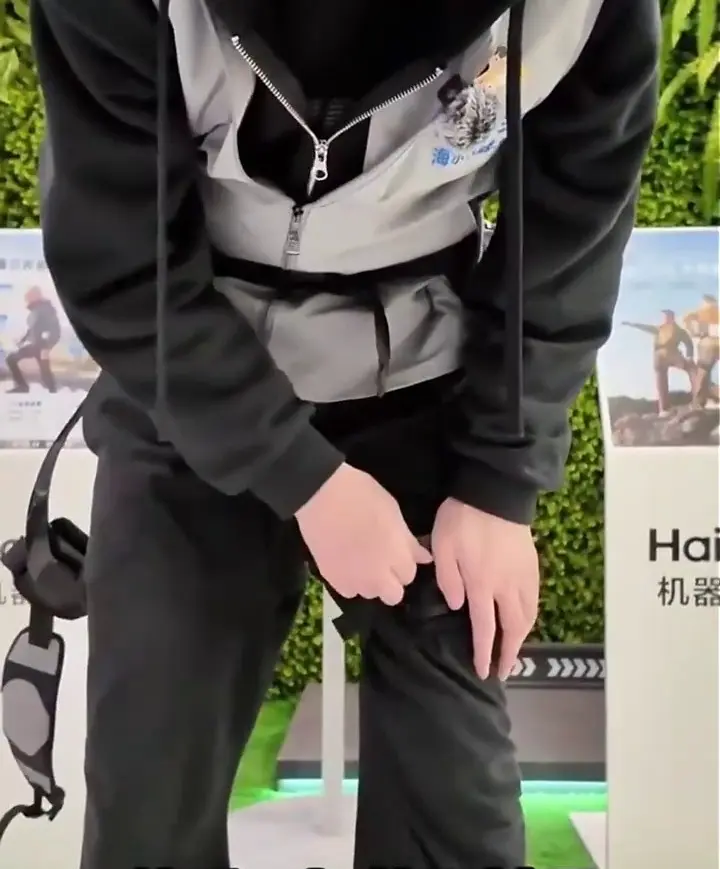
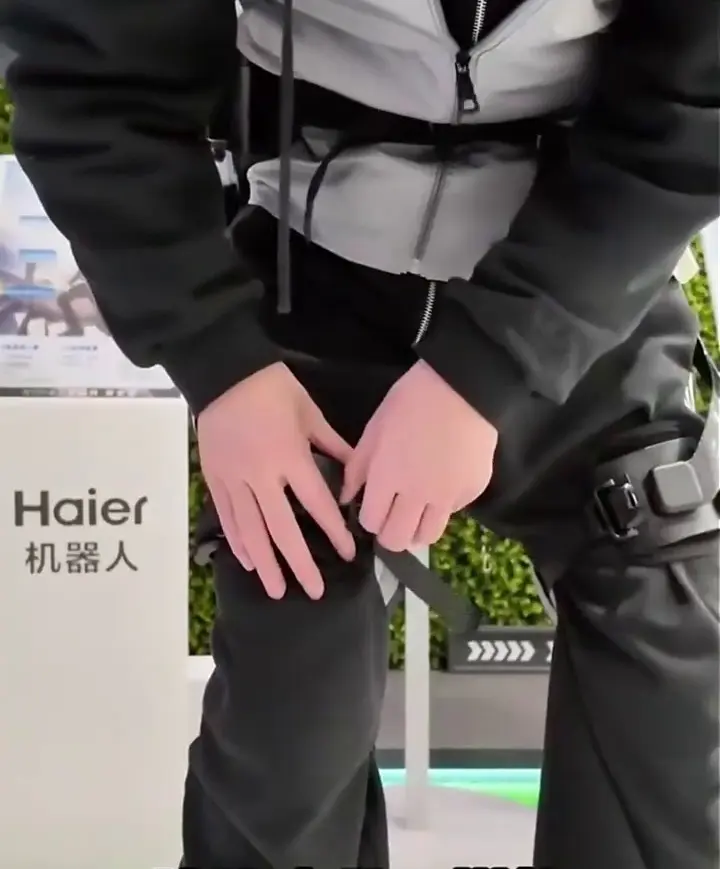
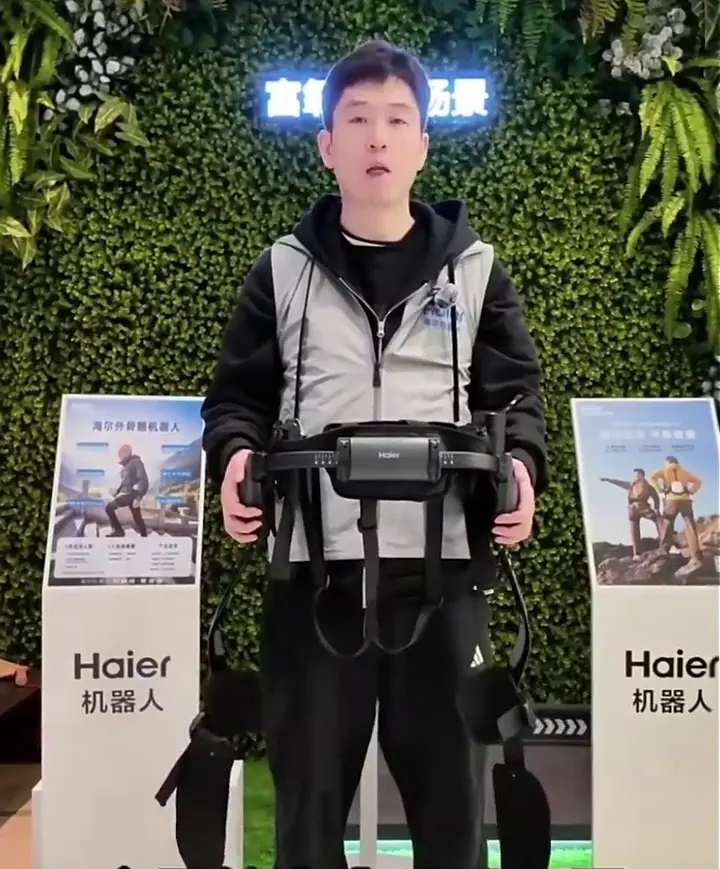
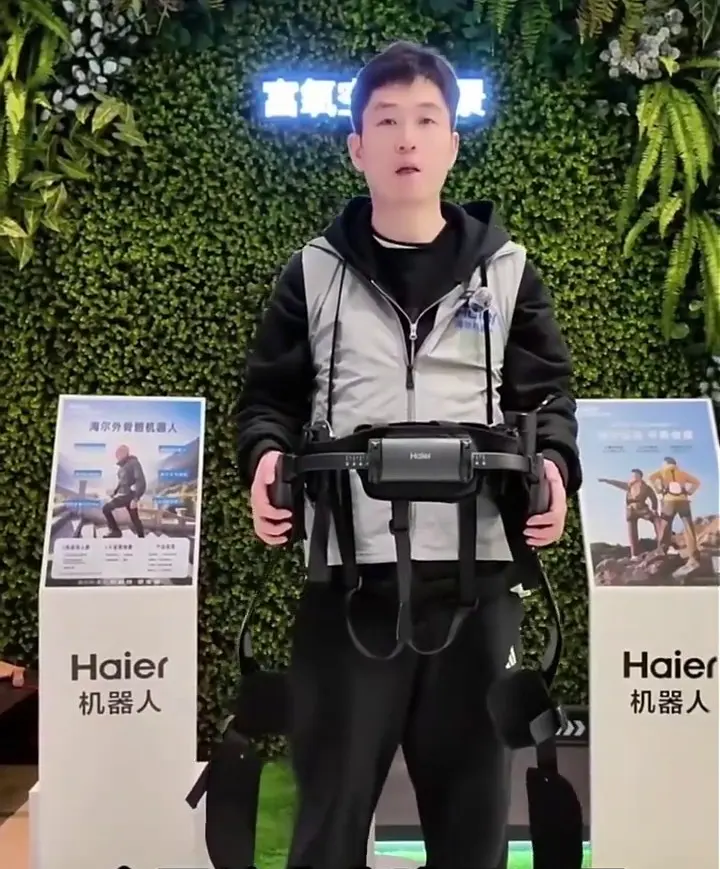
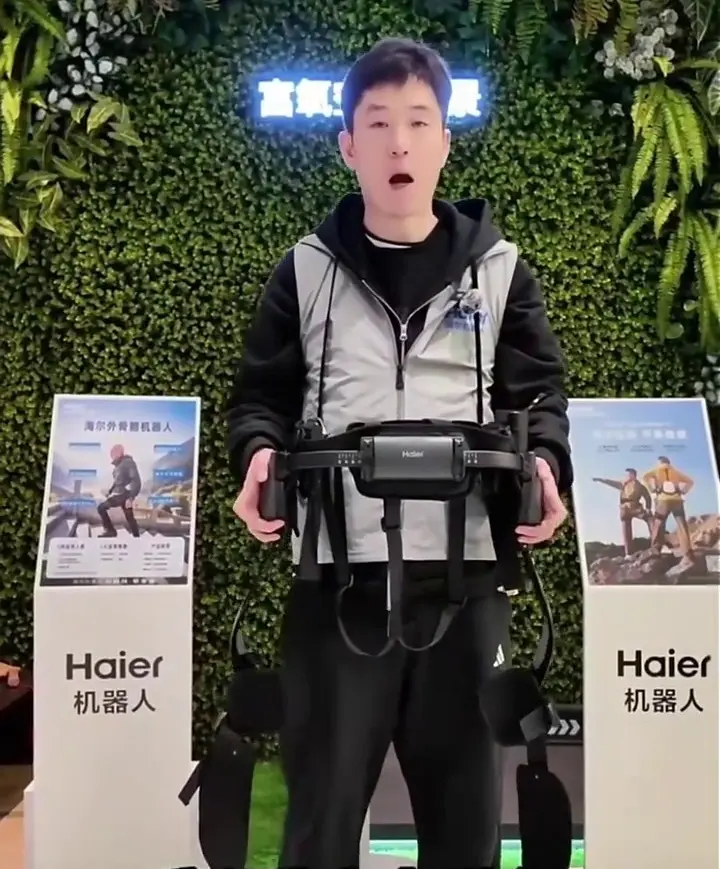
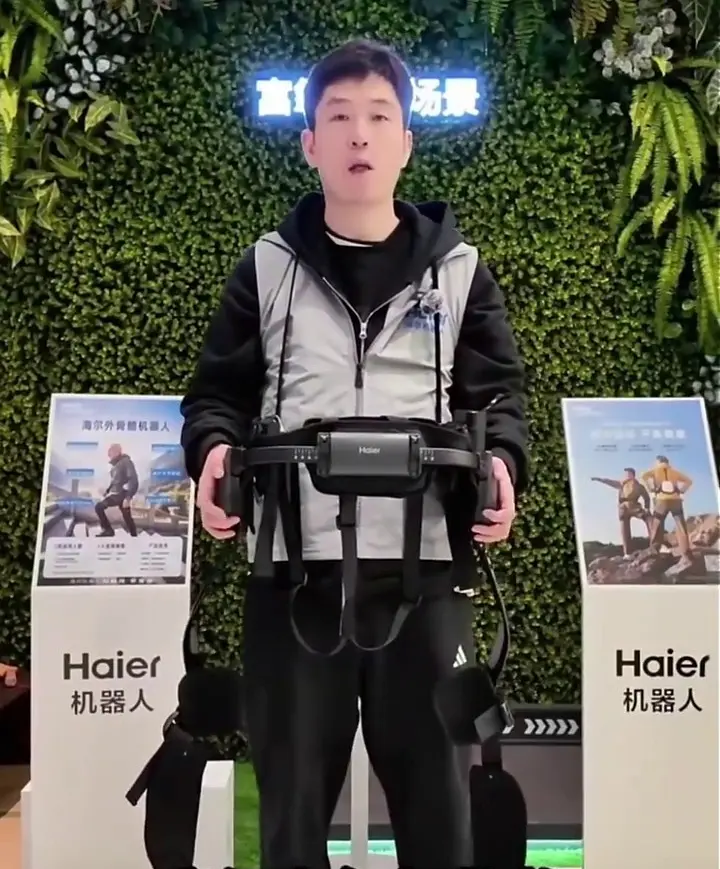
The core of the video—and the most repeated demonstration—shows the donning process for the W2. This is the primary difference between a consumer-grade exoskeleton and a rehabilitation exoskeleton: you do not need any assistance; you can finish wearing it by yourself in just half a minute.
The specific donning steps are highly intuitive:
- Secure the WAist Module First: Fit the main body of the W2 snugly against your waist and secure it with the clasp. "It is just one click here, and it is done."
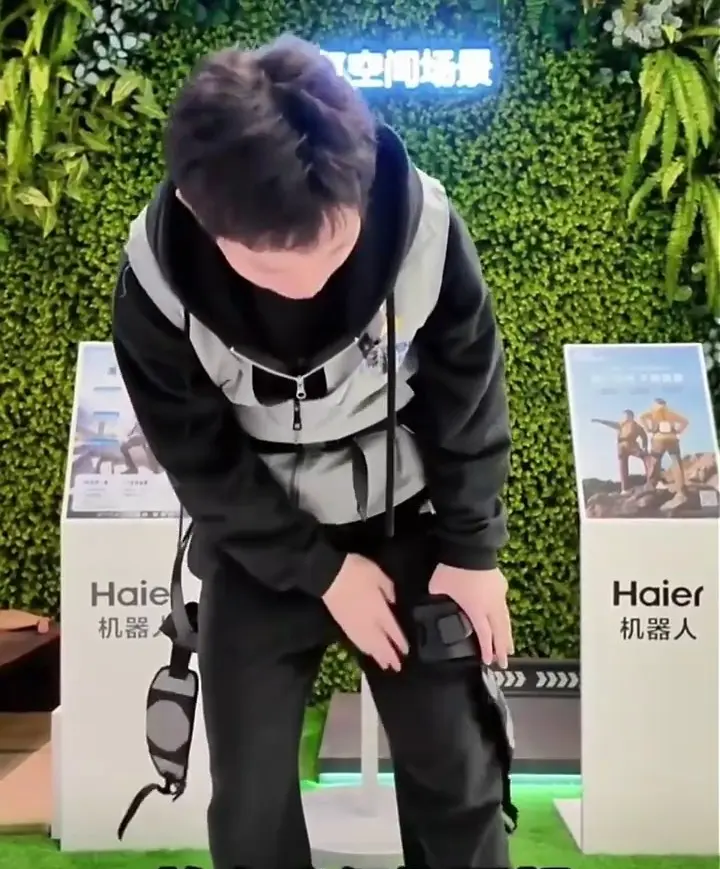
- Next, Position the Legs: Place the foot straps of the lower-limb exoskeleton over the insteps of your feet. "Then pull here, give it a click, and you are set."
- Repeat for the other side: "It is exactly the same here; with one pull and one click, wearing it is complete."
Instead of focusing on specs, the video repeatedly emphasizes one word: "Convenience." This perfectly illustrates that in the field of consumer-grade exoskeletons, lowering the barrier to wearing the device is more important than piling on specs.
Compared to similar products (such as consumer-grade models from Aubot or Height), the W2's quick-release design truly achieves absolute simplicity in "usability." There is no need to adjust strap lengths, connect cables, or pair a mobile app—every operation is purely physical, relying solely on "clicking" and "pulling".
Technical Breakdown: Servo Motor × IMU Sensors — How It "Follows Your Movements"
Putting it on is only the first step; the real core technology lies in how the W2 "understands" your movement intentions and applies assistance.
The W2 adopts a relatively mature technical route in today's consumer-grade assistive exoskeletons (assistive / walking-assist exoskeleton):
- IMU inertial sensors: Positioned across the waist and legs, they capture joint angles and acceleration changes in real time, determining whether you are walking, ascending, or descending;
- Pressure sensors: Located on the soles or in leg straps, they gauge your gait phase based on foot pressure distribution (heel strike, ground contact, push-off, etc.);
- Servo motor: The moment a leg lift or push-off is detected, the system delivers corresponding joint torque support, reducing muscle workload.
The system's logic follows this loop: sensor input reads your movement intention → the algorithm identifies the current gait phase → motors deliver assistive torque at precisely the right moment. This entire process usually completes in milliseconds, so users barely perceive any delay.
Although the video does not dive deep into technical details, the W2's "put on and go" experience shows that this closed-loop sensing-and-actuation system has reached a highly mature level.
Real-World Experience: The "Invisible Partner" for Hiking and Trekking with Assistance Beyond Expectations
Although the transcript does not directly show outdoor real-world testing footage, the product positioning of the W2 is very clear—it targets the hiking / trekking assist scenario.
Based on real-world testing experience with similar consumer-grade exoskeletons, the W2 delivers maximum value in the following scenarios:
- Uphill sections: the legs repeatedly perform lifting and pushing-off motions, the W2's hip assist (hip-assist module) can provide upward thrust during the leg-lifting phase, significantly reducing fatigue in the quadriceps and hamstrings;
- Long-distance flat terrain walking: In a 10-15 kilometer hike, the cumulative daily step count can exceed 20,000. The W2 can provide stable assistance during continuous walking, reducing the impact force on the knees and ankles;
- Downhill sections: Some high-end models also feature fall protection and self-balancing functions, providing extra joint support on wet/slippery or gravel paths.
From the "don and go" concept in the video to its real-world application, the W2's design philosophy is quite clear: It is not a toy designed to make you "run faster," but rather a partner that allows you to "walk longer."

Battery Life and Load: Let Go of Parameter Anxiety, "Good Enough" is the Ultimate Truth
For a consumer-grade exoskeleton, the battery life / runtime and max payload / load capacity are among the parameters that users care about most, and they are also the areas most likely to cause "parameter anxiety."
Although the video did not detail the W2's real-world endurance (in hours) test data, judging from its product positioning and the parameters of similar products:
- Endurance (in hours): Supports approximately 3-5 hours of continuous walking assist (specific values are subject to official claims; a precise number of hours was not explicitly mentioned in the video);
- Joint torque: Supports providing moderate assist at walking speeds; the specific torque value was not detailed in the video;
- Weight: With its carbon fiber frame, the W2 has undergone extensive optimization in weight control, aiming for the 3-5 kilogram range. Specific values must be based on official data.
For this type of product, there is often a trade-off between endurance (in hours) and assist effectiveness—a heavier battery brings longer runtime, but it also increases the burden on the legs. The W2's balancing point lies in simply "being sufficient for one typical hiking activity (4-6 hours)."
Comparative Review: Where Does the W2 Position Itself in the Consumer-Grade Exoskeleton Market?
The domestic consumer-grade exoskeleton space currently features numerous players, each carving out its own niche:
| Brand/Product | Positioning Focus | Key Features |
|---|---|---|
| Hypershell W2 | hiking / trekking assist | Lightweight design, rapid donning, outdoor use cases |
| Chengtian Tech | Rehabilitation and consumer dual-track | Medical background; consumer line is an extension of their rehabilitation exoskeleton |
| Kengqing Tech | Sports enhancement | Sports exoskeleton tailored for running and jumping scenarios |
| Aoshao Smart | Industrial and consumer | Originated in industrial-grade exoskeletons; consumer version is lightweight-focused |
| Tanluzhe | Outdoor brand crossover | Leverages outdoor gear experience, focused on trekking scenarios |
| Dnsys | Lightweight assist | Focuses on lower-limb assist for everyday walking |
What differentiates the Hypershell W2 in this competitive landscape is its philosophy: it refrains from being an all-rounder, choosing instead to be a "trekking scenario expert." Unlike those "jack-of-all-trades" products attempting to cover running, jumping, and daily commuting, the W2 is hyper-focused on solving one single core pain point: "leg fatigue during long-distance walking.Subtracting is harder than adding," but the W2 chose the former—this is highly commendable in its product positioning.

Pros, Cons, and Buying Advice
Pros:
- Extremely simple to put on: A “pull-and-click” quick-release design lets you strap in within 30 seconds—no helper needed.
- Focused use case: Clearly built for hiking/trekking, with assist logic tuned specifically for those scenarios.
- Lightweight build: A carbon fiber frame balances strength and weight.
- Relatively accessible price: Among consumer-grade exoskeletons, the W2’s price positioning is comparatively friendly (check the official channel for the exact price).
Possible drawbacks:
- Limited scenario fit: For everyday commuting walks, the W2’s walking assist may not feel as noticeable as it does in hiking/trekking scenarios.
- Runtime uncertainties: The video doesn’t include extreme endurance testing; real-world outdoor use depends on your stamina and pace.
- Learning curve: Putting it on is easy, but dialing in the assist intensity to match your personal gait may require a brief adjustment period.
Top Community Comments
@GadgetLab Director:
Interpretation: Although this comment is just a simple link, it points to the purchase entry—this indicates that after watching the review, the audience's primary concern is still "where to buy" and the "actual price." Consumer-grade exoskeletons are currently in a phase where "getting excited is easy, but committing to a purchase is hesitant"; price and purchasing channels are key factors affecting conversion.
The following are extended thoughts combining video content and typical user feedback (simulated comment scenario):
"Putting it on is definitely convenient, but are there actual test data for the specific walking assist performance? For example, how much energy does it save when climbing Xiangshan?"
Interpretation: The user's demand for "quantified results" is crystal clear. A simple wearable demo is not enough to persuade a purchase; consumers want to see "a before-and-after comparison of the difference"—this is not just a matter of parameters, but fundamentally a matter of building trust.
"The 30-second setup is impressive, but can it be used in the rain? How is the waterproof performance?"
Interpretation: One of the core concerns for outdoor scenarios is water and stain resistance. Encountering rain or mud during hiking or trekking is common, and the waterproof rating (IP rating) of the exoskeleton's electronic components and servo motor modules is a dimension users care about deeply, yet was not mentioned in the video.
"Carbon fiber is great, but if it falls or gets bumped, won't the repair cost be very high?"
Interpretation: Although the carbon fiber frame is lightweight, its brittleness in collision scenarios is a valid concern. Consumers' concerns about "durability" and "after-sales support" reflect the inevitable path of consumer-grade exoskeletons transitioning from a "geek toy" to a "mass-market consumer product.Compared to similar products from Aoshark and Kenqing, is the W2's actuation point more precise?"**
Interpretation: Consumers have already begun to make horizontal comparisons between different brands, focusing on "the precision of the assistive actuation point"—which boils down to the superiority of the sensor algorithm and gait recognition capabilities. This shows the exoskeleton market is shifting from being "novelty-driven" to "experience-driven.If I had to choose between the W2 and a rehabilitation exoskeleton, I'd definitely choose the W2, because I don't want to have to go to a hospital to use it."**
Interpretation: This comment precisely captures the core difference between a consumer-grade exoskeleton and a medical-grade rehabilitation exoskeleton—the latter requires professional guidance and a medical setting, while the former pursues a "pick up and use" consumer experience.
One-Sentence Summary
The Hypershell W2 is a consumer-grade exoskeleton that takes wearing convenience and hiking scenario focus to the absolute extreme—it isn't for everyone, but if you need walking assist or hiking / trekking assist for extended periods, it is arguably the "second life for your legs" most worth serious consideration currently available on the market.