$800 "Human Power-Up": A Hardcore Review of a Cypher-Style consumer-grade exoskeleton, Tested in a Real-Life Counter-Strike Battle—Does It Achieve True Human-Machine Symbiosis?
The Intriguing Fusion of Tactical Operations and Lightweight Design: From the Battlefield to the Review Lab
Now, let’s dive straight into some hardcore first-person-view footage showcasing a Wargame match held at the former site of a private prison in the UK.
This unprecedented event featured over 100 players. Sero, a highly renowned content creator in the international Wargame community, was part of the attacking team, attempting to breach the enemy’s robust defensive lines from the outer perimeter.


IMAGESPORT_3

But wait, if you look closely at the video footage, you'll notice that Sero didn't rely on traditional tactical maneuvers this time. Instead, he was wearing an incredibly specialized "physical cheat code." This is exactly what we are unboxing today—a leg-exoskeleton developed by Texas Instruments.
To demonstrate its real-world effectiveness, I specifically asked our video editor to cut a few clips from the actual gameplay. As you can see, in such a massive arena, Sero heavily relies on this holy grail of gear to sustain rapid, high-frequency movement.



Design Analysis: An $800 Lower-Limb "Cyber Attachment"
As a tech reviewer frequently evaluating cutting-edge products, my first look after unboxing is always the exterior design and core specifications.
Core Specs (as mentioned in the video): This lower-limb exoskeleton has a price of $800 (approximately 5,700 RMB).
At this price point in the consumer-grade exoskeleton market, it’s considered the "entry ticket" for tech enthusiasts. This device comes from a tech startup based in Shenzhen, China. Although its price is accessible, the interior is packed with hardcore, aerospace-grade carbon fiber, which significantly manages the overall weight. When worn on the legs, it avoids looking excessively bulky.



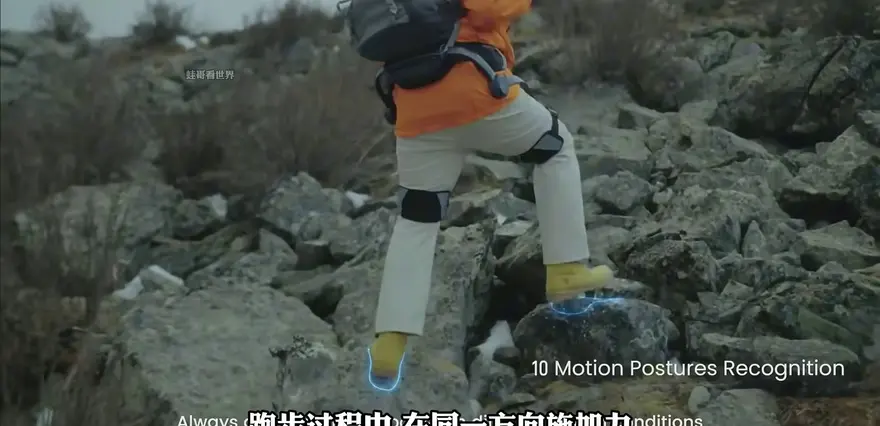
Its core operating principle is straightforward: the servo motor works in tandem with the sensor (IMU / pressure sensor) to apply physical assistance in the same direction as your walking or running motion. Simply put, it acts like an invisible pusher that constantly stays in sync with you, creating an ultimate illusion of weightlessness in your limbs.
Core Experience: Applying joint torque in the same direction creates a sense of lightness akin to "walking on flat ground."



Gait and Self-Balancing: Exploring the Wear Experience and Safety
Stepping out of the lab with this exoskeleton on, the most immediate sensation is its incredibly robust self-balancing system.
Key Observation: Whether you are jumping or running at top speed, the device provides exceptional gait support.
This on-the-go assistive exoskeleton certainly integrates high-precision IMU and pressure sensors internally, enabling it to predict the user's movement trends in real time. Should you accidentally trip, it even features a built-in fall protection mechanism that instantly senses shifts in the center of gravity and applies opposing joint torque support to stabilize you.







Field Test: The Same Experience as Eddie Peng
As the battle raged on, Sero's teammates were locked in an intense firefight behind a building. With the attacking team's respawn point located extremely far from the combat zone, this scenario served as the ultimate test of the device's battery life and continuous running capability.
Scenario Pain Point: With an exceptionally distant respawn point, average players would typically be left gasping for air during long-distance map traversals. However, equipped with the exoskeleton, they can swiftly rush back into the action.
With the exoskeleton's clear assist intervention evident, running back to the battlefield was noticeably effortless. Nevertheless, due to the extremely chaotic battlefield environment, as Sero advanced, one of his teammates suddenly darted out from the flank, nearly resulting in an accidental friendly fire—a "hell of a joke."
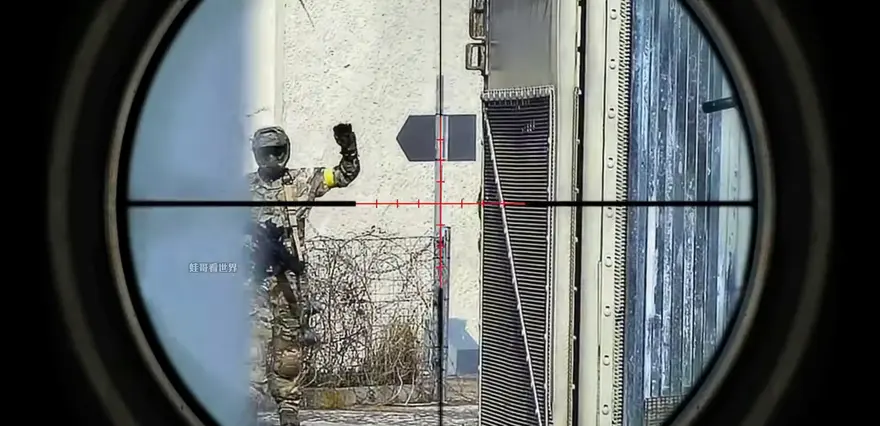

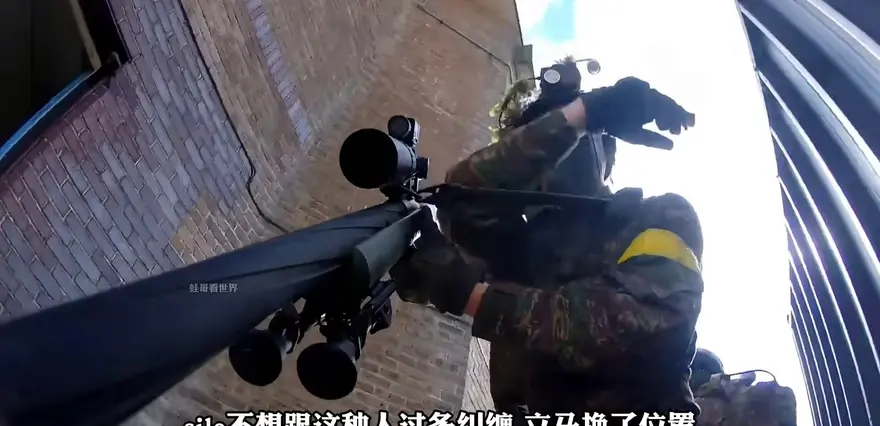

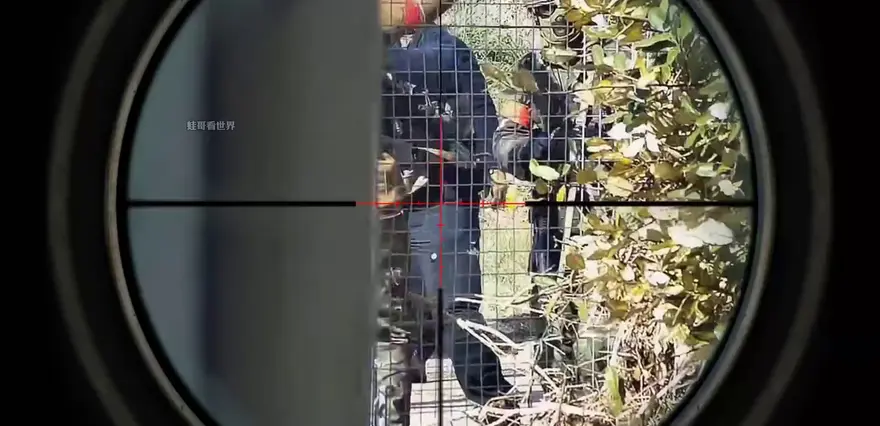
During the subsequent close-quarters exchanges, Sero was unfortunately pinned down by an intense barrage of fire from multiple enemy players. Despite this, he quickly readjusted his position, used the extended distance to leverage his ranged advantage, and successfully helped his teammates out of the bind.

Pain-Point Experience: Real-World Feedback and Limitations
After taking it through its paces, this device delivers a highly tangible physical sensation of enhanced joint torque. But in an extremely complex Filmi environment (similar to a real-person CS arena filled with obstacles), its self-balancing capability was pushed to the limit.

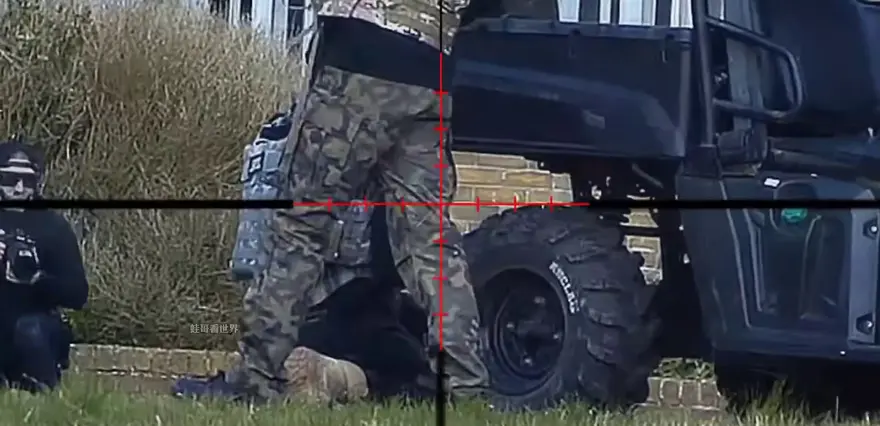


The perfect synergy of these sensors (IMU and pressure sensor) allows it to maintain excellent dynamic balance even after continuous rapid running. The second share returns to the battlefield scene: Ciro uses the back buildings as cover, alternating strikes against enemies in the distance.
Weapon Easter Egg and Destruction Effect Analysis
In this live-action battle, Cero also used an extremely expensive signature weapon.
Weapon Specifications (mentioned in the video): SSG precision custom rifle, market price: approximately 300 Euros.
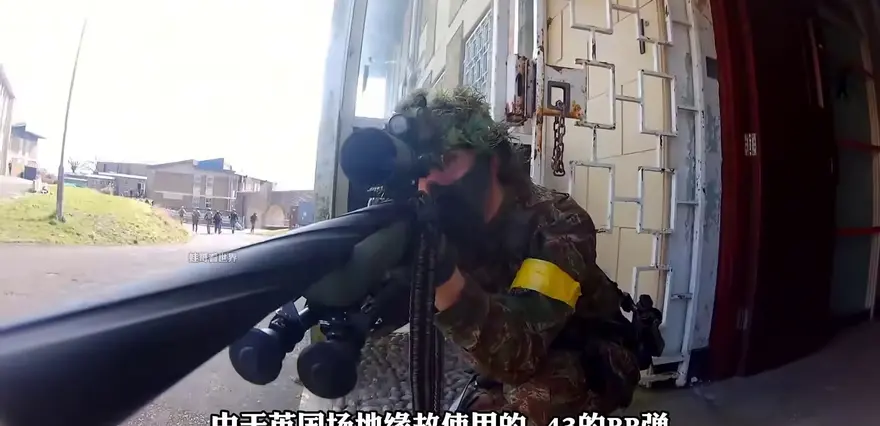
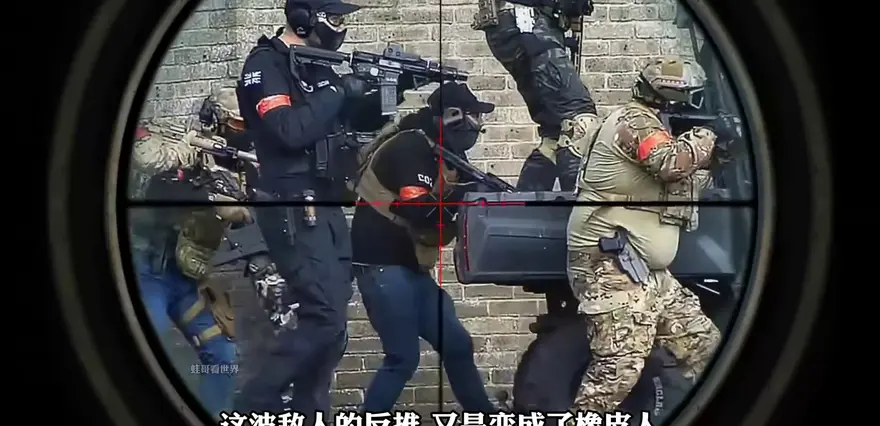
Due to the UK's strict regulations on live-action CS (airsoft matches), this prop uses special 4.3mm (0.43g) BB pellets. We can even clearly capture the kinetic energy trajectory of every BB pellet when the exoskeleton and hip assist module are linked.



U.S.–China Commercial Rivalry & the Hard-Core Industry Backstory
It’s worth noting that the exoskeleton Cero lavished praise on in the video is, in fact, ground-up R&D by a team in Shenzhen, China.
Industry Perspective: This military-spec exoskeleton has been under development for nearly a decade in the United States, and now a Chinese company has started mass-producing it as a consumer-grade product!
Rather than relying on a bulky, complex design, the team opted for a lightweight path that marries carbon fiber with brushless motors. That choice perfectly confirms a joke circulating among netizens: China’s most advanced civilian supply chain is now unleashing a “dimensionality-strike” on the tactical arena.

The Path to Victory and Reflections on the Market Positioning of Exoskeletons
As the battle intensified, Cero faced challengers aided by on-site cheaters. Yet, thanks to the extraordinary mobility provided by his powerful exoskeleton, he managed to defeat his enemies one by one amidst the chaos.
Some may ask: Is using an exoskeleton to play video games considered cheating? From a developer's perspective, a consumer-grade exoskeleton is not merely a device for rehabilitation or walking assist for individuals with disabilities. Rather, it serves as a "physical cheat" that acts as a power-up for healthy individuals, representing an inevitable pathway for humanity to explore its physical limits in the future.
Top Community Comments
@Corsair_17 (4 likes): btw the exoskeleton he's using comes from a Shenzhen-based company [doge]
Interpretation: This comment sharply captures the new trend of Chinese manufacturing going global. It shows that domestic geeks can clearly identify the supply-chain forces behind this track—China’s smart manufacturing is rewriting the Silicon Valley narrative in this field.
@Reader (3 likes): Exoskeleton! Engage! [doge]
Interpretation: This reflects how the target audience (Wargame players and the broader tech community) has intense enthusiasm for this cyberpunk gear. They want these products to move beyond military use or test labs and truly reach mainstream tactical experiences.
@Reader (1 like): It’s clearly reposted—why not credit the original creator?
Interpretation: Even if the original video may have traces of unauthorized reuploading, it also shows that the exoskeleton—as visually striking cutting-edge tech—has become a powerful crossover commodity, enough to spark copyright disputes.
@Reader: I’ve always wanted to ask: who is this actually sold to? $800 is affordable, but it’s useless in ordinary scenarios, right?
Interpretation: This hits the biggest commercialization pain point facing consumer-grade exoskeletons today—the mismatch between purchasing power and real-world demand. Right now it looks more like a rich person’s “toy” or a geek’s “productivity tool,” not something the average person can use for daily mobility.
@Reader: Great idea for subway commuters—wonder if it could help with the morning rush?
Interpretation: This shows everyday users’ desire for tech to become more routine and commute-friendly. Even though a device designed for complex outdoor terrain wouldn’t be allowed on the subway, it still signals strong latent demand in the civilian exoskeleton market.
One-Sentence Summary
This isn't merely a playground demo for geeks; it’s a vivid lesson in taking the consumer-grade exoskeleton from concept to real-world, complex scenarios. If you're a hardcore Wargame player, sci-fi buff, or outdoor hiking enthusiast, this lower-limb exoskeleton that delivers real-time, push-in-the-back assist is prime ultra-cool gear to experience true man-machine unity. For casual commuters, however, it still feels like a sci-fi "future form" waiting to materialize.
About this article: part of Chinese-Made Exoskeleton Review Archive — an independent, regularly updated English archive of reviews of consumer exoskeletons made in China, edited from publicly available video transcripts. Not an official manufacturer page.
For inquiries and purchasing, contact lonlonago@foxmail.com. More in Reviews · All articles.