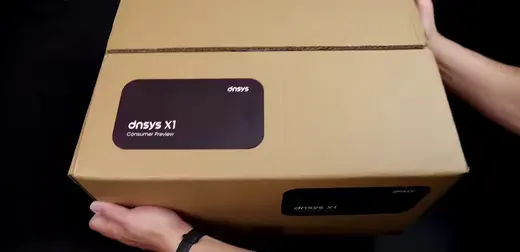
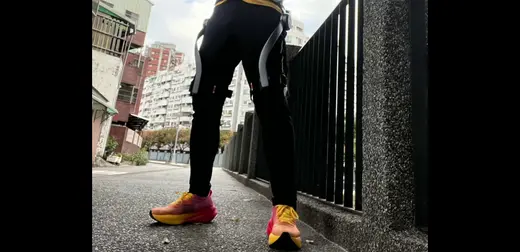
Field Test on Mount Tai: Does a 1.8 kg Consumer-Grade Hiking Exoskeleton Really Let Us Climb with "Zero Effort" to the South Heaven Gate?
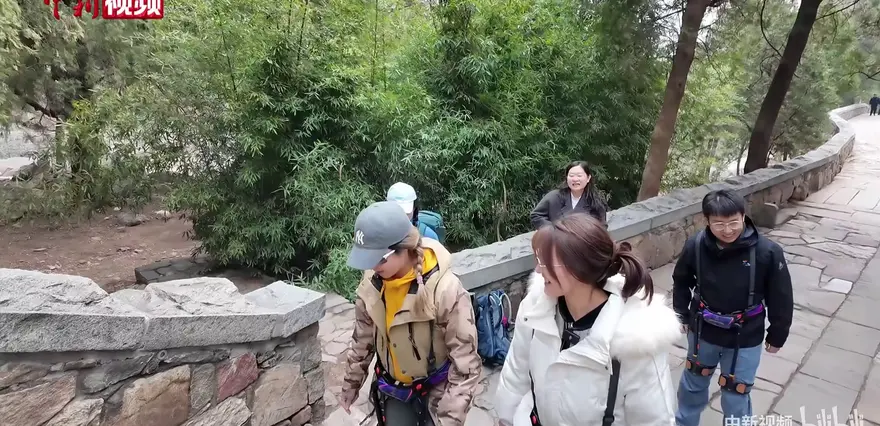

At the Hongmen Gate of Mount Tai, I got my hands on a magical device that can "help those who cannot climb to reach the summit."
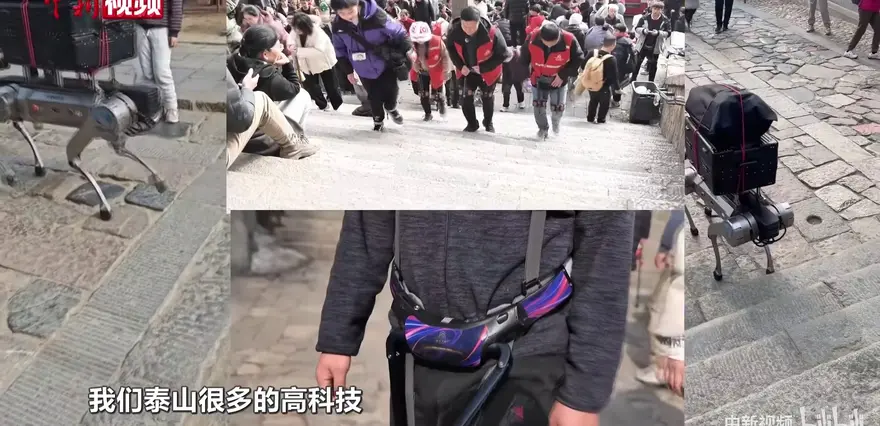
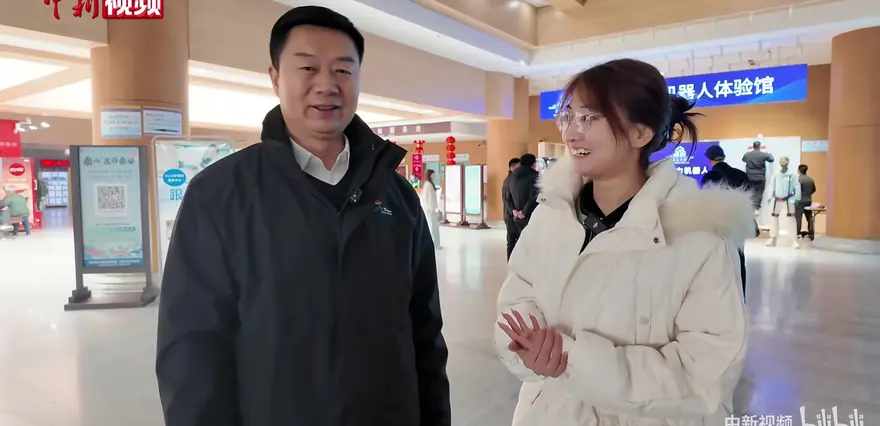
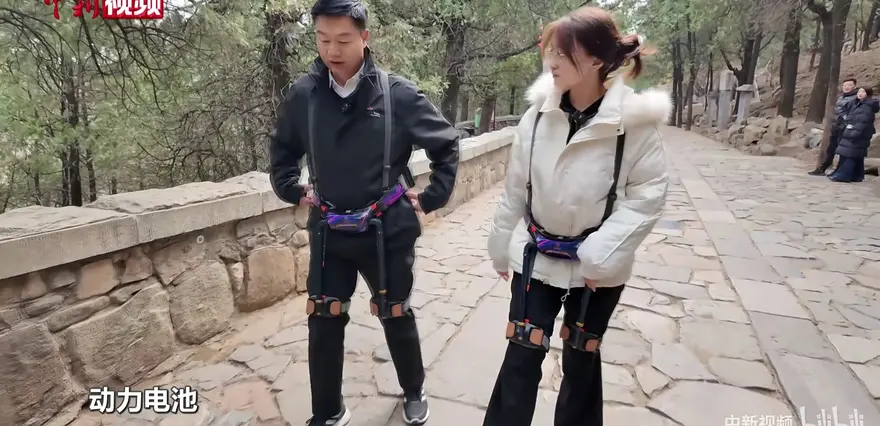
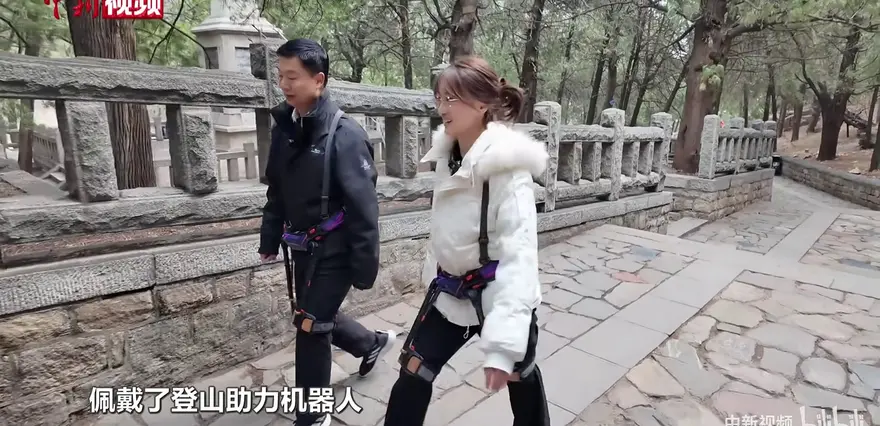
Standing at the Hongmen entrance of Mount Tai, looking up at the Shibaban flight of stairs soaring into the clouds, I suddenly understood the ancients' sentiment of "ascending Mount Tai to see the world as small." With an altitude of 1545 meters and maximum steep slopes exceeding 45 degrees, every single step requires engaging the leg muscles and core strength. Just as I pulled out my hiking poles to challenge it, a man in a black jacket handed me a slim, elongated backpack: "Try this. It will make climbing Mount Tai feel like walking on flat ground."

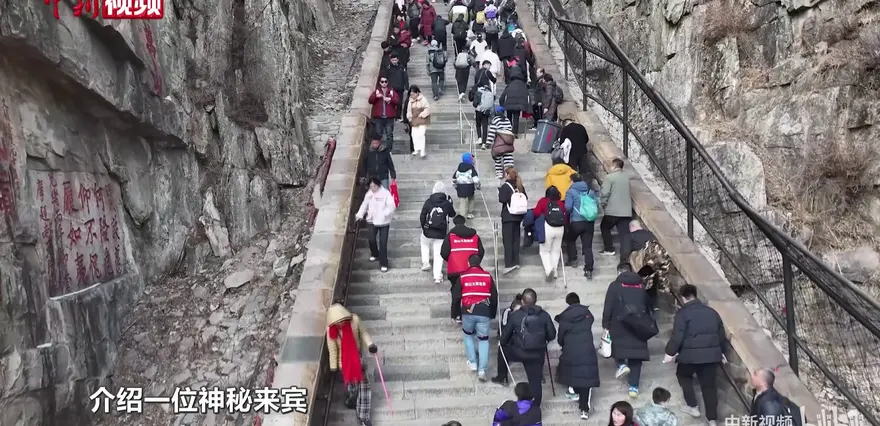
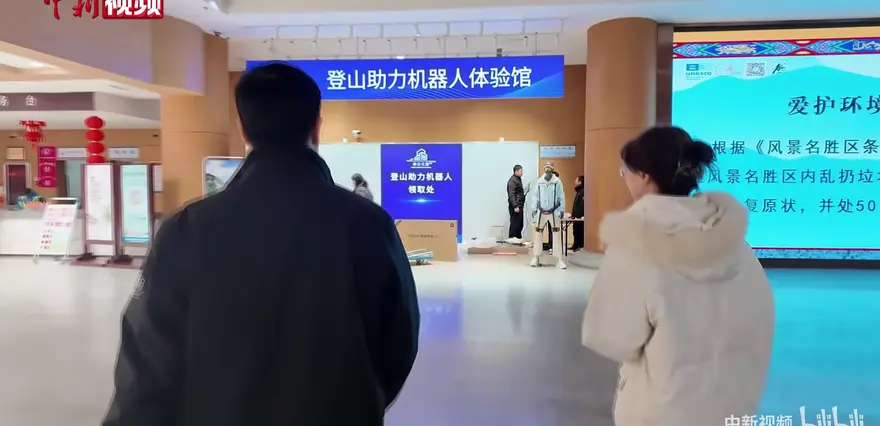
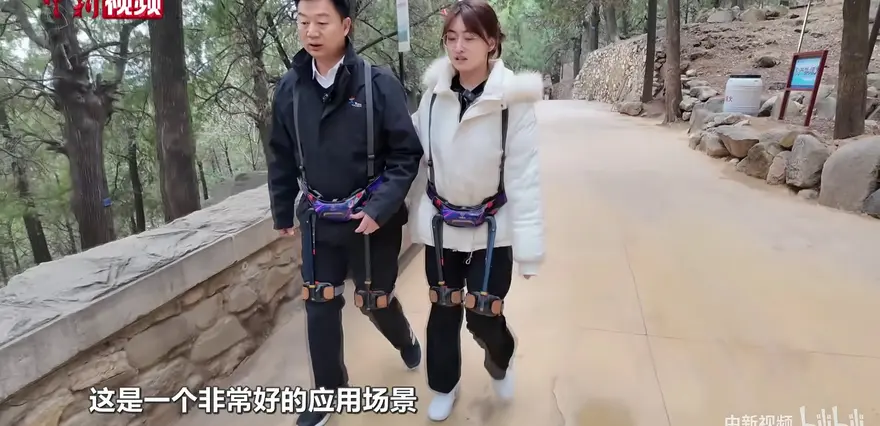
This is a newly launched consumer-grade hiking exoskeleton by the Mount Tai Cultural and Tourism Group. Secretary Wang, who caught up with us, explained with a smile: "This year it is officially being deployed in 'real-world combat,' after more than half a year of testing. Its design philosophy is very simple—it doesn't replace the effort you exert, it only helps you 'save' energy."
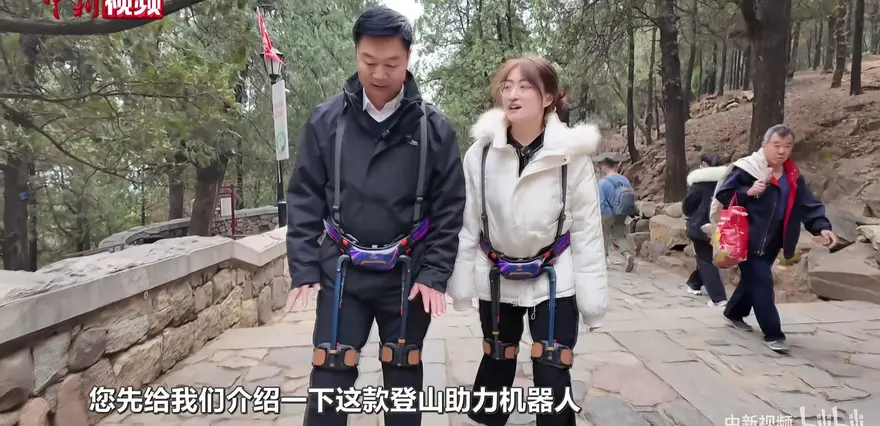
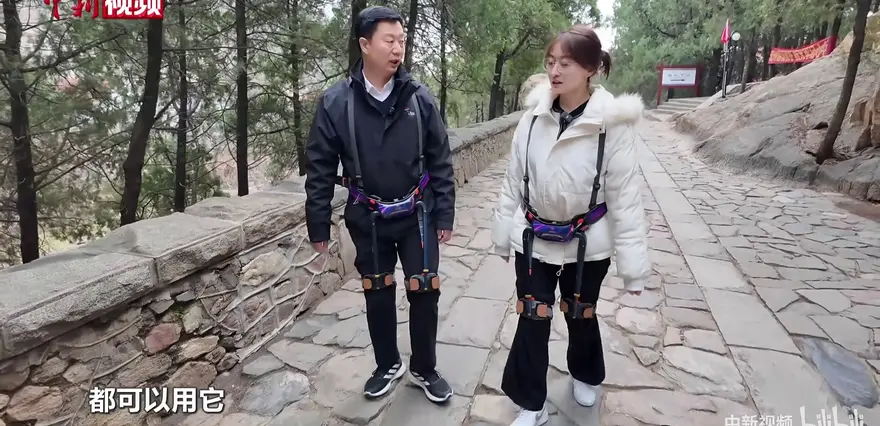
(Mentioned in the video) The total weight of the product is only 1.8 kilograms. When worn, it feels practically weightless, like carrying a normal backpack.

Feels Like a "Supportive Shell Jacket" When Worn: How to Achieve an "Invisible" Experience at 1.8 kg?
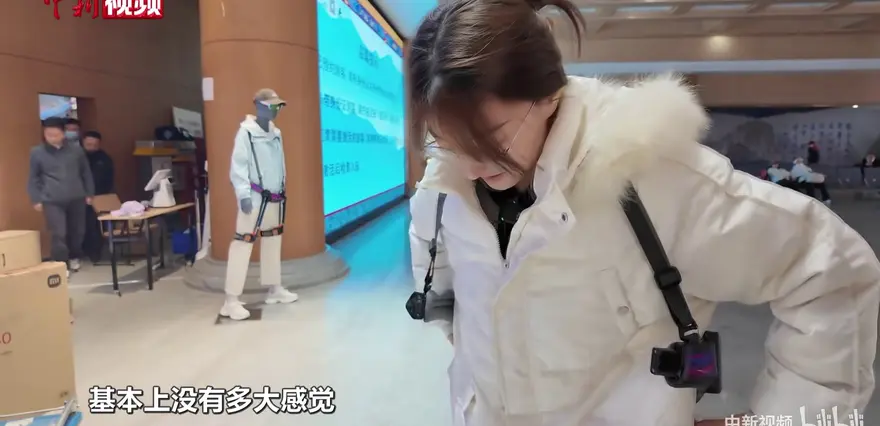
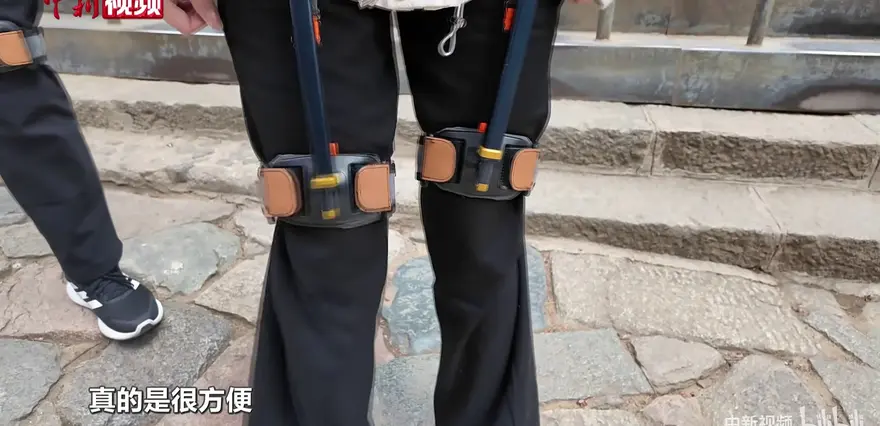
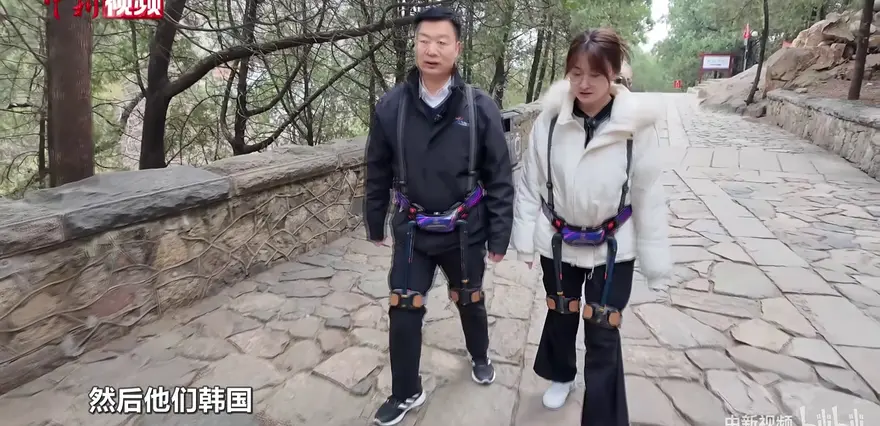
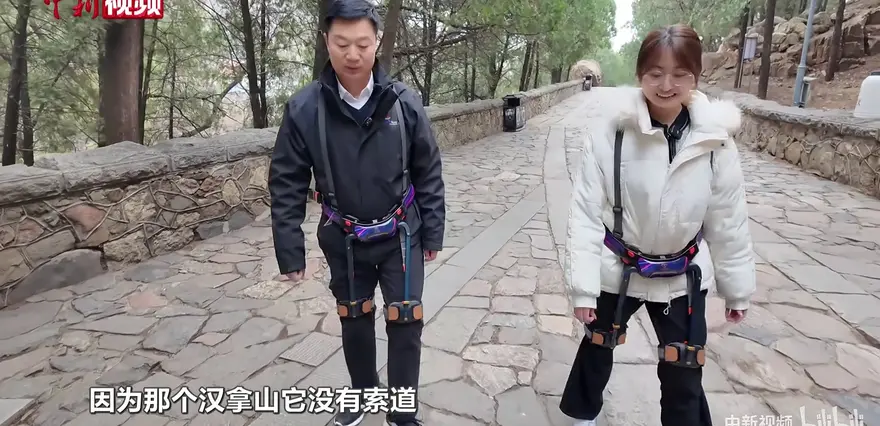
During a fitting session in the lounge area, the first thing that shattered the stereotype that "tech products = bulky" was the carbon fiber material. There is no metal frame like that of a medical-grade rehabilitation exoskeleton. Instead, it features lightweight support bands connecting the rear battery compartment to the thigh straps. The shoulder straps are wide enough to sit perfectly beneath the trapezius muscles; they neither dig into the shoulders nor bump into people nearby when walking through a crowd.
(Mentioned in the video) The donning process takes about 1 minute. There is a slight sensation of delicate elasticity when adjusting the leg straps, which does not restrict leg movement at all.
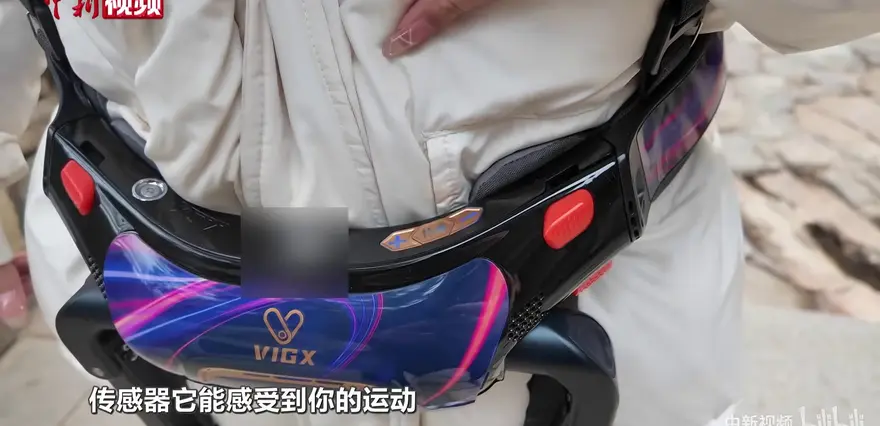
The most ingenious aspect is the weight distribution design: the battery pack is not placed on the shoulder stress points of a traditional backpack but rests close to the hip (Image 7). When wearing it, the weight transfers through the pelvis rather than the shoulders—I jumped up and down with it on and found that the backpack doesn't sag downward at all; instead, it feels like wearing a shell jacket with "invisible support." This suddenly reminded me of Secretary Wang's words: "To make a consumer-grade product, you first have to learn how to 'hide' the technology."
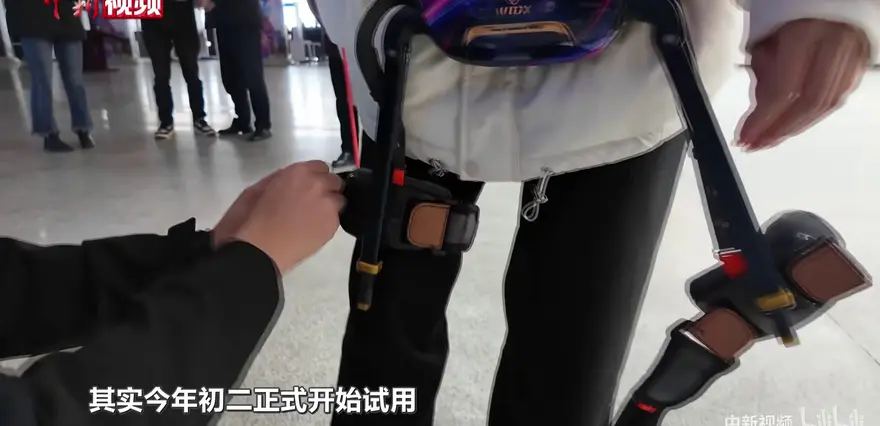
```
Sensors + AI Algorithms: Can It Really "Read" Your Gait?
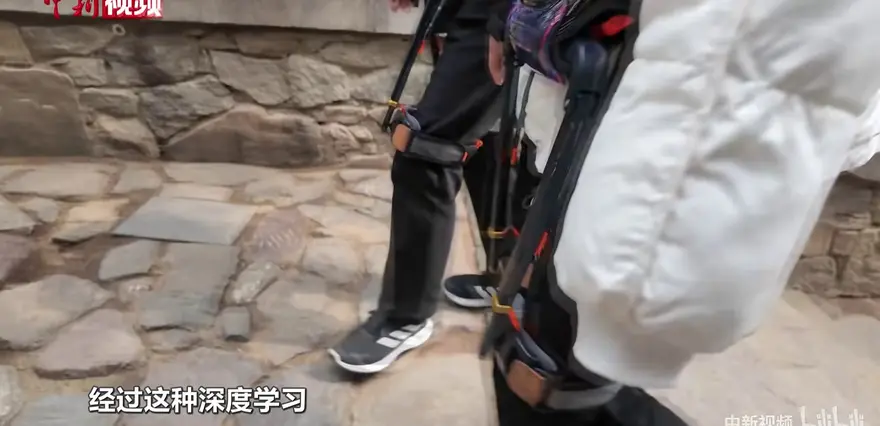
The "black tech" diagram that Party Secretary Wang pulled up on his phone reveals the product's core logic: a IMU (Inertial Measurement Unit) + pressure sensor combo that captures 100 gait samples per second. Simply put, the device uses deep learning to understand your stepping habits—for instance, when your left leg takes a long stride, the system synchronously tunes the right-side assist to prevent "uneven effort."
Core technical parameters (as mentioned in the video):
- Sensor array: IMU + pressure sensor (plantar pressure distribution)
- Algorithm logic: AI deep-learning gait (personalized to every user), auto-adjusting assistive strength across 10 levels
- Power principle: energy-recovery system (kinetic energy → electrical energy, extending battery life / runtime)
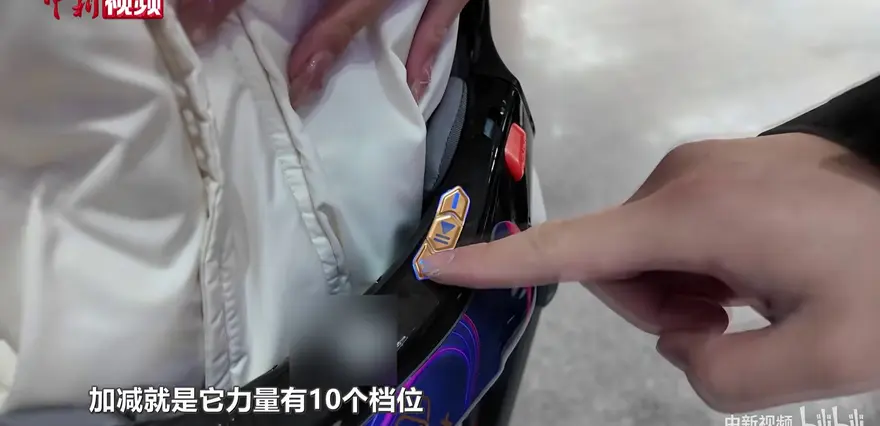 (Sensor distribution diagram: IMU on the outer lower leg + pressure sensors on the sole)
 (Energy recovery system working principle: kinetic energy → electrical energy → battery)
Addressing the worry "will I become dependent on it," Party Secretary Wang offered a concrete example: "What we build is 'assist'—if your leg needs to generate 20 kilograms of force per step, the device adds 5 kilograms for you. The assistive range adjusts in real time according to your stride, so you won't lose balance just because it feels 'too easy.'"
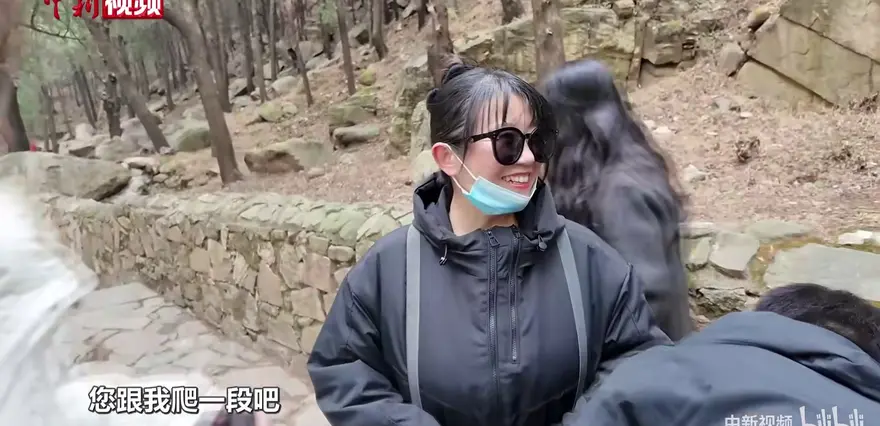
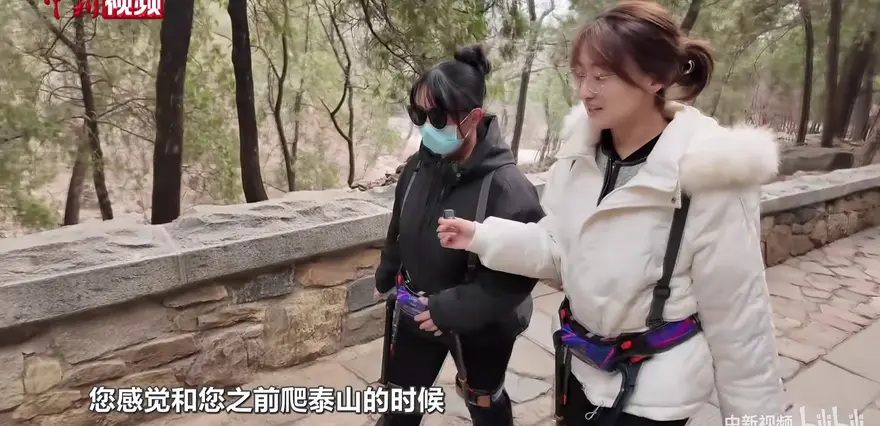
On-Site Test at Shibabang: A Tourist Says, “It’s Like Someone Pulling My Knees Upward”
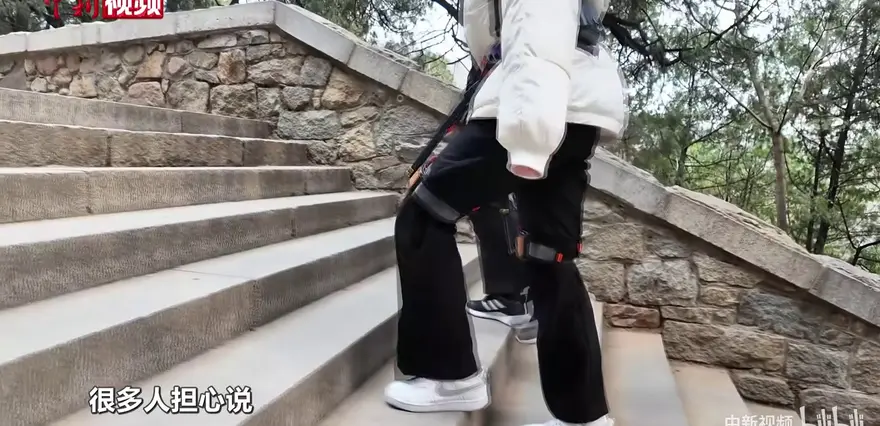
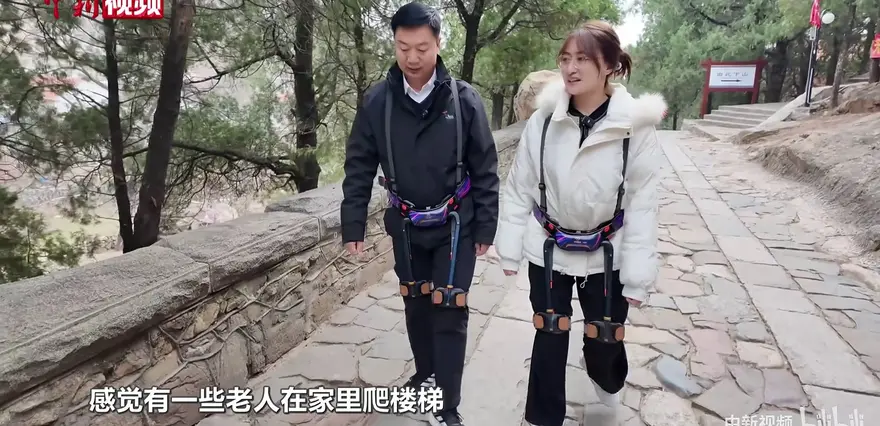
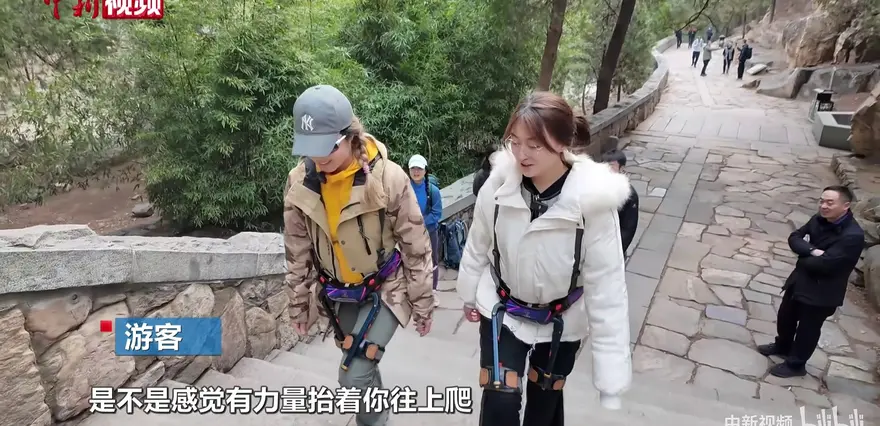
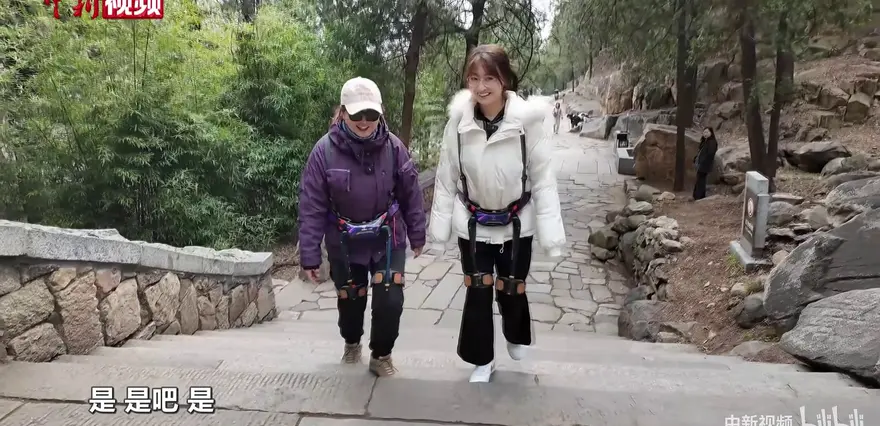
To verify the effect, I brought along a tourist wearing glasses to take on Shibabang—reputed to be “the section of Mount Tai that makes people turn back.” Regular visitors typically need 30 minutes, and by the time many people reach this stretch, they’re already switching to the slide path to descend.
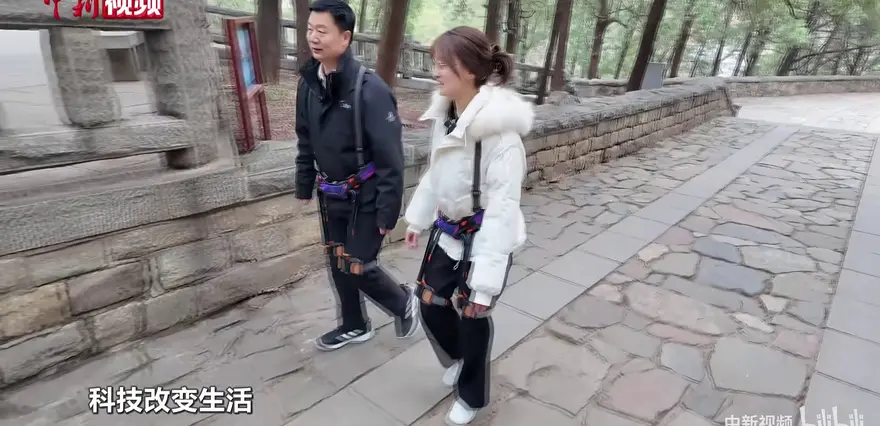
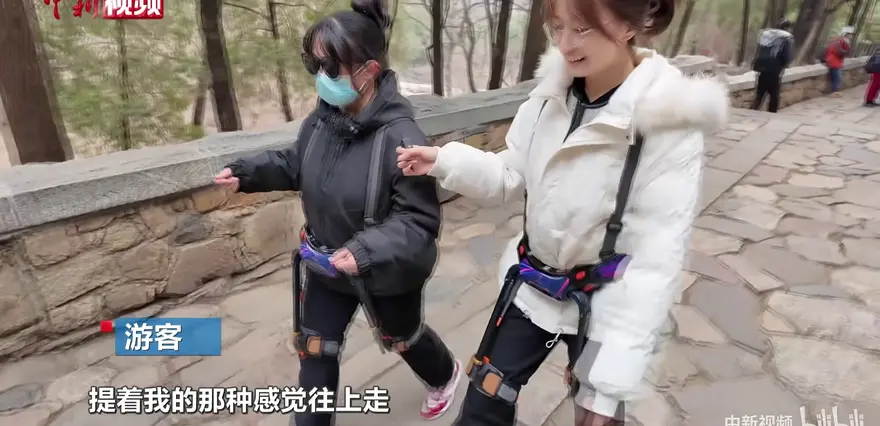
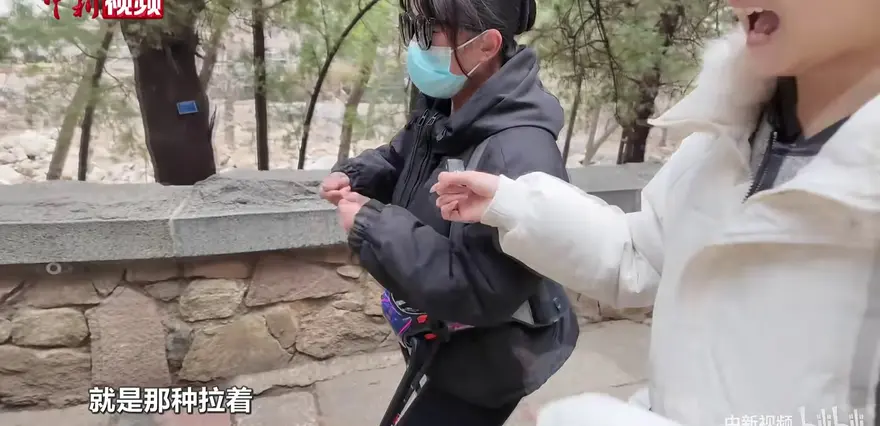
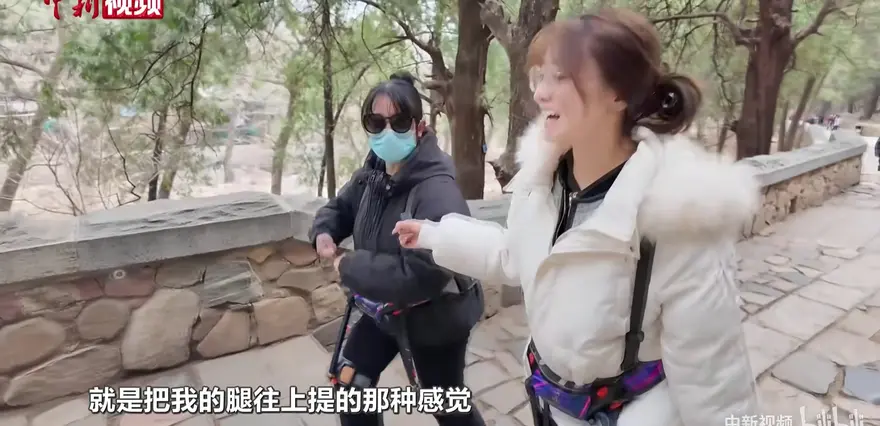
After putting on the exoskeleton, the tourist’s reaction was fascinating: “At first I didn’t dare push hard. Then I realized that when I lift my left leg, the device gives an upward thrust—like someone using a rope to pull my knees up.” When I asked whether it could match my pace, he tried a couple of quick jogging steps: “When I go fast, it goes fast too! Just now when I slowed down, the pushing force also got smaller.”
Tourist feedback from the experience:
- “It feels like someone is pushing my back and lifting my feet—the upward drive is perfectly applied.”
- “Normally, climbing Shibabang takes 30 minutes. This time, we reached the midpoint in 20 minutes.”
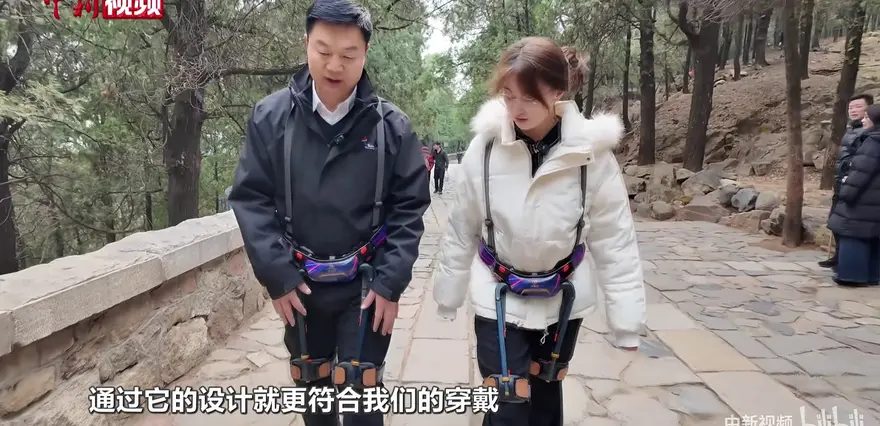 (A tourist wearing the exoskeleton climbing Shibabang: the background shows steep steps, with the tourist’s body leaning slightly forward)
 (Close-up of the tourist’s expression while ascending: a surprised smile, forehead dry, no sweat)
My own experience felt even more direct: the sore, heavy sensation of “stepping on cotton” when climbing stairs disappeared, replaced by the ease of “being lifted upward as I walk.” When we reached the South Heavenly Gate, I realized—the segment I usually need an hour for took only 40 minutes today.
Comparison data (mentioned in the video): The creator (me) usually takes 1 hour to climb to the South Heavenly Gate. With the exoskeleton, it took around 40 minutes (with stops for filming along the way).
 (The iconic stone stele at the South Heavenly Gate: clouds and mist swirl around the background, and nearby tourists gather to ask, “Where can I buy this?”)
 (The creator and the tourist posing for a group photo at the South Heavenly Gate: both wearing exoskeletons, looking relaxed)
From Mount Tai to Hallasan: Can It Meet the Needs of Elderly People Climbing Stairs?
Secretary Wang mentioned a detail: "The Hallasan team in South Korea wants to purchase several hundred units, because their stairs are steeper, and many elderly people can't climb them, nor can they use the slides." This suddenly made me think of the elderly at home—there are no elevators in my community's stairwells, and an older person has to pause three times gripping the handrail just to buy groceries. Could this exoskeleton help?
Extended Scenarios (mentioned in the video):
- Elderly people climbing stairs: it applies to the usual "running up the stairs" (originally "running gait") scenario
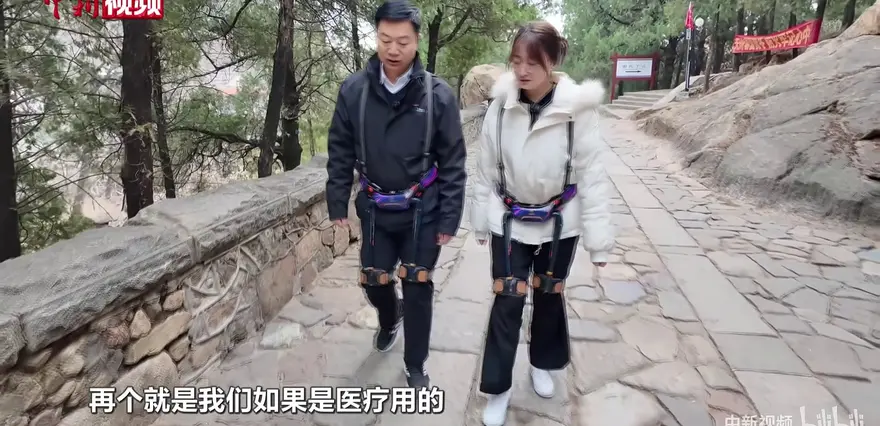
- Medical-grade distinction: a rehabilitation exoskeleton for patients will undergo more specialized adjustments (e.g., assistive force levels, joint protection)
 (Illustration of an elderly person climbing stairs: the background shows a residential staircase with an exoskeleton placed beside it)
 (Comparison between consumer-grade and medical-grade exoskeletons: the medical-grade model features more complex joint torque adjustment)
Of course, it isn't perfect. As one visitor noted: "When the crowd is dense, the device reacts a beat late—I wanted to step with my left foot but couldn't get through the crowd, and the device instead exerted a retracting force, nearly tripping me." This shows that the AI algorithm's response speed in crowded scenarios still needs optimization. Still, the flaws don't obscure the merits—for most visitors, "being able to help you finish the climb" is the most practical value.
The Audience is Asking: "Will my shoulders get tired?Can it reduce knee pressure?"
After the video was published, the discussion in the comments section was authentic and touched upon the product's key pain points:
Regarding "Force Transmission": Tired legs, but strained shoulders?
@Reader (35 likes): But this transfers the force to the shoulders. Even if the legs aren't tired, the shoulders will be. It's like the shoulders are carrying the force for the legs. The company should pay attention to this. After walking for a long time, the legs aren't tired, but the shoulders feel like those of a porter. This is not a complete labor-saving device; it just transfers the force to the shoulders to bear the pressure.
Interpretation: This reflects the user's deep thinking on the product's mechanical structure—if the device's weight and the reaction force from the assist are transferred to the shoulders, it would indeed offset the effect of reducing the burden on the legs. From our experience, the weight is mainly distributed to the pelvis. However, for long-term use (like climbing for 5 hours), whether it can truly achieve "zero sensation in the shoulders" might require specific gradient testing to verify.
Regarding "Real-World Scenarios": My parents summited with it!
@Reader (31 likes): Practice makes perfect. My parents started climbing from Zhongtian Gate at 1 PM today and took 3 hours to reach Nantian Gate. They got a lot of attention, especially at Shibaopan where seeing two people their age was already rare. I used it too, and it felt quite tiring, but not as exaggeratedly exhausted as I saw others. Many people were using two hiking poles, leaning forward like zombies. Of course, this thing isn't smart enough yet and has reaction forces. When I lifted my left foot to step up, its feedback was smooth. But because it was crowded, I couldn't squeeze through to lift my right foot. When I delayed, it assumed I was retracting the force after a step, but I wasn't stepping out. Its force was for retraction. But in any case, I really want to thank this thing. Without it, my parents couldn't have summited, and they were very happy to do so.
Interpretation: This is the best example of "user value > technical perfection." Although the product does have algorithmic latency issues in crowded scenarios, its core value lies in helping the elderly fulfill their wish of summiting. The emotional value this brings far outweighs the technical flaws. For a consumer-grade exoskeleton, solving the "user's core needs" is far more important than "pursuing perfect parameters."
Regarding "Essential Needs": When will a version that reduces knee pressure be released?
@jackli620 (13 likes): When will you release one that reduces knee pressure? This is the real need.
Interpretation: This represents a common pain point for the "bone health" user group. The knee is one of the most vulnerable joints during human movement, especially when climbing mountains, where each step puts several times the body weight of pressure on the knees. This product solves the issue of "walking assist." If a "knee support module" could be further developed (e.g., by reducing the load on the knee with an adjustable tibial bracket), it might better meet the needs of the middle-aged and elderly population.
 (Product's front close-up under bright outdoor light)
 (Photo of the influencer resting without the product)
 (Close-up of the product on a marble floor)
 (Image of the footwear-ground contact at the bottom)
 (Overall panoramic photo)
 (Half-body shot of the influencer using the product)
 (Group photo of the influencer and the product)
 (Detail shot of the product's bionic mechanical structure)
 (Posed shot of the influencer holding the product)
 (Overview of the product's accessories)
 (Image showing the product's light and shadow in the environment)
 (Detail shot of the product's side profile)
 (Overall view of the influencer wearing the product)
 (Close-up of the product's exterior)
 (Synchronized filming shot of the product in use)
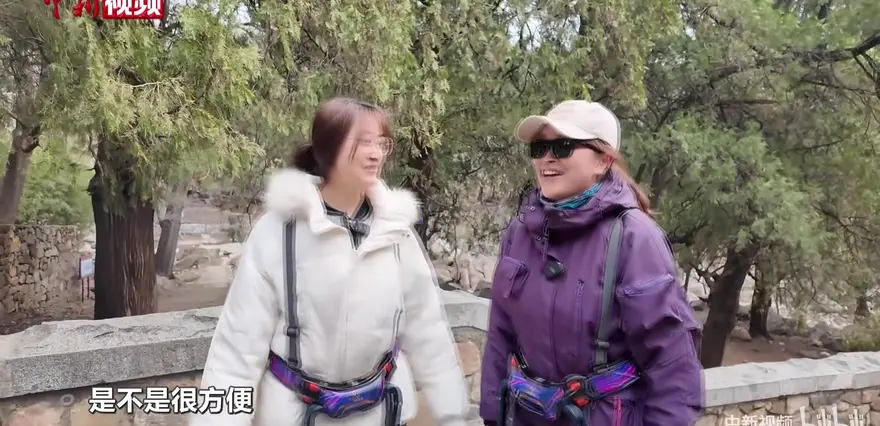 (Dynamic screenshot of the influencer's experience review)
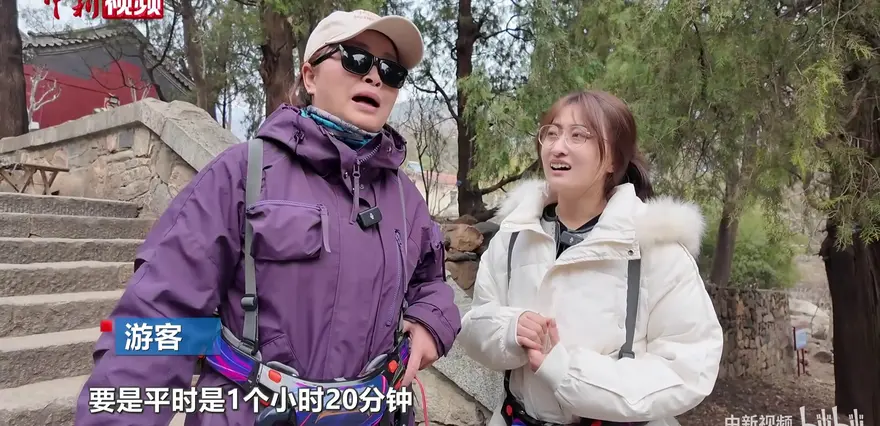 (Video frame of a tourist's reaction to the experience)
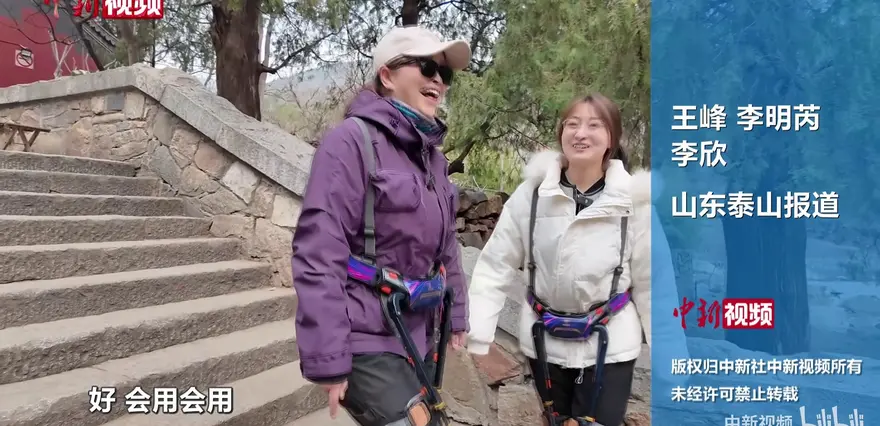 (Screenshot breaking down climbing movements) (Conceptual diagram of the technical structure) (Three-view diagram of the product) (Screenshot of the influencer lamenting about not bringing it to Mount Tai) (Close-up of the product held in the influencer's hand) (Photographs of the product's appearance paired with various outfits) (Posed photo of the influencer) (Action breakdown of the influencer's experience walking down stairs) (Image comparing the experience of different gear settings) (Photo of the product manual) (Photo of the influencer's thoughts on this video) (Unboxing photo) (Real-life photo of the product used to match outfits) (Posed shot for the full-length review) (Side view after wearing)
About this article: part of Chinese-Made Exoskeleton Review Archive — an independent, regularly updated English archive of reviews of consumer exoskeletons made in China, edited from publicly available video transcripts. Not an official manufacturer page.
For inquiries and purchasing, contact lonlonago@foxmail.com. More in Reviews · All articles.