A 100kg Strongman Tests the Hypershell Pro X: Is This leg exoskeleton the Ultimate Game-Changer or Just a "Beautiful Waste 1. Research Before Purchase: Key Specs for Choosing a Leg Exoskeleton
Before any purchase, I did some quick desk research on this type of product. The conclusion: there are already many manufacturers making consumer-grade exoskeletons domestically (Chengtian, Kenqing, Aoshark, Tartker, Haier, Yuanye, and Hypershell are all in this track), but the product forms are converging. What truly sets them apart are a few core parameters.
Joint torque: It determines how much assistance the product can provide and is the core metric of an assistive exoskeleton.
First is joint torque. Walking and lifting your legs is essentially a process of doing work to overcome your body weight. In technical terms, joint torque directly decides how much assistance the motor can give you. However, torque alone is not enough; it relies on sensors (IMU + foot pressure sensor) to recognize your leg-lifting motion, working with algorithms to output power at the correct moment. The quality of the algorithm directly determines whether that force feels right on the money or fights against your movements.
Second is the material. Market prices range from over 4,000 to over 10,000. High-end products generally use full carbon fiber to reduce weight, while the one I chose takes a compromised route of aluminum alloy + carbon fiber.
Third is the algorithm and functions. These products are no longer purely mechanical 'hard gears'. Instead, they require precision algorithms to recognize your movements and then provide assistance.
Additionally, battery capacity, endurance (in hours), whether the battery is removable, and wearing comfort are all factors that must be considered before taking them to the trails for real-world testing.
 "
2. Selection Logic: Why I Ended Up Ordering the Hypershell Pro X
Hypershell is a Shenzhen-based manufacturer whose products have a unique identity: they went global before returning to the domestic market. Many users abroad have already been using them for a while and given positive feedback—this path of "early adoption by foreign users first" provides a convincing reference for early domestic users like me.
I actually care a lot about waterproofing—IP54 means it's much safer to use in the rain. Outdoor hiking inevitably means encountering rainy days, and this kind of protection that prevents electrical faults during use in the rain is crucial for users in those scenarios.
The Pro X is priced at around RMB 7,000 to 8,000 (mentioned in the video)
Hypershell's product lineup is very clear, with four models:
- Go X: RMB 6,000 range, 400W motor power, comes with one battery as standard;
- Pro X: RMB 7,000 to 8,000 range, 800W motor power, standard plus one additional battery;
- Carbon X: Same motor and functionality as the Pro X, primarily upgraded to carbon fiber material, with the price doubling to over RMB 10,000;
- Auto: Top-tier automatic version with enhanced functionality.
Spending an extra two thousand yuan doubles the motor power from 400 watts to 800 watts and gives you two batteries. Considering that I don't do outdoor sports that often, the Pro X strikes the best balance between "marginal cost" and "practicality" for me.
Three. Unboxing First Impressions: The Built-in Travel Case Design Really Has Something Going
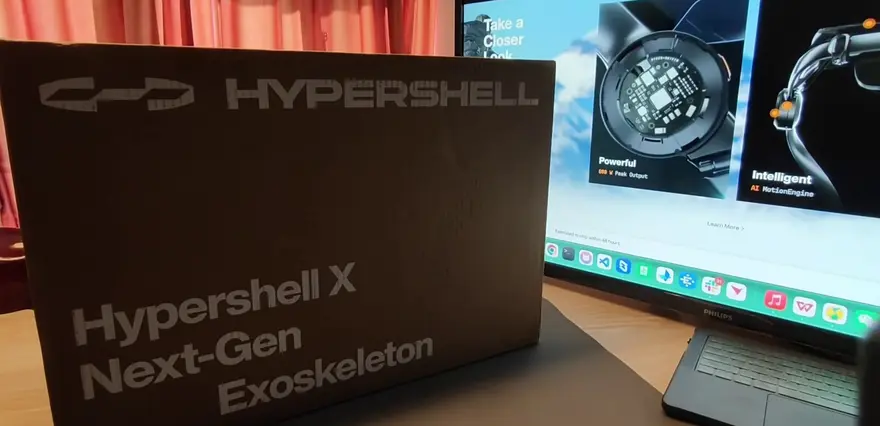
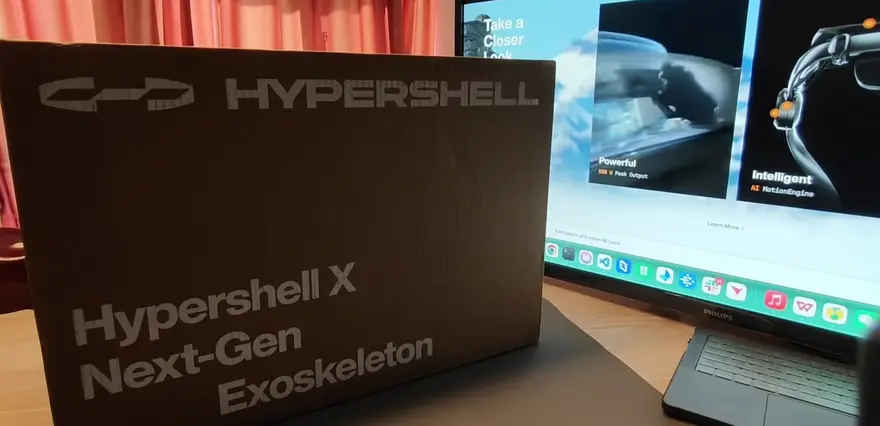
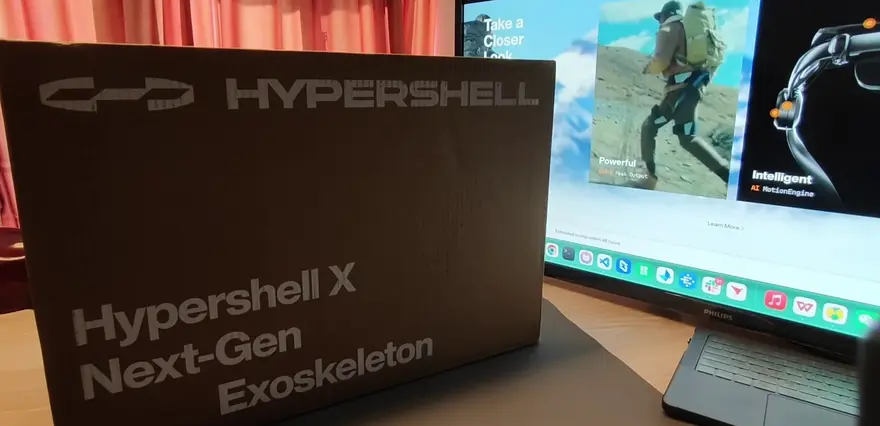
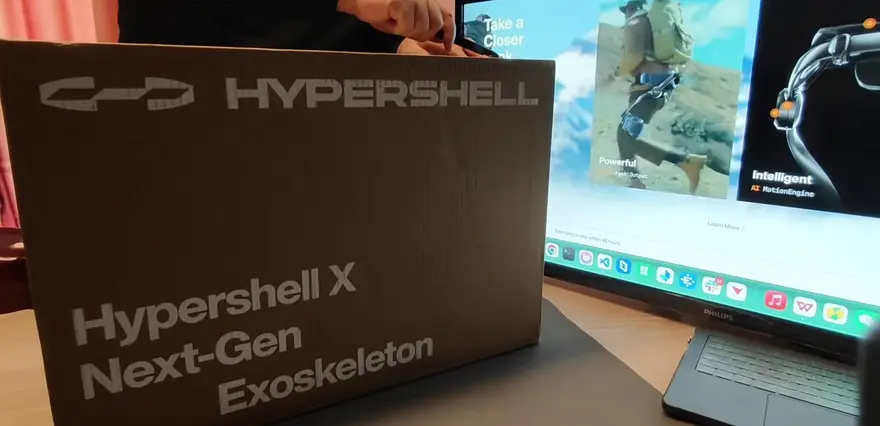
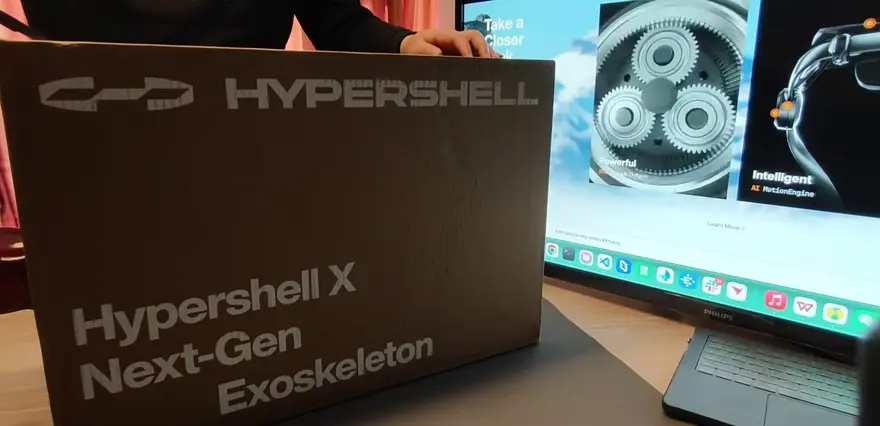
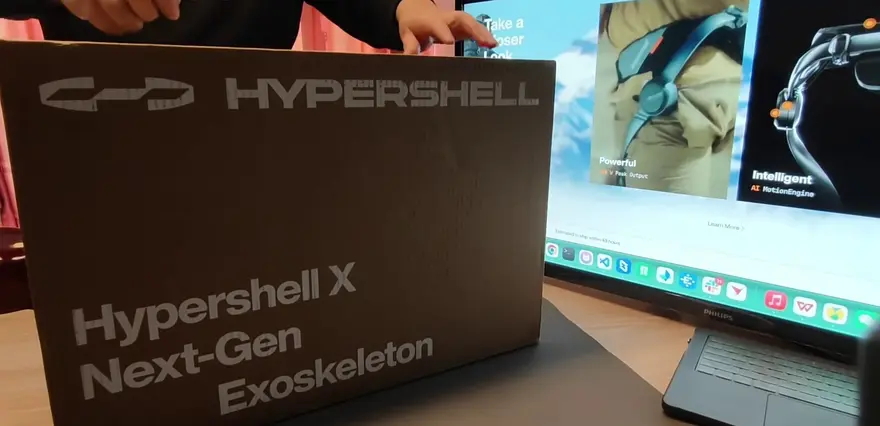
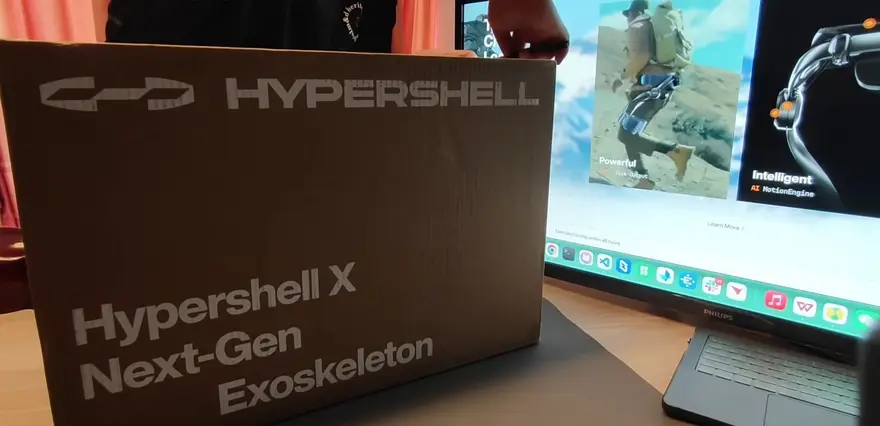
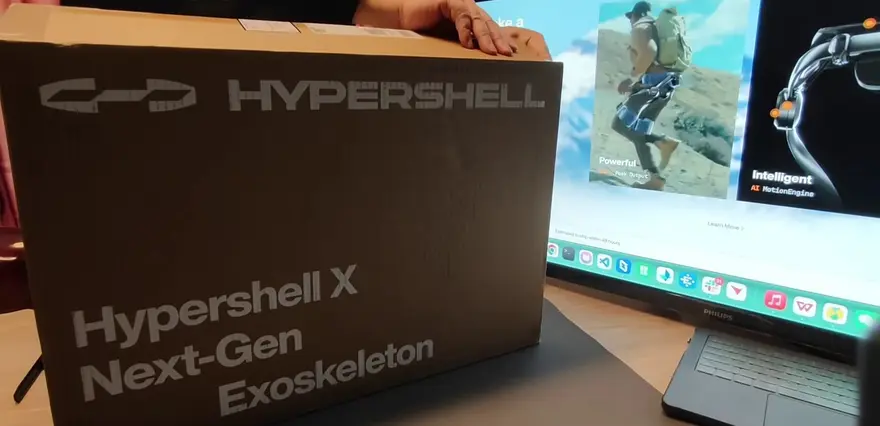
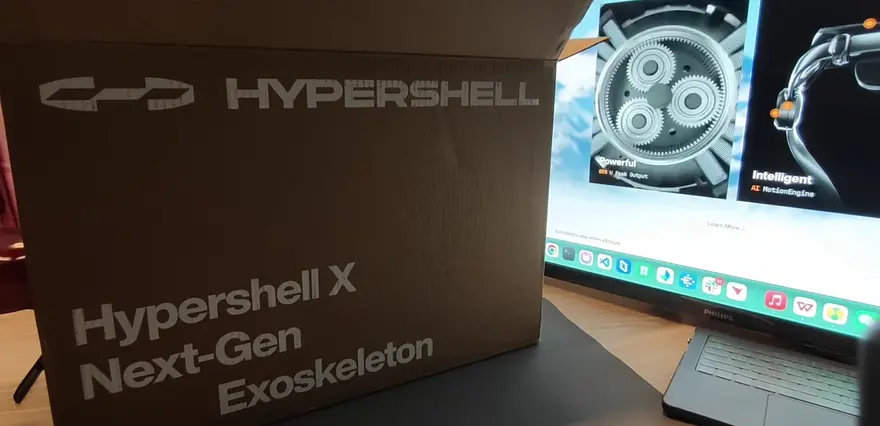
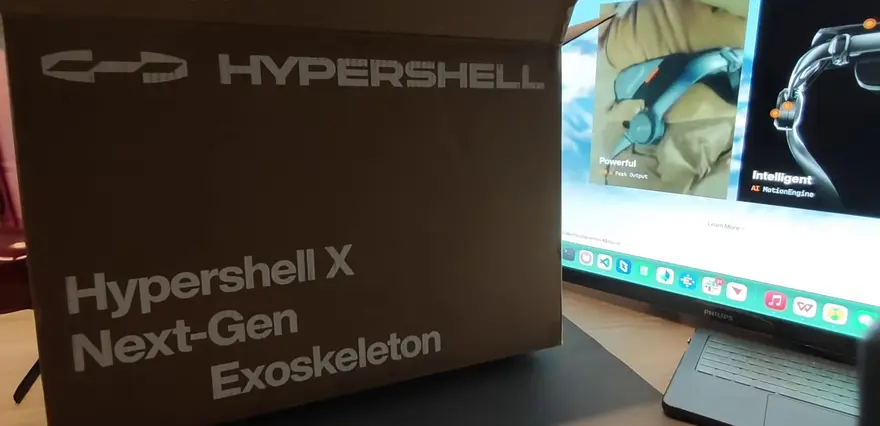
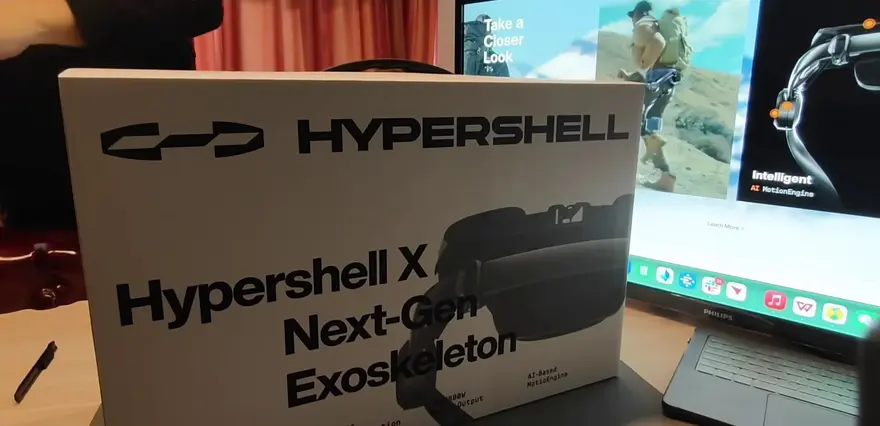
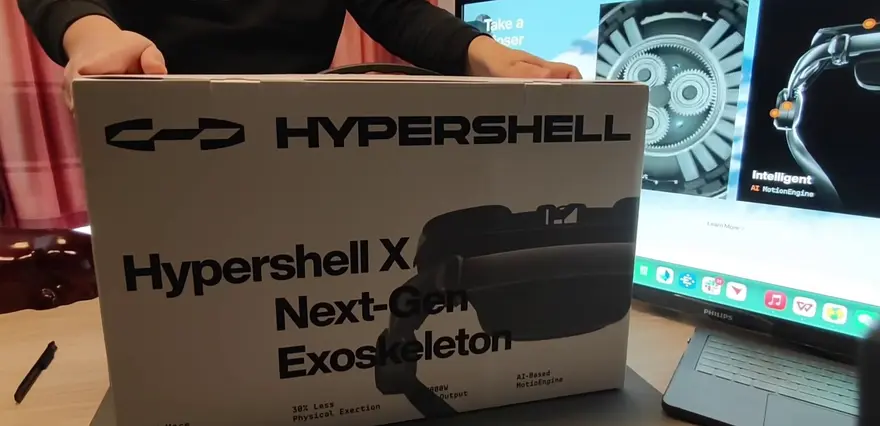
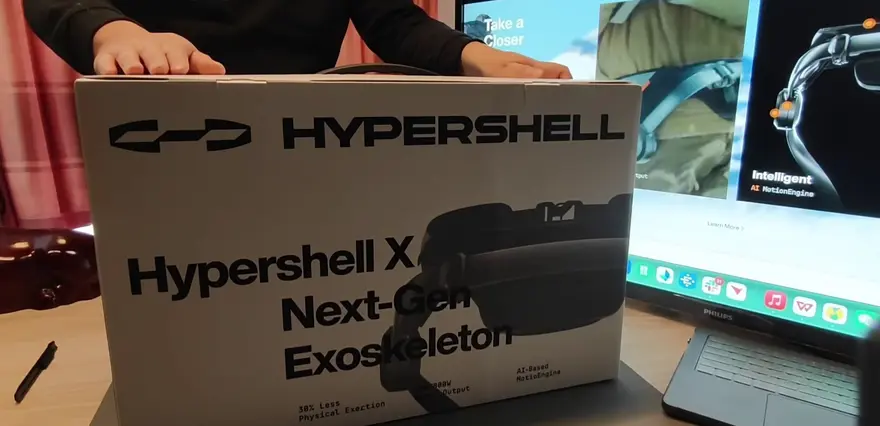
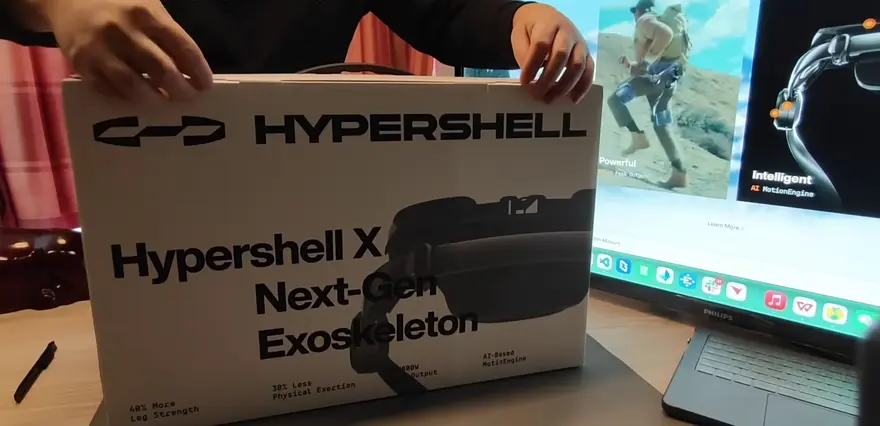
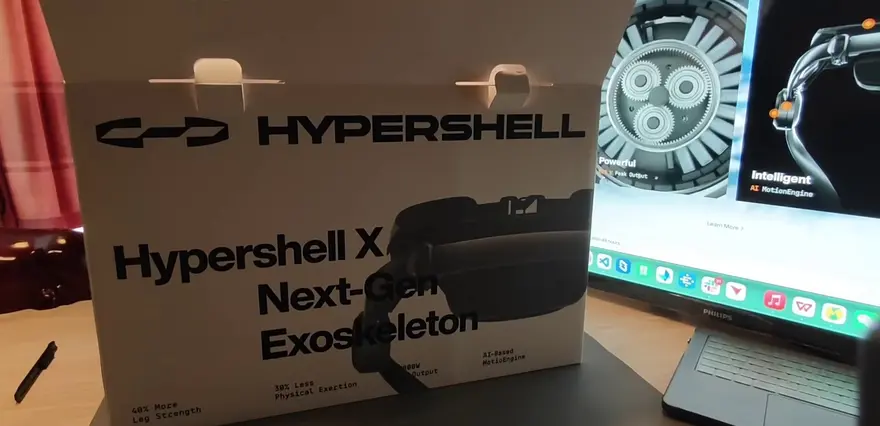
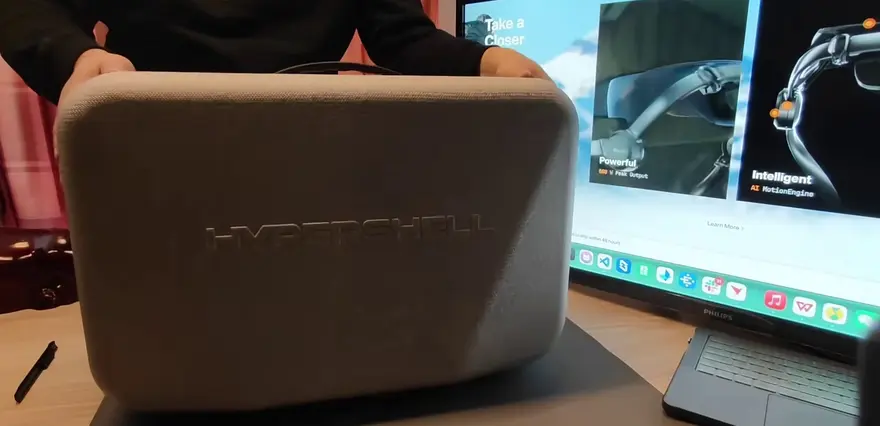
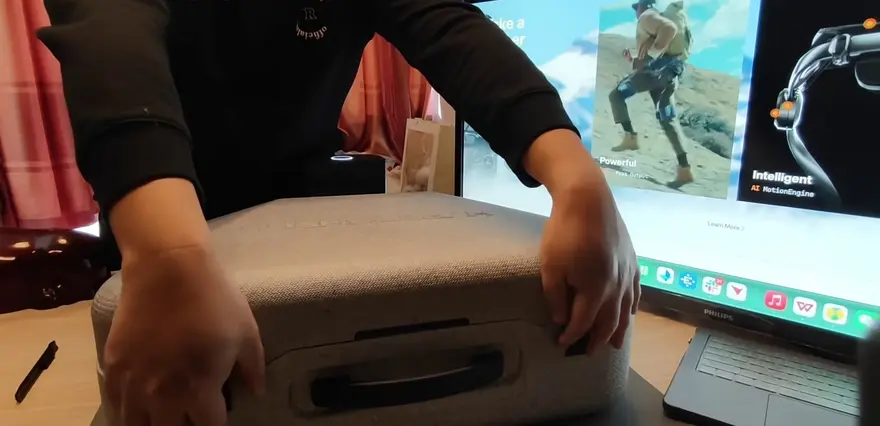
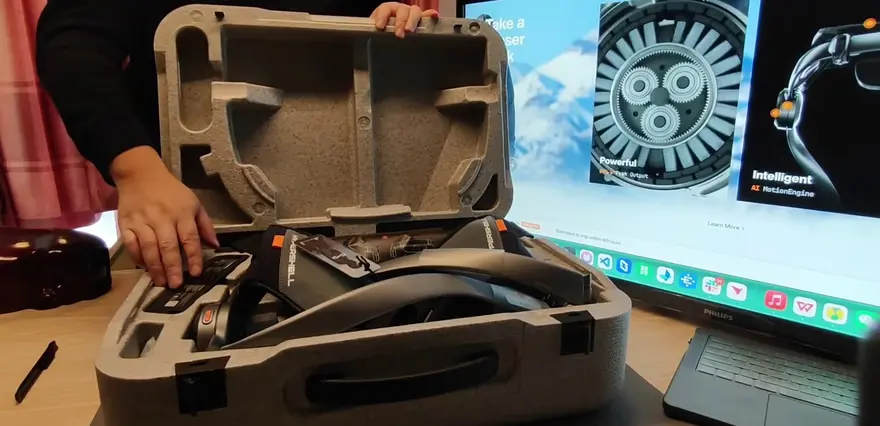
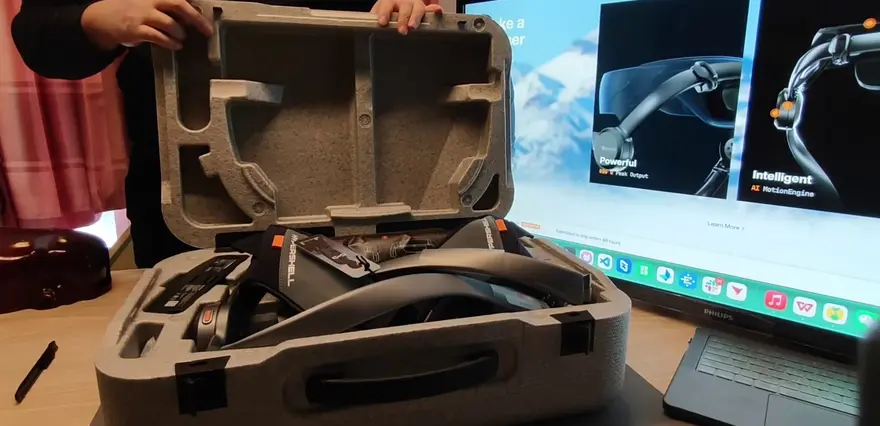
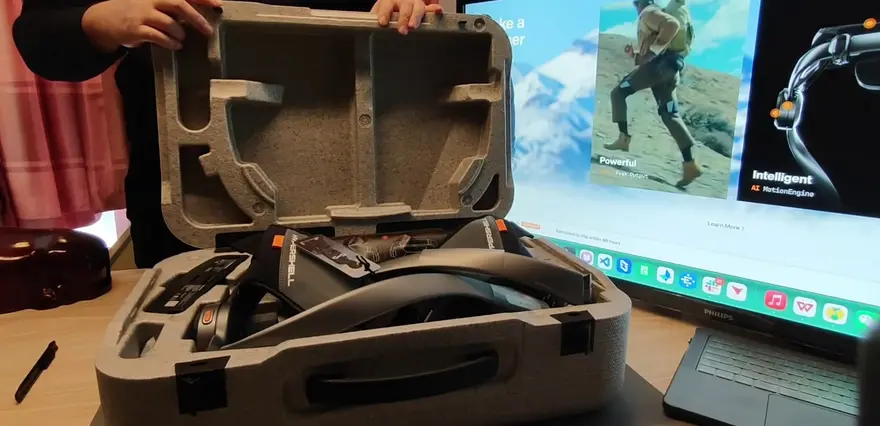
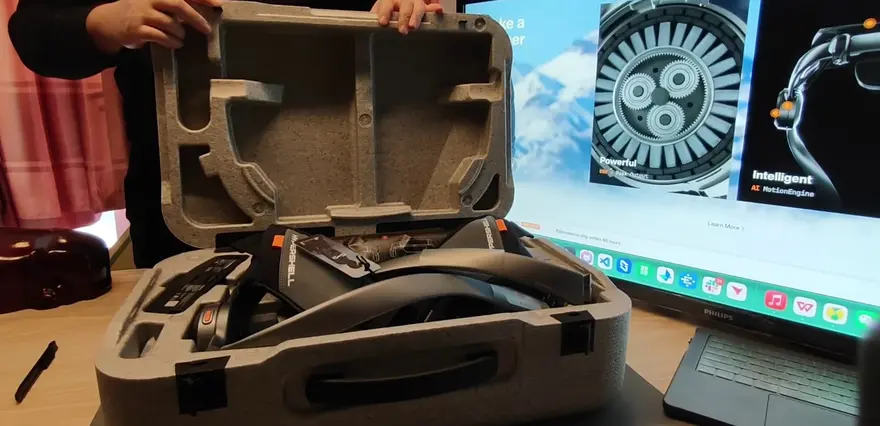
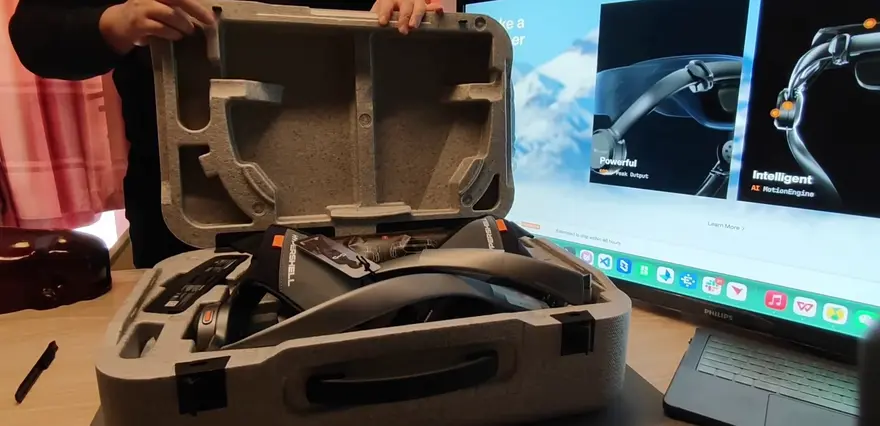
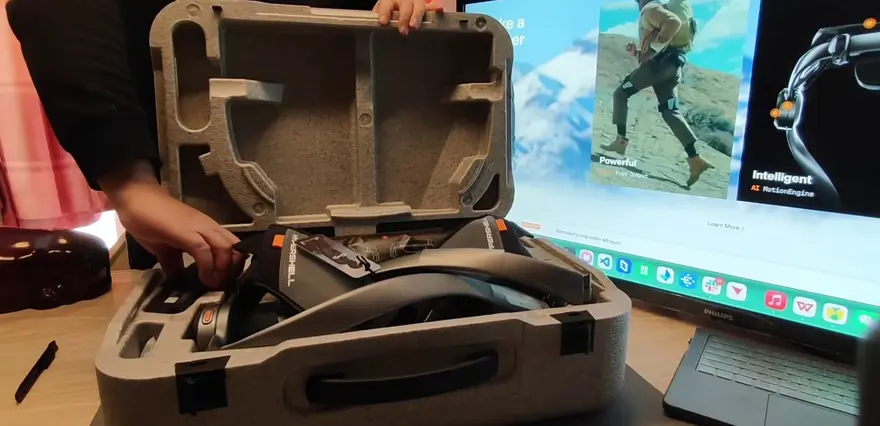
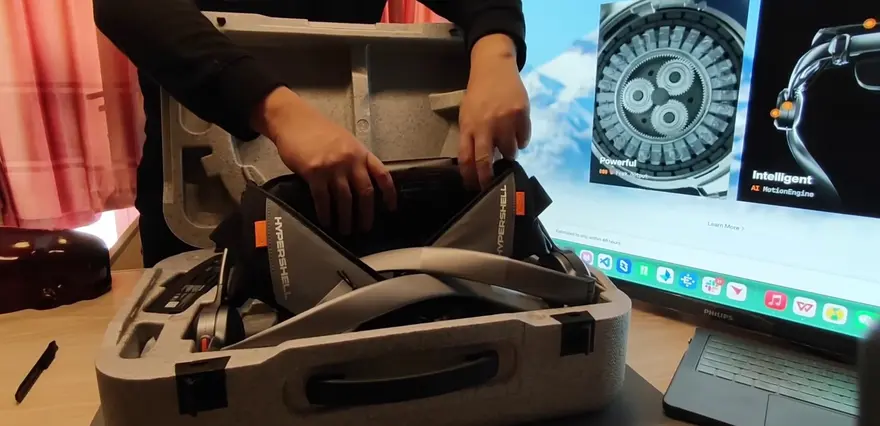
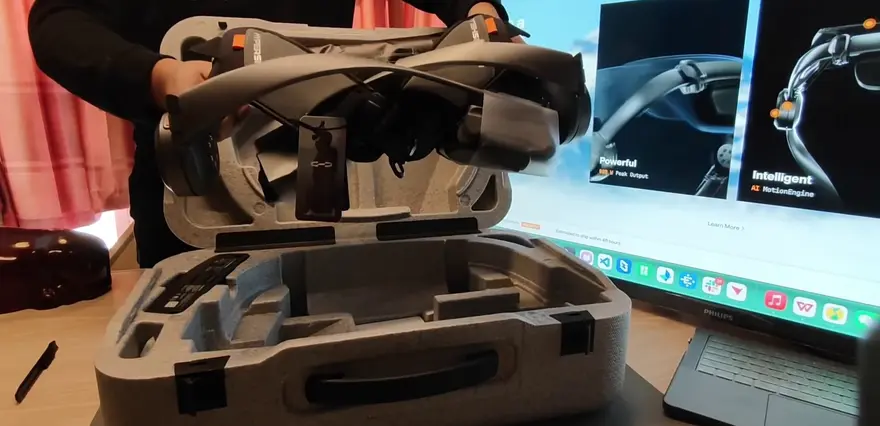
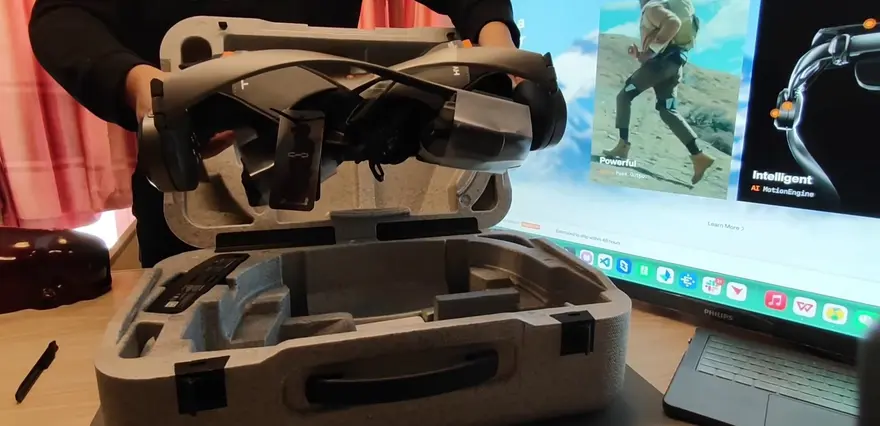
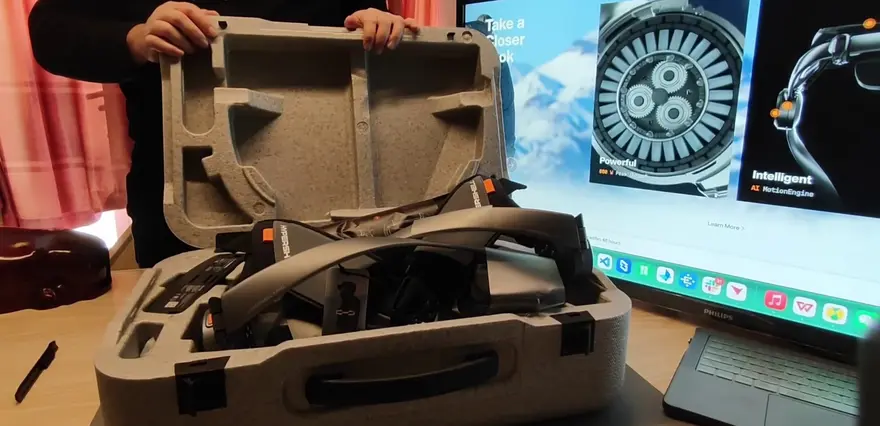
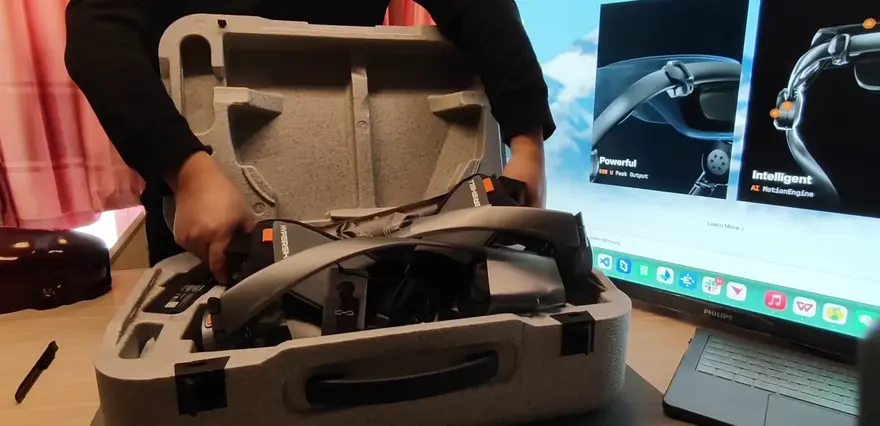
After removing the kraft paper exterior packaging, inside is a white case with a foam lining. This packaging design with a built-in "travel case" is a brilliant idea: it not only provides professional protective structure but also directly offers the user a portable carrying solution for business trips and travel.
The body weight is 2.2 kg, and with the battery it is approximately 2.67 kg (roughly equivalent to 6 to 7 jin, as mentioned in the video).
In terms of overall appearance, this is a highly stylish tech accessory. It does not take up much space when folded. If we forgo this case, I estimate that slipping it into a suitcase with just a cloth bag would not take up much space; it would even fit perfectly into a backpack.
IV. Unavoidable Pain Points: What Does it Feel Like Wearing a 5-6 Jin Machine on Your Legs?
Besides the motor and appearance, weight is the most intuitive feeling for a larger user like me (100kg). Based on rough calculations, the machine itself is about 2 kg, and about 3.25 kg with the battery.
To be honest, this weight might be a bit heavy, even punishing, for elderly users, women, or children; but for an adult male like me, it feels acceptable.
For adults over 100kg vs lightweight users, the weight perception is entirely different species.
But here is a physical trade-off: to get greater joint torque to provide more powerful assistance, you must use high-power servo motors and high-capacity batteries; full carbon fiber can reduce weight but doubles the price. This weight is an inevitable cost at the "maximum assist" end, not a lack of effort from the engineers.
V. My Real Pain Point: I Still Have Stamina, but My Ankles Give Out First
I don't exercise much normally. My most unforgettable experience was climbing Mount Qingcheng a couple of years ago. The feeling halfway up the ascent was quite bizarre: I clearly felt my cardio and stamina were fine, yet my legs and ankles ached terribly, and I simply couldn't take another step.
This is actually a shared pain point for many hiking and trekking enthusiasts—the body's cardio-pulmonary output actually still has surplus, but local fatigue in the meniscus, ankle joint, and knee reaches the tipping point first. So my expectation for this device is very simple: if I use it for outdoor hill climbing next year, can it help me smooth out that hurdle of "leg soreness"?
translated:
VII. Hardware Design and Wearing Mechanism: How Does It Recognize Your Gait?
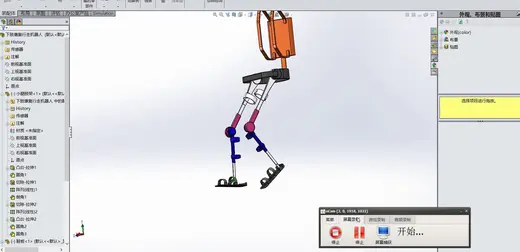
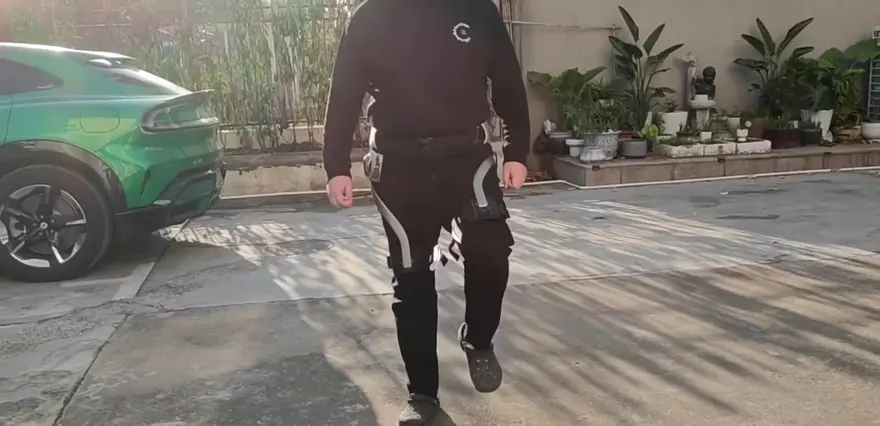
The structure of this assistive exoskeleton is straightforward: the waist-mounted module houses the built-in battery and control unit, while the two elongated mechanical components are secured to your thighs.
This functions as a walking assist exoskeleton designed for the waist. It operates unlike a machine that "forcefully pushes" the user; instead, when IMUs and sensors detect that you are initiating a typical gait cycle and lifting your leg, it actively provides a lifting boost. Its core value lies in synergy rather than rigid support. However, an important detail to note is that it is fundamentally an "active assist" device for the thighs, rather than a lower-leg exoskeleton offering fully passive support. As a result, it needs to be used in conjunction with cycling gear.
VII. The Landscape of the Category: This Is Not the Same as a Rehabilitation Exoskeleton
In China, beyond Hypershell that we’re reviewing today, many strong brands are pushing hard in this space: Kenqing and Aoshark focused on lumbar / back assist, TOREAD making walking-assist exoskeleton solutions, Yuanye delivering outdoor consumer-grade exoskeleton products, and even the cross-over home-appliance giant Haier entering the field.
But if you look closely at product positioning, the divergence in use cases is obvious: products that live on the “medical rehabilitation” side (such as traditional rehabilitation exoskeletons) are different from commercial consumer-grade exoskeleton products aimed at outdoor sports. As someone who loves hiking, my scenario is about wanting my legs to stay supported longer—not stepping into clinical assistance—and that difference drives major contrasts in product form and price range.
8. Hands-On Shots: What’s It Like to Wear It?
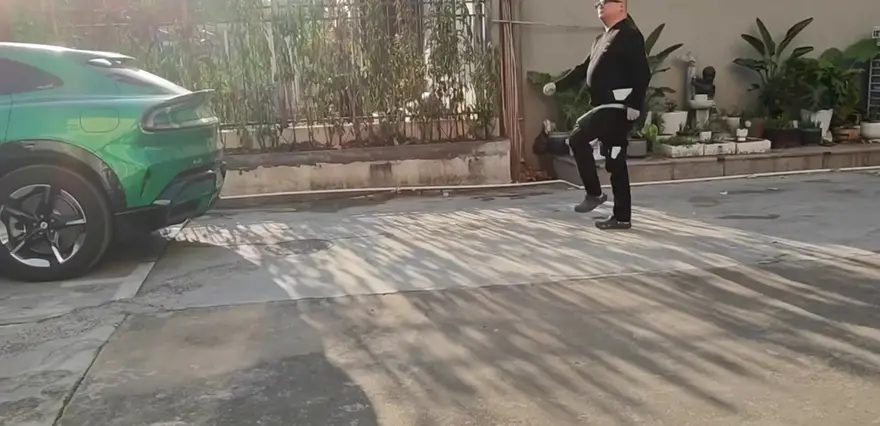
The actual process of putting it on isn’t as complicated as you might imagine. With the unboxing and first-look out of the way, the next step is to take it into the mountains: climbing inclines, and specifically walking stone steps and gentle slopes—to see whether it can truly smooth away that last 500 meters of leg fatigue before your strength is completely drained.
And whether this thing is a gimmick—whether it can genuinely help a 220 lb middle-aged man who doesn’t work out much—we’ll let the real mountain data answer.
Top Community Comments
@Reader (👍 6): At the start, I thought you were going to lift a car for show.
— This playful comment actually highlights a key point: the muscle-like feel and mechanical strength of an exoskeleton can, in a static demo, easily lead to the “brute force works miracles” misconception. Its real purpose is effort-saving assistance, not stage performance.
@Reader (👍 3): Is it really useful? My parents have trouble walking, I’d like to buy one for them 😂, to help with climbing stairs and so on.
— A highly upvoted comment may echo a common concern: wanting to buy equipment to show filial piety but afraid of making a wrong purchase. Pay special attention that this device weighs 2.67 kg (with battery) and is built around an active assist design. Whether it suits older users still depends on the real wearing experience.
@Reader (👍 0): I have rheumatoid arthritis and my knees hurt—it probably won’t help, right? There’s no knee assist at all.
— This points out a form-factor limitation: the leg exoskeleton targets the thighs and hip joints for lifting-assist during the swing phase. If the pain is around the knees, this leg exoskeleton may not help at present. Match your pain area with the product before purchasing.
**@Reader forward to a follow-up—when you test it uphill, remember to include elevation and pace (already picturing it).
— This shows that viewers understand how to evaluate: for exoskeletons, don’t just read product descriptions; look at real-world outdoor data.
**@Reader bundling orders during Double 11, could you pick one up for me? My old knees are waiting for you too.
— This might be the most earnest yet joking attitude among consumers: they have real needs for a tech consumer product, but still hesitate on purchasing decisions. Also, it’s unclear whether the intended user is a parent or the buyer themselves, which reveals divergence in product positioning.
**@Reader 800W motor? Then the battery life must be weak, right?
— This hits the mark: raising the motor power from 400W to 800W and adding another battery still leaves endurance a core concern for real use on the thigh.
@Reader (👍 4): Aluminum alloy plus carbon fiber—the weight is surprising.
— For something that costs over a thousand, this weight might be tough for many users to carry.
One-Sentence Summary
The Hypershell Pro X is a knee-assist component for mobility with a well-defined market position. Positioned in the 7,000 to 8,000 RMB price range and featuring a balanced aluminum-carbon fiber construction, dual batteries, and an IP54 waterproof rating, it is designed for outdoor hiking and light exercise. It is a perfect fit for heavier users or those whose legs fatigue easily but prefer not to immediately jump to the top-tier full carbon fiber model costing over 10,000 RMB.
About this article: part of Chinese-Made Exoskeleton Review Archive — an independent, regularly updated English archive of reviews of consumer exoskeletons made in China, edited from publicly available video transcripts. Not an official manufacturer page.
For inquiries and purchasing, contact lonlonago@foxmail.com. More in Exoskeleton · All articles.