An RMB 8,000 Power-Assist Exoskeleton vs. an RMB 8,000 E-Bike: After Three Rounds of Real-World Testing, the Verdict Is "It Saves Effort—But It's No Replacement"
Take an e-bike priced at nearly RMB 8,000 and a power-assist exoskeleton selling for almost exactly the same, throw them both onto a riverside test course in Chongqing at the height of summer—what answer do you get? This video runs three rounds of head-to-head racing and lands on a remarkably solid conclusion: a consumer-grade exoskeleton can genuinely help you save effort, but at this stage it still can't replace an e-bike. The rules "aren't especially rigorous, but they're guaranteed to be fun," yet the data turns out to be surprisingly worth referencing—heart rate, speed, and temperature protection thresholds, all laid out on the table.
1. The Showdown: Same Budget, Two Philosophies of "Assist"
The contest design itself is impressively savvy: lock the budget first, then lock the variables. Both devices cost just under 8,000 RMB (the video mentions "nearly 8,000"), so what's actually being measured is "assist" itself — and nothing else. The format unfolds in three rounds. Round 1 is a rider-vs-rider duel: Hei Yinjun and Lu Ke, two contestants with closely matched, well-proportioned builds, play rock-paper-scissors for the right to pick their gear first. Round 2 is an A/B comparison on the same electric-assist bike — "exoskeleton on vs. exoskeleton off." Round 3 is an extreme stress test with the creator personally taking the field.
"It may not be especially rigorous, but it's guaranteed to be a lot of fun." — Right at the opening of the video, the creator inoculates himself against criticism.
This three-round structure, in fact, maps neatly onto the methodology of consumer-grade exoskeleton reviews: first answer "is it a substitute for some mature product category?"; then answer "how much gain can it deliver on its own merit?"; and finally, push the bottom line of its reliability. Meanwhile, the midsummer heat of Chongqing became the hidden variable running through the entire test.



2. First Impressions: Before It's Even Powered On, What You Feel First Is Its "Presence"
Lu Ke won rock-paper-scissors and got first pick of the gear. Saying "I'd still like to try the normal one first," his first hands-on session actually began with "suiting up the upper body." And so came the first iconic moment of this episode: fully geared up, he pedaled a couple of times and marveled, "Is this what the assist feels like? It's so noticeable!" — only to be told that the device wasn't even powered on yet.
"Is this what the assist feels like?This is with it completely powered off." — A minor blind-test fail from the video
This detail says more than it seems. Most consumer-grade exoskeletons on the market today are built around a hip assist architecture: a harness wrapping the lower back and thighs, with brushless motors tucked into both sides of the hip joints. Sensors — IMUs, pressure sensors, and the like — read the phase of your movement and inject joint torque at the exact instant of leg lift and push-off. To keep weight down, the structural components typically use carbon fiber and aluminum alloy. By contrast, products built for material-handling scenarios take the lumbar / back assist route. But whichever architecture you choose, once it's on your body it is, first and foremost, "something extra" — its own weight and passive resistance are where the entire experience begins.
While we're at it, let's clear up a common misconception: this type of lower-limb exoskeleton does not provide self-balancing, and its so-called fall protection essentially amounts to "you're on your own." What it augments is your muscles — not your sense of balance.


3. Tuning Parameters Is Like Tuning a Bike: Cycling Mode, Straight-Line Assist, and That "Knee-Press" Assist Feel
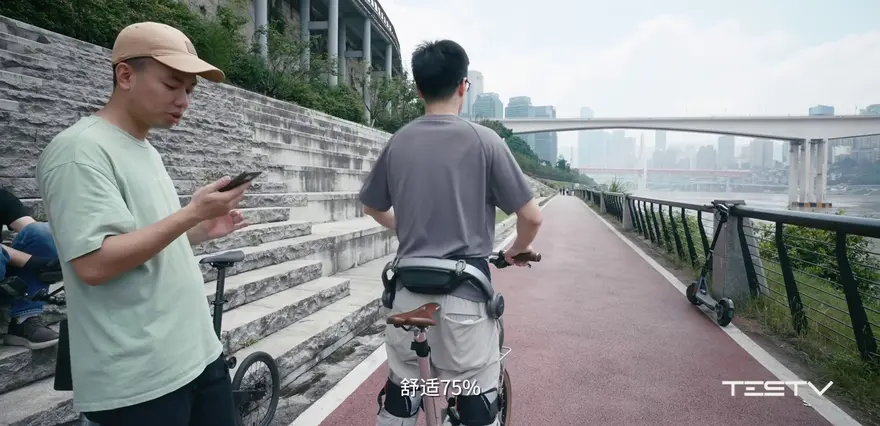
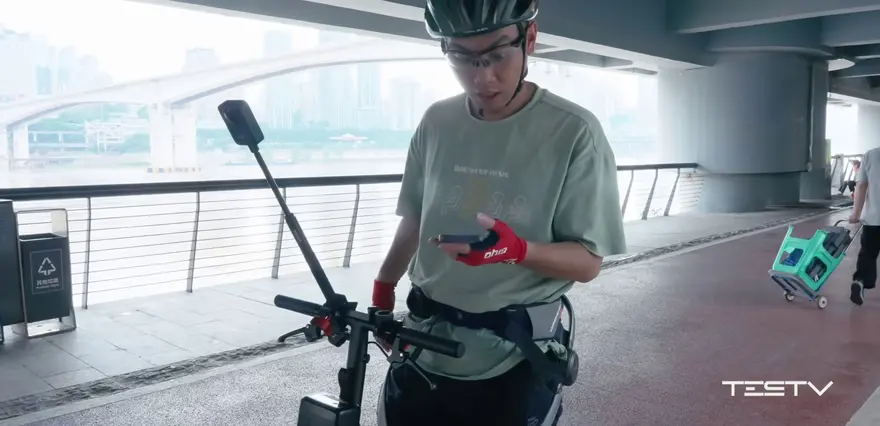
Before the formal testing came a long tuning session: once the app connected, the first move was to switch off adaptive recognition, lock the device in cycling mode for the entire run, then enable "straight-line assist" just for Luke, to see whether it would deliver that "superhuman assist" feeling. The first parameter set (the screen read "Comfort 75%") was an instant flop—
"I felt like I was fighting against it, you know? It made me even more tired."
After retuning, it was a completely different story: "There's a very distinct feeling of it pressing down on your knees and thighs for you," and "I suddenly felt full of confidence about that uphill."
These two descriptions of the physical sensation perfectly capture the fundamental difference between an exoskeleton and an e-assist bike: torque response on e-assist bikes is a mature, proven solution, while phase recognition on exoskeletons is still climbing its own hill. If the assist timing and force curve drift even slightly out of sync with your pedaling cadence, assist turns into resistance; only when they line up does it truly "give you a lift" at the very instant you push through the pedal stroke. Same device, but before and after tuning, you're in two different worlds—"fighting it" versus "riding the assist"—which is no small ask of the average user's tuning patience.
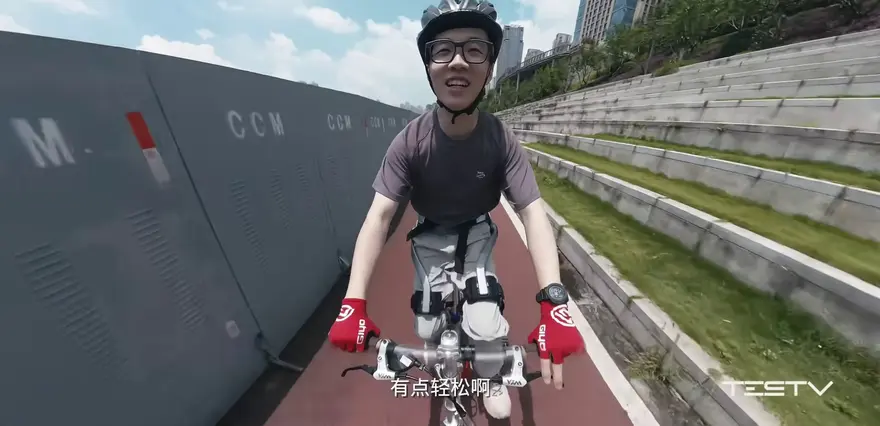
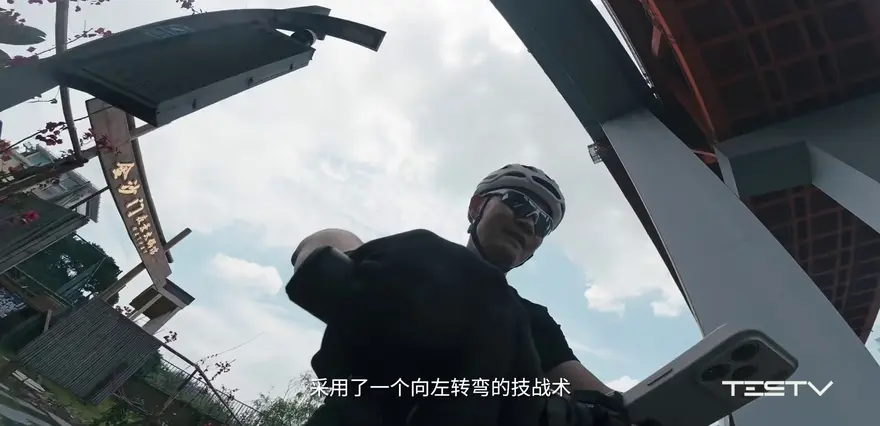
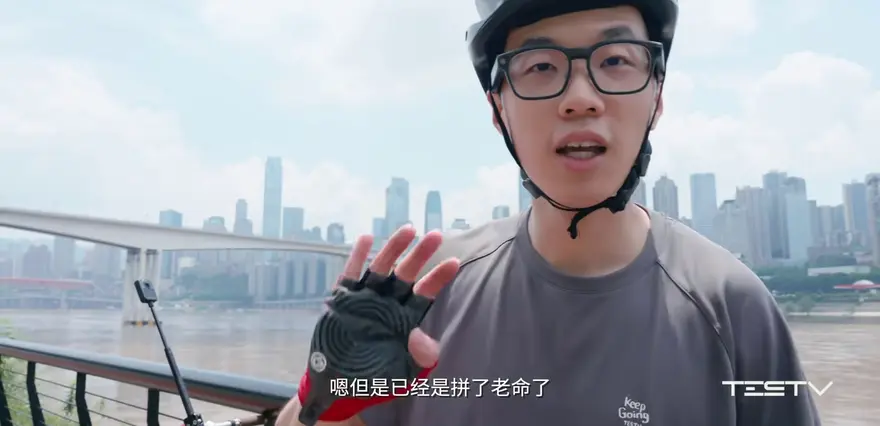
One heartwarming detail before setting off: the content creator had prepared gloves and a helmet for Luke—"safety first."

4. The Opponent Is in Position: The E-Bike's "Fully Loaded" Battle Prep
Over on the other side, Hei Yinjun's prep was brutally simple: power on, connect the app, crank the assist level straight to max—"just blast up the mountain and be done with it." His self-awareness was equally clear-eyed: "Hei Yinjun's weak spot is his body." Then, in the very next breath, he flipped the script: "But this body of ours can take a beating—full overclock." The game plan was clear: high gear, heavy assist, maximum output.
(By the way, Hei Yinjun noticed fingerprints on his premium cycling glasses, which segued neatly into this episode's mid-roll ad for lens-cleaning wipes—"enhanced anti-fog, safe and quick-drying, gentle on lenses." An ad is an ad, though—this article isn't endorsing it.)
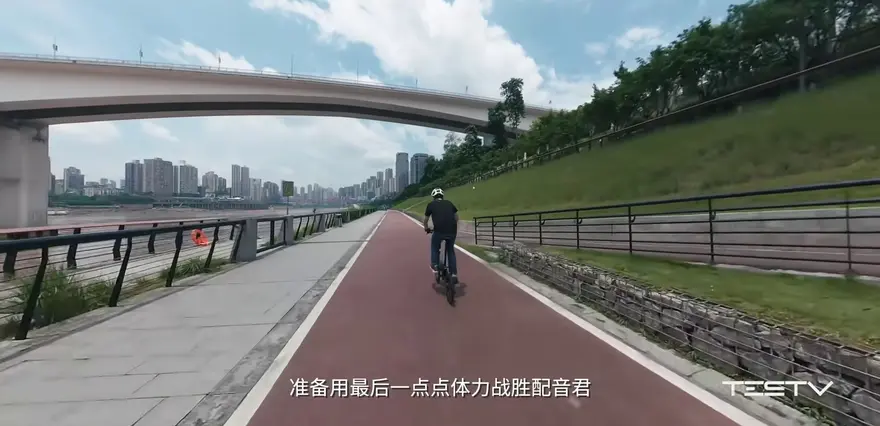
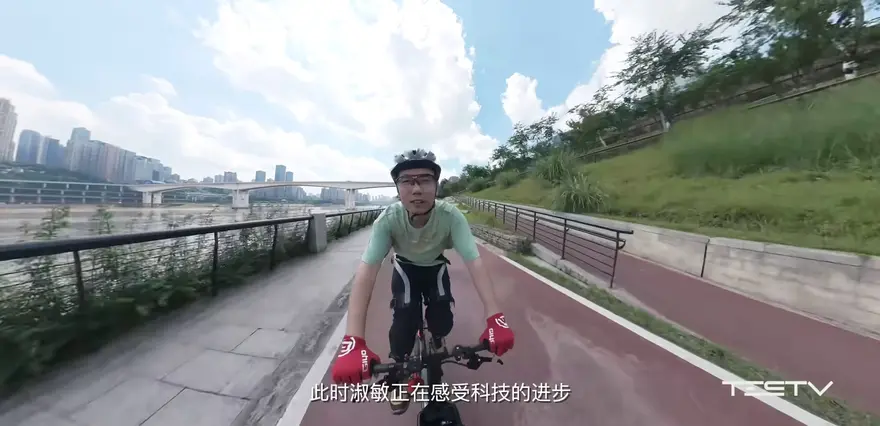
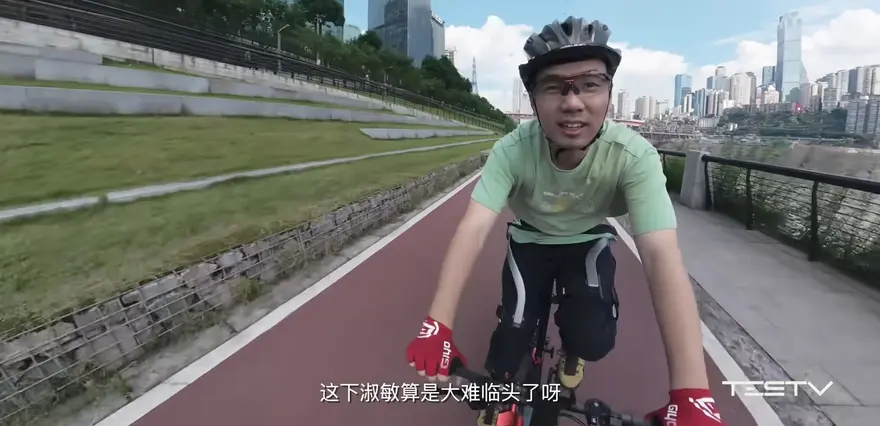
Race rules: ride from the start line to Master Xiao's observation point, roughly a kilometer and change—nearly 2 km—away, then turn around and ride back. First one back to the start wins (as mentioned in the video). Less than two kilometers each way sounds like a breeze, but Chongqing's sun begs to differ.


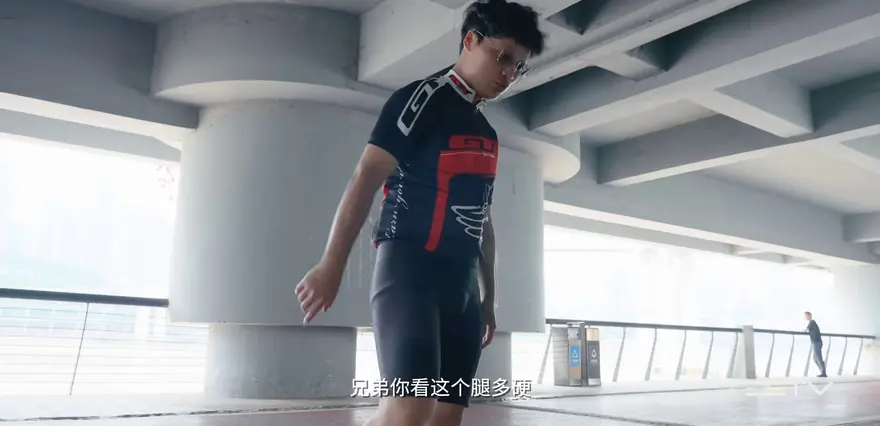
5. Round One: Two-Kilometer Out-and-Back — the E-Bike Leads From Start to Finish
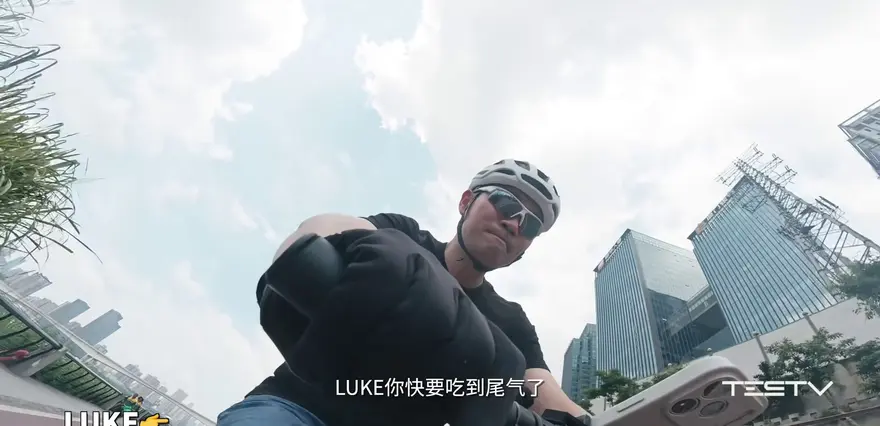
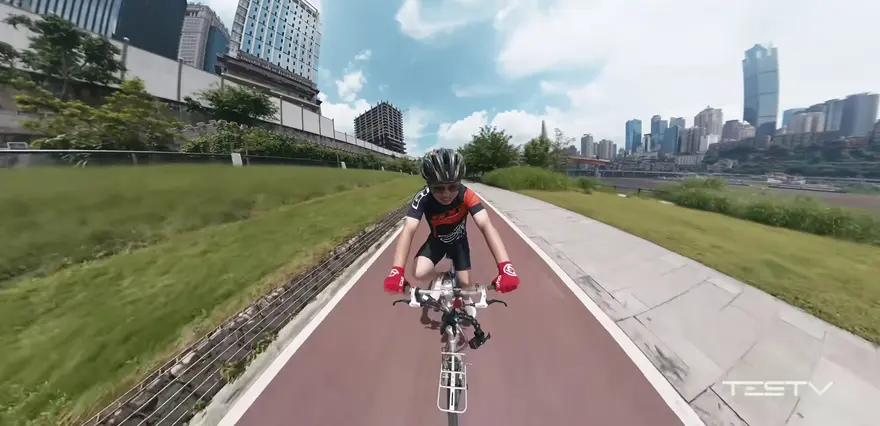
At the start, the e-bike "shot right out of the gate," and Hei Yinjun cut inside to seize the lead, a casual "I think I've got this one in the bag" betraying how relaxed he was. The commentators quickly summed up the two race tactics: Lu Ke going for aggressive all-out attacks, while Hei Yinjun steadied his breathing, "ready to win it from start to finish." Lu Ke stayed locked in a dozen-odd meters behind the entire way — unable to get any draft — and the commentator piled on: "You're about to catch his exhaust fumes instead."
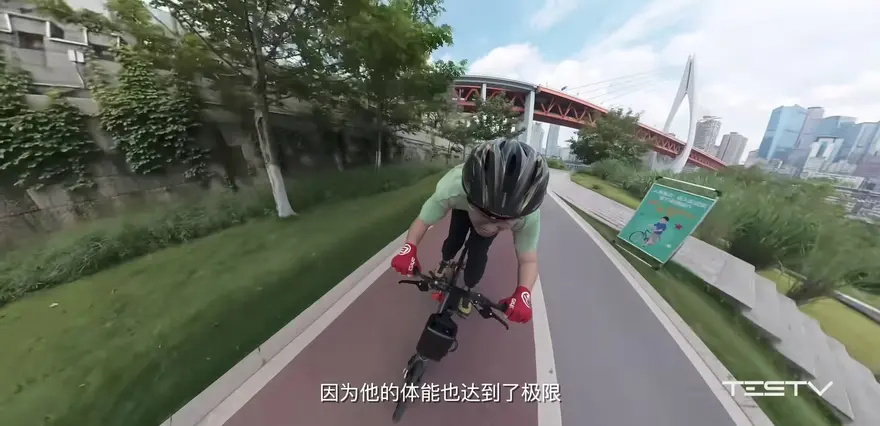
The climb became the turning point. The moment the gradient kicked in, both riders' stamina faced its first real test, and Lu Ke flat-out shouted, "I'm going to have to push my bike up this hill." Hei Yinjun reached the turnaround point first, still accelerating through the corner, "determined to stretch the gap wider and wider" — which the commentators described as "a cocky grin spreading across his face." After the turnaround, "both riders' stamina had hit its ceiling," and Lu Ke dug deep to launch one final furious attack, drawing a sigh from the commentary desk: "So this is what they mean by 'youth always beats age,' huh?" After crossing the finish line, he announced on the spot:
"I, Lu Ke, hereby officially announce my retirement. I'm never riding a bike again."
Post-race data review (as mentioned in the video): both riders' heart rates sat at 167–178 bpm, peaking near 190 at one point; top speed for this round was around 33 km/h. When reviewing the race, Lu Ke was still fixated on the equipment difference — "my tires are a bit bigger" — theoretically faster at the same cadence. Unfortunately, his opponent simply pedaled at a higher cadence, and the outcome was decided.
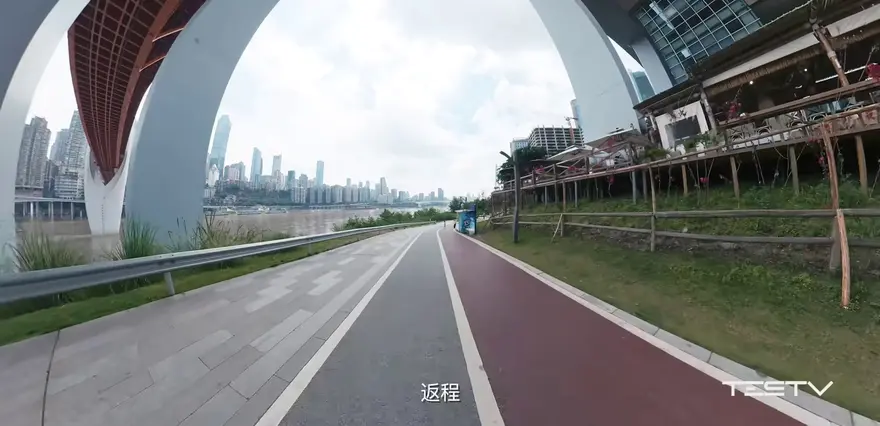
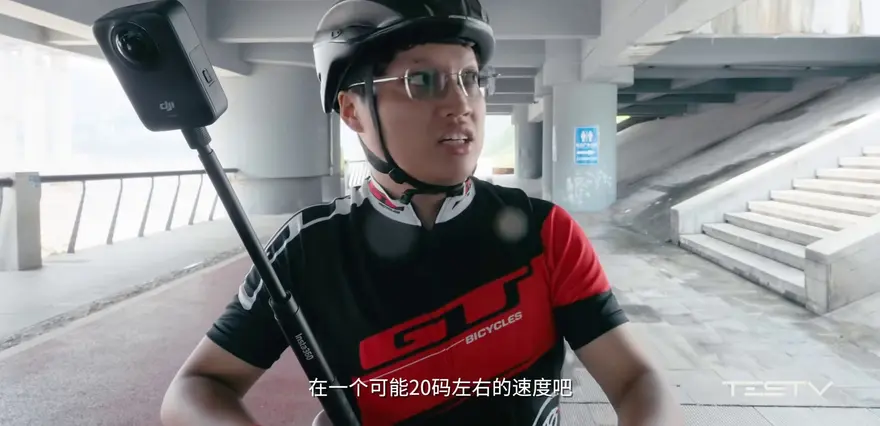
6. Retrospective: The 25 km/h Ceiling, High-Temperature Power Derating, and the Cadence Achilles' Heel
Lu Ke was refreshingly candid about the exoskeleton: "It does help, but the further we went, the less noticeable it became." Break it down, and you find three critical flaws.
First, high-temperature power derating. Mid-ride, the device alerted that it had hit its thermal protection threshold, and power was dialed down accordingly—Lu Ke griped that he'd been "burned." He also stressed that the day's weather "wasn't even Chongqing at its hottest—just a middling-to-low temperature for the city." The headroom in peak summer doesn't look promising.
Second, the speed ceiling.
"At 25 (km/h), the assist is gone. Above 25, it's pure leg power." — as mentioned in the video
Third, the mismatch between gear ratio and cadence. In 6th gear, the motor can't keep up once cadence climbs; drop to 5th, and you simply can't ride fast. The assist system, the drivetrain, and the rider's cadence haven't been tuned into sync yet.
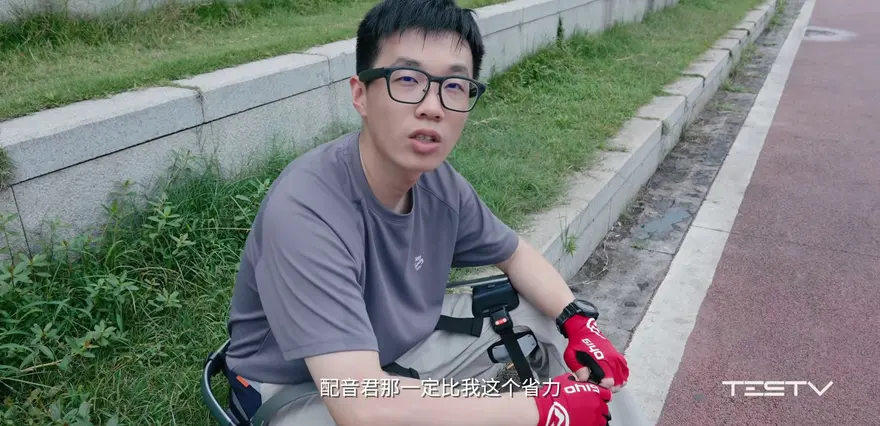
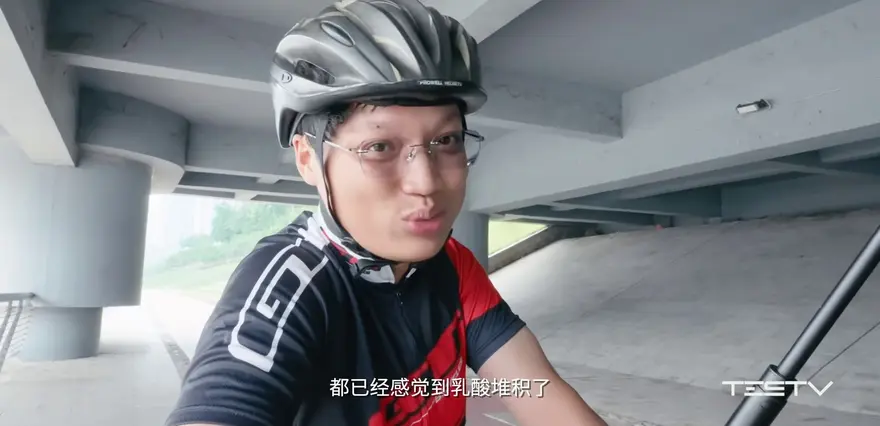
So when does it actually help? Lu Ke offered a range: if you're not racing and just out for a casual ride, keeping your speed around 20 km/h, "it should save you quite a bit of effort." But once the road tilts upward, "going uphill, there's no saving energy anymore." The price is written in plain sight on the heart-rate monitor—"pedaling a bicycle up to a heart rate of 188" (as mentioned in the video), that "spaced-out state" after finishing a 1,000-meter fitness test, the whole body "feeling like it's floating.One word: vegetable." — Lu Ke on his own condition

7. Round Two: A/B Comparison — Same Bike, With vs. Without the Exoskeleton
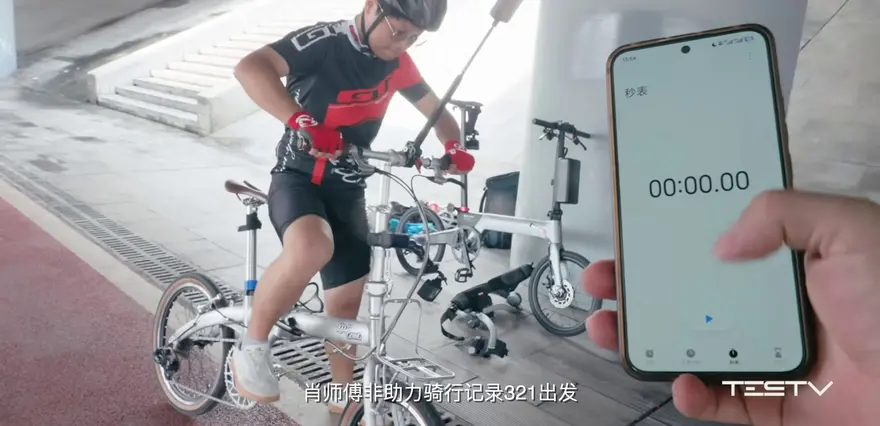
Round two gets back to science: the same e-assist bike, the same route, tested with the exoskeleton on versus off. This is the single most valuable test design in the entire video — locking down the "bike" variable to isolate the gains from "wearing" the exoskeleton. The gear got a matching upgrade too: cycling

About this article: part of Chinese-Made Exoskeleton Review Archive — an independent, regularly updated English archive of reviews of consumer exoskeletons made in China, edited from publicly available video transcripts. Not an official manufacturer page.
For inquiries and purchasing, contact lonlonago@foxmail.com. More in Buying Guide · All articles.