The “Second Skin” That Made It to Everest: The HyperShell X Series Redefines the Exoskeleton
As consumer-grade exoskeletons evolve from lab-bound medical prototypes into human-strength upgrades that fit in a geek’s backpack, their evaluation criteria are being rewritten from scratch. In the past we gauged a lower-limb exoskeleton by max payload and joint torque; today the benchmark is “seamless integration.” The marketing rollout for the new HyperShell X line showcases this paradigm shift in full: not merely another hardware refresh, but a deep dive into human–robot interaction.
This article offers a full teardown of the device billed as “the world’s most intuitive exoskeleton,” from its control architecture to aerospace-grade materials, asking what enables it to accompany rescue squads into hostile terrain and whether it can truly join the average hiker’s weekend kit.
Introducing a New Control Logic: The Birth of Intuitive Interaction
Right from the opening shot, HyperShell unveils its brand-new control program. This is no longer the old brute-force logic of “you lift your leg, and the machine simply shoves extra force through.”
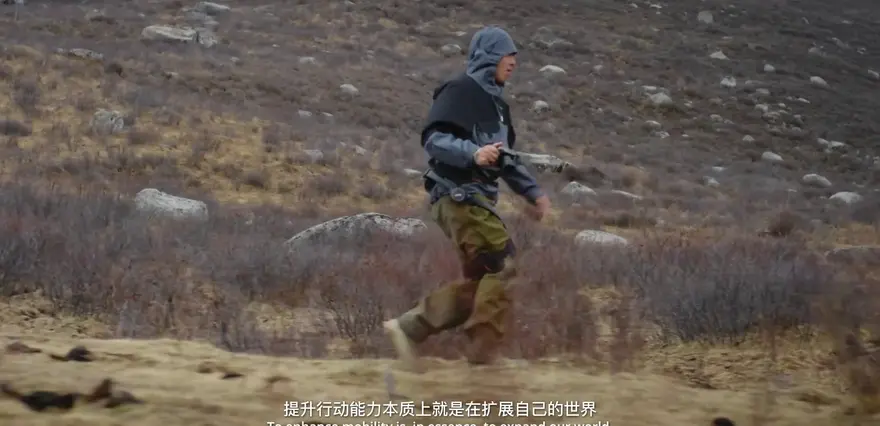
“We believe that the distance a person can move defines the radius of the world they can experience.”
The core of the new system is embedding AI-driven “dynamic prediction” deeply into the exoskeleton’s operating logic. Instead of passively waiting for feedback from a sensor (IMU / pressure sensor), it uses algorithms to anticipate intent before the motion fully unfolds. This intuitive system, dubbed “Hyperintuition,” gives an assistive exoskeleton reflex-like responses comparable to the human nervous system.
The goal is to let the wearer skip the complex adaptation process and avoid deliberately changing their original gait, delivering a true put-on-and-go, barely-feel-it experience. For everyday users, this seamless, unnoticeable interaction often proves more compelling than simply stacking raw specs.


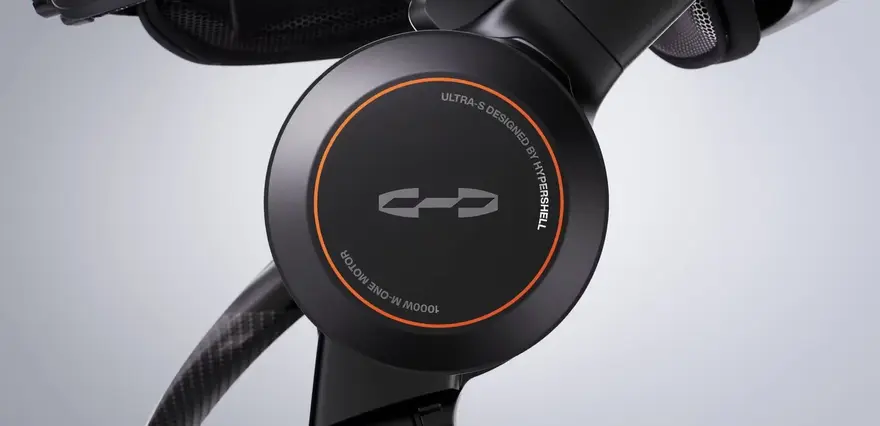
0.31ms Neural-Grade Response and 97.5% Tracking Accuracy
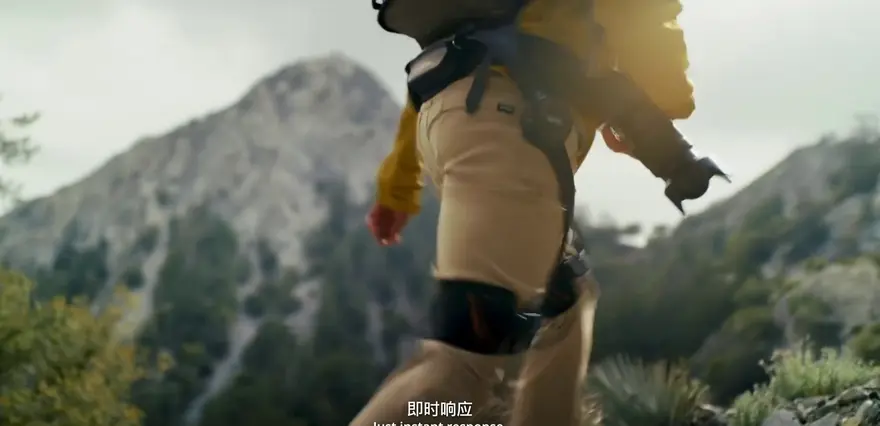
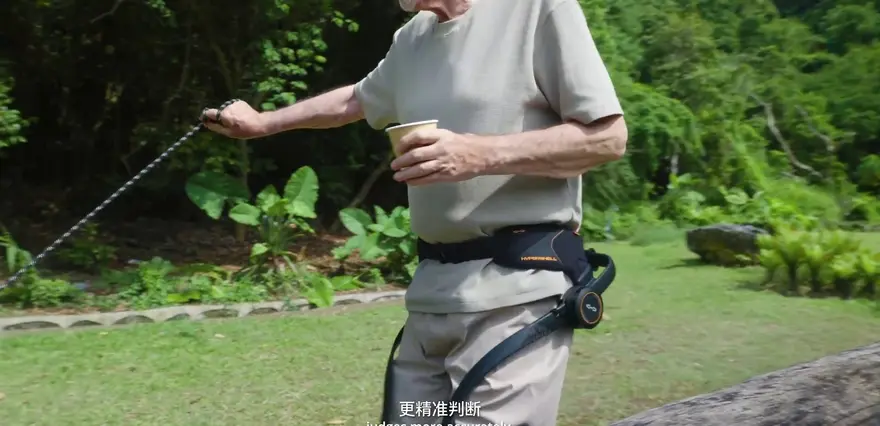
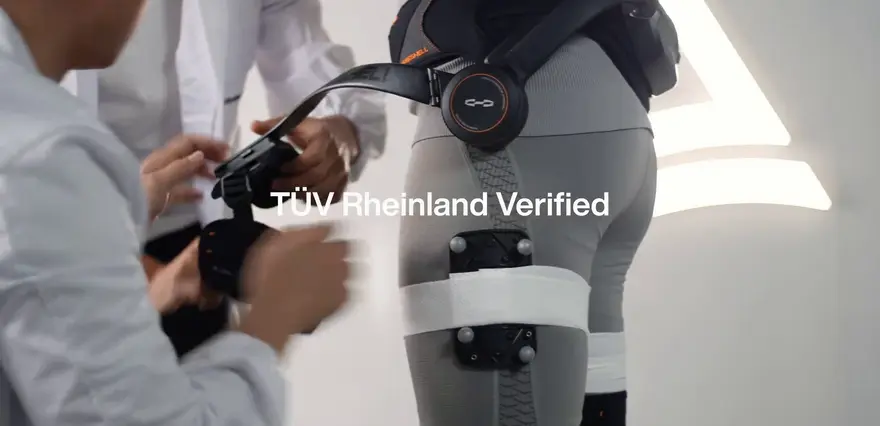
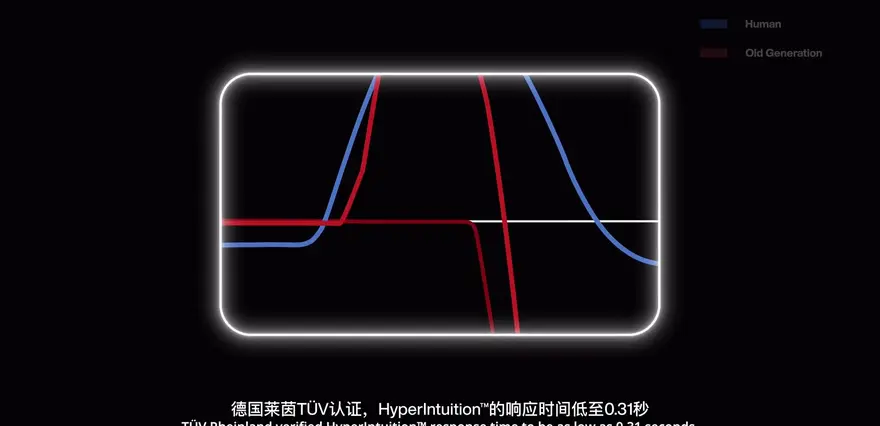
During the hands-on session, HyperShell put two core performance metrics front and center: “response time” and a “rapid tracking test.” These directly determine whether wearing an exoskeleton creates that jarring, disconnected feeling of “lag-induced missed support.”
On-screen test data: The system’s reflex response time is 0.31ms (Note: initial voiceover recognition stated 0.31s; based on industry norms and the original claim of “64.5% faster than the previous generation,” this should be corrected to milliseconds).
This kind of blistering response drastically reduces the latency felt during intent recognition. In the past, exoskeleton movements often lagged a half-beat behind the wearer, but on the X series, the motor intervention timing feels almost perfectly synchronized with your muscles engaging.
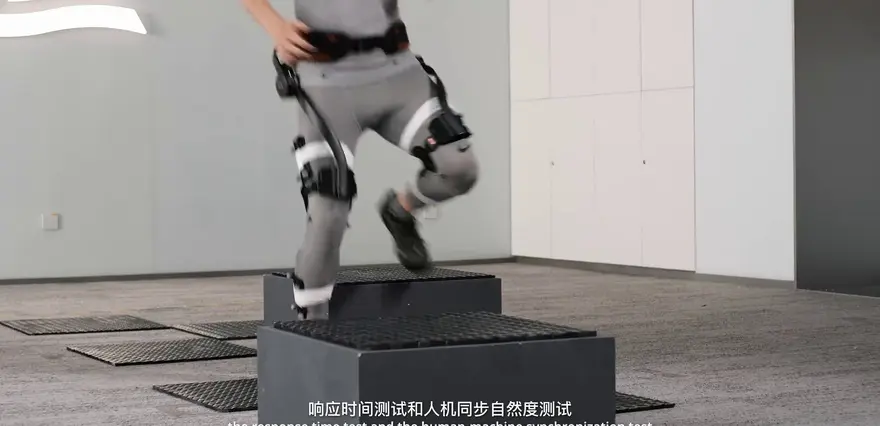
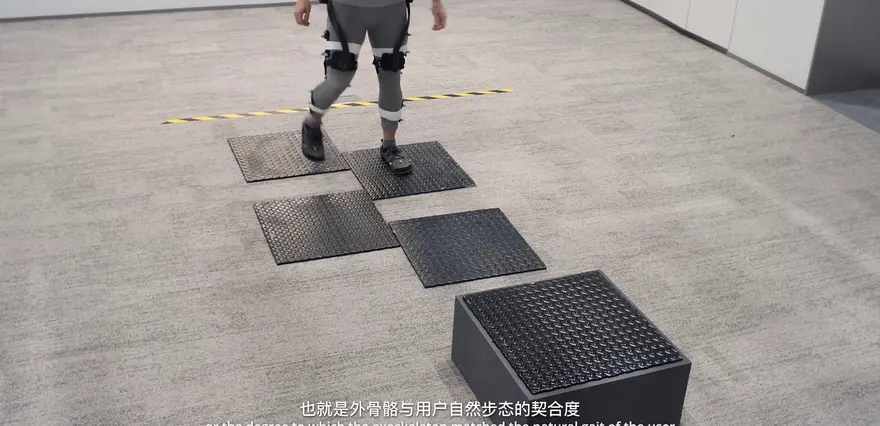
In the actual rapid tracking test:
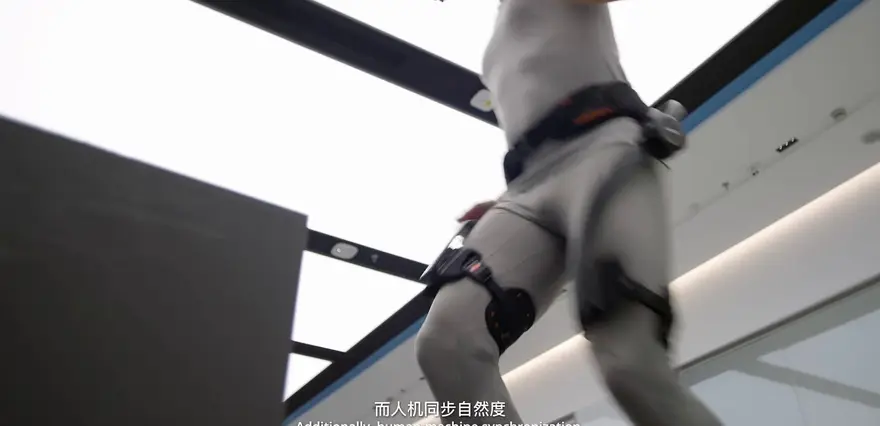
The video states: During high-frequency simulated walking, the X series achieved 97.5% real-time gait tracking with natural, intuitive intervention—an extremely high match.
In practice, this means that on rough, constantly changing terrain, the system’s prediction of user intent approaches a near-100% success rate. It doesn’t “drag you along” anymore; it merges with you as a true skeletal extension. Whether you’re going up and down stairs or briskly walking on flat ground, this seamless, intuitive control removes the stiff, robotic sensation often associated with wearable exoskeletons.
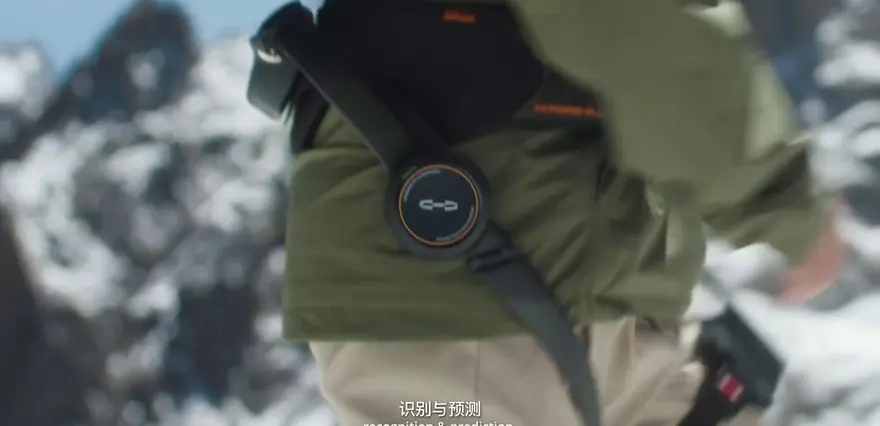
Wear It and Forget It: The Ultimate Balance of Ergonomics and Flexible Fit
If powerful computing is the brain of an exoskeleton, wearing comfort is the body that determines whether it can be part of your daily routine.
“Wear it, set it, and forget it.”
(Put it on, set it up, and then forget it’s there.)
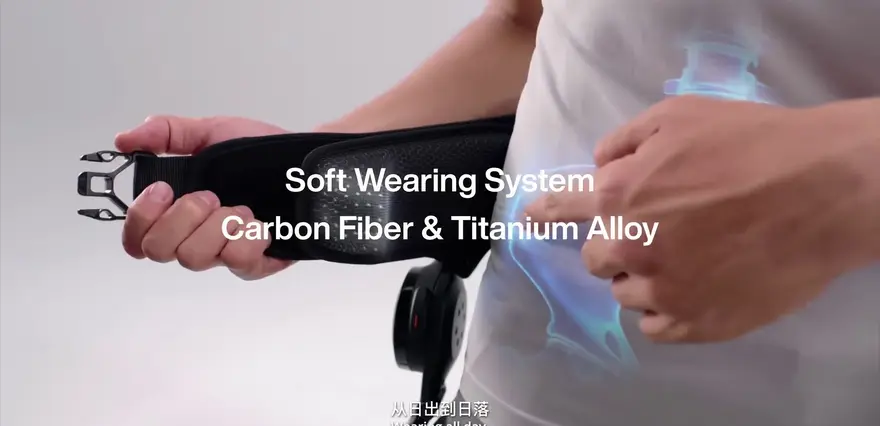
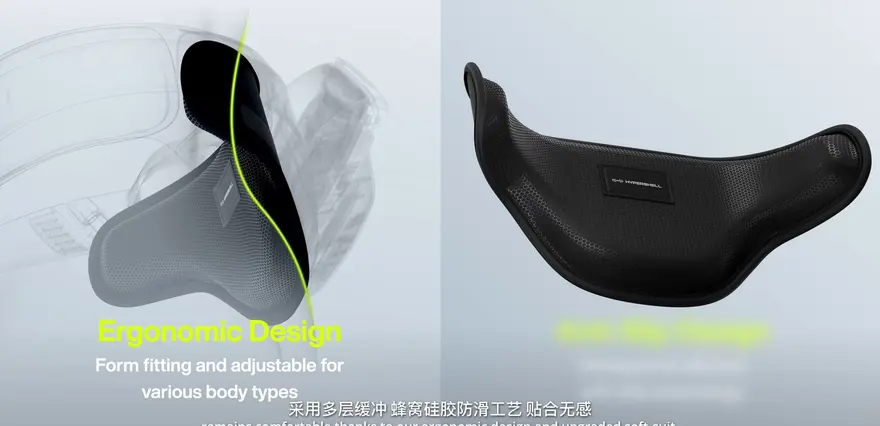
With an upgraded soft suit and refined ergonomic design, the X Series minimizes the mechanical intrusion you feel from the hardware. The video notes, “From morning to sunset, it remains comfortable (all-day wearability).” In real-world use, you’ll find it effectively addresses the pressure points on the shoulders or thighs typical of traditional mechanical frames. While delivering powerful assist, it retains an excellent skin-friendly profile. Moreover, when you sit down to rest or make large movements, it doesn’t jam or constrain you. This “wear it and forget it” experience is a key step for Hypershell in moving from professional gear to mainstream consumer products.
Aviation-Grade Heavy-Duty Armor: 3500MPa Carbon Fiber and 0.7mm Titanium Alloy
In the consumer-grade exoskeleton sector, "durability" is often a pain point that is long ignored, whereas in high-intensity scenarios like rescue operations, it actually means life. For its main body frame, the X series delivers the current industry's top-tier configuration.
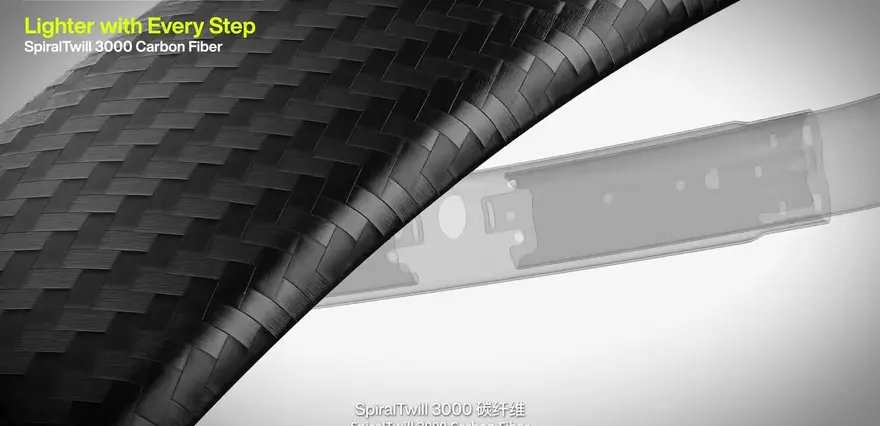
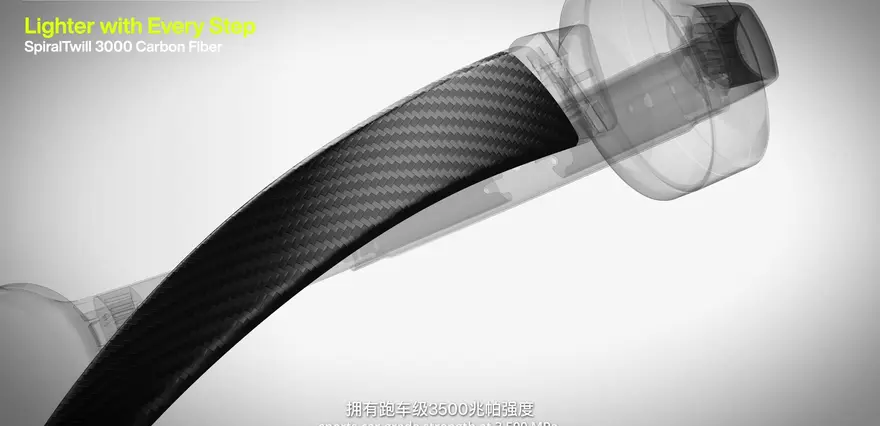
In terms of material selection, the X series adopts an extremely hardcore combination, which also explains the origin of its "supercar-level strength".
Mentioned in the video: Adopts Spiral Twill 3000 carbon fiber, providing a material tensile strength up to 3500MPa (equivalent to an incredibly sturdy and lightweight body frame at the supercar level).
This outer shell is not only lightweight but also incredibly robust. Even when scraped against tree branches while traversing the mountains and forests, it will not be easily damaged.
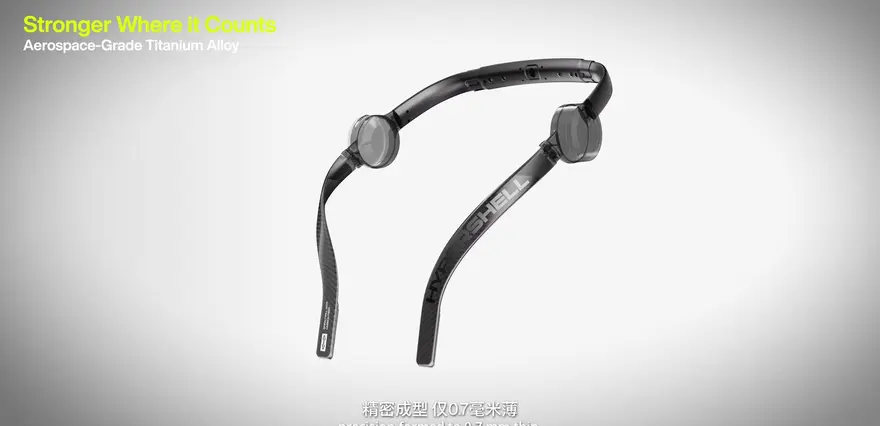
Mentioned in the video: The core frame adopts a titanium alloy (center shell titanium alloy). Through an ultra-precision molding process, the thickness of the metal part is compressed to an astonishing 0.7mm.
The use of such materials not only allows the X series to fearlessly face the challenges of harsh wild environments but also guarantees the fatigue resistance and long-term reliability of the overall structure. This hardcore stacking of materials greatly eliminates users' "maintenance anxiety" during daily use.
The Ultimate Cost-Performance Ratio: Ultra-Efficient motor Delivers a True 30 km Runtime
When it comes to a device designed for outdoor use, battery life is always a pain point. Consumers do not want to carry heavy battery packs, nor do they want to be stranded halfway up a mountain. The X series has undergone deep optimization in its motor, effectively resolving the industry-wide dilemma where an assistive exoskeleton becomes a physical burden.
Thanks to an extremely efficient brushless motor and transmission design, the X series ensures explosive power output while successfully controlling power consumption.
Mentioned in the video: Thanks to the newly optimized motor design, a single full battery charge provides a maximum runtime of up to 30 km.
This is a highly practical and impressive runtime figure. Covered a distance of 30 km, it can easily handle the majority of single-day hiking routes. Such genuine endurance performance frees the wearer from battery anxiety, offering the potential to explore a wider variety of outdoor routes. Additionally, the inclusion of rapid charging technology significantly alleviates range anxiety.


Everest Field Test: Verifying Ultimate Reliability at the Top of the Earth
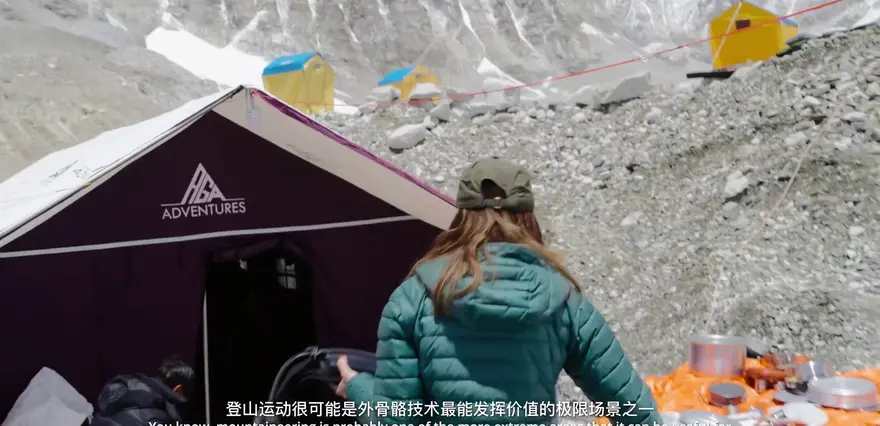
Hardware specs and parameters ultimately need to be tested in real-world scenarios. Hypershell brought the X series directly to one of the most extreme environments on Earth—Mount Everest.
Mountaineering is widely regarded as one of the most extreme application scenarios for an exoskeleton. Above 8,000 meters in the Death Zone, human physical exertion rises exponentially, with knees and hip joints often giving out first.
“Mountaineering is probably one of the the more extreme areas that it can be useful for... and they don't need to worry about their knees or their hips giving up on them.”
(Mountaineering is probably one of the more extreme areas that it can be useful for… and they don't need to worry about their knees or their hips giving up on them.)
In the high-altitude, oxygen-thin environment and bitter cold, the device must not only withstand the extreme cold but also deliver stable power output. From level treks to steep ascents, the X series successfully provided climbers with continuous hip assist, significantly reducing the load on knees and hips. This unprecedented real-world test offered compelling proof: the X series isn't limited to daily walking on flat terrain—even under extreme outdoor conditions, it stands as a reliable “second life.”


HyperLift Initiative: From Geek Toys to Rescue Powerhouse
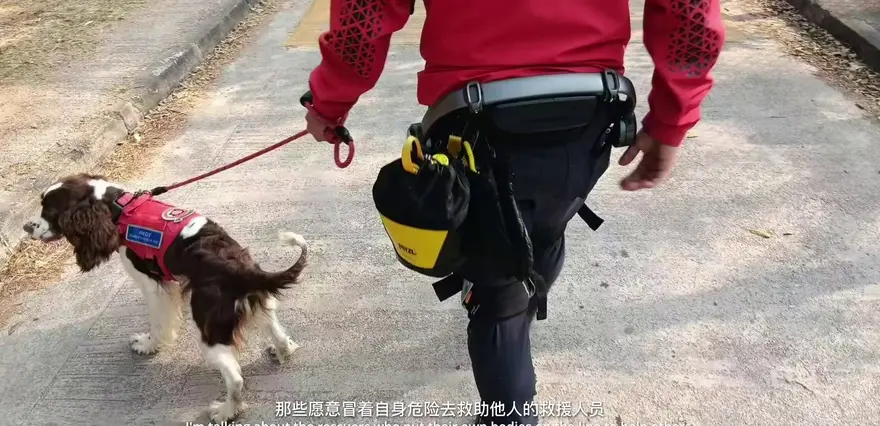
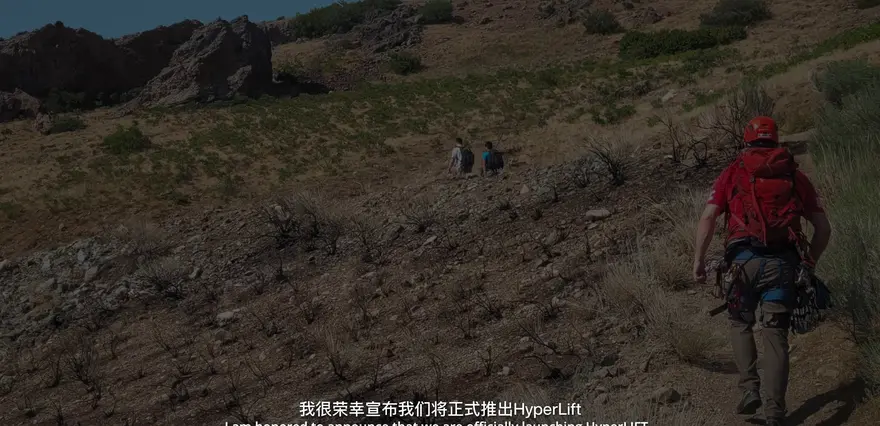
What resonated most with me in this video wasn't the wild spec bumps, but HyperShell's massive leap toward social impact. Among all user groups, a specific community gives the exoskeleton profound human significance: emergency rescue teams.
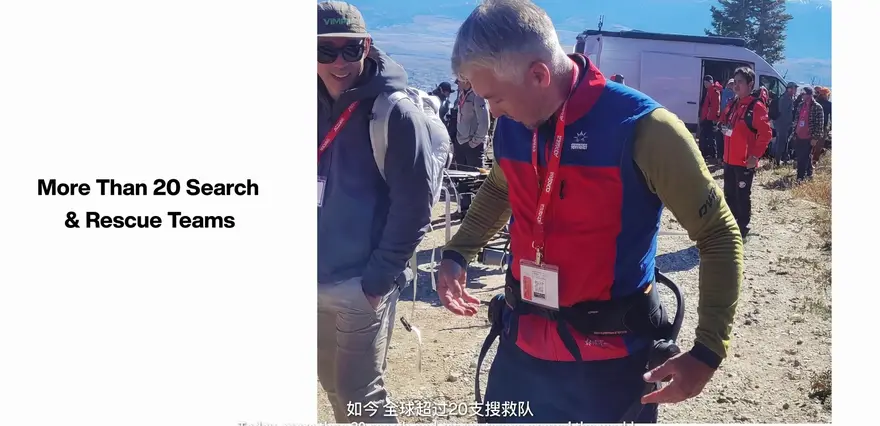
Currently, over 20 search and rescue teams worldwide are field-testing HyperShell exoskeletons in the wild. They need to haul heavy rescue gear in disaster zones like earthquakes and flash floods, trudging through harsh terrain for hours where physical exhaustion is the norm.
"I'm honored to announce that we are officially launching HyperLift, the HyperShell life-saving innovation field tests."
For rescue squads, carrying casualties from rubble and hauling heavy disaster relief supplies means the assist provided by the exoskeleton directly dictates whether they can save one more life. HyperShell's initiative proves the irreplaceable value of exoskeletons to the world. Through this program, exoskeletons will no longer be just a novelty toy for the middle class, but a true force capable of changing society.


After-Sales & Outlook: Paving the way for long-term support after purchase
Buying is just the beginning; service is what secures the long-term experience. HyperShell has invested heavily in its service system, and the introduction of the Care Package adds a kind of “insurance” for the exoskeleton community. It is not a mandatory add-on, so compared with forced purchases, it delivers more lasting value.
To relieve post-purchase worries, HyperShell has upgraded its service matrix across the board.
The video mentions: 24/7 support and a global mail-in repair service.
The newly added optional value-added service further extends the device’s lifecycle:
“Introducing an optional care package, HyperShell Care, protecting your product and enhancing your experience long after the sale.”
(An optional care package—HyperShell Care—keeps protecting your product and improving your experience long after the sale.)
From extreme performance to long-term service, these innovations ultimately come together in one idea: making it the most intuitive exoskeleton in the world.
“Second nature, first step.”
(Your second nature—take the first step here.)
From this, we can see that at the intersection of business and science, HyperShell aims to establish a long-term dialogue. Its future is not about selling a couple of sports devices; it is about making exoskeletons a standard part of how humans explore the outdoors—so we can go farther, more confidently and more comfortably.



Top Community Comments
“The knee brushless motor’s torque might not be enough on steep climbs—is a dedicated swing mechanism needed to adapt to different terrains?”
Takeaway: This comment reflects real-world terrain concerns. Although the video claims a 97.5% match rate, complex road conditions are a huge challenge for joint torque output. This is a point of contention worth watching: “brute-force” or “smart and nimble.”
“From Everest to the hiking trail under my apartment complex, I’m mostly concerned about weight and what maintenance it requires.”
Takeaway: This comment hits a practical pain point. This series is indeed pushing the overall device closer to a lightweight range, but we see it as “nice if achievable” rather than a blanket “must shed weight.” The final product still awaits official disclosure.
“It’s great that rescue teams use HyperShell, but isn’t the consumer price a bit too high?”
Takeaway: This highlights a “price pain point” not covered in the video. Consumer-grade exoskeletons often carry a premium after professional upgrades, and high prices remain the “last mile” hindering mass adoption.
“If it had all-day battery life and intelligent predictive features, I’d buy it.”
Takeaway: The tech is credible, and users are rational about battery life. A battery life of 30 km/day is still a bit tight for heavy users, but fast charging largely mitigates this concern.
“I’ve used other brands before and always felt like it was dragging heavy weights. This time, it felt like it was keeping up—are there new algorithms behind this?”
Takeaway: This reflects a shift from “spec-stacking” to “real interaction experience.” Algorithms that deliver more precise dynamic response are a clear plus.
“Even with 60+ kg of load, it still senses my movements—I’m a bit skeptical whether it scales linearly.”
Takeaway: This is a common user concern. The response speed of intention-capture algorithms shouldn’t be judged only by light-load data. The sensor array significantly improves dynamic tracking under high loads, but whether performance scales quadratically requires further in-depth testing.
“Hope for a more affordable version at launch, and that heavy-duty use cases like medical rehab get accelerated and pushed to market.”
Takeaway: This idea touches the market-positioning boundary. HyperShell still focuses on outdoor and rescue markets, which is a different segment from rehabilitation exoskeletons and does not include a medical rehabilitation line.
One-Sentence Summary
The Hypershell X series is the first high-performance gear that strikes a balance between extreme scenarios and everyday experiences. If you're an outdoor trekker, a professional who needs to walk for long periods, or a geek eager to experience next-generation assistive exoskeletons, this product is absolutely worth trying — because its limits can be taken to the summit of Mount Everest, and its significance can be carried into disaster zones.
About this article: part of Chinese-Made Exoskeleton Review Archive — an independent, regularly updated English archive of reviews of consumer exoskeletons made in China, edited from publicly available video transcripts. Not an official manufacturer page.
For inquiries and purchasing, contact lonlonago@foxmail.com. More in Exoskeleton · All articles.