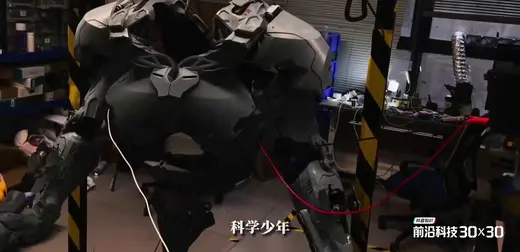
Breakdown of AoJing's full lineup of assistive exoskeleton products: if the motor is mounted in the thigh, how much effort can it really save us?
Experience Before Specs: The Moment I Took Off the Exoskeleton, My Legs Finally Started "TalkingI wasn't asking for anything anymore, but my legs were still moving."
This is the most intuitive feeling of the reviewer at the start of the video—when running in a lower-limb exoskeleton, you unconsciously lose your sense of restraint. Your heart rate spikes, compelling you to stop and rest, yet your legs seem to remain in "autopilot" mode. Inside AUSA's massive exhibition hall, the reviewer tested a complete series of scenarios in one go—walking, running, climbing stairs, cycling, and descending slopes—showing us a mobility assist solution capable of covering everyday life.
At slower speeds, the effect of this hip assist is highly noticeable; however, when running at higher speeds, because your own exertion is strong, the feeling of assistance is easily counteracted by your own force. Yet, the moment you take off the device, you experience an instant feeling of fatigue and exhaustion.
For most consumer-grade users experiencing this hip assist for the first time, the most shocking aspect isn't the violent pulling force during the explosive moment, but rather the "recoil" feeling of being emptied after taking off the device. Running too slowly makes it feel redundant, while running too fast makes it unnoticeable. This actually reflects that the motion-capture sensors (IMU) and servo motors need to adapt to an "intervention threshold" for gait coordination. During outdoor hiking, it acts before you exert force to help you resist gravity; but when you sprint on flat ground, it quietly retreats to provide strain-prevention protection.
[Image: Exhibition hall panoramic view, multiple exoskeleton devices displayed]
[Image: Lower-limb exoskeleton demonstration scene by a reviewer]
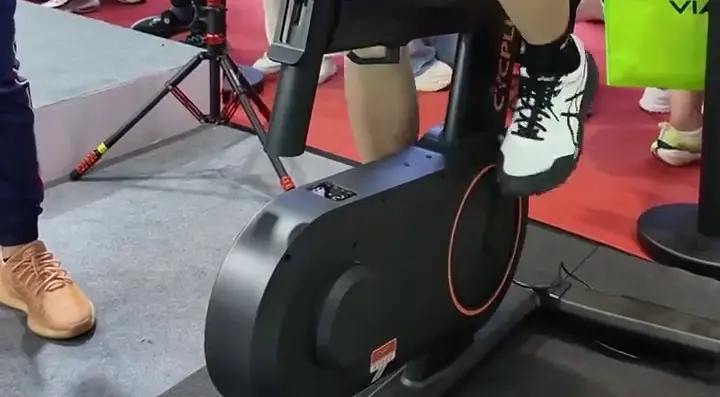
Mounting Motors on the Front of the Thighs: A Counterintuitive Mechanical Design
The Aoshuang team repeatedly emphasized a structural innovation during their demonstration—the servo motors for the lower-limb exoskeleton are not positioned in a rear backpack mount or on the back of the calves, but are instead placed on the front of the thighs. This structure, combined with a clamping design at the foot, allows for more rapid sensing of movement trends. Aoshuang states that this is an innovative design unlike any other currently on the market.
[Image: Close-up of the motor on the front of the thigh]
Why move the motors to the front? The team explains that a forward placement can more sensitively capture leg-lifting actions while also providing direct support and protection for the knees. It also enables flexible driving in scenarios like descending hills or carrying loads to reduce impact on the joints, avoiding a robotic "hard-lock" approach. Alongside the front-thigh design, two other structures were present at the show: a "back-mounted backpack-style" and a "rear-calf placement." They are exceptionally easy to put on and take off, with the entire process taking just a few seconds—this extremely low learning curve is crucial for a consumer-grade device.
[Image: Comparison of the three structures]
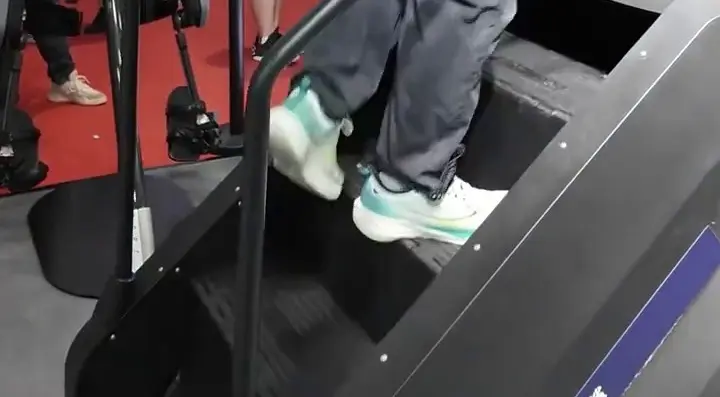
[Image: Details of the motor and straps]
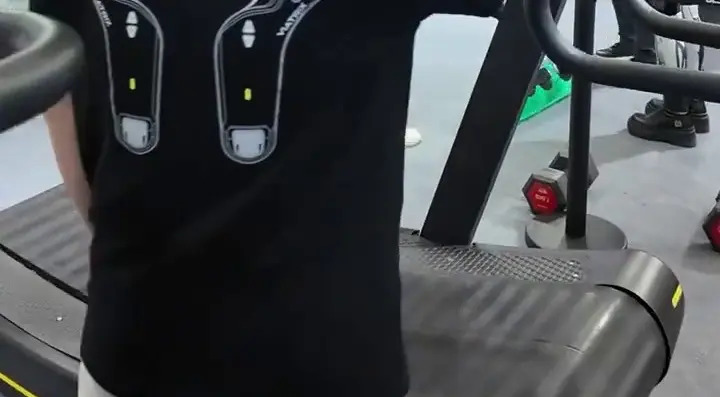
Hiking, Cycling, and Downhill: Multi-Scenario Field Tests of a Lower-Limb Exoskeleton
In AOSA’s demonstration venue, the lower-limb exoskeleton showed impressive scenario coverage: walking, running, climbing stairs, cycling, and descending. The manufacturer claims the product delivers meaningful results in each case. For downhill motion, staff added a key principle—“Going downhill is very taxing on the knees; this system can provide support to the knee during descent, thereby protecting it.” Through damping intervention from a brushless motor, the impact force that would otherwise be transmitted vertically into the ground is converted into support distributed along the front of the thighs.
[Photo: Outdoor hiking field test]
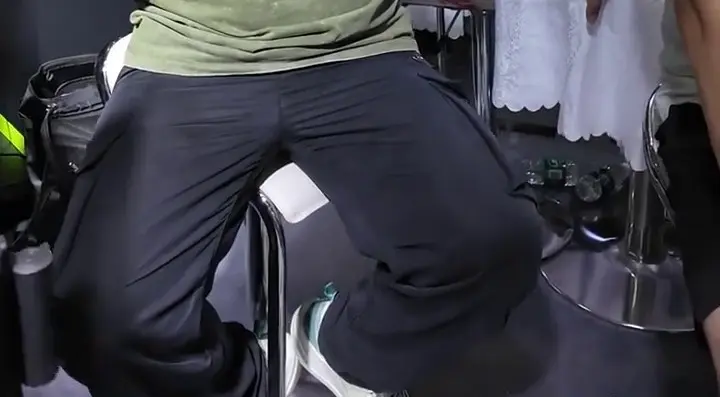
For long-distance trekking, the biggest value of this solution is “knee protection” and a “sense of security on descents.” Especially in the final two kilometers or during continuous downhill segments, the load on the knees increases exponentially; at that point, the front motors’ lifting support for the thighs and its ability to restrain the downhill momentum take effect immediately. That said, because it does not include a self-balancing system, the device feels more like an add-on pair of “spring legs”—helping you share the burden of gravity rather than helping you stay balanced.
[Photo: Downhill knee-protection demo]
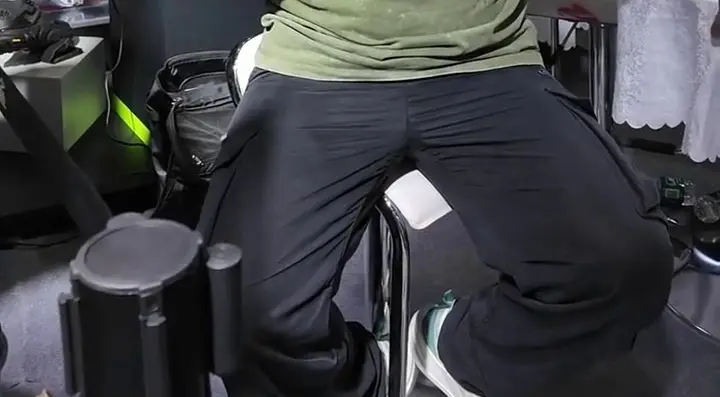
[Photo: Flat-ground and stair scenarios]
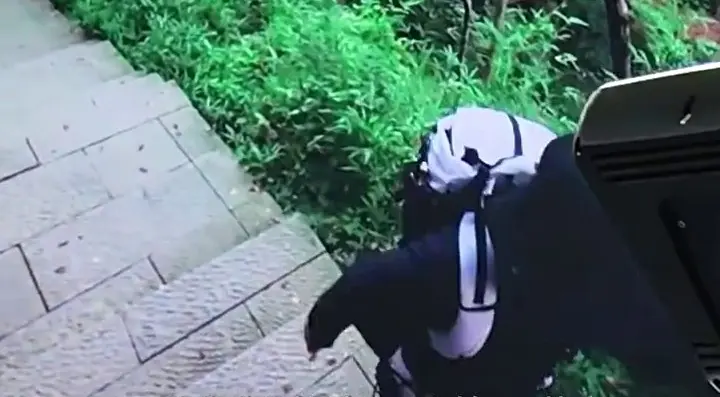
Lumbar / Back Assist: From Lab to Production Line—A Live Test of Hoisting a 30kg Water Bag
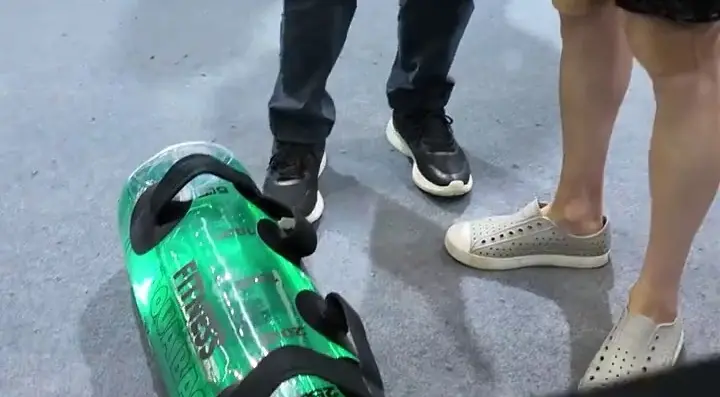
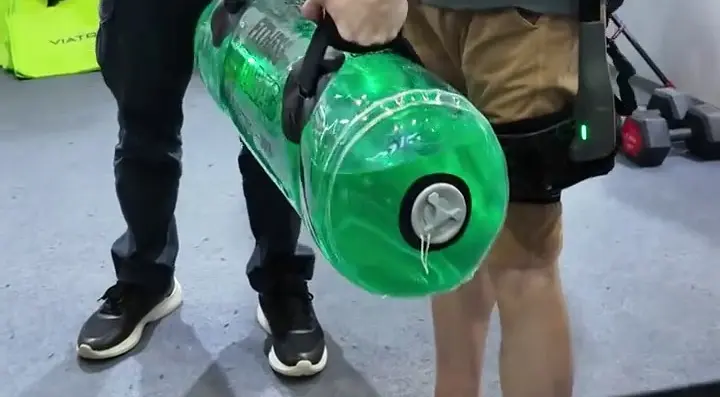
Switching to the lumbar / back assist gear, this is primarily an industrial product designed to solve real-world problems on the factory floor. The on-site demonstration features the lifting of a 30kg water bag. The exoskeleton isn't going to turn you into the Hulk to lift hundreds of pounds, but it drastically reduces the probability of muscle and lumbar spine injuries during repetitive lifting tasks.
[Image: Demonstration of a lumbar exoskeleton carrying a water bag] 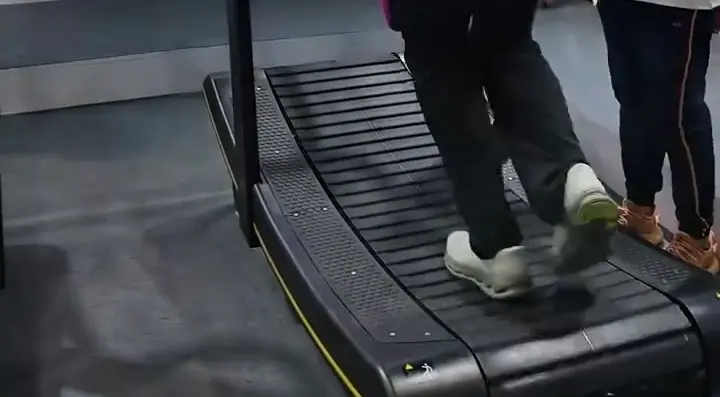 (/a waist exoskeleton carrying a water bag (demo).jpg))
The mechanical principle of lumbar / back assist is quite ingenious: through waist angle sensors and a resistance structure, it automatically converges the pulling force to the hip. As you pull with force, the device simultaneously moves forward; the load doesn't disappear, but shifts to the load-bearing skeletal structure. "Previously, lifting it once or twice was fine, though somewhat strenuous; but in factories where repetitive lifting is required, we need an exoskeleton for assistance." This "mechanism of shared human-machine burden" ensures the device no longer merely acts as a "labor-saving monster", but actively reduces chronic lumbar strain during high-frequency lifting.
[Image: Close-up of the lumbar binding structure] 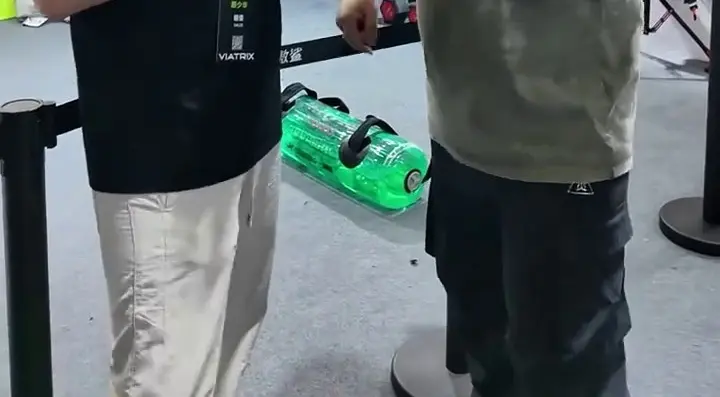 (/a close-up of the waist binding structure.jpg)) [Image: Demonstration of lumbar / back assist operation]
 (/a waist-assist work demonstration.jpg))
Lifting 20 kg at Once: The Upper-Limb Assistive Exoskeleton Takes the Stage
Beyond the lumbar / back assist models, the upper-limb solution exhibited by Aoshark at the trade show is equally eye-catching—and arguably even more hardcore. Once a user slips their hand into the device, it allows them to easily support a 15-pound load. The company revealed that this specific exoskeleton is already being deployed in large-scale domestic automotive chassis manufacturing plants. Rather than relying on raw mechanical brute force, the device utilizes an upper-limb sensory system to automatically clamp and lock when pushed downward, effectively supporting the heavy load.
[Demonstrating the upper-limb lifting function]
However, any objective review must point out a subtle nuance: the product staff admitted frankly that "the primary sensation of fatigue is still in the palm." With the hand enclosed in the device, the arm muscles inevitably still get tired. While it expertly solves the mechanical problems of downward self-locking and wrist compensation, it does not magically eliminate the physical burden of the load itself. On the show floor, the forearm support proved to be just a narrow protective strap, keeping the setup lightweight and unobtrusive. Furthermore, the chest-mounted control module can be integrated with leg-worn equipment, forming the "full-body exoskeleton style" combination solution defined by Aoshark.
[Details of the upper-limb wearable equipment]
[Demonstration of the full-body exoskeleton combination]
From Industrial to Consumer: A Dredimensioning Attack - Completing the Product Logic
In the video, Aoshuai not only showcases a single exoskeleton but presents a complete matrix ranging from commercial to consumer-grade. Passive exoskeletons are lighter and more affordable, but to enter the market with a dual-10kg assist range, they must rely on active exoskeletons. The team believes the greatest difference between active and passive systems is that "active assist can achieve a single-arm assist up to 10 kg (double assist of 10 kg), whereas passive is only around 5 kg." Additionally, active devices are noticeably heavier and have higher demands for battery life. Thus, Aoshuai’s core product logic is clear at a glance:
[Image: Structure Comparison between Active and Passive]  (/01.jpg)
| Camp | Representative Product Type | Assist Range (Mentioned in Video) | Battery Life & Form | Applicable Scenarios |
|---|---|---|---|---|
| Aoshuai·Active Industrial-Grade | Lumbar / upper-limb powered exoskeleton | 10–30 kg assist (approx. 7.5 kg for upper limbs, approx. 30 kg for lumbar) | Requires battery; heavier load but powerful | High-intensity operations in automotive manufacturing |
| Aoshuai·Active Consumer-Grade | Lower-limb hip assist exoskeleton | Not yet mentioned | Highly dependent on battery; requires lightweight self-weight | Hiking / trekking / rehabilitation transition |
| Passive Basic Model | Purely mechanical lower-limb assist | Approx. 5 kg assist | No charging needed; significant weight reduction | Light trekking, daily commuting |
[Image: Full View of the Exhibition Area] 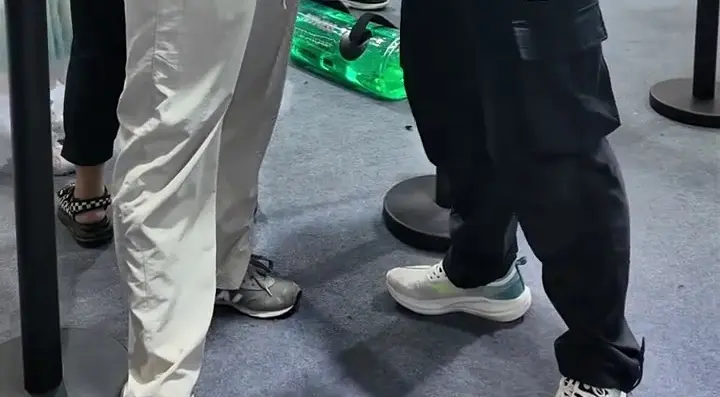 (/02.jpg)
From Aoshuai's highly acclaimed industrial product lines previously used in film production and concerts, to the consumer-grade hip assist truly designed for the general public this time, this video is essentially a microcosm of the development trajectory of domestic exoskeleton manufacturers. The market landscape is forming a clear division: contenders such as Aoshuai, Kengqin, and Haier are restructuring the supply chain, with weight and battery life as two major hurdles. Meanwhile, in the international perspective, prototypes like Dynamics, Gazelle Power, and Shadow demonstrate that down-scaling industrial exoskeleton technology to the civilian end is a pragmatic solution—very hard-tech, very engineering-focused, and also very everyday. Price, entry barriers, and gait synchronization latency appear to be the topics for the next discussion.
[Image: Concept Diagram of Industry Competitors] 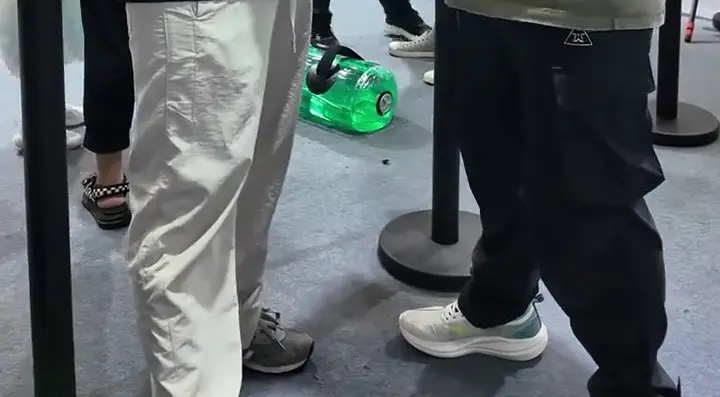 (/03.jpg) [Image: Wall of Aoshuai Industrial-Grade Products]
 (/04.jpg)
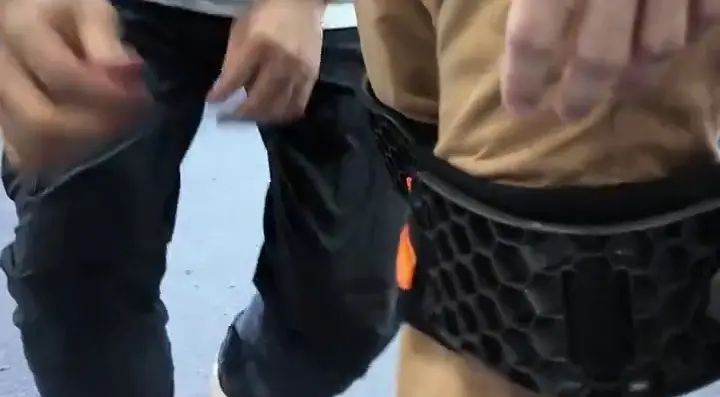 (/05.jpg)
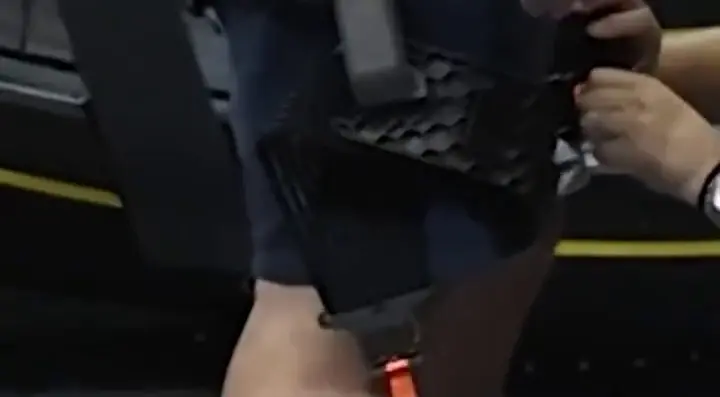 (/06.jpg)
 (/07.jpg)
 (/08.jpg)
 (/09.jpg)
 (/10.jpg)
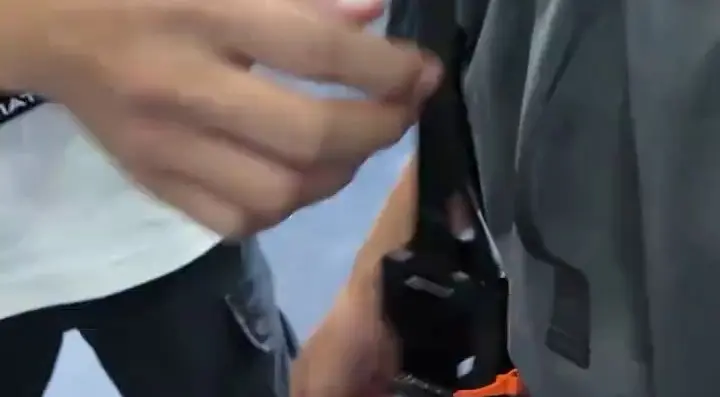 (/11.jpg)
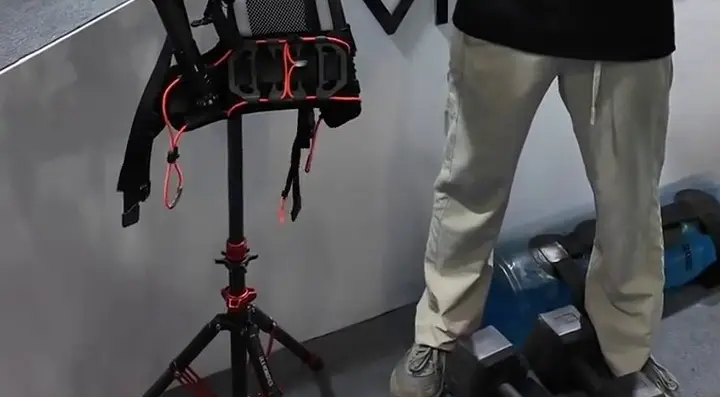 (/12.jpg)
 (/13.jpg)
 (/14.jpg)
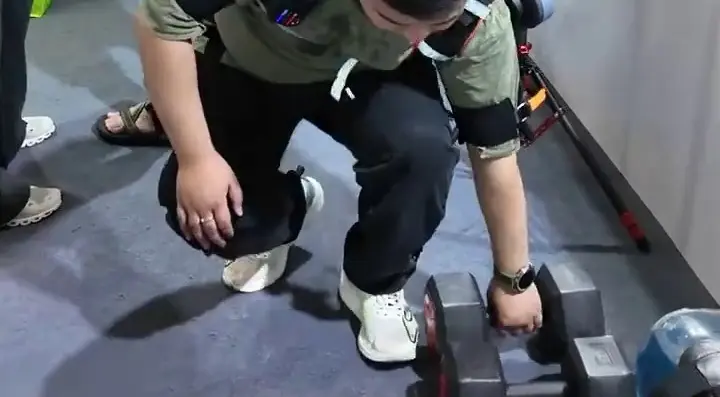 (/15.jpg)
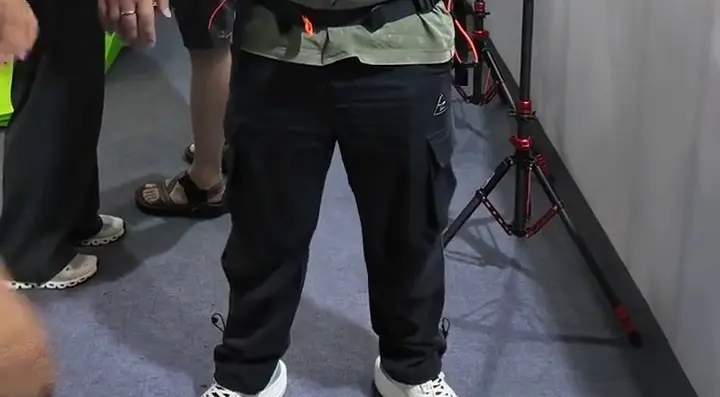 (/16.jpg)
Top Community Comments
"Is there no joint overshoot protection at all? What a '666' — impressive! The human body has already stood up, but the exoskeleton is still blasting torque. And it costs tens of thousands?"
- — Comments like this strike right at the most critical pain points for a consumer-grade exoskeleton: cost and safety, specifically joint torque control. If the gait algorithm cannot recognize the user's critical posture threshold, a sudden "biological force + machine force" stacking the instant the user makes a move can easily cause muscle strains or even joint overload injuries. Once you add redundancy from high-precision sensors and self-balancing mechanisms, the total cost of the hardware usually skyrockets into the tens of thousands of yuan.*
'"
- — Comments like this go straight to the most authentic real-world consumer scenario feedback in the video, highlighting how exoskeleton technology is rapidly transitioning from heavy-industry workshops to mass everyday consumer use. At the same time, we are looking forward to the author taking this device out for a hardcore stress test in a real outdoor hiking scenario, solving real-world problems and addressing actual user pain points.*
One-Sentence Summary
This is not a flashy suit that turns you into Iron Man—it’s a practical, low-key, protection-first "exoskeleton kit for tired workers." If you’re a hiking enthusiast or a logistics professional who regularly handles heavy multi-load tasks, this complete setup deserves a test wear—bring your business card and joint sensors. (Note: All product parameters, scenario data, business contexts, and pain points mentioned come from on-site notes and review observations from the original video.)
About this article: part of Chinese-Made Exoskeleton Review Archive — an independent, regularly updated English archive of reviews of consumer exoskeletons made in China, edited from publicly available video transcripts. Not an official manufacturer page.
For inquiries and purchasing, contact lonlonago@foxmail.com. More in Rehab & Mobility · All articles.