Giving Your Knees a "Cheat Code": Two Days of Hands-On Testing with the YuanYe PowerNi Knee-Power Exoskeleton — Is the 45% Assist Boost a Genuine Game-Changer or Just Hype?
Once you're past 30 — or after years of sedentary desk life combined with less-than-proper exercise — your knees are usually the first parts to "sound the alarm." I used to hike as if nothing could slow me down; now, just climbing five flights of stairs sets my knees creaking and crackling, as if they're staging a collective protest. A couple of days ago, I came across YuanYe Technology's newly launched "knee-power" device. Unlike the purely mechanical, elastic-based assist structures on the market, it comes with its own motor, AI algorithms, and machine learning capabilities — and at first glance, it didn't look like a gimmick at all. So I waited for the launch day, bought one the moment it hit the shelves, and put it to the test on everyone's behalf.
After two days of in-depth use, here's the verdict up front: this thing is essentially a "cheat code" for your knees — the assist is clearly perceptible. Below, I'll take you through unboxing, first wear, real-world testing across multiple scenarios, weight and battery life, and app features, all the way to the ongoing debate between knee-joint and hip-joint exoskeleton design routes — doing my best to make the "should you buy it" question as clear as possible.
Unboxing: Black-and-Gray Matte Body With the Look of "High-End Sports Protective Gear"
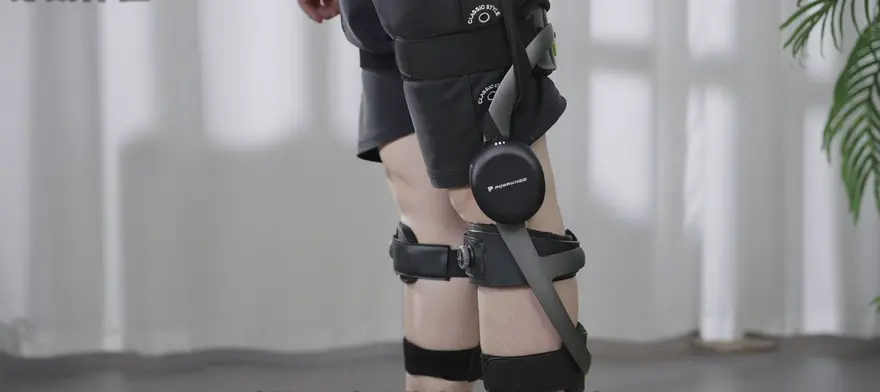
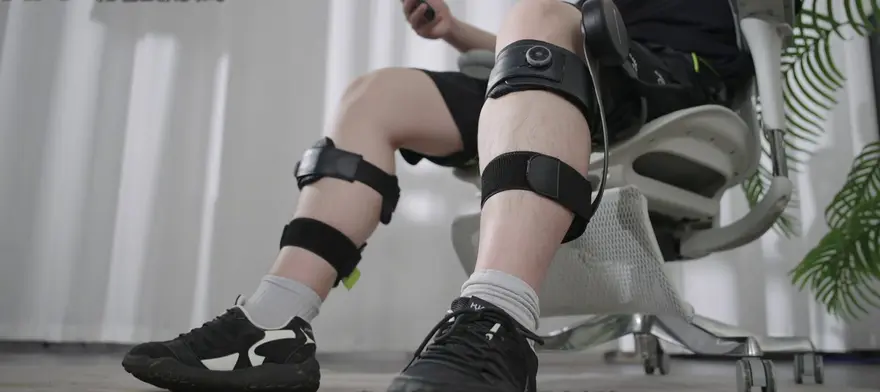
At first glance, the PowerNi main unit looks seriously cool—exactly the kind of thing that feeds a boy's childhood fantasy of "exoskeleton armor." The overall black-and-gray color scheme and matte finish steer well clear of cheap glossy plastic, and the aesthetic feels closer to high-end sports protective gear—or, more precisely, the matte version of the mech you always imagined.


The accessories are refreshingly practical:
As mentioned in the video, in addition to the main unit, the package includes two batteries, a charging dock, a USB-C charging cable, and a user manual.
The dual-battery setup is a detail worth calling out: the biggest fear with a consumer-grade exoskeleton is "running out of power halfway through the day." Shipping with two batteries as standard—whether used as a one-plus-one backup or delivering power in tandem—clearly goes straight after battery life anxiety. For a full day outdoors, you basically have nothing to worry about.
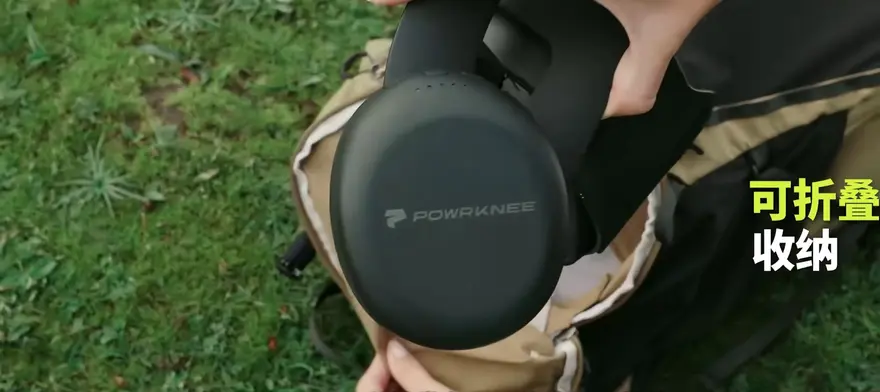

Upper Body & Wearing: Buckle Waist Belt + Padded Liner — Leg-Lift Assist That "Kicks In the Moment You Start to Lift"
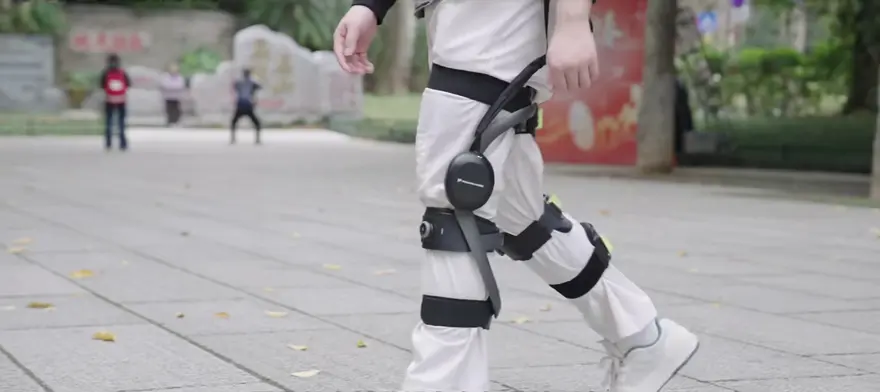
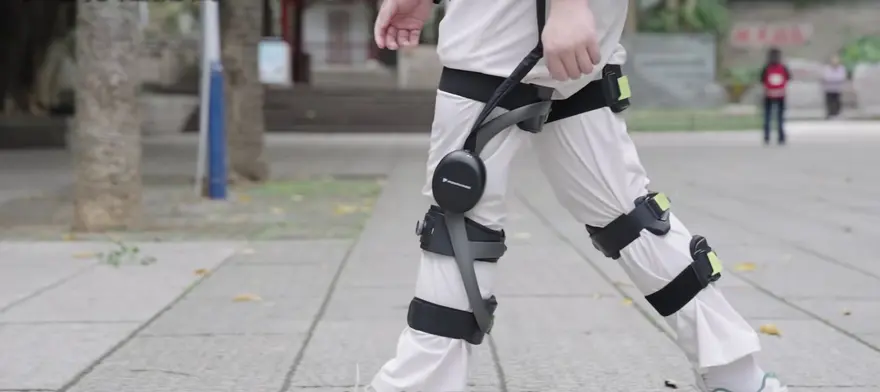
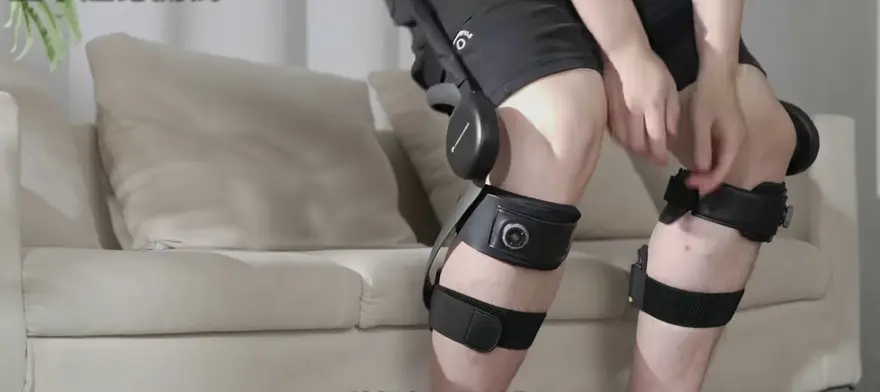
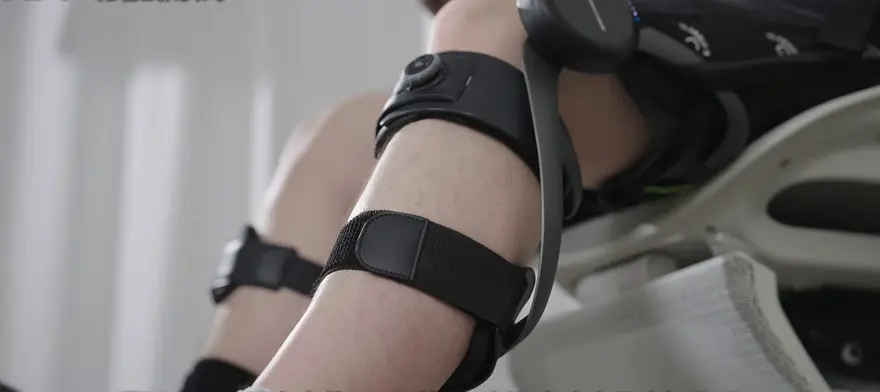
Putting it on is remarkably easy, and the buckle-style waist belt is a definite plus. Once the frame and straps are buckled and tightened one by one, everything feels quite secure. For my build, the overall weight is no issue at all — walking and lifting my legs are completely unaffected, with a high degree of freedom. The padded liner genuinely helps too: none of that stiff, digging-into-your-skin feeling.
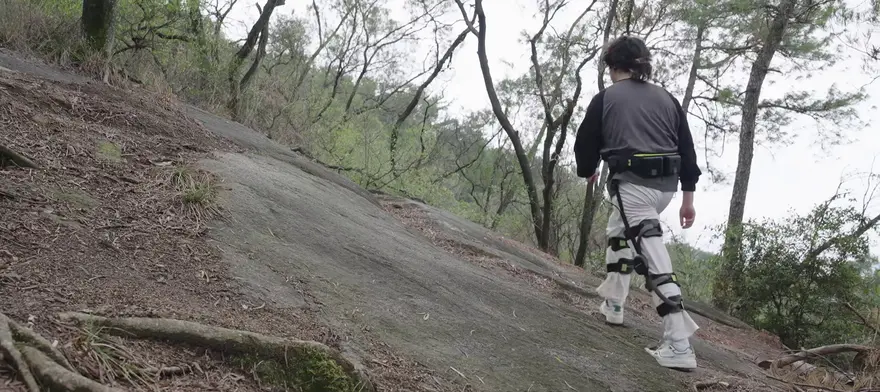

Standing still, you barely notice it. But the moment you squat down, the difference becomes obvious: there's a force at the knee "supporting" you — not yanking you upright, but giving you a boost. As you stand back up, your thighs barely need to exert any effort; you just rise on your own. The leg-lift response surprised me even more:
"It doesn't wait until you can't lift your leg anymore to help — it kicks in the moment you start to lift." (as mentioned in the video)
To sum it up in one piece of industry jargon: it's "incredibly in step with your feet." What this really puts to the test is gait recognition and motion-intent prediction. Working backward from the experience, the knee joint module most likely integrates a motor along with posture/pressure-type sensors: the algorithm detects that you're about to take a step, and the motor applies force ahead of time at exactly the right phase. Fire too early and it "steals the show"; fire too late and it's just an afterthought. Judging from the first day of use, PowerNi's timing is remarkably mature.
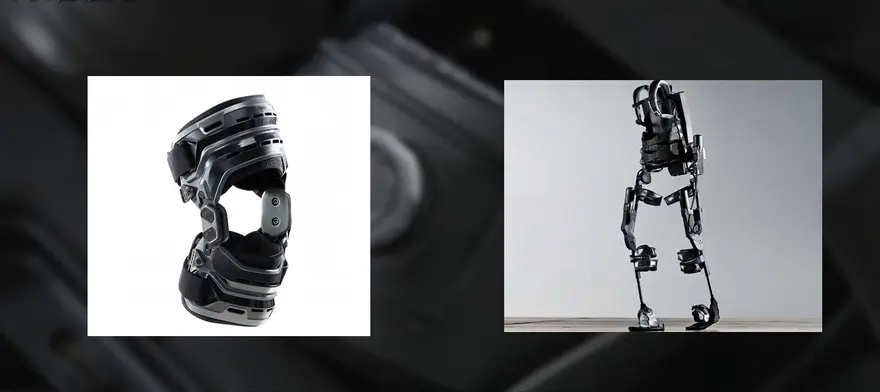
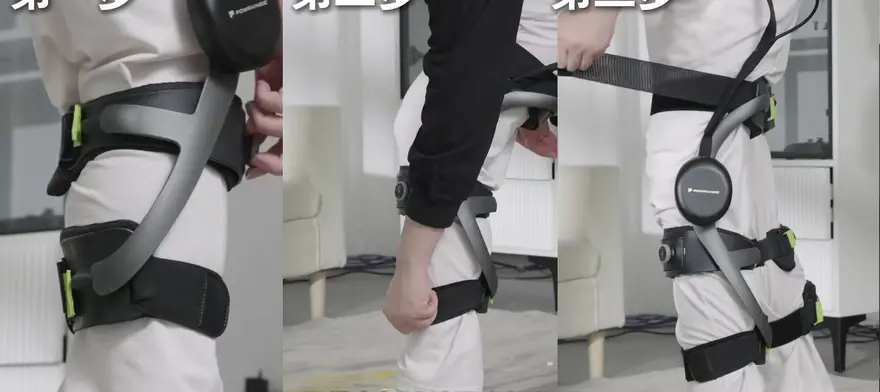
Scenario Test 1: Uphill & Downhill — Going Up Feels Like Someone's Pushing You, Going Down Feels Like Someone's Supporting Your Knees
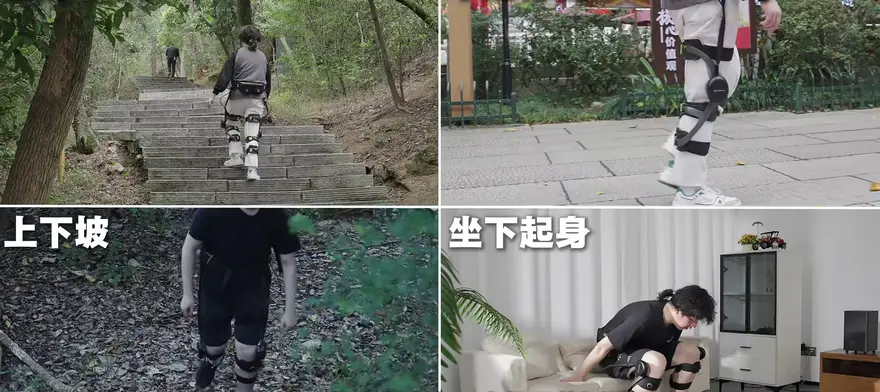
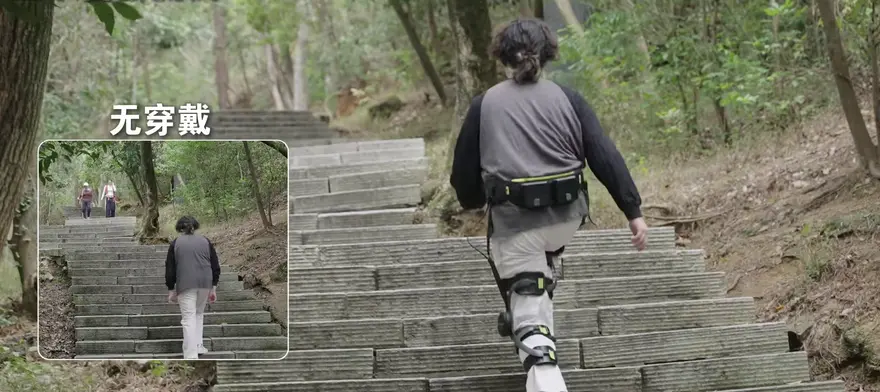
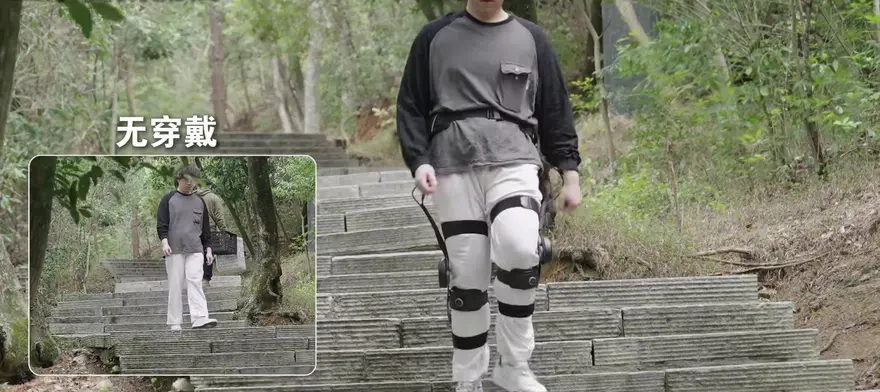
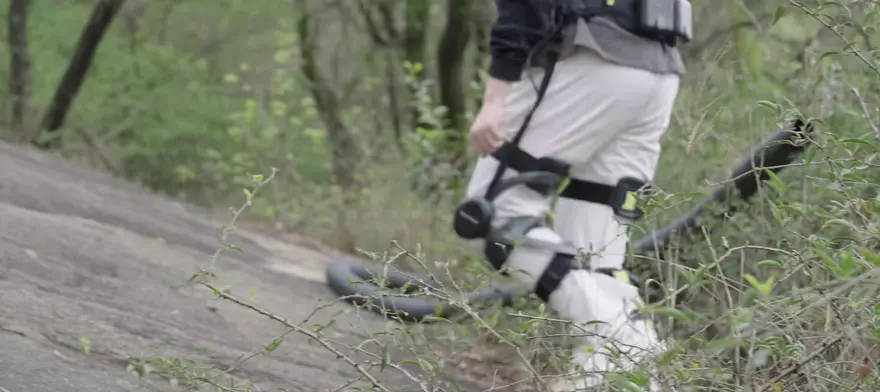
The first scenario we put to the test was uphill and downhill walking, and we deliberately picked a fairly steep slope for a controlled comparison. Without the exoskeleton, every step demanded active effort just to lift your leg — my calves and the fronts of my thighs started burning quickly, and by halfway up my breathing rhythm was already a mess. With it on, walking the exact same slope, the moment you lift your leg the motor practically "carries" you upward. No need to push hard on your own; the pace felt far steadier than before, and I wasn't out of breath at any point.
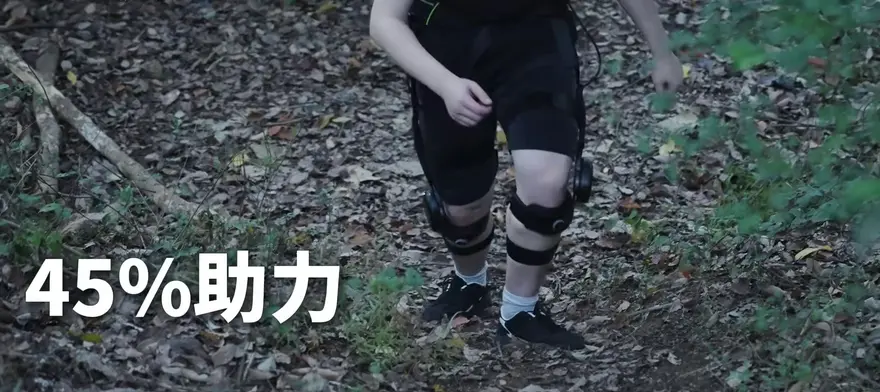
Official data (mentioned in the video): 45% boost in assist power, while saving 40% of your energy.
The subjective experience really matches that description:
"It feels like someone is pushing you forward from behind, but without throwing off your rhythm."
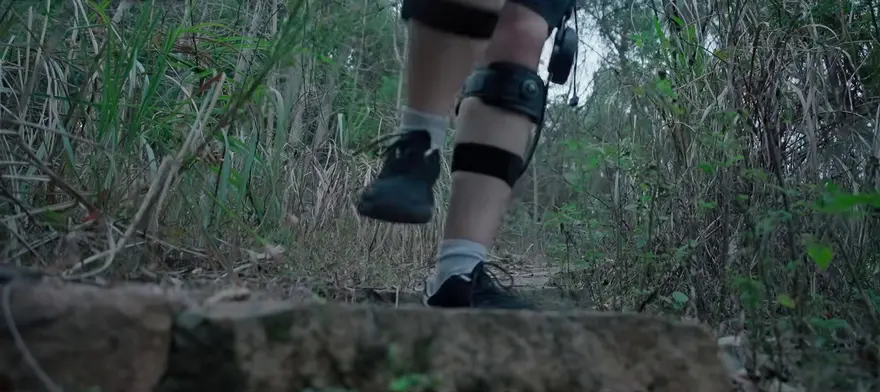
As the saying goes, going up a mountain is easy — coming down is hard. On the descent, your quadriceps perform eccentric contractions to "brake" the entire way, and your knee joints absorb far more impact than on the climb. That's exactly what wrecks the knees of so many veteran hikers. With the PowerNi on, the jolt of each footstrike was noticeably dissipated.
Official data (mentioned in the video): 60% reduction in knee pressure.
My own takeaway: that "my knees are done for" sense of dread was gone — as if a pair of big hands were steadily cradling your knees, and you simply feel more confident putting weight on every step.
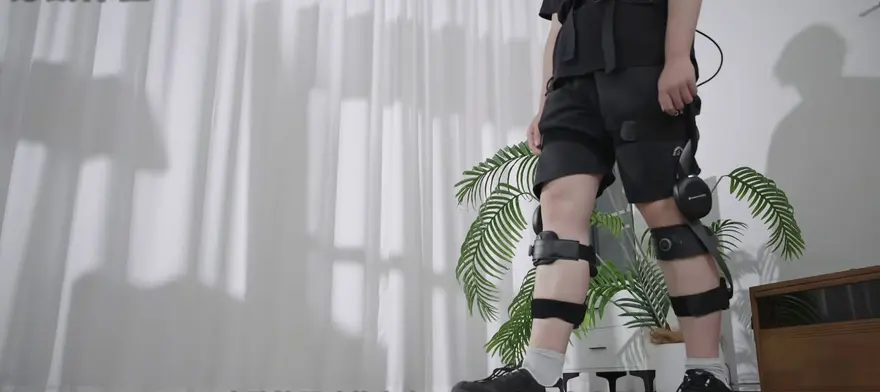
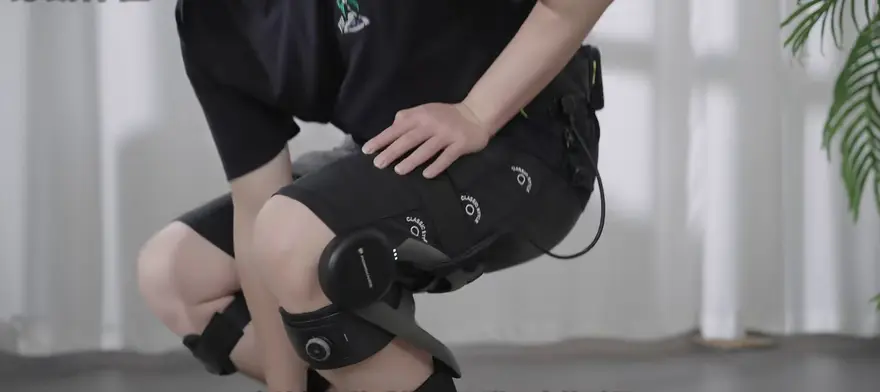
Real-World Test ②: Stairs and Flat Ground — The Scenarios I Feared Most Turned Out to Be the Most Pleasant Surprise
Going up and down stairs is probably the scenario people rely on most in daily life. Climbing stairs feels similar to walking uphill, but because each step requires lifting your leg higher, the assist actually feels more pronounced. Going down is when your knees take the most stress, especially on a long flight of descending steps — with the exoskeleton on, every footfall is cushioned, so your knees never get "slammed," and you can keep a smooth rhythm without deliberately slowing down. In one sentence: going up takes less effort, going down feels stable, and the pressure on your knees all but disappears.


Walking on flat ground was the scenario I was most worried would go wrong. Many assistive devices prove useful on complex terrain, yet end up interfering with normal walking on flat ground, making it feel like you're being dragged along by a machine. In practice, there was zero sensation of being pulled along — every step felt completely natural. When walking briskly, you can feel a subtle layer of assist added to each stride —
"It doesn't lift your leg for you — it makes lifting your leg easier."
Wear it long enough and you'll notice it never steals the show; it's quietly shouldering your fatigue the whole time. It also helps a great deal with sitting down and standing up: getting up feels smoother and more stable, your legs don't have to push as hard, and your knees feel more relaxed.
For a consumer-grade exoskeleton, "naturalness on flat ground" is the true dividing line — anyone can deliver a noticeable difference on complex terrain, but staying out of the way during everyday walking is what tests the precision of gait recognition and the restraint of the algorithm. On this front, PowerNi passes.

Weight and Battery Life: 2 kg on the Body, "Imperceptible" — 5-Hour Runtime + Dual-Battery Backup
No matter how powerful the features are, you can't get around the two most practical questions: weight and battery life. After all, this is something you strap onto your legs and take everywhere—if it's heavy and runs out of juice, even the most impressive features go to waste.
Let's start with weight:
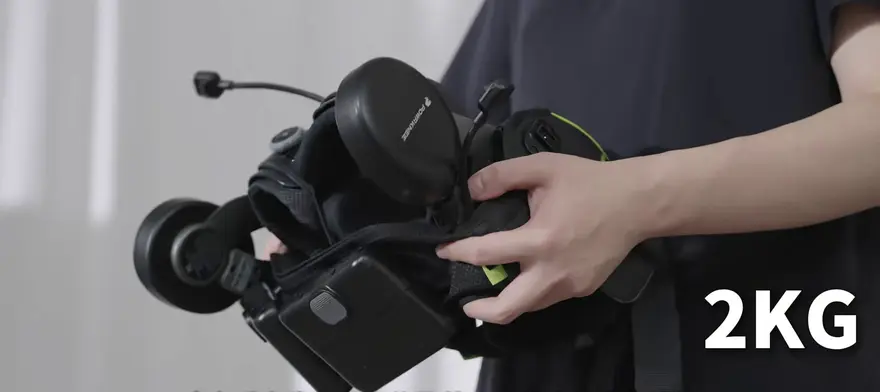
Official specs (mentioned in the video): total device weight of approximately 2 kg.
Held in the hand, it does have some heft—after all, it's a device with motors and a battery. But once you put it on and it's running, you can barely feel the weight: for one, the 2 kg is distributed across both legs, so the burden on each side is limited; for another, the motor output itself "offsets" part of the perceived load.
As for battery life:
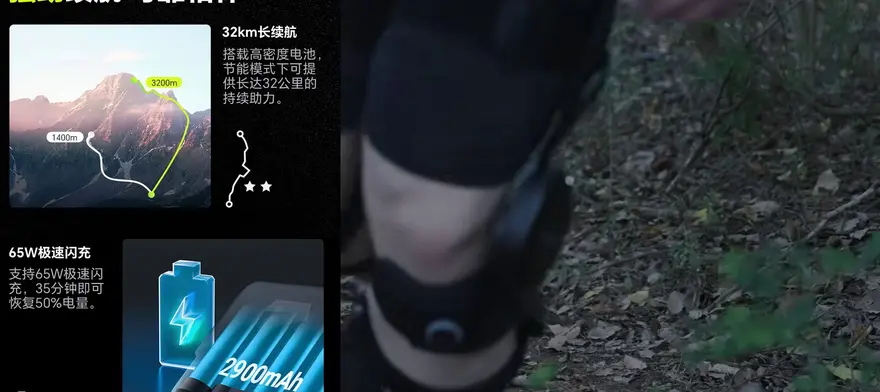
Official specs (mentioned in the video): endurance of over 5 hours, with support for 65W fast charging.
After running through all the test items, more than half the battery was still left—more than enough for everyday use, and no cause for concern even under heavy use. On top of that, two batteries come standard and can be swapped in rotation, so outdoor trips of a full day or more are basically covered.

App and Massage: Beyond Assist Levels, It Also Handles "Post-Workout Recovery"
Through the companion app, you can adjust assist levels, switch between assist modes, view workout data summaries, and more — the overall feature set is impressively rich.
Worth highlighting: the massage function is also tucked away inside the app. Honestly, I initially assumed it was a gimmick, but after trying it out, I found it's nothing like aggressive pounding — instead, it delivers a gentle vibration that feels like someone helping you loosen up the muscles in your thighs and calves, providing deep relief from muscle fatigue.
"When it comes to post-workout recovery, it's genuinely a plus." (mentioned in the video)
The thinking here is actually quite clever: most exoskeletons only solve the "during workout" problem, while PowerNi brings "post-workout" muscle recovery into the product loop as well. For fitness enthusiasts, being able to train hard and recover fast is what makes for a truly complete experience.

Knee vs. Hip Exoskeletons: Two Different Routes — Don't Buy the Wrong One
Finally, let's answer a question that's bound to come up in the comments: what's the difference between the hip exoskeletons you see on the market and this kind of knee exoskeleton?
Simply put, a hip exoskeleton saves you the effort of "swinging your leg forward" when walking or running — it assists hip flexion and extension, making it a great fit for endurance-focused scenarios like hiking, trekking, and loaded marching. Consumer-grade products built for outdoor hiking, such as those from Hypershell and Dnsys, all follow this route. A knee exoskeleton like PowerNi, on the other hand, is all about precisely assisting muscle output and cushioning the knee — especially when descending stairs or going downhill, where you can really feel the effect. Knee protection is its key differentiator compared with hip exoskeletons.
While we're at it, let's clear up a commonly confused concept: rehabilitation exoskeletons (such as the products companies like Chengtian Technology build for medical institutions) are mostly medical-grade devices designed for rehabilitation training — a completely different species from consumer-grade assistive exoskeletons, so don't let the marketing talk steer you wrong. Meanwhile, manufacturers like ULS Robotics focus on lumbar/back assist for industrial settings, and outdoor brands like Toread are also testing the waters with hiking assist gear. The consumer-grade exoskeleton market is stratifying fast — figure out your use case before you hit that buy button.

Verdict After Two Days of Use: Not an IQ Tax, But Think It Through Before Buying
All in all, this PowerNi knee-power exoskeleton really isn't an IQ tax:
- Easy to put on — the waist-belt buckle and padded lining make for a friendly wearing experience;
- The effort savings are strikingly noticeable — climbing hills or stairs feels like "someone is pushing you along";
- The knee pressure relief genuinely works — the impact from descending slopes and stairs is noticeably absorbed;
- Walking feels completely natural in normal mode, without getting in the way of daily life;
- Both the industrial design and the battery life are solid — dual batteries + 65W fast charging mean no range anxiety.
As the video puts it: "You could call it a seriously effective knee power-up."
That said, time to pour a little cold water: figures like 45%, 40%, and 60% are all official numbers — how much you actually feel will vary with your body weight, gait, and usage intensity; the 2 kg overall weight doesn't disappear on ultra-long-distance hikes; it protects your knees, but hip and lower-back fatigue are beyond its reach; and as for the price — judging from the feedback in the comments, that's currently the biggest point of contention.
If you're a sports enthusiast whose knees are already protesting, or part of the "knee early-warning" crowd — daily stair-climbing commuters and sedentary office workers — I'd say it's absolutely worth picking one up to try.


Top Community Comments
The following comments are hand-picked from this episode's comment section, and a few of the most-liked ones happen to capture the three most typical voices in the consumer-grade exoskeleton conversation.
@LanxiangCollegePitDiggingDeptDoctor (9 likes): This doesn't actually take any load off the knees. Only something that extends all the way down to the sole of the foot truly protects the knees.
This comment represents a typical challenge to how knee exoskeletons claim to relieve pressure: real knee protection, the argument goes, should start with plantar cushioning and structural load-bearing. It actually touches on a genuine debate over technical routes — the logic of a knee assist exoskeleton is to have the motor shoulder part of the joint torque and reduce impact loads on the muscles and joints, which is a fundamentally different approach from insole shock absorption or plantar cushioning. In the hands-on testing, the impact felt on landing during downhill walking was indeed noticeably absorbed, but the vendor really does need to be more transparent about the exact test methodology behind the "60% reduction in knee pressure" claim.
@KareHM (9 likes): Way too expensive. If it were a full-body exoskeleton, this price might be worth considering. For knees only, 3k is already the absolute ceiling. Hope they can bring the cost down.
Price is the threshold no consumer-grade exoskeleton can avoid. This comment reflects a very typical case of consumer mental accounting: paying a premium for a "full-body exoskeleton" is acceptable, but for knee assist alone, the psychological price ceiling sits around the 3,000 RMB mark. The video never disclosed the actual price, but judging from the context of the comment, the real pricing sits above that psychological line. When the costs of motors, sensors, and batteries finally come down will determine whether this category can graduate from a niche early-adopter novelty to mainstream gear.
@NightCityPsychDeptDirectorJohnny (4 likes): Any actual humans here?
It reads like a meme, but it stings. When a review wraps up with "this isn't an IQ tax" and attaches a purchase link, viewers instinctively question its objectivity — this comment is a microcosm of that trust anxiety. For creators, the only way to defuse "sponsored content" suspicions is to disclose testing methods, present comparative data, and clearly separate official specs from subjective impressions. For vendors, the temperature of the comment section is the most honest market research you can get.
One-Sentence Summary
The PowerNi knee-power exoskeleton is one of the rare consumer-grade exoskeletons on the market that takes the "knee-joint approach"—it doesn't aim to make you walk faster, but instead precisely offloads pressure from your knees and gives your muscles a helping hand; if you're a fitness enthusiast whose knees are starting to protest, or a desk worker who climbs stairs on the daily commute, it's worth picking up—but if you're expecting full-body assist or unbeatable value for money, it's best to wait and see how things play out.
About this article: part of Chinese-Made Exoskeleton Review Archive — an independent, regularly updated English archive of reviews of consumer exoskeletons made in China, edited from publicly available video transcripts. Not an official manufacturer page.
For inquiries and purchasing, contact lonlonago@foxmail.com. More in Reviews · All articles.