Two Young People Who “Don’t Want to Be Called Science Kids” Built a Lower-Limb Exoskeleton with an Inverted Knee Joint: A Human-Machine Integration Experiment with Consumer-Grade Exoskeletons
Let’s Talk About These Two First: Rejecting the "Science Boy" Label
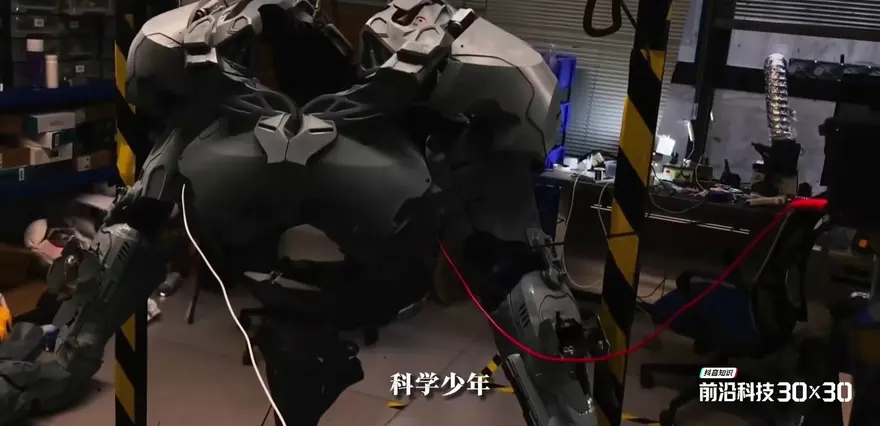
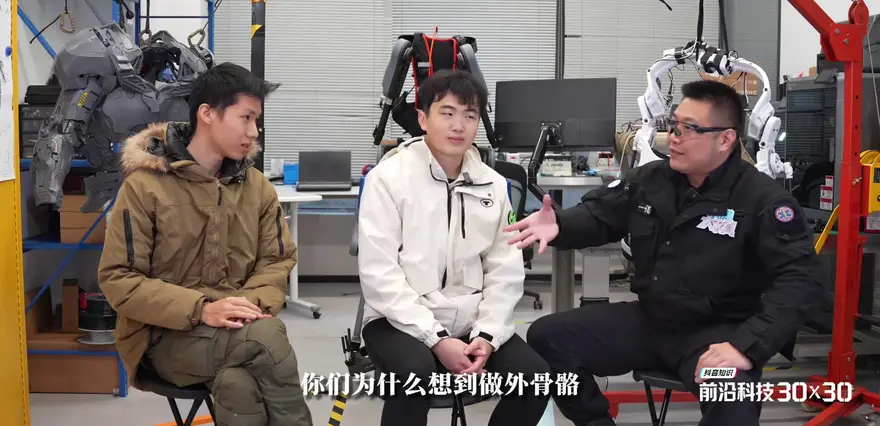
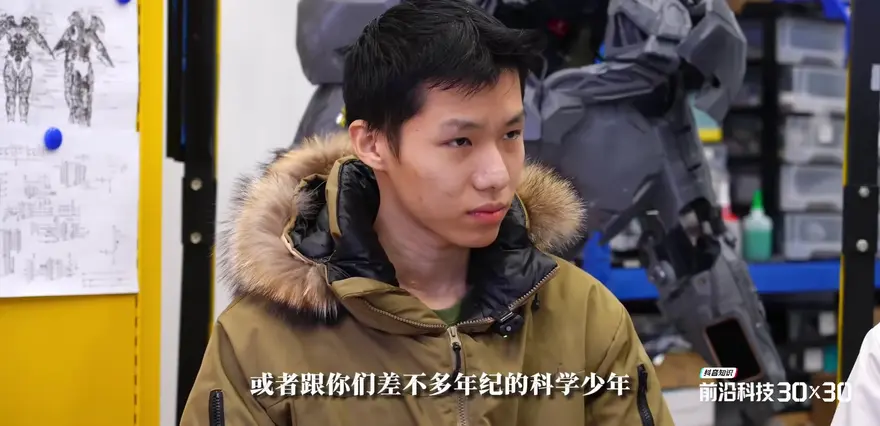
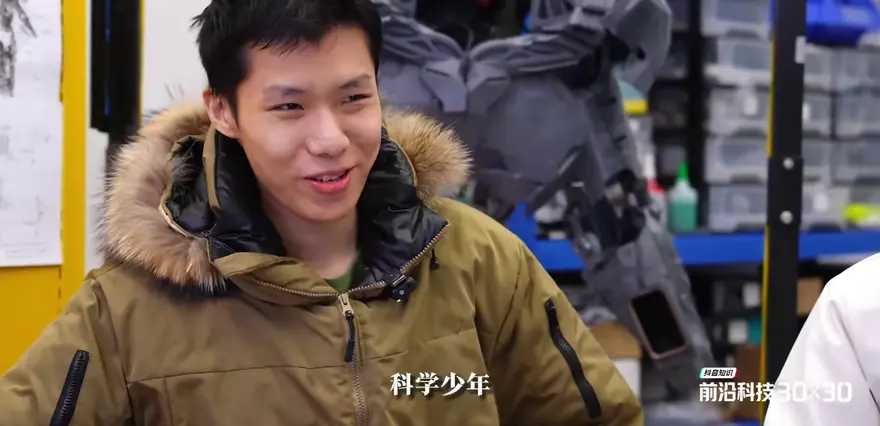
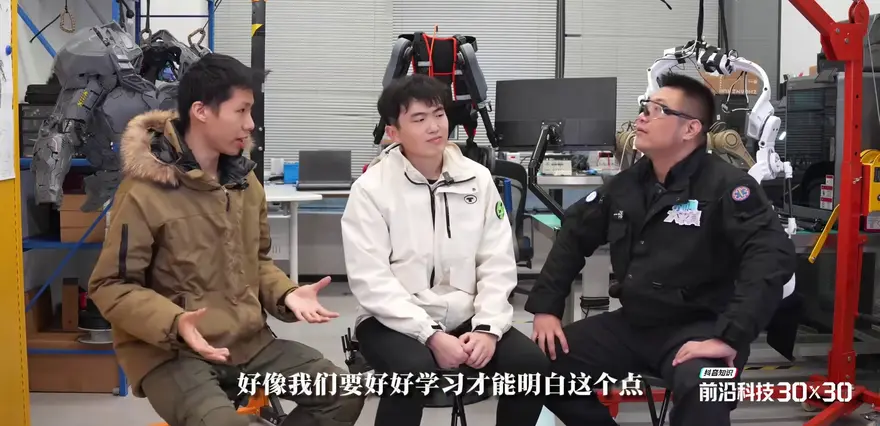
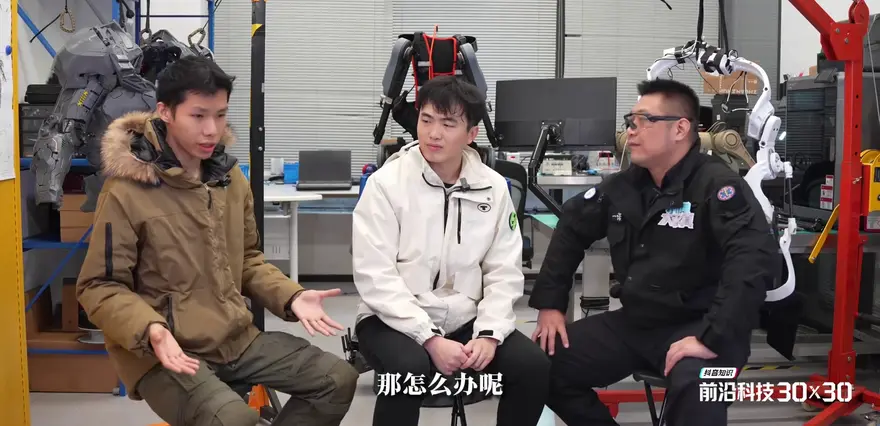
There is a minor incident at the beginning of the video: when the host calls them "science boys," the two wave their hands almost reflexively—"We don’t really like being called that." To these young people, terms like "science" and "studying" have somehow become taboo; it seems that one must sit formally and study with extreme diligence to be worthy of understanding a technical point.
"It feels like we have to study really hard to understand this point, but actually that's not the case; we can learn it naturally while playing."
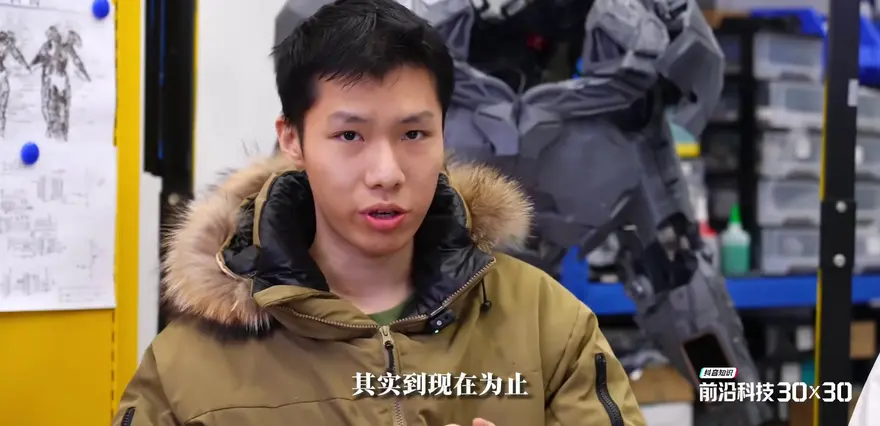
This aversion to "labeling" is actually quite interesting. They do not consider themselves packaged teenage geniuses, nor do they want to be treated like characters in a model play; instead, they insist, "We are just ordinary teenagers." What truly drives them is that interest hooks the person first, and knowledge simply "grows" out of it. The rest of the video can be seen as a complete demonstration of this logic: from discovering a need, to building things hands-on, and finally turning their creations into entrepreneurial projects—throughout the entire process, there is no "learning for the sake of learning," only "I have to learn in order to make this thing in my hands."

From "Discovery" to "Getting Hands-On": Building a 0-to-1 Toy
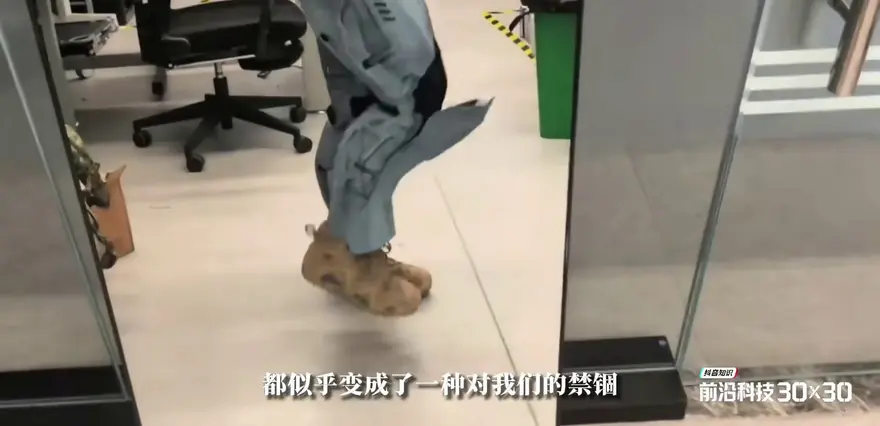
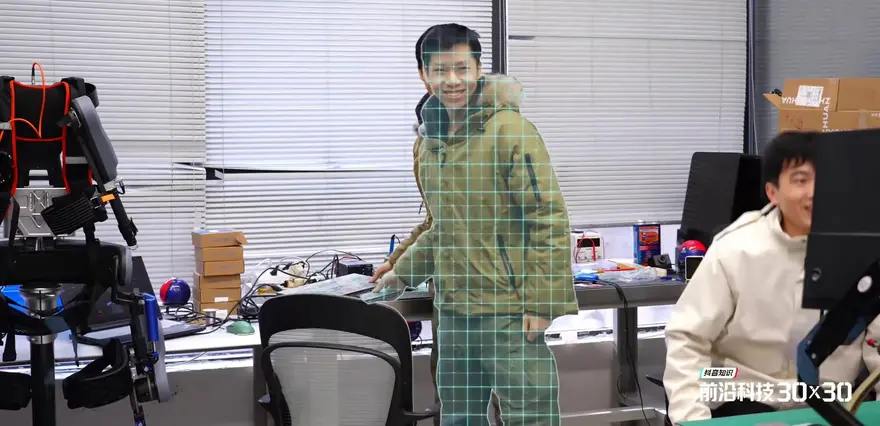
Their starting point for making an exoskeleton was refreshingly modest: after reaching a certain level of learning, they realized that things in sci-fi could actually be built for real. So they set the tone for the project—
"It's positioned as a toy, but this toy is a 0-to-1 toy."
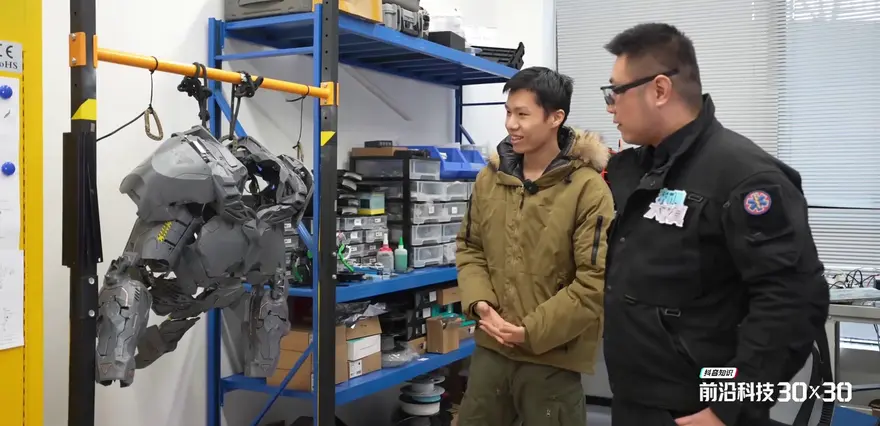
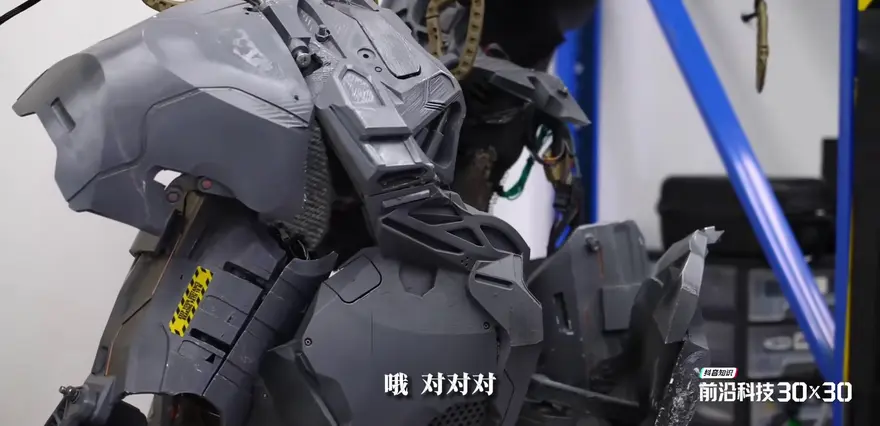
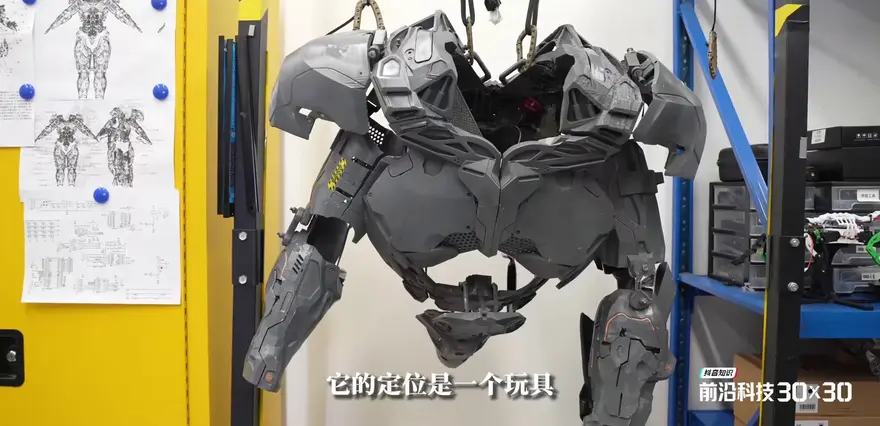
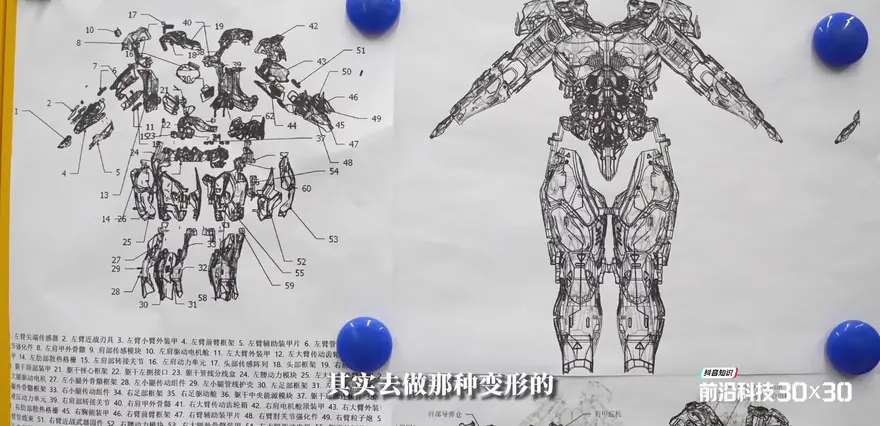
Pay attention to the phrase "0-to-1". The market does have plenty of transformable mecha-style products, but many are primarily about appearance parts and preset actions for demonstration. What they're doing is completely different: making a full-body mecha that can be worn comfortably, opens and closes automatically for easy putting on and taking off, and runs its drive, sensing, and control systems smoothly. This demands cross-disciplinary knowledge in exoskeleton structure and human ergonomics—where to place the motor, how to connect the linkages, and how to design the wearing path—every step is an engineering problem.
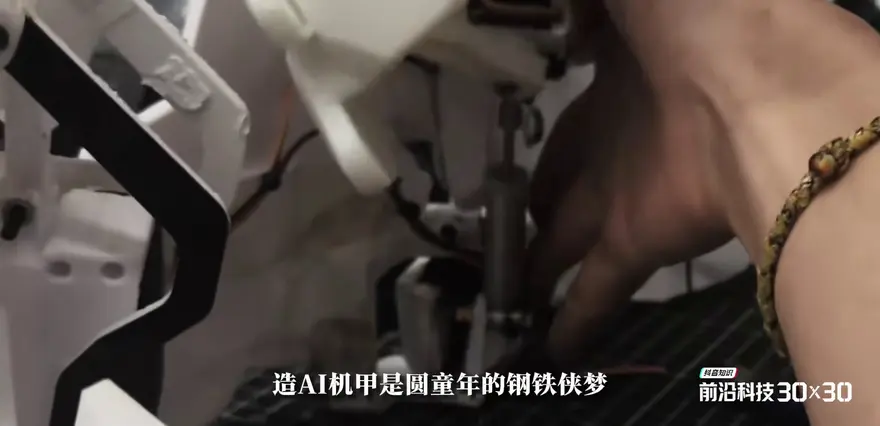
"Building an AI mecha fulfills a childhood Iron Man dream, but this exoskeleton robot is the real challenge in human–machine integration technology."
In other words, "Iron Man" is just the narrative shell; the tough nut to crack is the human–machine integration issue of "wearing comfort + full-body degrees of freedom + stable operation". And that's exactly this year's hottest topic in the consumer-grade exoskeleton industry: it's time to wear an exoskeleton the way you wear a garment.
Below is the fully translated section, professionally localized for a global wearable-robotics audience.
The Most Controversial Decision: Moving the Joint Motor Away from the Knee Joint
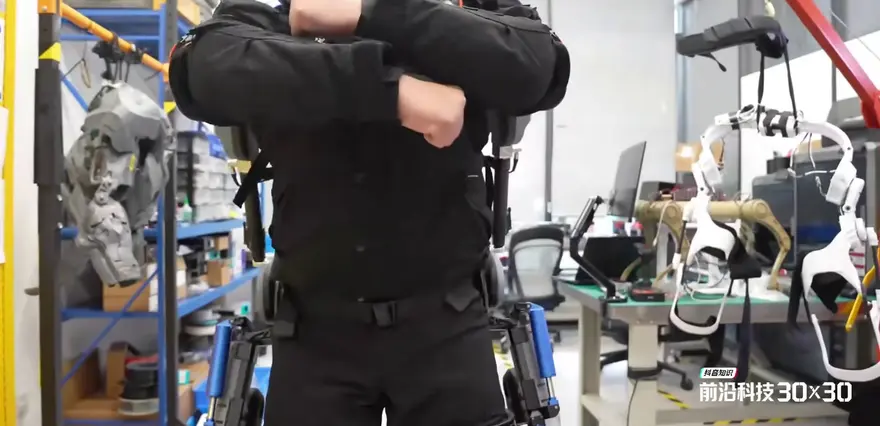
The biggest structural difference between this exoskeleton and conventional exoskeletons is hidden behind the knee. The traditional approach places the joint motor directly at the knee joint. However, this forces the design of a smaller, lighter motor—and that, in turn, inherently limits the achievable joint torque. It is an engineering trap locked in by the prior assumption that "joints must be compact."
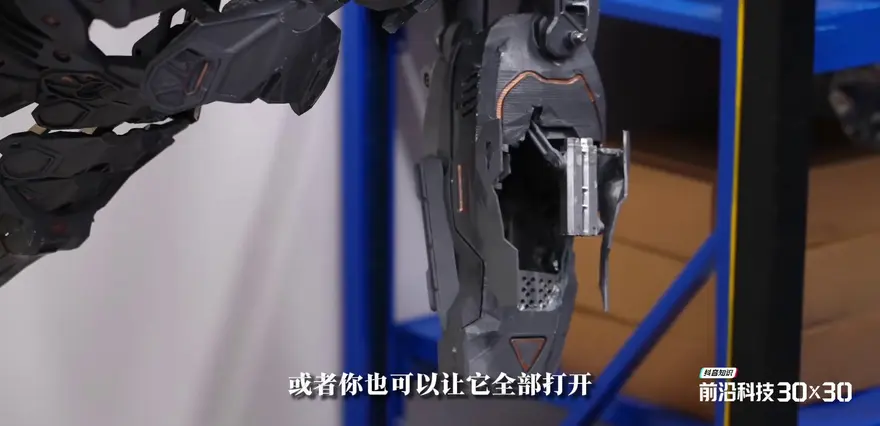
The makers chose the opposite path: they relocated the joint motor upward—placing it above the knee joint—and employed a parallel four-bar linkage to drive the knee joint.
"Since placing the joint motor directly at the knee joint requires us to make the motor small and lightweight, we simply took the opposite approach. We relocated the joint motor to this position and used a parallel four-bar linkage to drive my knee joint."
The benefits of this structural change are unequivocal (as stated in the video):
"This way, the inertia increases, allowing us to make the motor for the knee joint much larger, significantly boosting both its torque and speed."
Torque and speed are arguably the two most critical metrics for any consumer-grade lower-limb exoskeleton. Whether for a hiking / trekking assist device or a rehabilitation exoskeleton, performance ultimately comes down to whether the joint torque output is sufficient.
Conclusion
By abandoning the standard compact-knee design—and instead using a parallel four-bar linkage to mount the joint motor above the knee—Hypershell engineers achieved the power gains essential for a consumer-grade lower-limb exoskeleton.
Top Community Comments
"This is a brilliant mechanical workaround to the weight-torque paradox we see in so many wearable robotics today." — Robotics Enthusiast
"Very curious to see how the parallel linkage performs on steep terrain. The extra moving parts could introduce inertial noise." — Tech Reviewer
True Premium Lies in Freedom of Movement: Balancing Natural Wearing and Freedom of Action
A chain reaction of moving the motor upwards is that the individual joint weight increases, but the overall mobility of the system is actually improved. This is because the propulsion structure transitioned from having the motor directly attached to the joint to a connecting rod force transmission. As a result, space around the knee joint is cleared up, vastly improving the overall freedom of movement.
"At the same time, my freedom of movement becomes very, very high, and it won't interfere with any of my various motions.
"Not interfering with various motions" is an absolute must-have for wearable devices. The biggest divergence between consumer-grade exoskeletons and hospital-grade products lies in this: it must be able to follow your sudden turns, deep squats, and large strides, rather than locking you into a preset gait (gait).
This trade-off between joint torque and freedom of movement is a pitfall that essentially all teams making consumer-grade products must navigate. If the force is too high, it risks being bulky and clunky with an overweight structure; if it's too low, the assistive exoskeleton might be undeserving of its name. The approach this machine offers is to use structural design to dismantle the torque cage, rather than milking the motor.
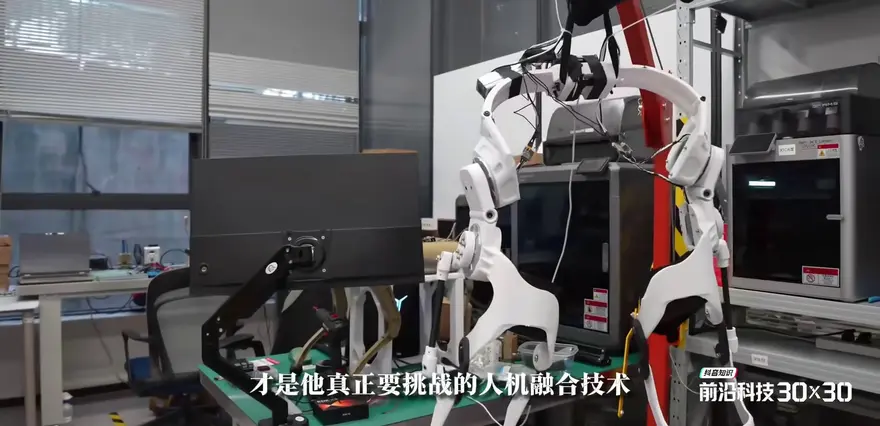
Standing on the Shoulders of UVS Robotics: Research Platform and Developer Interfaces
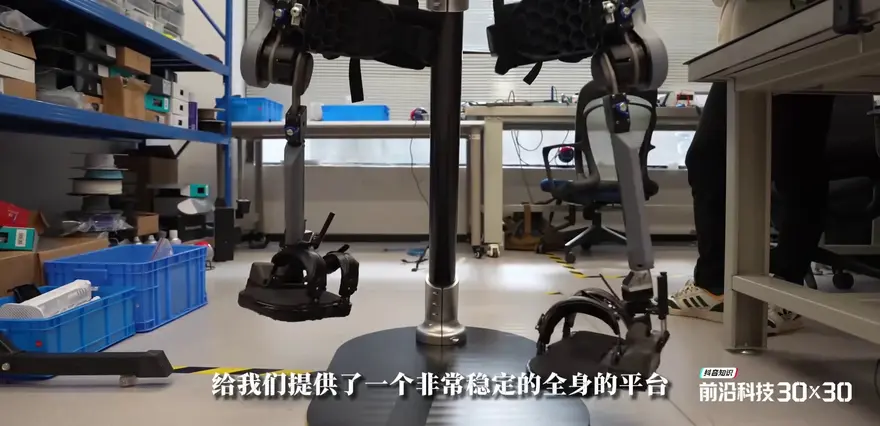
This full system wasn't built completely from scratch. In the video, they introduced a research platform unit from UVS Robotics as the development base:
"This is a research exoskeleton from UVS Robotics that gives us a very, very stable full-body platform with a complete set of sensor-equipped hardware."
A platform-based approach is not uncommon in the industry (UVS is precisely playing the game of "exoskeleton hardware + open data"). What truly excites developers, though, is the software layer:
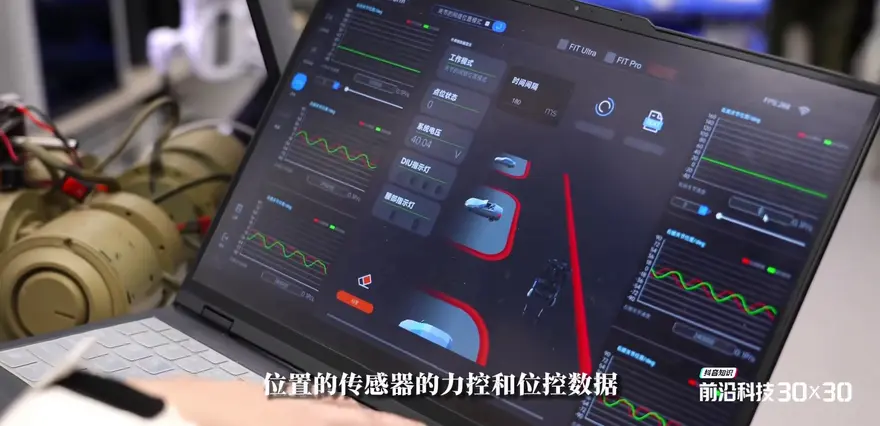
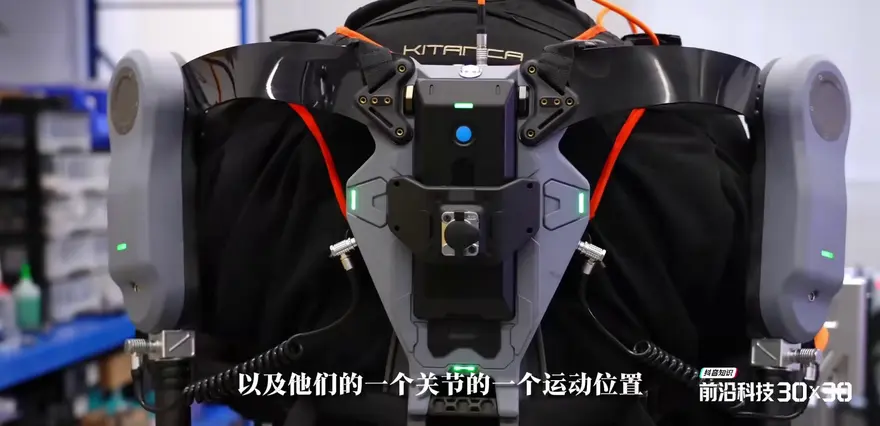
"It has compatible software that provides us with force control and position control data from sensors at each joint, delivered as curve-packet-style data. We can capture different human gaits along with joint motion positions, which helps us develop the exoskeleton's software and algorithms."
Translated into industry jargon: this is a development platform featuring IMU and other sensors, and offering open dual-channel data for force and position control. Gait-data collection is the fuel for algorithm iteration—whoever accumulates enough "human-in-exoskeleton walking" data first will secure a ticket to the next generation of assistive exoskeleton algorithms. One-Sentence Summary of this research platform's role: It hardens the engineering foundation, allowing two student teams to focus solely on algorithms and human-machine interaction.
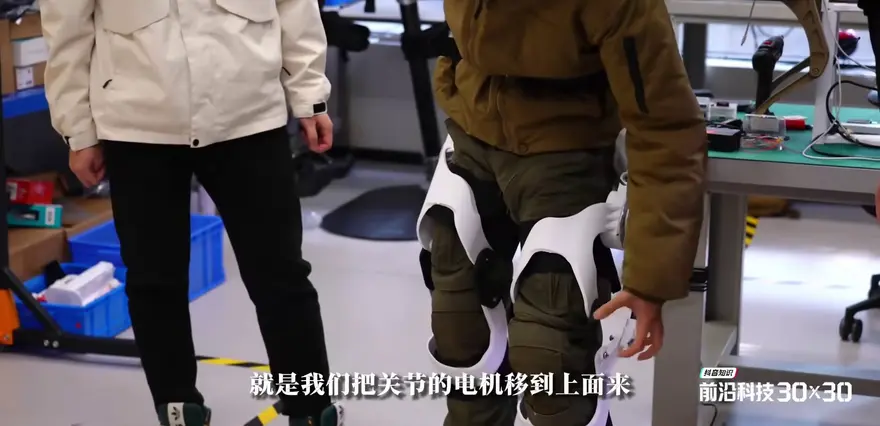
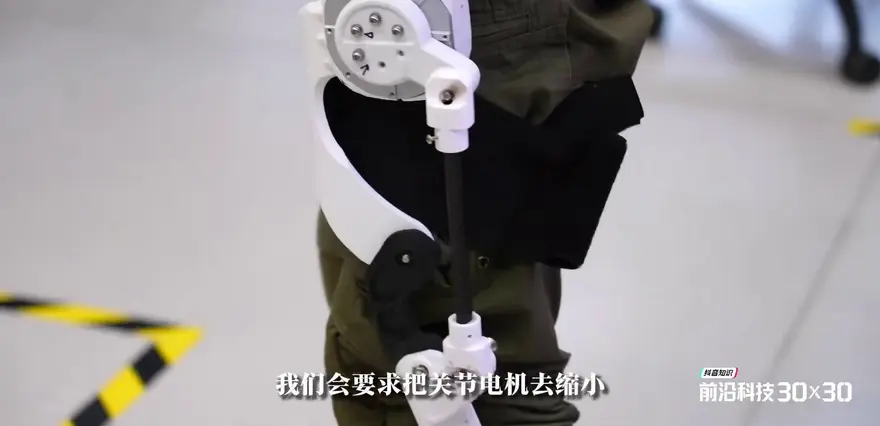
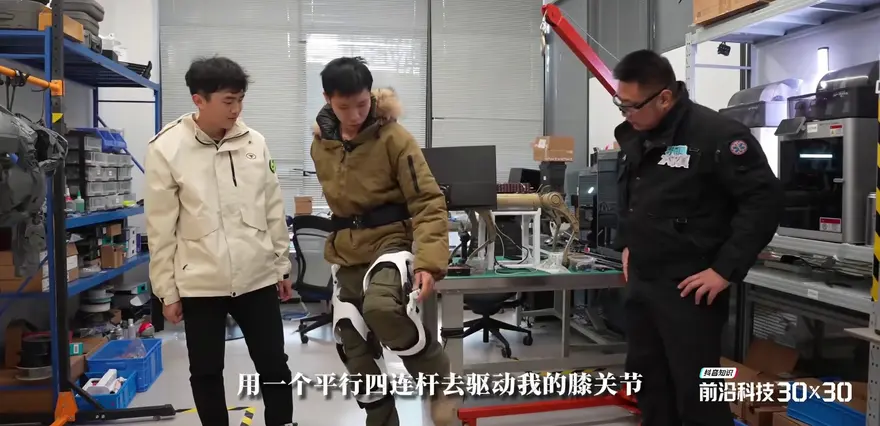
The "Research Unit" Itself: Whole-Body Self-Balancing, Fall Protection, and a Full Mecha Suit
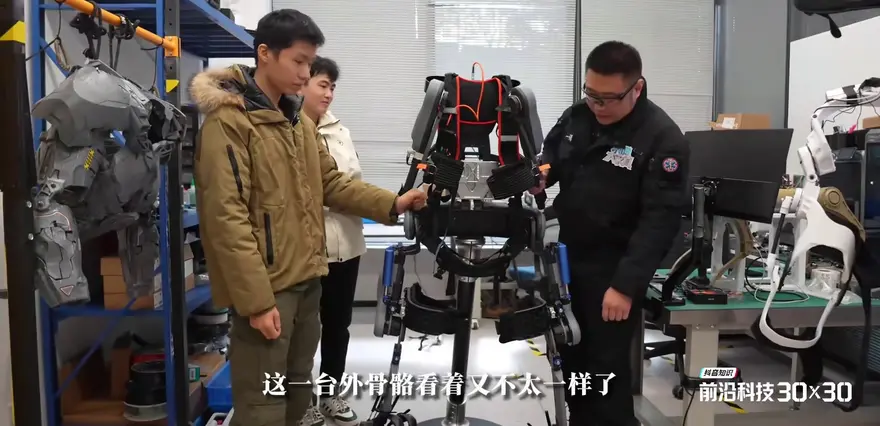
Let's not forget, the unit featured and explained in the video is a fully operational system worn directly on the body, not merely a scaled-down model modified with small motors:
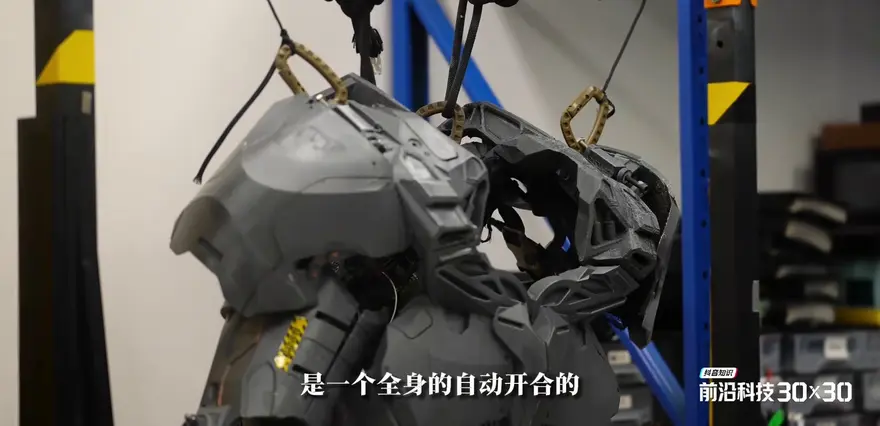
"It performs a full-body scan-like check; my pinch opens everything up, and then it opens up the joint structures on the body, making it easy for you to slide in... once unlocked, it automatically closes and locks completely."
This passage describes a highly mature donning process: power-on self-test → unlocking and expanding the joint structures → human entry → closing and locking. The significance of an automatic full-body opening/closing structure lies in simplifying the traditionally cumbersome process of "putting on an exoskeleton"—which usually requires two-person assistance, quick-release buckles, and adjustable straps—into a single motion as easy as "putting on a coat." This is critical for a positive consumer-grade experience. The unit serves as a whole-body self-balancing platform and features fall protection capabilities—indicating that it is not merely a lab prototype supported by handlers, but a "ready-to-wear" machine on-site that allows users to try it out independently.
As for its appearance, the answer is equally clear: this is a "wearable traditional exoskeleton (i.e., exoskeleton robot)," sporting a cold, imposing mecha look. Compared to the "practical tool" aesthetic adopted by brands like AoShark (Aoshark), Kengqin (Kenqing), Hypershell, Dnsys, and Yuanye (Yuanye) for their industrial and consumer-grade products, this machine falls into the "mecha" category—a class that attracts praise but struggles with mass production. It delivers maximum emotional value, though its engineering maturity, cost control, and productization opportunities remain in an exploratory phase.

AI Tooling and Tech Democratization: The Era's Conditions for Creation from Passion
Midway through the video, when asked what advice they could offer to peers and parents, their answer was quite contrarian:
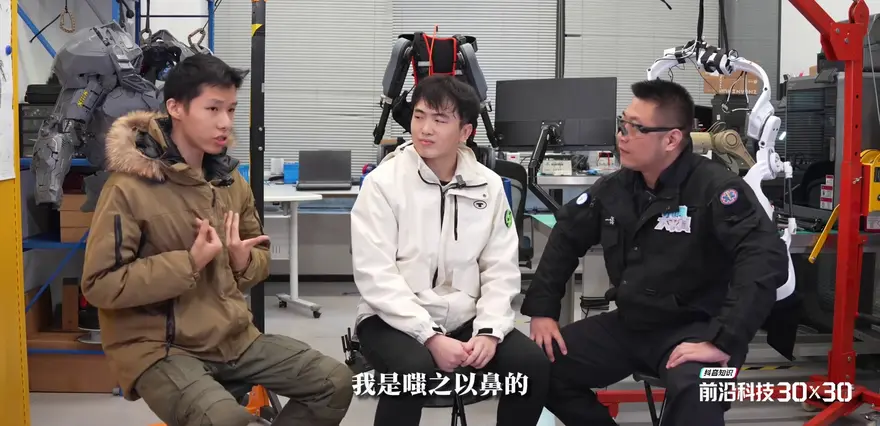
"Actually, we are just ordinary teenagers. So-called 'science'... even now, words like 'science' or 'academic study' seem to have become taboos for us."
Their methodology wasn't about grinding through textbooks, but prioritizing interest first, and naturally developing a thirst for knowledge through the process of creation:
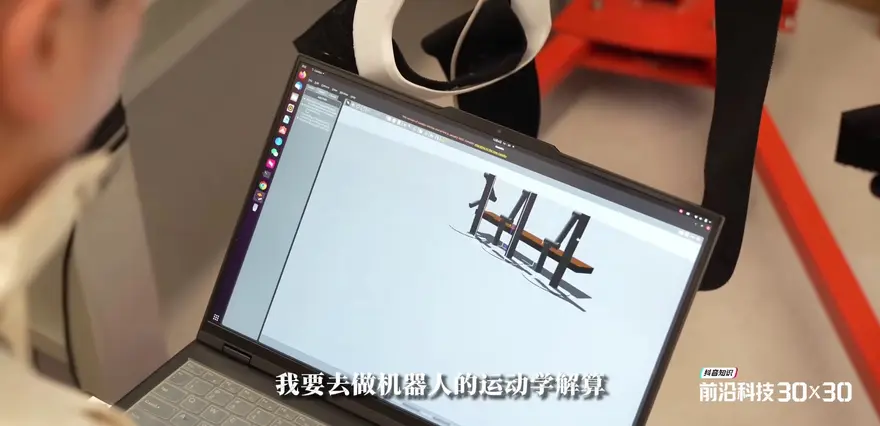
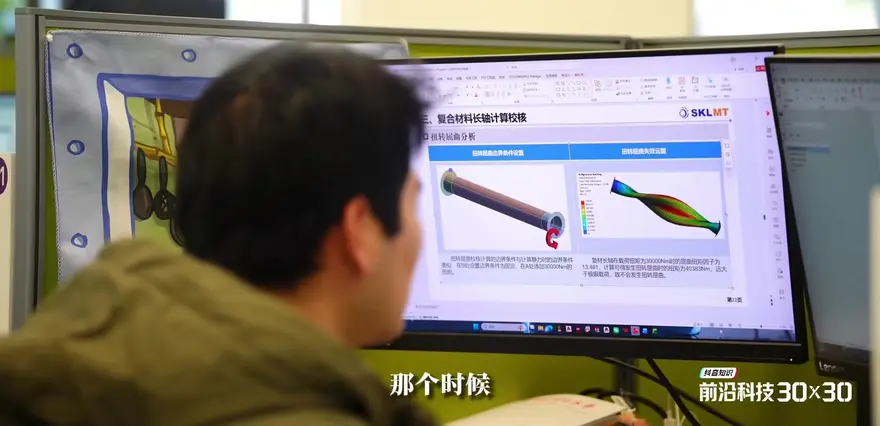
"I used to know nothing about high speeds or sensor optics. But later, when I got into the structural strength of materials, I had to use Ingress [advanced] materials, understand their composition, and perform robotic kinematic analysis—calculating the forward kinematics equations for the end effectors... I would naturally come to realize the importance of knowledge. But back then, I didn't really memorize formulas, recite problems furiously, or just grind through exercises."
So, what do you do when you don't understand something? The answer is AI:
"This is where AI's role really shines. It drastically cuts down the time we spend searching. I can filter through the knowledge I need very effectively and quickly, boosting my production and work efficiency."
Note their mindset: they don't treat AI as a mere hack, but as a "good tool and good friend," using it to filter knowledge rather than replace thinking. This is a point worth pondering for all consumer-grade exoskeleton practitioners—AI capabilities are scaling down from drones (auto-flight, auto-capture) to exoskeletons (automatic gait recognition, automatic assist), but judgment remains the exclusive domain of human developers.
Towards the end of the video, they dropped an even bigger assertion:
"This is an era of tech democratization (price)."
The original quote mentions "tech democratization (price)," but the on-screen text cards clearly feature the four large characters: "Tech Democratization." What is tech democratization? In the past, mastering a complex technical point might require years of dedicated study; now, a small open-source project from someone else is often enough to burst through the barrier. Human creativity is the root of productivity—the fact that this mecha exoskeleton was built by a student team with no industrial resources is a testament to tech democratization in itself.
They had another line that perfectly nailed the relationship between interest and technology:
"AI isn't going to like Iron Man, nor will it have the obsession to actually build him. But my obsession will drive me to constantly charge toward this direction."
Building Iron Man was never the end goal of technology, but rather that "I want to try" impulse in the human heart. Tools are becoming more accessible, thresholds are getting lower, but that desire to get hands dirty remains unchanged across generations.
A Few Observations: Three Key Questions for the Production Ramp-Up of This Mecha Exoskeleton
After watching the video, there are a few questions that are especially worth pressing on from the industry side. The first is whether the technical route of a reversed knee joint and parallel four-bar linkage can move beyond the lab. The claim in the video of “higher joint torque and greater degrees of freedom” translates into industry language as “higher torque density at the same weight.” This approach is already starting to show up in some consumer-grade walking assist exoskeletons, but which brushless motor this mecha uses, what joint torque figures it can achieve, how many hours of battery life / runtime it delivers, and what the max payload / load capacity is—the video doesn’t say. This falls into the first category of open content and will need to be verified through later teardowns.
The second is the synergy of a research platform in the Aosaki style plus self-developed complete systems. Brands like Aosaki provide not only the robotic body, but also a closed loop for sensor data collection: every step’s joint angles and torque curves, and even gait samples best suited to Chinese body types, all become fuel for training algorithms. Once this data pathway is fully operational, it will significantly raise the bar for later entrants to reuse the same capabilities—which is why “open data” is becoming a scarce capability in the industry.
The third is the real dividing line for consumer-grade exoskeletons. Inpatient/clinical-grade products sell efficacy and compliance, while consumer-grade products sell price and the psychology of the purchase. Being positioned at around the 10,000-yuan range will put it at a disadvantage when facing “pragmatic” products such as hiking assist and trekking assist exoskeletons—because the latter can clearly answer the unavoidable questions of “help me climb three flights of stairs / walk ten kilometers,” whereas a mecha exoskeleton more often answers identity-driven appeal like “I want to become Iron Man.” These are not mutually exclusive; they represent two layers of the market: first let symbolic consumer products open up awareness, then let tool-focused consumer products convert the mainstream.
Top Community Comments
@Tanletus: Can this wearable armor be turned into an electric vehicle? [doge]
Interpretation: The sentiment behind this comment is "functional reuse." The viewer, with the simplest of imaginations, connects three concepts—armor, vehicle, and electric power—pointing to a single demand: they hope this armor is more than just a wearable prop and can actually shoulder the physical labor of movement in a real-world scenario.
@Jiudan: A remarkable young person. He is not defined by what he's doing, but by his mindset.
Interpretation: A top-voted comment directly points to the video's win factor—the audience is drawn to the two individuals' attitudes regarding AI, the democratization of technology, and learning, not just a technical demo. This explains why "thought density" is the core asset for this type of content creation; spec sheets can remain silent, but strong viewpoints can drive significant long-tail sharing.
@MysteriousZeroApostle: We need more companies like this.
Interpretation: The viewer is already using the term "company" to describe this small team's attempt, indicating they see it not as a "kid's hobby," but as a potential evolution from an "interest-driven prototype to an industry model for a small team/company." The industry needs not more showmen, but small teams that can consistently turn consumer-grade exoskeletons into a positive cash flow business.
@crust (Supplementary): You can talk about who else can wear it, but the key is to first release the specs like joint torque, endurance, and payload capacity.
Interpretation: This comment touches on the internet's most common sentiment—parameter anxiety. The audience is no longer satisfied with "concepts" and "mechas"; they want hard data like endurance (in hours), max payload, and battery life. For a product like a consumer-grade exoskeleton that "saves people from fatigue," the specs are the primary trust certificate. Without them, all the emotional value will be dismissed as just another "concept machine."
@lapislazuli (Supplementary): Military aficionados love watching this, but will this machine really save me half the legwork when I'm climbing a mountain?
Interpretation: This comment hits the pain point of practical application. If the device relies entirely on its mecha appearance and identity symbols as selling points, users will naturally question whether "saving half the legwork" is true. The industry needs to speak with tangible metrics like "hiking assist," rather than letting hikers treat the "mecha" as an emotional commodity.
One-Sentence Summary
This episode is not a consumer-grade review driven by spec sheets, but a deep technical exploration centered on "youth, AI tools, and the democratization of creation": after watching it, you’ll understand why brands are vying to open up sensor data, and develop deeper respect for small teams who start from passion and use AI to accelerate hardware innovation. Recommended for anyone interested in exoskeleton technology, hardcore tech, and AI tool logic—especially youth innovation projects that blend creativity, real-world execution, and a distinctive attitude.
About this article: part of Chinese-Made Exoskeleton Review Archive — an independent, regularly updated English archive of reviews of consumer exoskeletons made in China, edited from publicly available video transcripts. Not an official manufacturer page.
For inquiries and purchasing, contact lonlonago@foxmail.com. More in Rehab & Mobility · All articles.