Can a 10,000-RMB-Class Walking Assist Exoskeleton Really Enter Senior Care? A Sober Take from a Rehabilitation Industry Insider

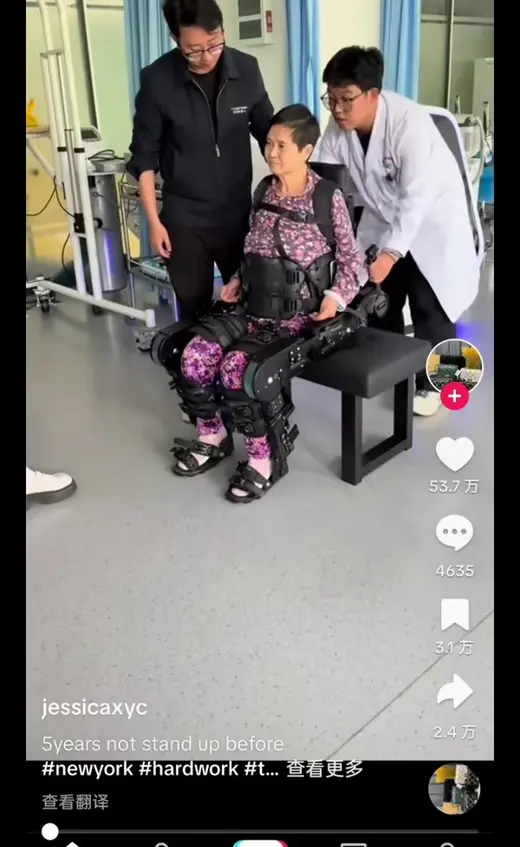
After the wave of exoskeleton product launches in May, my DMs blew up. Consulting firms and friends I know suddenly all came asking whether "soft exoskeletons and walking assist exoskeletons can really be used in senior care." The reason isn't complicated—several exoskeleton companies rolled out new products in rapid succession throughout May, pushing "senior care walking assist" back to the top of trending topics.
"Recently my phone has been blowing up—suddenly some friends and consulting firms are coming to me asking about the technical feasibility of soft exoskeletons."
This heat isn't surprising. Over the past two years, consumer-grade exoskeletons have been repeatedly labeled "the next ten-million-unit track," with Chengtian, Kenqing, Aosha, Yuanye, Hypershell, Dnsys and a string of other names taking turns to debut. Three lines—industrial handling, outdoor trekking, and senior care walking assist—have been rolled out in parallel. But heat aside, senior care is a far more rigorous field than industrial or trekking; its tolerance for "safety,care dependency," and "individual differences" is extremely low.

This installment isn't going to be a parameter cross-comparison. Instead, from the perspective of a rehabilitation industry practitioner, it will lay out clearly "who can really use them, and who ends up worse off by using them."
Bottom Line First: Smart Enough, Battery Life Isn't an Issue, but the Product Is Extremely Picky About Its User

Putting the conclusion up front is meant to keep us from being swept away by the "trending-search moodThe technology is smart enough, and battery life isn't an issue, but the product is extremely picky about its user."
Unpacked, this statement has three layers. The first: with current mainstream walking assist exoskeletons, the coordinated work of servo motors / brushless motors, IMUs, and pressure sensors can already achieve relatively timely gait recognition and hip assist — "is it smart enough" is no longer the main contradiction in consumer-grade products. The second: battery life and endurance can already support everyday use, and it's no longer a deal-breaker. The third, and the most critical layer — whether it works at all, and how well it works, depends almost entirely on the wearer's own physical condition, rather than the spec sheet of the product itself.

In other words, an exoskeleton is not a "buy it and it just works" standardized home appliance; it's more like a medical device that requires matching to the right indication. And that is precisely the point that livestream-selling videos and review videos are most prone to sidestep — and the one that is most fatal in rehabilitation and eldercare scenarios.

Three User Types: Healthy, Short-Term Impairment, Long-Term Disability

In the comments section of my original video, the split in user profiles is clearly visible. Some are asking for patients with congenital cerebral palsy or polio; some are asking on behalf of family members with acquired stroke, cerebral hemorrhage, or spinal cord injury; some have knee/hip/lumbar arthritis; others have leg weakness caused by long-term bed rest after illness — and there are even those who "simply don't want to move.I would first divide users into three broad dimensions for discussion: healthy, short-term impairment, and long-term disability."
These three categories are not split by age, but by "whether lower-limb function is reversible and whether active control capability still remains." This classification directly determines whether an exoskeleton is "icing on the cake,a symptomatic fix," or "better than nothing."

| Type | Lower-Limb Status | Exoskeleton Value | Notes |
|---|---|---|---|
| Healthy | Only age-related muscle/nerve atrophy, psychological fear of falling | Generally applicable | Assistive function reduces burden, breaks through psychological barriers |
| Short-Term Impairment | Joint inflammation, sports injuries, postoperative pain, repairable | Symptomatic fix only | Prioritize systematic rehabilitation |
| Long-Term Disability | Paraplegia, hemiplegia, lack of active control | Only saves effort, does not correct gait | Adaptation is extremely selective |

These three categories are expanded upon in turn below.

Healthy Seniors: Broadly Suitable, and Exoskeletons Can Even Break Through the "Afraid to Walk" Psychological Barrier
"Healthy" here does not mean the kind of health seen in young people, but rather refers to users who have no lower-limb disabilities or obvious pain — only the muscle and nerve atrophy that comes with age, or who have developed a psychological shadow after a fall and are afraid to walk, or who lack exercise and get out of breath after just a few steps.
"This group is broadly suitable for exoskeletons, because the product itself provides leg-lifting assist, helping seniors reduce the burden on their legs and decrease physical exertion."

Here lies an undervalued point — clinically, it has been found that some seniors are afraid to walk, and the root cause is a psychological barrier rather than a physiological one. The "guided leg-lifting" and continuous assistive feedback provided by the exoskeleton effectively give seniors an externally certain rhythm, helping them break through the psychological barrier of "fear of falling." Once they start walking, a positive cycle is established.
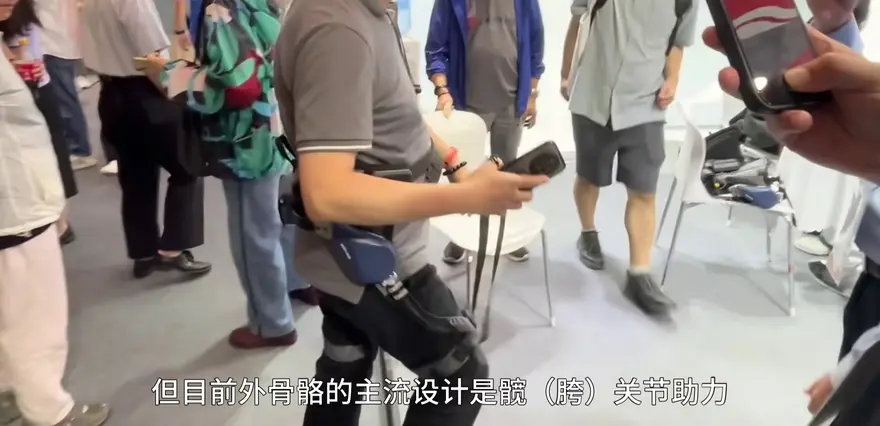
For this group, the "fast lift, slow lower" logic of the hip assist (hip-assist) module is a natural fit: it reduces physical exertion during the swing phase, while providing a soft cushion during the stance phase. This is also currently the most mature design paradigm among mainstream consumer-grade walking assist exoskeletons.
Short-term impairment patients: Visit rehabilitation first, don't use an exoskeleton to "treat symptoms, not the root cause"
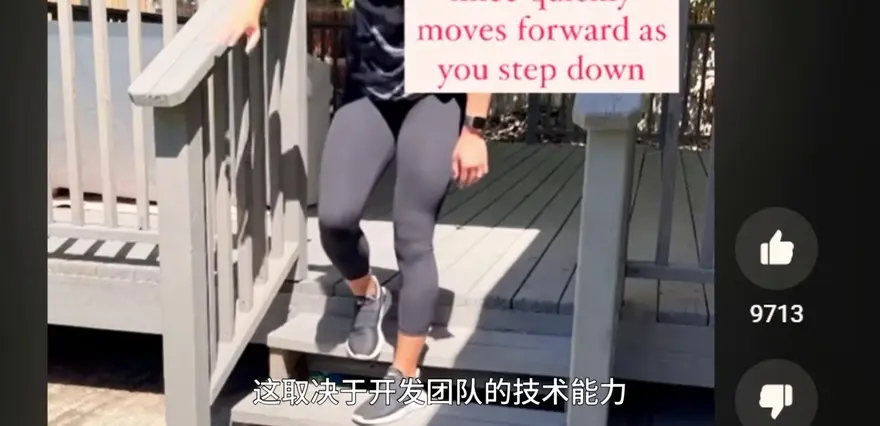
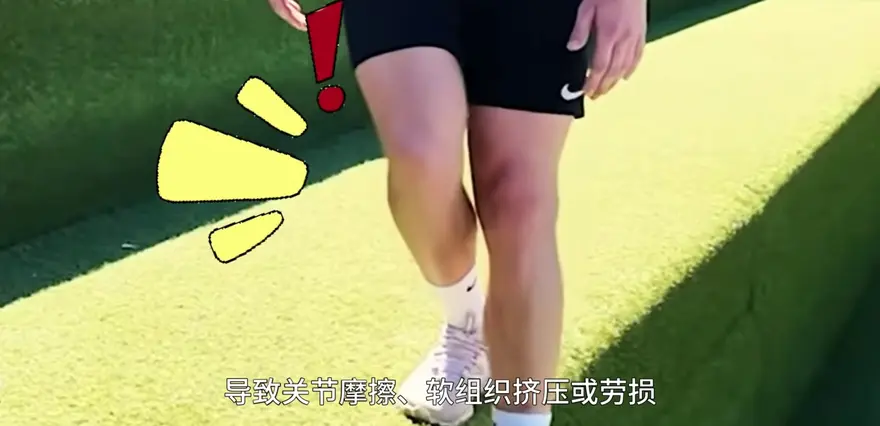
Short-term impairment refers to conditions where the lower limbs have functional limitations or pain but are recoverable—such as knee or hip joint inflammation, sports injuries, post-surgery pain when walking or climbing stairs, and restricted muscle weakness.
The root issue for this group isn't actually in the joints themselves, but in rehabilitation awareness:
"Many joint problems are not entirely irreversible; they stem more often from weakness in the muscles that stabilize the joint or from poor movement posture, which causes joint friction, cartilage and tendon wear, or strain that produces intermittent pain. A systematic exercise rehabilitation program can fundamentally resolve the issue, rather than using an exoskeleton to merely treat the symptoms."
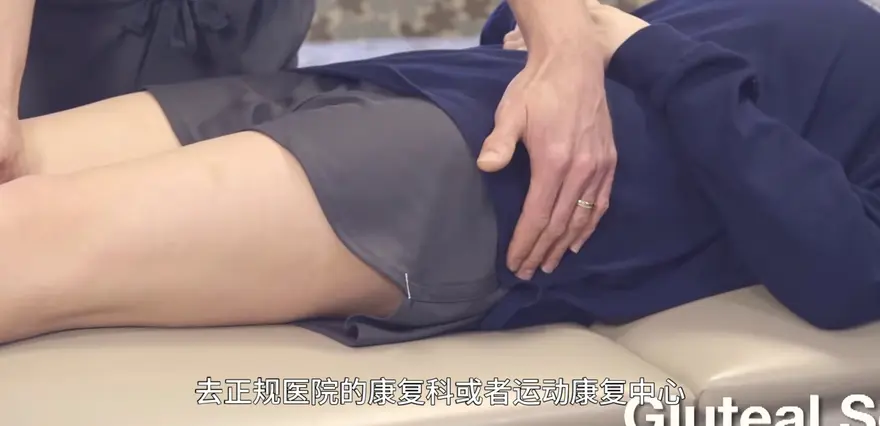
The human body operates on the principle of "use it or lose it." So it's also not advisable to reach for braces like knee supports or ankle supports to dodge pain after a joint hurts—that will only cause the muscles stabilizing the joint to atrophy further, entering a vicious cycle of "the more you brace, the weaker you get; the weaker you get, the more it hurts." The right path is to visit a rehabilitation department or sports rehabilitation center at a proper hospital to diagnose the cause and explore rehabilitation treatment options—this is far more meaningful than buying an exoskeleton.
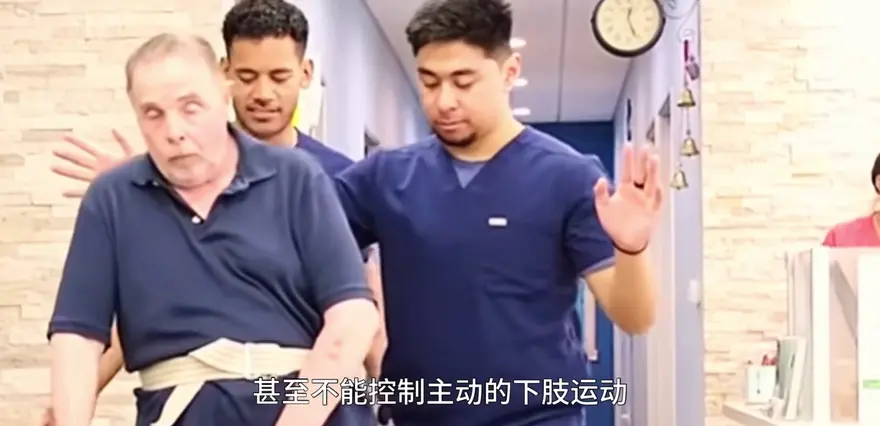
Of course, for older users or those without access to professional rehabilitation resources nearby, an exoskeleton is a product worth trying. But pay attention to one key design difference:
"The mainstream design of current exoskeletons is hip assist: rapid leg lifting and slow lowering. So if an elderly person already has knee pain when going downstairs, not every device can relieve that pain—it depends on the development team's technical capability and their understanding of walking assist for the elderly."
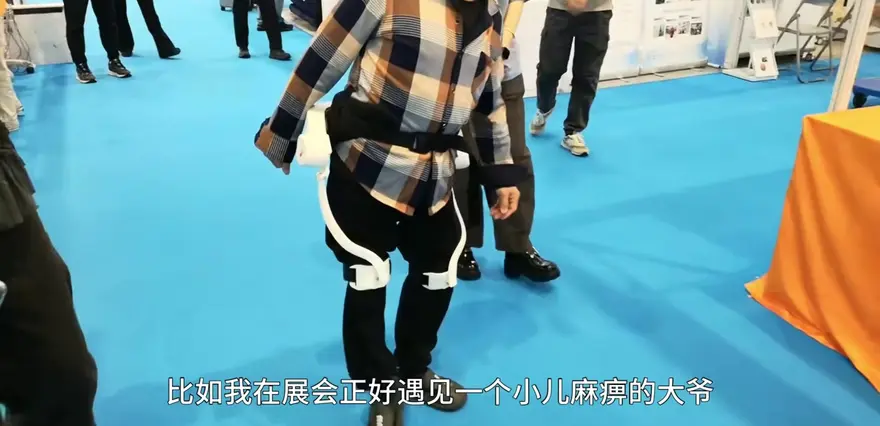
In other words, a hip assist exoskeleton addresses "tiredness when lifting the leg," not "knee pain" directly. There are also knee-joint assist exoskeletons on the market, but coverage at exhibitions and in everyday research is limited, so it's hard to draw firm conclusions about their effectiveness. Before purchasing, short-term impairment patients should first figure out whether their pain point is at the hip, the knee, or the ankle—this matters more than any spec sheet.

Patients with Long-Term Disabilities: It Saves Effort, but Cannot "Restore" Lost Function
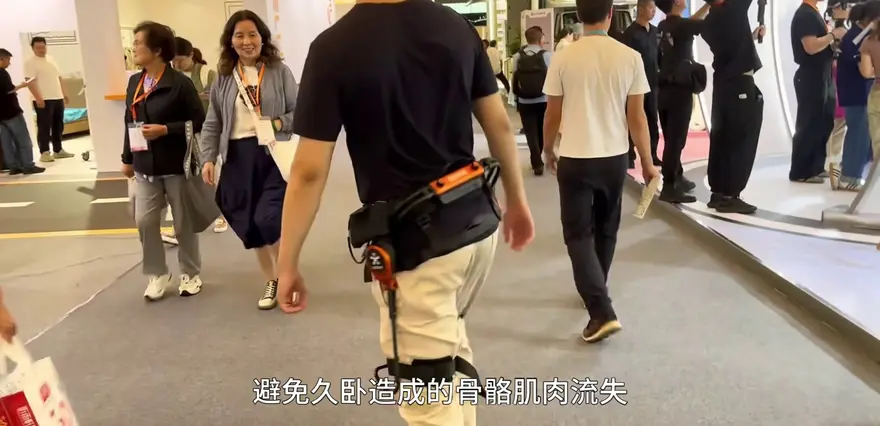
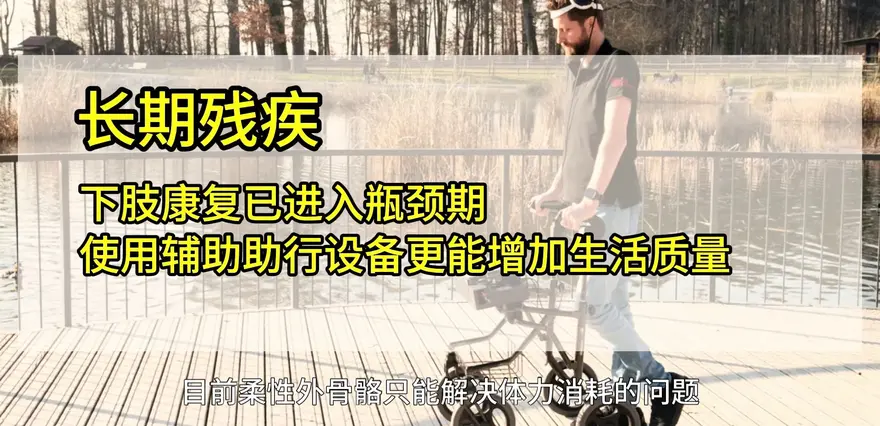
For patients with long-term disabilities (paraplegia, hemiplegia, severe polio, etc.), today's soft exoskeletons can only address one thing — physical exertion — and cannot correct gait:
"After putting it on, the walking posture is still abnormal and cannot be corrected. The exoskeleton is also very particular about this kind of user, because some paraplegic or hemiplegic patients themselves lack muscle strength, or even cannot actively control lower-limb movement. This kind of device cannot possibly restore functions that are already gone."

But "saving effort" alone is no small thing for this group. A patient who could originally walk for only six minutes on flat ground can, after wearing one, walk for ten or twenty minutes — meaning a multiplicative increase in activity level for the same physical exertion.
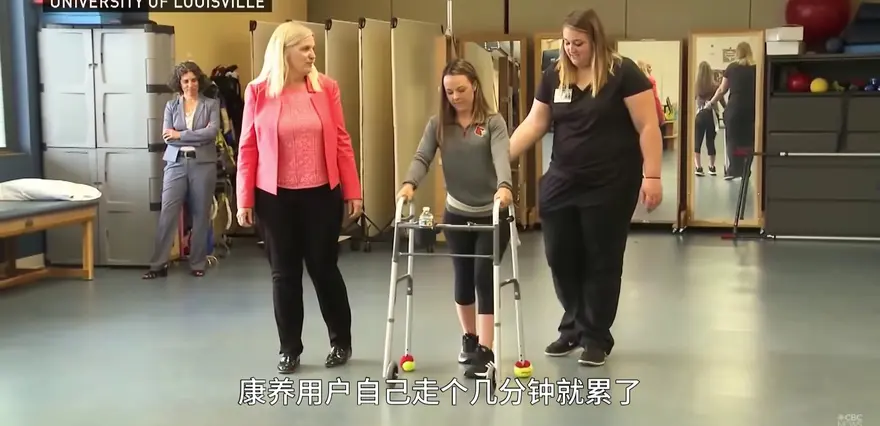
"Overall, wearing an exoskeleton to achieve longer walking time for the same physical exertion is beneficial for the bones, internal organs, and even sleep. Because overcoming gravity and the repeated swinging of arms and legs can activate the activity of the organs, bones, and metabolism, avoiding the loss of bone and muscle or the degeneration of organ function caused by prolonged bed rest."

At one expo I happened to meet an elderly man with polio. After putting it on, his walking gait was still the polio gait — something the exoskeleton cannot change — but from his own experience he genuinely felt that it "saves a lot of effort." This is the most honest and limited promise these products offer to patients with long-term disabilities: it does not correct posture, it only extends the radius of activity.

The Truth About Eldercare: Cannot Replace Caregiving, and a Five-Figure Price Tag Is Hard to Justify for Ordinary Families
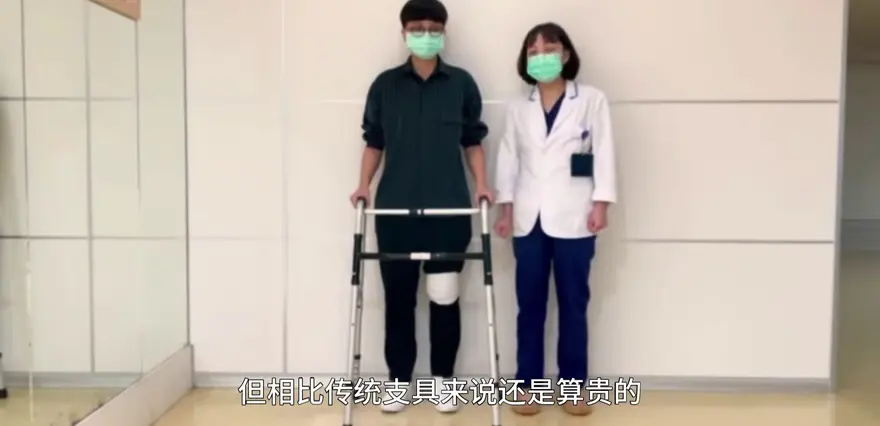
Having covered three types of users, let's return to the specific eldercare scenario. My wife's grandmother is a typical case: her daily routine consists of lying in bed watching TV, walking from the bedroom to the living room to sit for a while, then going back to lie down — that counts as half a day's activity. My first reaction was "exoskeleton prices have come down, this would suit her well," but my wife asked a question that made me reconsider:
"My wife raised a question that made me feel this exoskeleton isn't that important right now — you still need someone to provide care, don't you?"
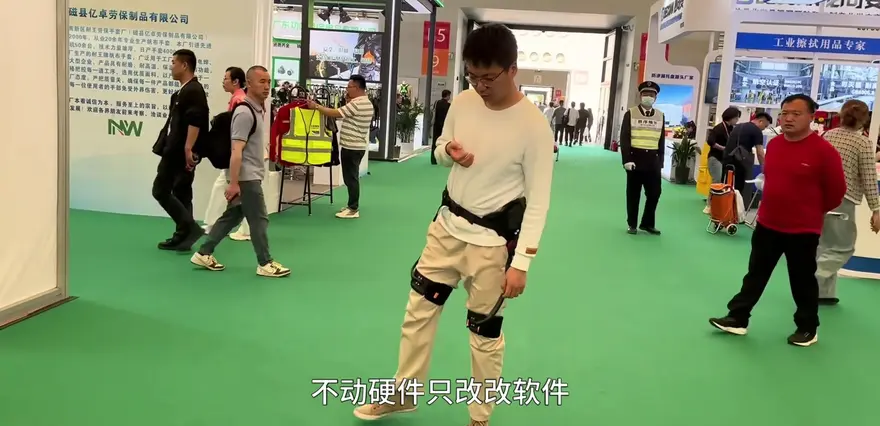
This is the most intractable paradox facing eldercare exoskeletons today: they solve "can't walk," but they can't solve "no one to accompany." For an ordinary family to spend five figures on a product that neither guarantees greater safety once an elderly person puts it on, nor frees them from caregiving, with rehabilitation and walking assist effects that vary from person to person — no matter how much it trends online, consumers will struggle to actually open their wallets.
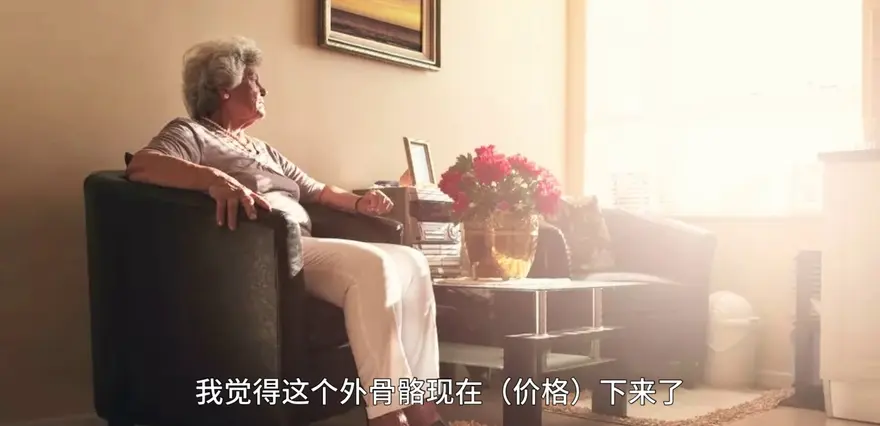
"Livestream selling has a commercial agenda, reviews are typically healthy people indulging their curiosity about the technology, and only those actually working inside the eldercare industry will introduce the effects from a real user's perspective."

The Distance Between Reviews and Wellness Care: A Hardcore Comment Worth Expanding

There's one comment in the comments section that I consider highly valuable—it directly points toward the design direction for the next generation of wellness-care exoskeletons:
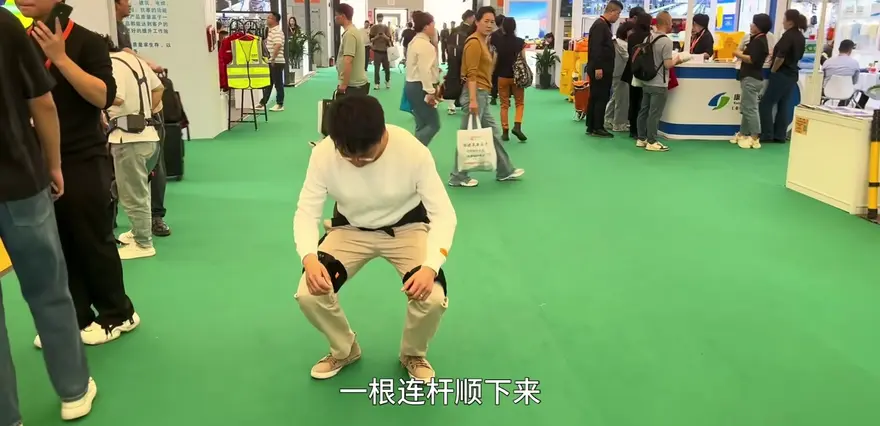
I suggest the exoskeleton development team treat the external support structure as a design consideration for wellness-care exoskeletons, especially a ground-contacting structure. This way the motors and structure directly offset a portion of the patient's own body weight, so the joint pressure on the patient naturally decreases, and pain becomes less likely to occur.

The essence of this idea: rather than only "pushing with force" at the hip, it's better to let the exoskeleton share part of the vertical body-weight load. With body weight absorbed by the structure, the pressure on the knee and hip joints naturally drops, and pain eases accordingly—this precisely hits the pain point of elderly users with short-term mobility impairments who feel "knee pain when going downstairs."

But the author also added a highly professional engineering constraint: anti-slip must be well-designed, along with the range of motion for knee varus/valgus and internal/external rotation. The reason lies in the mechanical differences among the lower-limb joints:
"Among the lower-limb joints, apart from the knee being a stable joint (with only two degrees of freedom), the ankle and hip are both flexible joints. If we just run a single connecting rod straight down the way an industrial-handling exoskeleton does, elderly people with limited mobility may find it inconvenient to use—or they may not be able to use it at all."
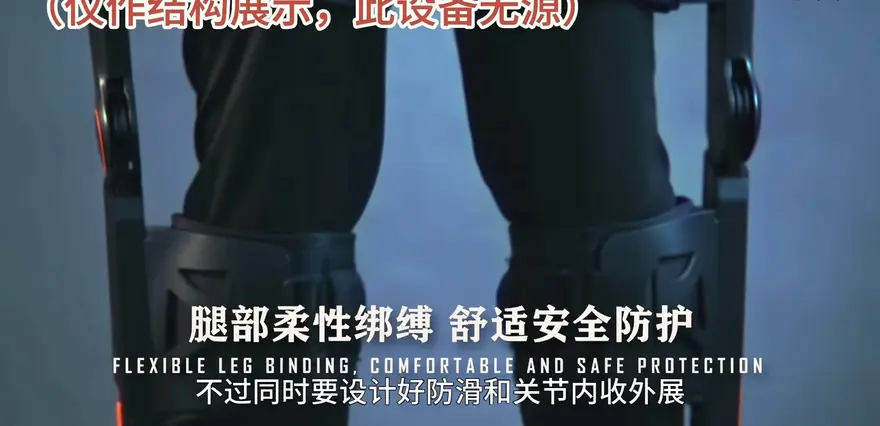
This explains why the design paradigm of industrial-handling exoskeletons cannot be directly transplanted into wellness-care scenarios: in industrial scenarios, the wearers are healthy workers pursuing lumbar load relief, and a single rigid connecting rod is sufficient; in wellness-care scenarios, the wearers themselves already have restricted joint range of motion, and a connecting-rod-style structure would instead lock up what little freedom they have left.
A Word for the Industry: Break Free from the "One-Hit-Serves-All" Commercial Mindset

Finally, a message for the executives building rehabilitation and senior-care devices. A mindset pervades the industry right now — "as long as the device still sells, never bother optimizing; one hit serves all." This logic may hold up in industrial or outdoor arenas, but in the rehabilitation and senior-care space, it backfires:
"This commercial mindset leads to losses. Rehabilitation is a highly rigorous field, no less demanding than industrial material handling. Developing a dedicated new product purely for rehabilitation is entirely justified."

Rehabilitation users have low tolerance, long feedback cycles, and wide individual variation. Betting on a single one-size-fits-all product to conquer the market will ultimately deliver only illusory prosperity — "looks like everyone's using it, but nobody actually renews."

"Those of you worth tens of millions or even hundreds of millions, I imagine you'd also hope to do something meaningful and valuable in life beyond market-cap realization and financial freedom, wouldn't you?"
Personally, I hope that one day the opening line of my video can become "Oh my god, I can't allow anyone to still not know about this," followed by a forceful recommendation of an exoskeleton. But based on current research findings, no product has yet emerged that truly fits rehabilitation needs. Until that day comes, rational observation, needs-based trials, and prioritizing rehabilitation ahead of walking assist remain the more responsible stance toward the elderly.
Wishing you peace.
Top Community Comments
@Tianbuping: A very fair-minded blogger who called out the emperor's new clothes, and also offered a lot of valuable perspectives.
Interpretation: This highest-liked comment essentially speaks on behalf of silent potential consumers, voicing the need for "a neutral voice not held hostage by rhetoric." It reflects the information asymmetry between reviews and genuine rehabilitation/wellness needs in today's exoskeleton content ecosystem — audiences are already tired of the "suitable for the whole family, young and old" type of one-size-fits-all narrative.
@chx800: I feel a wheelchair is still the better option for now. The problems with exoskeletons on the market today are exactly what the creator said: first, they can't be used without a caregiver's supervision; second, they can't help restore walking. I'm also watching and waiting — one, for the price to come down; two, ideally for a continuous, integrated design that provides continuous support from the waist down to the soles of the feet. From the look of it, we'll still have to wait another year or two.
Interpretation: Using a wheelchair as a control case, this viewer makes a highly pragmatic judgment — until the two prerequisites of "no longer needing caregiver supervision" and "ability to help restore walking" are resolved, a wheelchair's value-for-money and reliability still crush any exoskeleton. The "continuous support from waist to sole of foot" he mentions echoes the hardcore comment in the main text, indicating that user-side demand for a "body-weight-distributing structure" has spontaneously formed a consensus — the product just needs to catch up.
@Lieqi Shengwu varu: I'm also just starting to research products for an elderly family member. There are quite a few seniors with knee joint pain who have trouble walking — the demand should clearly be there, and assistive machines have been out for a year or two already, but product development is still slower than expected.
Interpretation: This comment pinpoints the mismatch between supply and demand pace — genuine needs (seniors with knee joint pain and limited mobility) objectively exist at considerable scale, yet product iteration speed clearly lags behind the speed at which demand is spreading. It also indirectly corroborates the main text's viewpoint: the mainstream hip assist design does not precisely target the largest potential customer segment of "seniors with knee pain," revealing a structural gap in the market.
One-Sentence Summary
Today's consumer-grade walking-assist exoskeletons have reached sufficient technological maturity, but they are far more demanding of users than livestream sales pitches imply — healthy seniors can treat them as a "nice-to-have enhancement," those with short-term impairments should first pursue systematic rehabilitation, and those with long-term disabilities can only expect "effort saving" rather than "posture correction"; a true rehabilitation-and-elderly-care-oriented product that delivers "continuous body-weight redistribution" and frees users from care dependence is still a year or two away for the industry.
About this article: part of Chinese-Made Exoskeleton Review Archive — an independent, regularly updated English archive of reviews of consumer exoskeletons made in China, edited from publicly available video transcripts. Not an official manufacturer page.
For inquiries and purchasing, contact lonlonago@foxmail.com. More in Rehab & Mobility · All articles.