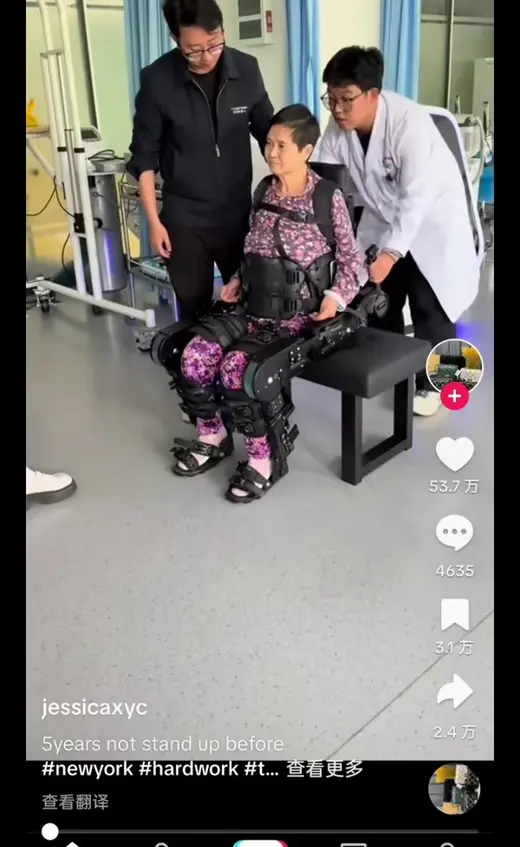
Challenging Huangshan's Tianduh Peak with an Exoskeleton: A Real-World Test of a 500W Hip Assist Exoskeleton's Upward Power and Downhill Kinetic Energy Recovery
__IMG0__
One-Sentence Summary
We put a 500W hip assist exoskeleton to the ultimate test by climbing Huangshan's steep Tianduh Peak, evaluating its walking assist capabilities, battery life, and innovative energy recovery on the descent.
Top Community Comments
"This is exactly the kind of practical test I want to see. How much did the battery drain on the way up?The downhill energy recovery feature sounds incredible if it actually works as shown. Very innovative.I'm curious about the weight of the exoskeleton itself. A lighter design would be a huge plus for long hikes."
From “Hiking” to “Ascent”: A Consumer-Grade Exoskeleton’s Extreme Real-World Test
Hi everyone, I'm Wang Qiming. This time, we didn't choose a routine trek. Instead, my colleagues and I strapped on an exoskeleton and set out to scale Mount Huangshan—the peak praised by the ancients as the one mountain that eclipses all others. Our destination was Tiandu Peak, which opens only once every five years and limits daily hikers to 3,000.
Xu Xiake once wrote, “After climbing Mount Huangshan, there are no more mountains under heaven; the view is complete.” Originally, he meant that Huangshan gathered the essence of all mountain ranges, bringing scenery to its absolute zenith—after seeing it, no other mountain could compare. In our hardcore exoskeleton field test, however, the quote took on a new meaning: we were about to undergo the ultimate test of “upward physical force.”
 ]
Mount Huangshan was originally called “Yishan” and is said to have been renamed for the Yellow Emperor, who once refined elixirs here. Its celebrated triad consists of peculiar pines, grotesque rocks, and the “sea of clouds.” Today's objective, Tiandu Peak, together with Lotus Peak and Bright Top, ranks among the mountain's three main summits and is widely regarded as its steepest and most precipitous.
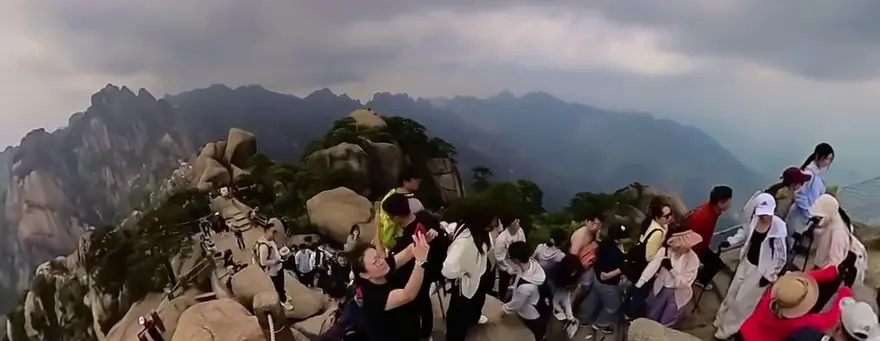 ]
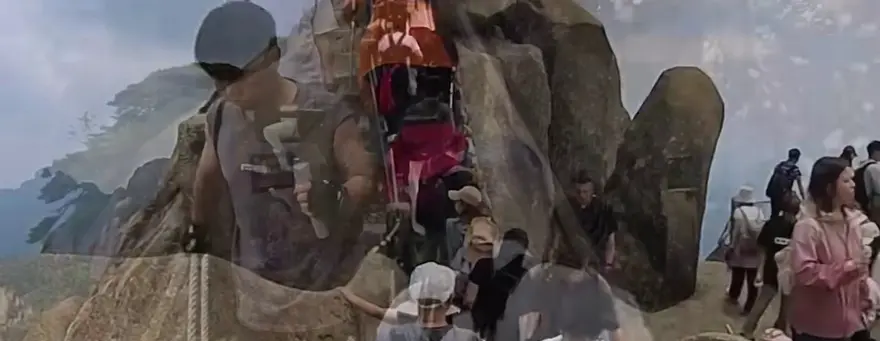
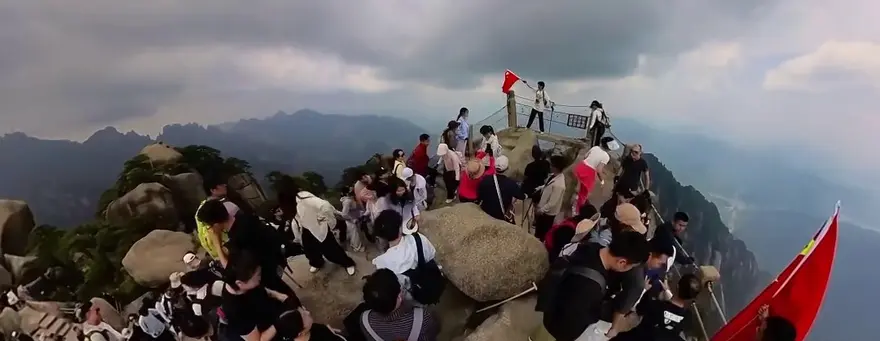
Looking back from the midway point on Tiandu Peak, we took in the Greeting Pine, the Jade Screen Pavilion, and Bright Top in a single glance. The vista was superb, but at that moment what captivated me wasn't the scenery—it was the curiosity of fellow visitors toward the gear strapped to our legs.
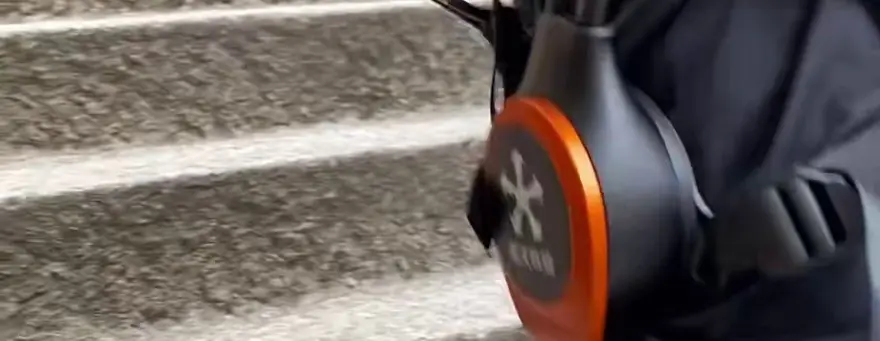 ]
One tourist couldn't resist stopping us to ask, “Where does your power come from?” My colleague pointed to the battery pack at his waist and replied, “Power comes from here—a 500-watt supply!” He then demonstrated the most tangible metric: that 500 W could actively drive each leg lift and sustain roughly five hours of high-intensity stepping.
 ]
This is by no means a heavy medical rehabilitation exoskeleton; it is a true consumer-grade exoskeleton. In an era longing for renewed exploration, this class of assistive / walking-assist exoskeleton is on a mission to lightweight the sci-fi “mechanical armor” we've seen on screen and deliver it to the premium segment of mass tourism.
Key Specs Breakdown: Turning "Lifting Your Legs" into a Quantifiable Engineering Task
Before officially facing the thousands of steps at Tiandu Peak, let's break down the engineering logic of this device. While traditional hiking relies on an individual's cardiopulmonary function and muscular endurance, an exoskeleton attempts to fundamentally alter the mechanical performance of human legs through electrical assistance.
Returning to the Q&A with the passerby mentioned earlier, 500W is not a monstrous, world-shattering power output in the fields of industrial manufacturing and exoskeletons. However, when placed on a consumer-grade assistive exoskeleton, it has an extremely precise purpose.
Key Data (mentioned in the video): Power/Output 500W; endurance (in hours) approx. 5 hours.
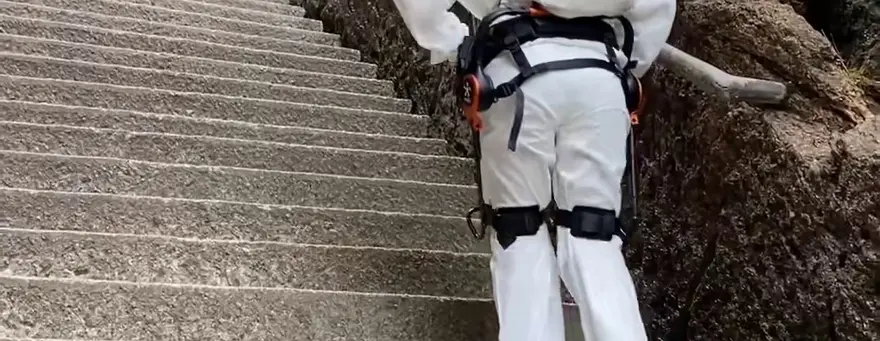
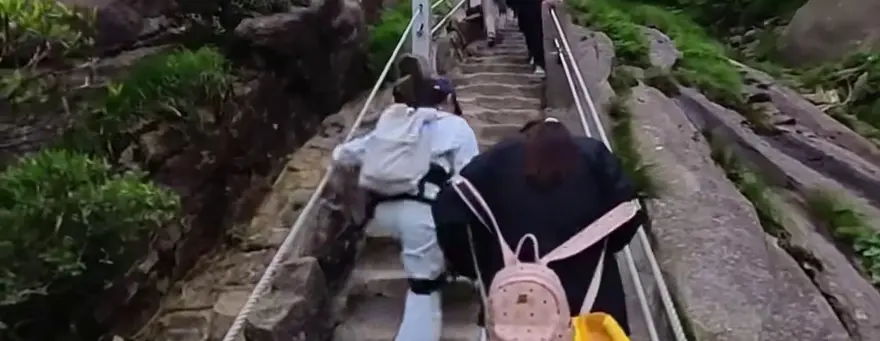
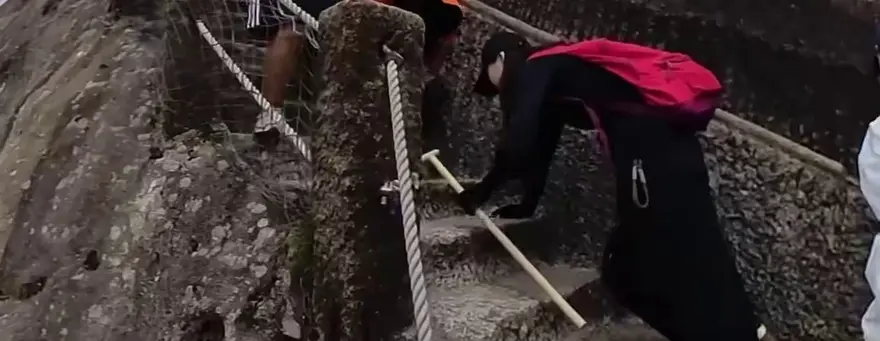
 (A street tester wearing the exoskeleton climbing steps.)](screenshot/IMG0.jpg)
This data reveals the product's design boundaries. Five hundred watts means it isn't designed to let you carry dozens of kilos of heavy gear to traverse the wilderness in one go. Instead, it precisely targets the demand for continuous, high-intensity terrain climbing within a single day, much like the Huangshan hike. The endurance (in hours) of 5 hours perfectly covers the prime time for the vast majority of single-day hiking routes.
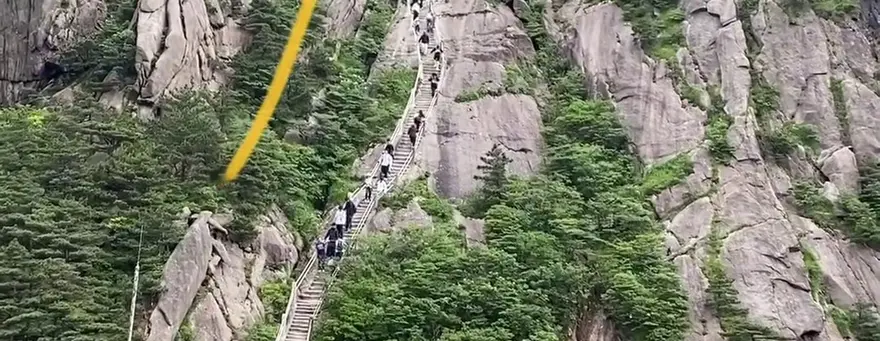
 (The steep steps of Tiandu Peak used as a natural testing ground.)](screenshot/IMG2.jpg)
Compared to the vague and abstract company brochures and lab data, the nearly vertical, steep steps of Tiandu Peak serve as the perfect natural testing ground for max payload / load capacity and joint torque. If a person climbs Tiandu Peak relying entirely on their physical body, they face enormous physical exertion. The additional assistance provided by the exoskeleton is precisely attempting to bridge this physical stamina gap.
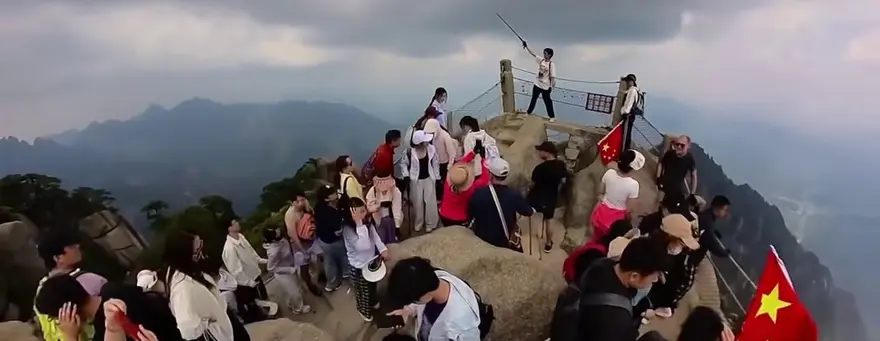
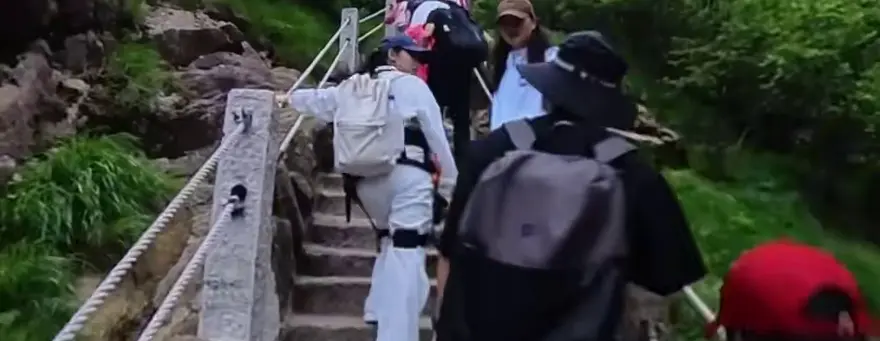 (The creator recovering at the summit with the exoskeleton.)](screenshot/IMG4.jpg)
Field Test on the Mountain: When Machine Torque Takes Over Human Gait
The Three Wonders of Mount Huang are its odd pines, grotesque rocks, and sea of clouds. As we set out to experience these three, the entire journey became a relentless climb; the number of devices we put into action and the steepness of the slopes went far beyond our expectations. The first time we applied an exoskeleton on a trail with such a deep historical resonance, we could clearly feel—over countless steep ascents on twisting mountain paths—that it was helping us conserve and exert our strength.
 ]
Why is the effect so noticeable on steep mountain trails? It comes down to the exoskeleton’s mechanical-assist principle. On flat ground, our gait (gait) is relatively regular. But as soon as the trail turns steep, every time we lift a leg we must do work against gravity, and the load on our hip and knee joints increases many times over.
 ]
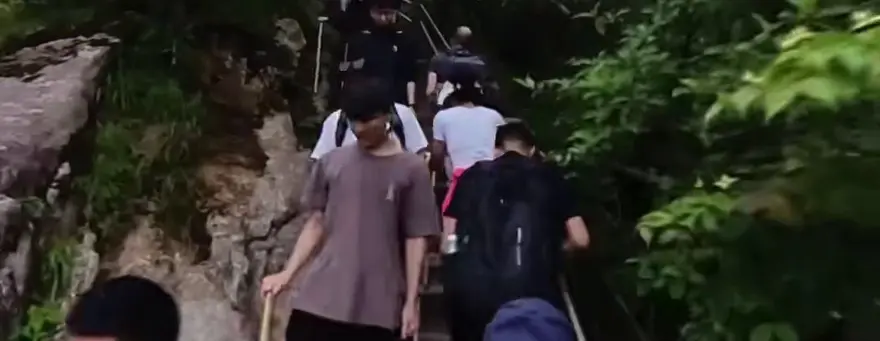
The exoskeleton’s built-in sensors (IMU/pressure sensor) quickly capture the physical trajectory of each leg lift, and compact servo motors (servo) come to life, delivering precise assistive joint torque. That’s why, during the sustained, high-intensity climb up to Tiandu Peak, the system still managed—with assist mode set to level four—to consume only 30 percent of the battery.
 ]
Key data (as mentioned in the video): It took about one hour and twenty minutes to reach the summit; with the assist level set to four, battery consumption was only 30 percent.
 ]
This demonstrates that the exoskeleton can significantly reduce physical exertion. For a commercial exoskeleton, that’s an outstanding field result—it really disrupts the typical“exertion–recovery” cycle. Yet we also noticed that such strongly imposed gait correction may be extremely hard to adapt to extremely irregular, uncut trails in the future.
Goldenfish Backridge Thriller: Testing the Tech Boundaries of Extreme Risk and Safety
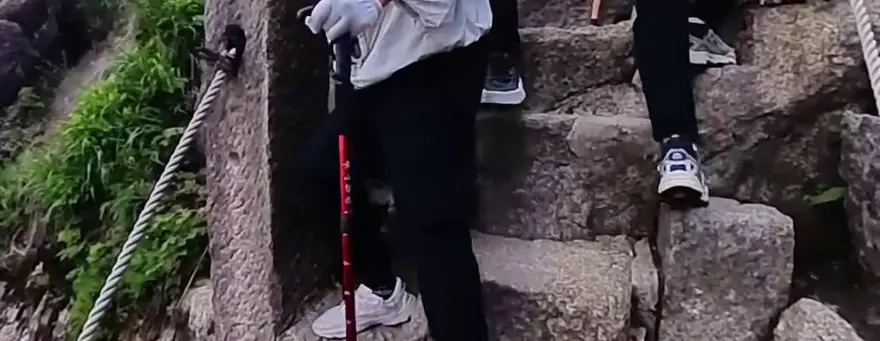
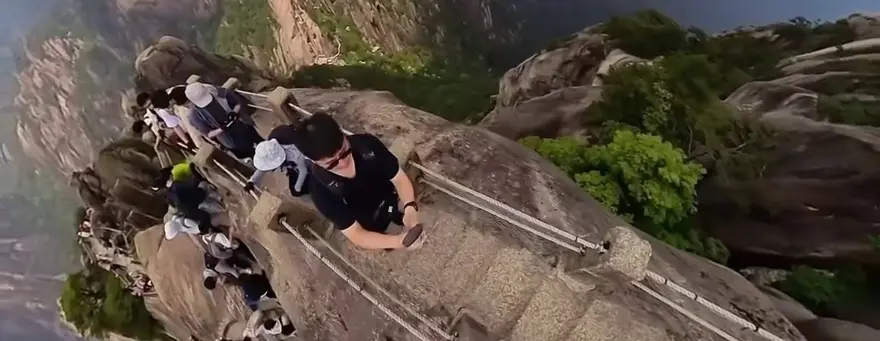
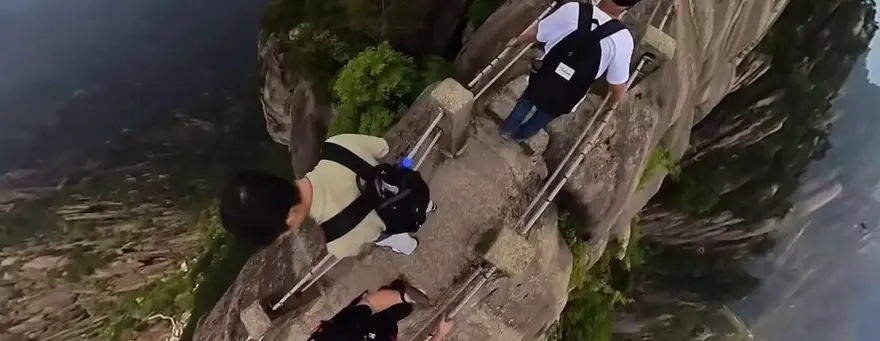
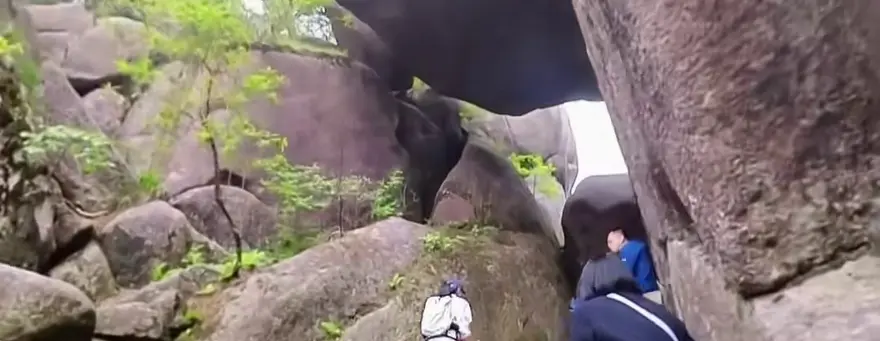
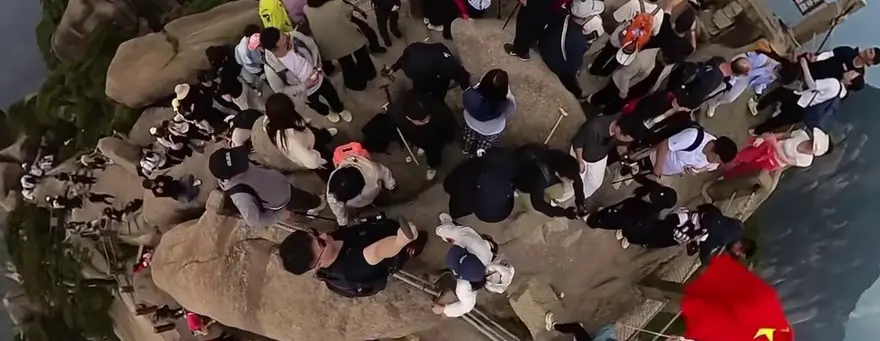
Just ahead is the "Goldenfish Backridge." It is less than a meter wide, with bottomless abysses on both sides. You must proceed through narrow passages carved into the stone walls, relying on rope guardrails less than half a meter high. This is the most perilous section of the entire Huangshan Mountain.
 ]
In the exoskeleton field, aside from providing the "physical power to lift the legs upward," safety is the nightmare facing almost all hardware products. Allowing us to ascend to the summit of Tiandu Peak, where the narrowest point is less than fifty centimeters, the handrails on both sides are carved directly out of the stone wall, offering a truly magical tactile sensation. This means that, on such terrain, you cannot rely on extra supporting objects for leverage; you must rely entirely on the friction under your feet and your gait balance.
 ]
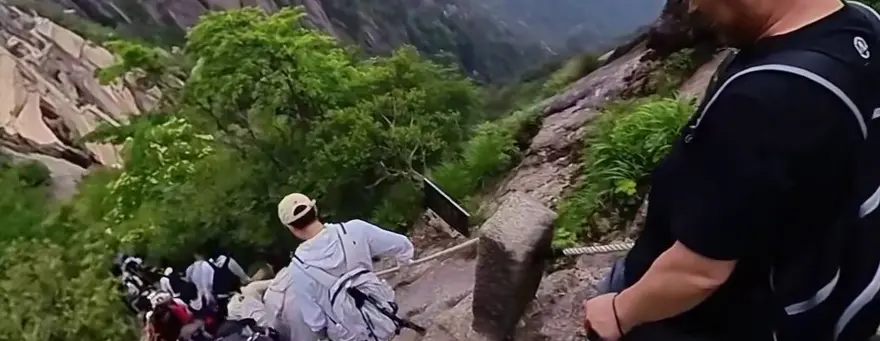
It is worth noting that this inevitably requires the industrial design of the device to adopt ultra-lightweight materials. Traditional power tools or lithium-ion batteries often weigh several kilograms, which would become a severe burden if placed on an assistive device.
 ]
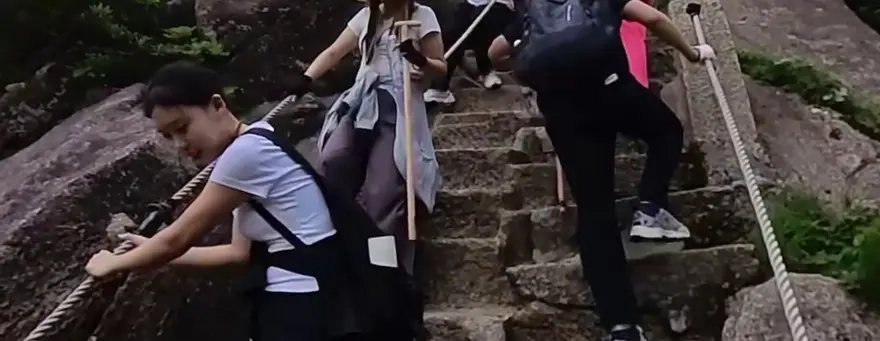
This means that future consumer-grade exoskeletons will tend to favor lighter structures. On the narrow Goldenfish Backridge, the margin for error is extremely low, making it very easy to lose balance. At this critical moment, if an exoskeleton lacks an excellent self-balancing algorithm or fall protection mechanism, it could instead easily throw the user off track and off the cliff. This overturns the stereotype held by some that simply providing assistance is enough.
 ]
Standing at the summit, we gazed into the distance. The Ming Dynasty traveler Xu Xiake once wrote, "Peach blossoms drift away with the flowing water; there is another world, not of this earth." At that moment, I was more focused on these consumer-grade exoskeletons, born purely to alleviate human physical burden, which are now being integrated at a higher technological dimension into the journeys of individuals pursuing their limits and connecting with nature.
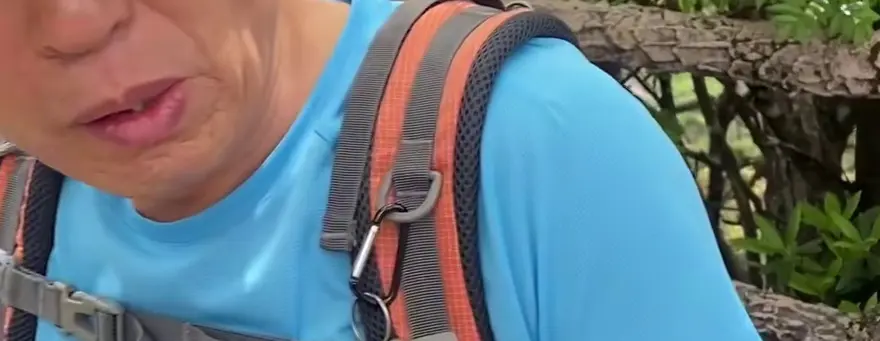 ]
A New Philosophy for Descending: Kinetic Energy Recovery and the Security of Center-of-Gravity Transfer
If ascending tests an exoskeleton's ability to amplify human upward physical power, then descending validates a deeper sense of security derived from modern engineering.
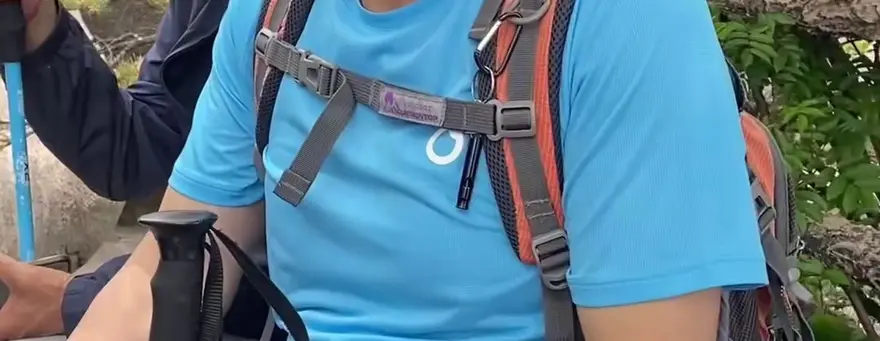 ]
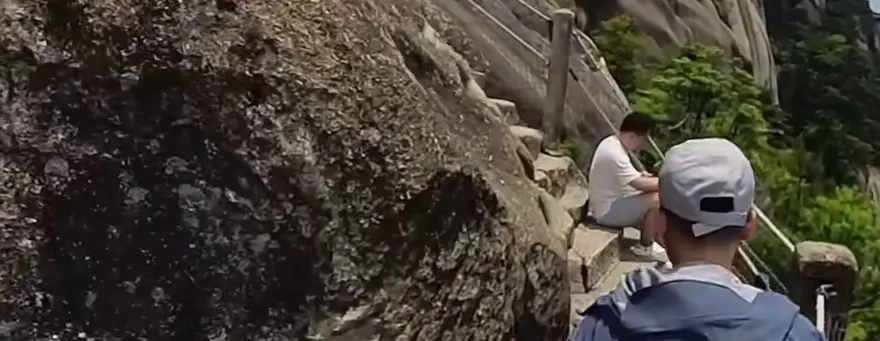
When going downhill, we activated the "steep descent" mode. Here, the industry has adopted algorithmic philosophies heavily rooted in automotive technology, offering a kinetic energy recovery-like effect. This function forcibly transfers the body’s overall center of gravity and downward force onto the waist and leg mechanisms.
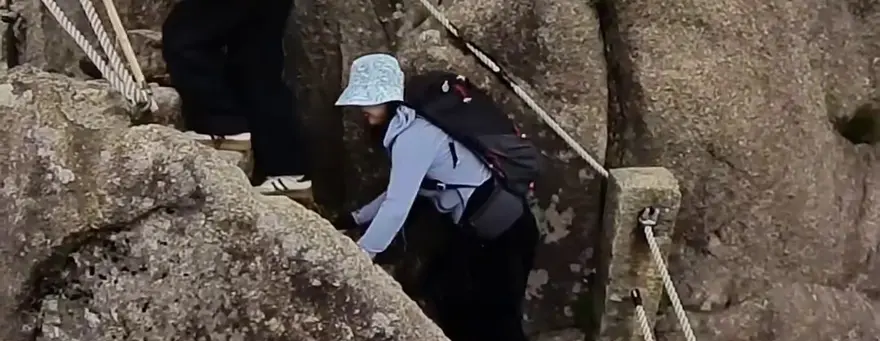 ]
This redistribution of weight provides a powerful sense of security on stone steps—the sensation of having gravity 'held back'—and goes far beyond simply coasting. It actively mitigates knee strain associated with downhill movement.
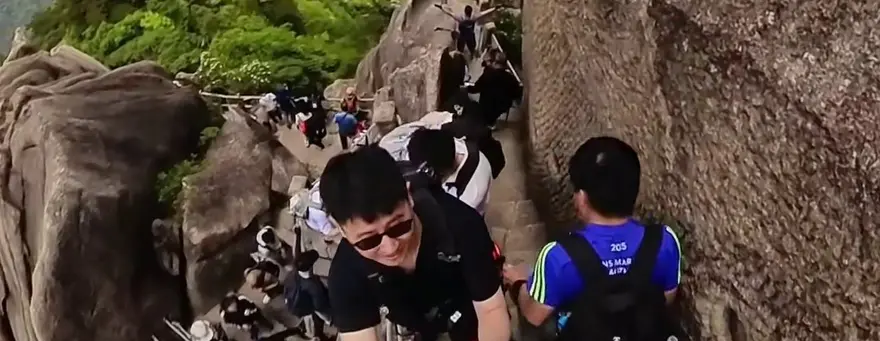 ]
Producing braking resistance via brushless motors acting as generators while maintaining balance using self-balancing controls has deepened my understanding of consumer-grade exoskeletons.
 ]
True safety features don’t eliminate effort; rather, they build confidence by offering the right tools for engaging with unfamiliar challenges.
Pros, Cons, and Buying Advice: The Benchmark for a Holiday Mountain Exoskeleton
Reflecting on the entire ascent—from climbing past the "Pu Tuan Stone" at the foot of the Tiandu Peak, navigating several stretches of narrow steps, and crossing the "Tiandu Trap"—on the treacherous paths, the accompanying assistance for every leg lift and stride was incredibly distinct.
 ]
Core Pros
- Direct Joint Torque for Leg Lifting: On the continuous, high-intensity steep steps of Tiandu Peak, the exoskeleton successfully functioned as a "second muscle group".
- Reliable and Controlled Battery Life: Power consumption was precisely 30%, easily handling the dead-angle climbs.
- Downhill Kinetic Energy Recovery: The center-of-mass shift and kinetic-energy-recovery-like effect during steep descents are perfectly suited for terrains like Mount Huangshan, known for "extremely steep uphills".
 ]
Exposed Shortcomings
- Noticeable Space Footprint: On the extremely narrow, undeveloped chiseled stone steps, the mechanical intervention of the machined joints actually required several weeks to adapt to the unique center of gravity.
 ]
Speaking of market application scenarios: If you ask me which field a consumer-grade exoskeleton is suited for in daily life? It is certainly not for hauling packages for courier companies. Instead, beyond the strictly defined boundaries of the rehabilitation exoskeleton, there is an urgent need for a piece of daily hardcore hiking gear that belongs to young people.
 ]
Overall, we are witnessing a golden era for the "holiday mountain exoskeleton". Compared to massive medical-grade equipment, the currently popular consumer-grade exoskeleton is moving toward miniaturization, everyday use, and lightweight structures (such as carbon fiber). For nature hiking enthusiasts, when making a purchase, expect it to be capable of competing with cutting-edge models from both China and abroad, such as Hypershell or Dnsys. It is highly suitable for the ultimate group of users who still yearn to challenge Mount Huangshan's Tiandu Peak, but whose legs or knees already show warning signs, and who have a strong passion for novel technology.
 ]
Top Community Comments
@andyjy: "Climbed Tiandu Peak in 1995; back then the fish-back ridge had no safety ropes."
Interpretation: This highly-rated comment taps into the nostalgia veteran hikers feel when comparing mountain safety equipment across generations. The absence of ropes on Tiandu Peak in 1995 underscores the extreme danger of that era, highlighting why fall protection is a critical focus of our current exoskeleton test.
@TechGeekXiaoMing: "Using 500 W of power to climb a mountain? Feels like this consumer-grade wearable robot will be heavy to carry over the fish-back ridge. Could you share details on weight reduction?"*
Interpretation: This user sharply points out the core pain points of consumer-grade wearable robotics: the dead weight of the power battery and exposed range anxiety.
@VeteranHikerZhang: "The kinetic energy recovery feature is absolutely fantastic. Giving your knees a break on the descent is incredibly important!"*
Interpretation: This demonstrates that downhill relief is the most perceptible need for hiking enthusiasts, endowing the equipment with true practical value.
@HardcoreGeek: "Next time, try adding an upper-arm assistive exoskeleton to your gear and see if you can challenge Lianhua Peak."*
Interpretation: Term correction: "Upper-arm assistive exoskeleton." This reflects that hardcore geek audiences not only look forward to lower-limb exoskeletons but also desire more comprehensive wearable robotics.
@MountainRider: "Medical rehabilitation exoskeletons are too expensive. If this consumer-grade mountain climbing tool can be commercialized and popularized, it will absolutely have huge market potential."*
Interpretation: This directly highlights the general public's consideration of cost-effectiveness. The shift from medical rehabilitation to consumer-grade applications is precisely the key to breaking the commercialization impasse in this industry.
@DataNerd: "It consumed 30% of the battery in 1 hour and 20 minutes. Based on a full charge, the extreme endurance should be over 5 hours. Pretty reliable."*
Interpretation: Hardcore tech-savvy viewers are calculating the battery runtime and product reliability under actual extreme conditions, proving that hardcore parameters still possess appeal.
@FutureSoldier: "When can this be used by civilians? Once it reaches mass adoption, I'll buy it immediately!"*
Interpretation: This expresses extremely strong personal anticipation, representing both the general public's desire for cutting-edge consumer-grade exoskeletons and the imbalance between market supply and demand.
One-Sentence Summary
This is the best-performing consumer-grade assistive exoskeleton that helps you successfully summit Huangshan's Tiandu Peak. By utilizing publicly disclosed hardcore specs, precisely timed battery life validation, and seamless downhill kinetic energy recovery, it proves that a consumer-grade exoskeleton can empower you to continue reaching the peak. It is highly recommended for hikers pursuing premier hiking records, or those wanting to challenge their speed limits with the safety assurance of fall protection.
About this article: part of Chinese-Made Exoskeleton Review Archive — an independent, regularly updated English archive of reviews of consumer exoskeletons made in China, edited from publicly available video transcripts. Not an official manufacturer page.
For inquiries and purchasing, contact lonlonago@foxmail.com. More in Exoskeleton · All articles.