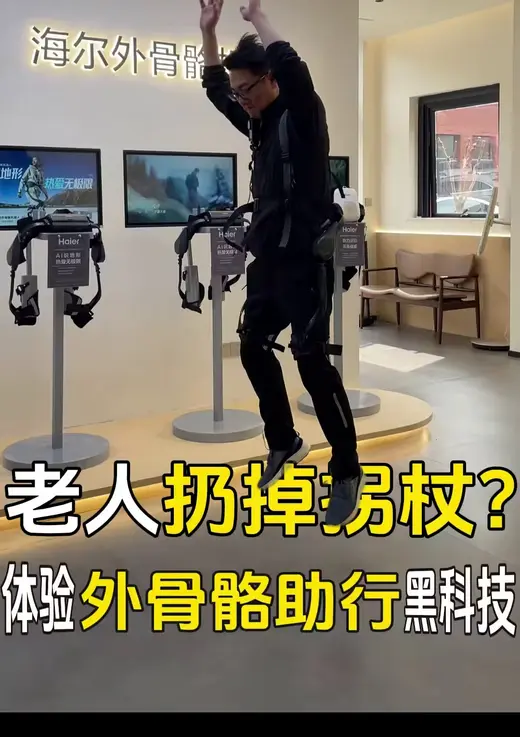
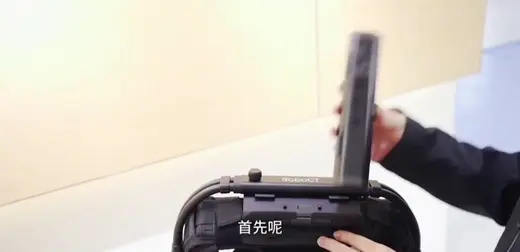
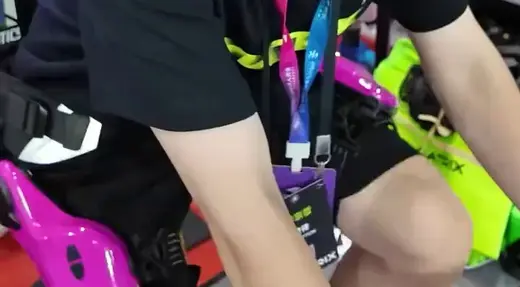
Canton Fair Highlight: A Zhejiang-Made Exoskeleton Helped Her Take Her First Step Again — Beyond the Tears, It Also Wants to Climb Zhangjiajie With You
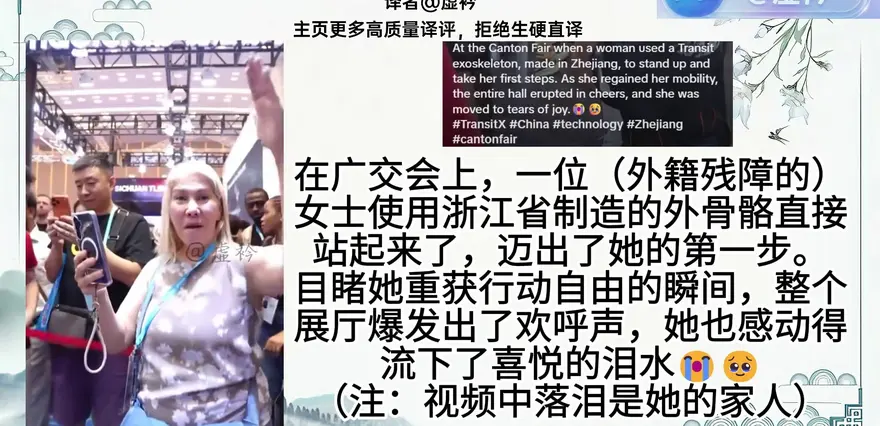
A booth video barely a dozen seconds long has recently gone viral across social media platforms at home and abroad: at the Canton Fair, a foreign woman with a disability, seated in a wheelchair, rose to her feet with the aid of a Zhejiang-made exoskeleton and took her first step. The cheers echoing through the hall and the tears in her eyes brought the slightly sci-fi-sounding word "exoskeleton" crashing into ordinary people's feeds in the most concrete way imaginable — for the very first time.
But beyond the spectacle, this video reveals almost zero product information: no brand, no model, no specs. What this article sets out to do is unpack the technology, the product category, and the industry landscape hidden behind those tears — and along the way, answer a more practical question: What does this machine have to do with you?
1. That Scene at the Canton Fair: She Stood Up, and the Whole Hall Cheered
Let's reconstruct the scene. At the Canton Fair (China Import and Export Fair) held in Guangzhou, a foreign woman with disabilities arrived at the exoskeleton booth and, with the assistance of staff, put on the device. As the motor started, she slowly rose from her wheelchair, and then—took her first step.
"Witnessing the moment she regained her freedom of movement, the entire hall erupted in cheers, and she was moved to tears of joy." (Mentioned in the video)
(By the way, correcting two voiceover/ASR transcription errors: one homophone rendered "exoskeleton" as a nonsensical phrase, and another turned "took her first step" into "sold her first step.")
Why does this image carry such viral power? Because for people with lower-limb dysfunction, "standing" means far more than "being able to walk": it means improved blood circulation, reduced risk of pressure ulcers, and a line of sight that returns from wheelchair height back to eye level with others—the latter often being a psychological watershed. And the ritualistic charge inherent in "the first step" allowed every onlooker to empathize instantly.
Objectively speaking, this kind of demonstration is not new in the rehabilitation exoskeleton industry—it has long been common in hospital rehabilitation departments. What is new is that it happened on the public stage of the Canton Fair, oriented toward global buyers, captured by a phone camera, and then pushed by algorithms onto the screens of millions.


II. She Was Not Using a "Hiking Assist Device" but a Lower-Limb Walking-Assist Exoskeleton
Based on the video footage and the capability of "enabling wheelchair users to stand and walk," this device belongs to the walking-assist / rehabilitation category of lower-limb exoskeletons: both the hip and knee joints are powered, with the device driving the legs through a preset gait to complete each step, while the user typically relies on crutches or a walker to maintain balance.
This type of product and the "hiking add-ons" you see at scenic spots are two entirely different species. Its joint torque is greater, its structure heavier, and its control logic more complex. The core metric is not "how much effort it saves you when climbing a mountain," but "whether it can safely drive a pair of legs that cannot generate force on their own."
The video only mentions that this was "manufactured in Zhejiang Province" without naming a brand. Zhejiang happens to be a major hub for rehabilitation exoskeletons in China, and Hangzhou's Chengtian is one of the most representative players in this track, also a perennial presence at Canton Fair booths — but since the video neither confirms this, we will not claim it on its behalf, and leave it as an open question for now.
"At the Canton Fair, a foreign woman with disabilities used an exoskeleton manufactured in Zhejiang Province to stand up directly and take her first step." (mentioned in the video)



3. Breaking It Down: How an Exoskeleton "Reads" Your Intent to Take a Step
The workflow of an exoskeleton can be roughly divided into three layers:
Sensing Layer. The IMU (Inertial Measurement Unit) captures the posture and angular velocity of the torso and thighs, while pressure sensors at the sole or joint detect weight transfer — together, they let the algorithm determine which phase of the gait cycle you are currently in: preparing to lift the leg, single-leg support, or a sit-to-stand transition.
Decision Layer. The gait recognition algorithm decides in milliseconds "whether to assist, when to deliver force, and how much." Rehabilitation exoskeleton models also offer multiple therapist-controllable modes: in passive mode, the device fully drives the legs through training; in assistive mode, force is output proportionally to the user's residual muscle strength.
Execution Layer. Brushless motors at the hip and knee joints (some products adopt a servo motor solution) output joint torque through gear reducers, driving the swing of the thigh. The frame is mostly aluminum alloy or carbon fiber, where weight reduction is the top priority — after all, every gram ultimately hangs on the user. Battery life sets the upper limit for a single training session or trek.
One easily confused point worth clarifying: hip assist and knee assist are two distinct technical approaches. Hip assist delivers force during the leg-swing phase of stepping, suited for "keep-walking" scenarios like trekking and hiking assist; knee assist stabilizes the knee joint during the stance phase, which is more directly relevant for ascending/descending stairs and downhill knee protection. The rehabilitation exoskeleton shown in the video, with full power drive at both hip and knee, is another matter entirely.




IV. Rehabilitation Exoskeleton ≠ Consumer-Grade Exoskeleton: The Divide Hidden Behind a Viral Moment
This is perhaps the most important reminder in the entire article: what enabled the lady with disabilities to stand up was a medical-grade rehabilitation exoskeleton; the viewers in the comments shouting "I want to buy one to go hiking" are actually eyeing a consumer-grade exoskeleton. These are two distinct categories—don't conflate them.
Medical-grade rehabilitation exoskeletons target patients with spinal cord injuries, stroke-related hemiplegia, and similar conditions. Their primary settings are hospital rehabilitation departments and rehab facilities, with emphasis on fall protection, safety redundancy, and therapist involvement. They are expensive, heavy, and typically require professional fitting. Their value lies in "re-standing and gait training," not everyday mobility—and the walking speed of such devices remains far below that of an able-bodied person.
Consumer-grade exoskeletons target healthy individuals: hiking/trekking assist is the primary scenario, and lumbar/back assist (carrying, manual labor) is the secondary one. They are lightweight, affordable, and ready-to-walk, but their motor torque and structural load capacity are entirely insufficient to "make a paraplegic person walk."
So, if you were moved by this video and want to buy a "same model" for a mobility-impaired family member—please first clarify which category you actually need. Consumer-grade hip assist products cannot help paraplegic individuals walk; this is a matter of physics, not something brand marketing can change.
Another marketing term to watch out for is "self-balancing." Self-balancing is more of a selling point for humanoid robots; an exoskeleton's balance relies on human-machine coordination (and, when necessary, a pair of crutches). When you see claims like "automatically maintains balance once worn," asking whether it's a full-powered hip-knee model or a hip-assist model can filter out most of the marketing spin.


V. Hiking Assist: The Consumer-Grade Exoskeleton's First Battleground Is the Scenic Spot
In the comments, the two most information-dense entries are, ironically, the two that look the least "lyrical.This exoskeleton isn't just for people with disabilities — it can also help those who want to hike but lack the stamina. Most tourist attractions in China are up in the mountains and sometimes require trekking. You can buy one for your own travel use, but at some tourist attractions in China, you can also rent one." (Transcript comment 35)
"Yes, I was just about to say — in Zhangjiajie, they use this exact thing for trekking, so climbing the mountain doesn't hurt anymore." (Transcript comment 36)
These two comments essentially sketch out the real usage portrait of consumer-grade exoskeletons in China: not the superhuman armor from sci-fi films, but an "hiking add-on" rented by the hour at scenic spots.
The logic is actually quite straightforward. China's top-tier attractions are overwhelmingly mountain-type; cable cars only cover the "main arteries," leaving the final few kilometers of sightseeing trails entirely to your legs. Among hikers, there's a sizable share of elderly visitors and younger tourists with average fitness — "I want to reach the top, but my legs won't cooperate" is a universal pain point. The exoskeleton slots right into this gap: when stepping uphill, it lends a hand to the hip joint, turning "turn back halfway" into "reach the summit."
Public reports indicate that mountain-type scenic spots such as Mount Tai had previously piloted exoskeleton rentals, with Shenzhen-based Kenqing Tech as one of the suppliers behind it; Zhangjiajie being called out by viewers suggests this model is now rolling out across more scenic spots.
For this category, the rental model may matter even more than direct sales: priced by the hour with an extremely low barrier to entry, it lets users — before deciding whether to spend thousands or tens of thousands of yuan on a purchase — first validate "whether this thing actually works" on a real mountain trail. For scenic spots, it's a value-added service and a new revenue line. Rent first, buy later is very likely the first stop for the exoskeleton to complete mass-market education.



VI. Brand Map: From Chengtian and Kenqing to Hypershell and Dnsys
Zoom out, and behind this "Made in Zhejiang" device lies a domestic exoskeleton track that is already quite crowded:
- Chengtian Tech (Hangzhou): Started with rehabilitation exoskeletons, taking a medical-grade route; a Canton Fair regular, and one of the most likely candidates for the "Made in Zhejiang" device in this video;
- Kenqing Tech (Shenzhen): Broke out through scenic-spot rentals, focusing on trekking assist — the best footnote to "the first battlefield for consumer-grade exoskeletons is at scenic spots";
- Aosha Intelligence (Shanghai): Industrial route; lumbar / back assist exoskeletons for logistics and production-line scenarios, focused on max payload / load capacity and reducing the burden on workers;
- Yuanye Tech (Shanghai): Soft-robotics / muscle-assist route, making exoskeletons lighter and more body-hugging;
- Toread: An outdoor brand going cross-category, integrating trekking assist into its traditional outdoor gear system;
- Haier: A representative of large-enterprise ecosystems, entering through a smart health-and-senior-care landscape rather than building hardware as a single point;
- Hypershell: A star project born from overseas crowdfunding; a hip assist exoskeleton with a carbon fiber body and AI gait recognition — a flagship of going global;
- Dnsys: Betting on the knee-assist route, focused on trekking and running scenarios, likewise using overseas crowdfunding to validate demand.
The underlying logic of this track is the supply chain: brushless motors, lithium batteries, and carbon fiber processing — the three biggest cost drivers of an exoskeleton — happen to all sit along China's most mature industrial belts. This is also why the pricing power for consumer-grade exoskeletons is increasingly concentrating in Chinese brands, and why overseas crowdfunding platforms have become their first stop for validating demand and building brand awareness.



7. Before You Order: The Spec Checklist the Video Didn't Tell You
It must be pointed out: this viral video never gives a single number for runtime, weight, price, or torque from start to finish. The emotion lands, the information doesn't — and that's almost a universal failing of exoskeleton content. If you're genuinely ready to order after watching, the checklist below will serve you better than tears:
- Battery life / endurance: First check whether the rated condition is flat-road constant speed or mixed mountain terrain; for hiking scenarios, estimate at roughly 70% of the rated value;
- Weight and max payload / load capacity: Self-weight determines wearing fatigue, while structural load capacity defines the boundary of suitable users — don't conflate the two "weights";
- Joint torque: Peak torque and rated torque are two different metrics, and the demand magnitude also differs between hip assist and knee assist products;
- Sensor solution: IMU + pressure sensor is the mainstream; focus on whether gait recognition can adapt to different cadences and slopes;
- Motor type: The noise and heat of a brushless motor directly determine whether you're willing to wear it for a full day;
- Material: Carbon fiber noticeably reduces weight, but the price also clearly moves up a tier;
- Don-and-doff convenience and after-sales: Size fit, single don-and-doff time, and warranty policy — these details determine long-term usage rates.
The video mentions no specific parameters such as runtime, weight, price, or torque — before ordering, rely on the brand's official ratings and third-party real-world tests.


8. The Comment Section Drift: When an Exoskeleton Becomes a Battlefield of "Tech Narratives"
One interesting observation: the writing style, meme usage (such as "the BBC would ask: but at what cost?"), and narrative perspective of these comments all read more like translated re-uploads of overseas platform comments—this video likely carried the international response back to the platform.
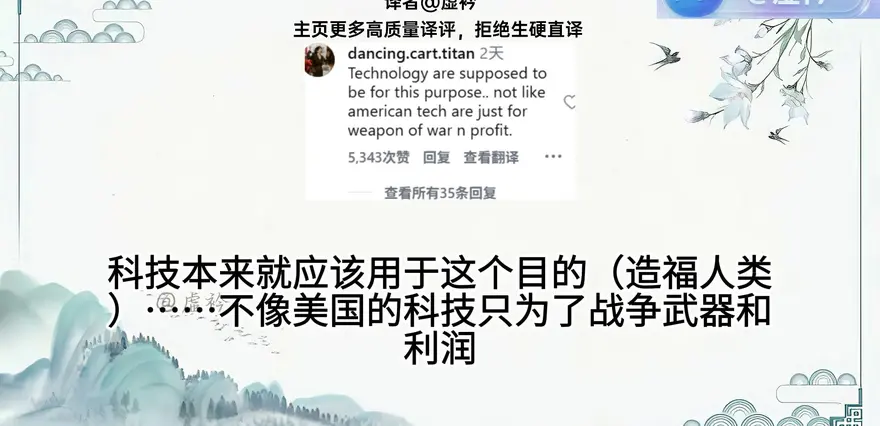
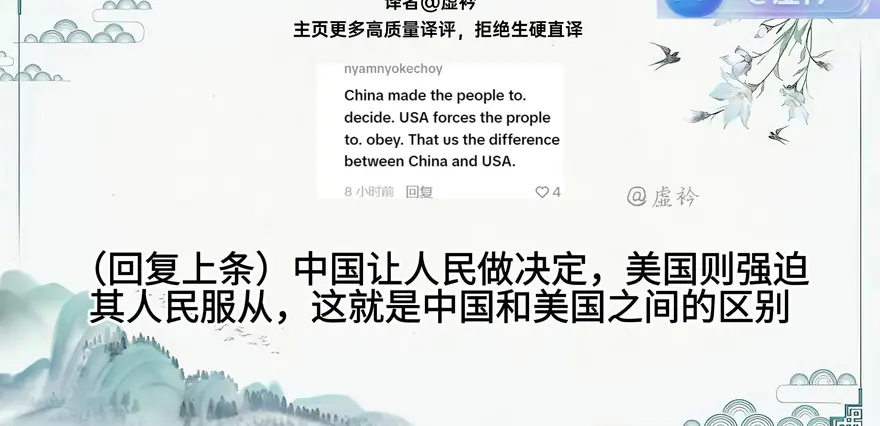
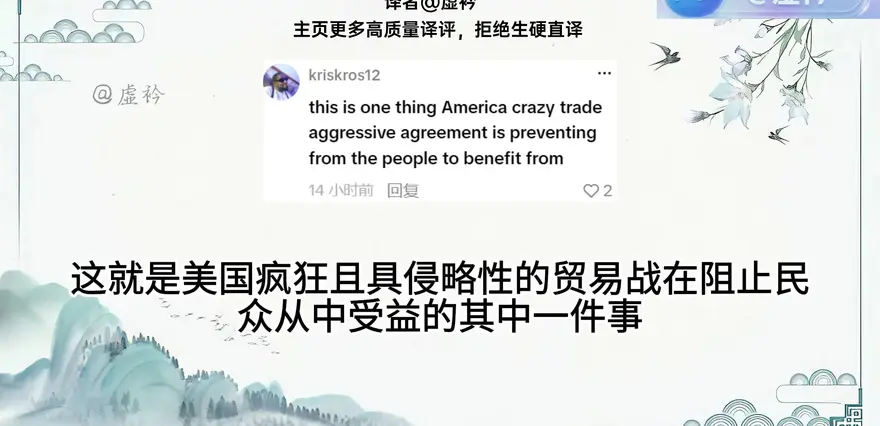
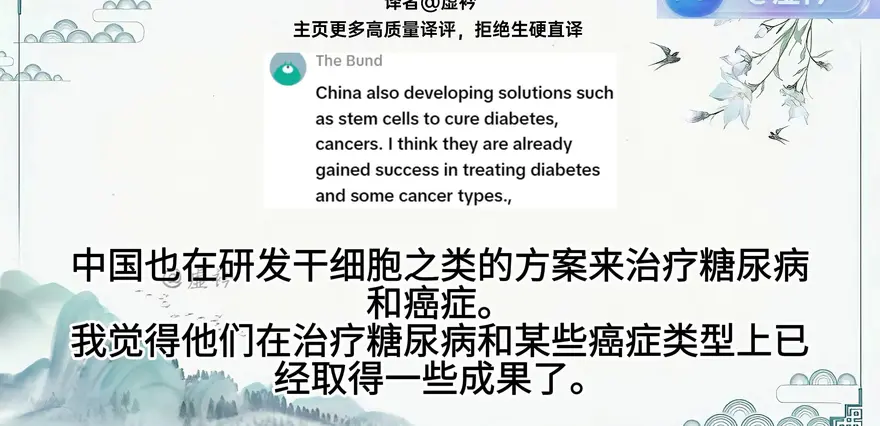
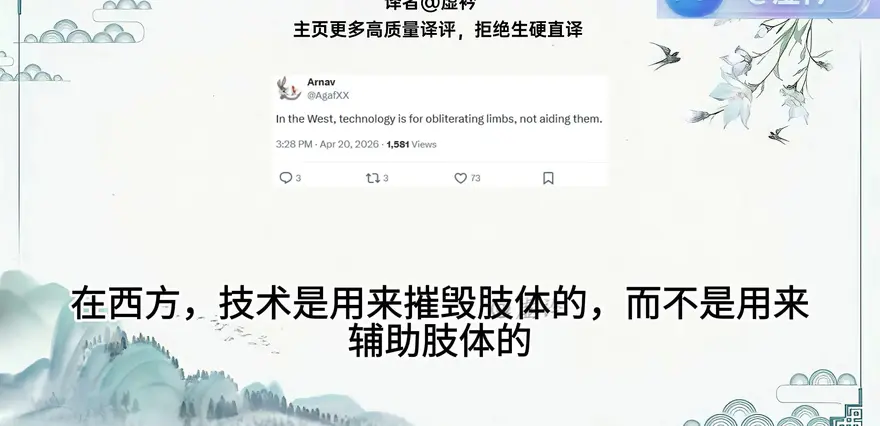
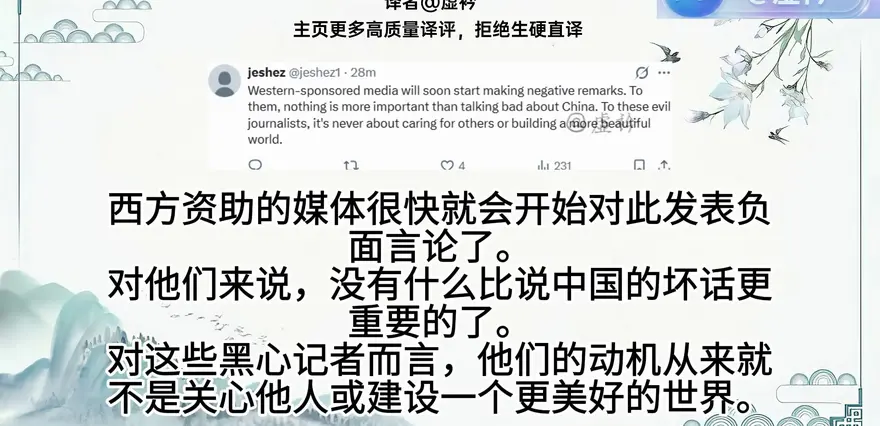
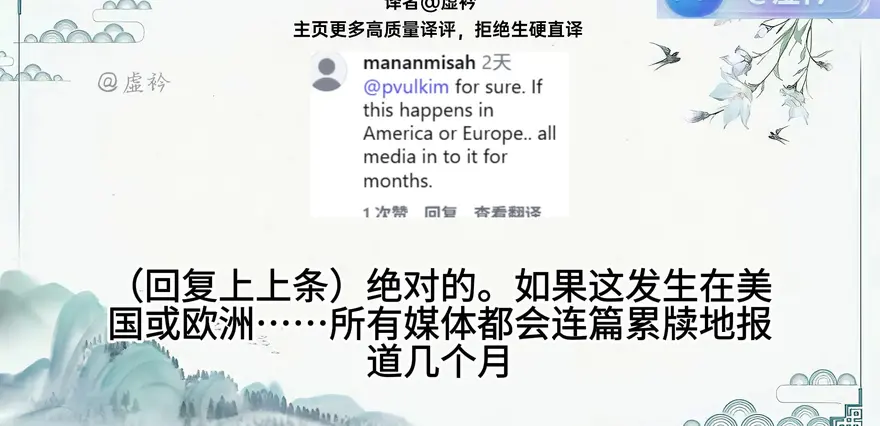
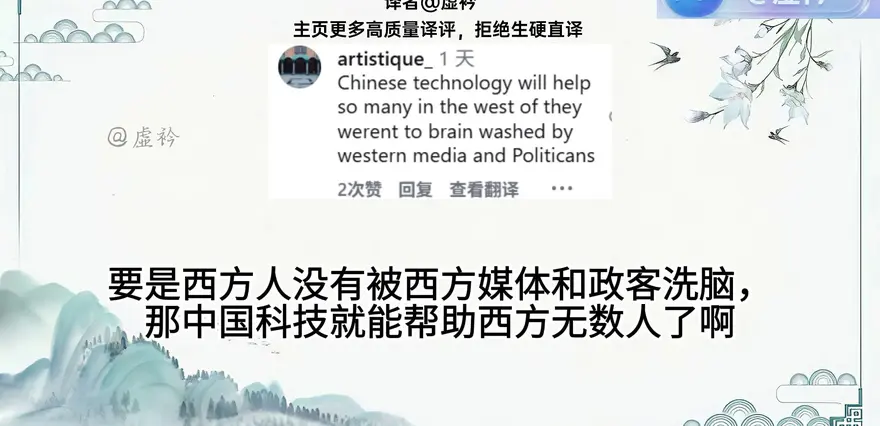
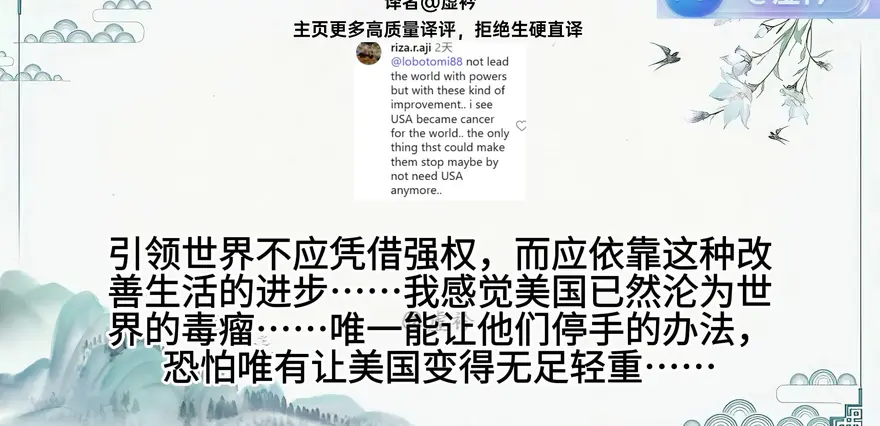
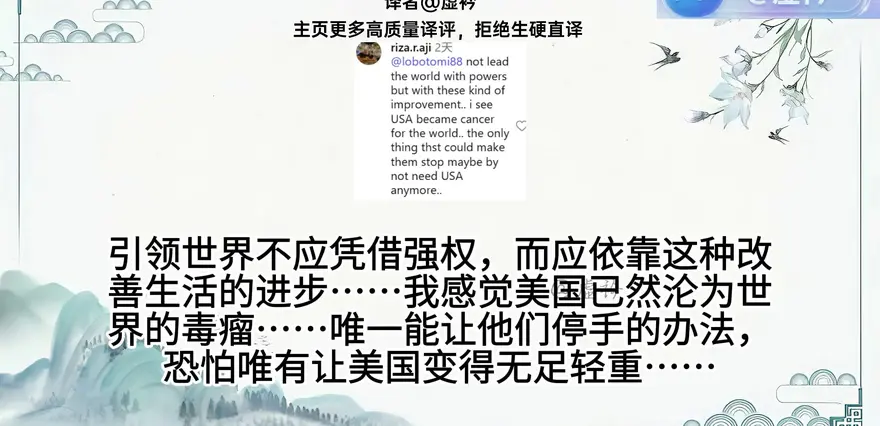
The drift direction was also highly consistent. The loudest voice placed this exoskeleton inside the "technology for humanity vs technology for war" oppositional frame: from "all the money spent on war should have been used to help those in need," to "in the West, technology is used to destroy limbs, not to assist them," to "China equals technology for humanity, the US equals technology for mass destruction" (the original is an ASR transcription error), the emotional intensity kept ramping up. The second voice was strong distrust of Western media, believing this kind of news would be deliberately played down—"if this happened in the US or Europe, all the media would report on it at length for months" (the original is an ASR transcription error). Some comments followed the "Chinese tech" thread and extended into progress on stem cell treatments for diabetes and cancer (the original is an ASR transcription error)—showing that in the eyes of some overseas viewers, "Chinese tech" is already a unified narrative, with the exoskeleton serving as just one entry point. From "China is the future, China is peace," to "China should lead the world to become better," the grand narratives kept escalating.
But amid a stream of taking-sides statements, there was one notably clear-headed comment:
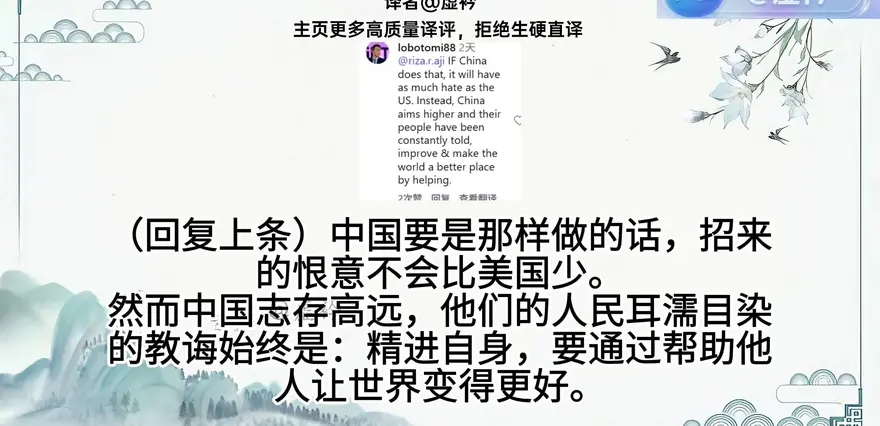
"If China did that, it would attract no less hatred than the US. Yet China harbors high aspirations... to make the world better by helping others." (Comment 32 in the transcript; is an ASR transcription error)
My take: the emotion is understandable, but elevating a single exoskeleton to the level of a "clash of civilizations" helps neither the product nor the industry. The best national narrative for the exoskeleton is not the grand rhetoric in the comment section, but an aunt with bad knees relying on it to climb Mount Tai, or a person with disabilities using it to look the world in the eye again. Users first thinking "hiking isn't tiring anymore" and "my cousin could have one too," rather than first thinking about taking sides—that is the real victory for this category.
There was also a mini-debate in the comment section worth mentioning. One person said "I watched it live, it was so moving," another replied "then you don't need to go out of your way to post this," and was voted back up with: "Letting more people know can help more people." For a new category like disability assistive devices that still has very low awareness, I side with the latter: spreading the word is itself product education—every extra post might let one more family learn "so there's this kind of solution too."

Top Community Comments
"But at what cost? [doge]" — @SeaGazingCorporalCantStandAtAttention (184 likes)
Interpretation: This repurposes the classic "BBC: But at what cost?" meme, poking fun at how certain Western media outlets always tack on a "but at what cost" caveat when covering positive news about China. The 184 likes suggest it struck a collective nerve among viewers weary of this narrative framing.
"This is the very point of humanoid robots—to develop prosthetics that protect the weak. Meanwhile, viewers from 4V and 🐌 watched the robot running and still asked why it doesn't just use wheels and tracks." — @DragonRoarShakingTheWorld (166 likes)
Interpretation: This slots the exoskeleton into the "prosthetics/humanoid robot" tech tree, representing the hardcore sci-fi enthusiast view—the ultimate value of robotics is to "protect the weak," not to replace humans. The regional meme at the end ("4V" and the like are community slang for certain overseas netizens) also hints that this kind of content inherently carries the undertone of an ideological battlefield.
"The eyes of the world's people are sharp; facts speak louder than words." — @DawnClassGoer (138 likes)
Interpretation: A textbook high-like emotional consensus: viewers believe the product itself is more persuasive than any marketing. It's also a quiet reminder for makers—the best vessel for a going-global narrative is real user scenarios, not slogans.
"Technology was always meant to be used for this purpose—to benefit humanity." (Transcript comment 2)
Interpretation: The "mother theme" of the entire comment section. It captures ordinary viewers' plain expectation of tech ethics, and explains why this video could travel across languages—emotion is universal and needs no translation.
"I'm happy for him, and I hope my cousin can get one too." (Transcript comment 15)
Interpretation: The most "product"-driven comment in the thread. Behind it sits a real need: families of people with limited mobility around the world are waiting for an affordable, usable walking-assist exoskeleton. Accessibility—price, distribution, fitting services—is the single biggest bottleneck for this category today.
"This exoskeleton isn't just for people with disabilities; it can also help those who want to go hiking but don't have the stamina… You can even rent one at some tourist attractions in China." (Transcript comment 35)
Interpretation: The single most information-dense comment. It nails the real usage profile of a consumer-grade exoskeleton: not a superhuman suit, but an "hiking add-on" rented by the hour at scenic spots. The rental model is very likely the first stop on this category's path to market education.
"If China behaved that way, it would draw no less hatred than the US does. Yet China aims higher…" (Transcript comment 32)
Interpretation: Amid a flood of us-versus-them takes, this is a rare reflective voice—cautioning against the logic of "replacing one hegemon with another." It shows that even in the most emotionally charged comment sections, clear-eyed observers of the narrative itself still exist.


One-Sentence Summary
The value of this episode lies not in specs, but in signals: exoskeletons are moving from hospital rehabilitation departments to scenic mountain trails, with the "disability assistance" and "hiking assist" routes scaling up simultaneously. If you have a family member with limited mobility, look into medical-grade rehabilitation exoskeleton brands like Chengtian and professional fitting channels; if you're simply struggling on mountain hikes, try renting one first at pilot scenic spots like Zhangjiajie or Mount Tai, then decide whether to bring home a consumer-grade exoskeleton such as Hypershell or Dnsys.
About this article: part of Chinese-Made Exoskeleton Review Archive — an independent, regularly updated English archive of reviews of consumer exoskeletons made in China, edited from publicly available video transcripts. Not an official manufacturer page.
For inquiries and purchasing, contact lonlonago@foxmail.com. More in Exoskeleton · All articles.