Starting at 9,800 RMB and Delivering a 99.2% Motion Predictive Accuracy: Tasha ASEXOTK1000 Debuts as a Powerful New Contender in the Consumer-Grade Exoskeleton Space
Opening: The Space Is Heating Up, a Strong Lineup of New Players Takes the Stage
Attention, geeks: the exoskeleton robot that went viral across major video platforms—leaving countless fans asking where to buy it—has now fully sold out. Ever since exoskeleton technology moved from clinical rehabilitation settings into the consumer market, this segment has been visibly heating up.
At the inaugural Zhejiang International Fashion Sports Week, held on May 1 at Hangzhou’s Huanglong Sports Center, Zhijiang Research Institute—already renowned for unveiling a three-channel wearable manned flying vehicle—presented even more hardcore, national-level new hardware: the first domestic lightweight lower-limb assistive exoskeleton that integrates AI gait prediction with joint-torque adaptive technology. The product is the Tasha ASEXOTK1000.

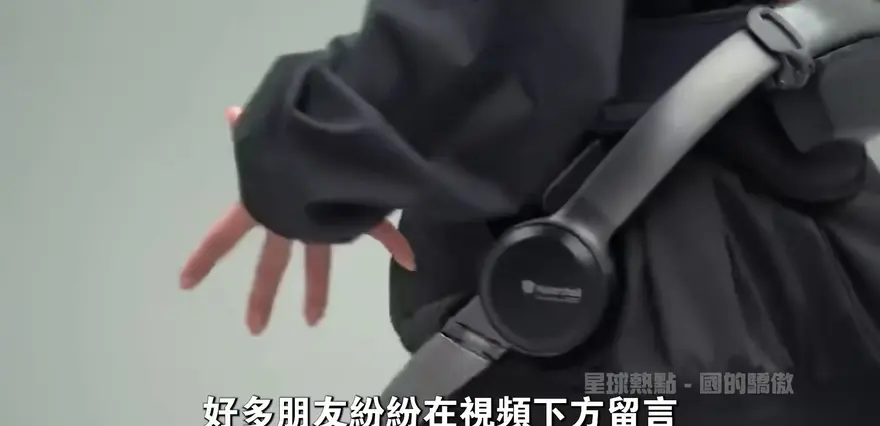
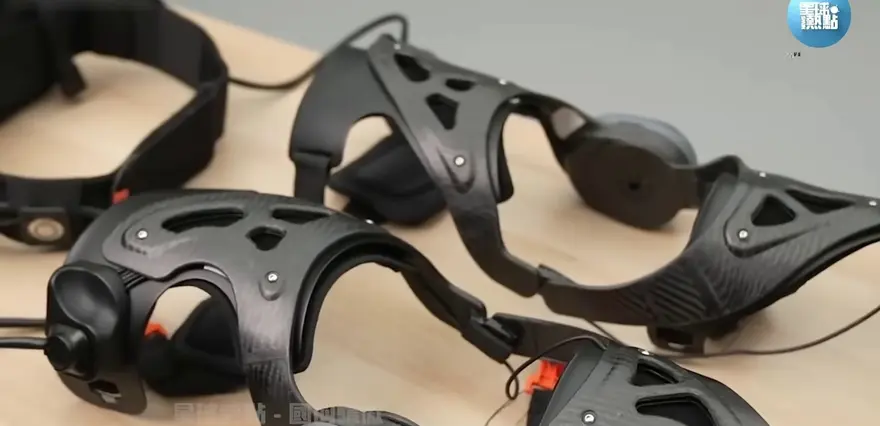

It’s both an on-body AI brain for walking assist and an entry ticket priced under 10,000 yuan. The product spans a broad user base—from hardcore outdoor enthusiasts to frontline factory workers—delivering hiking/trekking assist for scaling peaks and everyday walking assist for people with limited mobility. Tasha reveals exceptionally wide application prospects. Its launch makes it clear that the everyday “Iron Man suit” is no longer a sci-fi concept; it’s a reality we can measure with every step.
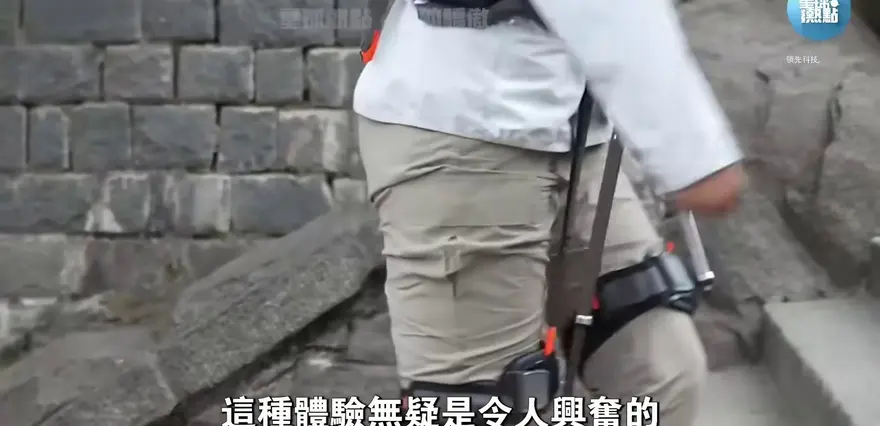
Whether outdoors or in industrial settings, steps that once left you gasping and struggling now feel like walking on flat ground with the gear, greatly reducing muscle energy expenditure.
Technical Analysis: AI Gait Prediction Accurately "Calculates" Your Next Step
As an equipment featuring cutting-edge technology, Tasha delivers highly impressive performance specifications.
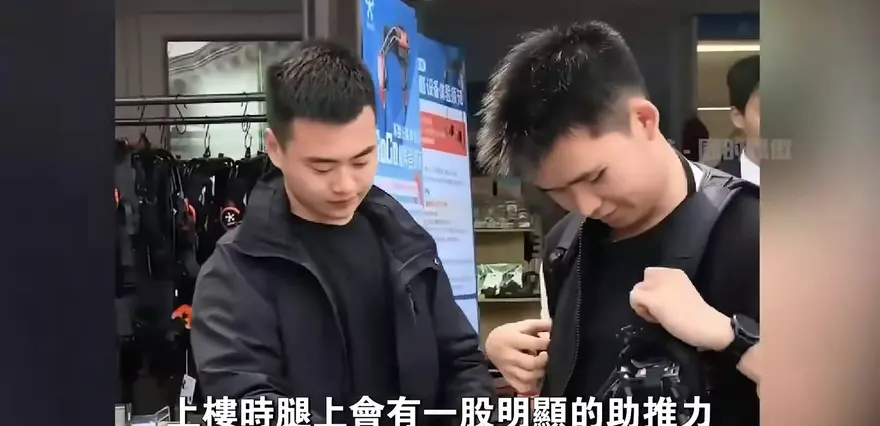
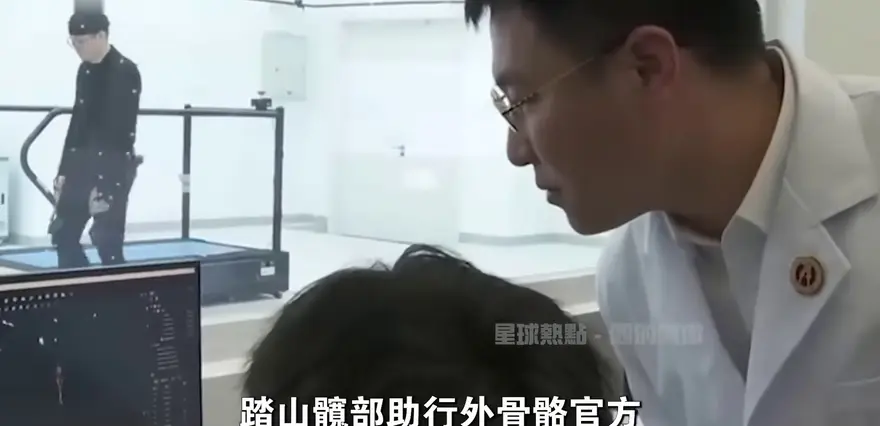
Regarding sensor hardware, Tasha has integrated three sets of high-precision sensors (IMU/pressure sensor) and a flexible sensing network into the extremely critical areas of the hip and lumbar regions. It can capture the human body's gait and core muscle movement data in real-time. Through rapid analysis by built-in advanced deep learning algorithms, it achieves automatic adjustment and precise motion prediction.
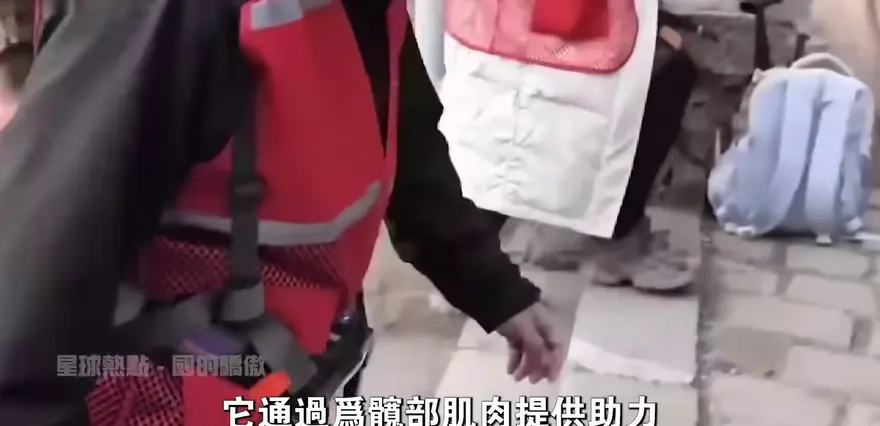
The minimalist yet highly efficient sensor array and AI execution pipeline break the past awkward phase of "rigid synchronization" seen in previous exoskeleton devices:
The motion prediction accuracy reaches up to 99.2% (data as mentioned in the video)
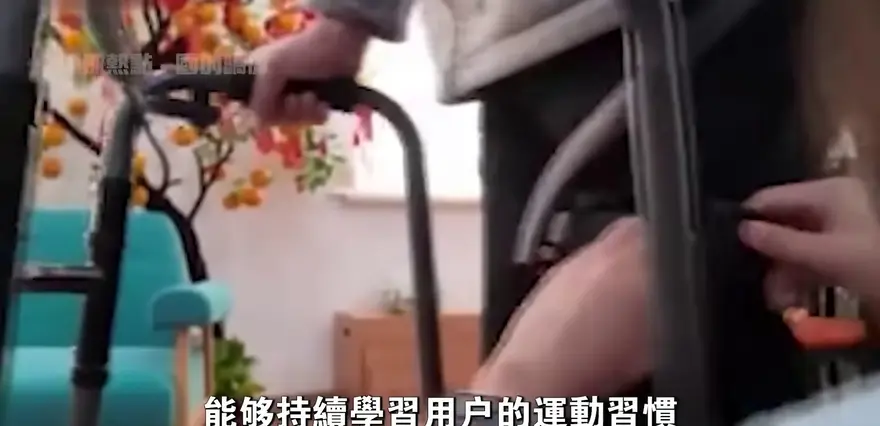
Beyond the hardware, Tasha's other killer app in technology lies in its "growing algorithm." This AI system can continuously learn each user's walking posture and muscle exertion habits, achieving the goal of "getting smarter and more comfortable the more you walk." This means that after wearing it for a period of time, the device is no longer an alien, cold machine, but rather acts like a bionic joint breathing in sync with you.
Furthermore, the system can autonomously switch assistance modes based on different terrains, ensuring that the joint torque output directly matches your motion intent. Every millisecond of delay eliminated by the algorithm ultimately translates into saved energy for our leg muscles—as many professional literature sources point out, advanced gait prediction algorithms can theoretically reduce muscle fatigue by up to approximately 30% (data as mentioned in the video).

Comfort and Safety: 2.7 kg of "seamless wear", a hardware-software protective barrier
When buying this kind of wearable device, comfort and safety are the most crucial considerations. We have seen too many traditional industrial exoskeletons with cumbersome structures and heavy battery packs, but Tasha offers a strikingly different experience right from the start.
Crafted extensively from carbon fiber and refined lightweight materials, the overall weight is strictly controlled at approximately 2.7 kilograms, leading thepack among similar consumer-grade exoskeletons.
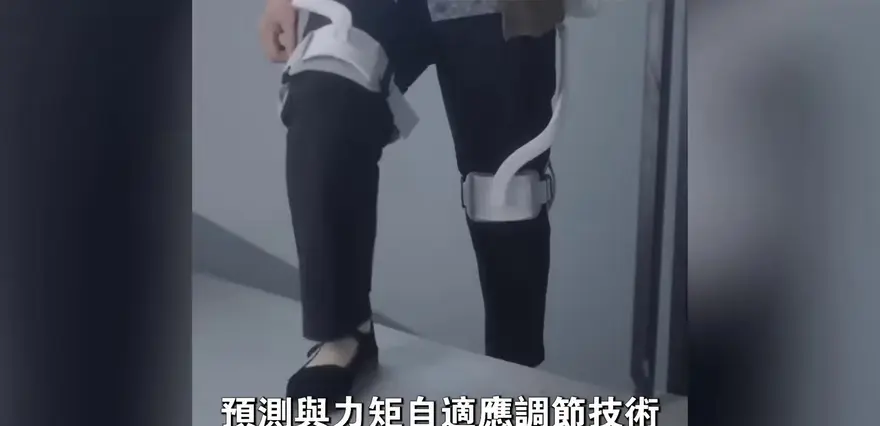

Combined with exceptional ergonomic design, the device precisely fits the curves of the human skeleton, achieving a seamless "sensory-free" wearing experience. The AI algorithm allows the assistive exoskeleton's assist intensity and human movements to achieve millimeter-level motion matching, making hundreds of millions of instantaneous force exertions as smooth as silk, completely devoid of the bulky feel of traditional machinery.
On the safety dimension, Tasha delivers a definitive answer to the biggest exoskeleton pain point—the "fall risk".
Tasha builds a dual protection system through software and hardware collaboration: physical structures include precise limit stops to avoid risks of excessive flexion and extension; meanwhile, the AI algorithm recognition system ensures stability and immediate response in abnormal situations.
During repeated field tests, when the device's power was cut off by an emergency program, Tasha's self-balancing and momentary stop mechanisms directly translated into the ability to take over the body's center of gravity. It can share gravity and provide dynamic support, even offering a flexible fall protection buffer during rapid descents. This production logic based on the high safety genes of national team standards has not only passed strict national standards but also validated the fundamental safety baseline of wearable equipment.
Battery Life, Price, and Real-World Testing: 4-Hour Battery Life, Hot-Swapping, and the 9,800 RMB Price Point
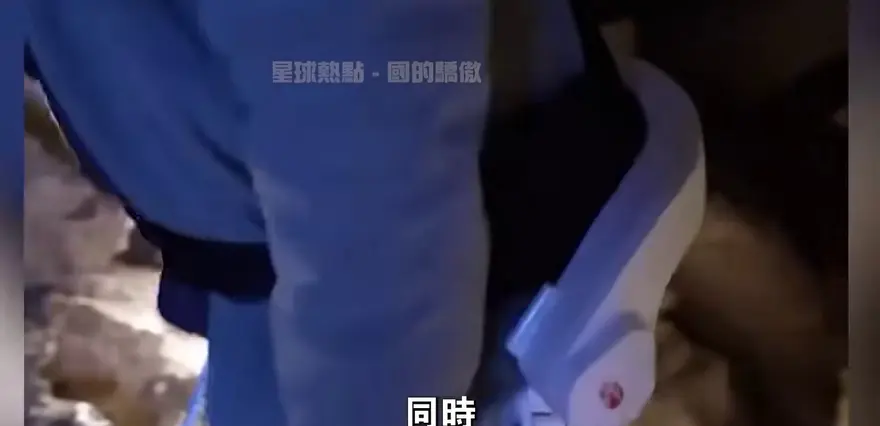
Up to 4 hours of battery life and a convenient battery hot-swappable design directly address the pain points of prolonged outdoor or production work. Tasha features a flexible dual-mode battery system, where the official battery life is rated at around 4 hours. When the charge is depleted, you simply manually remove the old battery and swap in a new one—just like using a standard power bank—greatly alleviating battery anxiety in complex scenarios.


During real-world testing across various terrains, whether climbing steep slopes with an incline of 30 degrees or tackling high-intensity continuous stairs, Tasha consistently delivers a sustained and linear pushing force for walking assist.
Finally, we must discuss the price, which is what everyone cares about the most.
The official guide price for the Tasha walking assist exoskeleton is 9,800 RMB. The first 100 users to pre-order will receive an immediate discount of 1,000 RMB, bringing the starting price to 8,800 RMB (data mentioned in the video).
Compared to the exorbitant prices of mainstream industrial-grade models, entering the market at a price point under 10,000 RMB offers a rare cost-performance advantage. It has officially entered mass production, and interested consumers can make reservations through the Zhijiang Research Institute's WeChat official account.
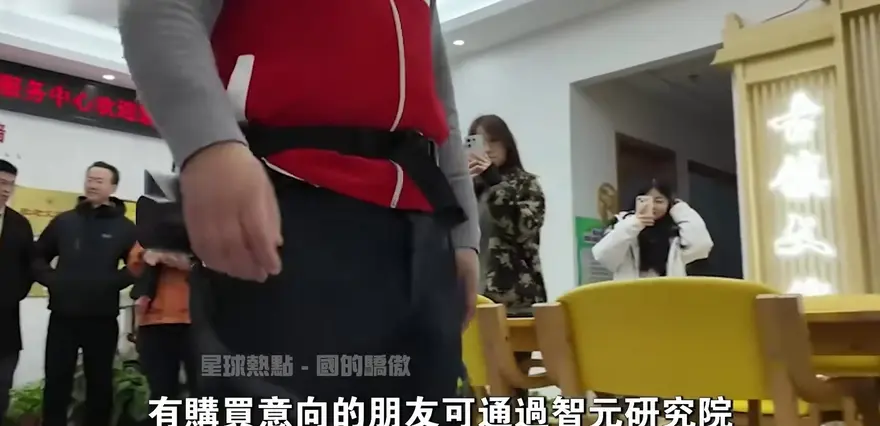
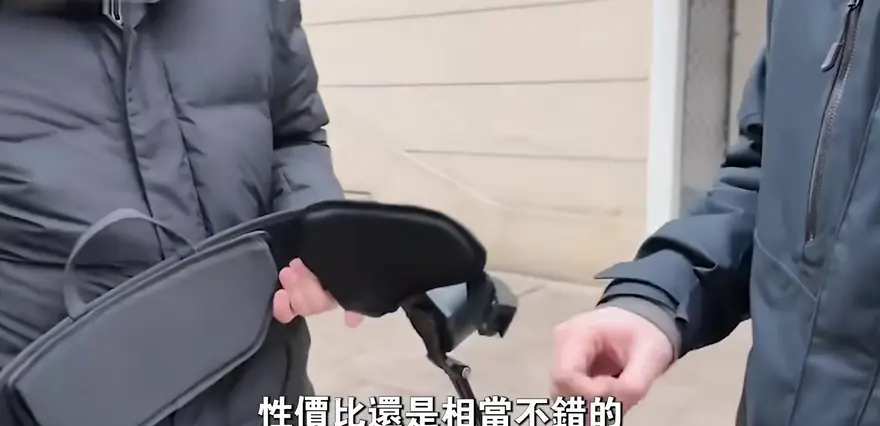

Another Side of Vertical Scenarios: How the Lumbar Lifting Exoskeleton Solves the Pain Point of Bending Under Heavy Load
However, another product line unveiled at this launch event also deserves a sustained spotlight.
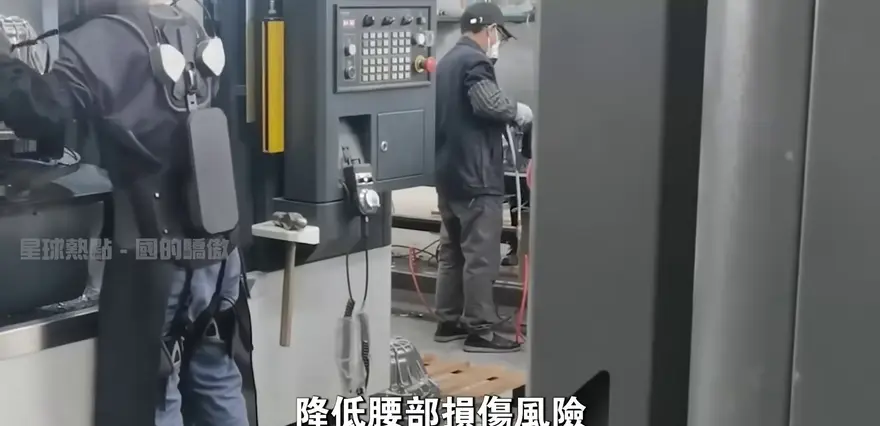
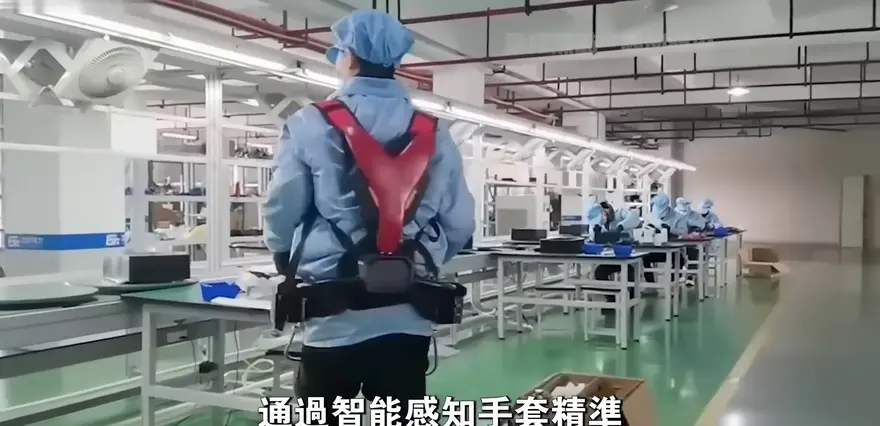
If Tasha ASEXOTK1000 is a rising star aimed squarely at the consumer-grade exoskeleton market, then the lumbar lifting exoskeleton that followed is a heavy-duty powerhouse engineered specifically for high-intensity operational environments. In logistics warehousing, industrial assembly lines, and mining—settings that push workers to extremes—frontline laborers may bend, lift, and rise hundreds or even thousands of times a day. Such high-frequency compound movements can easily trigger irreversible lumbar disorders (e.g., occupational lumbar muscle strain).

During the on-site demonstration of the culvert heavy-shell handling test, we can clearly discern the core logic of how it supersedes conventional gear:
It captures hand-grip actions with precision through sensor-equipped gloves, prompting the lumbar servo motors to generate an instant dynamic boost. This mechanism redistributes gravitational force for loads up to 30 kg, steadily offloading weight and markedly reducing compression-related injuries to the complex structures of the lumbar spine.


Throughout this process, the system orchestrates an exquisitely refined hardware-software collaboration link. Beyond bearing a 30 kg static load, it seamlessly transitions to a lower-limb walking assist mode once the user begins to move, ensuring smooth, uninterrupted gait cycles devoid of any stutter or jerk. With this proven eco-system, the device not only furnishes robust physical safeguarding for lifting tasks but also propels occupational health equipment toward new frontiers of intelligence and personalization. Meanwhile, its impressive max payload expands the imaginative potential for industrial deployments without limit.


$9,800 “exoskeleton Freedom”: A Close Look at the Product Logic Behind It
The exoskeleton market is booming, but so is the stiff competition and the public scrutiny. Across the domestic track, players such as Kenqing, Aoshark, Toread, Haier, Yuanye, Hypershell, Dnsys, and others have each rolled out products ranging from the hundreds to tens of thousands of RMB. Still, Tasha’s debut gives “sub-10-k exoskeleton” a genuine claim to technological relevance for the first time.
Distill the two headline products in this release and their underlying logic is crystal clear:
- Hip region: Deep-learning-based motion anticipation delivers high-accuracy predictions, targeting dynamic walking assist during natural movement.
- Lumbar region: A smart glove (and similar triggers) shifts load and resistance, optimizing instant high-load scenarios such as heavy lifting.
On mechanical engineering, this year’s flagship devices follow a strikingly similar blueprint: a carbon-fiber / aerospace-aluminum frame + brushless motor, paired with multimodal sensors and a mature hot-swappable battery system.
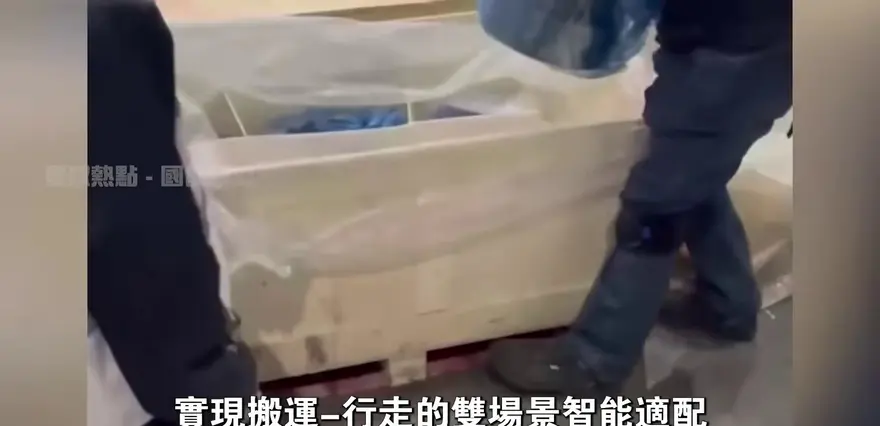
What further energized the industry was March’s announcement that an extreme exoskeleton developed in-house won a 2025 Germany iF Design Award, the first time a China-based defense/specialty-equipment team has earned what many call the “Oscars of industrial design.”
The award-winning breakthroughs:
- The deep fusion of a four-bar linkage and bionic architecture breaks through conventional planar motion limits, enabling joints’ degrees of freedom to match demands dynamically and delivering sub-millimeter precision from hydraulic or mechanical transmission.
- A first-of-its-kind purely mechanical force-transfer system distributes load across three levels—shoulder, waist, legs—offloading roughly 70 % of shoulder pressure onto other parts of the body.
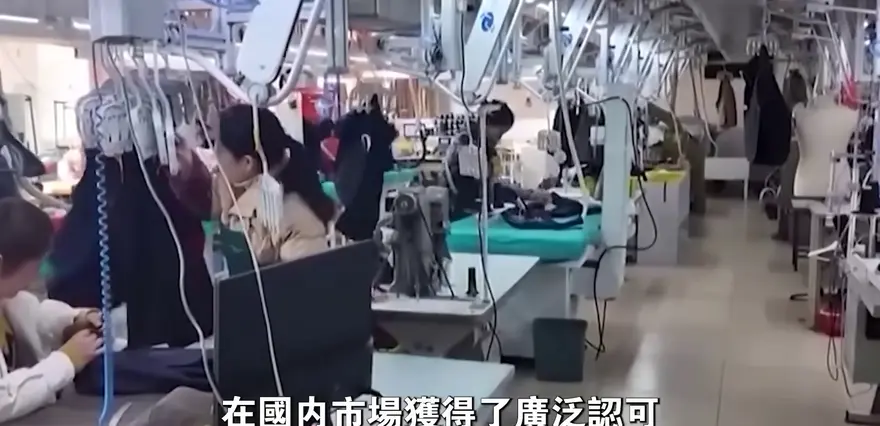
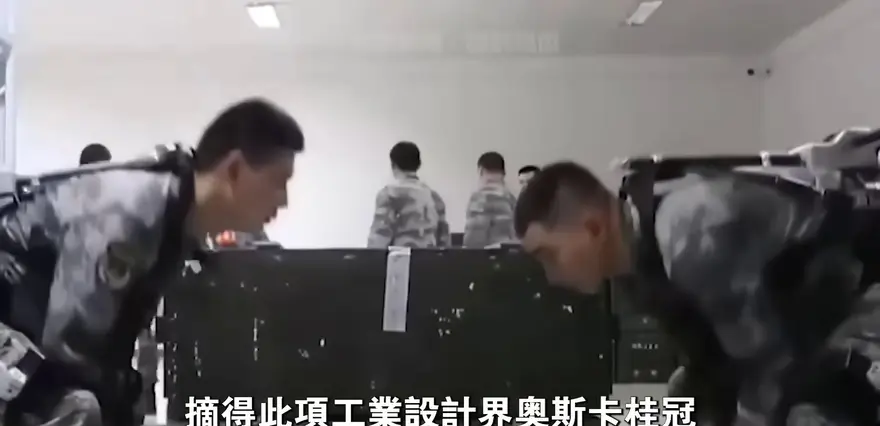

These hard-core technologies were once confined to academic papers or military documentaries; today they appear, meticulously engineered, in real-world hardware:
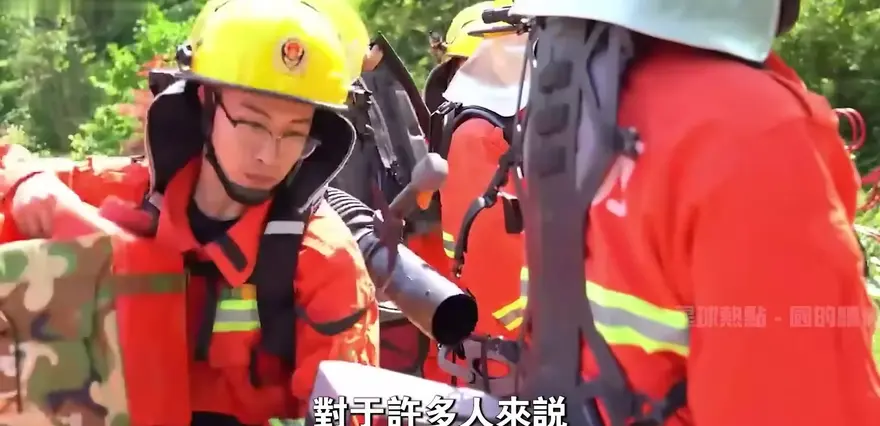
- Built with aerospace-grade materials and topology optimization, the system shrugs off the extreme, episodic missions of forest firefighting and earthquake rescue, providing high strength while shedding mass.
- A patented 45-second rapid donning/doffing routine fits 95 % of standard adult body types, and the inclusion of 80 % recyclable components turns it into a genuinely green, full-lifecycle piece of professional gear.
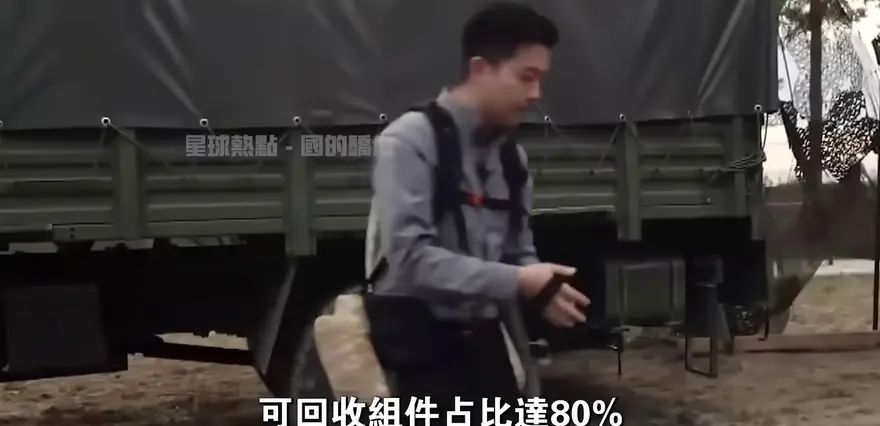

From a Blockbuster to a "Growable" Seed of the Future
From an industry perspective, the two product lines actually point to the same trend: the boundary between consumer-grade exoskeleton and industrial-grade equipment is blurring, and algorithms are destroying the era of pure hardware.
Tasha has "grown" its brain onto the user's muscle habits and gait. By utilizing a "growable algorithm" with self-learning capabilities, it has directly bypassed the rigid preset threshold stage. For the entire consumer-grade exoskeleton track, this is a watershed revelation—the ceiling on hardware stacking has irreversibly shifted attention to the deep waters of "who can read the user better."

So, after the initial frenzy, we believe there are three core areas that represent a "basin of cold water" for all entrants to face:
- Fail-safe mechanisms for complex terrain such as steep slopes and wet roads; current solutions are still far from perfect;
- All-weather heat dissipation and rainy-day reliability remain huge challenges for precision machinery and sensor (IMU / pressure sensor);
- Conclusions on long-term joint wear under extremely high loads still lack sufficient medical long-cycle validation samples.
However, the flaws do not overshadow the merits. We have reason to believe that both the Tasha ASEXOTK1000 hip assist walking assist exoskeleton and its powerful lower-limb exoskeleton are poised to become the next benchmark for the evolution of mass-market hard-tech devices, much like TWS earbuds were a few years ago.
Top Community Comments
@ShuiDing (30 likes): Don't be misled by the name. These so-called exoskeletons are really muscle-assist devices that help muscles contract and relax; they don't provide the load-bearing function of actual bones. So joints will still wear down, and wear can even be accelerated. Older adults and people with compromised joints should proceed with caution.
This was the most thought-provoking comment under this video. It cuts to the biggest conceptual mismatch in the exoskeleton industry: most consumer-grade products on the market today are, in fact, "muscle-assist suits" rather than load-bearing skeletal armor. From a medical and biomechanical perspective, joints will still wear down; in people with degenerative conditions, blind use can easily accelerate irreversible joint damage. It reminds us to approach hardcore tech with a healthy dose of respect.
@DaoYouAiZuoMeng (8 likes): The only reason to wear an exoskeleton is for climbing? So what's the point of climbing then? [lol]
This deadpan, humorous comment reveals a profound paradox of behavioral motivation. Spending nearly 10,000 yuan on heavy gear to go hiking—is it to conquer nature, or to deflate the hype bubble created by the gear itself? The rhetorical question nails the philosophical conundrum consumer-grade exoskeletons face in "sports enhancement": when external assistance erases physical differences, the value of achievement in outdoor sports is also undermined.
@cnxqscn (6 likes): Everyone wearing them is young. I knew it was basically advertising—not practical.
Among highly upvoted comments, this "it's just an ad" take hits a raw nerve. If you browse buyer profiles on e-commerce platforms, you'll find most are trend-chasing young gadget enthusiasts, not people who actually depend on the gear for their livelihood or physical work. This "reviews look great, real-world use is meh" phenomenon is precisely the biggest dilemma facing consumer-grade exoskeletons today—they can't shed their "influencer" label.
@User-A: Is it only young people who wear these? Can older adults actually use them? I'm really worried about safety.
Compared with the biting sarcasm above, this question is more grounded. Seniors are price-sensitive and have high safety requirements, especially for fall protection. As products move toward real-world deployment, how to enable silver-haired users—who may not be comfortable with complex digital devices—to use exoskeletons with peace of mind will determine the industry's true ceiling.
@ZhuiFengShaoNian: The previous one sold out in seconds. Hope I can grab the first batch of this one.
The enthusiasm from fans shows the product's appeal. But beyond FOMO and bandwagon effects, high demand often hides concerns about gaps in real-world experience—when users finally receive the mass-produced version and face daily commutes, how long will this tech enthusiasm last?
@YangLaoJi: Planning to get a set for my elderly parent. Rehabilitation exoskeletons from overseas often cost hundreds of thousands. If this one is really as amazing as advertised, paying around 9,000 yuan to help seniors climb and descend stairs would be absolutely worth it.
This comment reflects a real pain point from an everyday user. It pinpoints the clearest commercial path at present: consumer-grade walking assist devices must be priced under 10,000 yuan, and truly solve stair-climbing capabilities plus anti-slip thresholds, to become a breakout product that escapes the trap of pseudo-demand.
@HardcoreTechFan: The lumbar assist exoskeleton for lifting shown in the video—is 30 kg really that stable? Feels like a show. Any real-world test videos?
Faced with eye-catching specs, a rational commenter raises the most practical doubt. Peak lab max payload (30,000 grams of gravity transmission) doesn’t translate directly to micro-shocks and extreme inclinations during everyday bending and lifting. What ordinary people care about isn’t peak numbers, but power-response latency and fatigue under real working conditions—just as no one treats a phone's benchmark scores as equivalent to actual gaming performance. The spec exaggeration in consumer-grade exoskeletons still needs to be squeezed out through long-term, real-world field runs.
One-Sentence Summary
Using AI predictive algorithms and a final take-home price of 8,800 yuan, the Tasha ASEXOTK1000 brings the concept of "exoskeleton freedom" directly to the consumer market. It serves as a futuristic gadget for hardcore geeks to get an early taste of the future, and a powerful tool for occupations with specific load-bearing demands; however, for seniors with degraded joints, be sure to consult a doctor before making a decision.
About this article: part of Chinese-Made Exoskeleton Review Archive — an independent, regularly updated English archive of reviews of consumer exoskeletons made in China, edited from publicly available video transcripts. Not an official manufacturer page.
For inquiries and purchasing, contact lonlonago@foxmail.com. More in Brand News · All articles.