Cheat Codes for National Day Hikes Are Real: Can a 59-Yuan Rental Exoskeleton Really Save Your Knees?
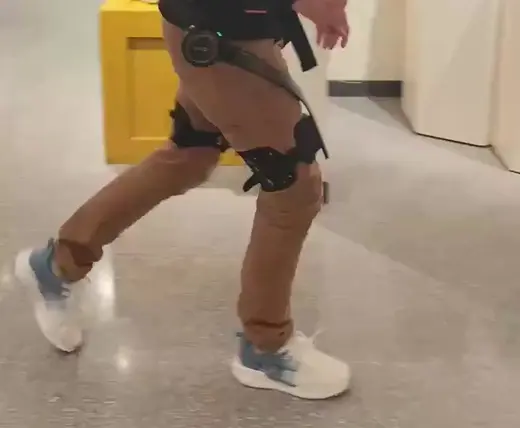
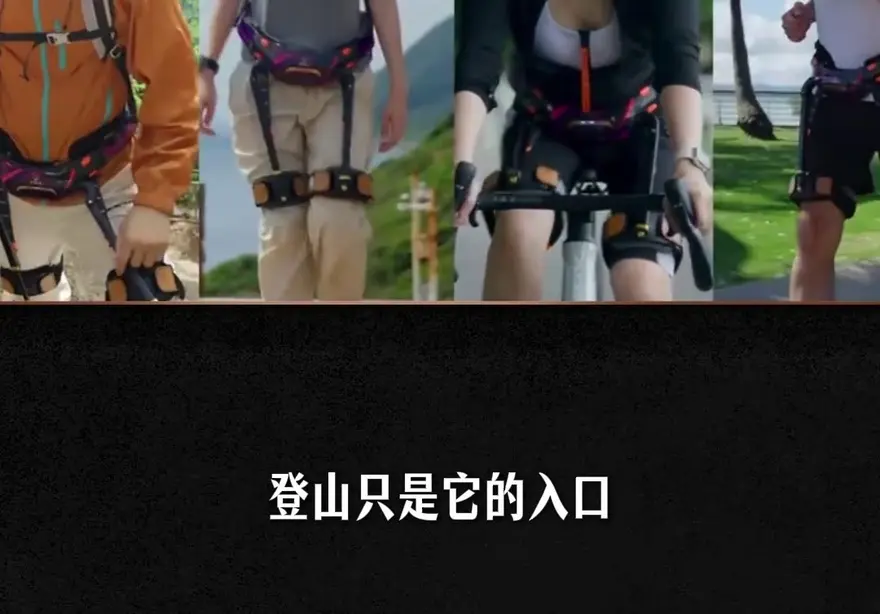
During the National Day holiday, famous mountains like Mount Tai, Mount Hua, and Mount Huang welcomed a unique sight: many tourists climbing with mechanical legs (exoskeleton) strapped to their legs. Going uphill, it gently "lifts" you; going downhill, it cushions your knees. It feels just like having a built-in electric motor.
“Something that was previously mainly found in hospitals, factories, and military scenarios, the exoskeleton has now achieved a consumer-grade breakthrough through hiking in scenic areas.” (Source: Mentioned in the video)
Is this just capital-inflated marketing hype, or a new species with true commercial viability? Today, we are diving deep into the business logic and real-world experience behind these consumer-grade exoskeletons, which have a price approaching 10,000 yuan but cost only tens of yuan to rent.


Portrait of the Players in the Race: Who Is "Giving Cheats" to Young People's Legs?
Currently, players in the consumer-grade exoskeleton sector are primarily divided into three tiers. Starting from different origins, they are all taking the same path, battling their way into the vast market for hiking and trekking assist.
The first tier consists of the native players of exoskeletons. For example, Hypershell, which focuses on outdoor use, has a selling price ranging from ¥6,999 to ¥13,999, achieving impressive sales. It has also successfully deployed rental scenarios in multiple scenic areas such as Huashan and Huangshan.
"Qing Kang has deployed 500 units at the Taishan scenic area, with its main models priced between ¥6,000 and ¥7,000; Aoshuai's consumer-grade model starts at ¥6,799." (Source: Mentioned in the video)
The second tier features companies transitioning from medical rehabilitation. For instance, Chengtian, which started in the medical field, smoothly downgraded its medical-grade rehabilitation exoskeleton into a consumer-grade product.
The third tier consists of cross-industry players. Not only has the Tashan exoskeleton launched by the Zhiyuan Institute seen deployments in over 50 cities nationwide for scenic area rentals, but even home appliance giant Haier has entered the market by opening experience stores. Even outdoor apparel brand Toread couldn't resist, crossing over to launch its own exoskeleton products.



A Business Equation That Adds Up: How Scenic Areas Become the “Super Showrooms” of Exoskeletons
Even though the typical price of a consumer-grade exoskeleton is around 10,000 RMB, its current main battlefield is clearly not individual purchase, but rentals at scenic areas. Why not sell directly to consumers? That leads to an exceptionally clever business playbook: “rent-to-own.”
For scenic areas, the rental model delivers a compelling return on investment.
“The cost of one unit is roughly 7,000 RMB. Renting it out at a scenic area costs just a few dozen RMB per session, so it can break even in no time. The equipment’s service life usually reaches three to five years.” (Source: mentioned in the video)
For visitors, paying 50 to 60 RMB buys three hours of a high-tech, game-changing boost, making the decision threshold practically zero.
“For just a few dozen RMB, you can experience a high-tech power-up. Scenic areas thus become the best showroom and billboard for exoskeletons.” (Source: mentioned in the video)
Through low-barrier trials, scenic areas seed interest and drive product awareness; meanwhile, manufacturers leverage these prime “billboards” to capture minds, turning an initial trial into a potential follow-up purchase.



Why This Sector Is Taking Off: The Outdoor Boom Meets an Aging Crisis
The sudden explosion of consumer-grade exoskeleton isn’t accidental—it’s the intersection of two society-scale trends converging on a single hardware device.
On one side, outdoor activities such as hiking and trekking have kept growing in recent years, with younger users having concrete needs for better performance and for protecting their joints. On the other side—and forming a much larger base—is population aging.
“Walking is difficult and knees are deteriorating—this is the daily reality for hundreds of millions of older adults. Aging is the real mass consumer scenario.” (as cited in the video)
This strong demand is reflected directly in market-level data. In 2026, the global wearable exoskeleton market is projected to reach $3.5 billion, up 41% year over year. In the domestic market, the surge in the first half of this year is even more striking.
“In the first half of this year, online retail sales of smart exoskeletons grew 458% year over year. On JD.com, exoskeleton robot sales volume rose more than 15x year over year.” (as cited in the video)
Capital has moved quickly as well, with exoskeleton companies such as Jike Technology and Chengtian Technology securing funding in succession. Within this track, low-decision-cost rental at scenic areas has become the perfect bridge connecting younger users’ outdoor trends with older adults’ daily essential needs.



First Cold Shower: Can the Assistive Experience Truly Be "Invisible"?
However, after multiple rounds of hands-on experience, we have found that beneath the surface of this rapidly growing market, three major concerns remain that cannot be ignored. First and foremost, the core product experience has yet to achieve an absolute "invisible" feel. Real-world tests by multiple testers indicate that current assistive exoskeletons still have noticeable pain points in user experience.
"The tested conclusions of multiple mainstream products are: the assistive effect on uphill slopes is obvious, but the sensation during downhill and flat-ground walking is not strong, and safety still requires further strengthening." (Source: Mentioned in the video)
This demands that manufacturers not only refine the joint torque output of the servo motor during uphill movements in the development of lower-limb exoskeletons, but also require more precise sensor algorithms to perceive the human gait in real time. Ultimately, this will provide a smooth assistance experience without resistance during flat-ground and downhill walking.



The Second Cold-Water Reality Check: No Industry Standards—Who Defines Safety?
Because an exoskeleton is a robot worn directly on the human body, safety is the non-negotiable baseline. Yet the sector is still in an early phase of unchecked expansion, lacking unified, clear-cut safety standards.
Current market offerings range from lower-limb walking assist devices to lumbar/back assist models, and their device classifications remain highly ambiguous. As a result, brands vary widely in the maturity of their fall protection and self-balancing technologies. Faced with prices that often exceed tens of thousands RMB andrugged mountain trails, consumers struggle to discern hidden safety hazards beneath the carbon fiber shells—highlighting an urgent need for authoritative bodies to establish rigorous quality and protection certifications.

Reality Check 3: The Scenic Spot Business is Essencially "Rental," Not "Consumer Sales"
The third pain point lies in the paradox of the business model. Renting exoskeletons at tourist sites may promise a fast return on investment and strong cash flow, but a quick payback period doesn't guarantee the business will be evergreen.
We must face a stark reality: a huge portion of sales in the entire exoskeleton industry is still propped up by the medical rehabilitation market.
“Right now, over 80% of sales in the entire exoskeleton industry are still supported by the medical rehabilitation market. While consumer-grade exoskeleton shipments are high, the average price point is relatively low.” (Source: Mentioned in the video)
When the capital tide recedes and the novelty fades for tourists, a critical, survival-defining challenge emerges for every market entrant: how to drive high-frequency repeat purchases or generate a desire for long-term ownership of consumer-grade products.



Beware the Illusion: The True Power of Exoskeletons Lies Not with Young Hikers
Finally, amidst this National Day hiking frenzy, we want to offer a friendly reminder to both industry professionals and consumers:
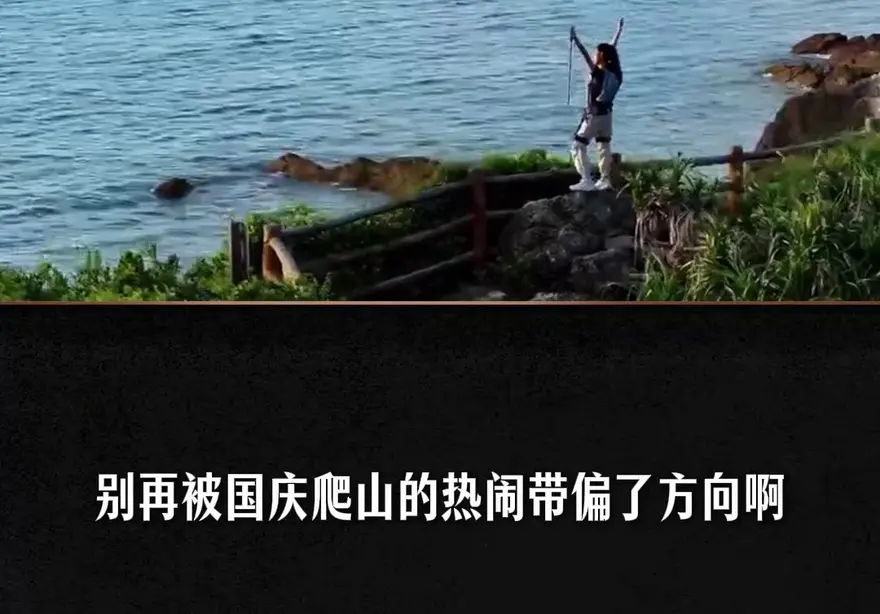
“Don't be misled by the buzz of National Day mountain climbing. The true users of exoskeletons are not young people hiking. Hiking is just the entry point; the aging population is its core market.” (Source: Mentioned in the video)
When a young person happily rents a pair of robotic legs for 59 RMB at the foot of Mount Tai and climbs to the summit, they may not realize—they are actually conducting a preview for themselves, decades from now, of what it might be like when they find it difficult to climb stairs.
Only by truly shifting our focus from “scenic spot check-ins” to “daily elder care” can the exoskeleton evolve from a traffic-hungry “internet sensation gadget” into a technology product with genuine, long-term value.





Top Community Comments
“For seniors with severe knee degeneration, it would be great to have an exoskeleton the size of a diaper for daily walking, but current devices still feel too bulky.”
Translation: This reflects a strong demand from early adopters for "lightweight" and "everyday" devices, indicating that current consumer-grade exoskeletons are still far from truly integrating into the daily lives of the elderly.

“Renting at scenic spots is fine, but when descending, the device relies heavily on kinetic energy recovery and the braking system. Is there a risk of falling if the battery runs out or the sensors fail?”
Translation: This strikes at the most critical "safety" issue and pain point of the experience; consumers remain highly vigilant about the reliability and fall protection mechanisms of lower-limb exoskeletons.
“Moving from medical-grade to consumer-grade feels like a massive leap. Medical quality control and standards are definitely much higher. I hope the price comes down soon.”
Translation: This confirms the breakthrough strategy of the "second tier" players mentioned in the video; consumers have high expectations for the cost advantages and quality assurance brought by major brands crossing over into the market.
“With a cost of 7,000 RMB, renting it out at a scenic spot for 3 hours at 59 RMB yields a higher return than many physical stores. It’s definitely a good business for scenic spots.”
Translation: The audience keenly captured the business model calculations in the text, demonstrating that "sell-by-renting" as a transitional strategy is convincing in its commercial logic.

“I bought a pair before. Honestly, the advantage isn't huge on flat ground. You only feel the leg motor exerting force when climbing very steep slopes. It’s probably just gathering dust now.”
Translation: From a real user's perspective, this echoes the industry pain point that "flat ground performance isn't strong," exposing that the application scenarios for consumer-grade exoskeletons are still limited and lack universality across all environments.
“Finally, someone is telling the truth. Current reviews are all hyping up camping and mountain climbing, but regular people don't climb mountains every day.”
Translation: The audience is weary of the industry's over-marketing of niche scenarios like "landmark check-ins." They agree with the article's view that exoskeletons must return to the daily needs of the aging and knee-pain demographics to avoid becoming just another passing fad.
“Forget the name, Hypershell or something, I saw someone wearing one by the sea. It looked like cyberpunk wasteland style and had a very high eye-catching rate. It's definitely a great social currency.”
Translation: This indirectly reflects another hidden value of current scenic spot rentals: beyond practical functions, products with a built-in "geek" attribute satisfy the social and showing-off needs of young consumers. This is also a key driver for boosting initial sales.
“I hope that in the future, you can buy a passive exoskeleton without a motor for 3,000 RMB—just pure elastic support. That's enough for daily knee protection; leave the active assist for scenic spots.”
Translation: This reflects the call among users for products following a "passive/active combination" route, as well as the pursuit of ultimate cost-performance. It provides a reference for the industry's future product planning and the sub-1000 RMB mass market.
One-Sentence Summary
This episode penetrates the surface of scenic area rentals, faithfully restoring the commercial prospects and the gap between actual experience in the consumer-grade exoskeleton sector—it completes your first machine-assisted mobility experience at the lowest cost. However, regarding this business, the challenging ascent only requires a single trial; to secure the core market, one must still commit to a long-term approach focused on daily use by the aging population.