Climbing the Great Wall in an Exoskeleton: Hands-On Testing of Four Consumer-Grade Exoskeletons — Hypershell, Chengtian, Kenqing, and Dnsys — 1–3 kg, 3–8 Hours of Battery Life: Real Walking Assist or Just a Placebo?
Taking the Review to the Great Wall: A Public Final Exam on "Treacherous Terrain"
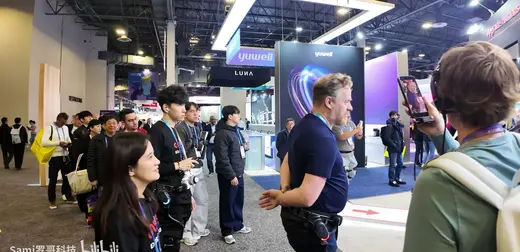
The opening had real show-business flair: a channel director, coaxed and half-tricked by his fitness-coach buddy into training on the Great Wall, climbs until he's questioning his life choices—then turns a corner and runs straight into a crew of reviewers wearing exoskeletons: the JD Cyber Review Bureau. From there, "borrowing the gear" became the obvious move. And so the Great Wall outside Beijing in May became the exam hall for this consumer-grade exoskeleton mega-test.
The show split the test into five major segments, led by reviewer Yu Zai and Ziyang, a JD merchandiser specializing in the exoskeleton robotics category. Under test: four of the hottest brands in the space right now—Hypershell, Chengtian, KenQing, and Dnsys.
An effort-saving challenge, a donning test, a battery life challenge, multi-scenario testing, and a buyer's guide by user type—five segments, all completed in the Great Wall's uniquely demanding environment of steep, rugged, hard-to-traverse terrain (as mentioned in the video).
According to JD, its exoskeleton product matrix is "the most complete in the industry, covering all scenarios and all price points," and the company will soon launch an integrated "delivery-plus-installation service"—one-stop, at-your-door delivery and setup—so users can buy with confidence and use with peace of mind (as mentioned in the video).
Why test on the Great Wall, of all places? Because it stacks nearly every "natural enemy" of the consumer-grade exoskeleton in one spot: irregular steps of varying heights, relentless steep slopes, a full kilometer of distance, plus holiday crowds getting in the way—stress no treadmill lab can ever replicate. And the fact that the retail channel itself stepped in to build a "Cyber Review Bureau" is a signal in its own right: the exoskeleton category is moving out of geek circles as a niche toy and onto the mass-market shelf.

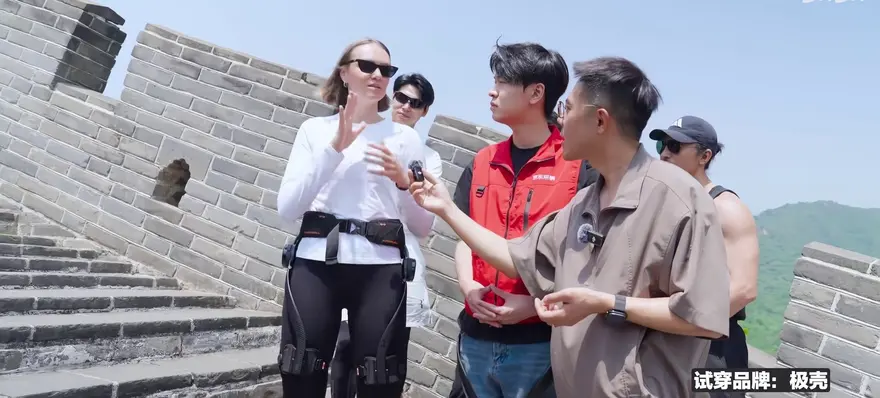
Steep slope section of the Great Wall, reviewers climbing with exoskeletons on

The four products under test: Hypershell, Chengtian, KenQing, and Dnsys

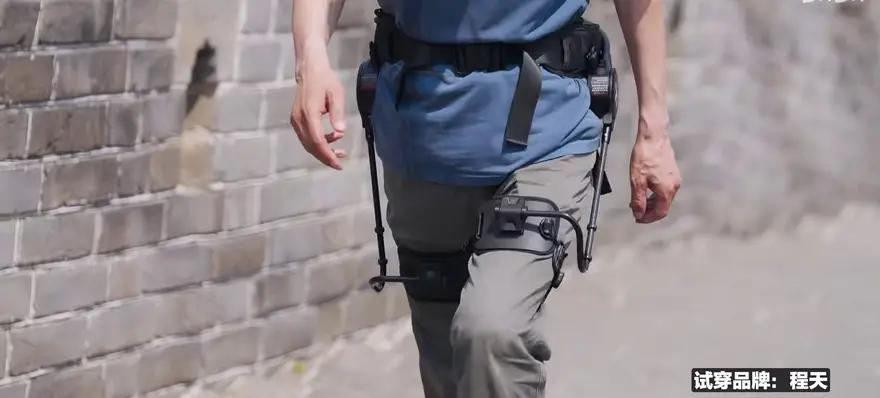
Close-up of the hip assist module and strap structure

Overview of the show's five test segments
Five Trivia Questions: Starting from the 1965 Military Prototype
The main video opens with a quick-fire Q&A, giving viewers a full rundown of exoskeletons' "vital stats."
The very first question comes as a surprise: in what year was the first prototype of the modern exoskeleton born? The answer isn't some sci-fi near future, but 1965—when the first-generation powered exoskeleton appeared in the United States. The host's reaction was refreshingly honest: "That early? Textbooks never even mentioned it." For context: the industry generally traces this history back to the mid-1960s, when General Electric (GE) launched projects like Hardiman for the US military—a set of "powered armor" designed to amplify human strength.
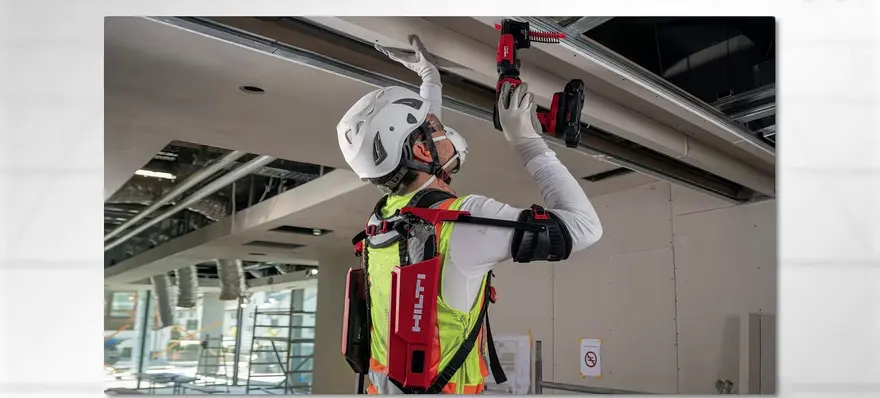
Question two: where were exoskeletons first used? Both guests and the audience share the same intuition—the military, to boost the load an individual soldier can carry. From there, exoskeletons moved into medical rehabilitation and industrial protection, and only in recent years did they start entering everyday life: hiking / trekking assist, lumbar / back assist for long hours at a desk, walking assist, and more.
In 1965, the first-generation powered exoskeleton appeared in the United States; exoskeletons were first applied in the military to increase individual soldier load capacity (as mentioned in the video).
The answers to the last three questions sketch out the capability boundaries and current state of consumer-grade exoskeletons: no support for intense activities like running or jumping (more on that in the next section); battery life generally 3–8 hours; and overall weight far lighter than you'd expect—extensive use of carbon fiber and high-strength nylon keeps the device weight within a comfortable range.
Consumer-grade exoskeletons offer a battery life of 3–8 hours, which basically covers a full day of outings (as mentioned in the video).
This migration path of "military → medical → industrial → consumer" wasn't the result of any sudden technological leap. Instead, brushless motors, IMU / pressure sensors, and battery energy density each saw their cost and performance curves hit critical tipping points in turn—once the supply chain matured, the consumer-grade explosion followed naturally.

Quick-fire Q&A question board

Historical photo of 1960s military powered exoskeletons
Lower-limb exoskeleton in a medical rehabilitation setting

Lumbar / back assist exoskeleton in an industrial material-handling setting
First, Let's Set the Boundaries: It's "Assist," Not an "Iron Man Suit"
The most valuable of the five questions was the third one: can a consumer-grade exoskeleton run or jump? The correct answer is no.
A consumer-grade exoskeleton is essentially "mechanical structure + assistive joints," designed primarily for slow, steady-state movement. High-impact actions like a 100-meter sprint or a jump generate forces that far exceed the structure's load capacity and range of motion. Current consumer-grade products are generally suitable only for slow walking, climbing slopes, going up and down stairs, and similar activities (as mentioned in the video).
The show also took the opportunity to remind viewers: don't do vigorous exercise while wearing an exoskeleton.
This "reality check" deserves a section of its own. At its core, an exoskeleton delivers assistive joint torque at joints like the hips and knees, helping you save effort in highly repetitive movements such as slow walking, climbing slopes, and going up and down stairs—it's a lever, not an engine. Get this straight, and you've already managed half your expectations: putting it on won't turn you into Superman, but on the climb up the Great Wall, every leg lift will get a gentle "boost" from behind.

Close-up of the hip joint drive unit and motor

Diagram of gait assist during slow walking

Going up and down stairs while wearing the exoskeleton

Activity restrictions noted in the product manual
Effort-Saving Challenge: One Kilometer on the Great Wall — How Much Lighter Do Your Legs Actually Feel?
The Director asked the sharpest question on behalf of every viewer: "Is the effort-saving effect of an exoskeleton really that good? If you climb the Great Wall wearing one, do you still get tired?"
The show's answer was refreshingly direct: a Great Wall climbing challenge — one kilometer end to end, with the reviewer wearing an exoskeleton on the way up.
The Great Wall climbing challenge covered one kilometer in total (mentioned in the video).
Notably, the show didn't throw out a one-size-fits-all "XX% effort saved" figure. Instead, it left the verdict to how it felt: on the ascent, hip assist was the most intuitive — every leg lift came with a sense of the device following along; on the descent, cushioning soaked up the impact; and after the full distance, "no sore lower back, no sore legs, and no need to stop and rest every couple of steps."
Effort-saving on the ascent, cushioning on the descent, and no sore back or legs even over a long walk (mentioned in the video).
Skipping a single percentage is actually a point in the show's favor — perceived effort savings are strongly tied to body weight, cadence, slope, and assist level, and no single number would survive scrutiny. What truly separates the products is how well the gait recognition "keeps up with your feet": assist that arrives early is no substitute for assist that arrives at exactly the right moment. Behind that is how quickly the IMU and pressure sensors judge gait phase — and that is each brand's algorithmic moat.
After the one-kilometer walk, the show's verdict was that all four brands delivered "outstanding product performance," and the Director's attitude had come full circle: from "thinking they were bulky, complicated, and far removed from ordinary people" to "these products are already genuinely practical, and the experience is excellent."

One-kilometer wall-climbing challenge route

Hip assist engaging on the uphill section

Cushioning performance on the downhill section
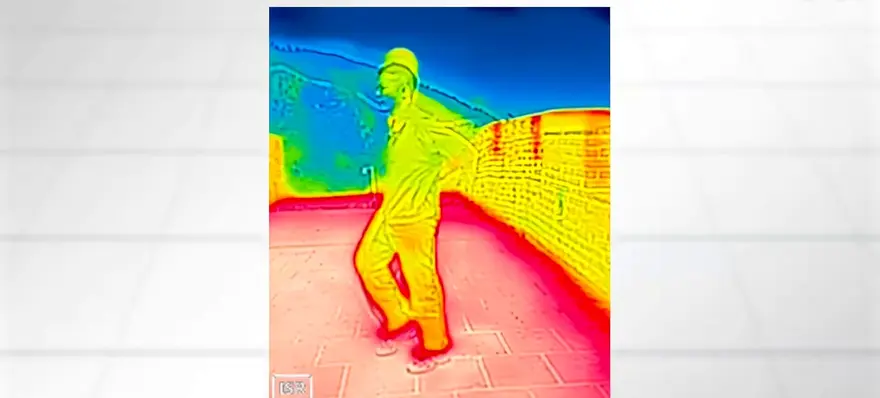
Sharing how it felt after reaching the top
Wearing & Self-Weight: Suited Up in One Minute, 1-3 kg of "Traveling Light"
For consumer-grade products to achieve widespread adoption, the first hurdle isn't the spec sheet—it's the act of putting the device on.
An ordinary user can complete donning independently in under one minute (as mentioned in the video).
Mainstream consumer-grade exoskeletons weigh roughly 1-3 kg as a complete unit, making extensive use of carbon fiber and high-strength nylon to stay streamlined rather than bulky (as mentioned in the video).
To appreciate what 1-3 kg actually means, you first have to accept one fact: an exoskeleton's self-weight is a "negative asset"—every additional gram must first be earned back through assistive gains. A carbon fiber frame combined with high-strength nylon structural components keeping the full unit within this range means that, after subtracting the self-weight cost, the assistive benefit still comes out ahead—only then does the math actually work.
The wearing test, for its part, examines waist and leg circumference adjustment and how well the device conforms to the body—that's what determines whether it's "gear" or a "torture device." JD.com's "delivery-plus-installation, on-site handover and calibration" service model also speaks volumes from the sidelines: both the retail channel and the manufacturers know full well that first-time setup still carries a learning curve, and it's worth smoothing over with service.
A heads-up for prospective buyers: when reviewing weight specs, check whether the figure is "with battery" or "without battery"—the most common bit of wordplay in any exoskeleton spec sheet.

One-minute independent donning process

Close-up of the carbon fiber frame

Waist/leg circumference adjustment mechanism

Full unit stowed and ready to carry
Battery Life Challenge: 3-8 Hours Plus Swappable Battery, Covering a Full Day of Travel
On the battery life question, the "24 hours" option was shot down on the spot — to borrow a line from the show, "there probably can't be a perpetual motion machine in this world."
Consumer-grade exoskeletons offer a base battery life of 3-8 hours, and with a swappable battery design, they can easily cover a full day of travel (as mentioned in the video).
For outdoor scenarios, battery swapping is a more targeted solution than fast charging: there's no power bank rental on the mountain, but you can carry an extra battery in your pocket. This is also why "swappable battery" deserves more emphasis than the "3-8 hours" figure — the former determines whether battery life anxiety exists at all, while the latter is just a range.
Two practical judgments: first, actual battery life is strongly correlated with assist level, and running at the highest level the whole time will likely push you toward the lower end of the range; second, if you frequently visit scenic areas or hiking trails, it's worth budgeting for a spare battery upfront and treating it as part of the accessory ecosystem.

Close-up of the battery compartment and removal/installation

Demonstration of the battery swapping motion
Charging status indicator

Full-day travel battery life timeline illustration
Multi-Scenario Testing: Obstacle Crossing, Single-Leg Stands, and a Boy-Band Leg-Sweep Dance
The multi-scenario segment was built around three progressively harder movements.
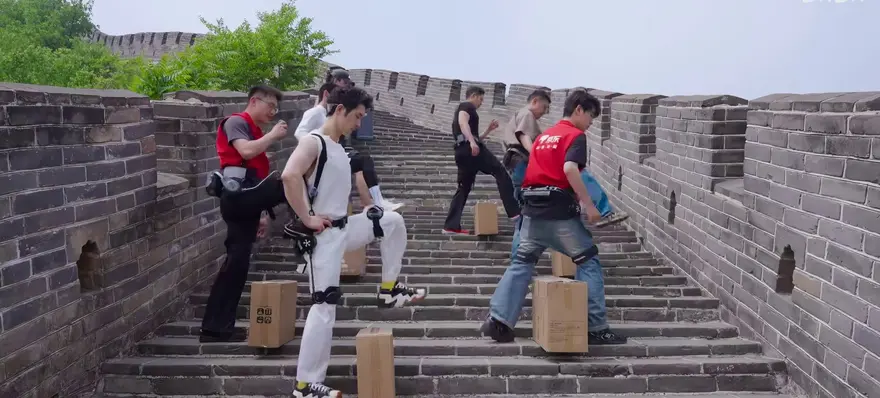
First came obstacle crossing: striding over a cardboard box placed in the path, proving the exoskeleton isn't limited to flat pavement — it can handle obstacles too. Second was a tougher challenge: standing on one leg in place, testing balance and stability — with the verdict that "everyday wear won't lead to falls or twisted ankles." Third was the boy-band leg-sweep dance, performed after some playful heckling — a flexibility Easter egg, and the test was a success.
The exoskeleton isn't just capable on flat surfaces — it handles obstacles as well; as for stability, everyday wear won't cause falls or twisted ankles (as mentioned in the video).
The exoskeleton robot adapts to a remarkably wide range of movements — it works for both outdoor outings and daily commutes (as mentioned in the video).
At their core, these movement tests are really tests of sensors and algorithms: the IMU and pressure sensors must determine which phase of your gait you're in within an extremely short window — assisting when it should assist, easing off when it should ease off. One more concept worth clarifying: the "stability" of a wearable exoskeleton is not self-balancing in the bipedal-robot sense — balance is always human-led. What the device does is avoid interfering with your body's own balance, then deliver power in sync with your natural movement.
For middle-aged and older users, "stability" can matter even more than "effort savings": steadier walking and a greater sense of security mean the confidence to actually head out the door. That said, a clear line needs to be drawn: consumer-grade products currently reduce fall risk mainly through support and assistance, which is not the same thing as the fall intervention performed by professional rehabilitation exoskeletons (mostly medical-grade). Don't confuse the two when shopping for elderly family members.
Cardboard box obstacle-crossing test

Single-leg standing balance challenge

Boy-band leg-sweep dance Easter egg

IMU and pressure sensor placement diagram
Buying Guide: Four Types of People Who Can Buy Now — and One Type Who Should Wait
The show wraps up with a pretty clear picture of who this is for:
Outdoor and sports enthusiasts: mountain hikes, climbing the Great Wall, trekking through scenic areas, weekend outings in the fresh air — less effort going uphill, cushioned impact going downhill, and no sore back or aching legs on long walks, so you're not stopping for a breather every few steps.
Middle-aged and senior users: great for daily strolls, grocery runs, shopping trips, and going up and down stairs, delivering steady support to the legs and lower back for a steadier, more secure stride — no more relying on family members to lend an arm.
Commuters and outdoor workers: office workers whose daily commute tops three kilometers, plus outdoor workers who spend long hours on their feet covering serious distance — with it on, walking takes less effort and less of a toll.
Tech trendsetters: undeniably cool, with the futuristic factor dialed all the way up — "trendy and practical at the same time."
And one group the show explicitly warns off: those buying it purely for peace of mind.
"If you're just buying it for peace of mind, chances are it'll end up sitting around gathering dust." (as mentioned in the video)
Price is the elephant in the room. A top-voted comment in the comments section cuts straight to it with one word and a number: "Price: 7,299" — which lines up almost exactly with the typical price band of today's flagship consumer-grade exoskeletons (as mentioned in the comments). Our advice: get clear on your high-frequency use case first. For someone who hikes every week versus someone who barely climbs a mountain once a year, the decision logic behind an RMB 7,299 price tag is completely different — the former is buying productivity; the latter is most likely buying a dust collector in waiting.
The show closes by tossing the question back to viewers: what are the biggest design flaws and pain points in exoskeleton products today? It's also teaming up with JD.com's "Cyber Machine Fans" community to collect real-world feedback, working alongside brands to polish their products and keep the industry on a healthy track — plus there's a "take a 10,000-yuan robot home" giveaway. At least in spirit, this is the playbook of a player looking to build the category into a long-term business.

Illustration of the four target user groups

Middle-aged and senior users going up and down stairs

Long-distance walking commute scenario
Product price and specs comparison table
Top Community Comments
"Three years from now." — @DisabledLegsCutie (355 likes)
Just three words, yet they pack in an enormous amount of information. It could be hope — in three years, the technology will be more mature and prices friendlier. Or it could be cool-headed skepticism: for users with lower-limb impairments, what truly solves the mobility problem are medical-grade rehabilitation exoskeletons and an accessible environment, while today's consumer-grade walking-assist exoskeletons mainly serve people who can already walk on their own and simply need to "save effort." This comment is a reminder to the entire industry: don't let marketing spin blur the line between "consumer-grade assist" and "medical-grade rehabilitation.Price: 7,299." — @BrickBorrower (280 likes)
It slams the single biggest barrier right onto the table. When the show asked "What is the biggest design challenge for exoskeletons?", price was one of the most-upvoted answer themes. At RMB 7,299, this is flagship-tier territory — and a manifesto from the "wait-and-see" camp: the tech gets my nod, but my wallet needs to wait a little longer.
"Let me recommend an exoskeleton I've been using all along — trekking poles. Under 200 grams, useful both uphill and downhill, and you walk with better stability [popcorn]." — @TheThirdIdler (255 likes)
The sharpest "negative review" of the entire discussion. 200 grams versus 1–3 kilograms; a few dozen yuan versus several thousand — this "low-tech solution" puts the exoskeleton's value proposition on trial: beyond saving effort, what irreplaceable thing can you offer? That is precisely the question manufacturers must answer with their next-generation products.
Beyond these three most-liked comments, the discussion also converged on two other themes. The first: "Is it actually a safe bet to buy one for my parents?" — with the focus on weight, operational complexity, and sense of security. The second: the "it's just psychological comfort" argument — a subtle echo of the video's closing reminder that "if all you want is psychological comfort, it will end up gathering dust." You could say the audience zeroed in on this category's real exam questions even before the show did: price, frequency of use, and safety redundancy beyond "stability" and "effort savings."

Screenshot slot for the top-liked community discussions

Trekking poles vs. exoskeleton comparison illustration
One-Sentence Summary
This Great Wall field test can be seen as a "coming-of-age moment" for the consumer-grade exoskeleton: with 1–3 kg frames, 3–8 hours of battery life, and one-minute independent donning, Hypershell, Chengtian, Kenqing, and Dnsys are now genuinely ready to serve hikers and trekkers, middle-aged and seniors seeking walking assist, and long-distance commuters; yet it remains "assist" rather than "augmentation"—high-frequency users can buy with confidence, while those merely after psychological comfort should wait a little longer, or first spend a few dozen yuan on a trekking pole.

A group portrait of the four consumer-grade exoskeletons
About this article: part of Chinese-Made Exoskeleton Review Archive — an independent, regularly updated English archive of reviews of consumer exoskeletons made in China, edited from publicly available video transcripts. Not an official manufacturer page.
For inquiries and purchasing, contact lonlonago@foxmail.com. More in Reviews · All articles.