Yes, This Is the Viral consumer-grade exoskeleton Taking Over Tech Circles: X-Pro-S Hands-On, We Wore It First

I. What exactly is the hottest "new species" in the tech world right now?
If traditional mechanical assistive devices were likened to external crutches, then the new species that has recently been dominating the digital space—the X-Pro-S exoskeleton—is much more like a layer of smart muscles that grow on your legs, or an invisible co-pilot for your legs.
As a tech insider, the most common question I've been asked recently is: "Is this reliable for gifting to elderly family members? And if I wear it for weekend outdoor trekking, hiking, or even cycling, will I look clumsy and burdened?"
Those in this industry know better than anyone that no matter how impressive the numbers on the spec sheet are, nothing compares to a real hands-on experience. I recently got my hands on this highly discussed consumer-grade exoskeleton—the X-Pro-S. I used it for two full weeks, testing it thoroughly from commuting during the morning rush hour to climbing Xiangshan and carrying heavy packages; I know its ins and outs all too well. Today, without exaggeration or criticism, we are going to dissect this product completely to see if it's a scam or not.

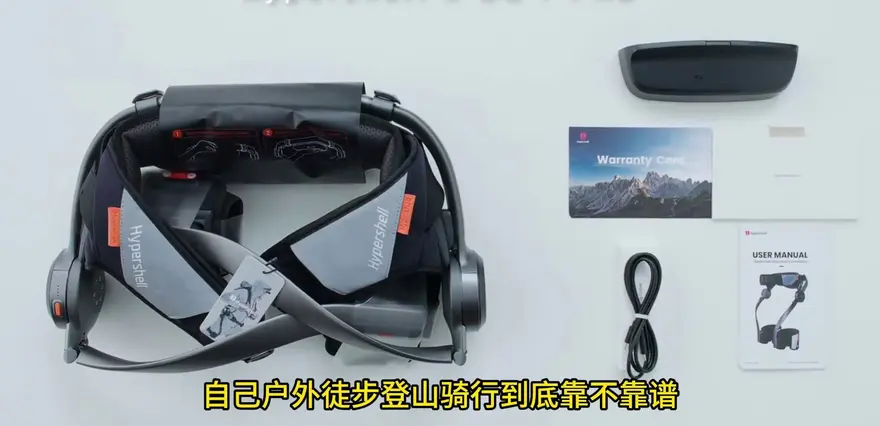
There is one thing I need to make clear from the beginning: the X-Pro-S is not a medical device. It cannot help you maintain balance, nor can it replace medical rehabilitation. Its application has a very clear prerequisite—your legs must already be strong enough to stand and walk on your own. Its job is to save you effort while walking, reduce fatigue, and give you an extra push. If you are a healthy outdoor enthusiast, or an elderly person who usually walks with strength but occasionally feels weak in the legs and short of breath, this device is perfectly targeted for your needs.
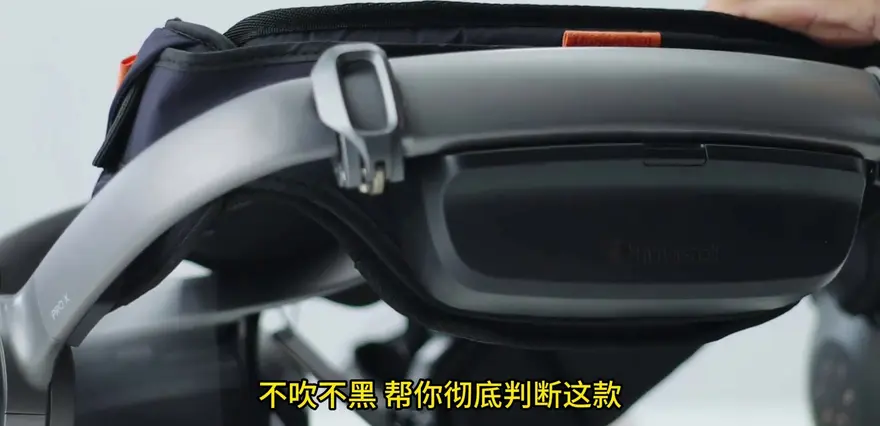
II. Core Hardware Excellence: Where Does the Confidence to Claim "Zero-Latency Leg Tracking" Come From?
Many low-end exoskeleton products on the market share a common flaw: the walking assist is jerky, giving the sensation that it is competing with your legs for strength.
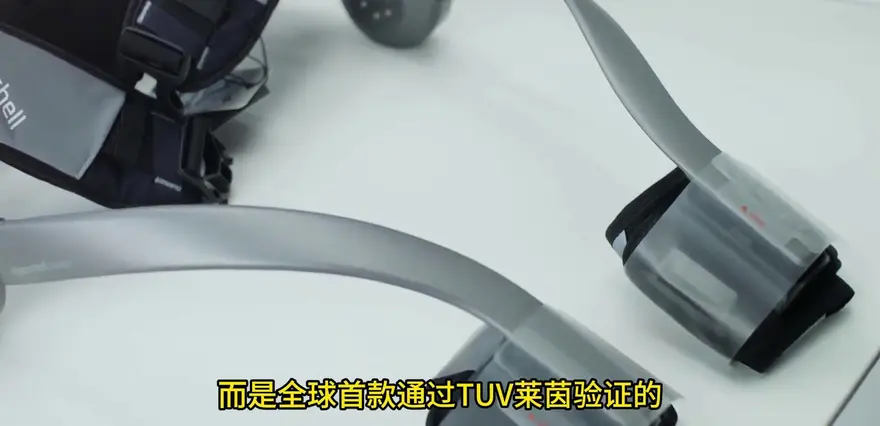
The core selling point of the X-Pro-S is that it is the world's first end-to-end technology integrated consumer-grade exoskeleton to receive TÜV certification. It introduces a technology called the "Digital Muscle Engine"—but what makes it so impressive?
Real-time processing power improved 36x over the previous generation.
Official tests show a response time of just 0.31 seconds.
All-terrain gait synchronization efficiency up to 98%.
Traditional assistive exoskeletons typically follow the old path of "sensor capture → upload → release walking assist," which creates an inherent lag. The X-Pro-S, however, executes a serious hardware upgrade at the underlying chip architecture level. By utilizing a proprietary SRMB architecture chip combined with an end-to-end algorithm, it enables the entire system to complete a closed loop of "decode-decide-assist" within milliseconds.
Even if you don't understand the tech, here is the layman's explanation: the moment you lift your leg, it is already assisting you. Whether you are suddenly accelerating, making an emergency stop, turning, or taking a large stride, you will barely feel that auditory or physical "dragging sensation" (the lag usually associated with delay). Putting it on creates a smooth, natural sensation—as if your legs have been enhanced with an "external muscle boost."



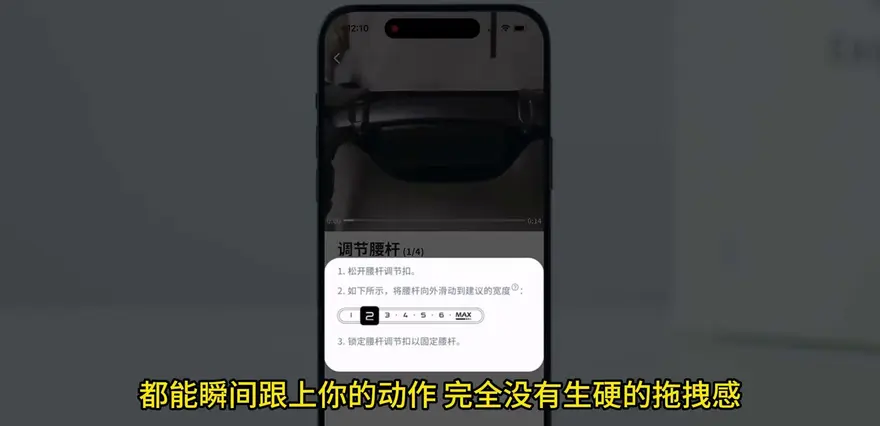
3. The Moment You Put It On, It Feels Like Your Legs Have Been Supercharged
When it comes to the user experience, real-world scenarios are what matter most.
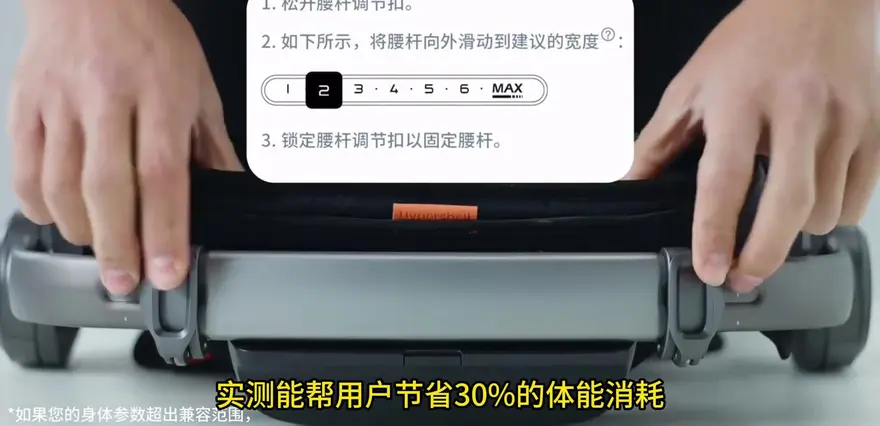
The first hard metric is the power reserve. The X-Pro-S is equipped with a brushless motor system powered by an 800W peak power core. It automatically adjusts the joint torque output in response to the force applied at each joint. Measured tests show that it can help users save about 30% of physical exertion on average without altering their walking gait.
In real-world testing, it helps users save 30% of physical exertion.
I wore it while climbing uphill for half an hour. In the past, my legs would have gone weak, I'd be gasping for air, and my knees would feel sore and heavy. But the change brought by this device is obvious: after completing the full climb, I still maintained an easy, steady breathing pace. For older adults who often find themselves out of breath just going up and down stairs at home, or who have come to view short trips outside as a mental burden, the sense of benefit that comes from this kind of effort-saving assistance is even more pronounced.
The second key point is all-terrain adaptability. It automatically adjusts the assistive joint torque when climbing uphills, walking on muddy paths, traversing rough terrain, or descending slopes. No manual mode switching is required. This seamless, imperceptible adaptation is especially important for outdoor users. When you suddenly encounter a steep incline on a mountain trail, there is no need to take your hands off to press buttons—the motor automatically detects the terrain changes and torque variations, giving you an extra push when you need it most. This design philosophy—non-intrusive, providing assistance exactly when needed—is what fundamentally distinguishes a genuine exoskeleton from a typical "vibration massager."

IV. Let’s Talk About What Everyone Cares About Most — How Far Can It Go? Does It Charge Fast?
If you’re about to place an order for an exoskeleton, 90% of people will first ask, “Does it deliver strong uphill performance?” and then follow up with, “How long can the battery last?”
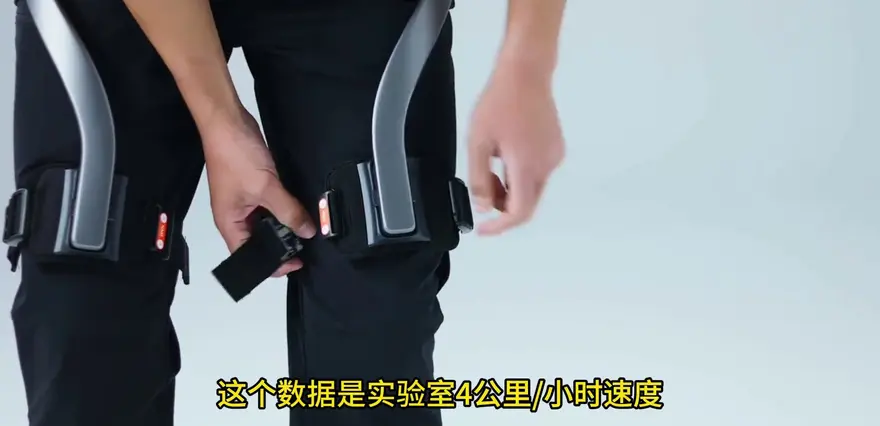
First, the official battery life / runtime numbers—in an energy-saving mode at 30% power, a single charge can achieve (measured in the lab at 4 km/h, under a Grade 2 incline):
Up to 260 minutes of runtime on a single charge, covering 17.5 km.
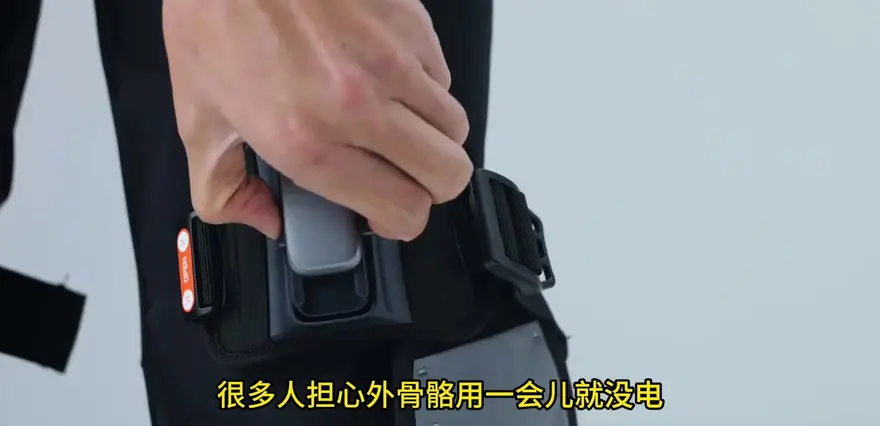
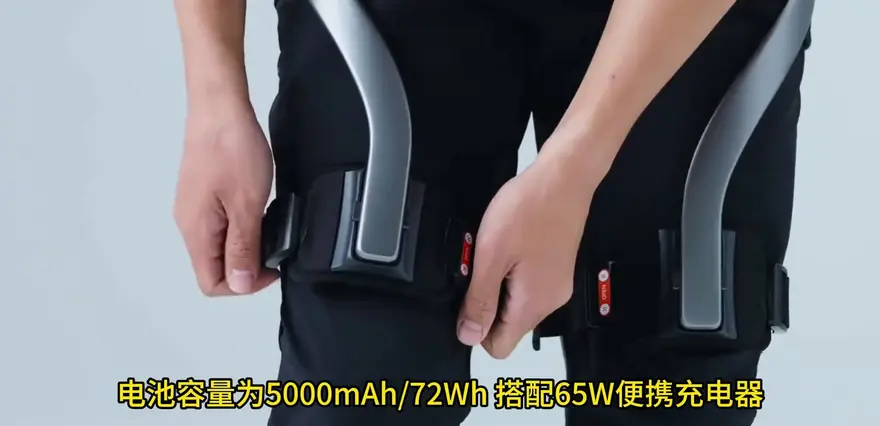
Battery capacity: 3000mAh (72Wh); charging from 0–100% takes about 88 minutes.
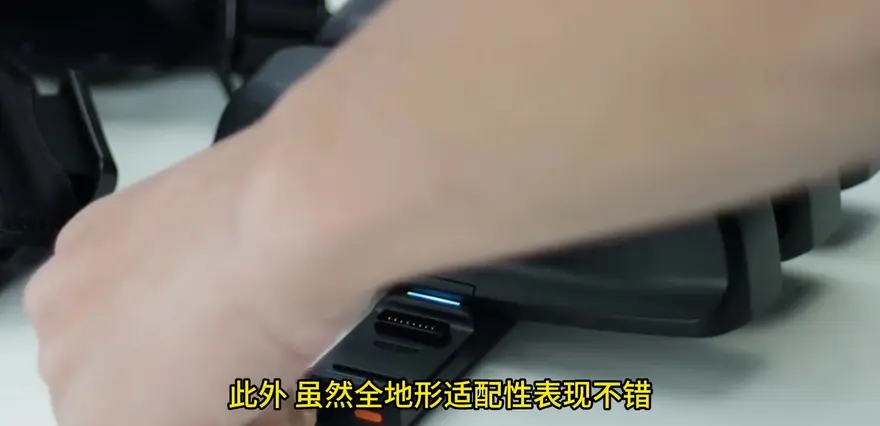
Compatible with third-party Type-C charging accessories.
What does that mean? For daily commuting (single trips within 5 km), short hikes (weekend strolls in the park), older adults going downstairs to buy groceries, or picking up/dropping off grandkids at school, this battery life is more than enough—you can even go a week without charging.
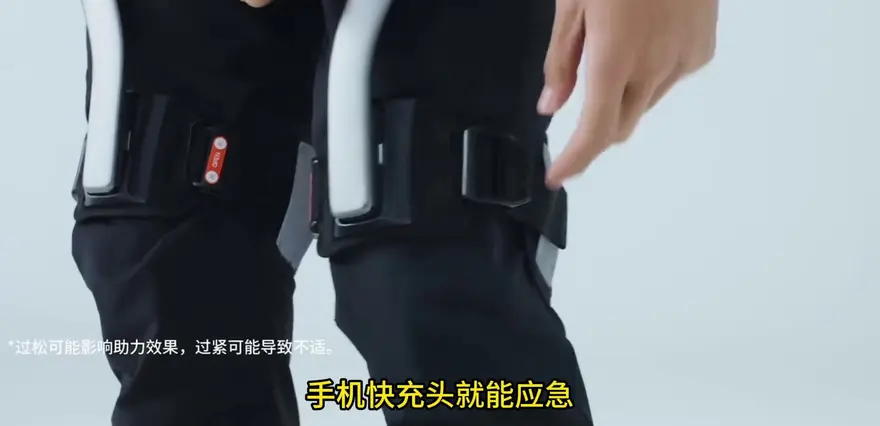
What especially pleases the tech crowd is how practical the charging solution is: a 65W GaN portable charger works with almost any outlet, and in a pinch you can even use a phone fast charger that supports PD. That’s crucial for outdoor use—nobody wants to haul a bunch of proprietary power adapters in their backpack.
But here’s a fair note: the 17.5 km maximum battery life is “absolutely sufficient” for daily life and light outdoor use. If you’re planning a heavy-load, all-day trek tens of kilometers long, it won’t support an entire day of ultra-long-distance walking. That’s something we should view rationally.
V. A 2.6 kg "Close-Fitting Companion" — How Does It Rate on Comfort?
2.6 kg marks a watershed moment for a "wearable device."
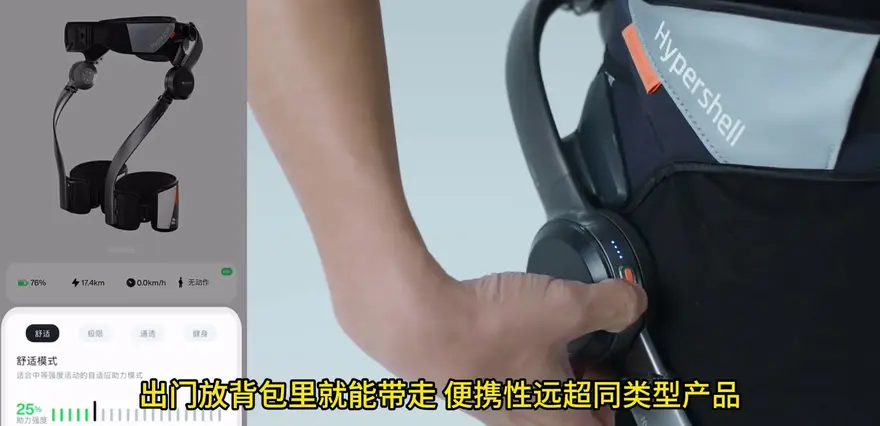
Compared to traditional professional exoskeletons that often weigh 7–8 jin, the X-Pro-S keeps its total weight at 2600 g. When folded, it’s about the size of a standard laptop bag—easy to slip into a backpack without taking up much space, making it truly portable for use anywhere.
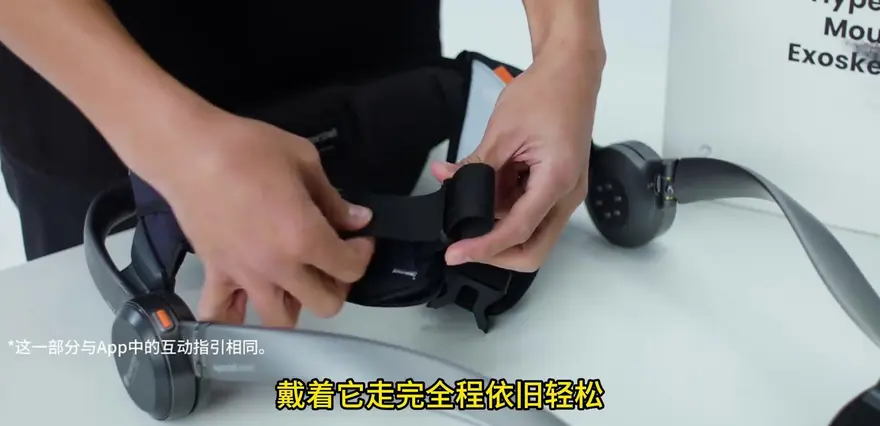
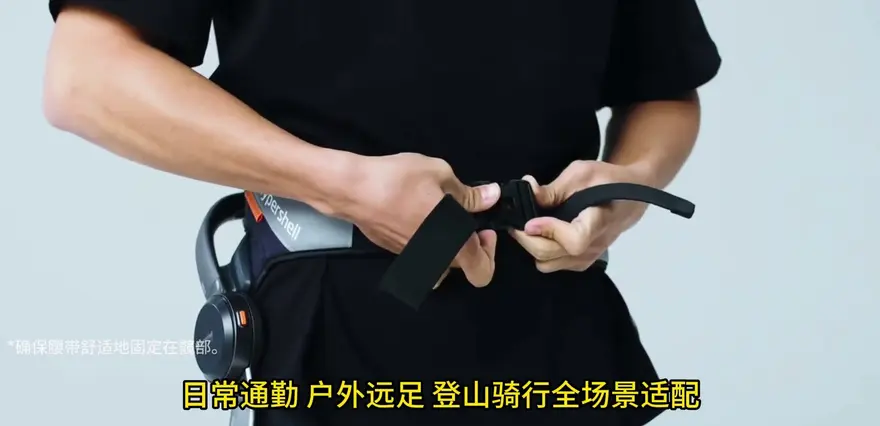
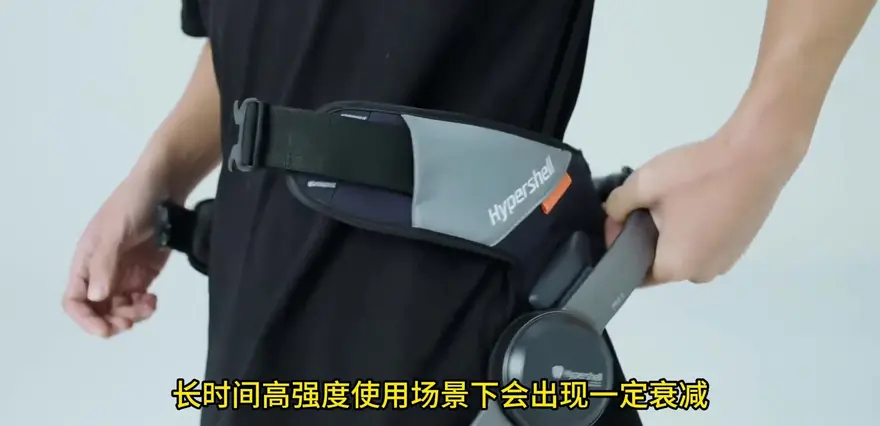
What’s the biggest worry when using such a device for elders? Clumsy and time-consuming wearing, straps digging into the legs or chafing the skin, or the waist being painfully pushed by the main strap. On these points, the X-Pro-S is actually very thoughtfully engineered:
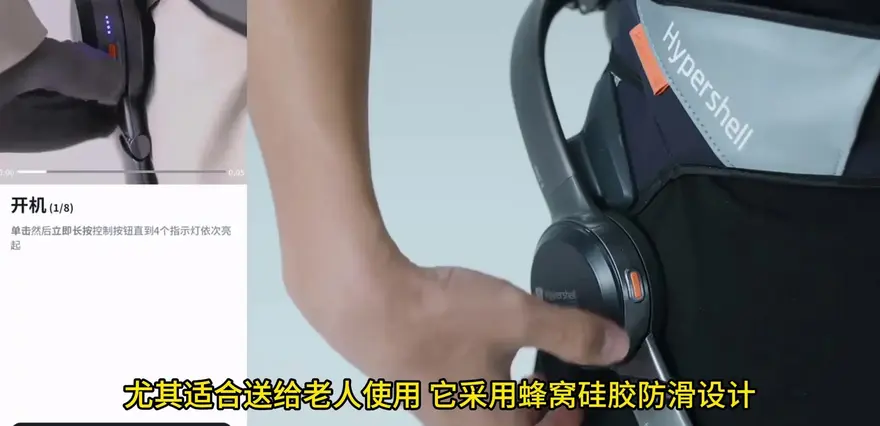
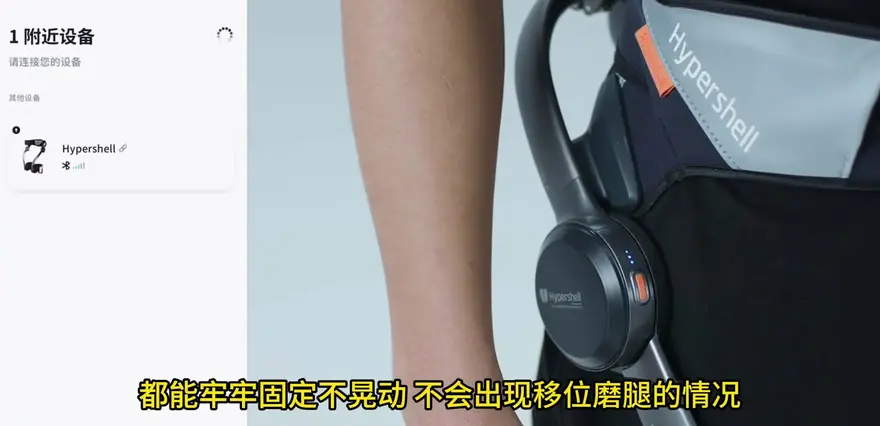
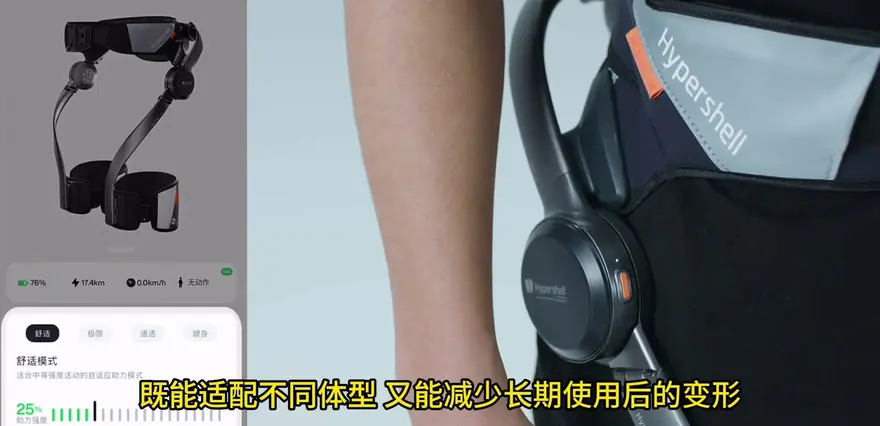
Honeycomb silicone anti-slip binding: Whether you’re walking, climbing, or taking large strides, it keeps the entire device firmly locked onto your legs, preventing the embarrassing situation of "device shifting and rubbing against the legs."
Three-zone strap independent load distribution: Independent shock-absorbing/soft zones are set in the lower back and hip region, accurately relieving pressure on key bony areas.
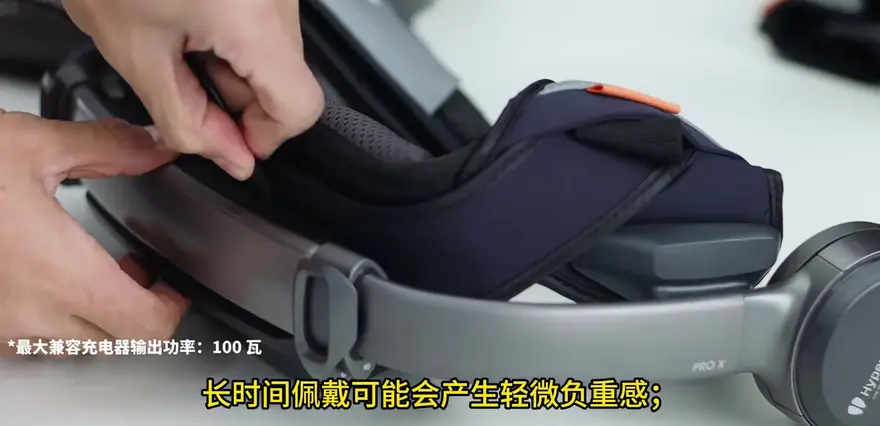
Memory-material waist pad: It’s not the hard, rigid type that pokes into your waist. It adapts to different body shapes, and even after long periods of wear, it does not suffer from a decline in support force due to deformation.
In actual experience, after taking a walk and removing the device, there are no deep pressure marks left on the legs or lower back. For vulnerable groups like the elderly, who have sensitive skin and are prone to discomfort from pressure, this is a particularly significant plus.
VI. Durability & After-Sales Service — Can It Take a Beating?
This is the part many tech reviewers skip, but I personally think it's incredibly important.
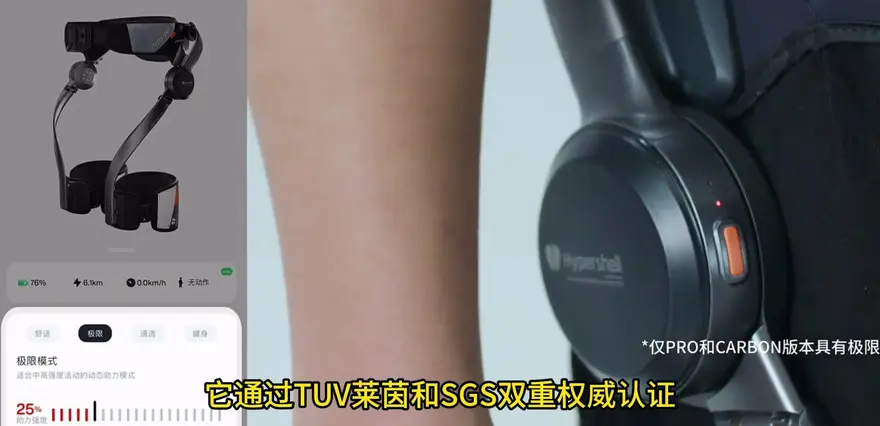
DUAL-CERTIFIED & TESTED
TÜV-Certified and SGS Tested.
IP54 Dust and Water Resistance.
Operating Temperature Range: -10°C to 60°C.
Designed Service Life: 3,000 km.
When it comes to exoskeletons, the biggest fear is buying one only to see it lose power after two months, freeze up at the joint, or short out after getting wet. Before shipping, the X-Pro-S undergoes a series of high-intensity reliability tests. Its officially rated service life hits 3,000 kilometers—if you wear it for two to three years, that's roughly a little over 1,000 km a year, which fully covers everyday usage needs.
An IP54 rating means you can just strap it on and walk straight through light rain, dust, or sweaty workouts. The -10°C to 60°C operating temperature range also lets it handle Northern winter strolls at sub-zero chill as well as summer outdoor workouts under blazing sun.
The after-sales policy is equally practical:
7-Day No-Questions-Asked Trial
1-Year Warranty via Official JD.com Channel.
After unboxing and putting them on, as long as there is no physical damage, all functions remain normal, and all accessories are complete, you can return them if you aren't satisfied. This purchasing model—where the trial cost approaches zero—offers significant peace of mind for many people looking to buy for their elders but are unsure of the fit.
 (Durability testing on the exoskeleton)(/exoskeleton_durability_testing.jpg)
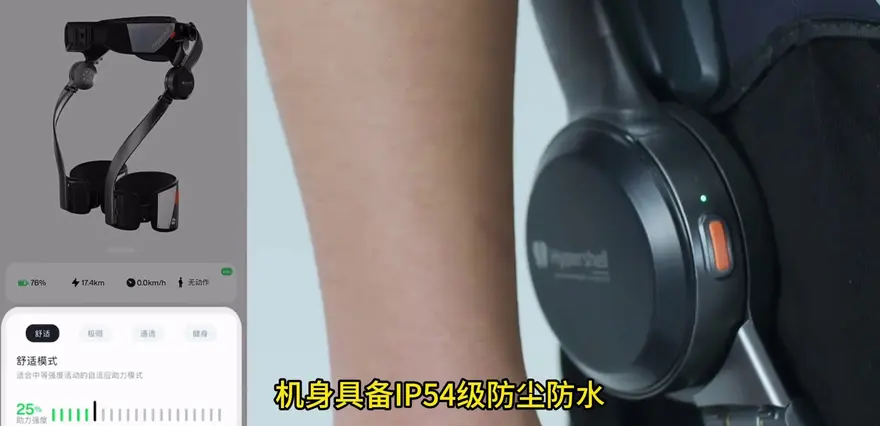 (IP54 water resistance demonstration)(/ip54_water_resistance.jpg)
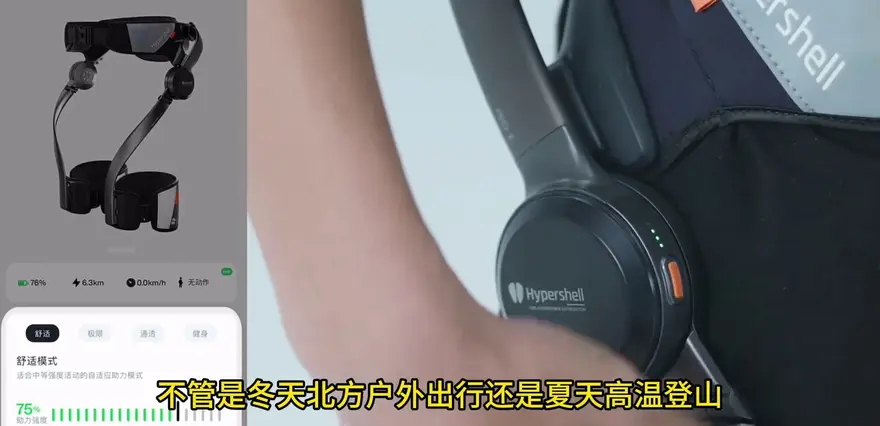 (Temperature range performance)(/temperature_range.jpg)
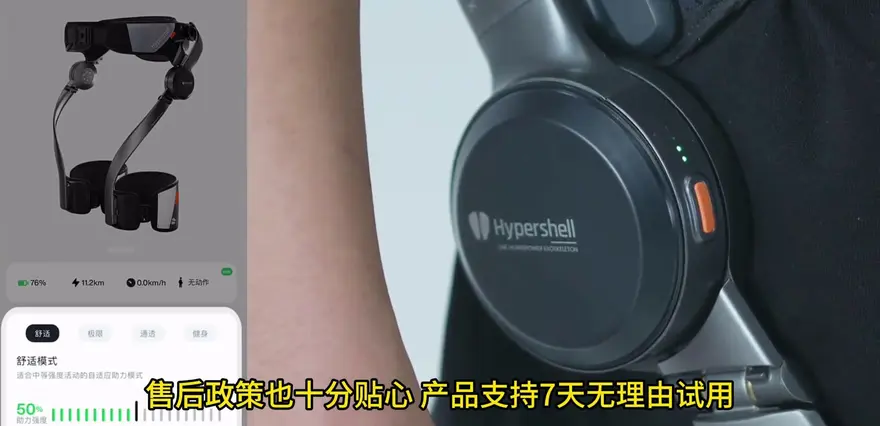 (7-day trial return process)(/trial_return.jpg)
VII. Speaking Truthfully—It’s Not a Magic Bullet, and Here Are the Catch
We need to be straightforward about its flaws.
1. Battery Life Strains During Extreme Treks. While the battery life / runtime is impressive for urban, park, and light hiking scenarios, attempting a continuous coastal boardwalk trek of over 10 kilometers or multiple mountain peaks in a single trip will still prove challenging even in energy-saving mode. For dedicated outdoor enthusiasts, particularly those tackling rugged mountainous terrain, might need to carry a spare battery pack externally.
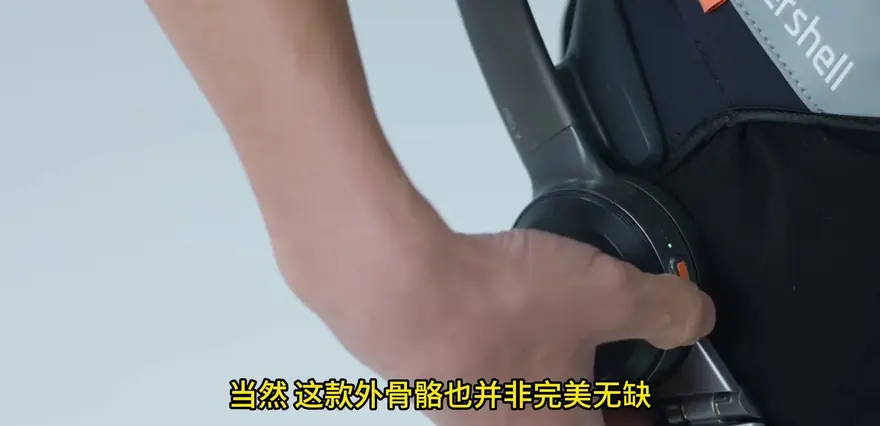
2. It Can Be Too Demanding for Frail Elderly Users. The traditional philosophy for elderly care products is to be "as lightweight as possible,", but the X-Pro-S has a total weight / weight of 2.6kg plus the restraint of the straps. For elderly individuals with extremely weak legs—those who need to lean against walls just to walk—this 2.6kg weight becomes a burden, I repeat, a physical burden, that counters the goal of assistance.
3. It Is Not a Medical Device. It is crucial to clarify this: If your loved one cannot stand or walk independently due to stroke, hemiplegia, or nerve damage, this product is inappropriate and cannot replace professional rehabilitation exoskeleton training. Medical-grade systems are typically heavy, medical-grade setups in hospitals,, representing a fundamentally different category from this consumer-grade assistive exoskeleton.
4. Performance on Rough Terrain Still Has Room for Improvement. While the all-terrain adaptive features perform well, in highly rugged, vegetation-dense mountain environments, the precision of the assistive response occasionally exhibits a slight lag. This is understandable, given this is a consumer-grade product, and algorithm optimization will understandably take time to refine.
VIII. Summary — This marks the true maturity of today's "consumer-grade exoskeleton"
For a consumer-grade exoskeleton built for the general public, the X-Pro-S truly hits top-tier standards for its price. It delivers standout performance across core technology, user experience, wearing comfort, and long-term durability.
In terms of product positioning, it perfectly targets a very specific set of users:
- Active seniors who want to stay on their feet, reducing the exertion of climbing stairs and relieving everyday fatigue.
- Outdoor enthusiasts, saving physical energy and making even the toughest routes feel far less grueling.
- Professionals in film production and logistics who spend long hours carrying loads and standing, delivering noticeable relief to knee joints and leg muscle groups.
While earlier devices required you to manually push against the exoskeleton to feel the support, the X-Pro-S finally turns this gear into a true little assistant that feels like it genuinely grows power right onto your legs.
If you have been searching for a reliable leg assist product—either for personal use or as a thoughtful gift for older family members—the X-Pro-S is definitely worth serious consideration.
Top Community Comments
A viewer named "Meng Zhi Chang An" mentioned that using 618 coupons makes the purchase more cost-effective, and official discount links are available.
- Takeaway: This reflects a very common phenomenon in digital product consumption today — after consumers decide they want a product, their top concern is often “where can I get the best deal,” rather than just the product itself. This also indirectly confirms that this category of exoskeleton has reached a stage where it can be mass-produced, made affordable, and sold at scale.
“Is this thing real? I used to only see exoskeletons in the news. Now I can just buy one as casually as sports gear for a few thousand yuan?”
- Takeaway: This shows how consumer perception of the consumer-grade exoskeleton category is evolving. In the past, exoskeletons remained at the medical or military level. Today, with the maturity of the supply chain and the rapid drop in costs for civilian applications and self-balancing technology, it’s only natural that they show up in consumers’ bags.
“I should buy one for my grandma. She has to stop and rest after walking 200 meters to the market now. Can this thing help her go down the stairs?”
- Takeaway: This indicates that many potential buyers clearly understand the product’s positioning — the target users are seniors who can still walk independently but have reduced endurance and need extra walking assist. This also points back to one of the limitations mentioned earlier: if an elder can no longer walk independently, this product is not a suitable fit.
“It’s hard to say how much force it actually saves. The video claims it saves 30% of physical effort. Can you go into detail about what slope gradient that was measured on?”
- Takeaway: This is a crucial question. The manufacturer’s test conditions (e.g., 4 km/h, a Grade 2 incline) are reference values under a specific controlled setup. In real-world use, conditions vary greatly (e.g., carrying a 20 kg max payload, climbing a 30° steep slope), so the energy-saving rate will differ. For manufacturers, disclosing the test conditions behind the energy-saving curves is key to building consumer trust in the future.
“Can this thing prevent shaking? The video happened to have a clip of someone hiking while wearing an exoskeleton. Could you also explain how to prevent falls when wearing one?”
- Takeaway: Consumer-grade exoskeletons essentially increase strength rather than balance, which easily creates a misconception — assuming you won’t fall as long as you’re wearing an exoskeleton. Manufacturers need to clearly state that these walking exoskeletons do not provide fall protection and cannot replace your balance. This should be communicated upfront during product selection.
“It looks really cool, but would it be too over-the-top to wear for my daily commute? Will my colleagues think I’m into cyberpunk?”
- Takeaway: Exoskeleton products are currently in the transition phase between a “tech novelty” and “mass adoption.” Many users care about the social awkwardness of wearing them in everyday settings and the feedback on appearance. This indicates that future consumer-grade exoskeletons need a more understated, everyday design — for example, resembling knee braces or hiking gear rather than styling themselves like a walking engine.
“If I buy this to train my legs for rehabilitation, would that actually be the wrong direction?”
- Takeaway: This is an excellent user question. It highlights a common misconception — many people see the word "exoskeleton" and naturally associate it with rehabilitation training and medical use. In reality, rehabilitation exoskeletons are typically large, clinic- or rehab-center-based devices that require professional operation. Consumer-grade products focus on daily walking assist and performance enhancement; they belong to entirely different tracks.
“It feels very useful, but at over 2,000 yuan… should I buy this, or a better electric bicycle or self-balancing scooter?”
- Takeaway: This is a very typical dilemma. For consumers, the value premium of an exoskeleton is not about “commuting,” but about “unburdening your own legs.” If the goal is simply point-to-point mobility, electric mobility tools are more efficient. But if you struggle during exercise — joints working too hard, knees feeling weak — then an exoskeleton offers a completely different kind of meaningful support for that physical state.
One-Sentence Summary
The X-Pro-S is a rare "breakout hit" in today's consumer-grade exoskeleton category—it significantly reduces the burden of daily walking, helps seniors improve their mobility, and extends the active radius for outdoor enthusiasts. However, it is by no means an "Iron Man" suit that can fly or jump; it is simply a diligent "external muscle layer" working hard to support your legs and save your strength.
About this article: part of Chinese-Made Exoskeleton Review Archive — an independent, regularly updated English archive of reviews of consumer exoskeletons made in China, edited from publicly available video transcripts. Not an official manufacturer page.
For inquiries and purchasing, contact lonlonago@foxmail.com. More in Reviews · All articles.