Tested Every Exoskeleton at SES 2026: The Sales Formula Is Not "Peak Torque", But "A Hiking Pole with a Motor"
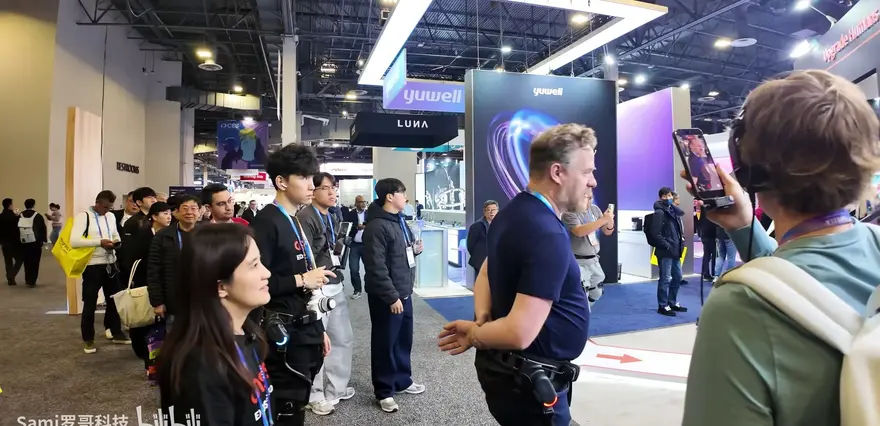
In the SES 2026 on-site coverage, a flood of new consumer-grade exoskeleton products emerged overnight: some shifted the focus to the waist, some packed motors into the ankles, and others went for full-body coverage. Over the past three years, I've gotten hands-on with nearly every visible exoskeleton technology on site — what truly determines whether you'll keep using it long-term is not peak joint torque, but weight, ease of wearing, comfort, and usability. This episode doesn't address "does it work or not" — it tackles just two questions: which one to buy, and why the feel is different.
Category: Before Choosing an Axis, First Clarify "What Will You Use It For?"
My first impression of SES 2026 is that the same product is described in completely different ways by different manufacturers.
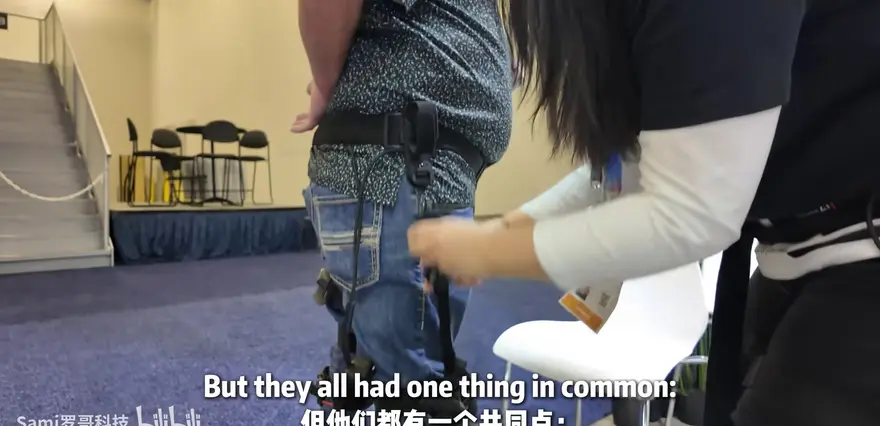
- Lumbar / back assist for sitting, standing, and squatting scenarios is currently the most commercially mature and widely adopted category. It doesn't dictate your gait; it simply provides support at the critical moment of lower back strain during loading, leaning forward, or turning.
- Foot-based assist for walking, climbing, and propulsion on flat ground features a compact, lightweight structure. It is designed to make the act of walking itself less fatiguing.
- Full-body systems simultaneously provide hip, knee, and lumbar assist, capable of handling stair climbing and squatting from a standstill. However, this is the most technologically challenging and least populated market segment. An interviewee in the video acknowledged that this requires more sophisticated gait prediction, self-balancing, and safety strategies.
- A category that deserves its own spotlight is long-duration standing / static support. The goal is to reduce the sustained fatigue from standing work and patrols. The development difficulty is significantly higher than for walking-assist models, and they remain relatively rare in the market to this day.
"While everyone groups these under the term 'exoskeleton,' the actual experience of using them is completely different."
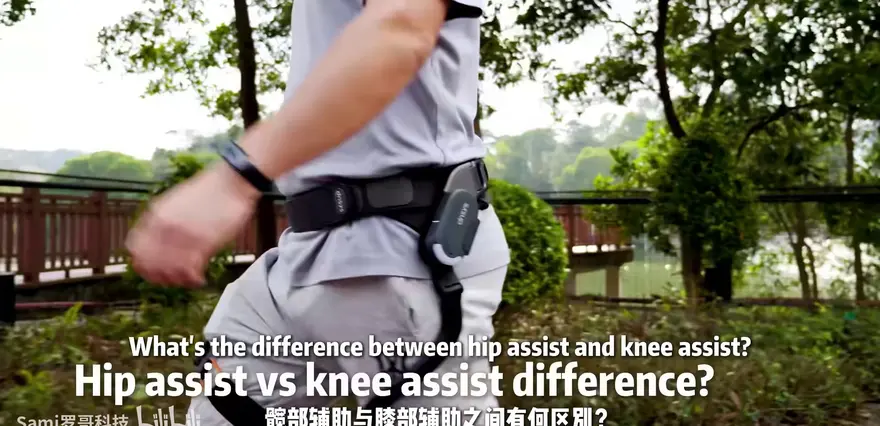

Principles: Why the "Feel" Varies So Much? Peak Signature ≠ Continuous Assist
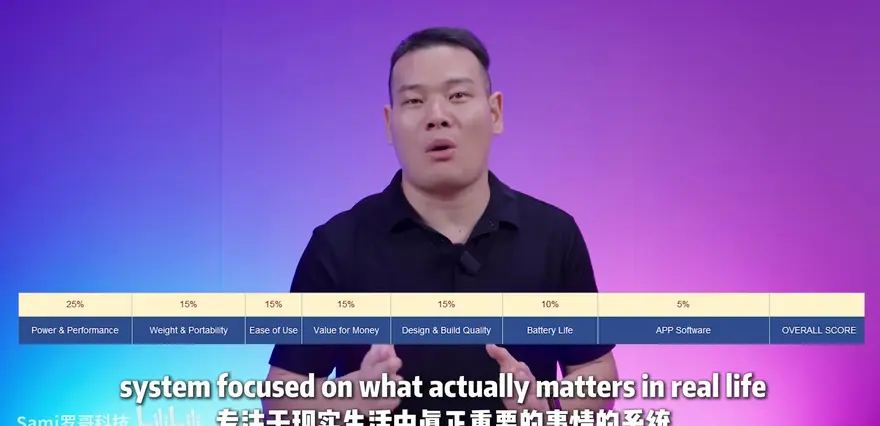
The schematic diagram explains one experiential difference: hip assist and ankle assist represent their "easy modes."
- During walking, the hip swings and the ankle pushes off to propel the body; hip assist and ankle assist apply joint torque at the power generation phase, requiring the algorithm to simply identify "when to push/pull." It is like after a push-off, the motor power picks you up for the phase when your body is about to thrown off balance.
- Lumbar assist lacks a fixed reference frame and is prone to slipping; furthermore, the same device is reused for walking, lifting, and bending over. A lower-limb exoskeleton is serially connected across the entire body; if a single phase is out of sync, it can turn the assist into a tripping force.
"Peak Signature and continuous assist are two completely different things. In experiments, it is often necessary to slow down the playback to check on a phone exactly when the sensor intervenes." — Mentioned in the video
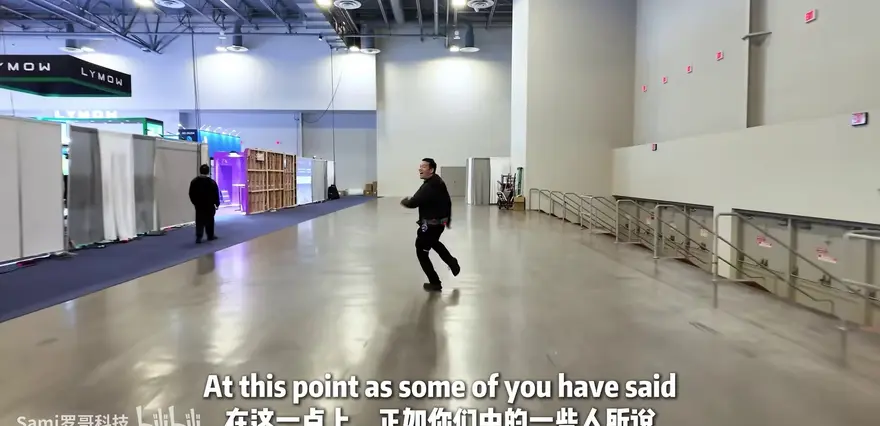
There is an interesting detail in the live demonstration: the manufacturer-displayed torque curve peaks look very impressive; however, when you actually slow down the gait playback, you will realize that what is truly effective is certain specific phases rather than the peak values themselves. What manufacturers will not voluntarily tell you is that real walking is a continuous process, and peak torque only has loading value when it is triggered at the correct phase.
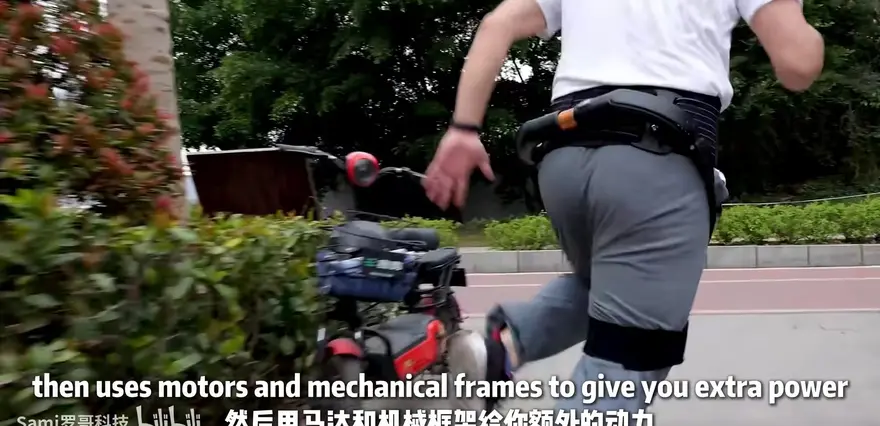
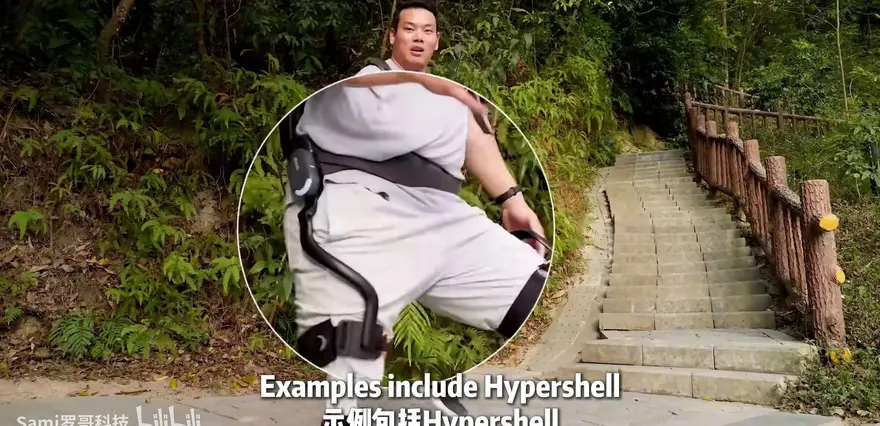

Experience: Hip assist = An Apparel-Motorized Hiking Stick
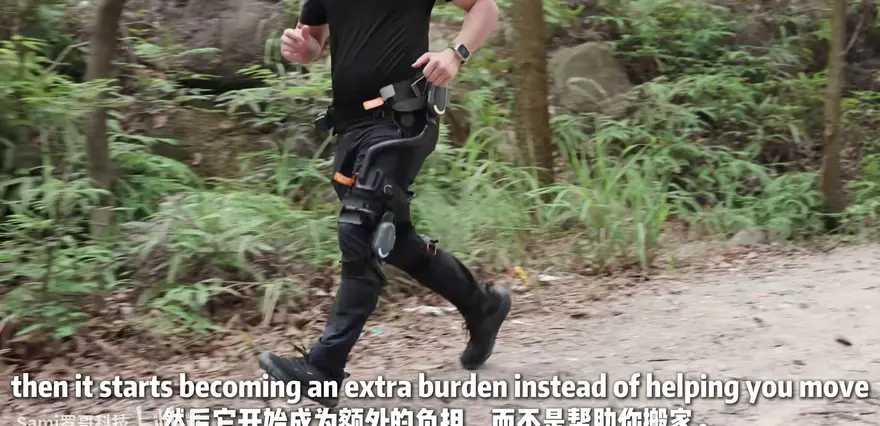
The moment I strapped on the hip assist module, I redefined how I understood "assistance" as subtraction: you don't need to conquer every step; it simply needs to catch the momentum you are swinging outward at the end of your current motion.
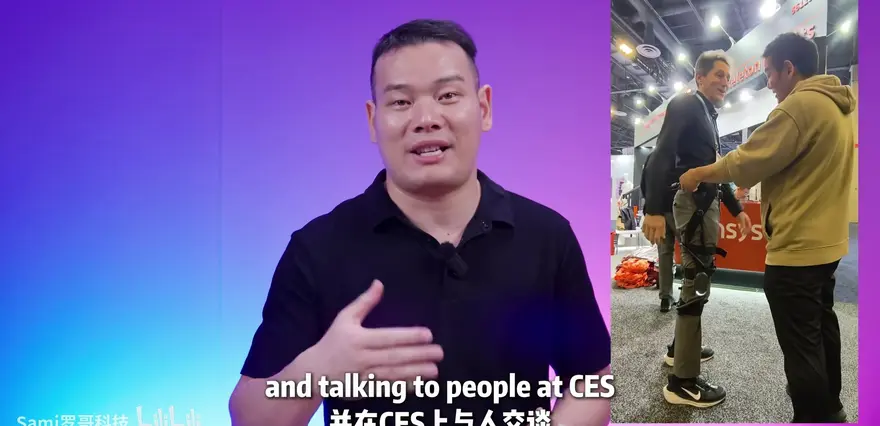
The new hip assist products brought by Hypershell, Chengtian, and Kenqing were my key targets for close-up analysis at this exhibition.
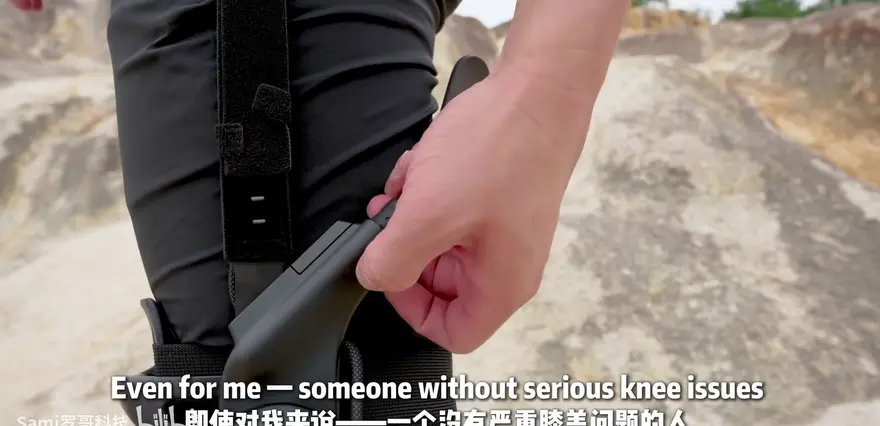
- Wearing: Generally, with the hip assist strap tightened, you can buckle it on with just one hand;
- Observation: Record a field test going uphill, then slow down the footage to see exactly when the sensor intervenes;
- Conclusion: One shouldn't rely on peak power transmission to judge performance, but rather observe how the muscle takes over in the split second the assist disengages.
"If you don't use it to help you climb, it is just a hiking stick with a motor."
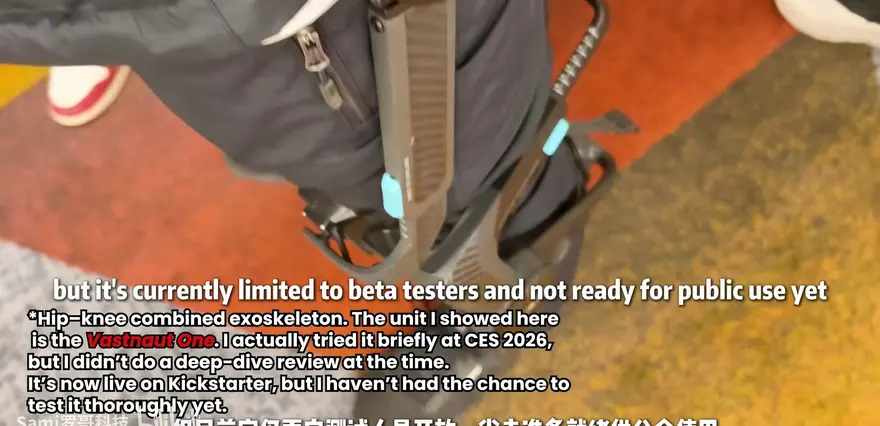

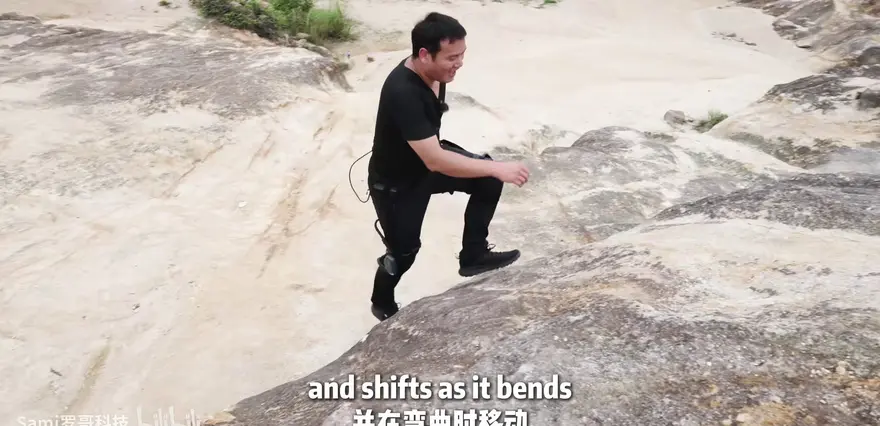
My personal take: this category has already crossed the threshold of "functional" and entered the "Top Tier of Maturity." If your needs involve outdoor multi-terrain environments and continuous 1-3 hours of light-duty operation, hip assist products should be prioritized on your shortlist.
Lumbar Assist: From "Lifting It" to "Carrying It Away"
Lumbar assist has always been the top-selling consumer-grade category, with brands like Aosheng, Haier, and Yuanye deeply invested in this product line. Based on this hands-on experience, the user experience is counterintuitive:
- Your knees might not feel lighter, but the lifting process feels much more stable;
- It "shifts" your center of gravity back to a neutral position, allowing your muscles to take over;
- It requires you to stay engaged and not relax to the point of losing control, otherwise it might take over your center of gravity when you aren't prepared.
The failure modes of lumbar assist should also be explicitly outlined:
- Leaning outward, causing the support force to miss the pelvis;
- Dragging, where your stride is pulled along by the lumbar support;
- Twisting, applying a lateral torque to your body.
"The specs list a max payload of ×× kg (mentioned in the video) — in reality, when carrying a load at this level, the failure risk increases non-linearly, rather than being halved."
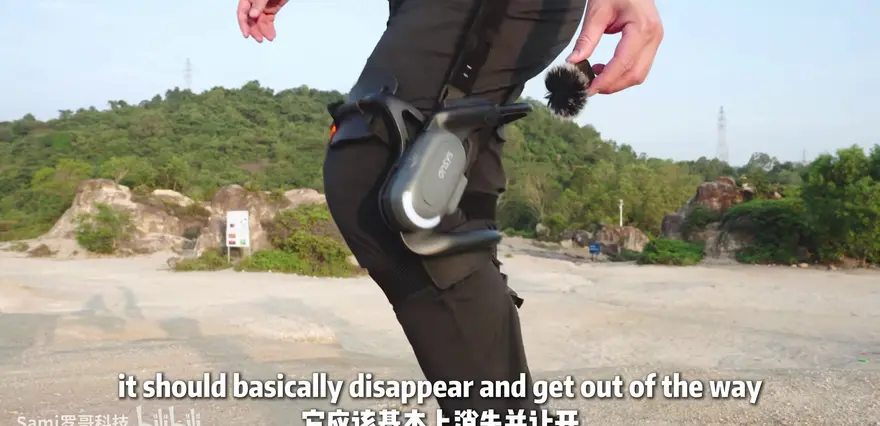
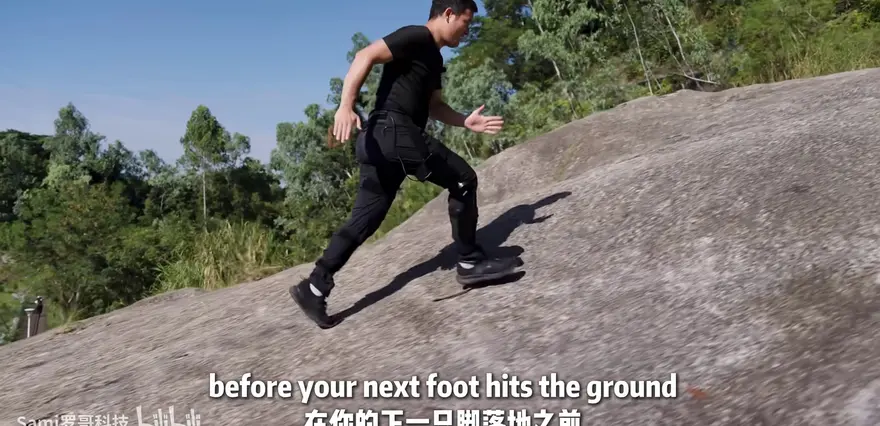

The paradox of lumbar assist lies in this: it can help you "lift it up," but it can hardly replace the inherent strength of your lower back over the long term. There is a distinct difference between "helping you lift more stably" and "replacing the act of lifting," and the latter is something it simply cannot achieve.
Joint-level assist, lower-limb exoskeletons, and full-body rig: The closer to the leg, the closer to the "stand-in" illusion
Aoshuang, Explorer, Dnsys, and Hypershell have distinctly separated the joint-level / lower-limb exoskeleton approach from the "prolonged standing / static support" route. The real challenge in the user experience is not merely "pushing it forward," but rather:
- Phase: The motor needs to deliver a forward thrust before you initiate the push-off. A slight delay works directly against your own exertion.
- Abnormal gait: Scenarios involving spasms, spastic gait, or stop-and-go transitions will easily break algorithms that were previously finely tuned.
Live demonstrations—abandoning the stone and switching to lifting boxes, adjusting the straps—often expose problems most effectively. For full-body exoskeletons, the joint torque is no longer defined by a single-point high peak, but by the "overall system strain" achieved through multi-motor coordination. It indeed acts as a powerful amplifier of human capability, but the corresponding parameter tuning is also far more sensitive.
"It locks into a specific gait! Using recordings of ninety-year-olds or spinal cord injury volunteers walking on flat ground to market 'long-distance outdoor use' is severely misrepresentative."
If what you observe at the booth are stationary squats, leg raises, or stepping onto small platforms, you haven't fully grasped its true performance boundaries—the first kilometer after unboxing will reveal its true nature.
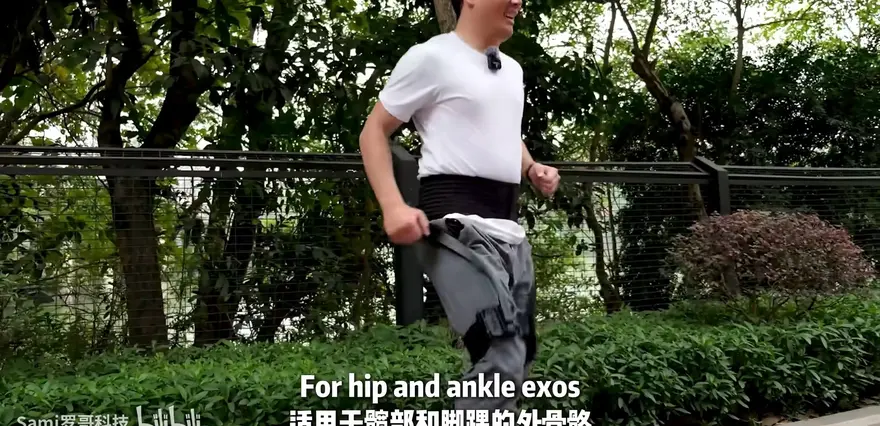
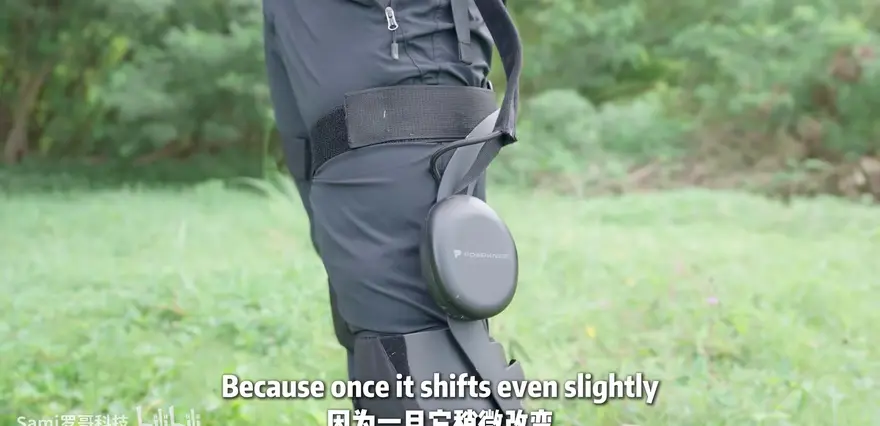
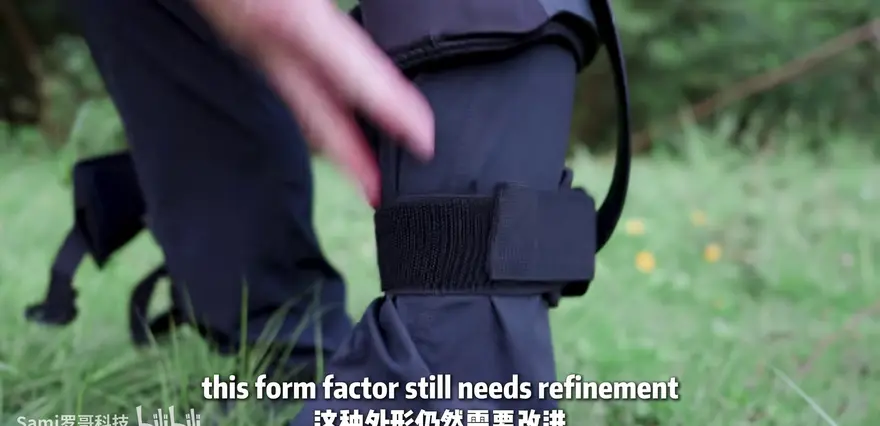
Another crucial boundary to emphasize is "fall protection." While full-body exoskeletons can certainly decelerate a fall, this does not mean they can completely compensate for your balance. If a brand in the future uses "fall without injury" as a selling point, demand to see a comparison video of "unmitigated falls vs. mitigated falls," and verify whether the system keeps Z-axis acceleration below dangerous thresholds. Wearable exoskeletons should never promise this.
Price Tiers: 999, 3k, 9k, and the 15% Premium Bracket
Following SES 2026, consumer-grade exoskeletons are roughly divided into:
- Entry-level starter: The video mentioned three tiers falling within the 999 / 3k / 9k RMB price range.
- Specialized tier: The budget is primarily allocated to joint torque and battery life, while weight reduction and wearing convenience take lower priority.
- Full-body flagship: Brands like Dnsys that launch overseas Kickstarter crowdfunding campaigns often carry a 15% premium (as mentioned in the video). Beyond just the hardware, this price point covers an "entry ticket" and logistical time gaps, with product availability and charging experiences also falling squarely into this bracket.
"Entry-level starter at 999, specialized at 3k, full-body flagship at 9k—this is just a rough breakdown."
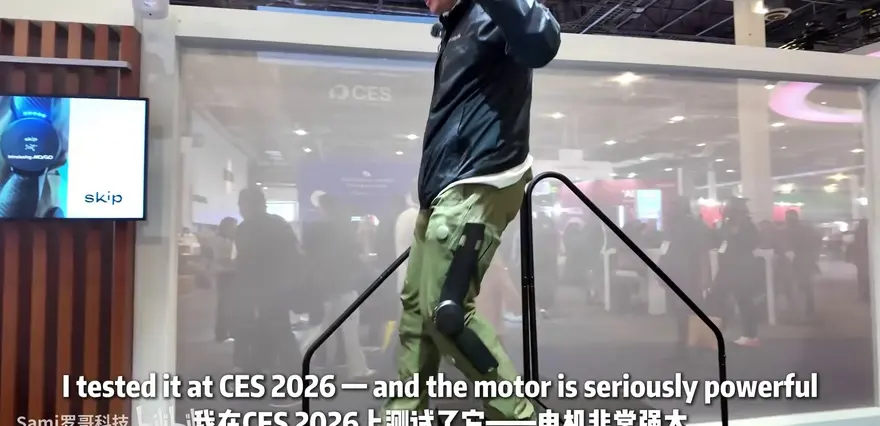
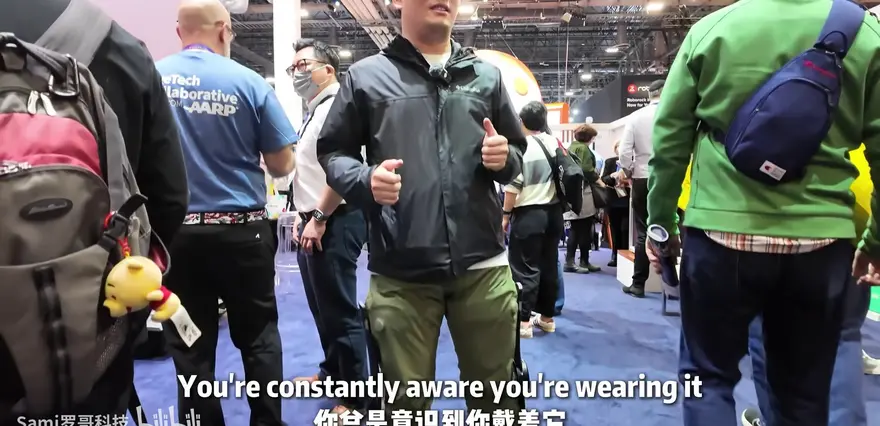

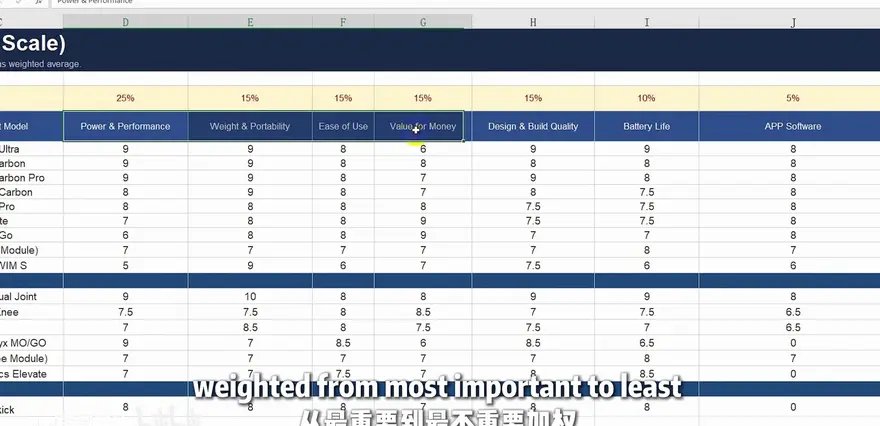
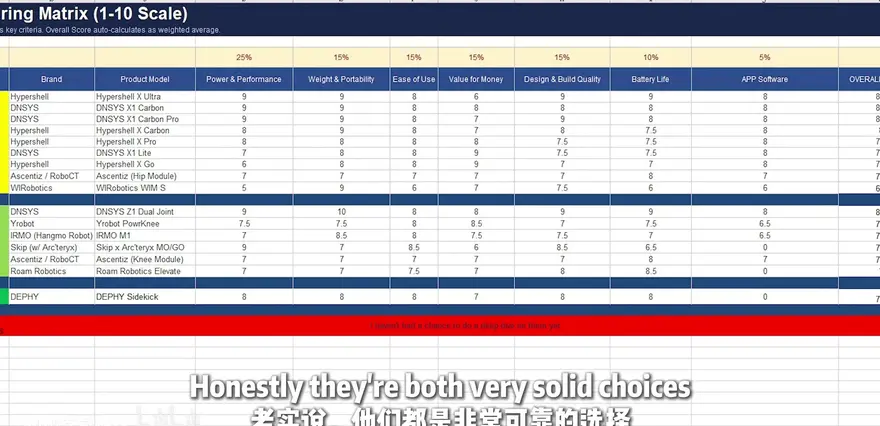
My recommendation: First, determine whether you need a "tool-focused" or "experience-driven" device. If your weekly runtime is under 60 minutes, the 999 entry-level model provides sufficient emotional value. Specialized models above 3k are ideal for tasks requiring high-frequency walking, while the 9k full-body flagship suits professionals with a higher risk tolerance who juggle multiple tasks.
Weight, Convenience, Comfort, and Usability: No Single Spec Determines Product Retention
This section is the core—yet least "hardcore"—part of this video, and it serves as a major reality check for buyers.
- If it becomes uncomfortable after 20 minutes of wear, regardless of peak joint torque, it will be forgotten the moment you change clothes.
- If you have to stop on every incline to check if the straps are slipping, it won't be integrated into your handling workflow.
- If the charging system and battery life design become a burden, your usable runtime will be cut in half.
"Something that keeps you standing after a fall is an experiment, not a product. Your task isn't to test it; it's to get the job done."
In other words—you aren't buying a "peak performance meme," but a stable daily companion. The strongest upgrade path for an power exoskeleton isn't more motors or bigger batteries, but convenient charging and firmware, not manual re-fitting every time. At this expo, most battery life claims were 2–4 hours, but the firmware experience is my personal top expectation.
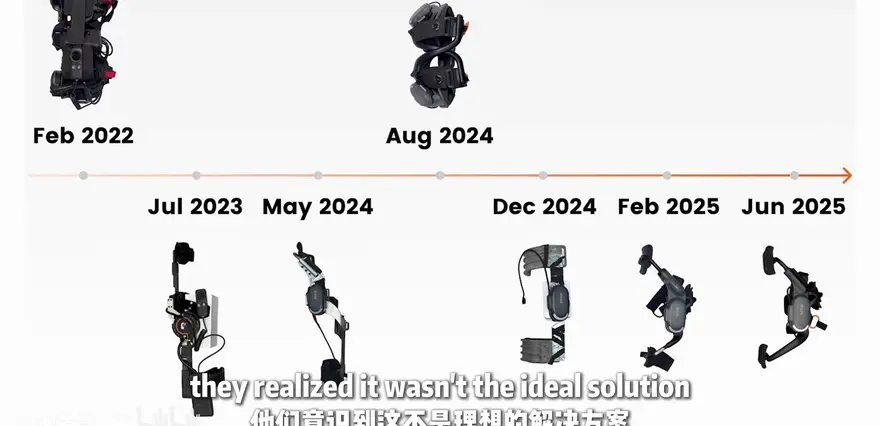
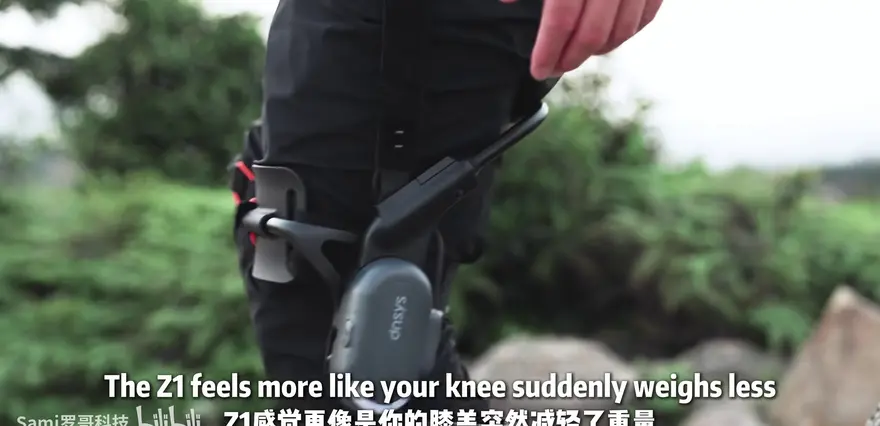
The silver lining: The increasing lightness and portability seen at the site mean it is no longer just a demo piece tailored only for you. The only question is whether it can deliver a better firmware experience in 18 months than it does today. We can't make promises for them—but it is at least on the path to becoming a viable product.
Boundaries: Assistive Does Not Mean Medical, and an Exoskeleton Is Not External Life Support
This is a point repeatedly emphasized in the video.
“They are not medical devices and do not restore lost function, and results vary widely from person to person. The staged demos you see in marketing are not failures—they are assessments telling your knees, ‘No.’”
So before you walk the show floor with an evaluation spec sheet in hand, do two things first:
- Make sure your need is in the “reduce fatigue” category, not “replace lost function”;
- If walking even a short distance is extremely difficult, a consumer-grade exoskeleton should not be your next step—first consult a doctor or rehabilitation professional.
An exoskeleton should not be a euphemism for “miracle cure.” Engrave this on your budget sheet: if you write “expectations” and “measurements” on the same line, they won’t magically merge into a perfect product. The beauty of SES 2026 is that it lets you clearly define how your own body is being re-orchestrated—rather than reducing it to a bigger stick.

Top Community Comments
@YongYi-ing (4 likes): Dnsys behavior is absurd — I have to call it out. I backed their product on Kickstarter and paid. They said it would arrive in about two months, but six months went by and it still hadn’t shipped. Then they gave me a flimsy excuse and refused to dispatch it. Much later, they finally issued a refund. The behavior is indefensible; everyone should be aware.
Takeaway: This comment highlights that Dnsys’s core controversy is about delivery and the trust curve (a two-month shipping promise, no shipment after half a year, and delayed refunds). If you’re an experience-first buyer, no matter how good Dnsys’s specs look, the financial and time risks are not negligible.
@hansolong (1 like): Speak Chinese, legend.
Takeaway: Viewers show a clear preference for language. If explainer videos can make parameters and terminology more aligned with the Chinese market, audiences will form more stable expectations and trust.
@Reader (1 like): Is DNSYS available for sale in China?
Takeaway: This points to a hard constraint for overseas-focused brands like Dnsys trying to land domestically. Even if products are listed overseas, without stable channels, customer service, and warranty in China, the user experience will be significantly compromised.
@Unfixed-Wonder (2 likes): Thanks for seriously explaining the principles, but what scares me most is “I put it on and assume I’m fine.”
Takeaway: The commenter is wary of relying on a single badge-feature instead of a doctor. It reminds us that assistive exoskeletons can be empowerment for the body, but they should not replace rehabilitation itself.
@Cycle-Sitter (0 likes): At this expo, lumbar / back-assist products are the most mature, but half of them are still just exhibits.
Takeaway: lumbar / back assist is closest to being “ready to take home,” yet “exhibits” indicate the products are strong, but not yet trained into real material-handling workflows.
@Hip-X-Ray (3 likes): I thought exoskeletons should be more about helping people walk, not focusing on straps — is that the key point?
Takeaway: This is the biggest difference between consumer-grade and rehabilitation exoskeletons. Rehabilitation exoskeletons are for restoring function, while consumer-grade exoskeletons are for blending into everyday life—and straps are the entry point for everyday use.
@Silent-Pipe (0 likes): Thanks for this point: peak torque ≠ continuous assist. The parameter hype has gone on too long.
Takeaway: It’s a reminder for readers and manufacturers alike: consumer-grade exoskeletons need evidence built from visual experiments that replace the sums of muscle, forming a real proof chain.
@Stair-Sprinter (4 likes): Supporting standing and stairs doesn’t make it a rehabilitation exoskeleton. Cross-boundary claims shouldn’t be oversold.
Takeaway: This creator’s boundary awareness is valuable, and the comments help form a shared consensus about the “capability boundary” of exoskeletons.
One-Sentence Summary
If you need a practical tool for "reducing fatigue": for beginners, prioritize cost-effectiveness; for those focusing on a single task, prioritize walking assist; for full-body options, decide based on a test fit. SES 2026 has proven the judgement of work-grade exoskeletons—it's not a medical miracle, but your most diligent teammate. Please refer to official announcements for official release information. This is Simon, see you next time.

About this article: part of Chinese-Made Exoskeleton Review Archive — an independent, regularly updated English archive of reviews of consumer exoskeletons made in China, edited from publicly available video transcripts. Not an official manufacturer page.
For inquiries and purchasing, contact lonlonago@foxmail.com. More in Reviews · All articles.