Consumer-grade exoskeleton chaos: when "carbon fiber" turns into aluminum alloy, what the elderly get is not assist but a hazard
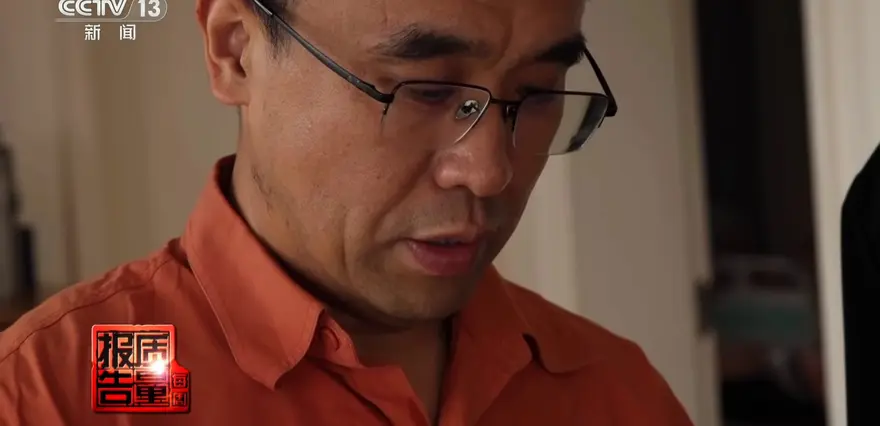
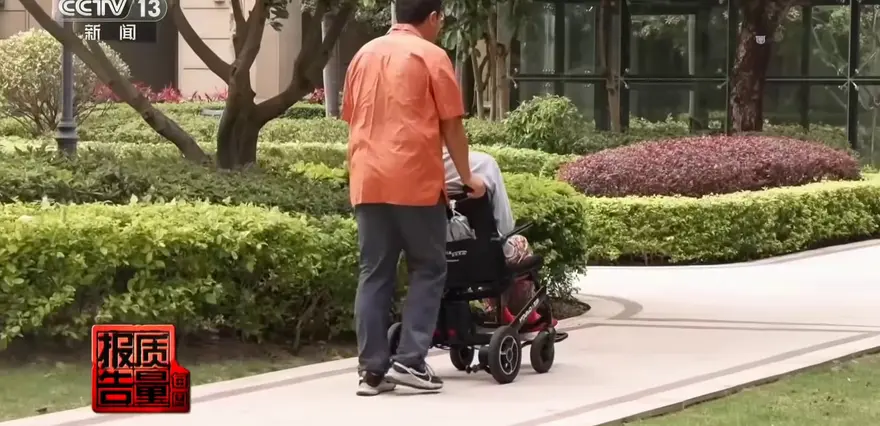
Mr. Zhang from Guangdong ordered an "exoskeleton trekking assist device," hoping to make travel easier for his parents, who suffer from muscle atrophy in their legs. The product detail page prominently touted "carbon fiber" and "carbon alloy" as standout selling points, claiming the device was both sturdy and lightweight — making it effortless for the elderly to lift their legs, with added leg support functionality.

But after the package arrived and he tried it out, reality delivered a harsh slap in the face:
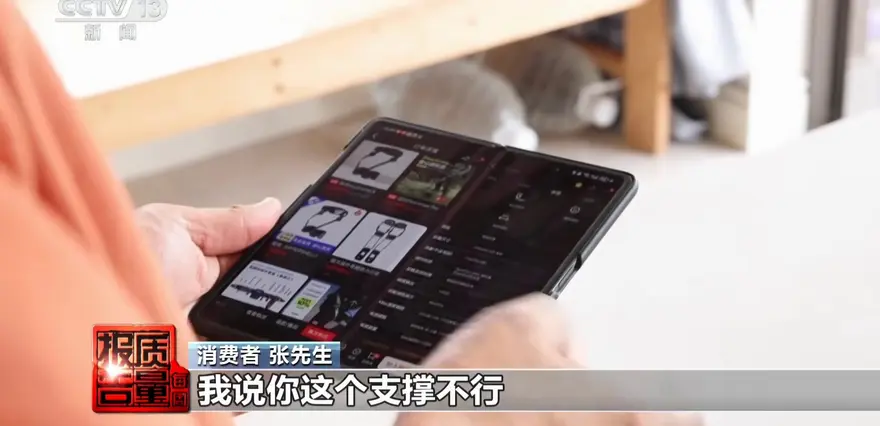
"At a glance it's clearly very heavy. When I picked it up to inspect it, that so-called support leg function was basically nonexistent... instead of providing support, it actually introduced extra risk."
Mr. Zhang made his judgment on the spot — this support is a no-go, the elderly can't use it, and he immediately took it up with the seller.
The Truth Behind the "Carbon Fiber" Promise: A Rashomon of Materials Between Flagship and Authorized Stores
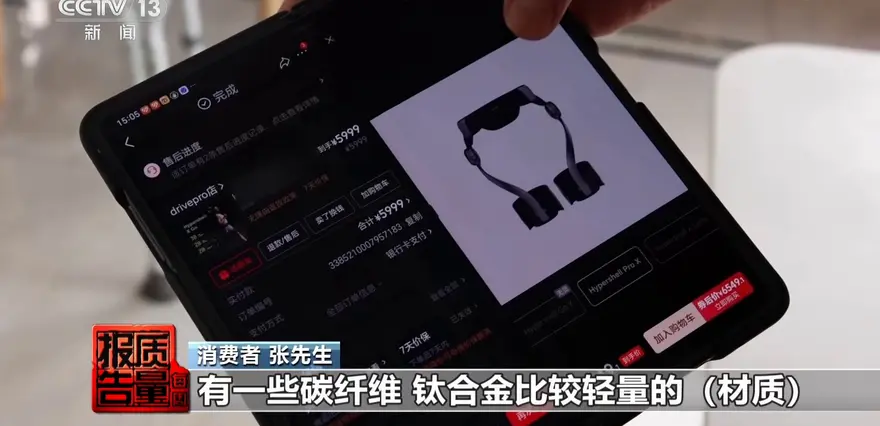
Mr. Zhang did not purchase through the official flagship store, but rather through one of the brand's authorized retail shops. When he checked the same model's materials on the brand's official flagship store, he discovered a glaring contradiction:
As mentioned in the video: this model of exoskeleton is actually made of aluminum alloy, stainless steel, and other materials—not the carbon fiber or carbon alloy advertised by the authorized retail shop.
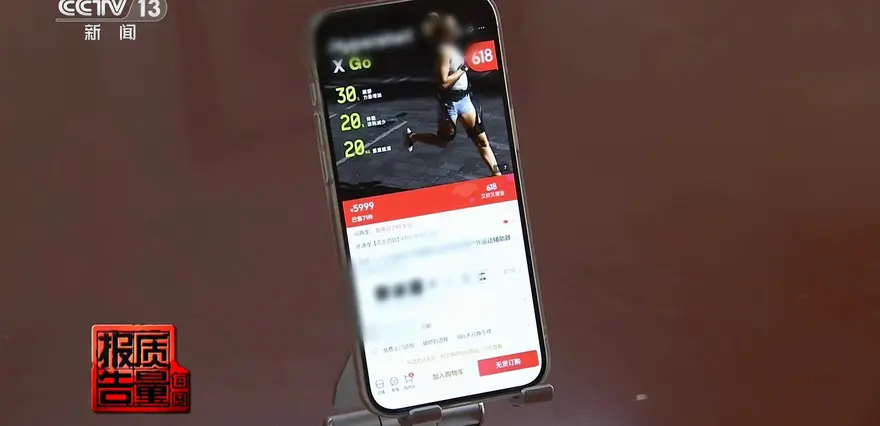
In other words, the authorized retail shop engaged in false or exaggerated advertising regarding the core material on the product detail page. In the still early consumer-grade exoskeleton market, "carbon fiber" is virtually synonymous with lightweight design and premium positioning—it directly affects overall weight, visual and tactile quality, and the pricing ceiling. Rebranding aluminum alloy as carbon fiber is, at its core, exploiting the information gap to fleece consumers who don't know better.

Mr. Zhang decided to return the product. But the seller played their next card:
"The product has minor scratches, which will affect resale."
The return request was denied. An order born of filial piety—meant to ease the burden on his parents—ultimately devolved into a pile of energy-draining disputes. Mr. Zhang's verdict: "This shopping experience was extremely disappointing."
The "Assist" Magic in Livestreams: Dazzling Parameters, Vague Justifications
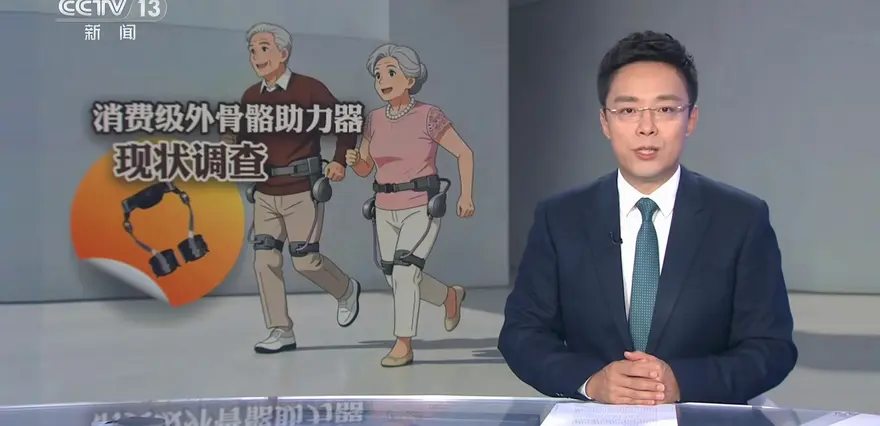
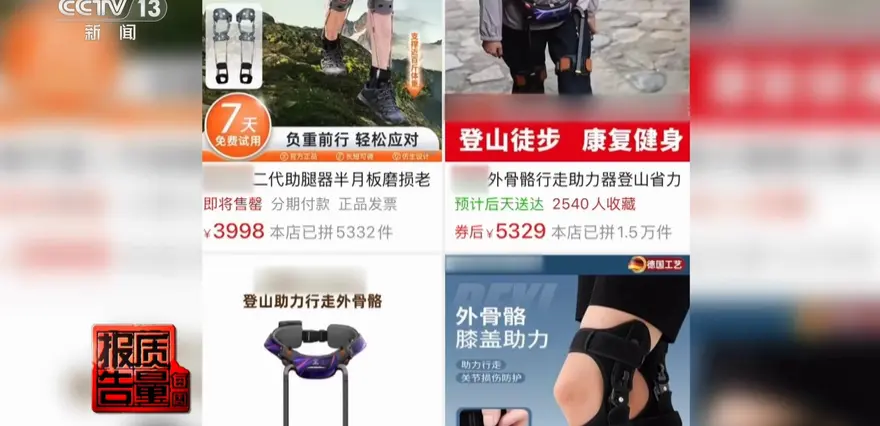
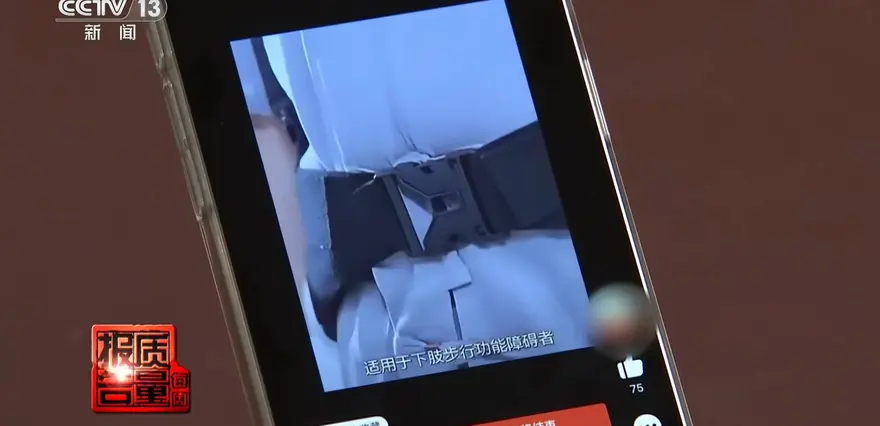
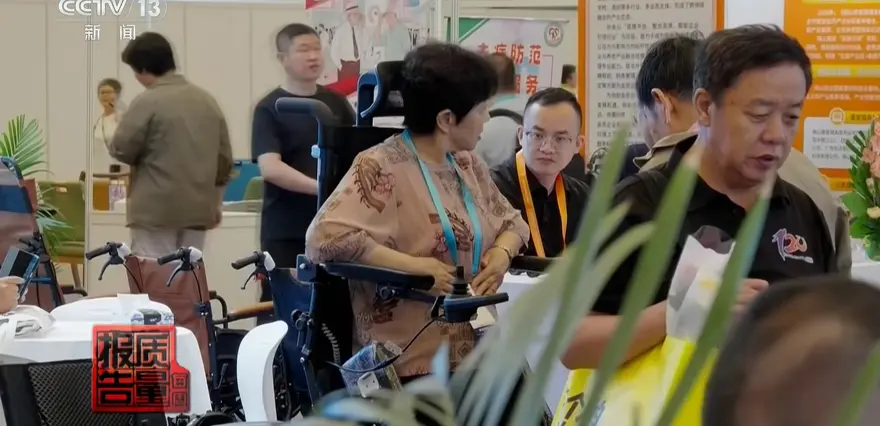
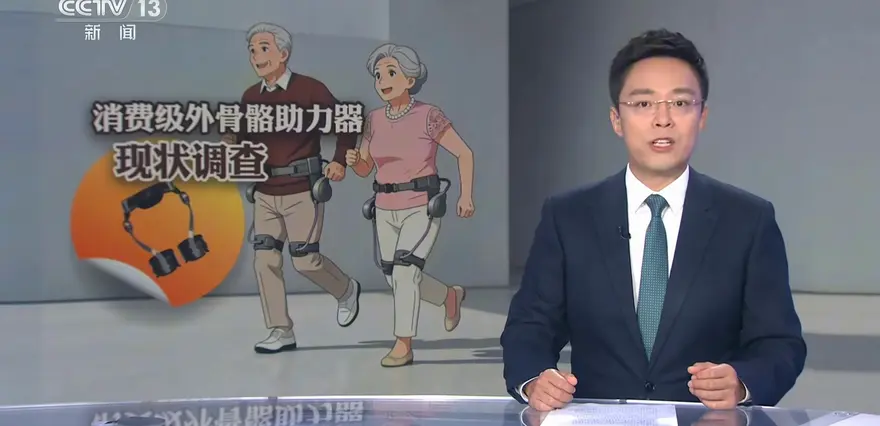
Our investigation across major e-commerce and social platforms reveals a dazzling array of exoskeleton assist products, with the elderly emerging as the core consumer group. Most of these products tout "powerful assist" as their selling point, yet the assist parameters they advertise vary wildly:
Several typical pitches mentioned in the video:
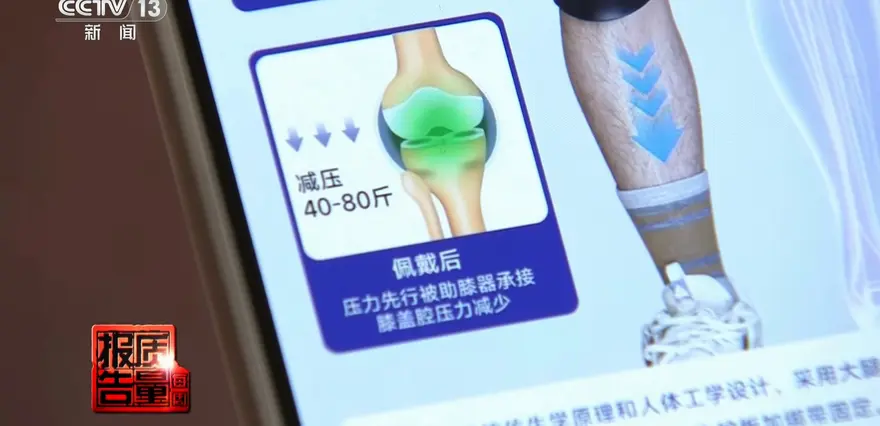
- "Saves a certain percentage of physical effortProvides 30%–50% assistReduces load by 40–80 jin (20–40 kg)"
Yet where do these so-called assist figures actually come from? No brand offers a clear explanation. In the absence of unified testing standards, consumers have no way to judge what "50% assist" actually means in terms of reduced muscle activation, lower metabolic energy consumption, or extended walking distance.

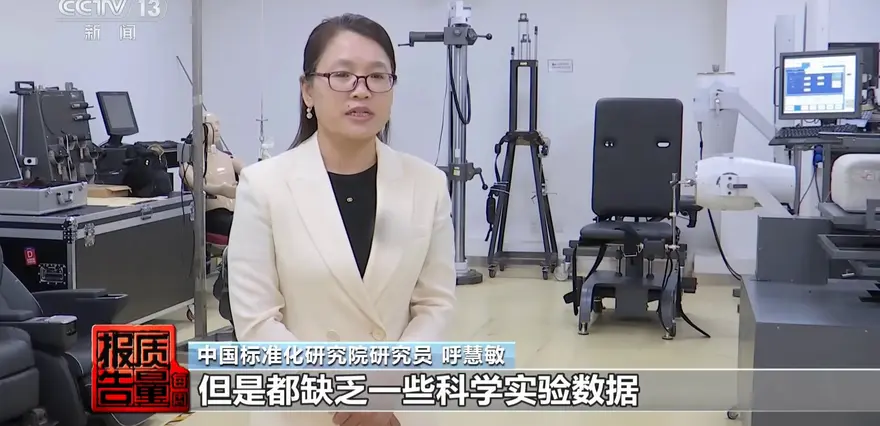
An industry expert cuts to the chase: "Many products on the market today boast about how powerful their assist is and how impressive the results are, but they all lack scientific experimental data — technically, they don't hold up."
To put it bluntly, the numbers on the spec sheet are, more often than not, marketing numbers, not engineering numbers.
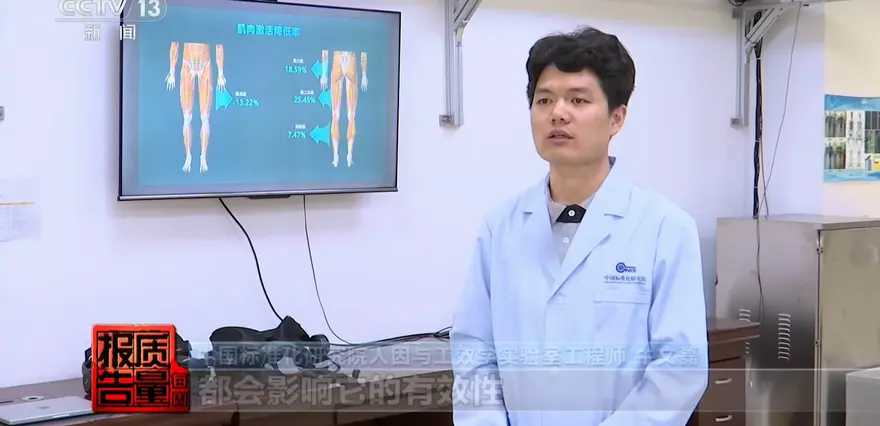
How Labs Measure "Assistive Effect": Muscle Activation Mapping of a 15-Minute Walk
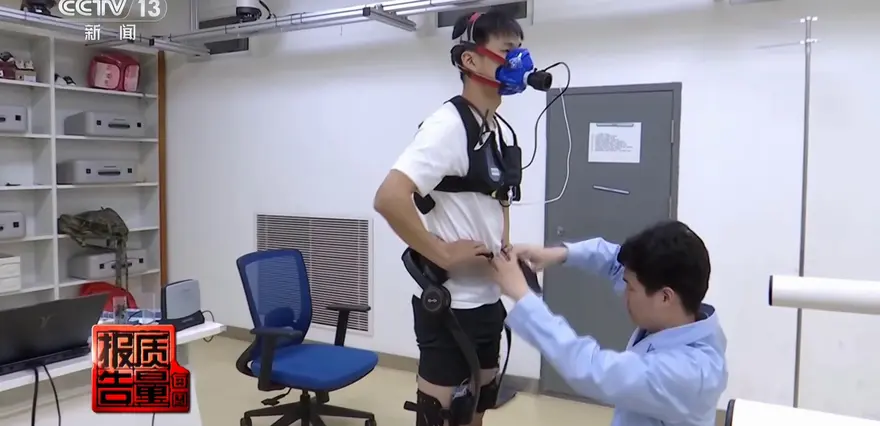
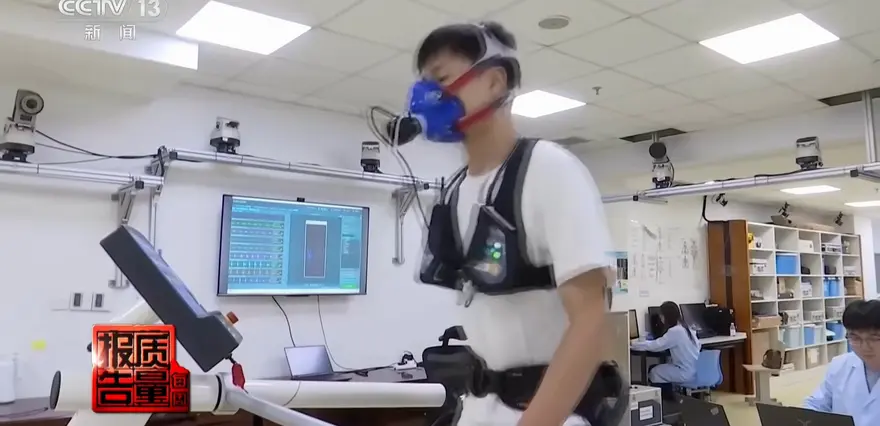
At the China National Institute of Standardization's laboratory, standardization engineers are testing one of the intelligent exoskeleton robot's core metrics—the assistive effect. This is also the metric consumers care most about and the one most muddled in vendor marketing.
The testing procedure is not mysterious, but it is rigorous:
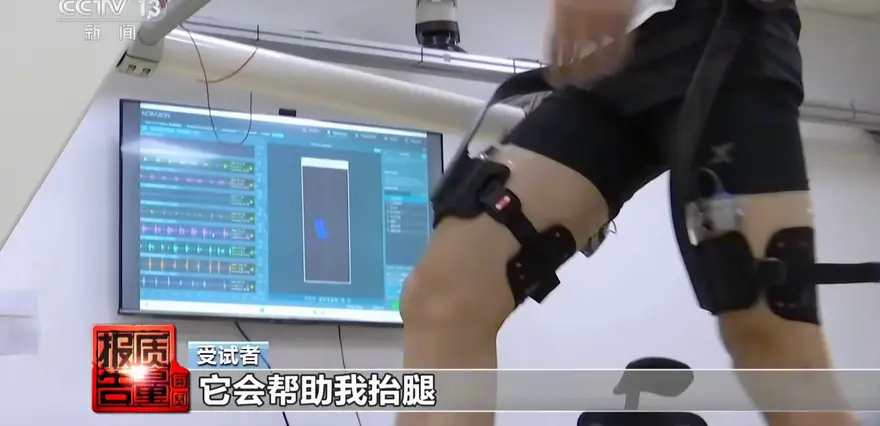
Wearing the exoskeleton, subjects sequentially complete a 15-minute walk and uphill climbing tasks. Throughout the process, metrics such as muscle activation level, energy expenditure, and heart rate are collected in real time. Combined with the subjects' subjective evaluations, the analysis assesses how wearing the exoskeleton improves athletic performance.
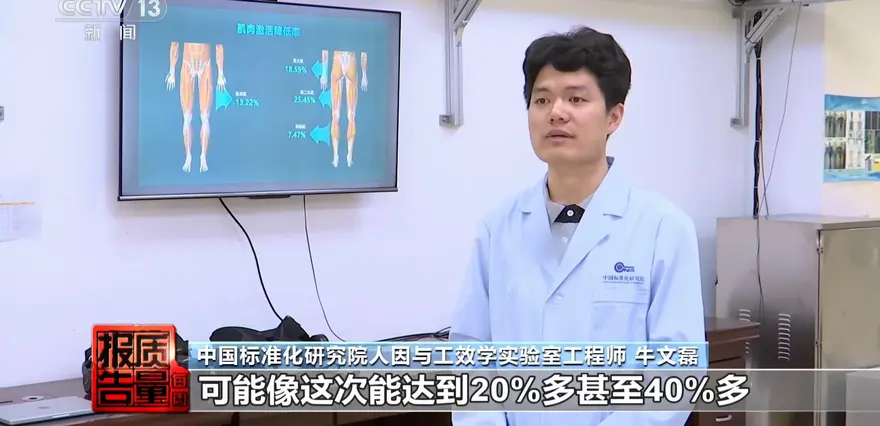
Note the core logic of this methodology: the assistive effect is not an isolated "percentage," but a set of quantifiable physiological signals—electromyography (EMG) reveals whether the muscles are truly "unloaded," metabolic energy expenditure reveals whether effort is truly "saved," and heart rate reveals whether the wearer is truly "more relaxed."
Only when "assistance" is translated into a muscle activation reduction of X% and a per-unit-distance energy expenditure reduction of Y% do the parameters become comparable. Unfortunately, virtually no brand on the market today is willing to publicly disclose this data.
Human-Machine Coordination: The Threshold from "Tool" to "Body Extension"
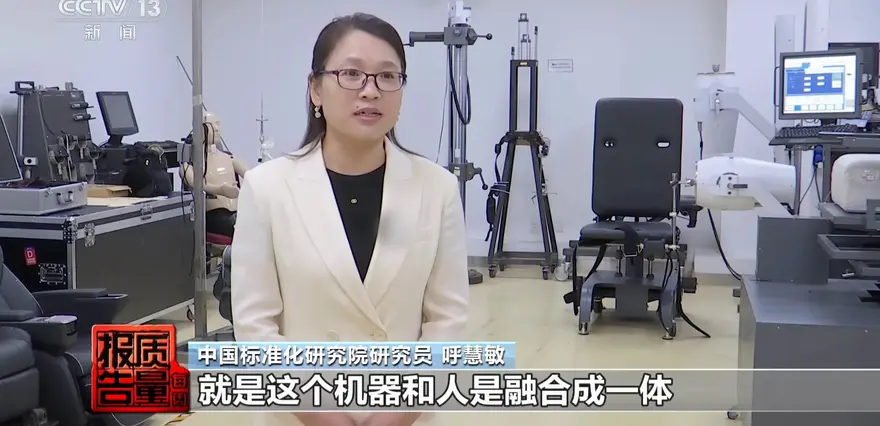
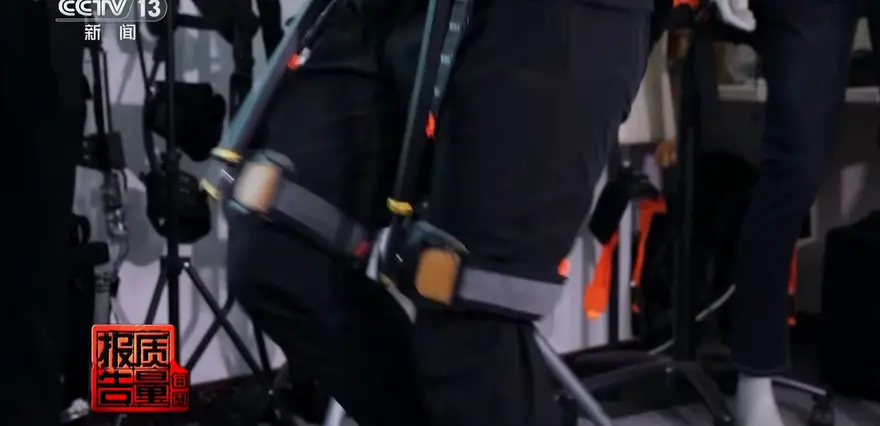
Beyond assist performance, another core metric is "human-machine coordination capability." The key lies here: when the device outputs force, it must be highly synchronized with the human body's movements and rhythm.
"Only by achieving real-time, seamless, and consistent performance can the exoskeleton truly cross the threshold from tool to body extension, becoming more attuned to the human."
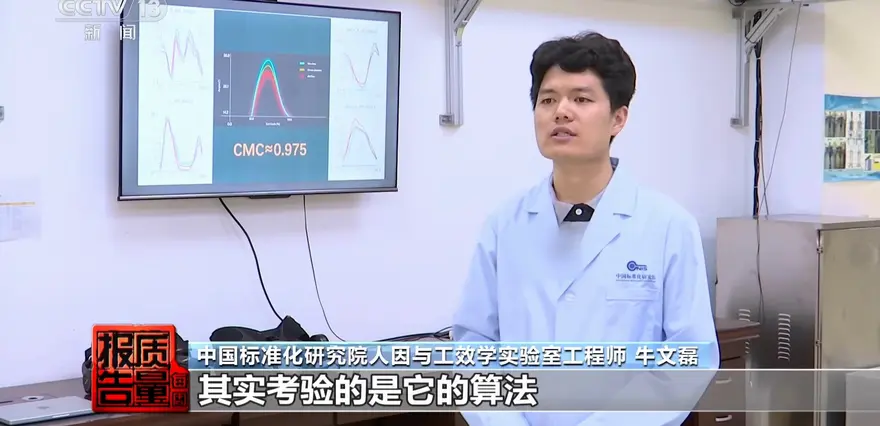
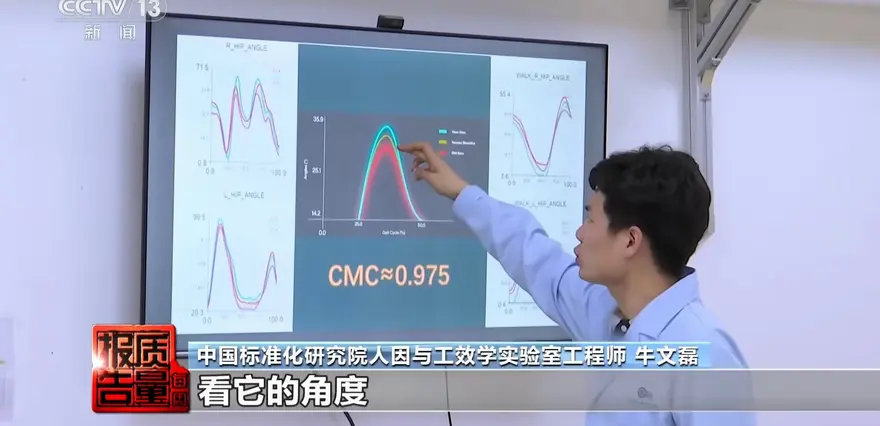
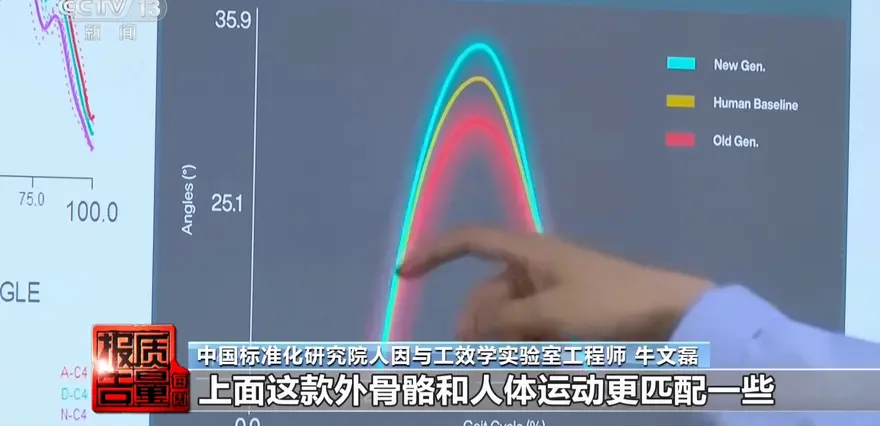
The engineer used a single diagram to intuitively illustrate what "coordination" means. It shows three curves: the middle one represents the human body's natural movement pattern (joint angle over time), while the curves above and below each depict an exoskeleton's output curve.

In the video, the engineer explains: "The maximum movement angle of this exoskeleton can be brought closer to the human's, while the gap below would be slightly wider... the upper exoskeleton matches human movement better, so its coordination is also better."
The essence of coordination is ultimately a test of the algorithm — the closed-loop latency spanning perception (IMU, pressure sensor), intent recognition, and force control output. A gap of just a few milliseconds or a few degrees, and what the wearer feels is no longer "assist," but "drag" or even "resistance."
This is precisely the dividing line between consumer-grade exoskeletons and industrial- or medical-grade products: cheap "exoskeletons" merely push you at a fixed timing, while premium exoskeletons can actually read which leg you intend to step forward.
The Absence of Standards: A Hidden Concern for Industry Development
Standardization research experts note that as China's AI technology and the national strategy for aging-friendly adaptation deepen their integration, exoskeleton products are entering a period of dual dividends from both policy support and market demand.
But the awkward reality is:
As mentioned in the video: Currently, exoskeleton products lack unified inspection standards, and there is a gap between product marketing claims and consumers' actual user experience; a unified testing and evaluation standard for exoskeleton performance has yet to be established, with different products using varying parameter labeling standards. To some extent, this constrains the further development of the industry, making the urgent establishment of scientific standards and specifications essential.
What does this mean? It means that Hypershell, Dnsys, Chengtian, Aoshark, Kenqing, Yuanye, Toread, and other players are currently competing under a set of "self-declared" rules.
It is unfair to manufacturers serious about their products—the servo motors, force-control algorithms, and carbon fiber structural components they invest heavily in are being undercut by low-priced, rebranded aluminum-alloy products pushed through livestream marketing rhetoric.
It is even more unfair to consumers—elderly users cannot distinguish whether "30% assist" or "50% assist" is genuine, and can only place their bets based on price and livestream sales pitches.
The good news is that CCTV coverage typically signals that standard-setting is about to accelerate. In the comments section, @Reader's assessment is not without reason—"CCTV coverage means standards will be set soon, and once there are standards, there's no need to worry about chaos."
Orthopedic Expert's Buying Guide: Lightweight, Easy-to-Wear, and Safe — The Three Essentials
Clinical orthopedic experts remind us that as we age, the human skeleton, joints, muscles, and spine gradually undergo functional degeneration — and this degeneration does not occur in isolation:
"Often one problem triggers another, and one plus one is greater than two, ultimately leading to a decline in quality of life and walking difficulties."
This is also the main reason most elderly users want to turn to an exoskeleton for walking assist. But when buying, the experts lay down three hard criteria:
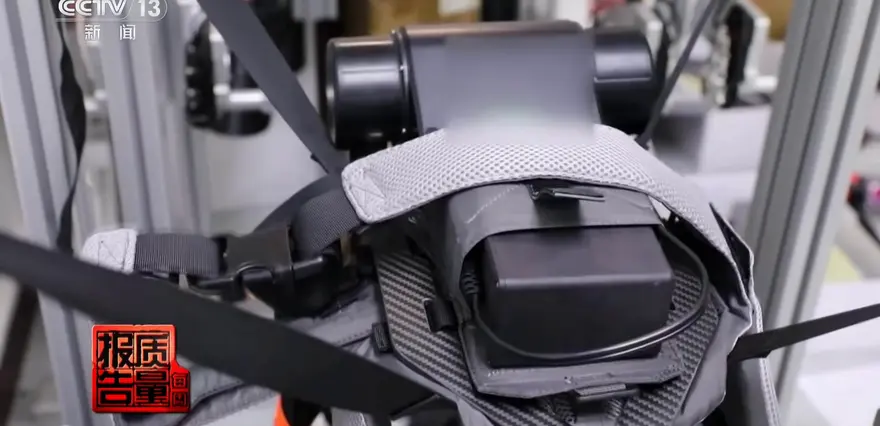
First, lightweight: it must not add any extra burden, and total weight must be kept under 3 kg to protect battery life.
Second, easy to wear: it must be simple to put on and take off — anything cumbersome to repeatedly wear and remove will go unused.
Third, safe: it must feature a start/stop mechanism and a feedback system that provides fall protection.
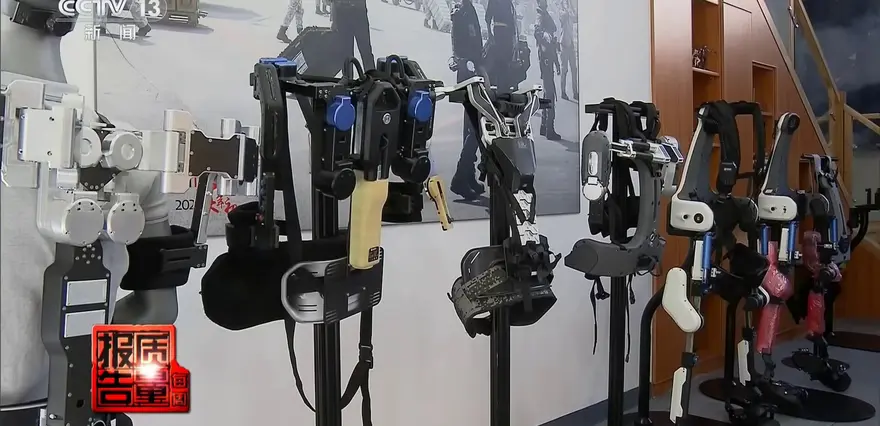
Note that "under 3 kg" threshold — it already rules out a fair share of heavy brace products marketed as "exoskeletons," disqualifying them from being genuine consumer-grade exoskeletons.
Who Shouldn't Use It: The Exoskeleton Is Not a Mechanical Crutch
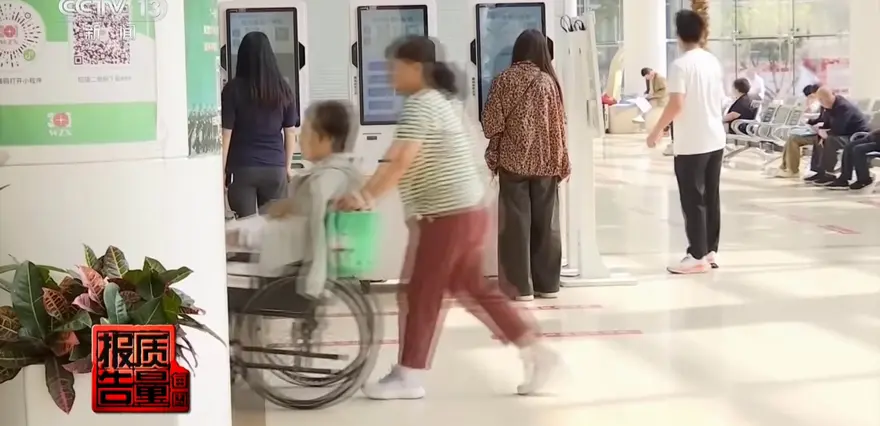
A truth often overlooked — the exoskeleton is not suitable for every older adult.
As mentioned in the video: older adults with cognitive and balance impairments are not suited to exoskeleton products.
The expert offered an especially precise analogy:

"Think of the exoskeleton as something like a mechanical crutch... it still requires the senior to walk on their own two legs. The exoskeleton is there to help me improve things, reduce joint stress, cut down on fatigue, extend my walking distance, and ease mobility difficulties — that's the correct way to understand it."
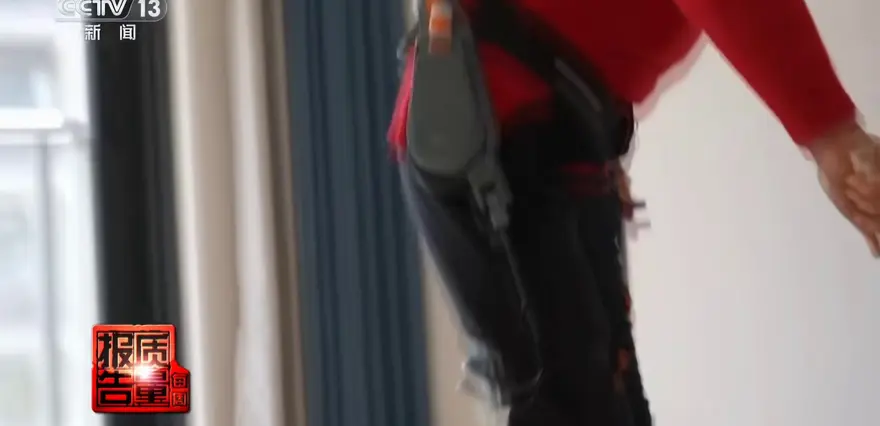
In other words, the exoskeleton provides "assist," not "replacement power." It amplifies your residual ability rather than substituting for what you've lost. If you can't even maintain standing balance, the exoskeleton won't make you walk again — it may instead become a new source of fall risk.

This is precisely why medical-grade rehabilitation exoskeletons and consumer-grade walking-assist exoskeletons must be strictly distinguished — the former operate in hospitals with rehab therapists on hand and body-weight-support hoists, while the latter are used solo in parks, wet markets, and on hiking trails, where the margin for error is entirely different.

High-Tech Assistive Devices Are an Aid, Not the Main Force
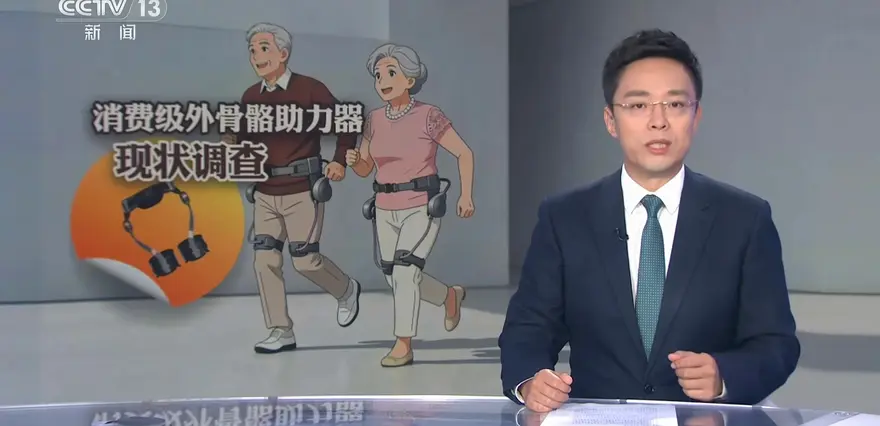
As the reporter's investigation reveals, exoskeleton products still have a long way to go before they truly enter ordinary households—especially when it comes to benefiting the elderly.
On one hand, regulation and standards cannot be absent—unified industry access and ergonomics evaluation standards must be established as soon as possible;
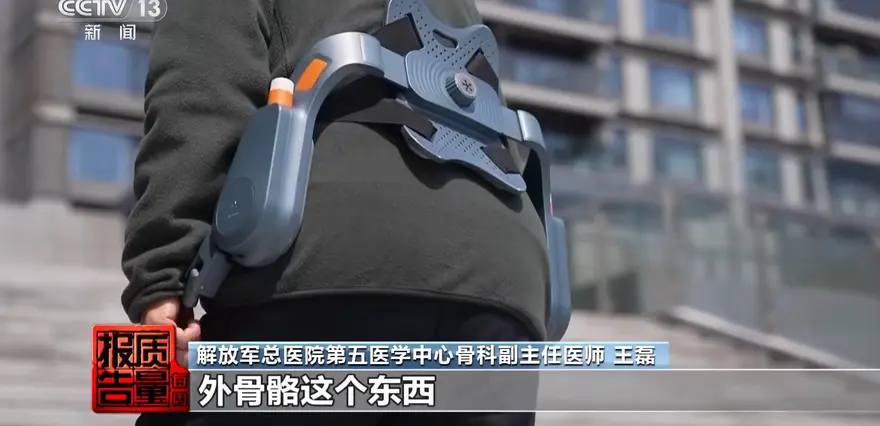
On the other hand, consumers also need to maintain a rational perspective:
"High-tech assistive devices are an aid, not the main force—don't blindly trust the marketing claims of vendors."

Only by grounding frontier technology in rigorous, scientific, and standardized frameworks can exoskeleton products genuinely help consumers lighten their burden and improve their quality of life in later years. This is not just the appeal of Mr. Zhang alone, but the inevitable path for the entire consumer-grade exoskeleton track to evolve from the "wild west" to true maturity.
Top Community Comments
@hrbcya (101 likes): A lot of braces and supports nowadays are sold at high prices under the banner of the exoskeleton — truly speechless. In fact, ever since the concept of the exoskeleton was established, there have been two key criteria: 1. Active power — meaning it must carry its own drive and energy source. 2. Intelligent sensing and control, or manual control. The vast majority of so-called exoskeletons on the market today meet neither of these two key requirements.
This comment hits the industry's "definition chaos" problem dead on. Passive, sensor-less brackets are essentially just elastic braces, yet they wear the halo of "exoskeleton" tech to sell at a premium. There is an urgent need to clarify the minimum technical threshold for an "exoskeleton" at the standards level — active power + intelligent control, neither dispensable.
@Reader 0o (76 likes): This technology has only been on the market for how long, and counterfeit and shoddy products are already showing up.
This reflects consumers' worry about "bad money driving out good" in an early-stage track. When a technology moves from lab to mass market, the real danger is not immature technology, but the crowd of people fishing in troubled waters while the tech is still green.
@Reader (49 likes): Great — CCTV coverage means standards are about to be set. With standards in place, there's no fear of things running wild.
This reflects consumers' high expectations for "standards first." CCTV endorsement often signals an opening policy window, and unified testing standards may land soon — a clear positive for the vendors genuinely doing R&D.
@hrbcya's extended reading actually hits a deeper pain point: when "exoskeleton" becomes a marketing word rather than a technical one, the damage is not only to the consumers who get fooled, but to the credibility of the entire track. An elderly buyer who is disappointed once will equate "exoskeleton" with "scam" in their mind — and that is the greatest harm to serious product makers like Hypershell and Chengtian.
This is also why experts repeatedly stress hard metrics like "under 3 kg,active power," and "intelligent sensing" — they are not just product requirements, but the yardstick to sift the fakes out from the genuine article.
One-Sentence Summary
This episode reveals not the failure of any single product, but the collective chaos across the consumer-grade exoskeleton sector in the absence of standards—before unified testing standards land, elderly consumers are advised to insist on three hard thresholds: "whole unit under 3 kg, with active power and sensing, and equipped with a fall feedback mechanism," treat the exoskeleton as "assist" rather than "primary force," and view rationally the vaguely-worded "30%–50% assist" pitches peddled in livestreams.
About this article: part of Chinese-Made Exoskeleton Review Archive — an independent, regularly updated English archive of reviews of consumer exoskeletons made in China, edited from publicly available video transcripts. Not an official manufacturer page.
For inquiries and purchasing, contact lonlonago@foxmail.com. More in Rehab & Mobility · All articles.