Could the first big consumer leap for the exoskeleton be not walking assist, but hiking? — An in-depth analysis of Dnsys’ powered lower-limb exoskeleton
1. Who Is Dnsys? At the Medical-Engineering Frontier and the Entrance to the Consumer Market
Right from the opening frame, Dnsys positions itself clearly: a company deeply rooted in medical-engineering technology, focused on enhancing human movement functions and rehabilitation, developing intelligent, lightweight, and cost-effective full-body assistive power devices. It may sound overtly "medical," but its true ambition is to carry this technological thinking from the laboratory back into everyday life. In recent years, exoskeletons have been surging in popularity—from Yuanye Technology and Aoshao Intelligence to Hypershell and Dnsys entering the field—pushing the industry to spill over from pure medical rehabilitation exoskeletons into consumer-grade exoskeletons.


"Our core mission is to provide efficient assistive power for full-body movement, helping people restore and enhance their movement functions and break through physical limitations."
The video lays out a clear future product roadmap: starting with a lower-limb powered exoskeleton as the gateway, then gradually expanding to lumbar assist and beyond to the spine, neck, and upper limbs, building a comprehensive health-guardian system across all scenarios. This is a typical "from spot to scope" product strategy—first breaking through market perception with a mature, verifiable category, then expanding horizontally.
2. Core Product: Lower-Limb Powered Exoskeleton + Dedicated Intelligent Operation Platform
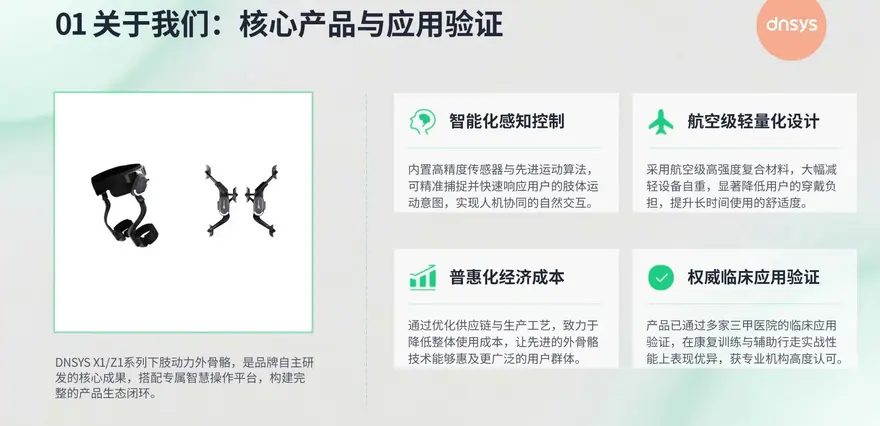
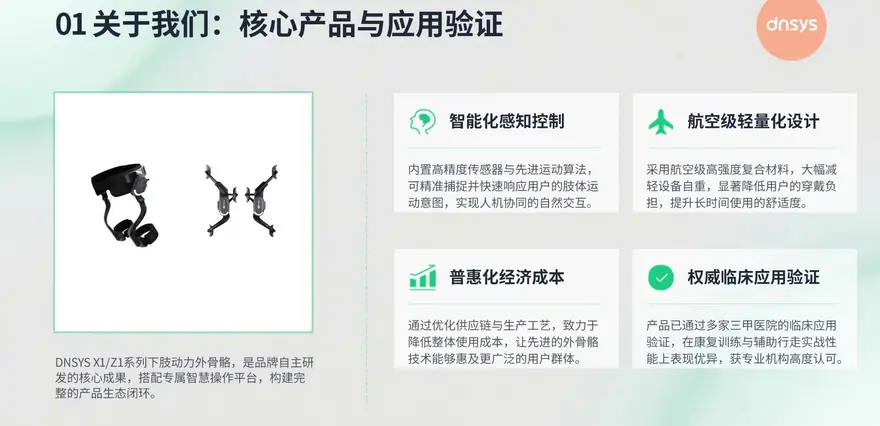
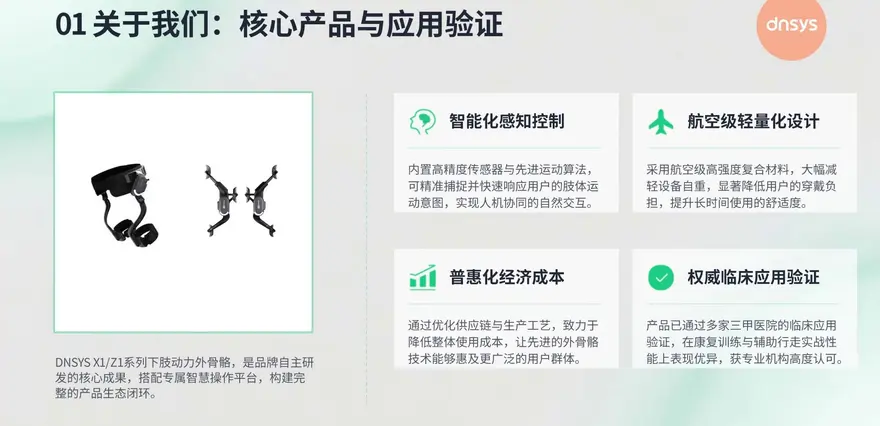
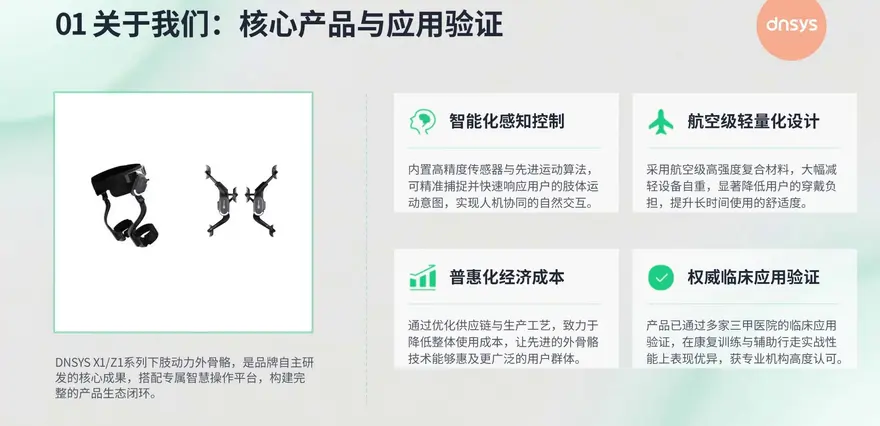
The core product showcased by Dnsys is its self-developed X-series lower-limb exoskeleton, paired with an intelligent operation platform, forming a complete product ecosystem.
The first impression of this product can be summarized in three key words: smart, lightweight, and accessible.
Intelligent Sensing and Control: Equipped with high-precision sensors (including an IMU and pressure sensors) and advanced motion algorithms, the device accurately captures and rapidly responds to the user's limb movement intentions, achieving natural and seamless human–machine collaborative interaction. Although specific values for joint torque and battery life are not provided in the video, this technical approach aligns with mainstream assistive exoskeleton strategies—relying on gait recognition and motion-intent prediction rather than brute-force torque.

Aerospace-Grade Lightweight Design: Constructed with high-strength composite materials, the design effectively reduces the device's self-weight and significantly lowers the wearing burden. If built with carbon fiber structural components, the overall weight could be kept considerably lower than traditional medical-grade exoskeletons (often well over ten kilograms). A consumer-grade exoskeleton designed for extended use in hiking or trekking scenarios needs to stay well below that level. However, the exact overall weight is not disclosed in the video—a key detail to probe in future reviews.
Accessible Cost Control: This is a term Dnsys repeatedly emphasizes. By optimizing supply chains and production processes, the company aims to bring advanced exoskeleton technology out of the laboratory. To put this in perspective, the current price range for consumer-grade exoskeleton products spans from several thousand to tens of thousands of RMB, while Dnsys evidently targets a band closer to consumer electronics pricing.

"We continuously optimize our supply chain and manufacturing processes to effectively control costs, bringing advanced exoskeleton technology out of the laboratory."
One more point worth making is that the accompanying platform feels very much like consumer electronics. From an IoT and smart-hardware perspective, an "intelligent operation platform" typically implies device-status visualization, customizable parameters, and OTA firmware updates—much like Hypershell's companion App. For a consumer-grade exoskeleton, that kind of software ecosystem is a meaningful plus.


III. Clinical Verification: Backed by Authoritative Tertiary A-Level Hospitals, But What is the Room for Imagination in Consumer Scenarios?
Dnsys has cited the strongest trust endorsement: it has passed clinical verification in multiple tertiary A-level hospitals and has performed excellently in scenarios such as rehabilitation training and assisted walking, earning recognition from professional medical institutions. The list of partner hospitals includes Xuanwu Hospital, the China Rehabilitation Research Center, Second Xiangya Hospital, and Shanghai Sixth People's Hospital—names that would constitute an "all-star lineup" in any medical device prospectus.

A distinction needs to be made here: rehabilitation exoskeletons (mostly medical-grade, used in hospitals for gait training and hemiplegic rehabilitation) and consumer-grade exoskeletons differ greatly in price, compliance, and usage scenarios. Dnsys's clinical verification proves its safety and rehabilitation effectiveness, but to break into more "consumer-oriented" scenarios such as outdoor hiking, hiking/trekking assist, and daily commuting, consumer-grade functions such as waterproofing, anti-slip, self-balancing, and fall protection must also be considered. The video did not dwell much on this, but it offered a directional judgment—that moving from "medical-grade" exoskeletons to "consumer-grade" exoskeletons is a feasible path.
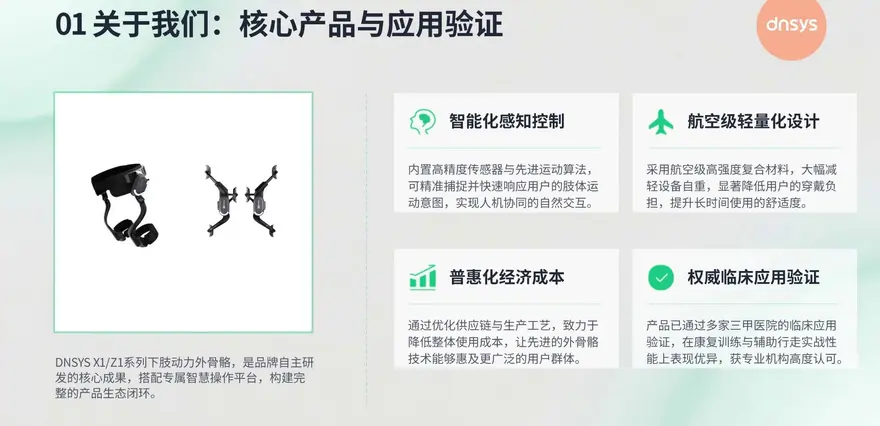
"At present, the product has passed clinical verification in multiple tertiary A-level hospitals and has performed excellently in scenarios such as rehabilitation training and assisted walking."
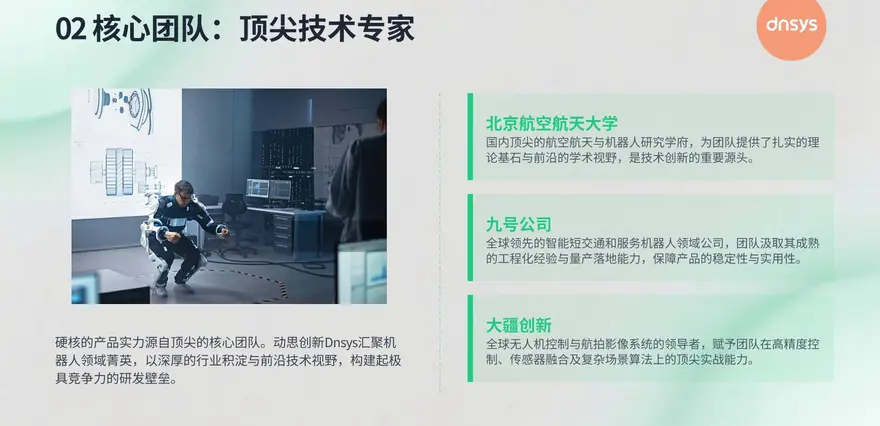
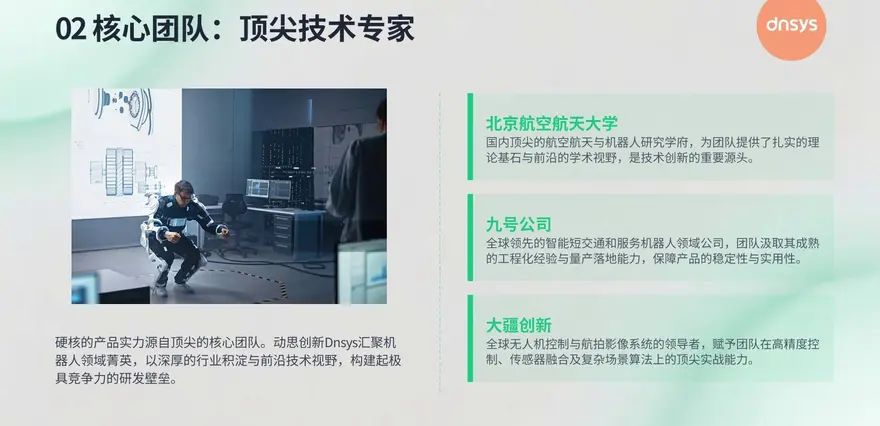
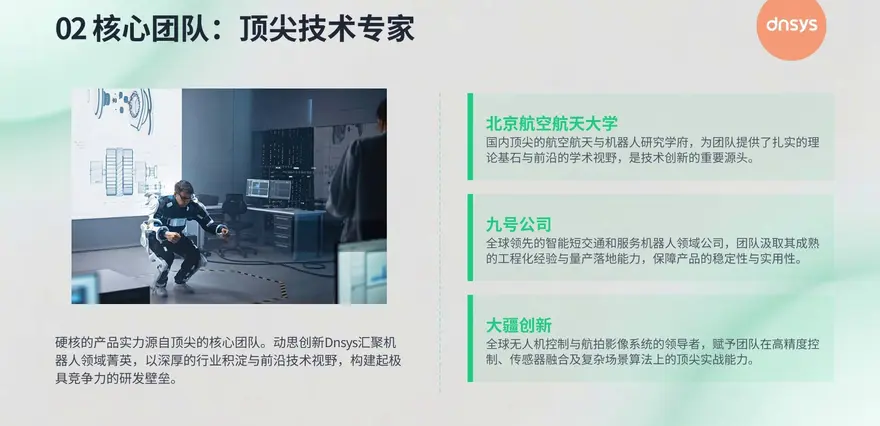
IV. Technical Team: Beihang University, Ninebot, DJI — What Did This Lineup Inject Into Product Capability?
On paper, the Dnsys technical team is a "dream team": it is primarily built on three industry-benchmark platforms — Beihang University, Ninebot, and DJI Innovations. Beihang University provides the theoretical foundation and academic perspective. Robotics, mechanisms, and control engineering are the core disciplines underlying wearable robotics. Ninebot brings mature engineering experience and mass-production capabilities. Starting with self-balancing scooters and kick-scooters, it has deep expertise in supply chains and quality control for consumer-grade short-distance mobility devices. This is a key signal for Dnsys's consumer-grade product approach. DJI Innovations leads in high-precision control, sensor fusion, and algorithm development. To achieve "natural and smooth human–robot collaboration" in an exoskeleton, algorithms are the soul.
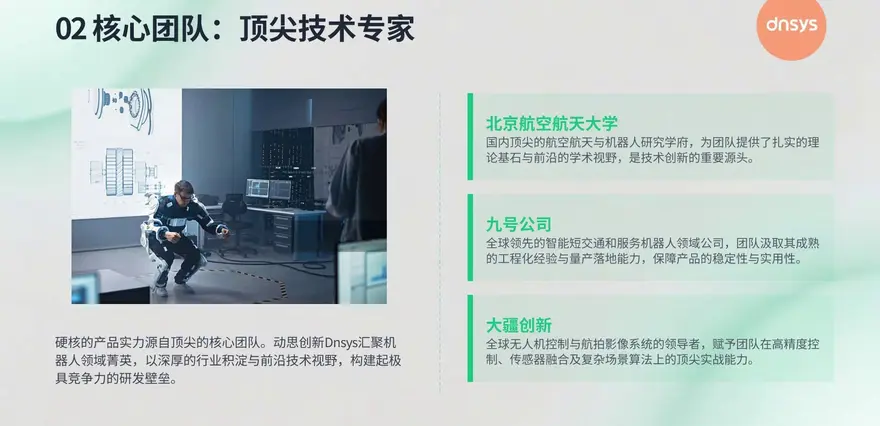
In other words, Dnsys is not an academic team that "only knows the lab." It is a cross-disciplinary team with both "0-to-1 R&D" and "1-to-N mass production" capabilities.
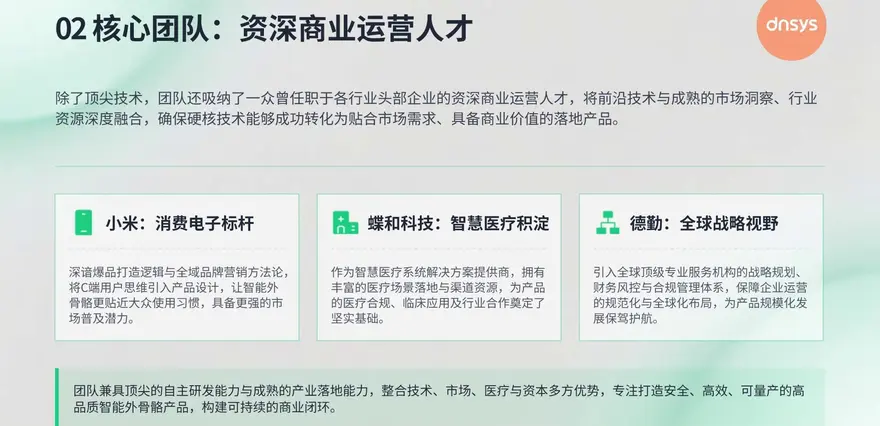
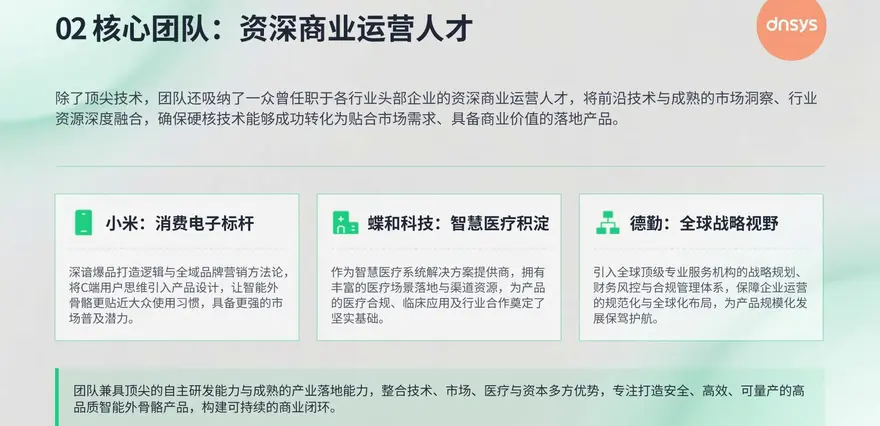
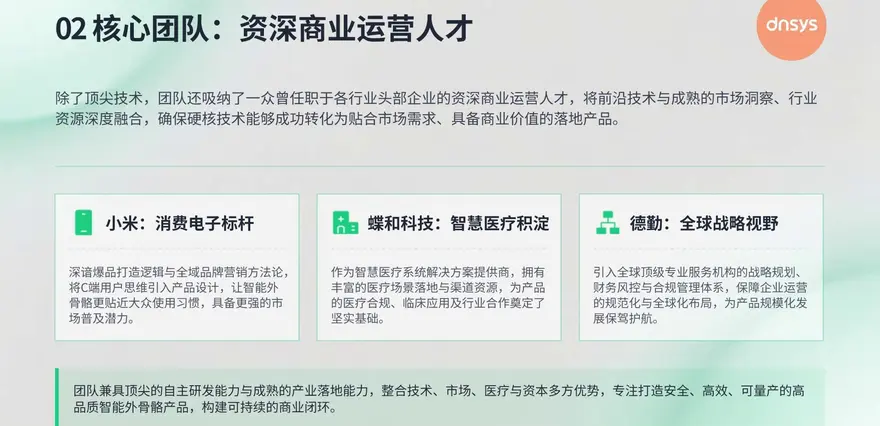
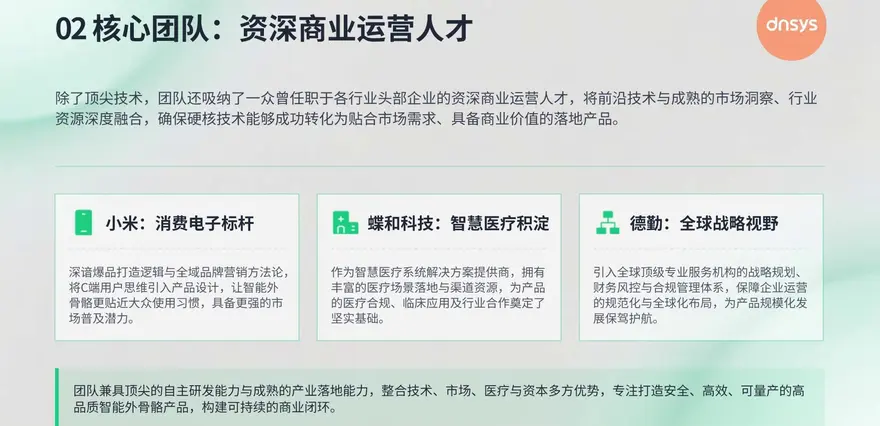
V. Commercial Operations Team: Xiaomi DNA, Medical Compliance, and Global Perspective
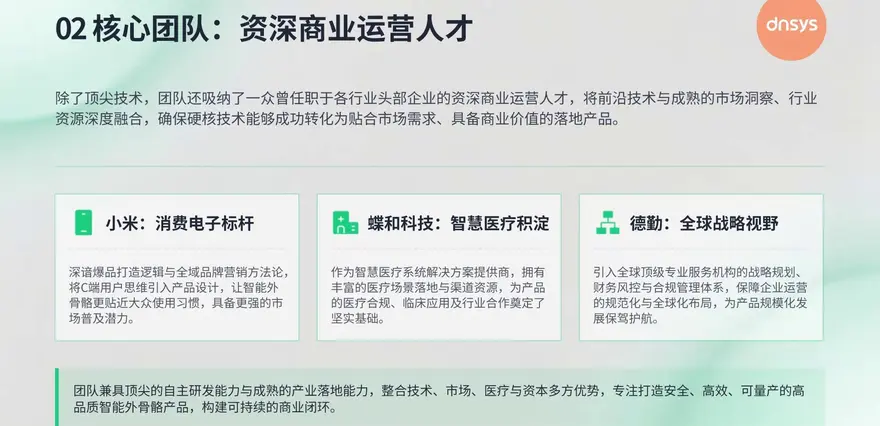
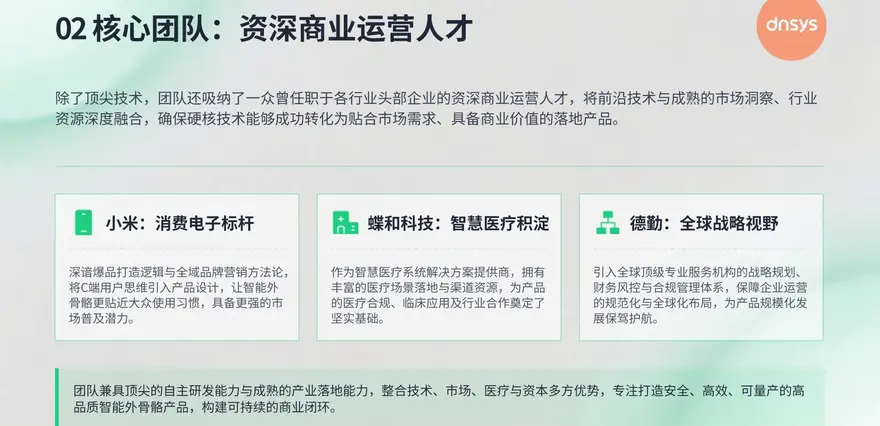
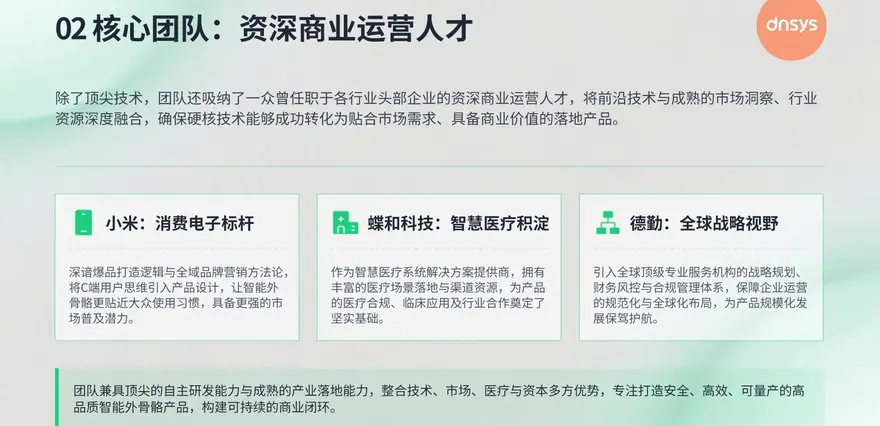
Beyond the technical team, the commercial operations team at Dnsys is also worth highlighting:
- Core Members with a Xiaomi Background: Infusing consumer-centric user thinking into product design, making smart devices seamlessly fit the habits of the general public. This serves as a distinct competitive advantage for consumer-grade exoskeletons—Xiaomi ecosystem enterprises naturally accumulate expertise in cost-effectiveness, hit-product methodologies, and user insights.
- Diehe Tech (speculated to be "DiShi Medical" or a team excelling in medical backgrounds): Introducing rich experience in smart healthcare scenarios and channel resources to safeguard the medical compliance and clinical rollout of the products.
- Deqing: Delivering global professional service capabilities and building a comprehensive framework for strategic risk management, financial risk control, and compliance management.
"We have integrated diverse strengths in technology, marketing, healthcare, and capital, focusing exclusively on building safe, efficient, and mass-producible smart exoskeleton products."
Products engineered by such a team achieve a delicate balance between "medical devices" and "consumer electronics": they are capable of passing clinical validation while leveraging consumer electronics playbooks for commercial promotion. This type of cross-disciplinary synergy is quite rare.
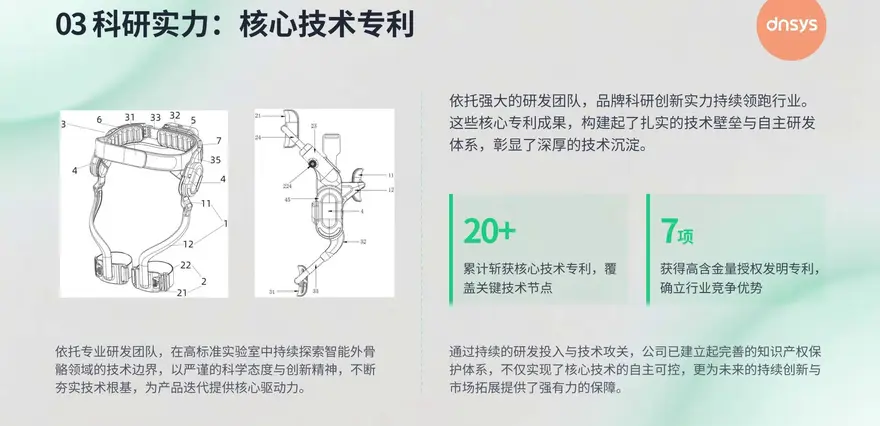
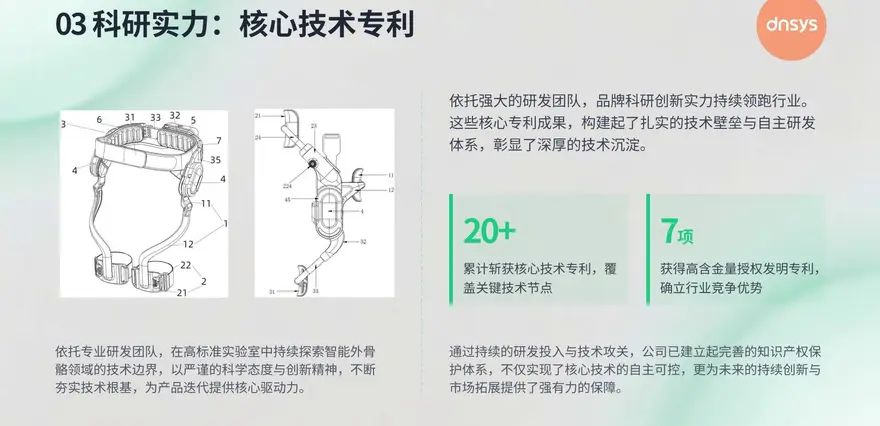
VI. R&D Capabilities: 20+ Core Patents and 6 Key Research Projects
Dnsys has also unveiled its R&D reserves:
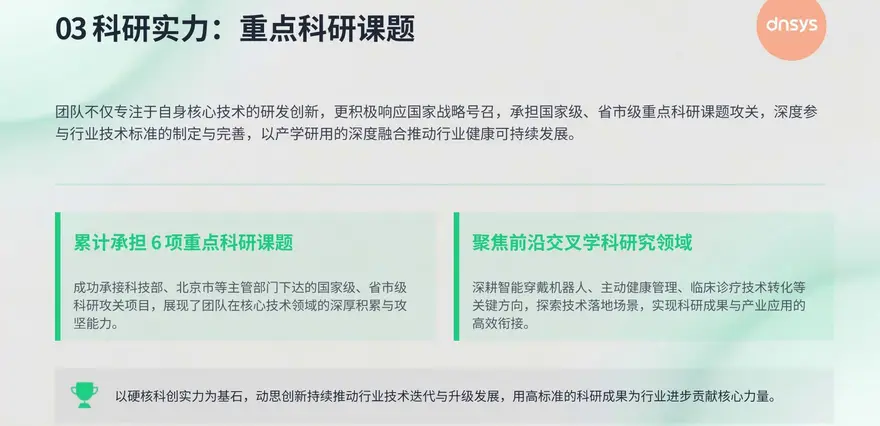
- It has secured over 20 core technology patents, including 7 highly valuable authorized invention patents;
- It has achieved full autonomy and control over its core technologies;
- It has undertaken 6 key research projects, focusing on intelligent wearable robotics, active health management, and the clinical translation of diagnostic and therapeutic technologies.
The video clarifies the two focal points of these R&D capabilities: technological independence and industry-academia-research clinical translation. The former determines the ceiling for the product's long-term evolution, while the latter determines whether the product can be effectively deployed in professional scenarios.
VII. Industry-Academia-Research: Pinning R&D to Clinical Needs
Dnsys’ industry-academia-research collaboration footprint is substantial:
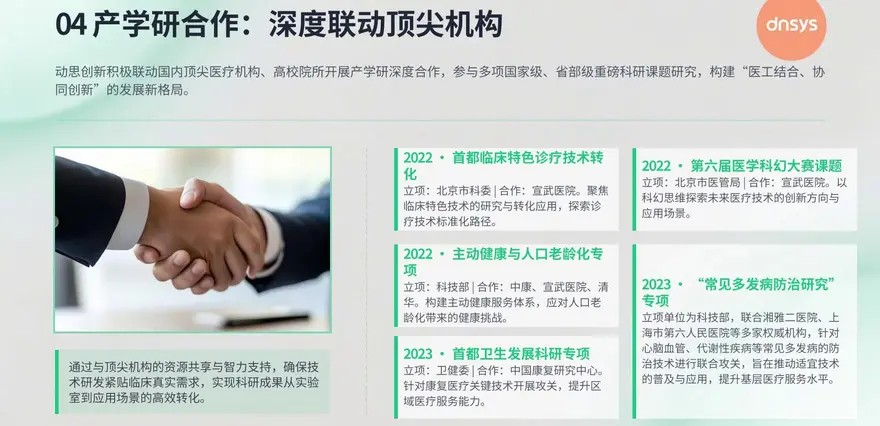
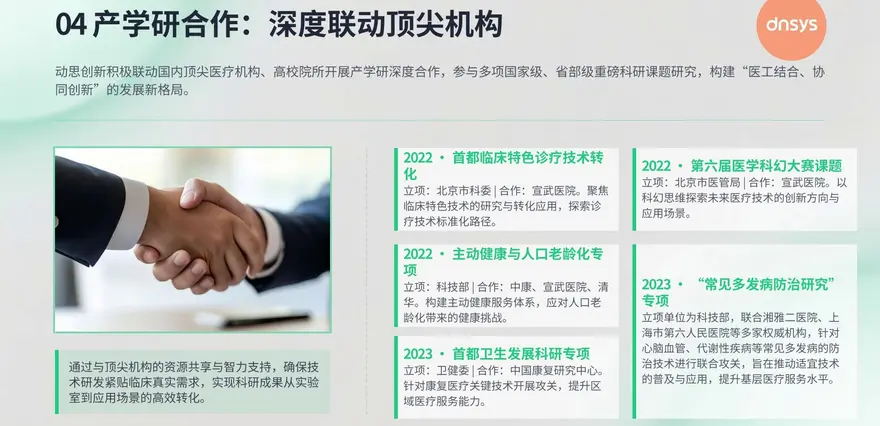
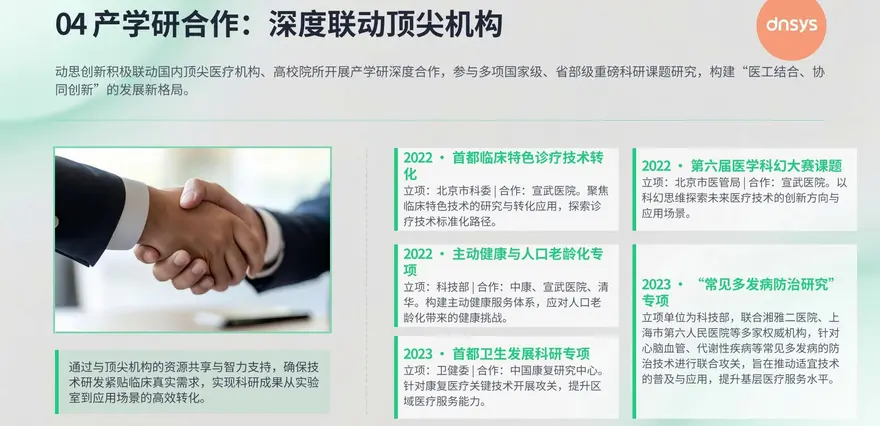
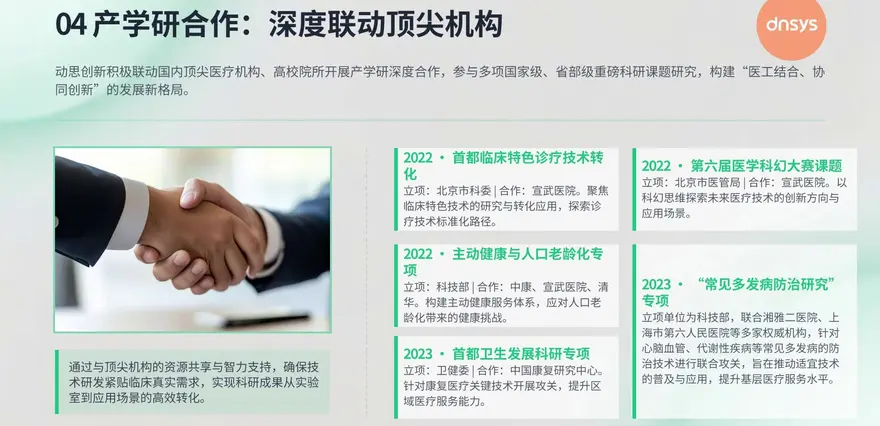
- In 2022, jointly with Xuanwu Hospital, it participated in the Beijing Municipal Science and Technology Commission’s Capital Clinical Characteristic Diagnosis and Treatment Technology Translation Project; the same year, together with Tsinghua University and Xuanwu Hospital, it undertook the Ministry of Science and Technology’s “Active Health and Population Aging” initiative.
- In 2023, with the China Rehabilitation Research Center (Bo’ai Hospital affiliated with Capital Medical University), it launched the Capital Health Development Research Initiative.
- It also joined projects in the Medical Sci-Tech Innovation Competition and the Ministry-led Multi-Disease Prevention and Treatment Research Program, collaborating with multiple leading hospitals to tackle key challenges.
- Its partners span top-tier tertiary hospitals and rehabilitation centers—Xuanwu Hospital, the China Rehabilitation Research Center, Xiangya Second Hospital, Shanghai Sixth People’s Hospital—as well as leading universities including Tsinghua University and Beihang University.
Additionally, Dnsys joined the Chinese Association of Rehabilitation Medicine and the China Rehabilitation Association for Persons with Disabilities, participating in the development of industry standards. This signals that beyond shipping products, Dnsys is helping set the industry’s “rules of the game”—a strategic approach to building long-term B2B moats.
Section 8: Side-By-Side Comparison: Dnsys’s Position in the Consumer-Grade Exoskeleton Landscape
When Dnsys is viewed within the domestic competitive consumer-grade / assistive exoskeleton landscape, it sits roughly in the “tech-driven camp with deep medical roots.”
| Dimension | Dnsys | Hypershell | Aoshark | Kenqing |
|---|---|---|---|---|
| Core Product | Powered lower-limb exoskeleton | Leg exoskeleton | Industrial exoskeleton | Lumbar-assist exoskeleton |
| Price Range (Public Info) | Promises “affordable,” no pricing shown in video | Overseas crowdfunding campaign | B2B industry applications | Lumbar-assist for industrial/logistics scenarios |
| Tech Path | Sensor fusion + motion-intent recognition | Carbon fiber + servo motors | Motor-assisted | Lumbar assist |
| Scenario Focus | Rehabilitation / walking assist / future hiking | Outdoor hiking, trekking | Industrial material handling | Warehousing & logistics |
| Standout Feature | Deep clinical validation, full-scenario portfolio | Consumer-grade go-to-market for overseas markets | Heavy-industry scenarios | Focused on lumbar support |
Dnsys’s strength lies in its complete suite of medical-grade validation and a comprehensive, scenario-spanning product lineup; that is also its challenge—as a new entrant, it needs to leverage C-end mindset, channel prowess, and product strength to create buzz in the consumer sphere, just as Hypershell has done.
IX. Scenario Imagination: From Hospital Wards to Mountain Trails
Judging from the information shared in the video and the typical application domains of consumer-grade exoskeletons, Dnsys’ product potential may unfold in the following areas:
- Hospital Rehabilitation Wards: As an extension of rehabilitation exoskeletons, the device could assist hemiplegic and elderly patients in gait training.
- Home Elderly Care: An assistive exoskeleton for seniors with mobility challenges could make daily living more effortless.
- Outdoor Hiking / Trekking: This scenario is coveted by every consumer-grade exoskeleton maker—on steep climbs, a hip assist module can significantly reduce leg strain, extending both hiking distance and duration.
- Daily Commuting: If price and weight are well balanced, the product could also serve as an auxiliary tool for urban mobility.
“Let technology warm every step.”
This is Dnsys’ official vision. From the publicly available information, however, key specifications such as joint torque, battery life (or endurance in hours), max payload / load capacity, weight, and price have yet to be disclosed—leaving room for future hands-on testing and validation.
Top Community Comments
(Empty) The video currently has no audience comments.
(This note serves as clarification: as there are currently no comments available to the public for this video, selecting "empty comments" as a signal highlights an issue — Dnsys's penetration rate within the consumer mindset remains very low. This is both a market gap and a promotional challenge that needs to be addressed.)
One-Sentence Summary
Leveraging clinical validation from top-tier hospitals, technological DNA from Beihang, Ninebot, and DJI, alongside a multi-segment product lineup, Dnsys has forged an exoskeleton pathway of "medical-grade technology, consumer-grade route." This makes it a must-watch for readers and investors tracking consumer-grade exoskeletons, individuals with rehabilitation needs, or anyone seeking products transitioning from medical-grade to consumer-grade applications.
About this article: part of Chinese-Made Exoskeleton Review Archive — an independent, regularly updated English archive of reviews of consumer exoskeletons made in China, edited from publicly available video transcripts. Not an official manufacturer page.
For inquiries and purchasing, contact lonlonago@foxmail.com. More in Rehab & Mobility · All articles.