Hands-On Test: Haier's 3rd-Generation Lower-Limb Exoskeleton — Is This 15,000 RMB Lumbar / Back Assist Booster a Hidden Gem or Gimmick?
Returning home for the holidays to visit retail stores, Haier's 3rd-generation exoskeleton made me rethink the boundaries of "human-machine symbiosis".

Introduction: A Spontaneous Store Visit and a Chat on True Human-Machine Symbiosis
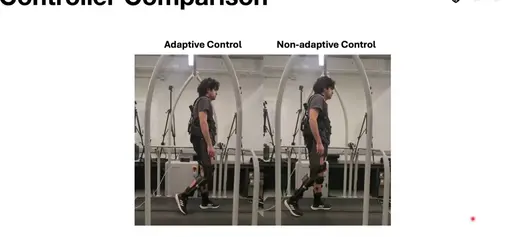
Like many of you, I was curious. During my recent trip back to China, I took an afternoon off to bring my parents and experience a lower-limb exoskeleton together. There wasn't much flashy decoration at the entrance—the product was just sitting there, and the staff members patiently explained everything. I had my mom put it on for a trial first. We initially failed to get the video rolling, so all we have is this one photo from the scene.


Why did I suddenly want to try this? Because during my last live stream, a viewer asked: “My elderly relative has bad knees. Are there any wearable devices that can help?” I wasn't sure myself, so I decided to go hands-on. Below is my authentic experience from that day, along with some of my thoughts on the consumer-grade exoskeleton industry.

Product Positioning and Contraindications: It Is a "Booster", Not a "Mobility Scooter"
Let's start with the most critical takeaway. Service personnel repeatedly emphasized that this device is not meant to replace walking, but to help you lift your legs more easily. It cannot be used by people with weak legs or those who cannot walk independently. You must be able to walk on your own for it to truly add value.



Here is how the target and contraindicated demographics are categorized:
| Target Audience | Suitability | Reason |
|---|---|---|
| Elderly individuals who can walk normally but easily tire after prolonged walking | Suitable | Extends walking time and reduces knee load |
| People with weak legs or those who cannot walk independently | Not suitable | It is positioned to assist with leg lifting and does not support body weight |
| Individuals with a thin physique | Use with caution | Staff noted that "there needs to be a bit of flesh on the waist", and being too thin may result in poor securing |
| Outdoor hiking and trekking enthusiasts | Suitable | Its value is particularly evident in high-load scenarios (e.g., carrying a hiking backpack) |
| Residents in older buildings without elevators who need to climb stairs daily | Potentially suitable | The walking assist effect on stairs is clear and addresses a major pain point |

"You must be able to walk on your own. It can only help you enhance your walking, allowing you to walk for a longer time and making it easier to climb stairs."
This distinction defines its medical boundary: it is not a rehabilitation exoskeleton. Medical-grade rehabilitation exoskeletons typically go through device approval processes, bear partial body weight, and conduct gait training; whereas this machine only provides a "lift-up" boost at the level of joint torque. It does not offer excessive protection, does not bear body weight, and does not even specifically implement fall protection.


Upper Body Experience: Wearing 3 kg on the Waist—Carrying the “Original Sin” on Their Backs
Here are the specifications first. All data sources are from what was mentioned in the video and stated on-site by the service personnel:
- Self-weight: Approximately 3 kg (the video mentioned “3 kilograms” multiple times)
- Wearing method: Mainly hung on the waist, secured with straps, providing some support to the lumbar region
- Version: Haier's 3rd generation
- Price range: Approximately RMB 12,000–13,000; including other associated costs, expected to reach about RMB 15,000


What does it feel like to wear 3 kg on your waist? To be honest: it's a bit heavy. The service personnel knew this themselves, so they added a backpack for the device, distributing a portion of the weight to both shoulders. They said that with the backpack, the “effect is a bit better,” but if you hang it directly on your waist without the backpack, it feels “especially heavy.”


“You're wearing it on your body, and it really is a bit heavy.” This was the genuine feedback from the site.
Here, however, we need to apply an objective caveat: a large portion of that 3 kg is the “original sin” brought about by the battery life demands. The entire system is driven by servo motors, and the battery is an unavoidable bulky component. Without breakthroughs in future battery technology, achieving a lightweight design will be difficult to accomplish merely by downsizing the structure.


Flat Ground Walking vs. Stair Climbing: The Real Magic Shows Up on the Stairs
After putting it on, the staff had me start with a walk on flat ground, then try a few steps of running. I was deliberately "too afraid to run too fast," as it houses a motor and sensor, and my expectation was that "this thing might restrict my movement." As it turned out, its presence during flat-ground walking wasn't as strong as I'd imagined—I could feel a slight upward lift in my legs, but at a normal walking pace, the effect wasn't particularly impressive.


The real "upgrade" happens on the stairs.
The building where my parents live doesn't have an elevator, and after walking up a few flights, my knees start to "complain." Wearing this device to go up and down the stairs, my legs—especially my knees—felt significantly lighter. The leg-lifting motion offers varying levels of assist depending on the gear—as mentioned in the video, the "2nd gear / 3rd gear" switch. The staff adjusted it from "2nd gear" to "3rd gear" and asked me to try a jog. I didn't dare actually run because I was afraid of falling, but being able to reach that level of movement shows that its walking assist is already in step with daily pace.



"The biggest difference is climbing stairs. My knees really did feel much lighter."
It's also important to note a boundary: its assist is mainly focused on "lifting the legs." Its help for downhill walks or going down stairs doesn't seem as obvious as going up. If you live in a mountainous city like Chongqing, or in an older building without an elevator, this device's presence will feel much stronger. But if you usually walk on flat ground, don't climb stairs, and don't hike, its marginal benefit becomes quite small.


Pros and Cons: Lightweight Design vs. Battery — The Most Realistic Trade-off
Let's summarize what we observed during this store visit:
| Dimension | Advantages Observed in the Video | Obvious Disadvantages |
|---|---|---|
| Assist Logic | Clear leg-lifting assist, definite pressure relief when climbing stairs | Assist sensation weakens during slow walking on flat ground |
| Weight | Third-generation total weight is approximately 3 kg | 3 kg is still too heavy for post-dinner walks; a backpack must distribute some of the weight |
| Price | Already in its third generation | Price of 12,000–15,000 RMB remains too high |
| Safety | Supports light jogging and stair climbing | Fall protection design is not implemented; not suitable for those with weak legs |
| Battery | Supports charging | Battery weight appears to be the main source of burden; must be addressed in the future |


From a product structure perspective, if carbon fiber materials become more widely adopted in this type of product, the frame weight can decrease further. However, what truly "holds things back" is always the battery. Just as the phone industry frequently mentions "half-jin phones" (heavy flagship devices), in consumer-grade exoskeletons, the battery is not an accessory — it is a core dimension.


Who Should Buy Now—and Who Should Wait: Two Demographics, Two Sets of Calculations
This machine has two entirely opposite purchase logics across two user groups.
Group one: Outdoor and hiking-focused users. Staff on site noted that not everyone trying it is elderly—many are people who do a lot of outdoor activities, especially young users who like mountain climbing. In their budget thinking, 15,000 is just the cost of “one high-end set of outdoor gear.” Hiking packs and high-altitude trekking gear are already expensive, so if this device can genuinely reduce knee strain while carrying 20 kg uphill, the price becomes easier to accept.


Group two: Urban seniors who are still mobile, and their adult children who are paying for them. For this group, the spending falls into a “low-frequency, high-ticket purchase,” and the real pain points are limited to a few scenarios: long-distance travel, climbing slopes, or going up stairs. Parents may feel it’s too expensive and too heavy—and if they don’t get out often, taking them to walk in a park for a full day or go hiking may not happen at all, meaning they might simply never use it.
“If you’re buying this just for travel, asking them to spend 15,000—they’re not going to be keen on it.”


There’s also a special-use group that emerged from conversations on site: residents living in older walk-ups without elevators, who need to go up and down stairs every day. For an elderly couple living on the sixth floor of an old building with no elevator, stairs mean something completely different. In addition, viewers in the comments brought up emergency scenarios such as earthquakes and fires, where rapid stair use is critical—pointing to a potential emergency preparedness market: for rescuers or residents in high-rise buildings, would wearing an exoskeleton make going down stairs safer in urgent situations? Since the topic wasn’t explored further on site, it remains an area with room for imagination.

Looking Ahead from Gen 3: Lighter Batteries, Lower Price Tags, Broader Emergency Scenarios
The development direction for this machine is crystal clear:
- Lighter: The core breakthrough lies in the battery, followed by lightweight structures such as carbon fiber frames.
- Cheaper: If the price can drop to under RMB 10,000, the psychological barrier for ordinary consumers will significantly lower, and we might witness a true leap toward mass adoption.
- Longer Battery Life: While the video didn't specify the endurance (in hours), for power-hungry equipment like a consumer-grade exoskeleton, longer battery life / runtime directly translates to higher practicality.
- More Emergency Scenarios: Aging societies have awkwardly compressed scenarios involving urban stair navigation. The product might soon be bundled with emergency rescue and high-rise evacuation use cases.



There is also a hidden pain point: the wearing threshold. A staff member reminded me that "you need some meat on your waist"—meaning it is far less friendly to users with extremely slender waists. In other words, this product still comes with specific "shape requirements" in terms of human body fit, encompassing thigh circumference and waist girth. We are still miles away from the "Apple Watch level" of universal sizing. The device can certainly be made sleek, but its physical structure will always inevitably feel somewhat "bulky" or intrusive against the skin.

Top Community Comments
I have bone spurs in my knee. Would wearing this while walking make it easier?
This question hits home. It points directly at the core value of such products: whether they can alleviate knee pain. Current experience suggests: it mainly helps you lift your legs and reduces the force exerted on the knee joint when climbing stairs. For those with "bone spurs who feel uncomfortable after walking for long periods," it may be helpful, but this requires more systematic rehabilitation medicine evaluation. Users should not be blindly optimistic.
Great share
Acknowledgement is understandable, but this comment also reflects an issue: before encountering this technology, many consumers themselves do not understand the boundaries of the product. Only by trying it personally can one know what it is suitable for and what it is not.
One-Sentence Summary
At its core, Haier's third-generation lower-limb exoskeleton is a "leg-lifting effort-saver." Its value is amplified on stairs, during hiking, and on long walks, but becomes less significant during slow walking on flat terrain. Right now, it is a high-end piece of gear for outdoor enthusiasts and those with tired knees, but not yet a daily-life staple for every senior. Only when the price drops below 10,000 yuan and the weight is cut by another third, might the consumer-grade exoskeleton truly cross the line from an "urgent need" to a "lifestyle choice."
About this article: part of Chinese-Made Exoskeleton Review Archive — an independent, regularly updated English archive of reviews of consumer exoskeletons made in China, edited from publicly available video transcripts. Not an official manufacturer page.
For inquiries and purchasing, contact lonlonago@foxmail.com. More in Reviews · All articles.