From Medical Gait Reshaping to Consumer-Grade "Cyber" Absurdity: An Observation on the Divergence Between Medical Experience and Commercialization of lower-limb exoskeletons
First Look at the Therapy Hall: A Cross-Disciplinary Conversation About "Walking"
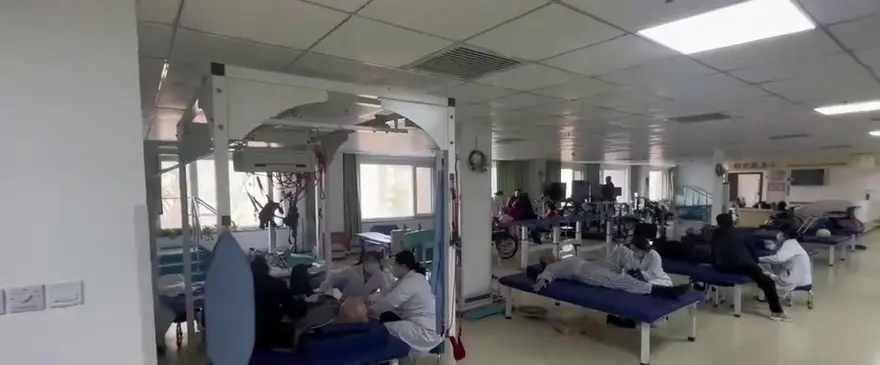
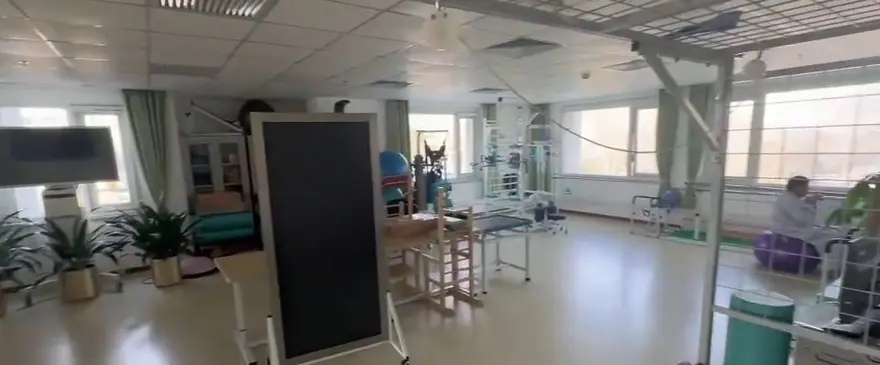
Standing in the therapy hall of the Department of Rehabilitation Medicine at Ishii Mountain Hospital, we find ourselves surrounded by various professional and advanced rehabilitation assistive devices. This rare opportunity for an on-site visit allows us to step beyond the consumer-grade concepts frequently discussed in geek circles and truly re-examine the lower-limb exoskeleton from a clinical perspective. Within the industry, we often focus on the "future technology" reminiscent of tech parks, but in reality, these devices were originally just workhorse tools in hospital wards.
"This place provides professional and advanced rehabilitation equipment."
As devices that push human-machine integration to its extreme, exoskeletons actually fall into two distinct worlds: one is the serious medical rehabilitation scenario, and the other is the consumer-grade wearable market full of cyberpunk fantasies.

Through the hospital's bright windows, several wheelchair-bound patients can be seen being guided by medical staff to the gait training area.

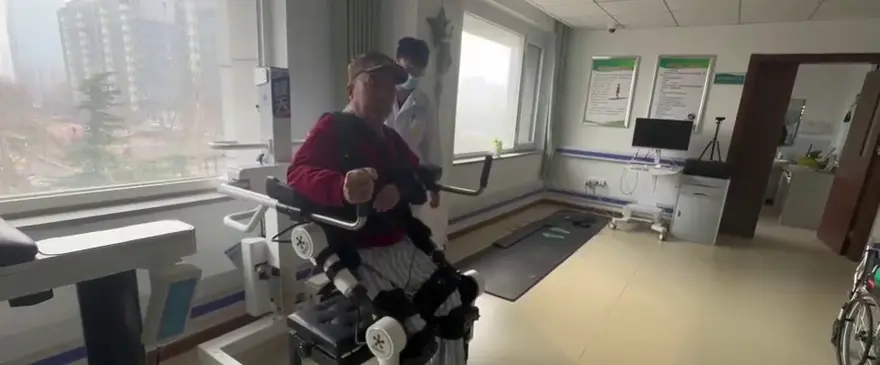
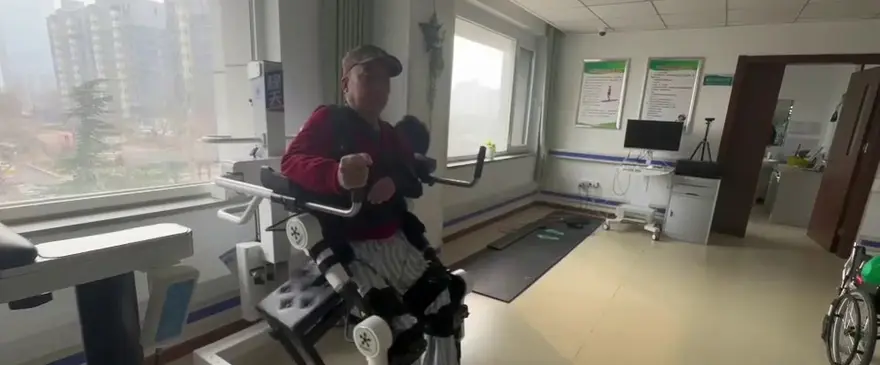
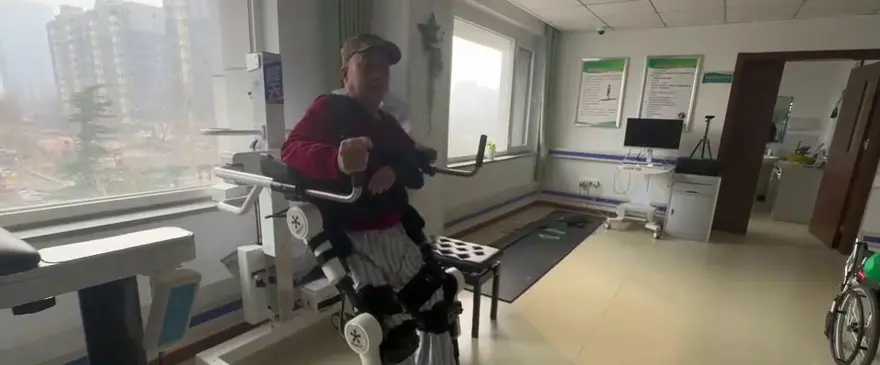
The medical-grade lower-limb exoskeleton walking rehabilitation devices here are often accompanied by massive robotic arms, complex treadmills, and reflective materials that provide a sense of security.

When browsing through popular science videos about this kind of hardcore medical content online, you can often see advertisements for lighter, more compact consumer-grade products outside the outpatient building, touting "assistance for daily mobility."

The Life-or-Death Boundary and Prohibited Zones: Who Should "Stand Down" from Wearing an Exoskeleton?
Medical science videos profoundly highlight the serious medical nature of the exoskeleton. Putting on this gear of steel and electronic components is not universally beneficial or harmless. For product design and commercialization, clearly defining the "contraindicated population" is the first step toward building trust in B2B medical channels.
"Contraindicated for patients with severe primary diseases of the cardiovascular, pulmonary, hepatic, renal, or hematopoietic systems, critical conditions, psychiatric disorders, severe cognitive impairments, or severe visual and auditory impairments.Prohibited for use by patients with injuries or infections in the lower limbs or at the device contact points."
Accompanying this concept, we can imagine the real-time heart rate and blood oxygen data fluctuating on a medical monitor on the other side of the screen, reminding us that the baseline of physiological functions must not be tested.

Doctors will strictly prohibit high-risk cardiovascular patients from attempting gait training, as the machine's forced intervention could introduce unknown secondary risks.

Meanwhile, any ulcers or infections at the device's contact points are an absolute red line. Hard mechanical guards will not only cause secondary friction injuries but also become a breeding ground for bacteria.
This also serves as a reminder to users: no matter how advanced the protective gear is, the body must be in an optimal "combat-ready" state before use.
Hemiplegia and High-level Paraplegia: Early Electronic Intervention Matters
The hospital video presents a golden quote regarding the target audience, striking a chord with many families concerning the "golden window" for hemiplegia rehabilitation.
"The first category is the hemiplegia patient group. The earlier the intervention with an exoskeleton, the better the recovery! Those who have just learned to sit, or those who can stand but not yet walk, can start using it now."
In the footage, high-level paraplegia patients undergo lower-limb training. Although this represents a simple medical principle, it offers immense hope for patients with poor muscle strength and poor balance through early intervention.
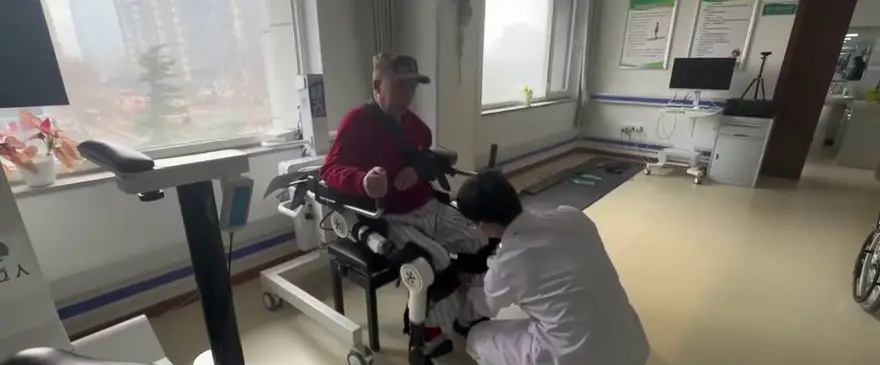
For individuals with spinal cord injuries and high-level paraplegia, as well as the elderly population whose physical functions have degraded from prolonged bed rest, this machine serves as the primary input source for the earliest restoration of correct physiological walking ability.
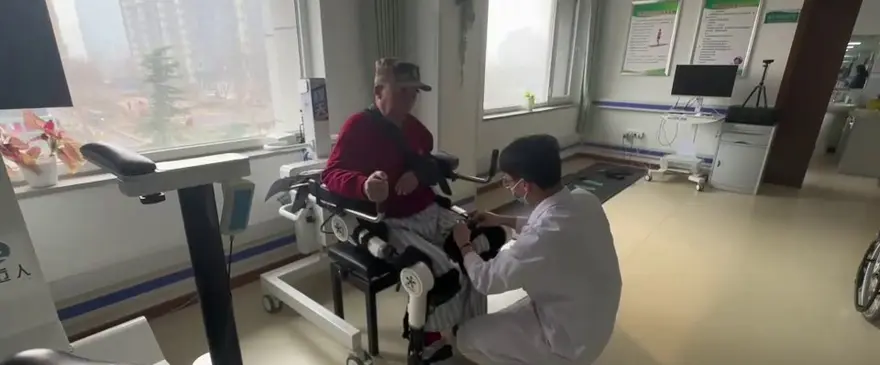
On the hospital's clinical data dashboard, curves of step frequency and stride length are often displayed shifting, showing the medical-grade exoskeleton system correcting abnormal gait, which represents the quantified metrics of neural remodeling.
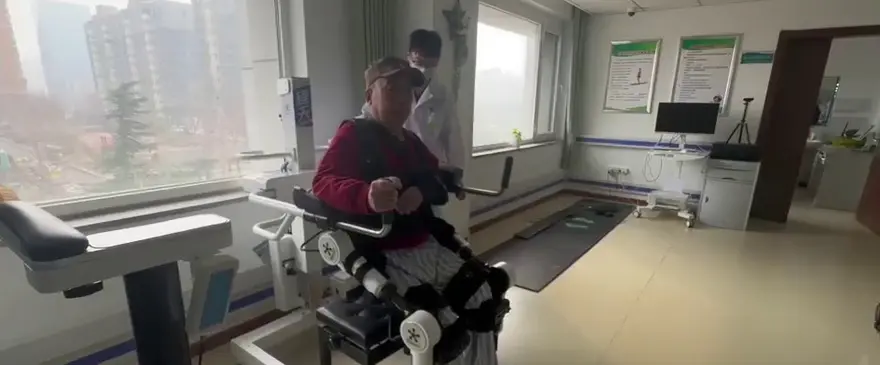
Industry analytics indicate that individuals suffering from lower-limb walking dysfunction caused by central neuropathy account for a massive proportion of the rehabilitation market. This is also the core commercial logic driving hospitals to promote it vigorously.
However, as cross-industry observers, we have also seen the assistive exoskeleton launched by AOSHAN in industrial and logistics scenarios, designed to help enterprise workers handle heavy loads.
Tech innovator Hypershell has taken a bold approach by introducing the practical training concept of VR plus an exoskeleton, integrating neural exploration in the brain with physical limb movement within the same coordinate system. Although, this clearly diverges from the hospital's intensive intervention pathway.
Hardware Parameters and Mechanism Evolution: When the Treadmill Meets the Consumer-Grade “Open-Source” Era
The lower-limb rehabilitation walking training shown in the video relies not only on the assistive devices administered by medical personnel, but even more so on the mechanical precision of the equipment itself. As attention shifts from medical-grade equipment to today’s consumer-grade products, the hardware materials and power sources have entered a fierce arms race.
"Training with both feet on the ground better corrects abnormal gait and provides muscle-strength and balance training for patients with poor muscle strength."
If you were to take apart the rehabilitation machine in the video, you would find that it typically retains a precision gear structure internally to ensure stability.
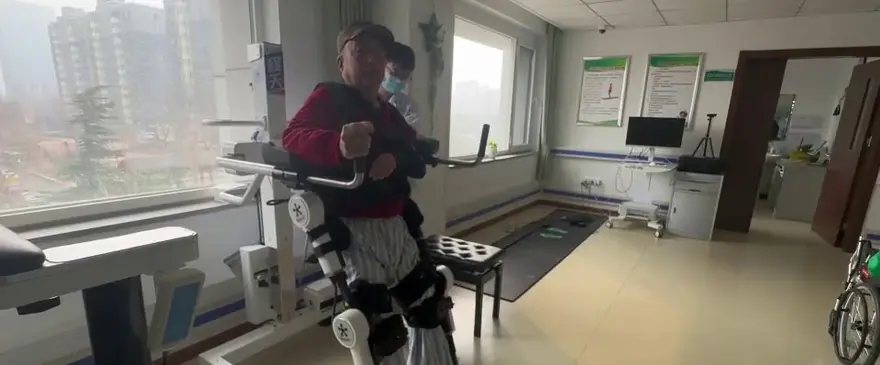
However, in our experiences with consumer-grade exoskeletons, it is often necessary to densely pack multiple IMU sensors across the torso and legs to accurately capture minute movement trajectories.
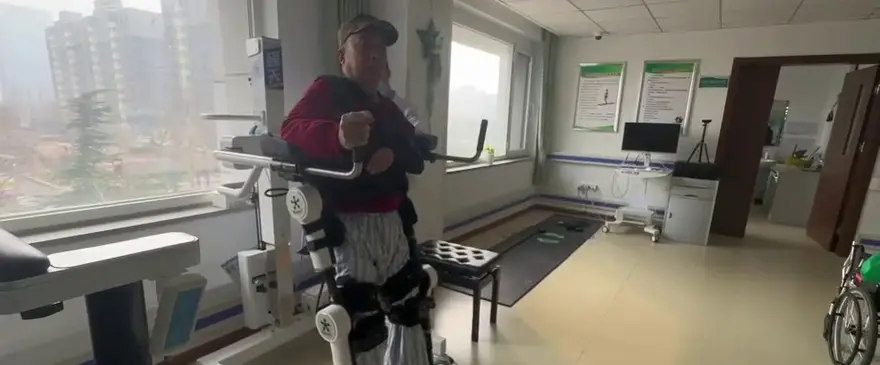
The most significant material divergence between medical-grade and consumer-grade devices lies in their composition: durable materials used in hospitals are being replaced by carbon fiber by some innovative brands, drastically reducing the weight to wear.
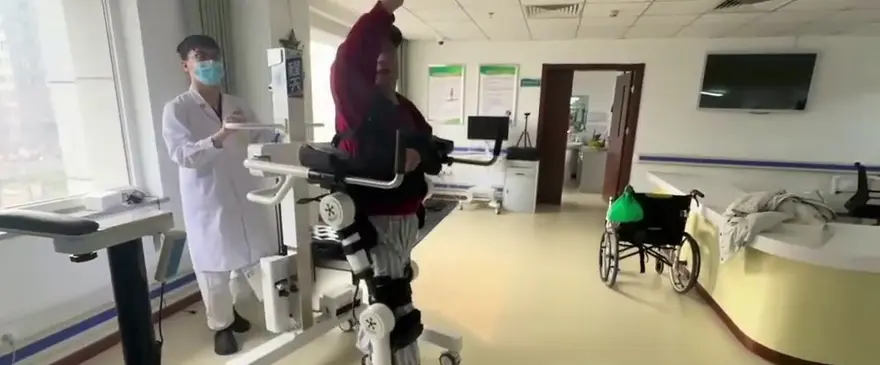
By driving the joints with a motor, advanced brushless motors enable the device to precisely output specific joint torque when addressing foot drop in hemiplegic patients, supporting various training modes such as walking on flat ground and running.
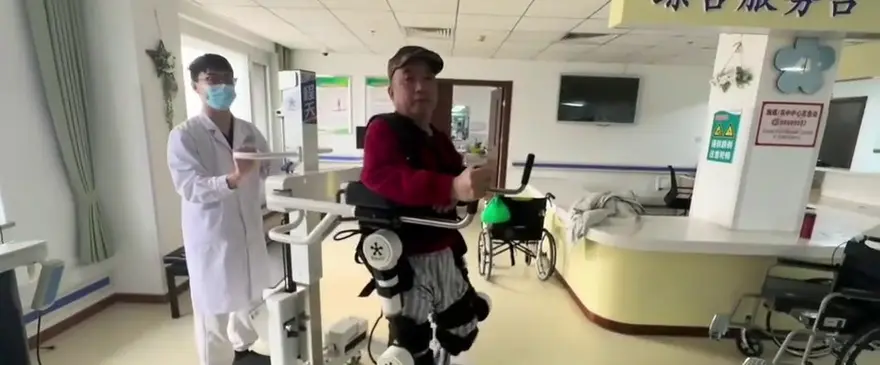
If a patient is training on a treadmill, the device's screen will display key parameters such as cadence and step length.
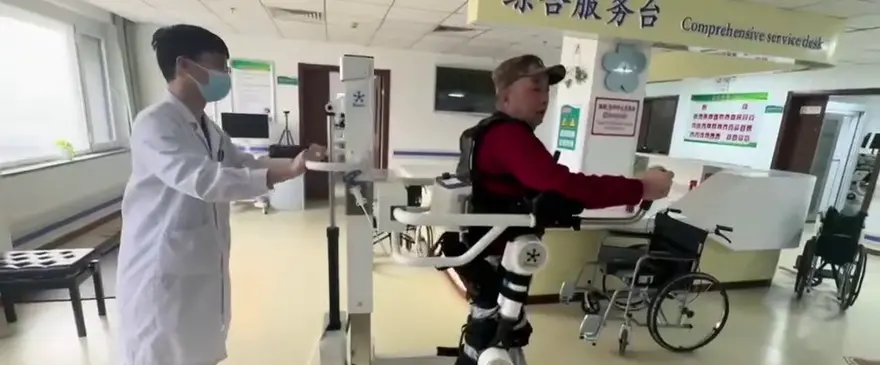
During this process, it is clear that medical-grade institutions still rely on heavy, omnidirectional treadmills for intervention. This remains a pain point that many commercialized startup devices aim to solve.
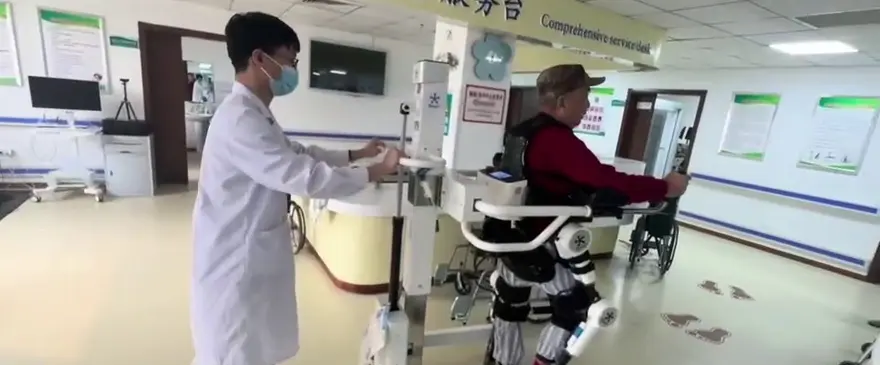
Application Scenarios: The Contradiction from Tertiary Hospital Departments to Rehabilitation Lines
The video underscores a crucial point regarding applicable scenarios: “Should be used in medical institutions and other settings with professional medical staff,” which reveals the exoskeleton industry's current pain point: beyond the hospital, where else can these devices go?
“Applicable to patients with lower-limb walking dysfunction caused by stroke-related neuropathy who are undergoing walking rehabilitation training.”
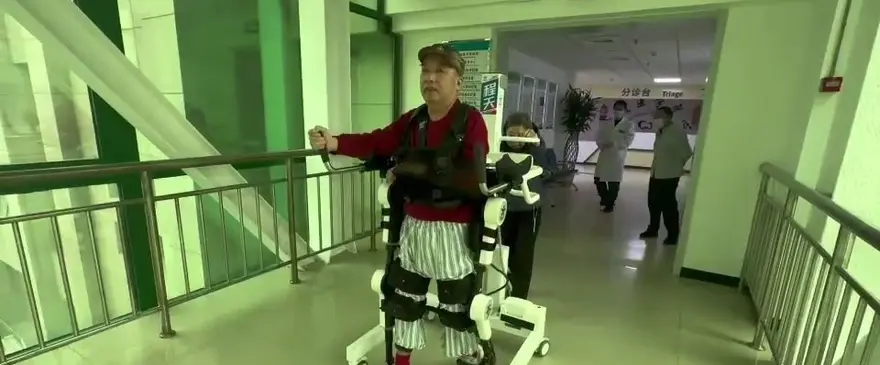
Rehabilitation departments at tertiary hospitals have become the first front to adopt these mechanical behemoths.
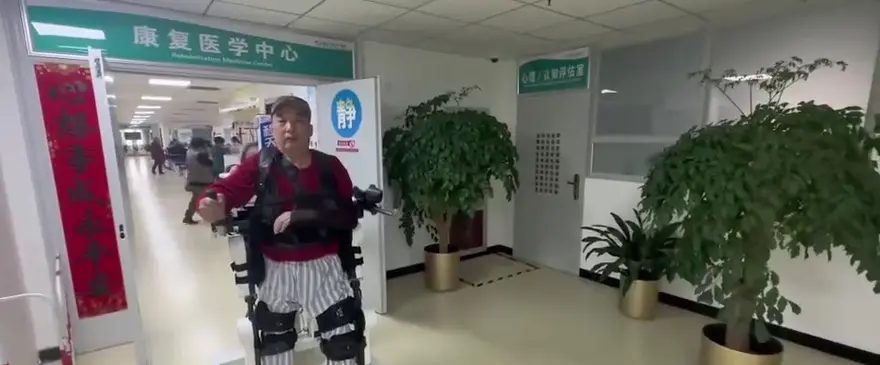
On nursing home assembly lines, movements that train lower-limb strength in older adults have evolved from simple sit-to-stand actions into precise, controllable routines.
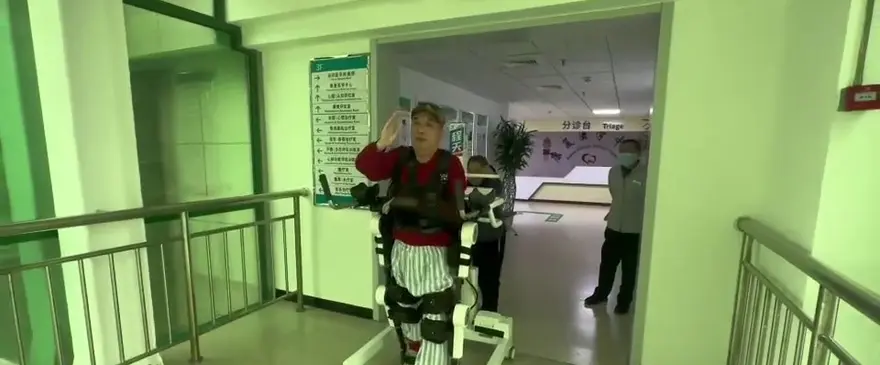
But once the devices leave the “supervision” of medical staff in hospital wards, can they serve elderly individuals with hemiplegia in a home living room? This remains a highly contentious topic between family caregivers and doctors.
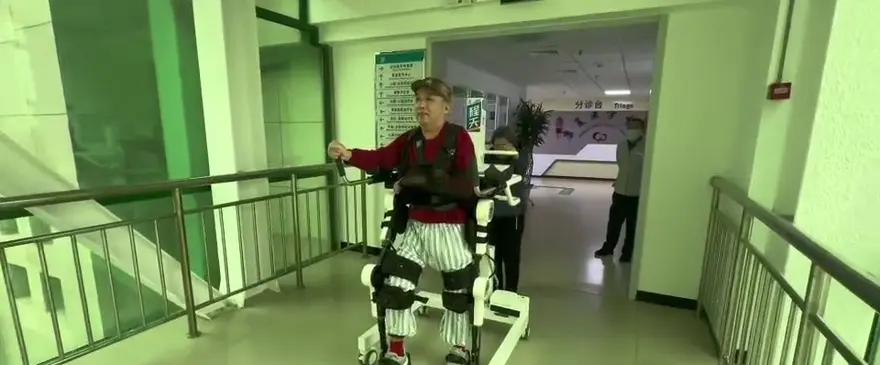
The original medical device manufacturer offers cautious advice: “Should be used together with common assistive devices.”
In contrast, in the realm of maker innovation, Kenqing’s (KENQING) lumbar assist exoskeleton offers an alternative solution—applying force at the waist to provide labour-saving support for lifting and carrying tasks.

Dnsys is also gradually highlighting mechanical stability in complex wearing scenarios within its rehabilitation and care product showcases, attempting to extend applications to community-level care.

Future Outlook: A Bifurcated Path from Passive Rehabilitation to Active Enhancement
At present, the global economy has not fully emerged from the long shadow of healthcare and eldercare, and mechanical exoskeletons in the consumer market are showing a fission-like split—an explosion of consumer-grade exoskeleton production and segmentation. The gait correction and fall protection emphasized in the video have already evolved into a new commercial logic in today’s commercial landscape: devices don’t just improve your quality of life—they can also sell you safety.
“This machine does not represent an all-powerful invader; it can treat stroke, spinal cord injury, and multiple sclerosis, improving patients’ quality of life.”
Reality has become more surreal: older adults who once lay in hospital beds may, in the future, achieve a kind of “digital rebirth” simply by purchasing a lightweight assistive robot.

Compared with the massive mechanical machines on the market that have been added to the rehabilitation “whitelist,” a few mass-produced carbon-fiber mechs have already made their way into ordinary households.

Looking ahead, one development worth anticipating is that companies such as Hypershell are developing lightweight hiking-assist exoskeletons, attempting to move the use case directly from hospitals to outdoor mountain trails.

Hardcore universities and maker labs are now manufacturing lightweight exoskeletons with mass-production-grade structures that are low-cost yet high-strength and high-computation, and support brushless motors, aiming to break through the industry’s moat.

Even more aggressive experiments include inflatable airbags designed for self-balancing fall protection, directly expanding the application scenarios to broader mass-market destinations.

In the future, we may see an ordinary person climbing a mountain wearing an exoskeleton brushing past a severely ill patient relying on machinery to survive—an absurd yet poetic scene brought about by technological progress.

Top Community Comments
“Regardless, early rehabilitation training using an exoskeleton is definitely more beneficial than harmful. It's just like a sapling that has just sprouted in spring needing to be straightened out immediately.”
Commentary: This comment reflects the public's strong consensus on the principle of early intervention during the golden period for lower-limb rehabilitation, highlighting the commercial certainty of this logic.
“I agree with the rehabilitation principle, but what truly limits rehabilitation progress is often the dead weight of the equipment. Medical rehabilitation exoskeletons must address lightweighting challenges using materials like carbon fiber.”
Commentary: A keen observation of equipment weight as the primary contradiction, driving a reflection on current exoskeleton material and manufacturing bottlenecks from a practical pain point perspective.
“If you have a hemiplegic family member at home, you should buy this. This micro-exoskeleton can be used by two people to support the patient and delay the deterioration.”
Commentary: Speaking directly to the massive pain point of home-based rehabilitation, expressing the current desire of patient families for unmonitored, consumer-grade products in the home environment.
“Just like the situation in the video, after elderly patients complete lower-limb training in the hospital, nurses still need to manually move them. It would be great if there were a dedicated lumbar assist exoskeleton to offload the physical strain.”
Commentary: Bringing up the alternative function of consumer-grade assistive exoskeletons (like Aosa MAX) in assisting with the moving and transferring of hospitalized patients, broadening public awareness.
“For medical-grade systems to enter the consumer home, the core lies in whether self-balancing and fall protection mechanisms can be integrated. Otherwise, a single slip on the stairs by an elderly person will become a major disaster that could destroy the industry.”
Commentary: Precisely pinpointing the clear red line between medical-grade and consumer-grade systems, emphasizing that safety is the baseline for commercialization.
“Forget about cyberpunk. The second a hemiplegic elderly person puts it on and the bearings move slightly in micro-adjustments with the walking speed, that is powerful mechanical aesthetics.”
Commentary: The difference between this and large military robots in superficial markets is dissolved, earning genuine respect and aesthetic approval in the rehabilitation field.
One-Sentence Summary
Starting from medical-grade equipment in real-world hospital settings, this analysis calmly and clearly demarcates the boundary between serious rehabilitation interventions and consumer-grade exoskeletons, making it a deeply observed piece that combines humanistic care with a sharp industry perspective. Recommended for all hardcore enthusiasts tracking the commercialization of exoskeleton robotics and the future of medical rehabilitation.
About this article: part of Chinese-Made Exoskeleton Review Archive — an independent, regularly updated English archive of reviews of consumer exoskeletons made in China, edited from publicly available video transcripts. Not an official manufacturer page.
For inquiries and purchasing, contact lonlonago@foxmail.com. More in Reviews · All articles.