From "Pull-Bar" to Dual-Modal Interaction: Engineering Trade-offs and Productization Deduction of an Underactuated Hand Rehabilitation Exoskeleton
Wearable Experience: Can This 1kg "Mechanical Glove" Be Put On Independently?
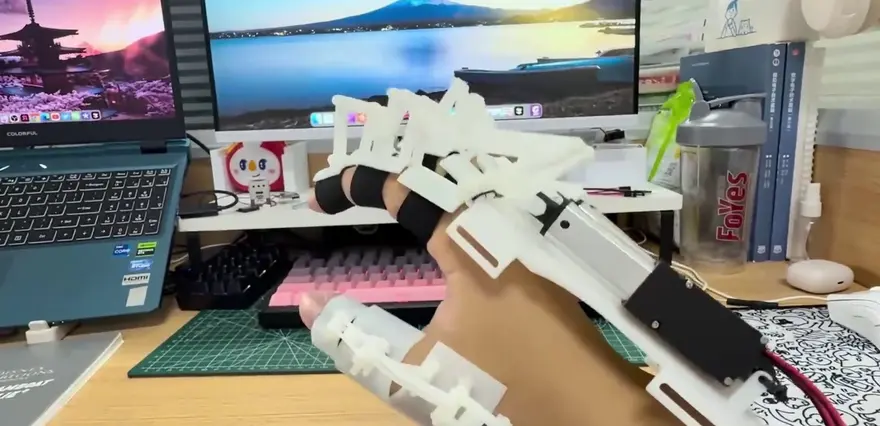
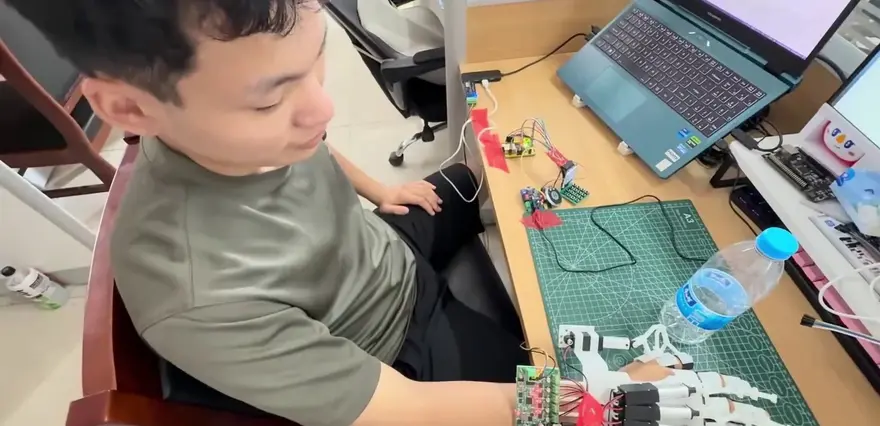
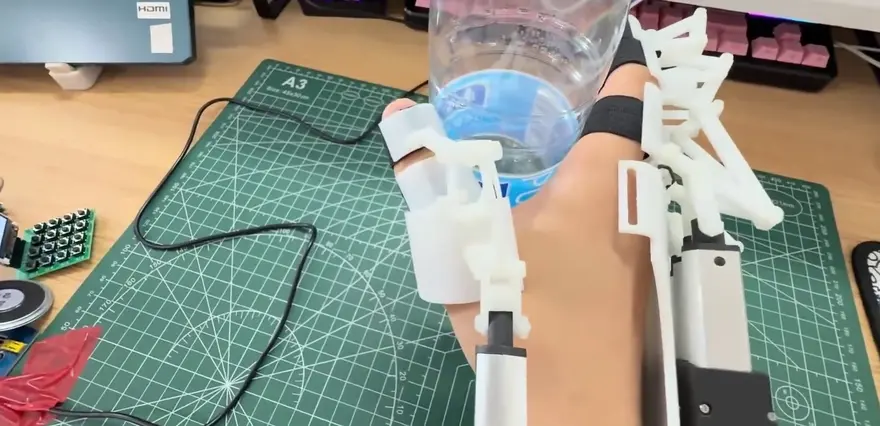
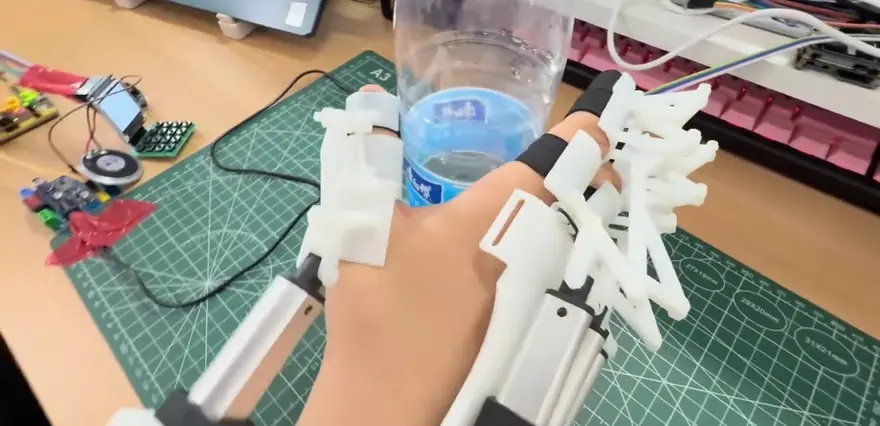
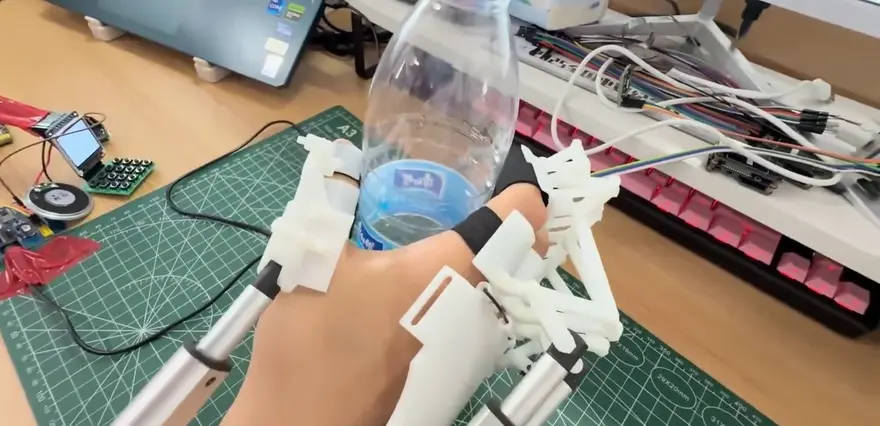
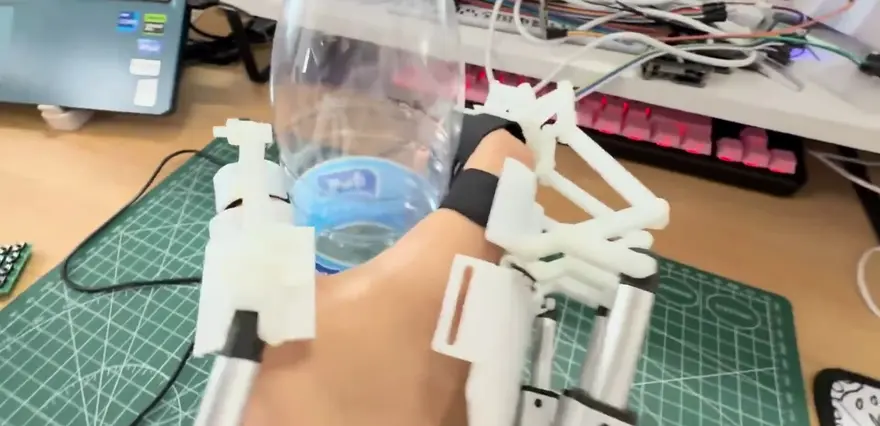
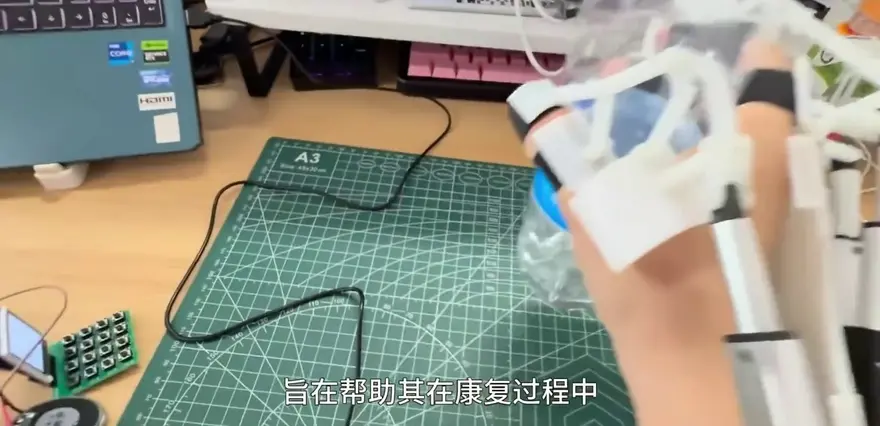
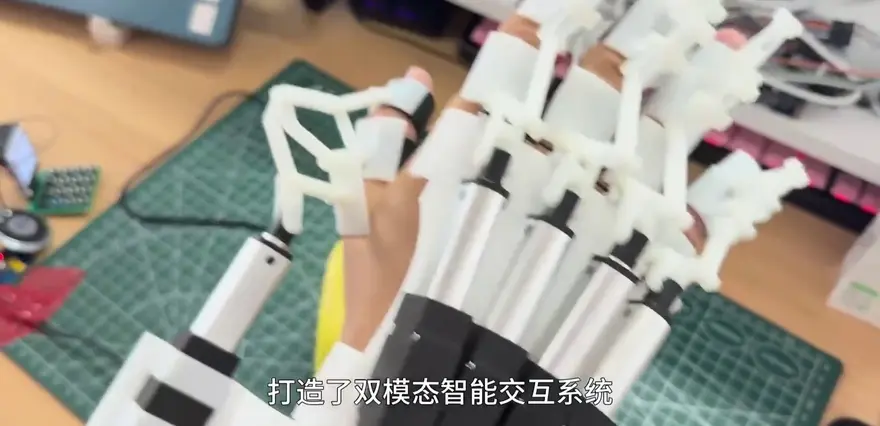
At the beginning of the video, the presenter does not show off complex mechanical equipment but instead has a volunteer demonstrate putting on and wearing the device. For a rehabilitation exoskeleton positioned for daily use, the convenience of donning it directly determines the product's "dust-collection rate"—a measure of how often it is actually used.
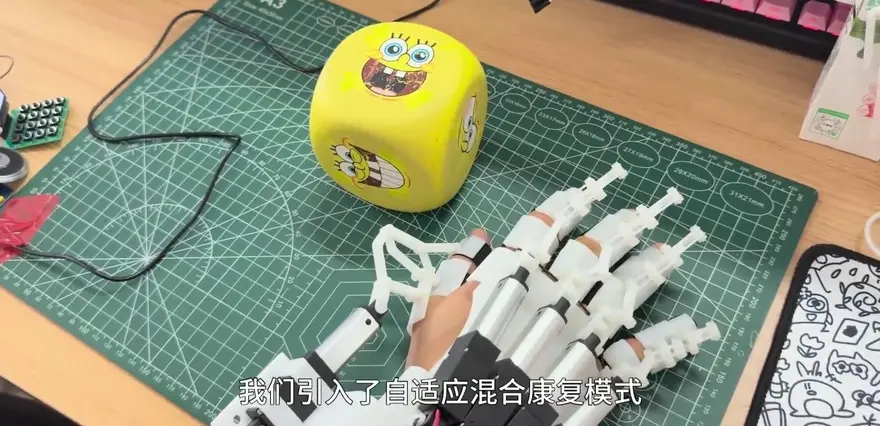
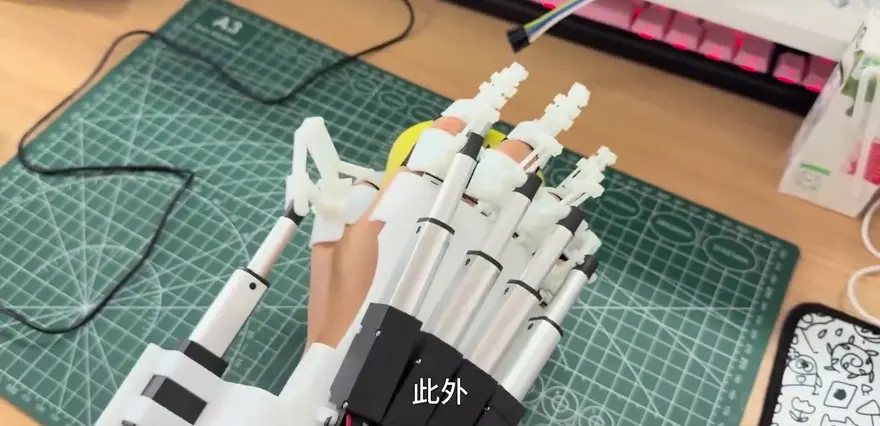
This hand-based rehabilitation exoskeleton offers a rather restrained and appealing volume profile. The performance data is quite impressive:
"This rehabilitation exoskeleton is easy to put on; the volume is as small as two jin (mentioned in the video, i.e., 1kg), allowing patients to put it on independently."
A weight slightly over 1kg (1000 grams) on both hands is roughly the equivalent of strapping a bottle of mineral water to your wrists. Thanks to the lightweight design, even patients with physical frailty can complete the donning process themselves without assistance from others.
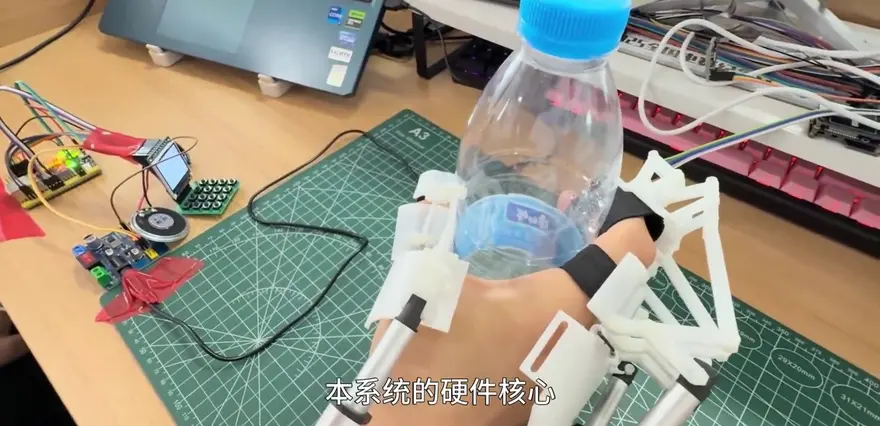
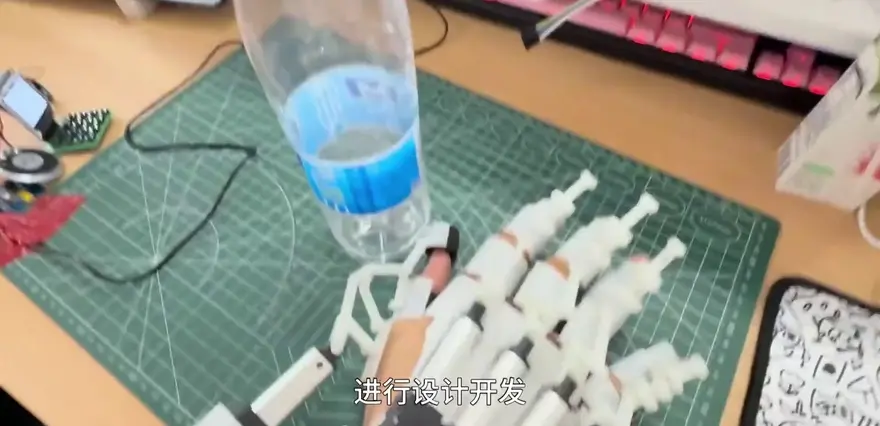
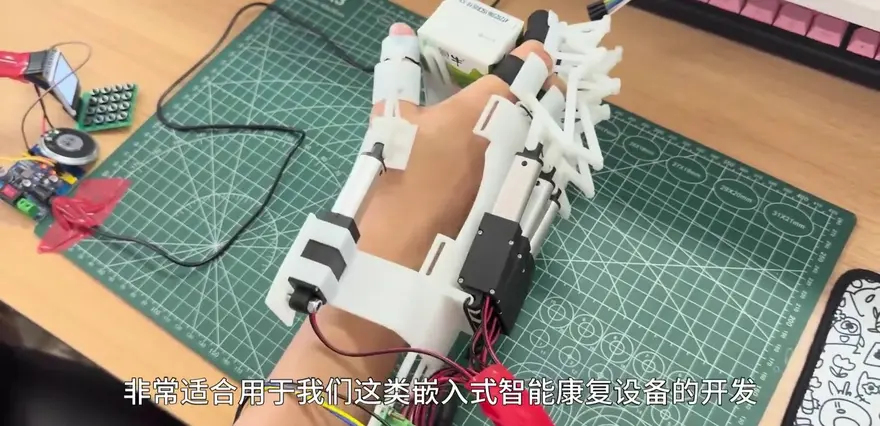
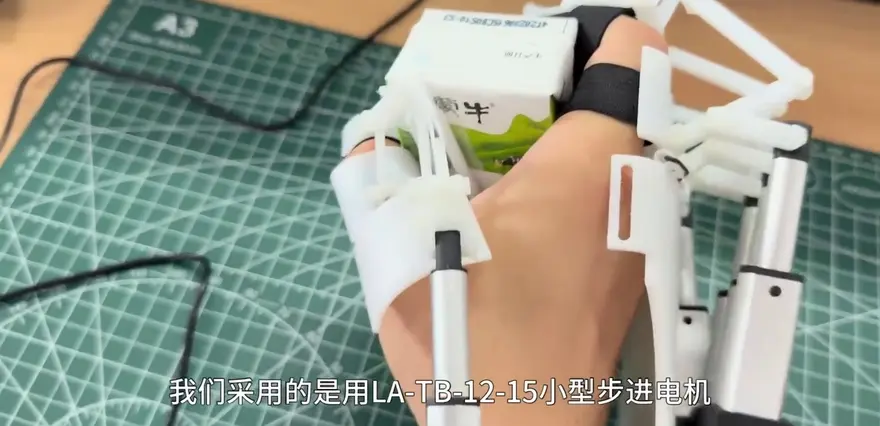
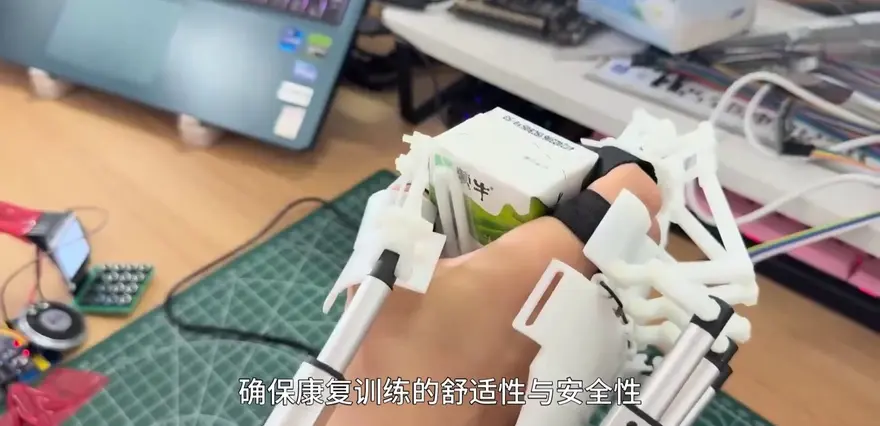
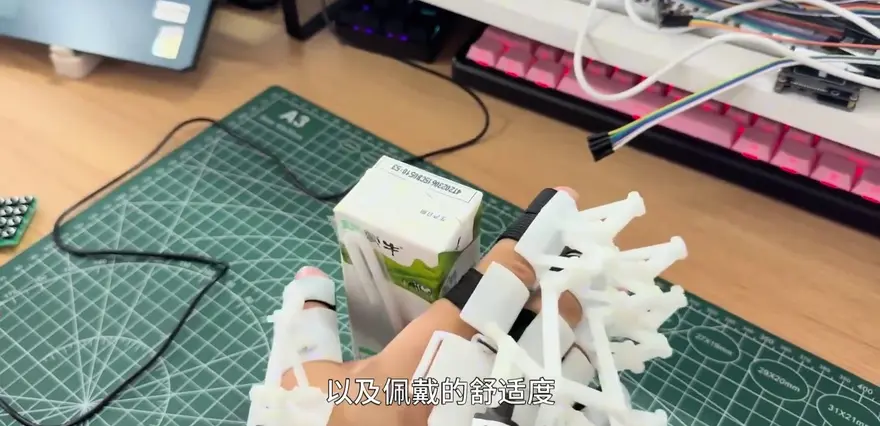
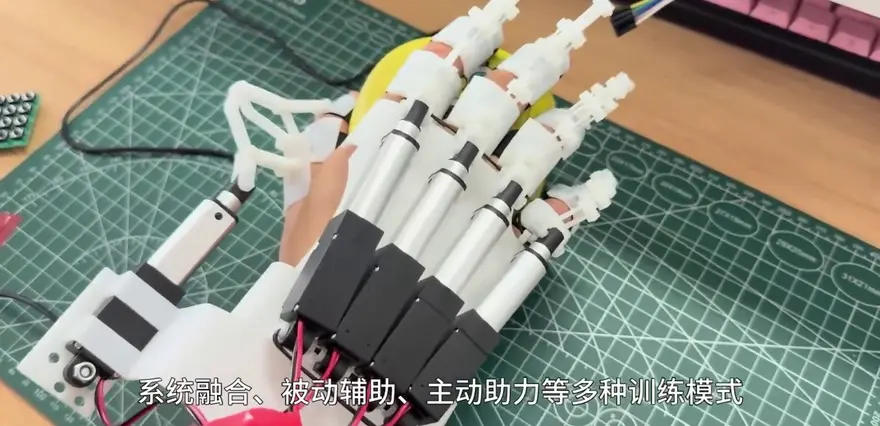
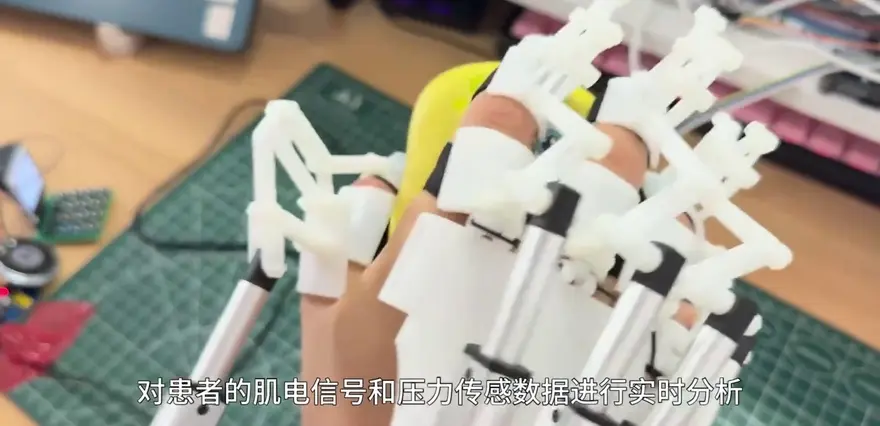
Delving into the details, its mechanical fixation method follows the approach of "flexible straps + skeletal support." Each joint is equipped with an independent band for fixation. This design ensures that the axis of the mechanical skeleton aligns as closely as possible with the human body's biological joint, minimizing shear forces generated during long-term operation.
Core Hardware: The Localized Exploration of Domestic RISC-V Chips and Micro-Motors
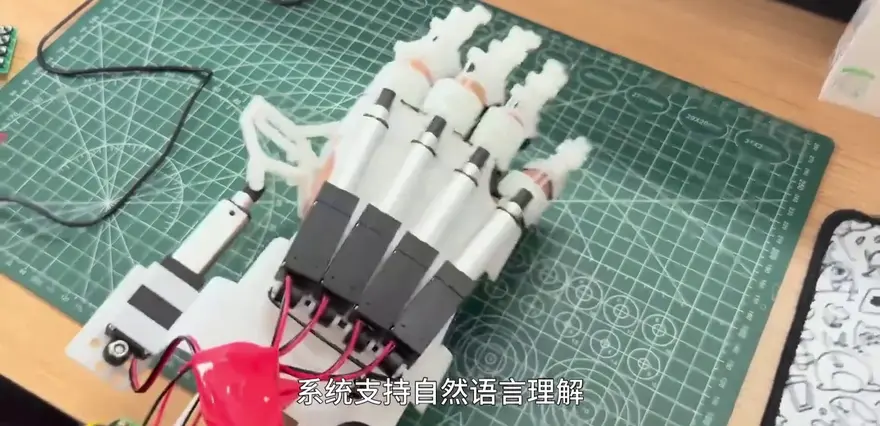
If the control algorithms represent the brain of an exoskeleton, then its driving hardware serves as its muscles. This device showcases a strong commitment to "domestic substitution" in its foundational hardware selection.
For the main control system, the device rejected the ubiquitous ARM architecture and adopted a chip solution built upon the RISC-V instruction set. While this might seem a bit hardcore for smart wearable devices, it is actually an incredibly pragmatic choice:
"The hardware core of this system is designed and developed based on the CH32V307VVT6 launched by (Qingheng) Electronics. It features high performance and low power consumption, making it perfectly suited for the development of our under-actuated smart rehabilitation devices." (Mentioned in the video)
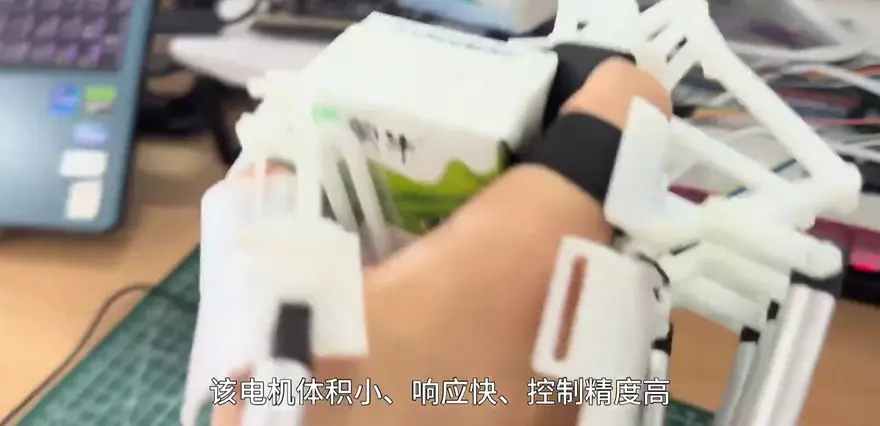
Regarding the actuator mechanism, the device utilizes a specialized micro-motor solution (The original audio mentions a "lever-type TB-12-15", speculated to be a specific model of steering gear/servo micro-motor). Although these motors have a small footprint, they deliver exceptionally high control precision and a rapid response speed.
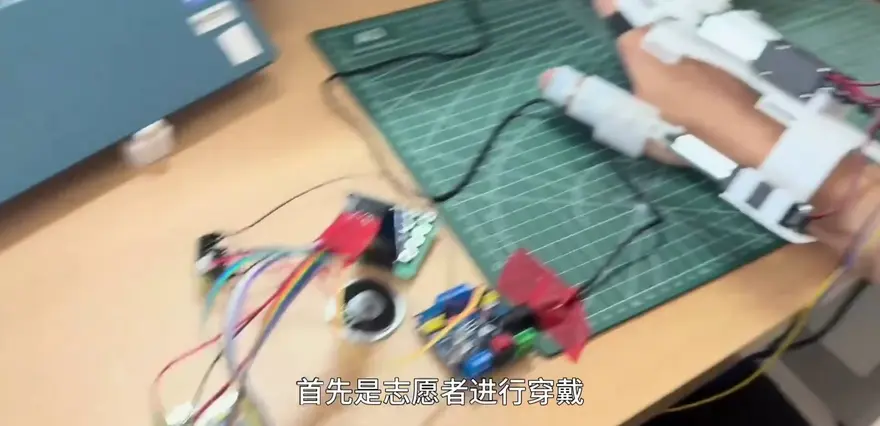
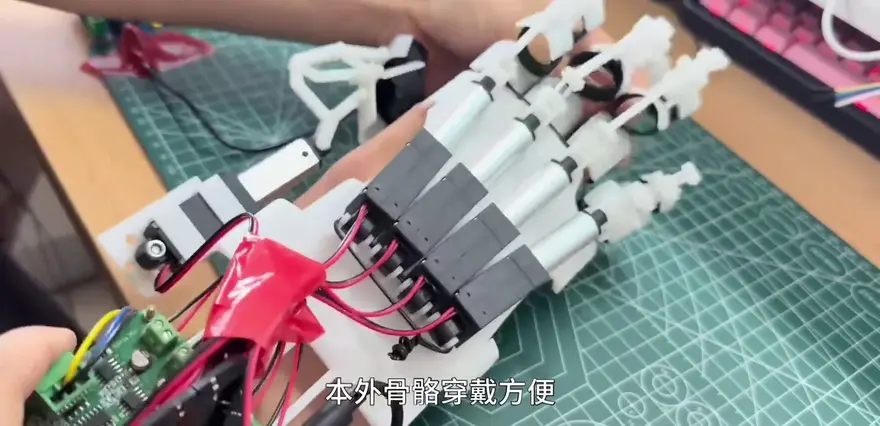
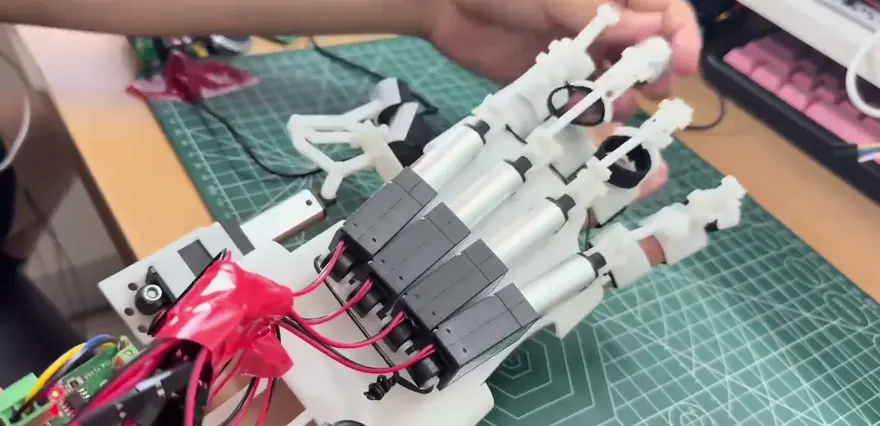
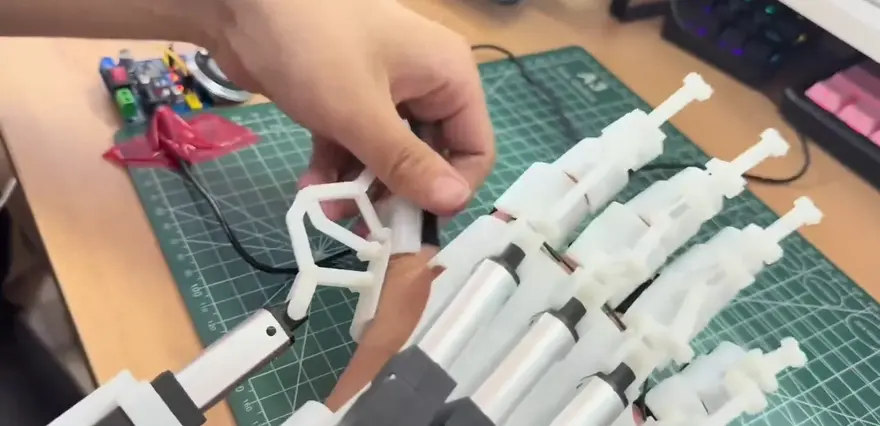
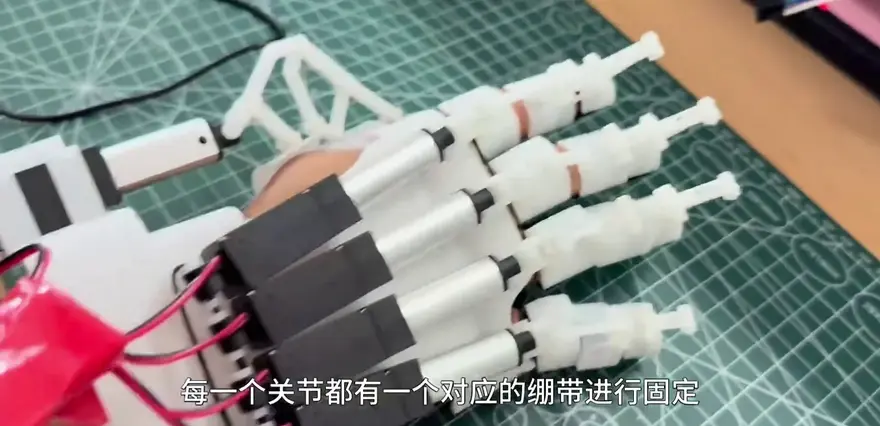
In the highly precise domain of hand rehabilitation, if a motor's joint torque control lacks sufficient finesse, it can easily cause muscle strain or defensive spasms in the patient's hand. The "stable and gentle assistive driving force" provided by this hardware solution is precisely the cornerstone of comfort and safety during the rehabilitation process.
Control Strategy: How Smart is the Adaptive Hybrid Rehabilitation Mode?
An exoskeleton cannot be just a "moving iron frame." The video spends considerable time explaining its underlying control philosophy: the "Adaptive Hybrid Rehabilitation Mode."
Traditional rehabilitation exoskeletons typically employ open-loop control: a trajectory is set, and the machine rigidly moves your hand along it. However, this device introduces a closed-loop feedback mechanism. Through a sensor array (which fuses electromechanical signals with pressure sensor data), it captures the patient's subtle active exertion intentions in real time.
"The system integrates multiple training modes, including passive assistance and active assist, and utilizes machine learning algorithms to perform real-time analysis of the patient's electromechanical signals, pressure, and sensor data, intelligently decoding the patient's current active motor intentions." (Quoted from the video)
Addressing the hand's complex skeletal structure and the high requirement for wearing comfort, the developers wisely selected an "Under-actuated" mechanism. In other words, the machine does not forcibly intervene in every micro-movement of each finger. Instead, by applying traction at a few key points, it guides the whole hand to execute complex movements such as grasping and pinching. This is a classic engineering trade-off, striking a seamless balance between safety and effectiveness.
Interactive Experience: A Hacker-Level Experience Empowered by ESP32 and Large Models
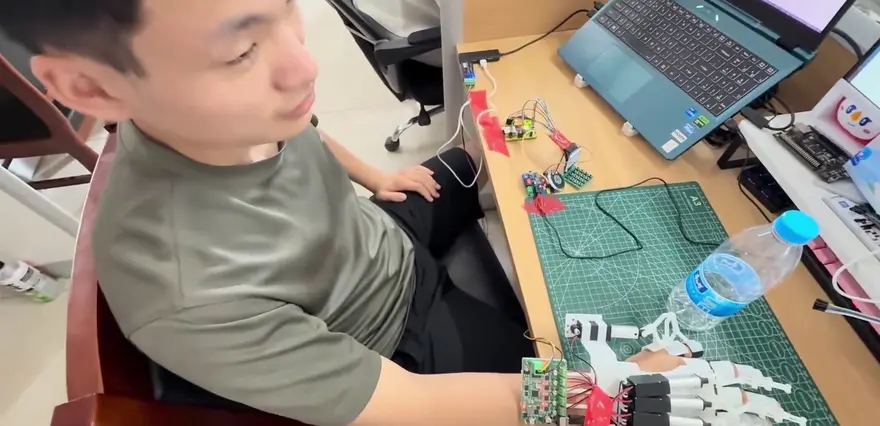
The biggest surprise for me in this episode's content is that this device actually possesses extremely cutting-edge AI interactive properties. The brightest highlight during the demonstration is this "dual-mode intelligent interaction system."
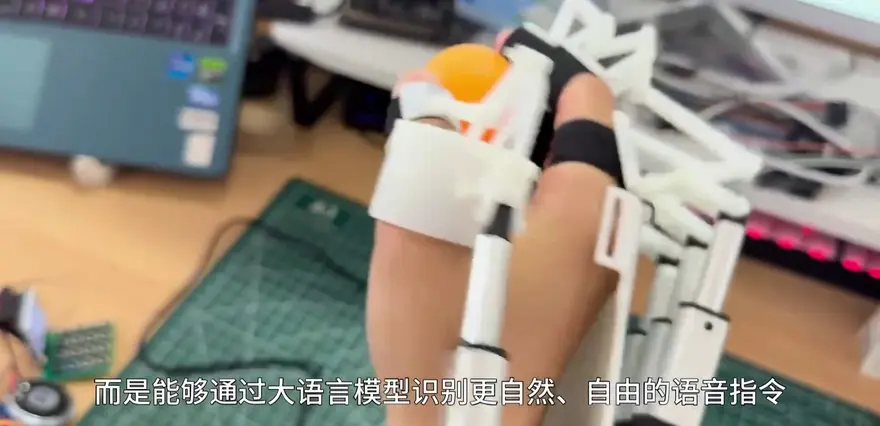
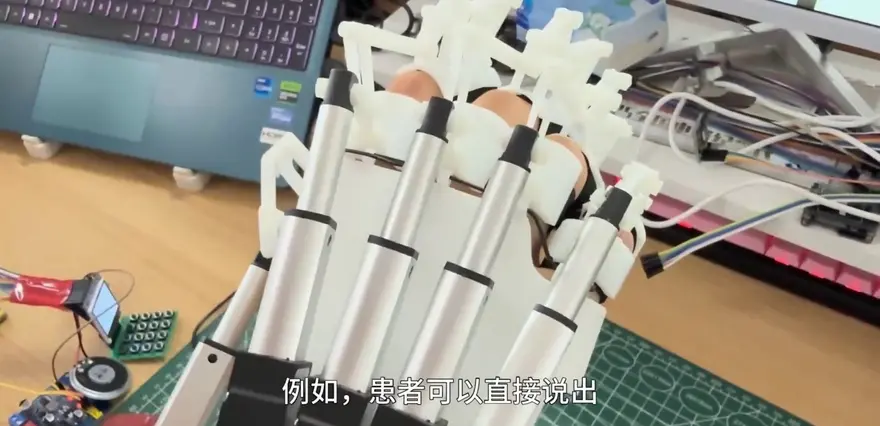
At the communication core, the system integrates an ESP32-S-based voice and vision suite powered by three large models—a feature that feels like a major step up in class for a compact exoskeleton. Most importantly, it supports Natural Language Understanding (NLU):
"No longer limited to traditional, fixed command words, it recognizes more natural, free-flowing voice commands through a large language model… For example, the patient can directly say, 'Help me do a fist-clenching training,' or 'Switch to active assist mode,' and the system will quickly understand and respond." (Mentioned in the video)
This interaction lowers the learning curve for the device, transforming cold, mechanical commands directly into natural language communication.
Pain Points, Positioning, and Commercialization Potential
Following the initial demonstration, the core positioning of this project has come into clear focus. It explicitly targets an overlooked group with strong essential needs:
"This project is primarily aimed at patients with severe (wind) paralysis or hand trauma, designed to help them achieve more efficient and personalized hand function recovery during the rehabilitation process." (mentioned in the video)
From the perspective of rehabilitation exoskeleton features, this solution demonstrates profound commercialization potential. Particularly noteworthy is that the adaptive hybrid rehabilitation mode can make metabolic-level adjustments based on the patient's daily rehabilitation progress, which means the device possesses strong data stickiness. This personalized adjustment also creates possibilities for future subscription-based services combining software and hardware.
The Other Side of Productization: A SWOT Strategic Analysis
To comprehensively assess the commercial viability of this product, we conducted a professional SWOT analysis:
- Core Strengths: The approximately 1 kg lightweight design greatly enhances everyday wearability; large-model–based natural speech redefines human–machine interaction, resulting in a very low learning curve; an adaptive hybrid-drive algorithm delivers medical-grade, high-precision intent decoding.
- Existing Limitations: The current product form factor remains comparatively bulky, offering less discretion than similar EMG wristbands; underactuation may lead to insufficient driving force when assisting users with extremely severe, complete paralysis, and industrial-production yield rates still require observation.
- Potential Threats: The registration and certification cycle for medical rehabilitation devices is lengthy; additionally, sensor accuracy and durability remain challenging when tracking the complex muscle groups of the hand.
- Breaking Opportunities: The smart in-home rehabilitation market is still in its early stages of development; coupled with the aging population trend, there is enormous room for market penetration of lightweight exoskeletons.
About this article: part of Chinese-Made Exoskeleton Review Archive — an independent, regularly updated English archive of reviews of consumer exoskeletons made in China, edited from publicly available video transcripts. Not an official manufacturer page.
For inquiries and purchasing, contact lonlonago@foxmail.com. More in Rehab & Mobility · All articles.