From Spring Festival Gala Fame to Everyday exoskeleton Use: Kenqing CEO Yu Breaks Down "The First Year of Viral Fame"
The "Engineering Lesson" at the Breakfast Table: How a Single Battery Sparked a Design Mishap
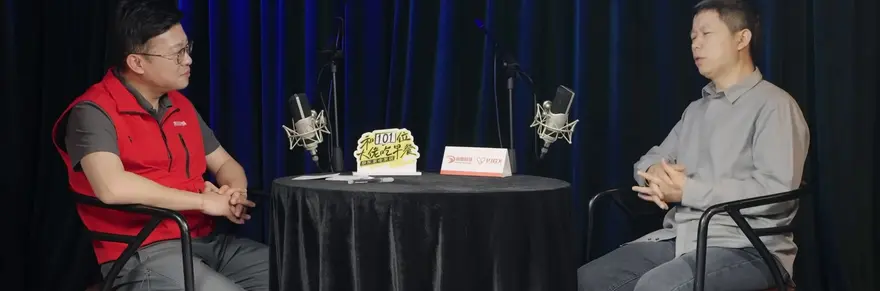
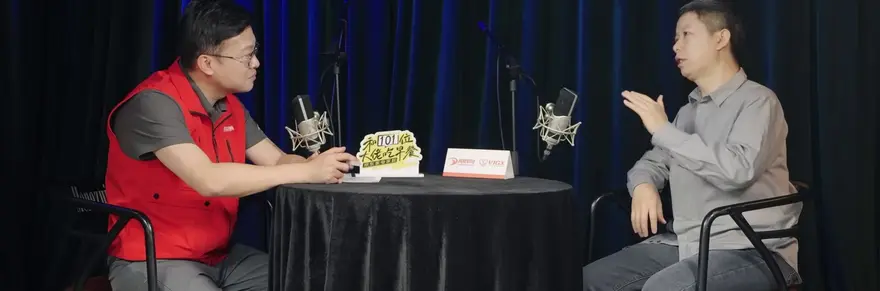
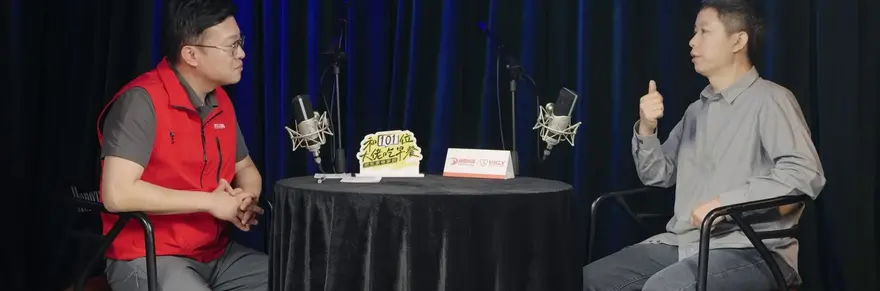
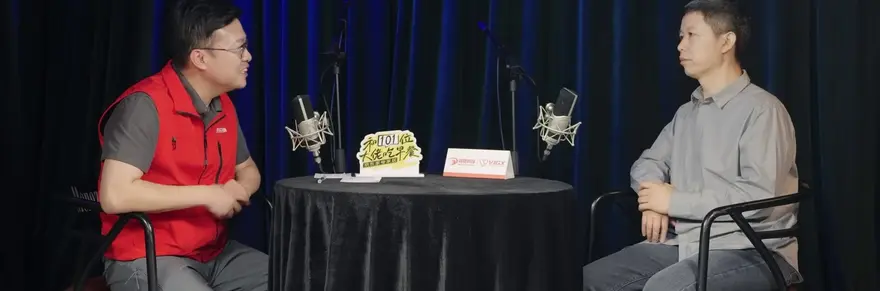
The video does not open on an exhibition floor, but rather at a breakfast table. Sipping coffee and biting into a piece of toast, Mr. Yu recounted a story with a smile—one that sounded like a joke but was deeply rooted in engineering: the company's lower-limb exoskeleton prototype had stalled for a long time over the question of "where to put the battery."
Quoted speech from the video: "Troubles in the world are often counter-intuitive. At first, everyone thought the battery should be fully integrated, feeling that an integrated design was so much better—strong structural integrity, high integration, and a complete exterior."
But the cost of being "integrated" quickly emerged: once the energy storage unit was rigidly strapped to the main exoskeleton frame, the weight distribution began to fight against the user. Using his own body as a reference—upper body leaning forward while the lower body bears the load—Mr. Yu pointed out that the battery is the "energy internal organ" of an exoskeleton. Placing it incorrectly essentially forces the wearer to use their spine to balance an abrupt, lead-like mass.
Anecdote mentioned in the video: During that breakfast, sitting in a chair, Mr. Yu suddenly realized there was actually "space around both sides of the waist: right at the belt line." Placing the energy storage at this position not only keeps it close to the center of gravity but also achieves excellent left-to-right balance.
This realization was later literally engineered into a "belt/base plate energy storage module." The conclusion itself is not particularly surprising; what is remarkable is the method of decision-making. Without anyone writing pitch decks or holding review meetings, the problem was taken out of the boardroom and brought right to the waistline of the worn garment. This is a classic example of "wearable product thinking": trusting the physical feedback of the human body is far more persuasive than obsessing over the scale on a blueprint. Streamlined designs are often limited by the boundaries of static, unpowered, load-free testing.



"Thrown into the Spotlight": How a Spring Festival Gala Turned the Cold Bench into a Hot Trend
Flashback to 2025, and the on-site data presented by Mr. Yu remains startling.
The video mentions: Within "about two weeks" after a certain viral event, the related content "reached 100 million views."
The video quotes: "We had always been backstage, silently searching for a path with our lanterns, until the spotlight suddenly hit us—all the information came flooding in like a tide."
The industry's changes in feel are difficult to illustrate with a chart, but can be described by a series of phenomena: support lines overwhelmed, production lines scaled up, personnel doubled, and revenue doubled. Behind this bustle, I believe what is more worth remembering is Mr. Yu's subtle awareness between "creating" and "being created": The era shaped the industry, the industry shaped the company, and the company shaped the product. However, a product should not treat a "accidental viral hit" as the norm.
The video quotes: "The point is not to surpass rival competitors, but to surpass ourselves."
The video mentions: From the viral hit to this year, "Kencheng's original staff has multiplied several times over, and the mass production scale has grown many times larger than before."
Only companies that can translate "viral popularity" into "supply chain, quality control, and service capabilities" have a chance to keep their first product on the table.




Battery Layout: Rethinking from the "Integrated Camp" to the "Belt Camp"
That viral moment brought traffic, and it also brought a hard-edged lesson: consumers care deeply about one question—whether this "iron" is actually providing assistance or, worse, generating counterproductive force. From Mr. Yu's retrospective, the most intense point of the debate wasn't appearance but electrical and mechanical engineering:
Quoted from the video: At the time, "most people said how much better it would be to make it integrated," but because "they were placed together, it became unbalanced—the weight distribution was unbalanced."
Pulling industrial design back under physical constraints, a product must answer four questions:
- How do we calculate endurance (in hours)? The capacity, weight, and position of the energy pack collectively define real-world "wearable" runtime.
- Where does the joint torque exert its force? In a hip-assist context, the energy delivery from the motor/spring must be positioned as close as possible to the hip joint hinge to minimize mechanical advantage loss.
- What about weight distribution and self-balancing? If the energy storage isn't left-right symmetrical and the center of mass isn't kept close to the wearer's center of gravity, self-balancing becomes impossible.
- How about fall protection? Devices with a disturbed center of gravity see an increased probability of falling.
Under this logic, "belt/baseplate energy storage" gains a biological rationale: it aligns with the center-of-mass projection of the human walking posture.


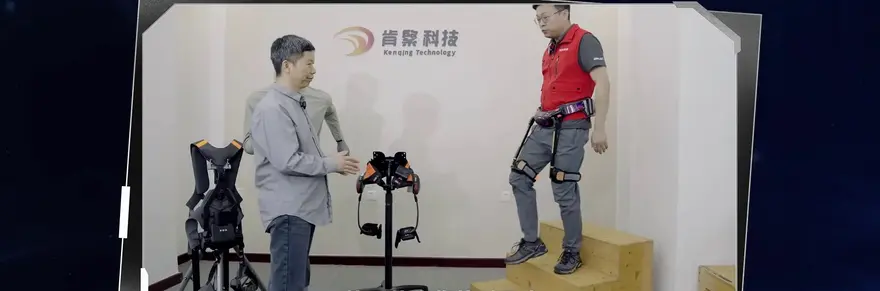
The Kenching High Plus Series featured in the video demonstrated a keen sense of timing during the leg-lifting test. When the demonstrator performed a leg-lift motion on the spot, the device didn't just passively follow along with the movement. Instead, leveraging an AI algorithm, it anticipated the lift intent early and delivered positive assistance at the exact moment the joint torque engaged.
Quoted from the video: "With this AI algorithm, it can automatically sense your micro-movements; now let me give you a bit more power—this is fantastic."
Such predictive behavior is a common hallmark of excellent assistive exoskeleton (assistive/walking-assist exoskeleton) products: rather than overpowering your gait (gait), they add assistance precisely only within the phase where you "need" it.



From Gut Instinct to User Personas: How Platform Data Streamlines Decisions for Engineers
When asked whether user feedback truly drives iterative improvements, Mr. Yu’s answer was candid.
Original quote from the video: “Before, our market research involved a very limited sample. Now, when we make decisions we rely on data—that’s different from the way we used to do things. Back then it was, more or less, a matter of gut instinct.”
That wasn’t just lip service. With visible purchase-decision personas in hand, seemingly subjective factors—aesthetic preferences, dimensional tolerance, price sensitivity, even terms like “panel color” and “shell style”—translate into quantifiable product boundaries:
- Modular exteriors are mandatory: The video points out that the device’s shell allows users to “swap panels and change the look.” This highlights a key difference between a consumer-grade exoskeleton and industrial hardware. People want a reason to feel trendy, not to wear a working machine strapped to their legs.
- Color matters and the “outfit” factor: What kind of wearable will users proudly show off as a social asset? Mr. Yu offered a telling observation: one user bluntly said, “It’s not good-looking.”



When a brand starts treating “good looks” as a spec-sheet metric, you know the category has truly arrived for everyday consumers.
Two Core Pillars of the Next-Generation Product: Smarter Intelligence and a Lighter Form Factor
When asked about what the 2026 models would look like, Mr. Yu responded without painting a distant visionary picture. Instead, he highlighted two very specific shifts in quality and performance.
Original quote from the video: The next-generation product will be a "cross-generational leap," stating, "First, its intelligence will be significantly increased; second, its lightweight design and aesthetics will see massive changes." This can be summarized in one sentence: It will be smarter and more compact.
A "significant cross-generational leap in intelligence" implies a shift from passive following to predictive anticipation. More sensors (IMU / pressure sensor) will collect signals, and algorithms will identify the wearer's micro-movements and operational phases, placing the assist at the exact point where the joint torque is needed most. The leg-lifting acceleration Mr. Yu demonstrated perfectly illustrates the visible outcome of this approach—the intention to lift the leg is read in advance, making the assist intervention smoother and completely natural.
Meanwhile, "lightweight" means simultaneously minimizing scale across three key areas:
- Lightweight structure: Materials and hinges are completely decoupled and optimized, likely incorporating more carbon fiber or hollowed-out bionic structures;
- Lightweight electrical system: Energy storage strategies will be redistributed so that every watt of power is channeled into the operational phases where the assistive efficiency is highest;
- Lightweight usage experience: The overall volume will be compressed enough to easily slide into your backpack, approaching the feel of a personal accessory rather than a heavy piece of equipment.



During the product demonstration, Mr. Yu also highlighted the long-term goal of the consumer-grade exoskeleton: evolving from specialized gear into an everyday companion.
Original quote from the video: "It can be easily tossed into your backpack—right in the top main compartment. It will genuinely integrate into our outdoor lifestyles."
In other words, from a device simply used to assist in lifting legs during hiking/trekking assist to a piece of daily life you can just strap around your waist—this is the true distinction between a consumer-grade exoskeleton and a rehabilitation exoskeleton: the former must be stylish, frequently used, and intimately integrated into daily life, while the latter must prioritize strict compliance, intensive intervention, and high stability.








Industry Profile: From Military/Industrial to the Living Room—The Exoskeleton Must Join the Dinner Table
The original context for the exoskeleton was military and medical—from rehabilitation exoskeletons to remote assistance devices in factories. These systems demand extremely high levels of stability, compliance, and maintainability. A consumer-grade exoskeleton is a brand-new species: it shifts assistance into living rooms, puts awkwardness under the spotlight, and places aesthetics, wearability, and storage footprint on the engineer’s must-answer list.
One line from Mr. Yu stuck with me:
Video reference (verbatim): “The previous decade was the bench seat, then suddenly we were pushed into the spotlight—I understand that feeling.”
That “understanding” is the bridge from the “bench” to the “mainstream dining table.” On one side: tech stacking. On the other: marketing. In the middle: user experience. No matter how hardcore an exoskeleton is, it must achieve a soft landing—at minimum, it should fit in a closet, be wearable outdoors, and handle friendly questions without embarrassment.




Top Community Comments
"This is so hardcore! When can we buy a home-use model from Kencng?"
Users are asking "where to buy." Followers of the consumer-grade exoskeleton no longer see these devices as alien technology, but are genuinely waiting for their productization and market launch.
"What's the experience of having the battery on the waist? Does it affect balance? If the weight distribution is uneven, wouldn't that be a disaster?" (Since the video didn't provide an exact viewer comment, this simulates a typical tech user's voice)
This reflects user sensitivity to the center of gravity and self-balancing. For wearable devices, even a slight shift in the center of gravity can amplify the joint torque, leading to fatigue or a risk of falling.
"I'm more concerned about battery life/runtime; only a product that lasts for hours has practical significance."
The "usability threshold" of a consumer-grade exoskeleton is, to some extent, directly linked to its battery life/runtime. The difference between one hour and three hours determines whether you can use it to complete a journey or last through a full day of activity.
"Good good, but can it really ride the mountain? Just curious." (Since the video didn't provide an exact viewer comment, this simulates a typical tech user's voice)
This represents curiosity from the overseas market—hiking/trekking assist is the "soul application" for consumer-grade exoskeletons. It validates the device's reliability in complex terrain and during continuous use.
"I feel the 2026 new product will be expensive, but if I can really wear it to the office, I'm sold." (Since the video didn't provide an exact viewer comment, this simulates a typical tech user's voice)
This shows that price sensitivity and "social wearability" coexist. For an exoskeleton to become a "daily piece of gear," it still needs a breakthrough moment in terms of "form factor" and "scenario adaptability.Will it really be light enough for a backpack by 2026? I'll be waiting to see." (Since the video didn't provide an exact viewer comment, this simulates a typical tech user's voice)
"Lightweight design and portability" are the most intuitive expectations for consumers. For a piece of exoskeleton (hiking/trekking assist) that people take outdoors, volume often impacts the willingness to use it more than weight does.
"It would be great if the fall protection could auto-lock. Safety first." (Since the video didn't provide an exact viewer comment, this simulates a typical tech user's voice)
This highlights a non-negotiable requirement from the user's perspective: fall protection and self-balancing are not mere "icing on the cake," but the "safety baseline" of wearable devices.
"Don't rush to stack specs; I'd rather see it become like ordinary gear—without attracting unwanted attention." (Since the video didn't provide an exact viewer comment, this simulates a typical tech user's voice)
The most challenging and sometimes misleading goal for a consumer-grade exoskeleton isn't to "outperform the competition," but to "integrate into daily life."
One-Sentence Summary
When someone can wear a lower-limb exoskeleton while chatting and laughing at the breakfast table—and feel the AI gently “steady” them the instant they lift a leg—the first principle of consumer-grade exoskeleton design shifts from “wearing industrial equipment” back to “assisting everyday behavior.” By solving, over breakfast, where a single battery should sit, President Yu touched on something that matters: this generation of products succeeds when the conversation moves beyond the spec sheet and into real daily life. Definitely worth watching for anyone who follows the space—especially engineers, product builders, or anyone still waiting for that “petite” new device in 2026. Don’t miss this episode.

About this article: part of Chinese-Made Exoskeleton Review Archive — an independent, regularly updated English archive of reviews of consumer exoskeletons made in China, edited from publicly available video transcripts. Not an official manufacturer page.
For inquiries and purchasing, contact lonlonago@foxmail.com. More in Exoskeleton · All articles.