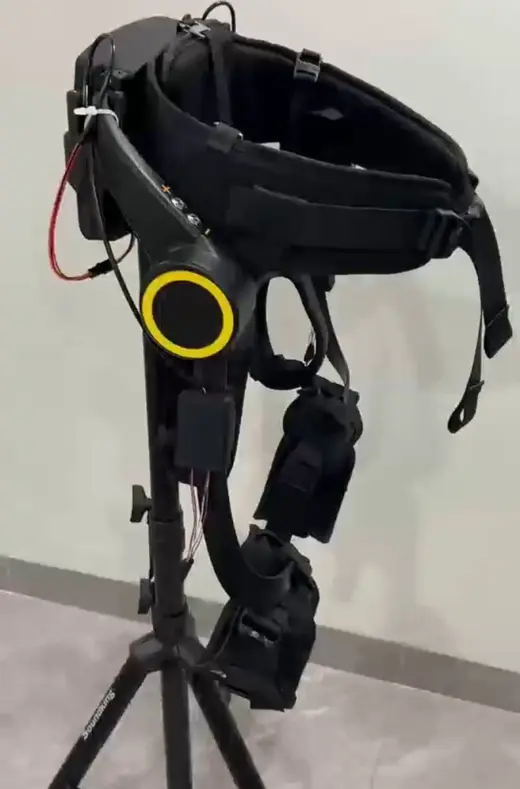
In-Depth Hands-On with the Aoshark Vitrex Consumer-Grade Exoskeleton: A 3 kg Frame, 46 N·m of Dual-Leg Assist — the Promise and the Limits of a "Physical Cheat Code"
When you hear "exoskeleton," you probably picture the powered armor from sci-fi films, or the medical-grade devices with six-figure price tags in a hospital's rehabilitation department — something that has long sat at the very top of many people's "want to try, never had the chance" list. This time, we finally got our hands on one: the Vitrex, a consumer-grade assistive exoskeleton from Aoshark Intelligence.
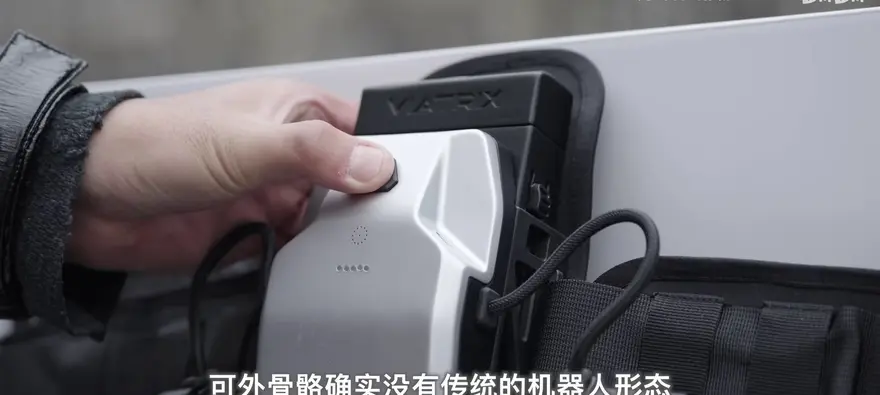
I had a great time using it myself, and I even rounded up a group of classmates to try out this exoskeleton robot together. This episode mainly covers the Vitrex unboxing, its design, and the hands-on experience. A quick note, though: Daofengti has published a great many hardware reviews, but an exoskeleton simply doesn't have a traditional mechanical form — it's neither a phone nor a camera, so the entire review process felt genuinely special for us. One more thing: this episode was created using a product from Aoshark Intelligence, so please weigh the subjective opinions for yourself.

Unboxing: Like Opening Two ATX PC Cases — Except It's an Exoskeleton
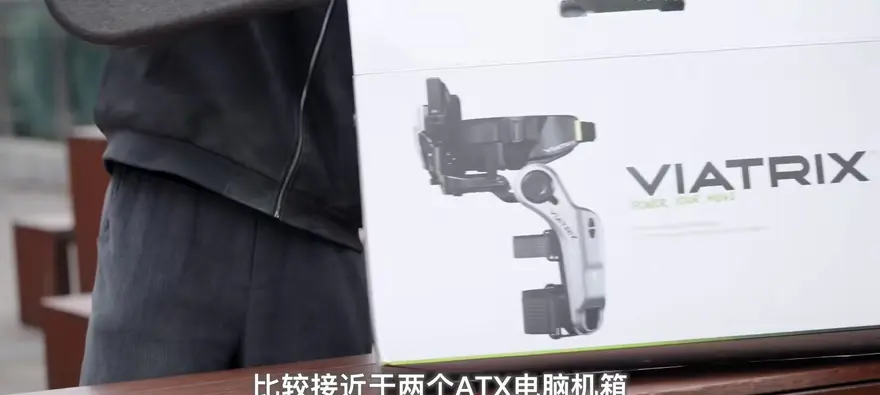
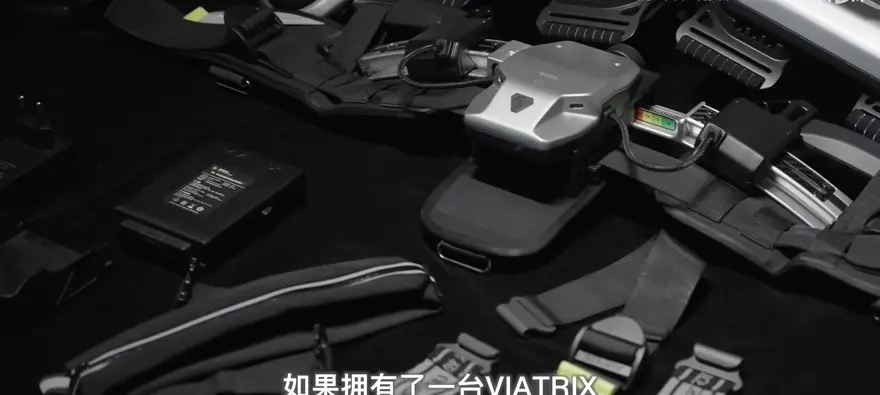
Vitrex's packaging experience exceeded my expectations — two cases sitting side by side, with a volume close to two ATX computer cases. The brand-new unit is wrapped in blue protective film, and peeling it off is the moment you truly get that "brand-new exoskeleton" sense of ceremony.
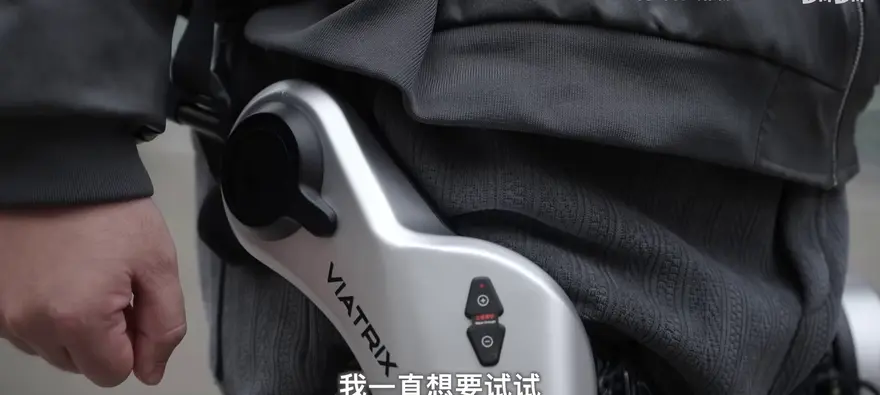
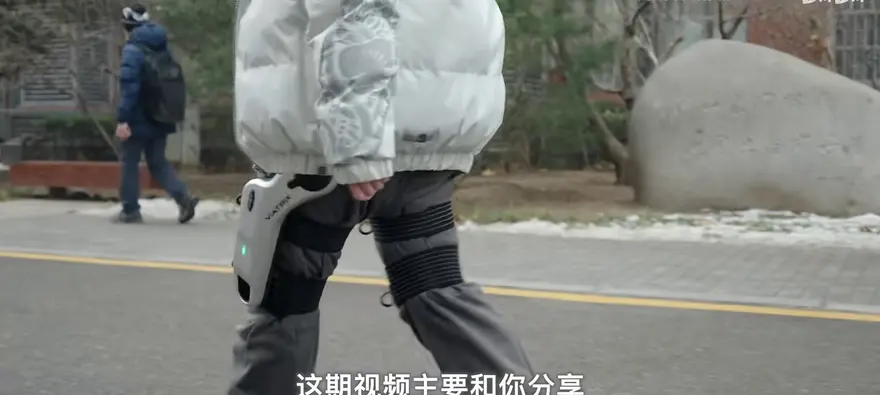
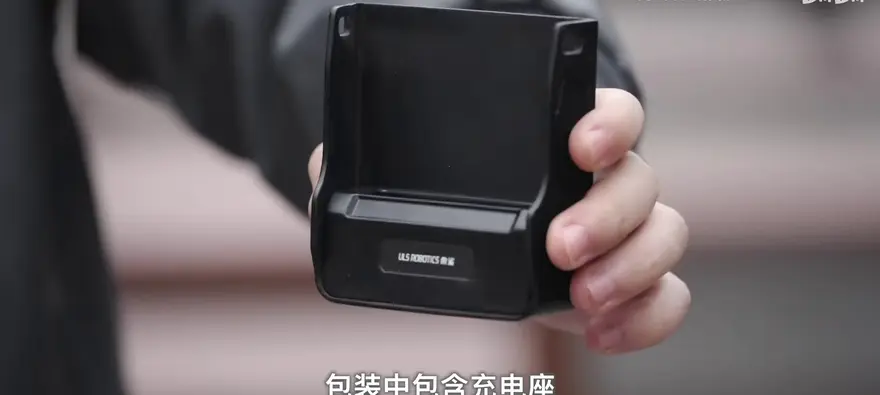
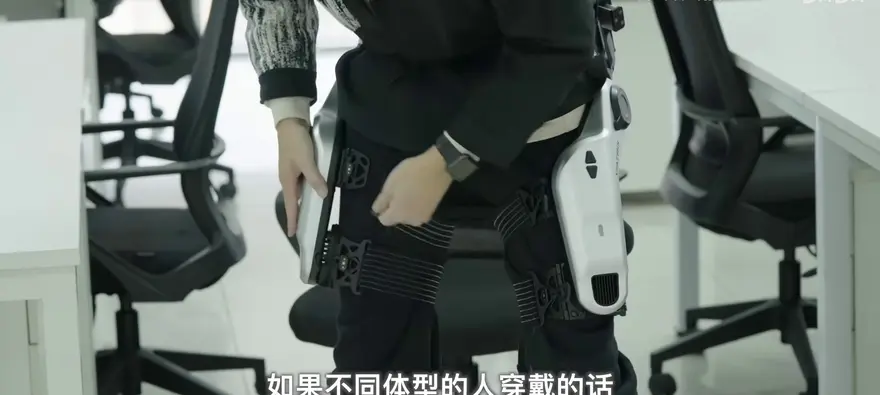
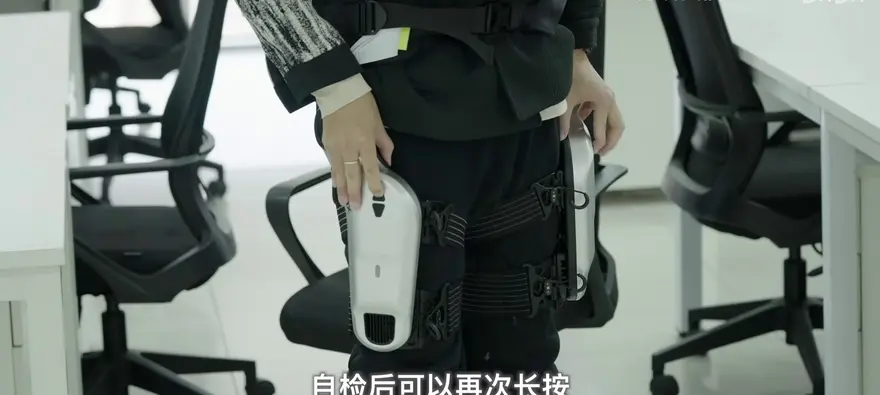
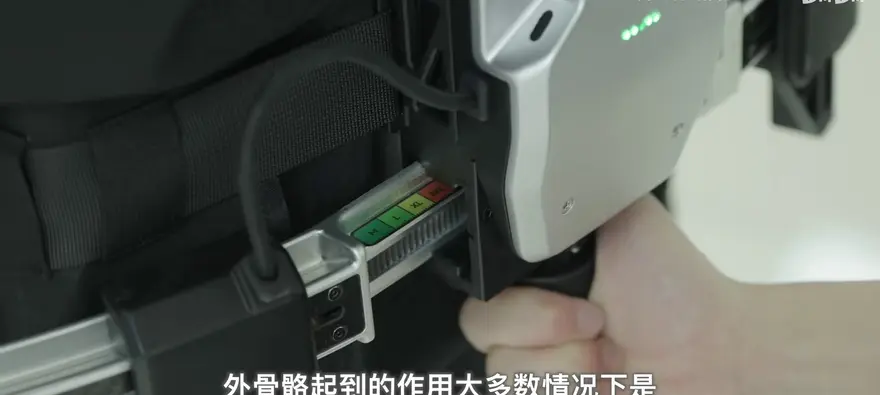
Beyond the exoskeleton itself, the package also includes a charging dock, battery, power adapter, waist pouch, and a shoulder strap. The donning process isn't complicated: first tighten the waist belt, then secure the thigh straps to ensure a snug fit. If someone with a different body type is putting it on, remember to adjust the elastic straps first before fastening the thigh straps — once you've got the hang of it, the whole routine takes just a minute or two, and the barrier to entry is far lower than you'd expect.
Specs at a Glance: 3 kg Bare Weight, 46 N·m of Assist — Lightweight Design Comes First
Let's start with the hard numbers. All figures below are as mentioned in the video:
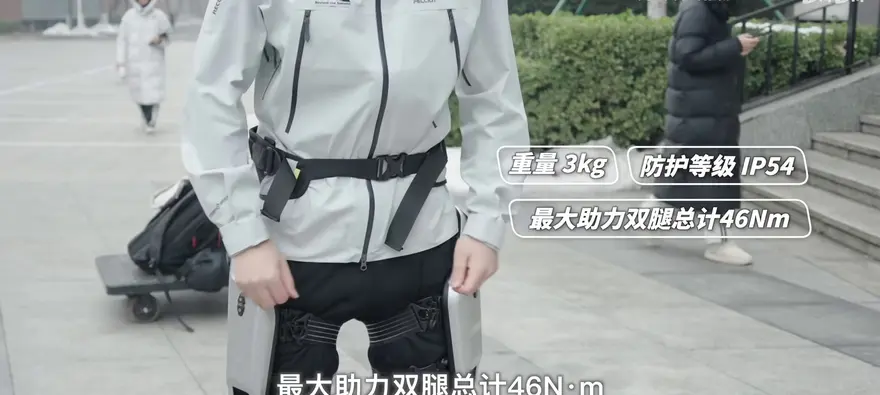
Bare weight: 3,000 g, with IP54 dust and water resistance
Max assist: 46 N·m combined across both legs (joint torque)
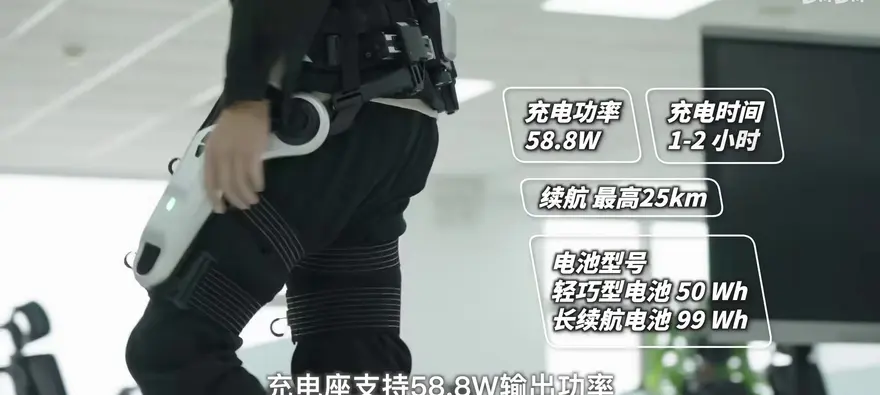
Two battery options: 50 Wh compact / 99 Wh extended runtime, with a maximum range of 25 km; the charging dock outputs 58.8 W, fully charging the compact battery in about 1 hour and the extended-runtime battery in about 2 hours
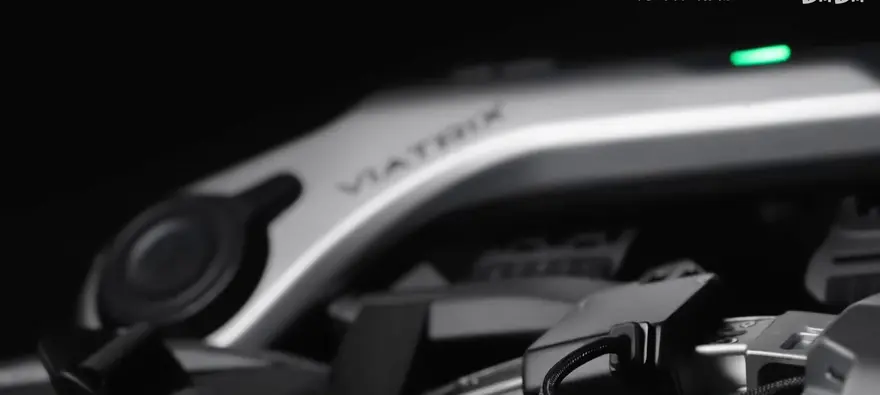
A few points worth unpacking: the 46 N·m figure is the combined total for both legs, which works out to roughly 23 N·m per leg (editor's estimate). The positioning is "helping you lift your legs," not "lifting your legs for you" — and that defines it as an assistive tool rather than a replacement. IP54 means light rain and dust on mountain hikes are no problem, but don't count on submerging it or marching through a heavy downpour.
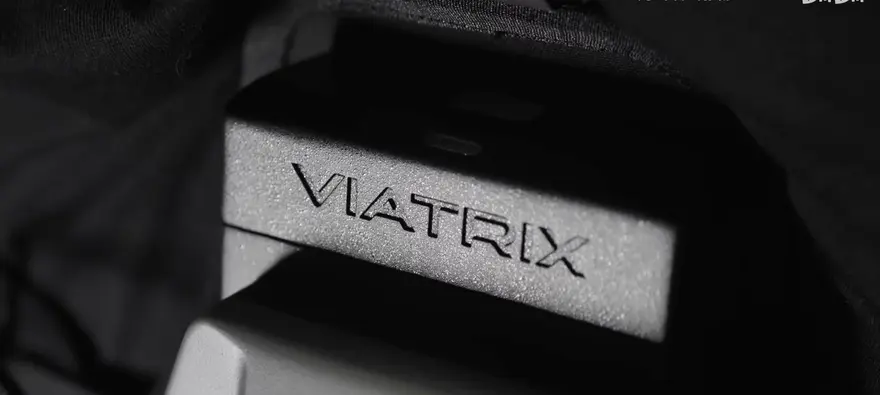
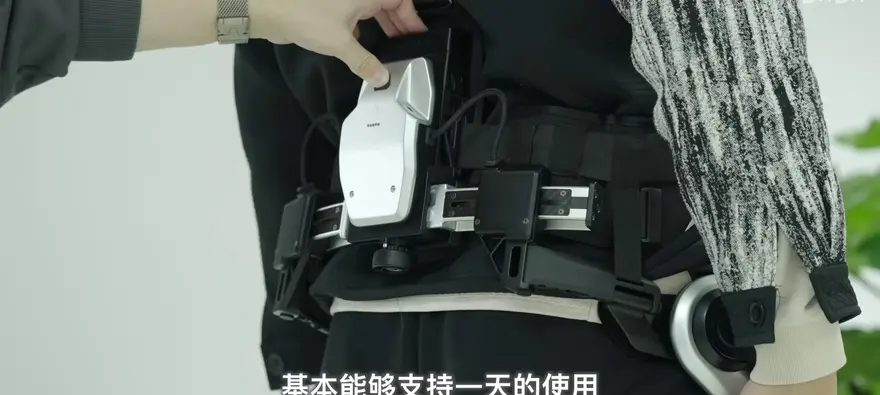
As for battery life: during filming we ran the 50 Wh compact battery, and setting out fully charged each day was basically enough to cover a full day of use. With a spare battery to rotate in, or by switching straight to the 99 Wh extended-runtime battery, you can go all day with zero battery anxiety. Interestingly, the 58.8 W charging output corroborates the claim that the extended-runtime battery fills up in about two hours — the calibration of this three-electric system (battery, motor, and electronic controls) is internally consistent.
Wearing & Operation: Button Logic with a "Keyboard-and-Mouse-Level" Learning Curve
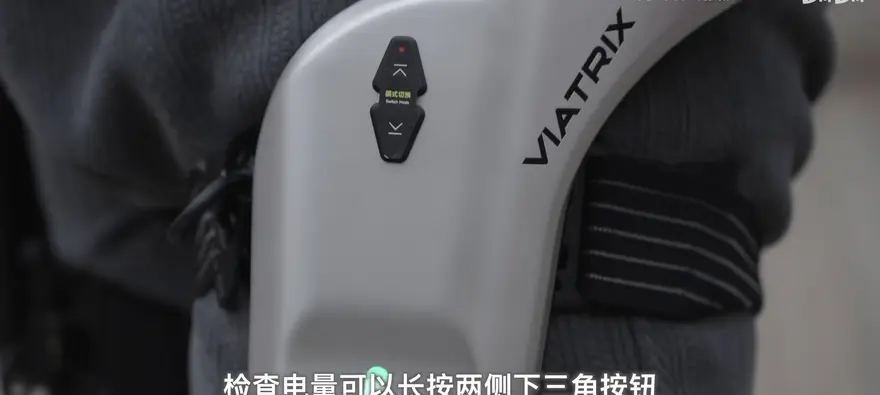
Vitrex's operation has been distilled down to the bare essentials: once you've put it on, press and hold the up-triangle buttons on both sides simultaneously to complete the power-on self-check; after the self-check, press and hold again to turn the assist on or off. The left-leg button switches modes, while the right-leg button adjusts the torque level; press and hold the down-triangle buttons on both sides to check the battery level. No app dependency, no complicated menus — this absolutely deserves praise.
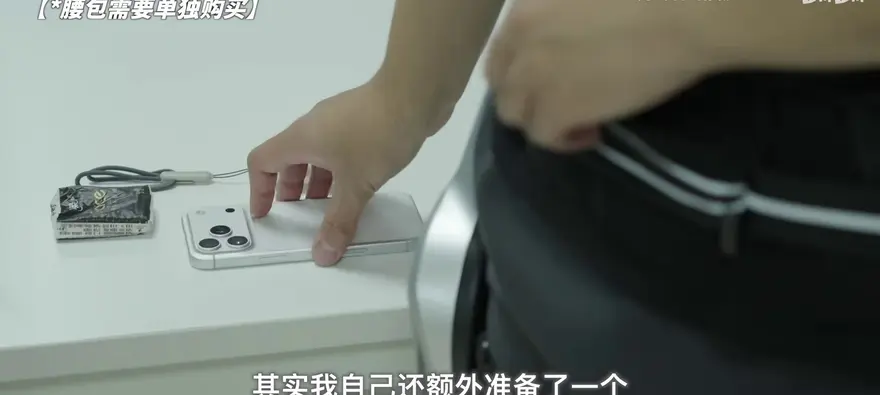
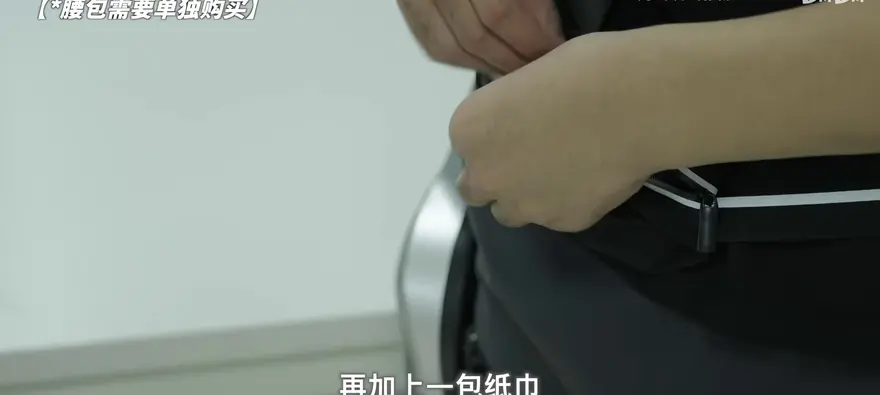
Two accessories also deserve a mention of their own. The waist pouch looks tiny — I even brought a spare one of my own, only to find it completely unnecessary: the included pouch fits a China-market iPhone 17 Pro Max (silver, 512GB), AirPods Pro, and a pack of tissues, with room to spare for other small items.
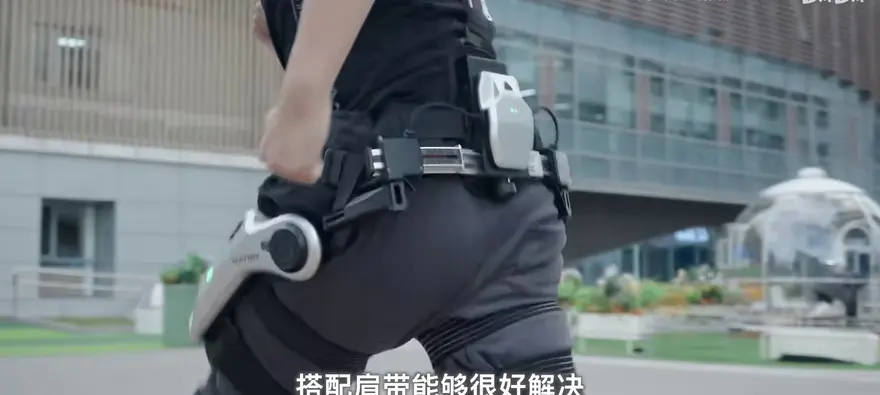
The shoulder straps, meanwhile, solve a pain point common to all exoskeleton products: when wearing the exoskeleton, they reduce the load on the hips and shift part of the weight onto the shoulders, making extended use noticeably more comfortable. It's the 3 kg body combined with the weight distribution from the shoulder straps that makes "wearing it all day" actually possible.
AI Adaptive + Impedance Mode: The "Throttle" and "Brake" of This Exoskeleton
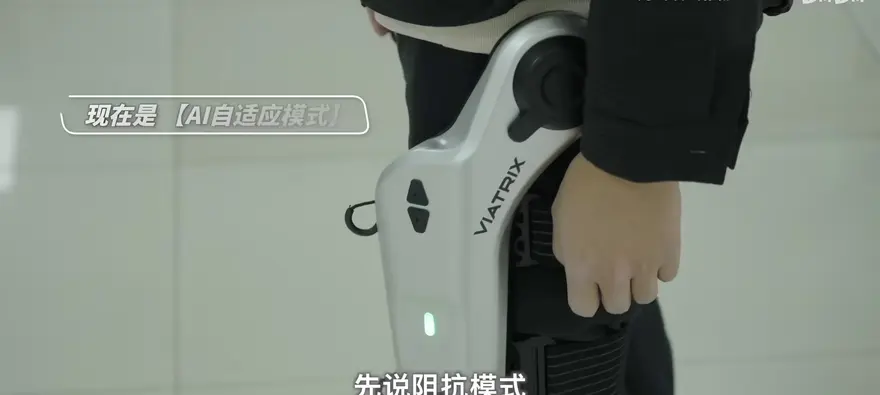
In everyday use, you'll really only touch two modes: AI Adaptive Mode and Impedance Mode. Plainly put, it's the difference between an "effort-saving mode" and an "effort-building mode."
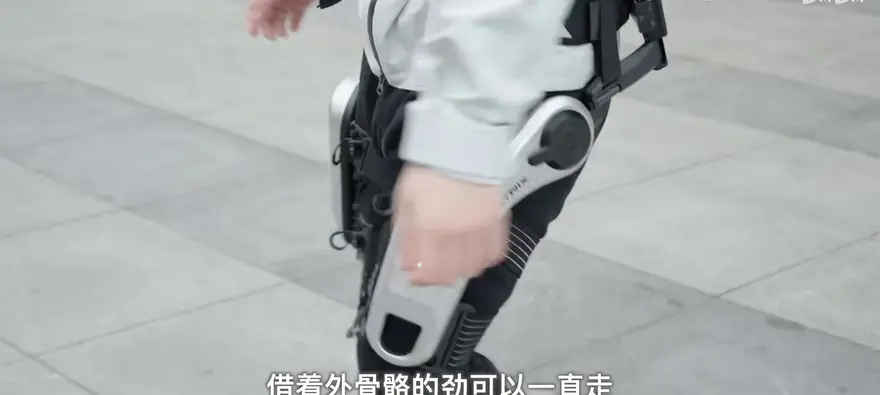
AI Adaptive Mode is the effort-saver. It needs to learn the wearer's gait and cadence — after roughly ten normal steps, it starts delivering assist, letting the exoskeleton help lift your legs. In practice: the first few steps "feed" your cadence and stride to the algorithm, and from then on your thighs no longer have to keep pushing — you can keep walking on the exoskeleton's power; when you need to stop, just plant your feet with a bit of extra force. Most of the time, this machine's core function boils down to two things: saving effort, or lifting your legs.
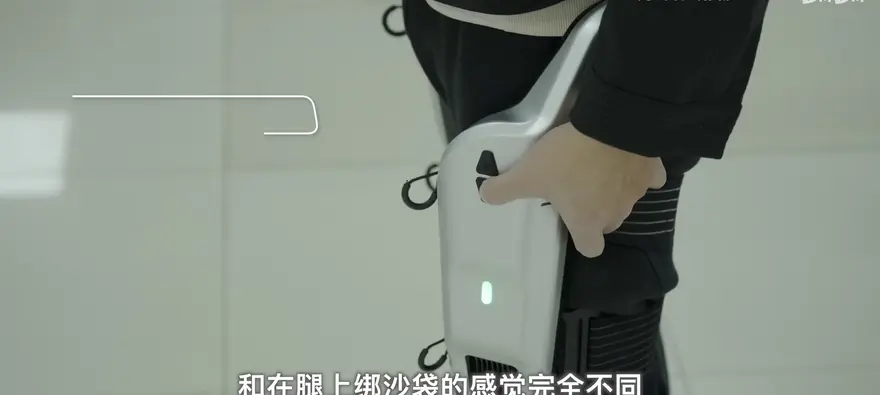
Impedance Mode takes the opposite route: it applies adjustable, stepped resistance through the thigh joint motors, making your legs work harder with every movement to boost your workout efficiency. The feel is nothing like strapping a sandbag to your leg —
A sandbag simply pulls straight down, whereas Impedance Mode delivers continuous resistance throughout the motion (as mentioned in the video)
By now you've probably seen where this is going: Impedance Mode also shines when descending mountains or going down stairs. On a downhill, your thighs perform continuous eccentric "braking" work, and the adjustable resistance acts exactly like a brake pad you can tighten or loosen — keeping your pace in check while turning the descent into a workout. One device, two philosophies: this is the cleverest part of Vitrex's functional design.
Floating Hip Joint and the "Coolest-Looking Back": Real Thought Went Into This Industrial Design
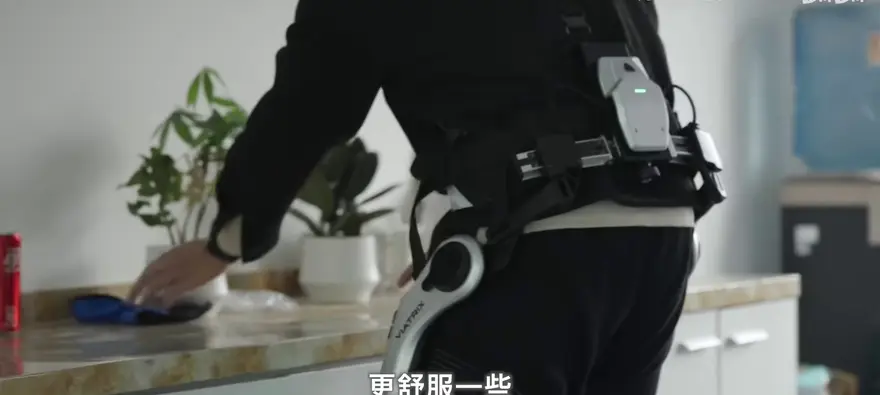
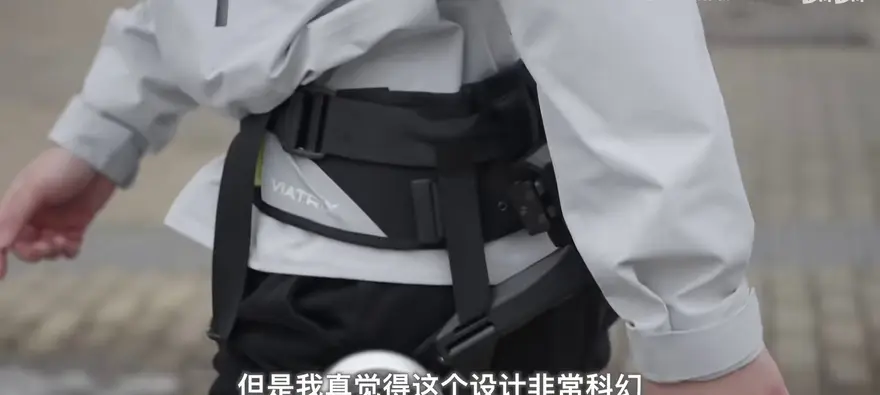
Honestly, the back of the Vitrex is the best-looking of any exoskeleton I've ever seen — a highly subjective claim, I know, but I genuinely think this design looks straight out of science fiction.
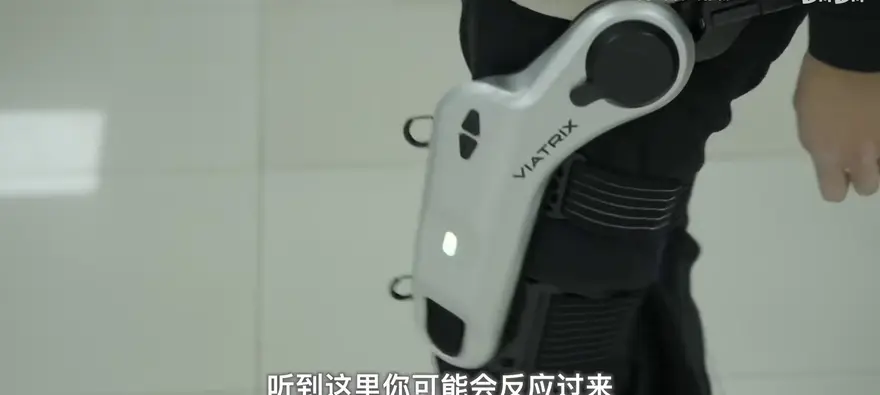
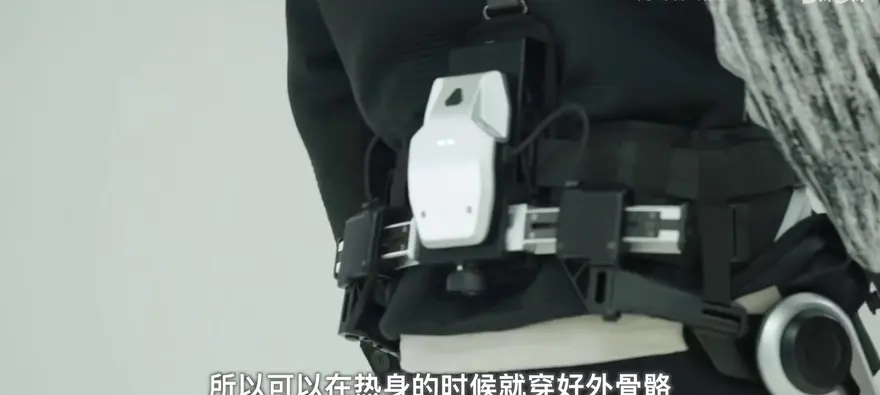
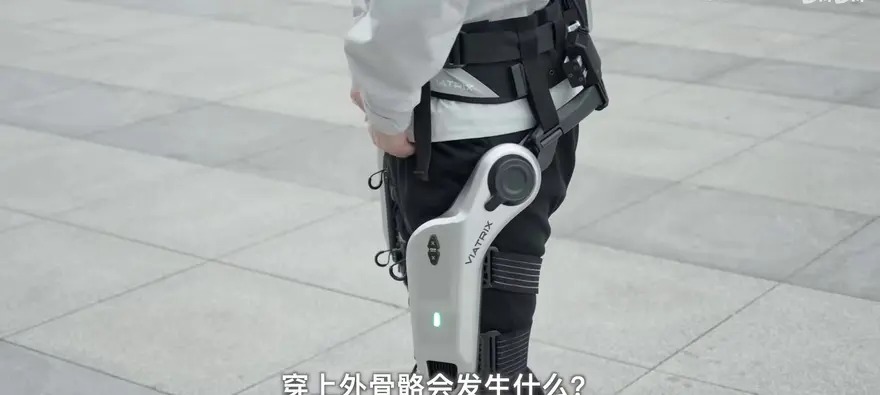
Beyond the looks, there's practical logic at work: once you put it on, you'll notice the exoskeleton doesn't restrict any leg movement, and the key lies in this floating hip joint — it automatically repositions itself as your legs move. That means you can even wear the exoskeleton through your warm-up; high knees and stretches come with zero sense of mechanical interference. That's a rare degree of freedom among lower-limb exoskeletons.
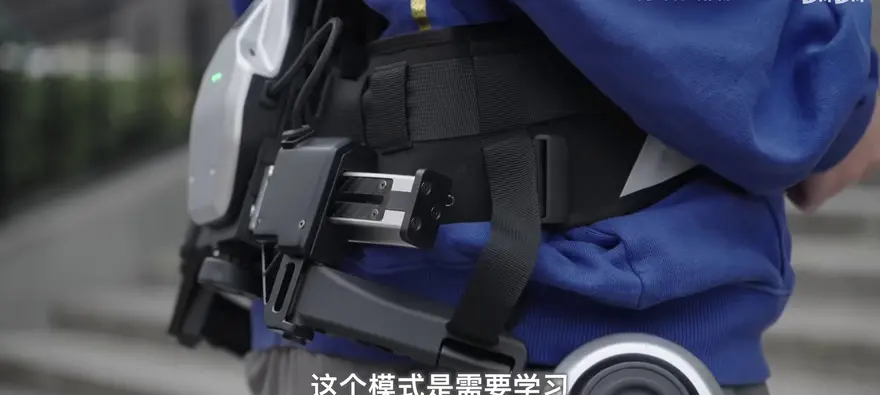
The width of the hip joint can also be adjusted manually, accommodating users of all body types. Combined with the elastic strap adjustments and the three-size fitting logic mentioned earlier, Vitrex has clearly put serious thought into "one unit for the whole family" — and that's precisely what separates consumer-grade products from custom industrial equipment.
Real-World Testing: "Noticeably Less Effort" for Stairs and Walking, but Intense Activity Means Facing the 3 kg Head-On
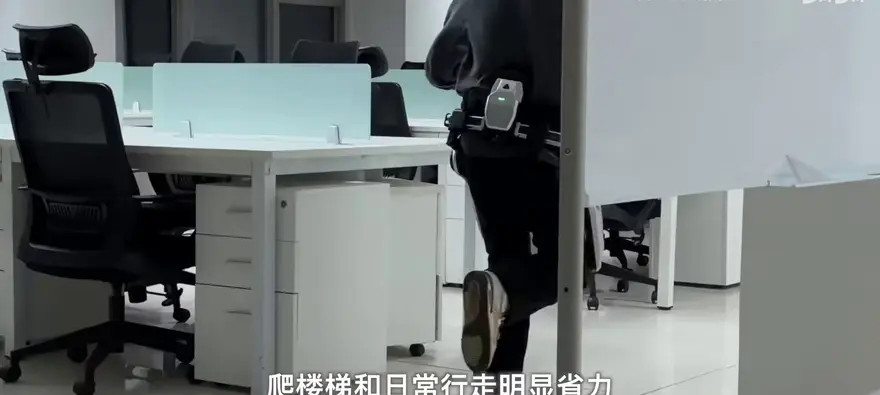
We brought in a group of students to try out the exoskeleton, and their feedback was largely consistent: climbing stairs and everyday walking felt noticeably easier—that alone deserves a major thumbs-up. There was also a perceptible assist during running and jumping, but with relatively intense activities, the weight of the exoskeleton became clearly noticeable; fortunately, pairing it with the shoulder straps largely solves the problem.
This result actually aligns well with physical intuition: 46 N·m of assist is "timely support in a moment of need" for low-intensity cyclic movements like walking and stair climbing, but for high-power outputs like running and jumping, it's more like "icing on the cake." So don't expect to smash your PB while wearing it—what it optimizes is endurance, not explosive power.
Final acknowledgments: Special thanks to the VLite Studio club at Beijing Forestry University for helping with the shoot and joining the hands-on trial—having multiple users cross-try the exoskeleton also served as indirect validation of its adaptability across different body types.
An Unexpected Discovery — and a Clear Boundary
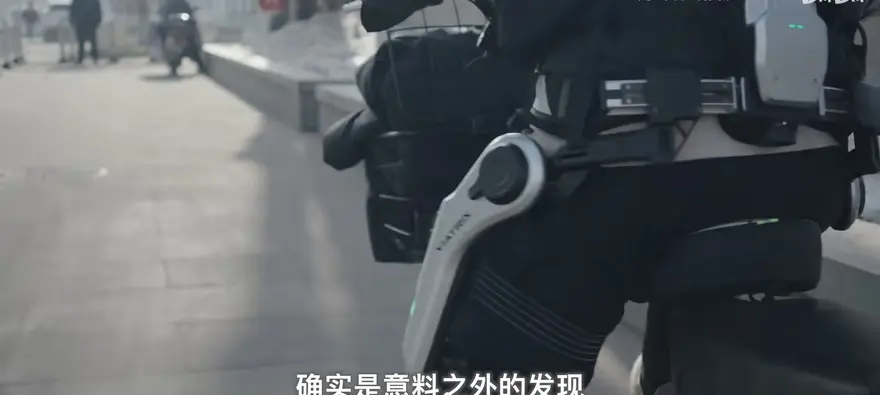
During the shoot, we also tested a few specific scenarios: the exoskeleton can deliver assist while cycling, and it can even provide assist when riding an e-scooter kick-style — pushing off the ground and gliding. A genuinely unexpected discovery.
But there's also a clear boundary: wearing the exoskeleton in a ride-hailing car keeps your back from resting flat against the seatback. So the conclusion is pretty clear —
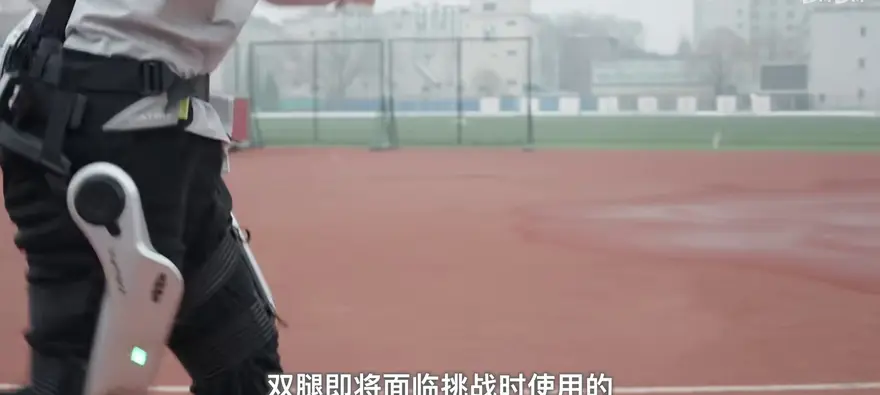
This exoskeleton is, quite simply, a sports exoskeleton for the moments when "your legs are about to face a challenge" (as mentioned in the video)
In other words, it's "on-site gear" for hiking and trekking assist scenarios: stow it in the car and strap it on at the trailhead — not wear it from your front door all the way to the office. This positioning brings back the feeling I had when I first saw a seriously cool photo:
If the Apple Watch Ultra embodies the city dweller's deep-down yearning for the wild, then the Vitrex is the product that physically helps you take that step
Opinion: From "Effort-Saving Tool" to Human-Machine Collaboration — Has the Consumer-Grade Exoskeleton Reached Its Tipping Point?
What happens when you put on an exoskeleton? "It saves effort" is most people's first reaction. But put another way: this is a way for humans to work side by side with robots — pushing the limits of human physiology to reach endurance, distance, and speed that were simply out of reach before wearing an exoskeleton.
This kind of collaboration blurs the boundary between flesh and machine, letting us stay in control and keep our creativity even as we master our tools (as mentioned in the video)
Viewed against the industry landscape, this move carries even more weight. Aosha Intelligence has long excelled at industrial-grade lumbar assist and upper-limb assistive exoskeletons, and Vitrex is its strategic play to bring that B2B expertise down into the consumer-grade market. On the hiking/trekking assist track, players like Hypershell and Dnsys already focus on outdoor walking assist; Yuanye Tech is exploring lightweight, body-worn assist; and outdoor brands like Toread are following suit. Meanwhile, the rehabilitation exoskeletons that teams like Chengtian and Kenqing have beening—no, pardon—deeply invested in are mostly medical-grade, following a product logic entirely separate from consumer-grade devices. You can't hold a consumer product to the framework of medical equipment, and vice versa.
Looking ahead at Aosha, I have two clear expectations — the same directions flagged at the end of the video: first, a knee exoskeleton; second, an exoskeleton that can substantially raise load capacity. The former would put real substance behind downhill fall protection; only the latter can answer the genuine pain points of field workers. Once price, weight, and the assist curve all close in on the tipping point, consumer-grade exoskeletons could well go from geek toys to standard outdoor gear within two to three years — and Vitrex is, for now, a rather convincing sample of that.

Top Community Comments
"This price... it's okay, I guess? [thinking]" — @GoldenPony (167 likes)
Takeaway: The video never revealed an actual price, and that hesitant "it's okay, I guess?" captures the public's core doubt about consumer-grade exoskeletons — are they productivity gear that solves a real need, or just a novelty toy for a handful of geeks? The price anchor will directly determine whether this category can break out of its niche.
"Will we see exoskeleton products down the line that transfer load to the ground for assisted weight-carrying while also providing thigh assist? That matters hugely for field workers who hike up fully loaded and come down fully loaded — or even overloaded. [star-struck]" — @BingPing (96 likes)
Takeaway: This comment calls out a gap in Vitrex — and across the entire consumer-grade space: load-carrying scenarios. Hikers, surveyors, power-line inspectors, firefighters — people who "hike up fully loaded and come down overloaded" don't need help lifting their legs; what they need is for the weight of a 20–30 kg backpack to be transferred straight to the ground. That's a different technical route, and it echoes the creator's call for "exoskeletons that dramatically increase load capacity.Full-body, ground-contact exoskeletons aren't far off" — @StarPicker_sinter_studio (90 likes)
Takeaway: Echoing the previous comment, this reflects hardcore users' read on where the product form factor is headed — from the "partial assist" of hip assist toward a full-body frame that routes the payload down to the ground for true "full-body load-bearing." It's also a hint for manufacturers: the next competitive battleground may not be torque numbers, but structure and load-transfer paths.
These three top-liked comments neatly sketch out the three layers of user concern around consumer-grade exoskeletons today: price and mass adoption, the gap in professional load-carrying scenarios, and the next step in product-form evolution. They are, in effect, the three coordinates for judging how far this industry is from its breakout moment.
One-Sentence Summary
The Aoshark Vitrex is one of the few finished products that genuinely brings industrial exoskeleton expertise down to the consumer grade — the effort savings are real, it's ready to go in just ten steps, and its floating hip joints deliver a rare degree of wearing freedom, while its 3 kg weight also defines its limits: it's an athletic power-up built for the moments when "your legs are about to face a challenge," ideal for hiking and trekking enthusiasts, stair-climbing commuters, and geeks eager for an early taste of human-machine collaboration; if you're expecting substantial load capacity or all-day wear, you may want to wait for the upcoming knee-joint and high-payload follow-up models.
About this article: part of Chinese-Made Exoskeleton Review Archive — an independent, regularly updated English archive of reviews of consumer exoskeletons made in China, edited from publicly available video transcripts. Not an official manufacturer page.
For inquiries and purchasing, contact lonlonago@foxmail.com. More in Reviews · All articles.