Wearing an Exoskeleton to Climb Songshan for 5.5 Hours with 53% Battery Remaining: A Definitive Real-World Test of a Consumer-Grade Hip Assist Exoskeleton
1. Challenging Songshan: A "Real vs. Fake Exoskeleton" Showdown
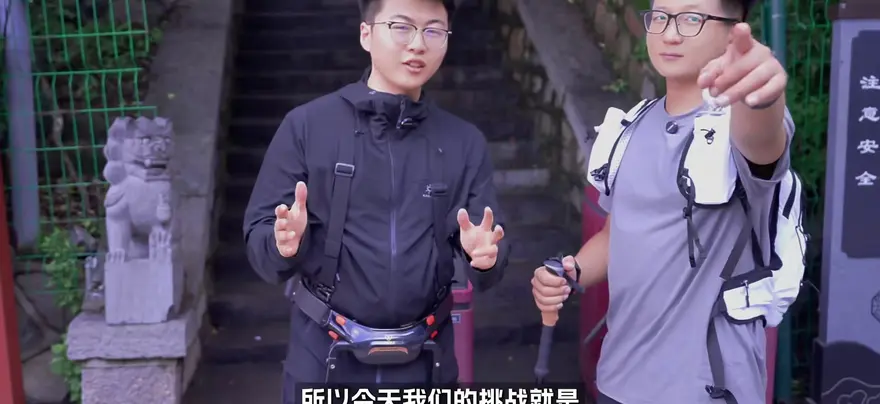
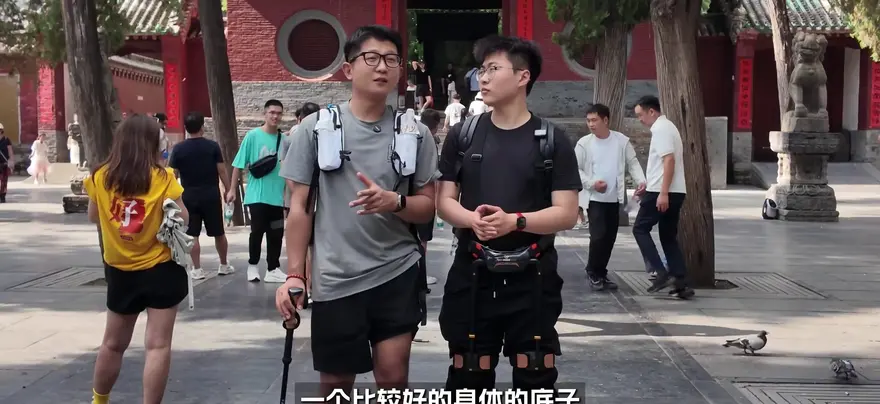
This is an outdoor controlled experiment by the creator and his partner Yang — taking on the climb up Songshan. The rules are simple yet carry a faint whiff of "cheating": one person genuinely wears an exoskeleton, while the other only pretends to (without actually wearing one).
Both backpacks are loaded with standard outdoor essentials: hardshell jackets, water, and energy supplies. The only difference is that the creator has slipped in an extra exoskeleton unit.
"How is someone cheating?"

The subtext of this head-to-head is crystal clear: how much tangible gain does an exoskeleton actually deliver for hiking? Is it genuine assist, or just psychological comfort? To answer that, the fairest approach is to have one person wear it and the other go without, both climbing the very same mountain.

II. Wearing Experience: A 2 kg Weight That Becomes "Barely Noticeable" Once Distributed Across the Shoulder Straps
The whole exoskeleton weighs about 2 kg (roughly four jin), as mentioned in the video. That doesn't sound particularly light, but the actual wearing experience is described as "pretty nice."

The key lies in the force-distribution design. Once the shoulder straps are added, the weight is spread across the shoulders, waist, and legs, so prolonged walking doesn't create a single pressure point.
"Especially after adding a shoulder strap, the feeling of wearing it isn't that noticeable — it's only 2 kg in total."
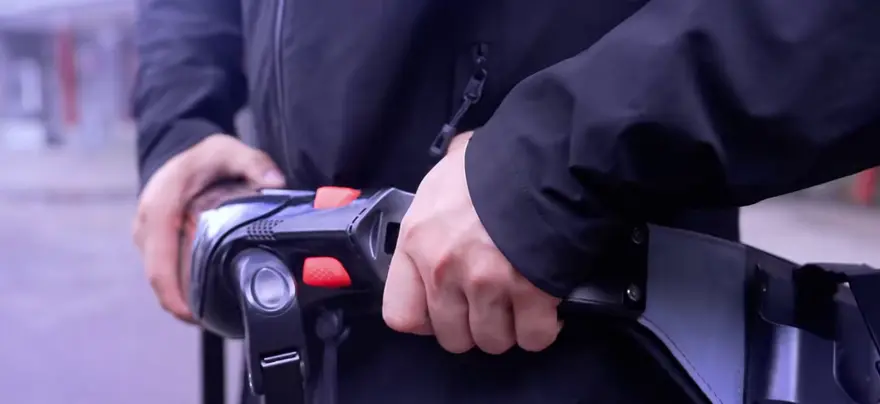
The creator admits he "doesn't exercise much day-to-day," which is exactly the typical target-user profile for a consumer-grade assistive exoskeleton — not athletes chasing peak performance, but ordinary people wanting to turn "manageable" into "effortless."
III. The Assist Philosophy: Not "Making You Fly," But "Keeping You From Stopping"
This is the most core viewpoint of this episode. The creator has a very clear-eyed positioning of this exoskeleton:
"Perhaps the exoskeleton is more of a safety net for you... It doesn't deliver a particularly high boost; it might just let someone who doesn't exercise much reach the level of a fairly active ordinary person."
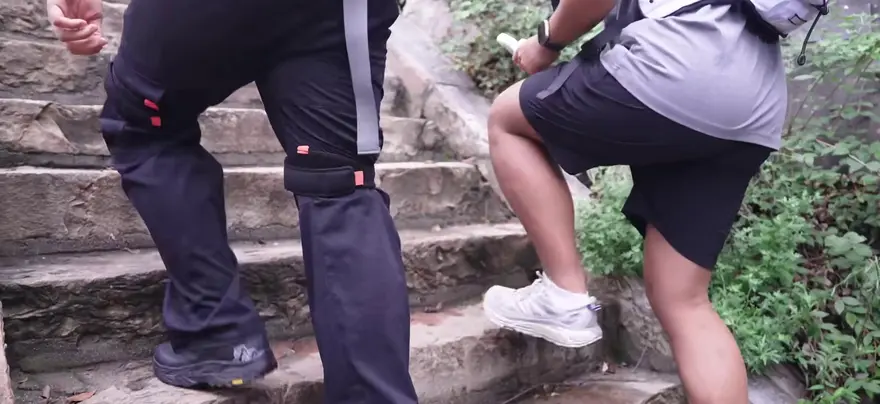
In other words, it's not the kind of enhancement armor from sci-fi movies where "you put it on and can run and jump." Instead, it lifts your floor. For a sport like hiking where "stopping is the biggest fear," the safety-net significance is huge—once you stop, both your cardio and your willpower are hard to restart.

After reaching the middle section, the creator summed it up even more bluntly:
"It just gave you a floor support, so at the very least you won't stop. Because with hiking, the thing you fear most is stopping—once you stop, it's really hard to start again."
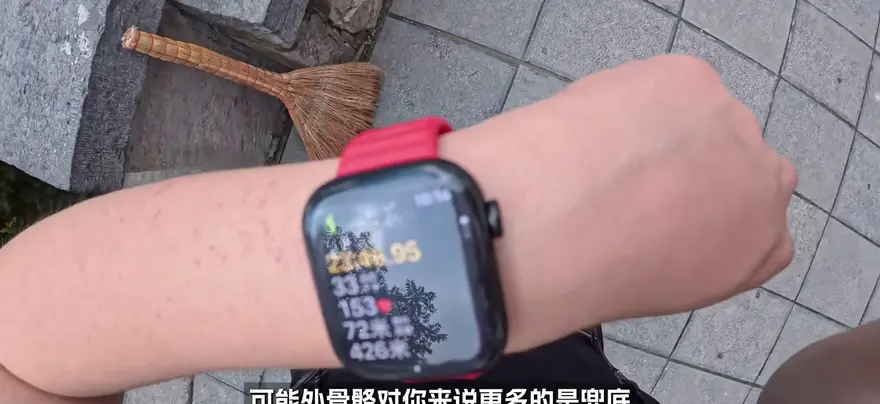
IV. Intelligent Perception: Recognizes Uphill, Downhill, and Stairs with Millisecond-Level Response
This is the most technically sophisticated part of this exoskeleton. It's not just mechanical assist — it has gait recognition capability:
"It can sense whether I'm walking uphill or downhill, whether I'm walking on flat ground or climbing stairs, and it delivers the same level of assist either way."

Behind this is a closed-loop system of "algorithm + motor": sensors continuously capture gait, stride, and speed, while the servo motor adjusts the output joint torque in real time based on these parameters.
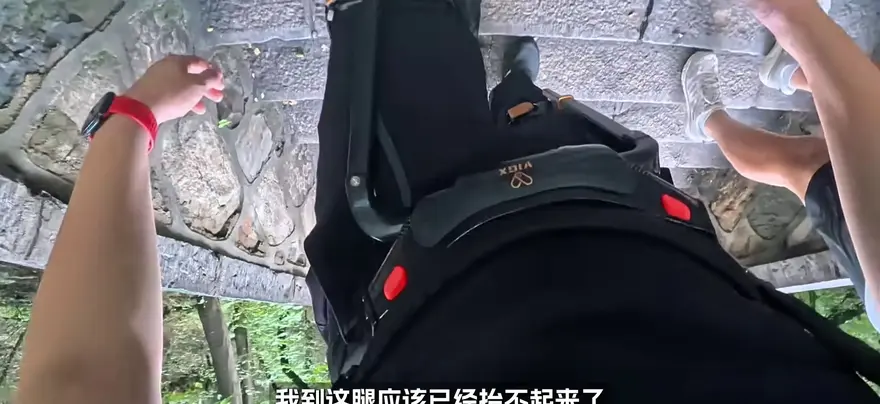
"You need the algorithm and motor to be matched, delivering a continuous force… it's a continuous adjustment, persistently adapting to your different gaits, different strides, and different speeds — and the response time is at the millisecond level."
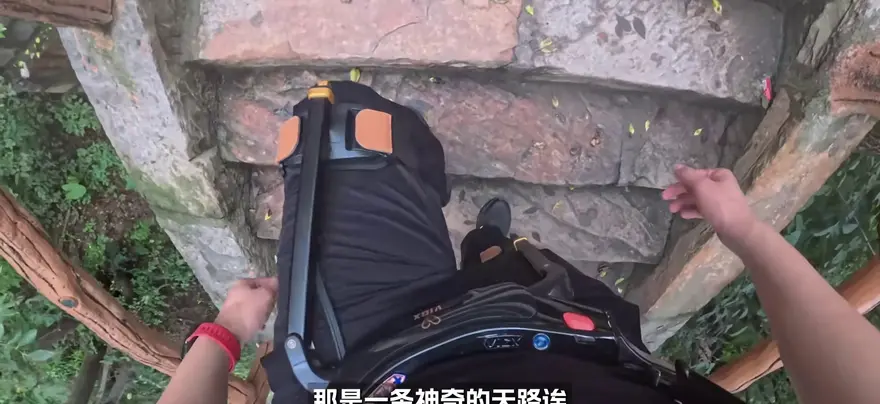
Millisecond-level response means the assist "follows" the user closely — eliminating any sense of disconnection like "I haven't even lifted my leg yet, but the machine already pushes me forward." However, UP also noted a boundary case: when stamina declines, keeping it on the highest gear can occasionally cause the machine to "jump the beat."

5. Battery Life Tested: 100% After One Hour of Climbing, 53% Remaining After 5.5 Hours
Battery life is the most surprising data point in this review.
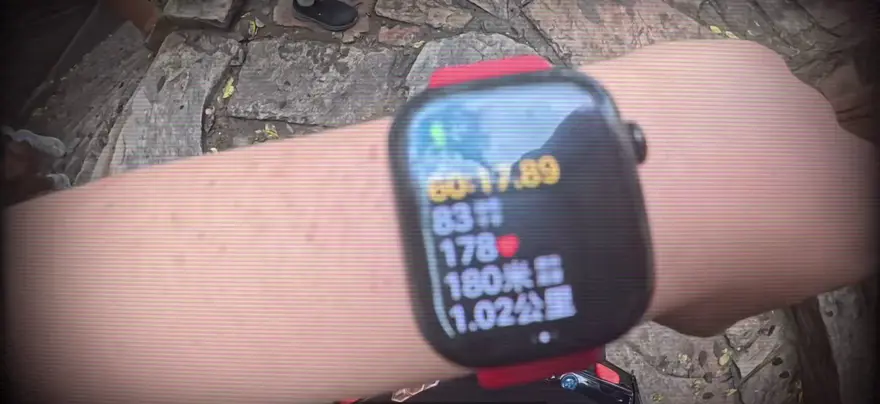
After one hour of climbing, the battery still shows 100% (mentioned in the video).
After 5.5 hours of climbing, the battery still has 53% remaining (mentioned in the video).
"After 5.5 hours of climbing, there's still 53% battery left. The battery life truly exceeds expectations."
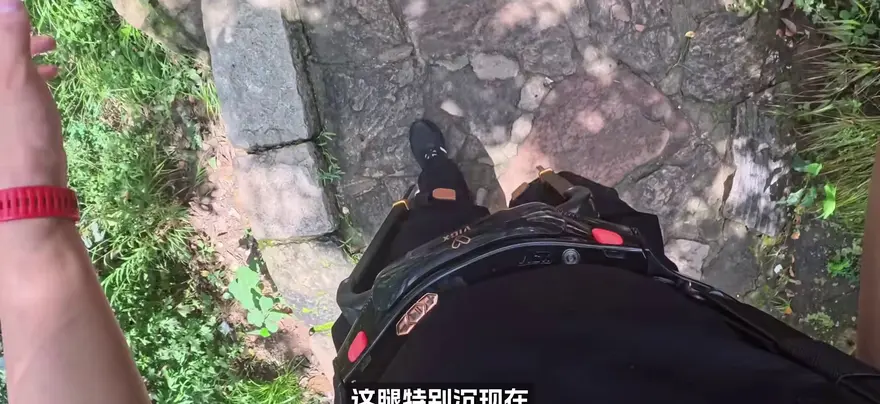
Extrapolating from this discharge curve, supporting a full day of moderate-intensity trekking on a full charge is entirely feasible. For hiking/trekking assist scenarios, battery anxiety is significantly alleviated — this is also the key metric determining whether consumer-grade exoskeletons can break free from the "novelty toy" positioning.
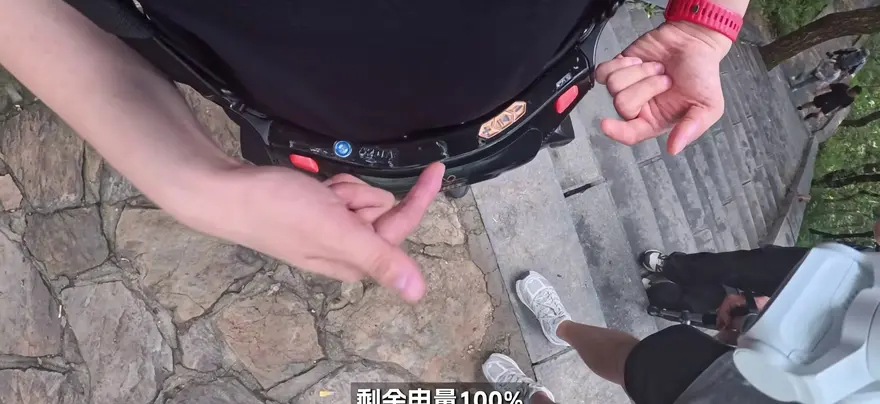
VI. Power-Off Comparison: After Taking It Off, Legs Feel Like "An Astronaut Returning to Earth"
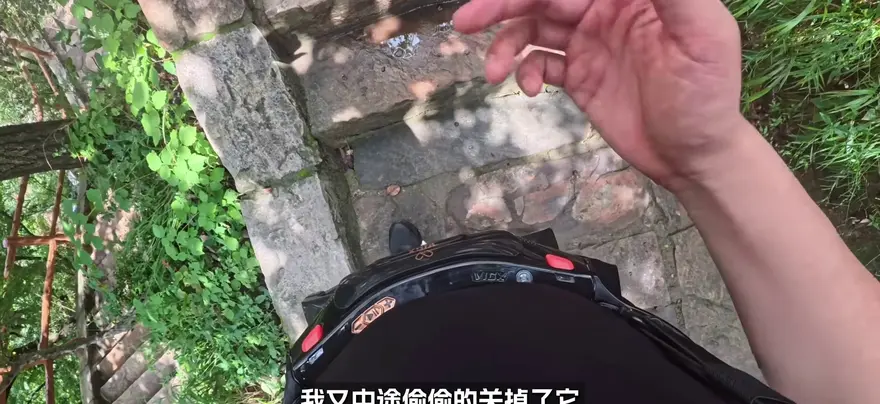
The most convincing experience came from a "midway stealth shutdown." After getting used to the assist, the creator quietly powered off the unit and climbed 30 steps relying purely on their own strength.
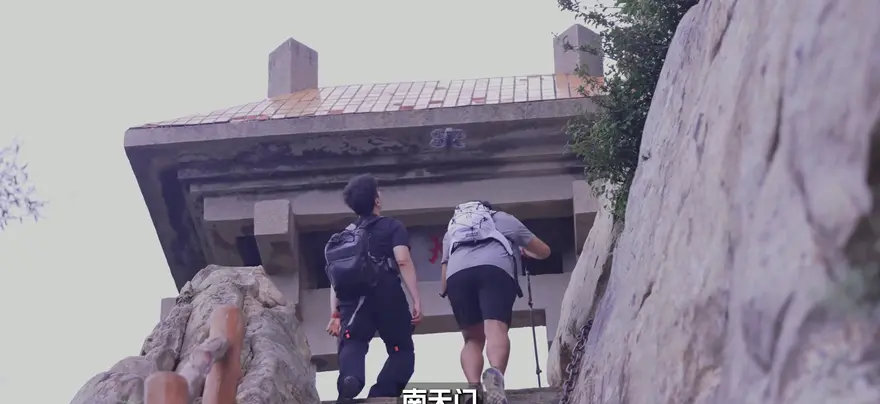
"It's so heavy... these legs feel really heavy... to exaggerate a bit, it's kind of like an astronaut just back on Earth from the Moon."

This "sense of contrast" is exactly what proves the assist was working continuously—what felt like "nothing much" was simply the machine constantly sharing your load; the moment it's taken away, the previously masked fatigue surfaces instantly.

This also leads to a usage tip: stamina is consumed continuously. When your limbs can no longer hold a certain gear level, you should actively downshift rather than forcing yourself to stay at the highest gear.
"If it stays in a stable state, you actually won't fully adapt to it."

7. All-Day Wear: Sitting, Walking, Layering a Jacket — All Unaffected
The creator wore it for an entire day, roughly 5 hours, and logged the "all-weather" wearing experience:

- Sitting: No noticeable intrusive feel ("After wearing it for a while, this exoskeleton actually doesn't feel like a foreign object at all").
- Walking: It "fuses with the body," without getting in the way of a normal gait.
- Layering a jacket: When it gets cold, just throw a jacket on top — zero impact on wearing it.
"Whether you're sitting or walking, after wearing it all day today... there's no strong intrusive feeling, and it doesn't put much pressure on me either."

This points to a key judgment: for consumer-grade exoskeletons to genuinely break into everyday mass use, "low presence" matters more than "powerful assist." Professional rehabilitation exoskeletons can afford to be bulky because they're used inside hospitals; consumer-grade ones must achieve the feeling of "put it on and forget it's there."
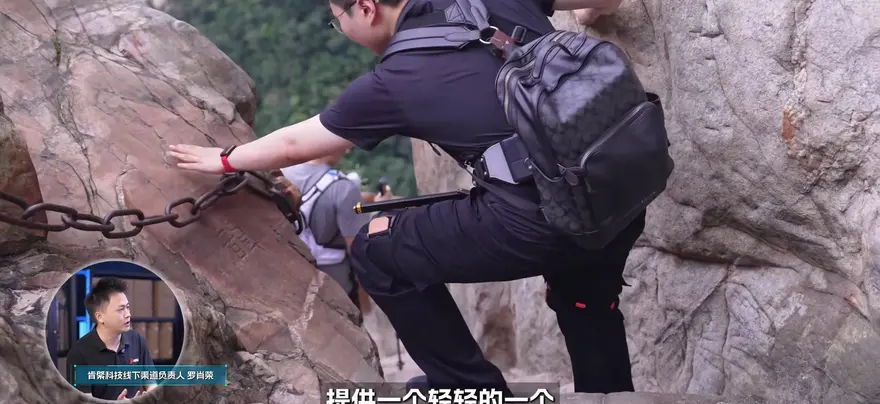
VIII. Target Users and Product Boundaries: Exoskeletons Can't Replace Cardio and Baseline Fitness
After reaching the summit, the creator offered a sobering reminder — the exoskeleton isn't omnipotent:
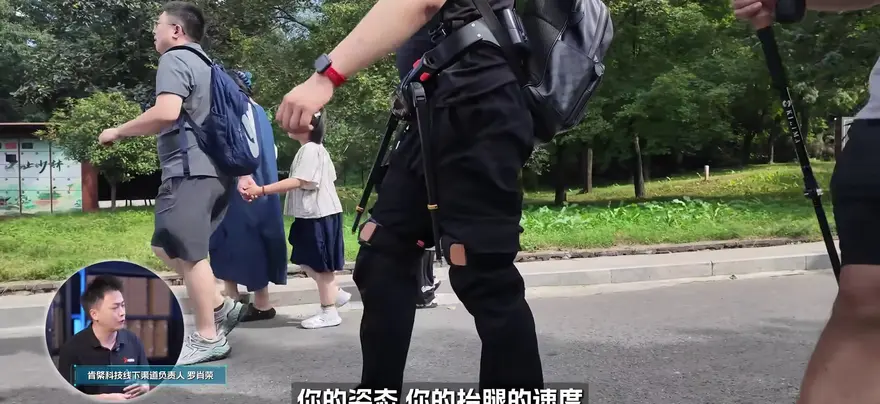
"No matter what product it is, I still hope everyone can maintain a solid physical baseline, especially strong cardio capacity, along with fairly agile running and jumping ability."

Hiking and trekking place heavy demands on cardio, leg strength, knee joints, the core, and the lumbar region. An exoskeleton can share the lower-limb load, but it can't replace cardio training. In other words, the exoskeleton is an amplifier, not a substitute — the worse your baseline, the more limited the room it has to amplify.

This also echoes the "floor-raising" positioning from Section 3: it lifts sedentary people up to the level of an average mover, but it won't turn an average person into an athlete.

IX. Post-Doffing Recovery and Final Verdict
After descending the mountain, the creator removed the exoskeleton and packed it back into the backpack. The moment it came off, the pressure on the waist and shoulders noticeably decreased — but "it's the legs that are tired."

"At first, the exoskeleton did help relieve a lot of pressure on my legs, but after taking it off this time, I still needed to adapt to walking with my legs under my own power. However, this recovery process won't take long — probably just a couple of steps before I adjust."

This shows that the exoskeleton doesn't truly "replace" the work your legs do (as the professional viewers in the comments section also pointed out); rather, it continuously shares the load. The brief heaviness felt after doffing is simply the transition of the muscles switching from "assisted mode" back to "fully autonomous mode."

Ultimately, the creator offers a measured yet clear-eyed assessment: battery life exceeds expectations, the wear is imperceptible, and intelligent sensing is on point — but it's a "safety net" tool, not a "cheat code."
Top Community Comments
@Slay0r815 (66 likes): I bought one of these for my mom, but returned it after a trial. First, the whole device is still too heavy. Plus the main unit hangs in front, constantly pulling on the lumbar spine. Second, the rods sit on the front of the thighs, relying on an inner sliding rod to adapt to different leg lengths—not a good approach. Third, for the weight you have to strap on, the functionality is pretty limited.
Interpretation: This comment is highly instructive—it exposes the real pain points of consumer-grade exoskeletons in the market segment most hoped to benefit: the elderly and those with limited mobility. The issues are weight, wearing structure (front-hung main unit pulling on the lumbar spine), the adaptability of the front-thigh sliding rod, and single-purpose functionality. The creator found it "light" because he is young and in decent shape; for the elderly, those same two kilos are a different story. This is a classic signal of a mismatch between product definition and target audience.

@Qingfeng Qingjiu Yu Mingyue (35 likes): The title and intro were both written with AI, huh.
Interpretation: This reflects the trust cost of tech-review content under AI-assisted production. When the title and body style feel disjointed, viewers instinctively question the content's authenticity—which is especially fatal for outdoor reviews that sell themselves on "real-world testing."

@Dayoujiang Huashui (23 likes): A follow-along exoskeleton only helps you carry the load—your own legs still have to walk exactly as far as they have to walk, not saving you a bit of effort. Only the neural-control kind that helps disabled people walk can actually drive your legs.
Interpretation: This technical comment hits the nail on the head regarding the product category boundary. "Follow-along/assistive" exoskeletons share the joint torque and muscle load, but the step count and distance don't change; only "neural-control/rehabilitation" exoskeletons can truly drive limb movement. This perfectly matches the creator's experience of "tired legs after taking the device off," and it clearly articulates the essential difference between consumer-grade and medical-grade exoskeletons.

One-Sentence Summary
This is a consumer-grade hip assist exoskeleton with stunning battery life, imperceptible wear, and well-tuned intelligent sensing, but its positioning is "safety net" rather than "cheat code"—best suited for ordinary people who don't usually exercise but want to complete a long-distance hike; if you expect it to replace leg effort or solve mobility issues for the elderly, the current weight and structure remain hard barriers.
About this article: part of Chinese-Made Exoskeleton Review Archive — an independent, regularly updated English archive of reviews of consumer exoskeletons made in China, edited from publicly available video transcripts. Not an official manufacturer page.
For inquiries and purchasing, contact lonlonago@foxmail.com. More in Exoskeleton · All articles.