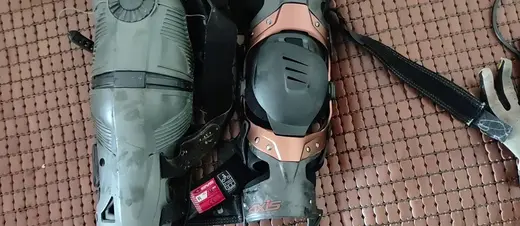
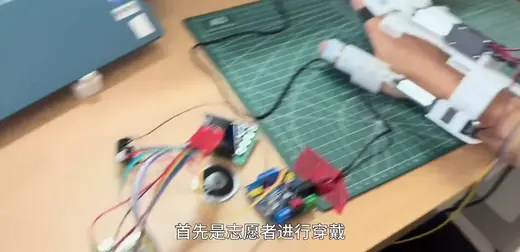
More Than “Motors Strapped to Your Legs”: A Deep-Dive Review of Dnsys Z1, a Consumer-Grade Knee-Assist Exoskeleton
Over the past few years, consumer-grade exoskeletons have quietly peeled away the bulky armor traditionally associated with medical rehabilitation equipment and heavy industrial gear, now seeping into the mainstream consumer market. As an entrant in this burgeoning space, Dnsys has brought their Z1 into our field of view.
An exoskeleton should not be shackles for walking—it should be an extension of the human body, a second layer of muscle.
Before we put on and test the product billed as the “world’s first knee-assist exoskeleton,” we need to clarify one thing: this is not a rehabilitation exoskeleton priced in the tens of thousands, designed for gait reconstruction in paraplegic patients. The Dnsys Z1 is an active wearable robot built for healthy users, outdoor enthusiasts, and people who spend long hours at a desk or on their feet. Can it truly become the first walking-assist exoskeleton for young consumers? In this in-depth review, we conduct a professional teardown to find out.



The consumer-grade exoskeleton wave: Evolution from the X1 to the Z1
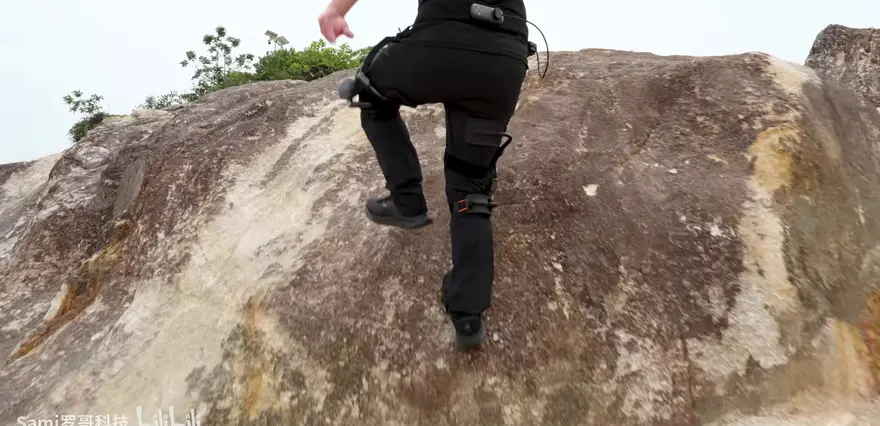
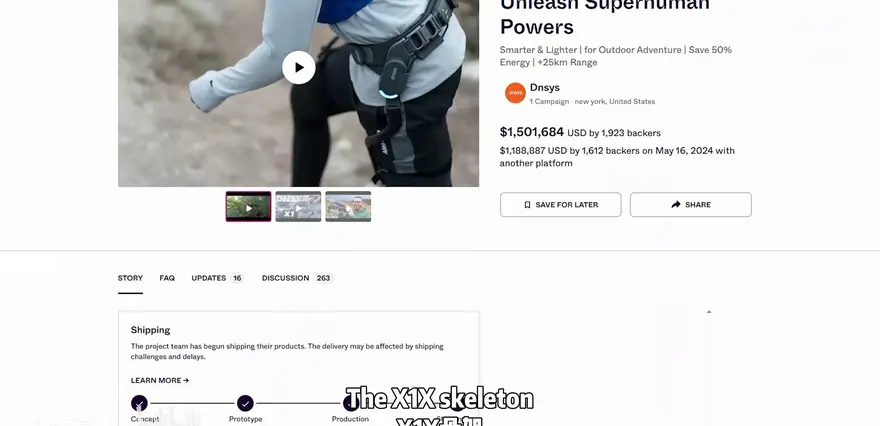
Before we dive into the Z1, let’s cast a quick glance at its older sibling—the Dnsys X1 X-Skeleton. Just one year ago, crowdfunding for a product of that tier pulled in an impressive 1.5MUSD (USD 1.5 million) (figure cited in the video). If the X1 felt more like a hard-core geek’s plaything, the Z1 represents Dnsys’ boldest move yet to push exoskeleton technology into true mass-market commercialization.


Out of the Box and On: Harness Structure and the Quick-Release Revolution
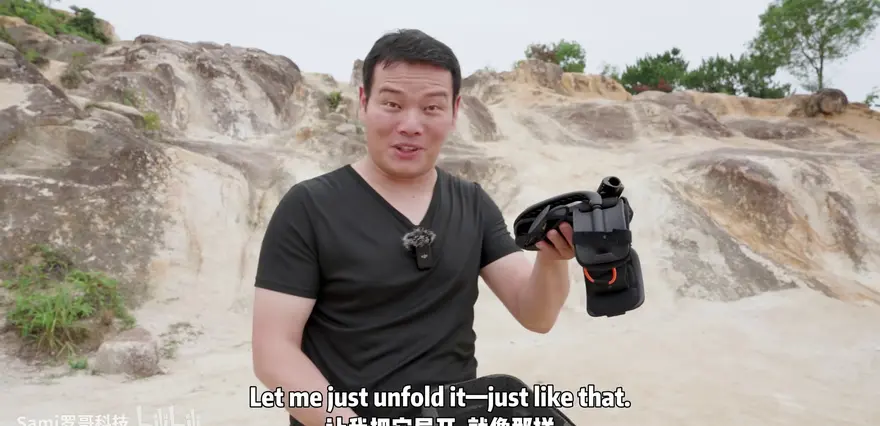
The first impression of the Dnsys Z1 is: It's so light. This represents the most tangible upgrade of the Z1 over its predecessor, and it's the essential path forward for consumer-grade exoskeleton to alleviate the psychological burden on users. When you take it out of the packaging, it can even unfold itself quickly, much like an umbrella.
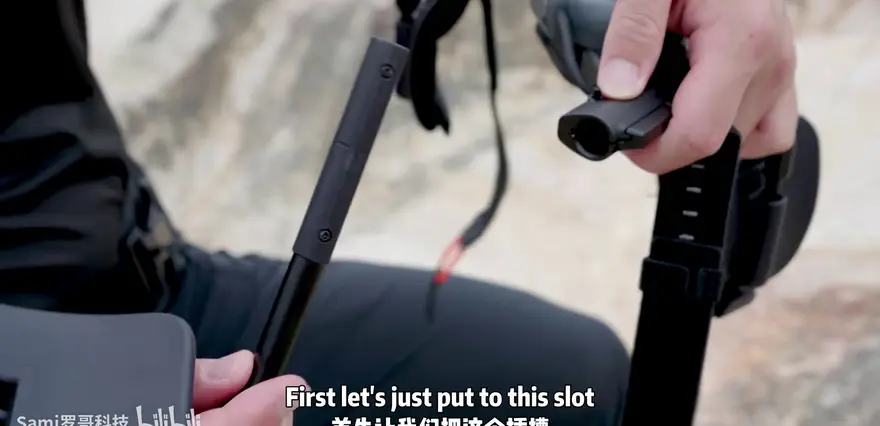
The entire wearing process is incredibly minimalist yet mechanically elegant:


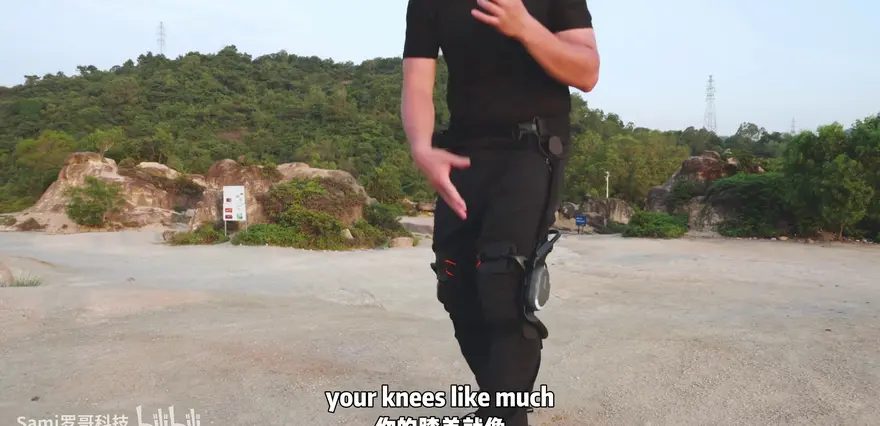
- Insert the support pad: Attach the support pad with slots to the waist and hip area.
- Press to lock: Simply press a single button, and the entire module smoothly clicks into the track. The "Super smooth" mechanical feedback dramatically reduces the learning curve.
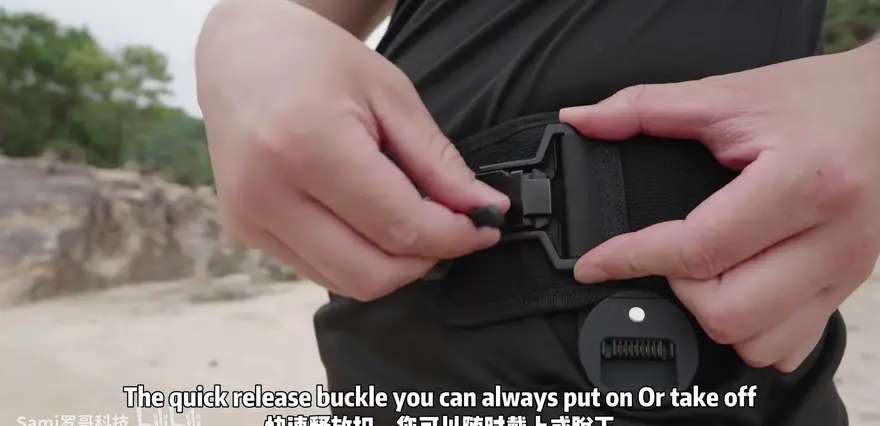
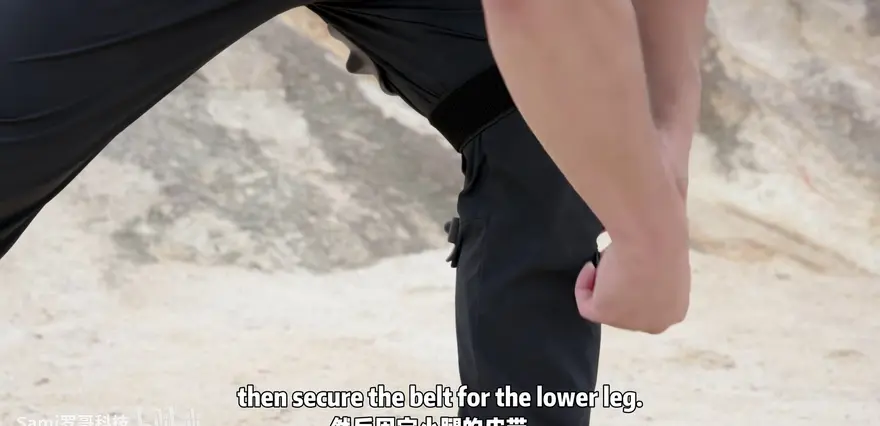
- Secure the waist strap: Connecting the main unit to the waist belt is the most brilliant aspect of the entire design.
Compared to the somewhat cumbersome strapping system of the X1, the quick release buckle introduced in the Z1 represents a remarkable improvement—it enables users to don or doff the exoskeleton in seconds, just like putting on or removing pants, while offering stepless adjustment to fit any waist circumference.

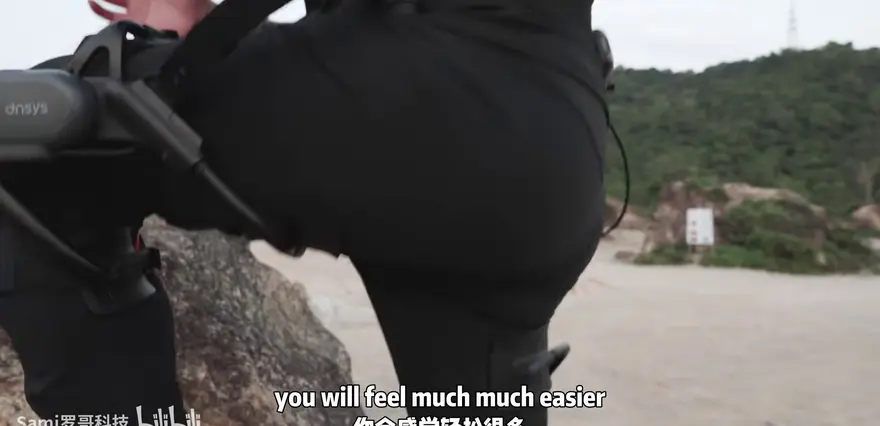
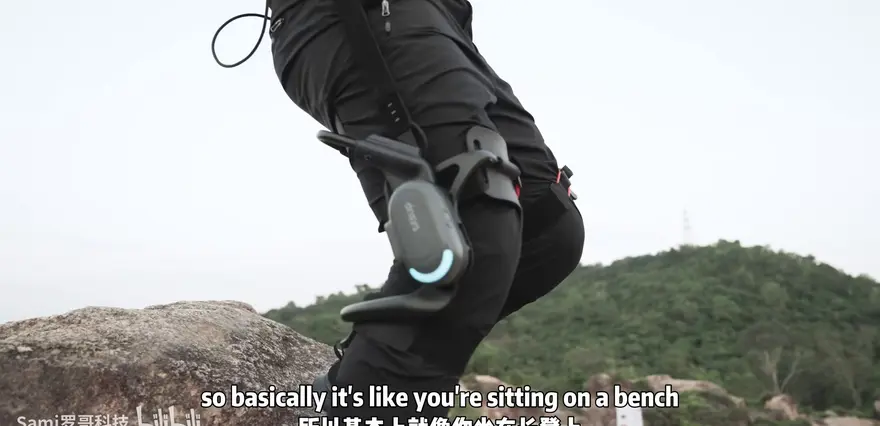
Core Reveal: Hardware and Algorithms Hidden Behind the Knee Joint
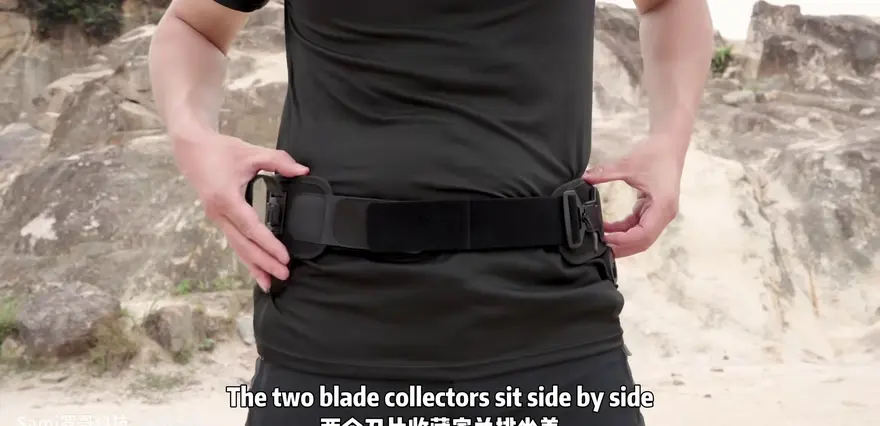
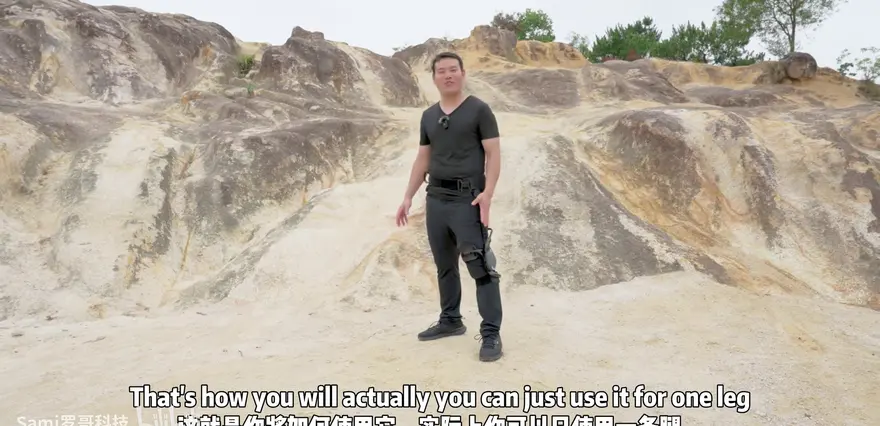
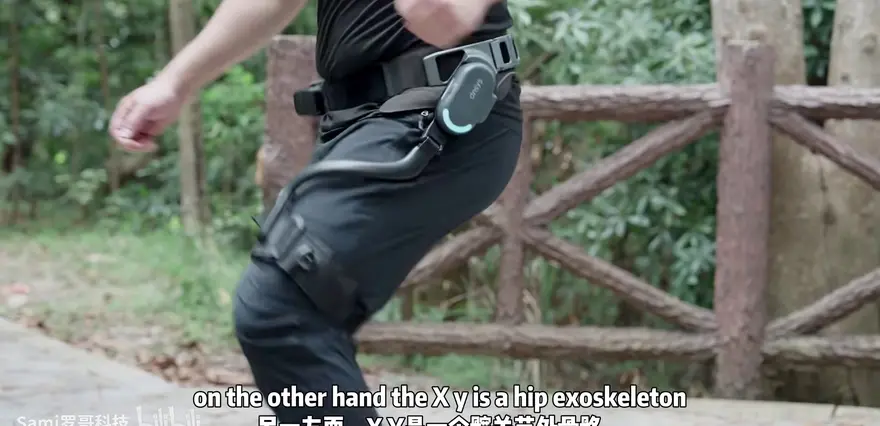
When you strap the Z1 onto your legs, you’ll notice its two linear guide rails (blades) positioned snugly side-by-side along the outer thighs. Housed within these rails, travertine stacks provide active power, working in tandem with internal sensors to form the technological foundation of this review.

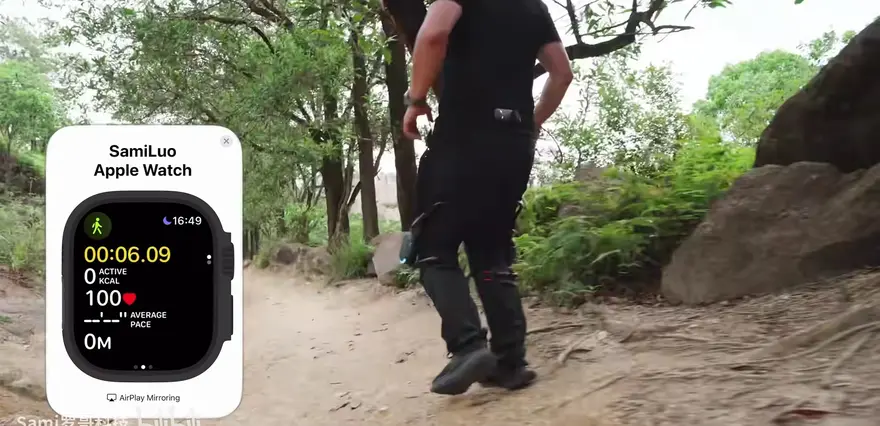
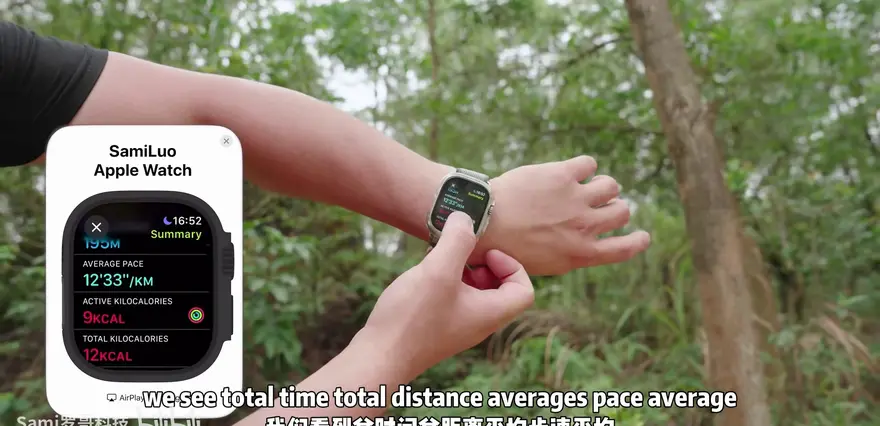
Many peers believe that the biggest challenge for a consumer-grade exoskeleton isn’t raw power, but gait sensing. The video highlights a crucial concept: “synchronizing power assistance with the natural walking rhythm.”
Everyone’s walking posture (gait) is different.

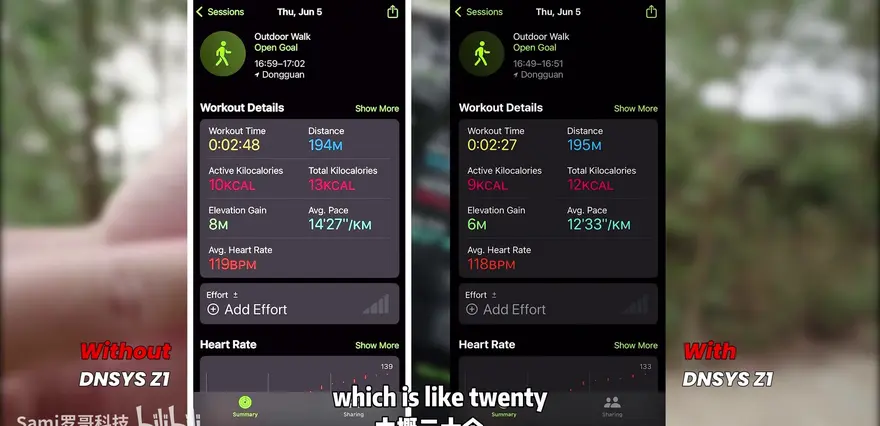
This means that within milliseconds, the Z1’s algorithm must utilize the IMU (Inertial Measurement Unit) and other sensors to determine if the user is climbing upstairs, heading downstairs, or brisk walking on flat ground, and instantly match a power curve tailored specifically to them. This highly individualized adaptation algorithm (individualize patterns) is precisely the core moat enabling Dnsys to transition its product from the lab to the consumer-grade market.
Brute-Force Spec Analysis: 4–7 Times Bodyweight in Joint Torque
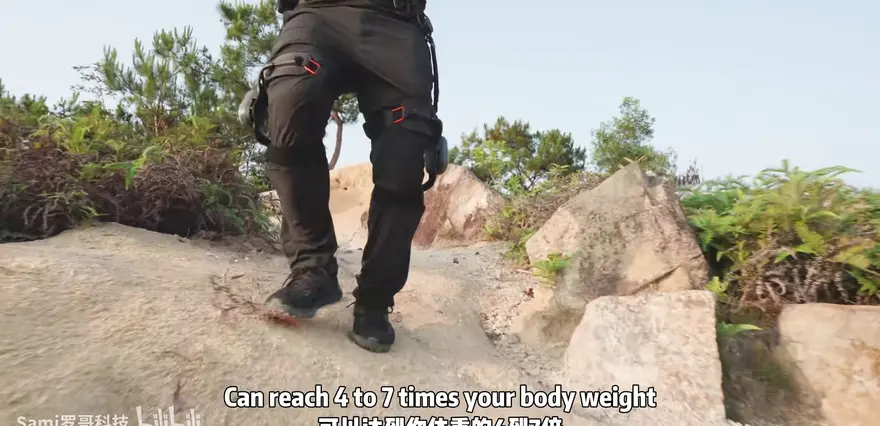
Though it looks small, the Dnsys Z1 houses motorcycle-grade high-torque brushless motors (motor torque) designed to deliver extremely robust joint torque (joint torque).
According to a real-world test reference cited in the video: the peak assist provided by the device under specific movements can even withstand and support an instantaneous load equivalent to 4 to 7 times a human body weight.

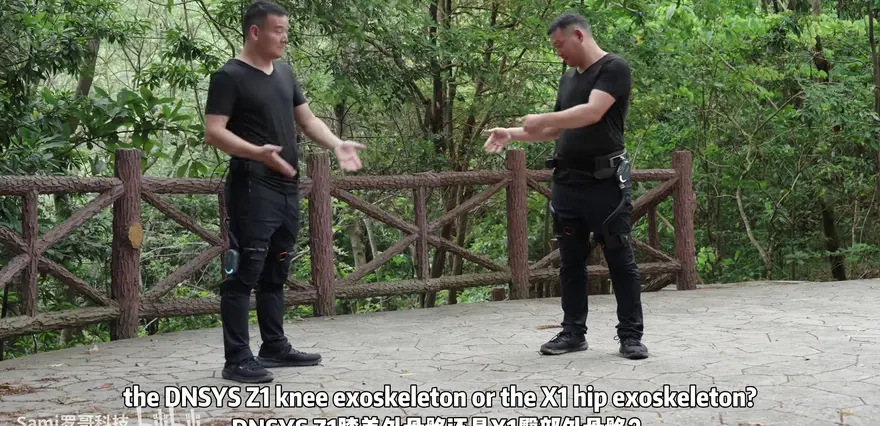
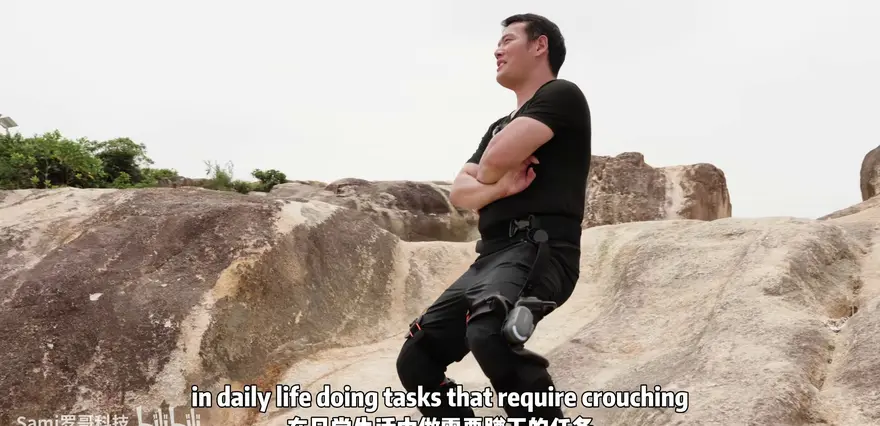

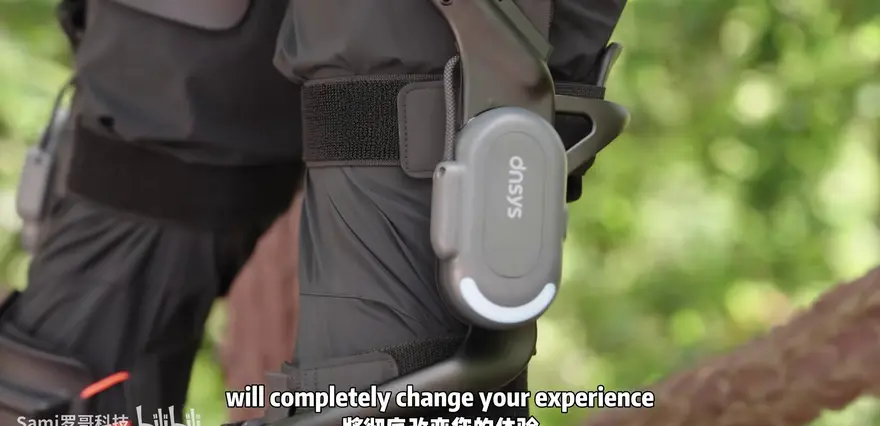
For scenarios like climbing stairs, tackling steep slopes, or hiking with heavy loads, this explosive push force significantly reduces quadriceps exertion, directly lessening thigh muscle soreness. Meanwhile, the built-in battery module has been lightweighted, laying the foundation for long battery life.
Stepping Up in the Real World: Gait Coordination and 'Seamless Wearing'
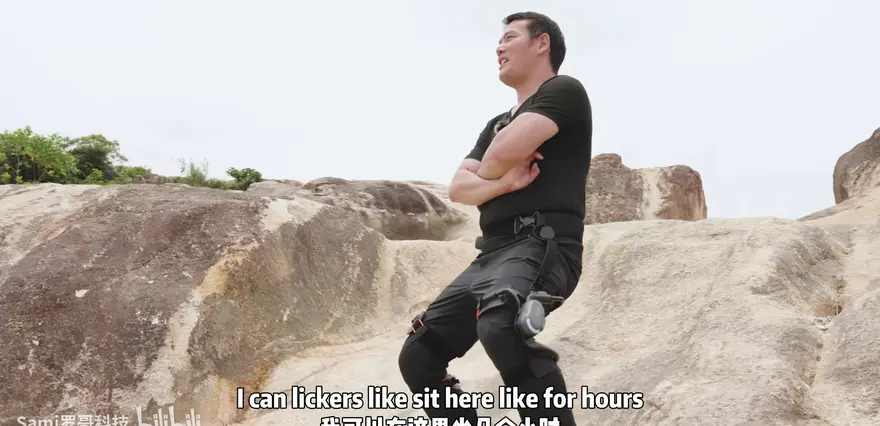
The real test comes outdoors. When you put on the Z1 and take your first step, you'll feel this force not 'pushing' you forward, but rather 'guiding' your movement. This is made possible by the Z1's sensor system, which combines feedforward and feedback mechanisms.
Whether you're doing (hiking / trekking assist) over complex outdoor terrain or doing daily activities indoors, this system is constantly learning and fine-tuning your gait.
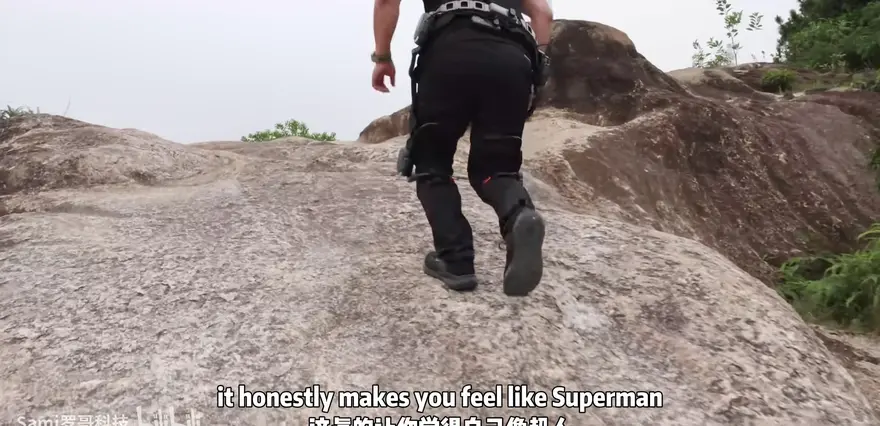
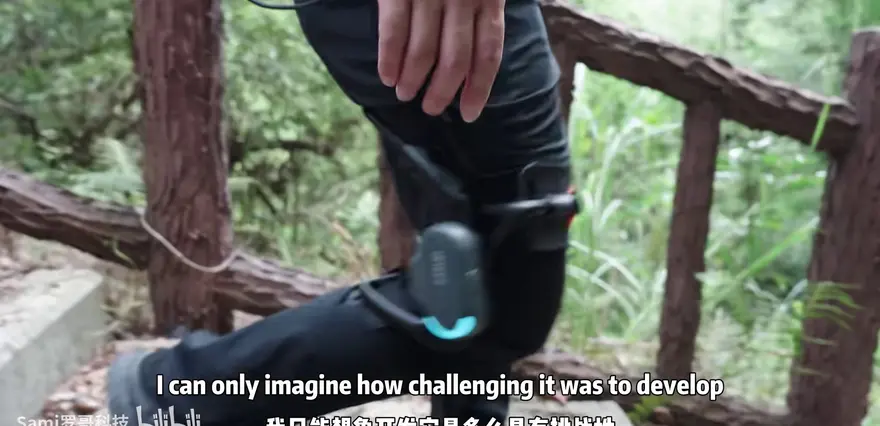


The wearing guidelines demonstrated in the video are extremely precise: the two linear guide rails must be aligned side-by-side, maintaining a gap of approximately 2 to 3 centimeters without interfering or rubbing against the support pads. Proper wearing not only ensures optimal force transmission efficiency but also protects the skin on the outer side of your thighs from being scraped by hard components.
Pushing the Limits: Jumping, Sprinting, and Fall Protection Mechanisms
An excellent lower-limb exoskeleton shouldn't just help users conserve energy; it must also possess "muscle memory" and a non-negotiable safety baseline. In advanced testing, the Z1 demonstrated impressive dynamic response capabilities.
Whether jumping, brisk walking, or jogging, the Z1 consistently delivers smooth and responsive assist, feeling completely natural and effortless.
Even more critical, when the device detects that the user is about to lose balance, this knee joint assist system locks via rigid guide rails. Working in tandem with top-tier protective mechanisms to provide support, this is the non-negotiable fall protection feature of a consumer-grade exoskeleton. It protects your knee joints from long-term wear while acting as a physical safety net during your workouts.
Side-by-Side Comparison: Z1 vs. Classic X1 and Competitors
Looking at the 2025 consumer-grade exoskeleton market, we can benchmark the Dnsys Z1 against other outstanding offerings in the category.
- vs. Dnsys X1 (Previous Generation): X1 feels like a rigid suit of full-body armor—power delivery is raw and forceful. Z1, by contrast, functions like flexible, external muscle: lighter, smarter, and more fluid.
- vs. Traditional Hip-Assist / Lumbar Assist: Down-market lower-limb or lumbar assist products from Aosaki, Haier, or Yuan Tech mainly tackle lower-back fatigue when bending and lifting. Z1’s knee-assist module instead hones in on the most strenuous phase in the gait cycle—knee extension—delivering a sharper solution for long-distance runners and outdoor trekkers who need to lighten the load on their lower limbs.
- vs. Medical Rehabilitation Exoskeletons: Medical-grade systems are bulky, rely on handrails, and focus on post-injury recovery. Z1, akin to those breakout hits in tech-gadget roundups, thrives in any environment. Its self-balancing design lets you weave through crowds with ease.
The Frantic Race Behind the Scenes: From Crowdfunding Myth to Hypershell's Market Puzzle
As the video creator Sami stated, "Everyone walks differently... Dnsys has impressed me." Looking at its development history, Dnsys has indeed demonstrated powerful hardware research and development capabilities. However, if we cast our eyes on the global map and compare it to Hypershell—a brand equally focused on consumer-grade exoskeletons for running and cycling—the Z1 has chosen the knee joint as an incredibly precise entry point, adding a distinct piece to the market puzzle alongside brands like Hypershell.
"Dnsys Z1 is truly one of the most innovative products I've tested recently."
This innovation lies in the fact that it does not attempt to reshape the natural human walking posture, but rather dynamically adapts to your natural gait through AI algorithms. This is a significant sign of maturity for leg exoskeleton products.
One Kilometer Away from Perfection: Pain Points and Target Users
But of course, a long-term review shouldn’t be all praise. As a consumer-grade product, the Z1 still has limits in terms of its target users. It’s best suited for people who love an active lifestyle and frequently hike outdoors or engage in physically demanding activities.
It can significantly reduce lower-limb strength and fatigue... help relieve pain and protect your joints.
If I were to give a recommendation: this is a device worth experiencing. If you’re the type who runs mountain trails, or an enthusiast looking to prevent knee joint degeneration, or even just want it to act as “wearable testosterone” during your daily commute, the Z1 is the lightest, smartest option you can buy right now.
Top Community Comments
**@Reader grabs the first post: (So where can I buy one?)
Interpretation: Although this comment with 0 likes is ranked lower, it highlights an awkward reality faced by all consumer-grade leg assist devices: awareness remains trapped in a small geek circle. How to truly penetrate C-end sales channels (such as mainstream e-commerce platforms beyond Kickstarter) is the biggest commercial test ahead for Dnsys.
@Wisecrack asks: “Does it add weight to your leg and slow you down without the motor being on?”
Interpretation: An extremely professional question, reflecting concerns among some users about the "passive burden." This also demonstrates that when developing an assistive exoskeleton, lightweight carbon fiber materials and a mechanical structure without resistance when powered off are essential, non-negotiable performance metrics.
@Vishal Menon suggests: “Nice video, can you try this on a 7 year old kid? My kid loves hiking...”
Interpretation: This indirectly proves the immense outdoor potential of such devices. However, for children, the current height adjustment range and joint torque settings are clearly insufficient. Fine-tuning a youth version might be the next blue ocean market segment.
@Rejji... comments: “Nice video bro... also no sarcasm intended - do the hypershell stuff actually work at all?”
Interpretation: The audience inevitably compares the Z1 with competitors in the same track (Hypershell), harboring doubts about the actual effectiveness of these devices. This skepticism actually proves that presenting comprehensive real-world test data is the cornerstone of building market trust.
@charliemasong states: “As a movement scientist... Appreciate the factual information shared in plausible simple terms!”
Interpretation: Whether it's sports rehabilitation therapists or movement science professionals, experts are paying attention to this review. This indicates that hardcore exoskeleton evaluations cannot merely be based on subjective experience; delivering professional educational value is also a major trend.
@Louis... states: “Where do I even buy?? All these other comments saying it's cheap but I can't find a link.”
Interpretation: Another typical case of someone wanting to buy but failing to find a purchase entry point. This explains why the developers attached a Kickstarter link in the video description—the actual pool of demand in the consumer market is far larger than what we can see from our screens.
**@Reader points out: (People's lower limbs are deteriorating badly today; we rely on exoskeletons just to keep going.)
Interpretation: This statement is jarring but incredibly real, reflecting a pain point of modern society: leg muscle recession caused by prolonged sitting and standing is driving what was originally gear reserved for first-tier geeks to become an essential mode of transportation for the general public in the future.
One-Sentence Summary
By pairing a lightweight exoskeleton frame with an extremely smart gait synchronization algorithm, the Dnsys Z1 proves that a consumer-grade knee-assist exoskeleton isn't just dead weight strapped to your legs. Instead, it is a god-tier add-on for outdoor enthusiasts and those with knee strain, allowing them to "wear it on your hikes and confidently tackle any terrain."
About this article: part of Chinese-Made Exoskeleton Review Archive — an independent, regularly updated English archive of reviews of consumer exoskeletons made in China, edited from publicly available video transcripts. Not an official manufacturer page.
For inquiries and purchasing, contact lonlonago@foxmail.com. More in Reviews · All articles.