Put on “Sensor-Strike Integrated” Leg Armor to Play Wargame: Hypershell X Consumer-Grade Exoskeleton Field Review
This Is Not Your Grandfather's Exoskeleton
When I first heard this video, I almost thought the ASR (Automatic Speech Recognition) system had misrecognized a sci-fi setting for me—"a super-powered rotten shrimp". After reviewing the audio transcript, I realized what the creator was saying:
"This is a super-powered exoskeleton, the Hypershell X."

The Hypershell X is a typical consumer-grade exoskeleton. Unlike the medical-grade rehabilitation exoskeleton used in hospitals for physical therapy, it is an assistive exoskeleton aimed at outdoor sports, military drills, and even CQB (Close Quarters Battle) players. Its original design intent could even be described as "violent aesthetics."
The recording mentions a highly tense contrast: Civil version Hypershell X vs Military version XL Scenic. The XL Scenic has been tested by the U.S. military for over a decade, while the Hypershell X is the civilian consumer version created by former DJI engineers. The technological lineage behind these two generations of products points to the same core demand: using mechanical power to reconstruct the walking efficiency of the human lower limbs.

When this exoskeleton, claimed to be "based on motion pattern recognition" and capable of covering hiking, running, and even cycling, appeared in my field of vision, I instantly couldn't resist it. Next up is our hardcore hands-on experience with the actual device in an abandoned prison in the UK.
Unpacking "Super Power": Hardcore Engineering Under the Carbon Fiber Shell
Picking up the Hypershell X, you'll first be amazed by its materials. This isn't some cumbersome, industrial heavy metal. To ensure the device is wearable, a vast amount of carbon fiber is used, which significantly controls its self-weight while retaining immense structural strength and rigid load-bearing capacity.
As a lower-limb exoskeleton, the core power of the Hypershell X comes from a precision servo motor system. When you suit up, the sensors (like IMU and pressure sensors) distributed along your legs quickly take over your gait input. They then precisely output joint torque, applying a concentric push to the athlete's legs at exactly the right moment.
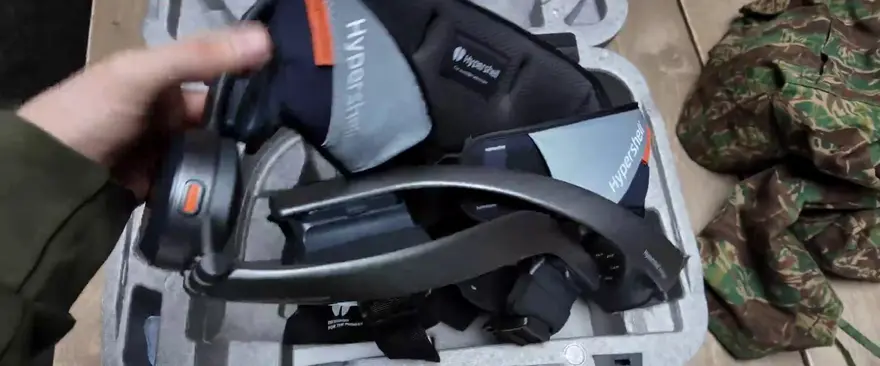
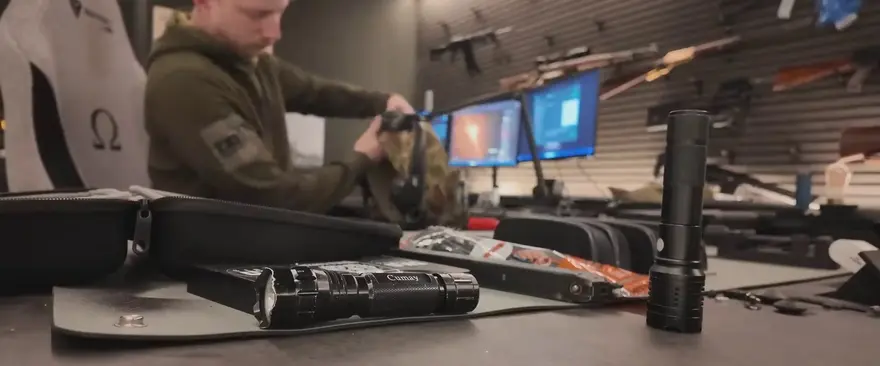
Regarding its use cases, Hypershell was initially designed for mountain climbers and adventurers. Therefore, it demands extremely high battery life / runtime and sustained load capacity. Although the official video doesn't provide a detailed endurance table, the high-capacity battery pack easily supports a full day of high-intensity operations or hiking, based on our half-day field test.
Abandoned Prison Exercise Ground: A Self-Balancing Showdown Against 100 Enemies
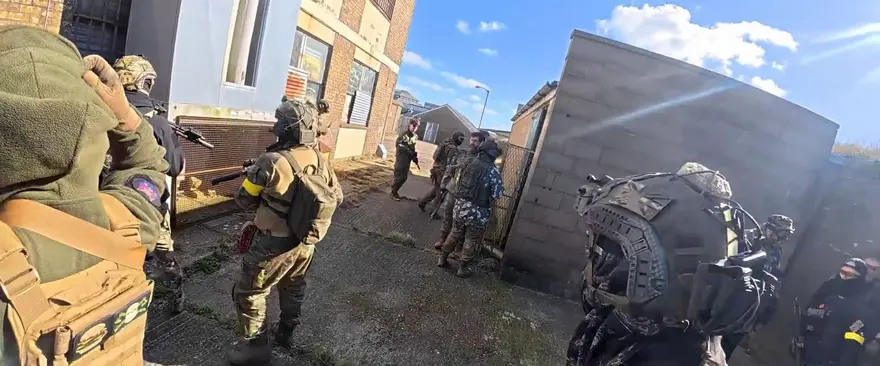
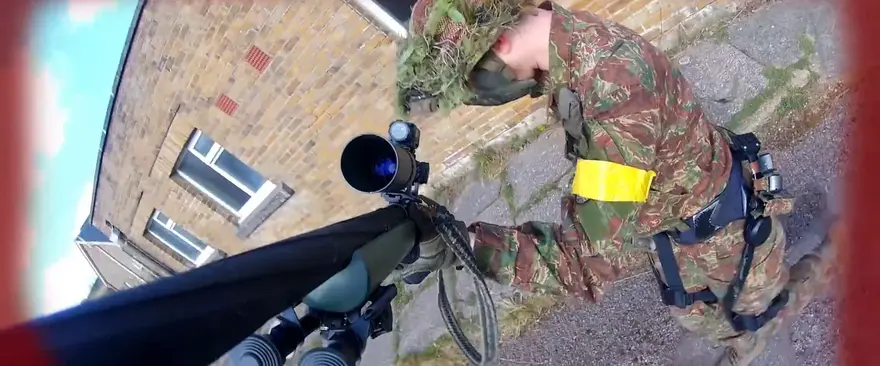
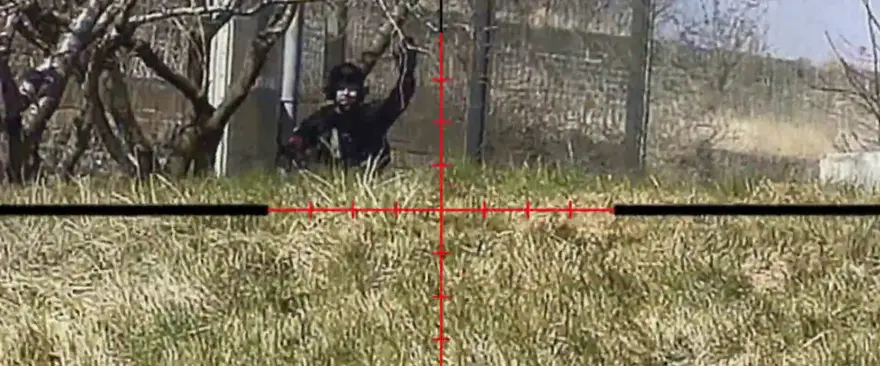
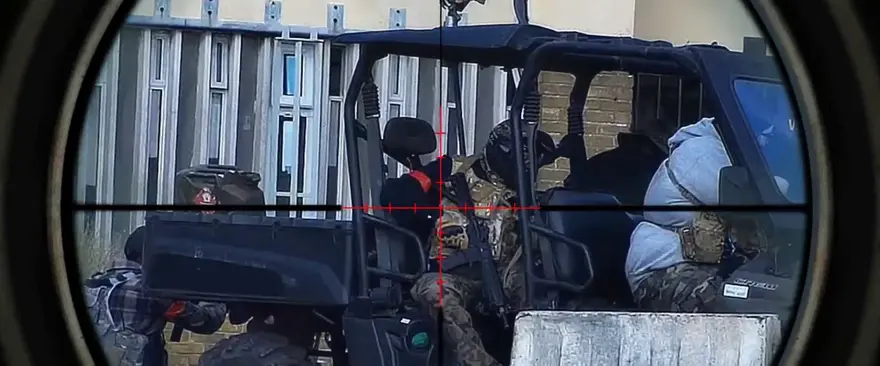
To push this gear to its absolute limits, the uploader picked a wildly unrealistic test site: an abandoned prison in the UK. Today’s mission is to defend the prison and hold off 100 enemy players swarming from every direction. In a human-wave brawl like this, movement speed can decide whether the line breaks or survives.

The enemy doesn’t just outnumber the defenders—they also use a range of pyrotechnics and explosives to force breaches. And while the defense team enjoys “infinite respawns,” the moment the line gets punctured, the time cost of mopping up the intruders becomes brutal.

Throughout the defense, the uploader’s most frequent loop is scouting the map. Since threats can show up from any angle, he has to relocate fast between cover and defensive positions. That’s where Hypershell X’s mobility boost starts to matter—equipped with a self-balancing algorithm, the exoskeleton minimizes the physical drain of walking within the rules of the game, giving the user a longer window for mobile, on-the-move engagements.
"Everyone is Walking, But I Am Running": Gait Boost and Real-World Experience
Throughout the small-to-medium-scale skirmish, Hypershell X performed consistently with its advertised "explosive power."

The most memorable moment occurred in the mid-to-late game. To balance the defender's "infinite respawn" advantage, once "eliminated," players must run a long way to return to the battlefield. While everyone else was walking back on foot, the content creator activated the exoskeleton's assist mode, using near-"sprint" mobility to pull the defense line in both directions, significantly faster than normal walking.
This incredibly fast hip assist, provided by servo motors, delivered a mechanical pushing sensation on the back with each step.

In high-intensity combat, Hypershell X's precise gait recognition sharply captured the user's leg-lifting and stepping movements, automatically syncing the assistive joint torque within the power exertion cycle. Even under different terrain conditions, the assist effect remained noticeable, allowing the user to sprint for the objective without exerting excessive physical energy.
It's Not Perfect, but Its Potential Is Exciting
Admittedly, this test also exposed the pain points of industrial consumer-grade products in extreme environments. The most obvious issue was the disconnection problem. In the latter half of the video, the UP host clearly encountered severe network and device communication issues, even shouting into the walkie-talkie: "The server side is crashing!" This directly impacted the team's tactical execution.

In addition, this type of consumer-grade exoskeleton generally lacks medical-grade fall protection. However, given that the Hypershell X comes with a self-balancing feature, even if it loses power, its rigid structure can still provide some support assistance and protection at the moment of a fall. Although its slip resistance and waterproof performance in wet and muddy environments still need to be examined, as an assistive exoskeleton developed for hiking, it demonstrates distinct advantages in traversing extreme terrain.

It is worth noting that the Hypershell X is not the only option currently on the market. In recent years, the domestic consumer-grade exoskeleton track has become quite crowded: brands such as Cheng Tian, Kenqing, Aoshark, Tankwalker, Haier, and Yuanye have all established their presence in this field, each with its own focus. Some lean more towards lumbar / back assist, while others focus on lightweight walking. The Hypershell X, however, is like a "lopsided sports student"—it pushes the explosive power and assist capabilities for extreme outdoor scenarios to the absolute limit.
Conclusion: When the Exoskeleton Takes Off Its “Hospital Gown”
With the scenario test wrapped up, the creator steps out of the gear. Originally engineered for hikers, this high-tech innovation proves its cross-domain capability in military and law-enforcement simulations. At the end of the video, the creator shares the hope that consumer-grade exoskeletons will soon find their way into everyday life. Although the video hasn’t revealed complete pricing information yet (price), there’s no doubt that the Hypershell X represents a bold consumer-grade exploration.
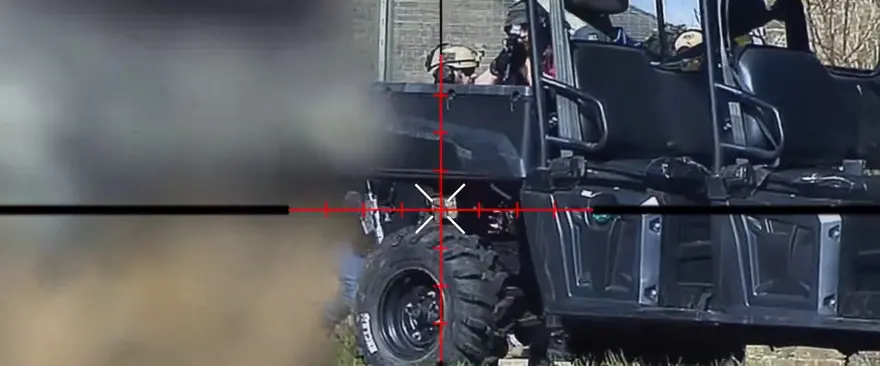
And the exoskeleton is taking off its heavy “hospital gown,” transforming into an add-on powerup on the road to becoming superhuman.















Top Community Comments
@VaniRx (4 likes): "In practice, running the field is genuinely exhausting. Players who aren't physically trained will start jogging, then drift into a slow walk after two or three rounds in a CQB arena, drenched from helmet to pants."
Interpretation: This comment perfectly explains why military/law enforcement users—and Wargame players—can have a hard, recurring need for an assistive exoskeleton. High-intensity CQB pushes infantry-style movement demands to the limit, and ordinary players often hit an "energy deficit" within a few rounds, forcing them to slow their pace. That's where the value of a consumer-grade exoskeleton shows up most clearly for these "non-professional athletes": it doesn't just help you move faster—more importantly, it helps you keep from falling apart. Whether you're talking about walking assist, hip assist, or a lower-limb exoskeleton that reduces strain at the joint level, the experience often hinges on real-world factors like joint torque from the motor, smooth gait support, and dependable battery life / runtime. Even when you're not chasing hiking / trekking assist, the everyday benefit is similar: less work for your legs and core, less fatigue over time, and fewer moments where you're forced to stop. In short, it helps you "not drop the ball."
One-Sentence Summary
Hypershell X, with its incredibly low entry barrier and the hardcore technical expertise of former DJI engineers, proves that a consumer-grade exoskeleton can not only step out of the lab but also dominate in Wargame, outdoor hiking, and even future industrial scenarios—it is the first batch of "cybernetic limbs" that geek players and outdoor veterans absolutely cannot miss.
About this article: part of Chinese-Made Exoskeleton Review Archive — an independent, regularly updated English archive of reviews of consumer exoskeletons made in China, edited from publicly available video transcripts. Not an official manufacturer page.
For inquiries and purchasing, contact lonlonago@foxmail.com. More in Reviews · All articles.