Summiting a 13 km Snowy Mountain: Hypershell X Ultra hip assist consumer-grade exoskeleton Field Test—Can It Really Turn a Newbie Into an Iron-legged Pro, or Just a Pricey “IQ Tax”?
At minus ten degrees Celsius in Chengde, Hebei, I hiked a loop through the Binggou Scenic Area that totaled 13 km with 650 m of cumulative ascent, tackling gravel paths, steep drop-offs, and stepped climbs. My goal was simple: to test whether the Hypershell X Ultra—the consumer-grade exoskeleton hyped as “newbie leg saver” and “outdoor Iron Man”—lives up to its claims. With a price cited at ~RMB 14,000 and marked as “hip assist” in the video notes, does it truly enable someone with weak stamina to cruise uphill, or is it just expensive “IQ tax”? Below is the complete, strict, no-BS field test.


Opening: The Cure for Weak Legs—or Just a Pricey Paperweight?
In this latest exoskeleton wave, we’re seeing more products that look straight out of a sci-fi movie—and are actually built to be worn on the trail.
“I always get absolutely crushed by others when hiking and trekking.” — Opening lines from the video, and the daily reality for countless players who feel like their stamina is stuck in a valley.
The Hypershell X Ultra gives us an “old-school hero” kind of promise (a casual way of putting it; the video’s phrasing even includes a minor slip of the tongue): strap it on and—whether you’re climbing snow-capped peaks or making the ascent of Mount Tai—you’ll occupy a position of “dimensionality-reducing” dominance that goes beyond raw physical strength. The official slogan is: “Help elders and friends who can’t keep up reach the places they want to go—but can’t.” It sounds rosy, but at the same time, it has a slight “IQ tax” vibe.

As writers for a tech-media outlet focused on consumer-grade exoskeletons, we need to draw a clear line first: this is not a medical rehabilitation exoskeleton (rehabilitation exoskeletons are typically medical-grade products), but a consumer-grade assistive exoskeleton built for outdoor use, hiking, and everyday walking.
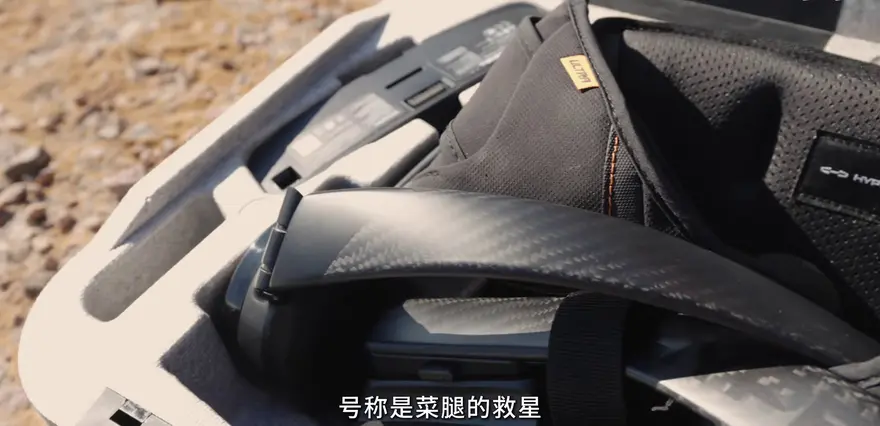
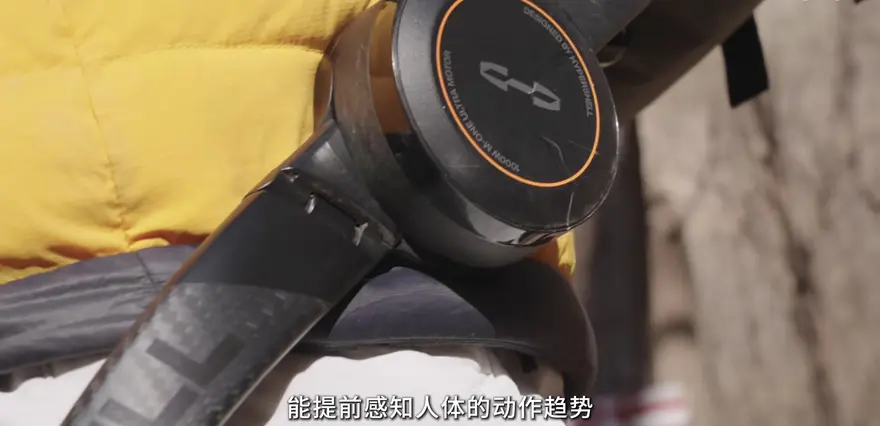
- Product form: a hip assist exoskeleton, driven by a brushless motor / servo motor, with a carbon fiber frame as the core structure and the main control unit positioned at the lumbar area.
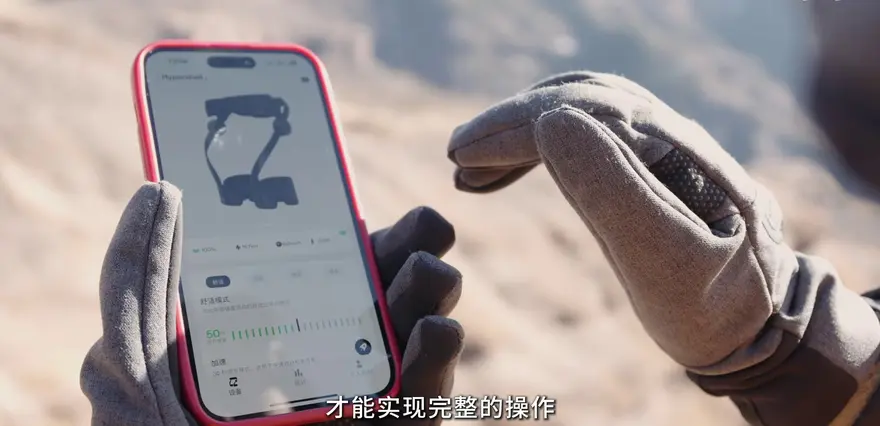
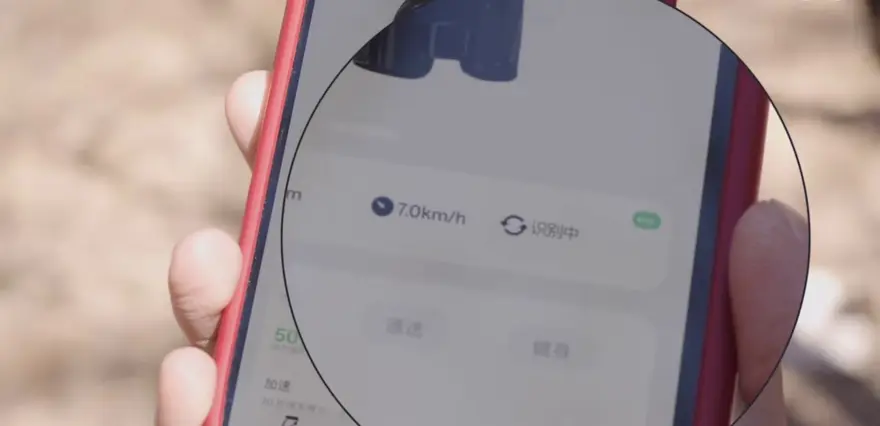
- Getting started: pairing and mode switching are done via a phone APP or a smartwatch. Putting it on isn’t overly complicated, but it does take some adaptation.
- Positioning and price: positioned at the top end of consumer-grade assistive exoskeletons, with 14,000 yuan (mentioned in the video) benchmarked against the mid-to-high end range of comparable overseas products.

Testing All Four Modes: Comfort, Smart, Pass-Through, Resistance
The APP and watch are the first entry points for getting started. As of 2025, many mainstream consumer-grade exoskeletons still rely on a phone for gait learning and parameter fine-tuning—and the Hypershell X Ultra is no exception: you first need to “register” your body into the algorithm.
Comfort Mode: Like Driving an “Automatic”
When I first put it on and enabled Comfort Mode, the system needed to learn my walking posture. During that process, I felt a subtle “being lifted” sensation, with especially clear fixation and support around the lower back.
“My lower back is really sensitive… after a sudden moment I felt like it was actually fixing and supporting my waist.” — On-camera impressions.
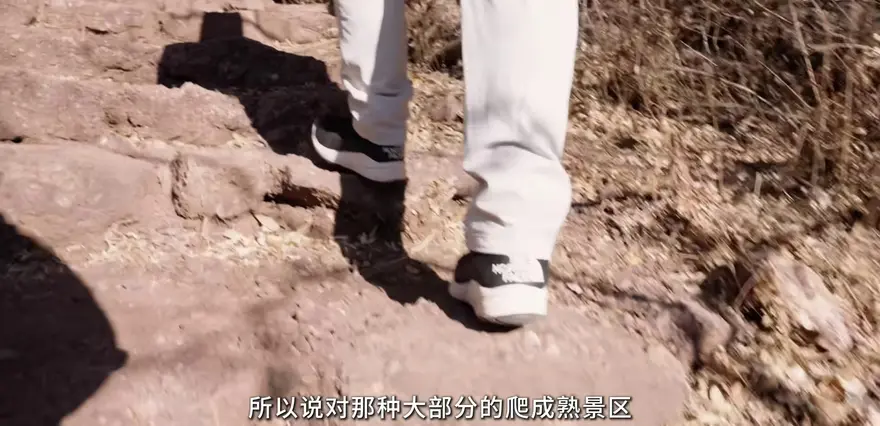
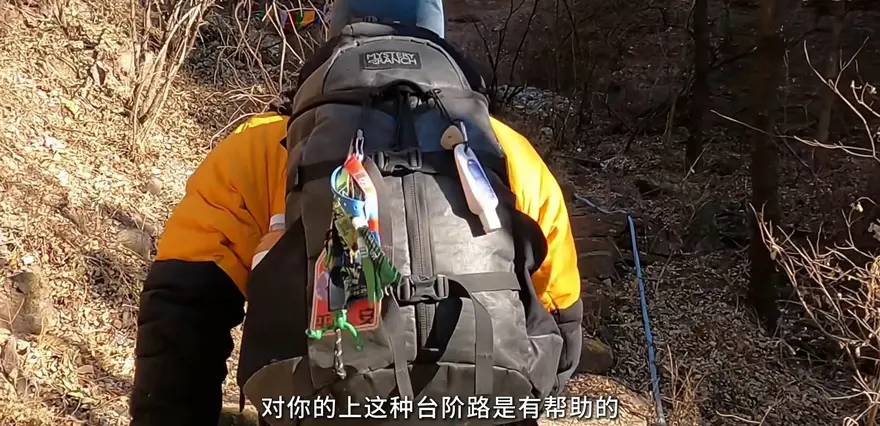
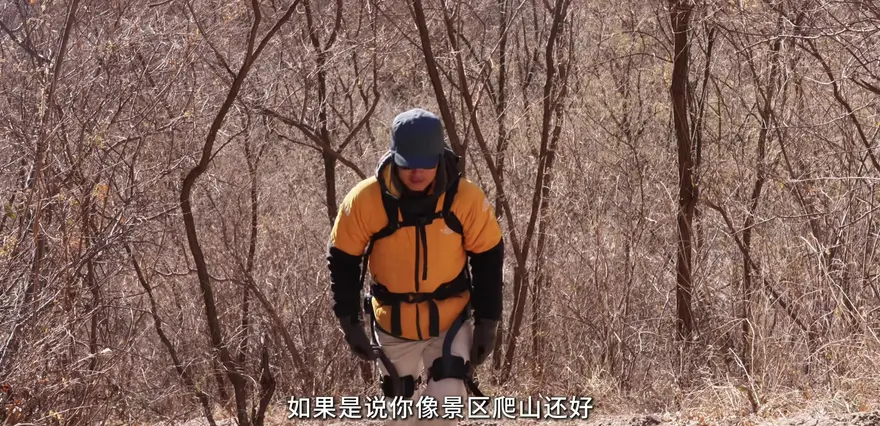
In Comfort Mode, after walking upsteps for over ten minutes, the most direct feedback was this: leg muscle fatigue was noticeably reduced. If your main scenario is hiking / trekking assist in mature scenic areas like the Great Wall, Mount Tai, or Mount Huang—climbing steadily along stepped paths—this type of exoskeleton delivers real, tangible help to “most people.”
Smart Mode: A Flat-Road Beast with Genuine “AI Mind-Reading”
After switching from Comfort Mode to Smart Mode, the power output became very aggressive.
“This is basically my normal pace when I’d run… on flat ground and small slopes, the assist is very obvious.” — On-camera impressions.
The system’s logic is to capture movement intent through multiple sensor inputs—such as an IMU (inertial measurement unit) and pressure sensor—and actively apply joint torque at the instant you lift your leg, achieving “move-first, assist-first” support. For someone like me—big belly, slightly poor muscle endurance—it really delivers that satisfying sense of “borrowing some muscle power.”

Pass-Through Mode: Sounds Mystical, but It’s Actually the “Do-Nothing Mode”
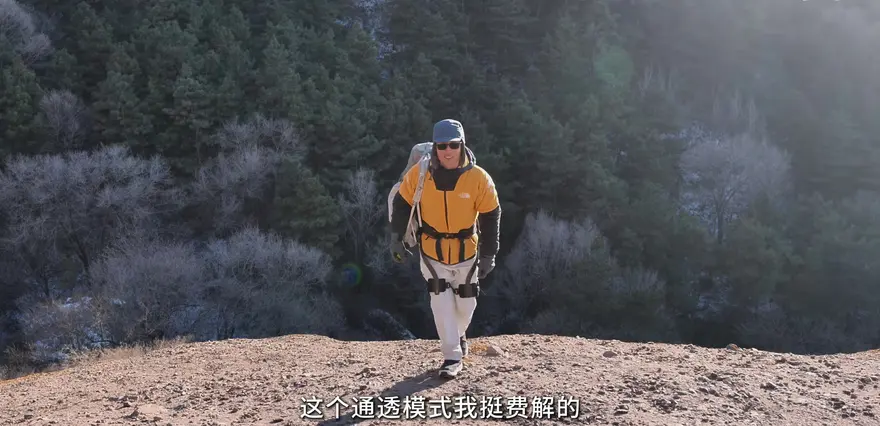
This was the most controversial of the four modes for me. Pass-Through Mode essentially means “doing nothing”: the motor stays in standby. Once you turn off the assist while wearing it, a noticeable dragging heaviness hits you:
“I could feel gravity being way too heavy—my legs felt like they were filled with lead.” — Original on-camera line.

At first I suspected “Pass-Through Mode” was just a filler feature, but later I realized its real purpose: when you sit down to rest, the device may actively “pull force” to help you stand up—so the only way to keep it from interfering with your rest is to completely set it aside. This matters for older users—the target audience includes seniors—who may need a purely passive exoskeleton that won’t “mess things up” during rest scenarios.
Resistance Mode: Turns Your Trail Run into “Weighted Training”
Finally, I tested Resistance Mode, and the experience was quite “interesting”:
“It feels like it’s fighting you… like you’re wading through water—there’s a layer of resistance.”
This mode adds opposing joint torque resistance. For trail-running/racing crowds, that’s basically “cheating,” but for people who treat an exoskeleton as workout gear, it’s a “cyber sandbag”:

“It’s like training with sandbags strapped to you—it can effectively improve your training results.”
Note: If your goal is to set personal bests, don’t touch Resistance Mode. If your goal is to build muscle, Resistance Mode is indeed an innovative “tech-based load training solution.”
Algorithms and Downhill Slopes: The Most Exciting Moment is "Reading the Terrain"
Downhill slopes are the most delicate phase of outdoor trekking. Take one wrong step, and the joint torque might either work against you or exhaust your muscles.
The algorithm logic of the Hypershell X Ultra left a deep impression on me:
"When I start descending, it automatically identifies the downhill slope and cuts off the assist. The moment I hit flat ground or an uphill slope, the hiking assist kicks in immediately."
This is actually an advanced "terrain-reading self-balancing strategy": during a descent, gravity is already pulling you down, so the motor doesn't need additional thrust. Applying force at this moment would actually cause the joints to bear excess joint torque, compromising stability. Having an algorithm that can read the terrain and automatically intervene is quite rare among similar exoskeleton products.
However, there were some minor flaws in actual experience: there was no clear feedback indication (such as a vibration prompt) during the mode switching process. There was a certain delay in the automatic transition between uphill and downhill modes. Once, halfway down a slope, it suddenly lost power, and because my center of gravity hadn't adjusted, I almost slipped. For the elderly or those with poor balance, assistance from a guide might be necessary during the initial learning phase.
Bonus Feature: The "Reverse Lifting" Experience on Qingyun Steps
I encountered a rather steep set of steps in the scenic area (similar to the "Qingyun Steps" challenge section found in some scenic spots). For ordinary people, this stretch means "climbing and gasping for breath," but for an exoskeleton, it is the "ultimate algorithm exam."
The moment I stepped onto them, the smart mode initiated a very distinct "upward lifting" action. It felt like someone was lifting me up from beneath my hips. It wasn't a rigid pushing force, but rather a "smooth, assistive descent."
Sweat-inducing highlight: The assist only intervenes at the moment of lifting the leg, and the motor recovers energy when lowering the leg or stepping evenly. Once I got used to this rhythm, the Qingyun Steps actually became the easiest segment of this entire test.
```
Battery Life Test: Half Battery Remaining After Four Hours
Low temperatures are the enemy of lithium batteries, and a nightmare for all powered wearable devices.
"I basically used it in comfort mode for over an hour, and extreme mode for over an hour... and still have 69% battery left."
This real-world test was conducted in outdoor mountaineering conditions at -10°C with level 4 winds. Then, by the afternoon, after a full 8-hour session:
"The battery still has 50% left. With this kind of battery life, it can easily support a round trip up Mount Tai, or a round trip up Mount Huang."
Whether it is 69% or 50%, this battery life endurance is a commendable achievement under these temperature conditions (of course, there is also significant variance depending on each startup and individual battery unit). However, it is important to note that if you are planning a two-day trekking expedition, its battery capacity will not be sufficient, and you will need to swap in a spare battery.

Some "Quirks" in Haptic Feedback and Ergonomic Design
After covering so many advantages, let's talk about a few areas that left our "picky players" dissatisfied during this test. To be honest, this is what a real review is all about.
Weight and the Burden: The 1.8 kg Lie
“1.8 kg doesn't create a burden in terms of weight.”
This number is actually worth a closer look. The mainframe skeleton weighs 1.8 kg, which is roughly the same as a few large battery packs; wearing it alone is OK. But if you add a backpack (especially a heavy soft-shell pack over 25L common in outdoor activities), your lower body turns into "heavy ankles."
The "Pocket Jungle" on My Waist is Blocked by the Belt
“The belt and the exoskeleton frame block my pockets, making it very inconvenient to grab things.”
The exoskeleton waist belt creates a rigid support band. This soft spot (a weakness) is a pain for someone like me who habitually digs for things while walking. To grab a phone, a handkerchief, or an energy bar, I have to lift the belt up first.
Backpack Friction and Pressure
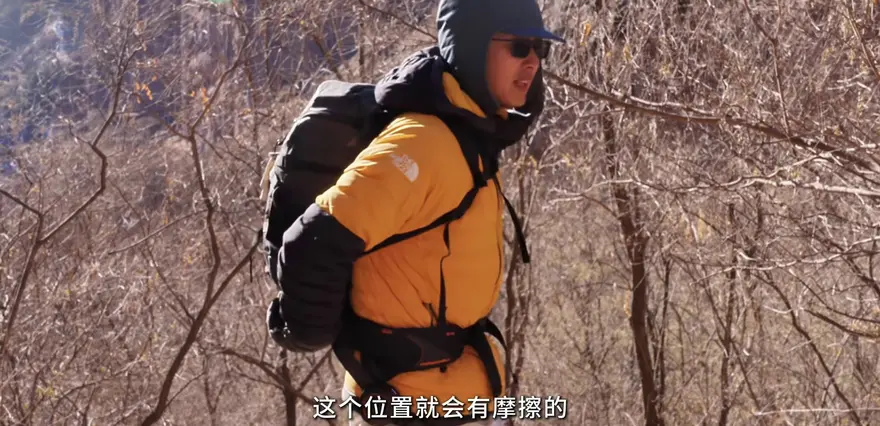
“If you go outdoors and carry a pack with a capacity of over 25 liters, the exoskeleton's waist frame in the back will rub...”
This issue is very real during heavy-load hiking: the hard structure of the exoskeleton frame creates pressure under the shoulder straps, and the friction after a long time is no joke.
The Sore Spots of Cushioning and Long-Term Wear
After wearing the hip assist lower-limb exoskeleton for a long time, fatigue gradually builds up at the top of the thighs, around the hip joint where the sensor (IMU) sits, and from the seat strap. These issues were not severe during this test, but comfort decreases after wearing it continuously for more than two hours.

Who Is It For? Who Should Skip It?
As a consumer-grade exoskeleton, the Hypershell X Ultra is actually designed for users who "want to go out and explore but know their physical stamina isn't enough."
- Ideal for: Middle-aged and elderly users visiting parks or famous mountains; beginners with decent stamina who want to experience traveling light outdoors for a day or two; young users who want to use the resistance mode for fitness training.
- Not ideal for: Core trail runners (resistance and walking assist on flat roads will be useless or even feel like cheating for you); heavy-pack trekkers (carrying spare batteries, pack abrasion, and bulky clothing taking up space makes it inconvenient to carry items); budget-conscious buyers (at a price point of 14,000 RMB, this is currently the top-tier configuration among similar products).
 ](/.jpg)
It is worth mentioning that this exoskeleton, paired with its assistive exoskeleton algorithms, effectively offers a new possibility for the "ordinary people limited by physical stamina" mentioned in the tagline: The most charming moment we've seen is the confidence of a senior in their 50s or 60s wearing it, stepping firmly over gravel paths.
Don't Forget: Assistance Reduces Muscle Fatigue, Not Cardiopulmonary Load
This was actually one of the most important findings of this test.
"After the assistance kicked in, my cardiopulmonary system felt exactly the same; the intensity was identical to not wearing it."
What this means is: Assistance only saves you muscle tension; it cannot reduce cardiopulmonary stress. This implies:
- For those with lower baseline lung capacity, wearing this to hike off-trail (routes that aren't primarily stair-focused) will make your legs feel easier, but the risk of shortness of breath remains.
- If your destination is at a high altitude or involves long climbs, it can help relieve leg fatigue, but it won't save your lungs.
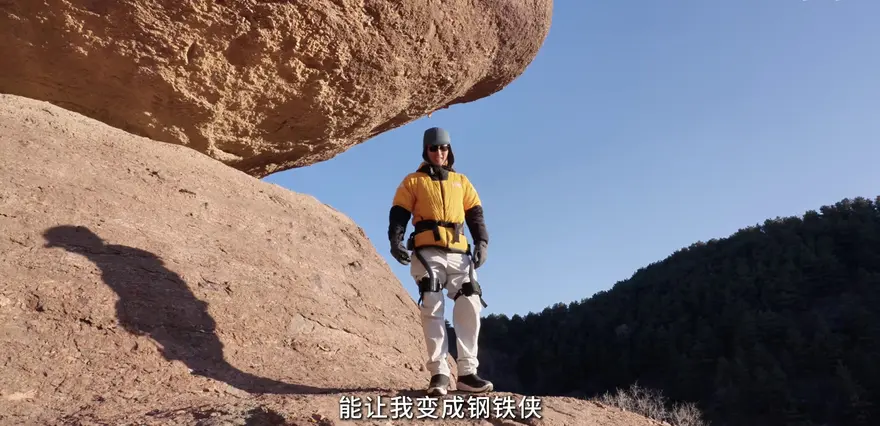
For senior citizens, we have another serious reminder: wearing this helps with walking, but fall protection is not included in this product's feature set. It is an assistive exoskeleton, not a protective brace.
Finale: God-tier gear, not an aimbot
The 8-hour stress test draws to an end.
- Positioning summary: This is a consumer-grade exoskeleton that lowers the threshold for “scenic-area or light valley hiking,” using mature algorithms to deliver road-condition recognition, joint torque control, and assist timing that are reliable enough to take into the mountains. That said, the limitations are equally clear: backpack incompatibility, a steep learning curve for the assist strategy in some scenarios, and no medical rehabilitation curve capability.
- Market positioning: At a price of 14,000 yuan, it still sits within the acceptance range of “enthusiasts / geeks / light trekking crowds.”


“Would you choose this mechanical exoskeleton for training and testing?” — the question to the audience at the end of the video.
Hypershell X Ultra doesn’t give you the “Iron Man suit”; it gives you “heavy-duty legs for adults — by choice.” It’s fun, useful, and pricey. If it fits your travel plan, put it in your kit; if not, it still has a purpose: use resistance mode for fitness, or treat it as a futuristic experience.
If there’s an exoskeleton or new outdoor gear you want to see next, tell me in the comments, and we’ll serve as the test subject for you.








Top Community Comments
“It reminds me of a joke. To assist with field work, they used a robot dog to carry luggage up the mountain. In the end, it required two people to follow along just to carry the spare batteries for the robot dog [lol]”
This comment perfectly nails the ultimate paradox of all robotics: if the machine saves you effort, but you must first expend energy to carry the machine, what is its net benefit?
“This thing weighs 5kg. Don't I still have to carry it up the mountain? What is the gravitational potential energy converting from?”
The second comment touches upon an age-old physical dilemma: self-weight offsetting the assist. Fortunately, at 1.8kg, the Hypershell X Ultra has a much better weight than many alternatives. But the load paradox remains: if you carry the machine up the mountain, does the effort it saves you offset the work of carrying it up the slope?
“Can we test this? Can a DJI 150kg payload agricultural drone carry a person up Mount Gongga? [thumbs up][thumbs up]”
This is a wild imagination, yet it implies a deep-seated craving for the essence of "assist." If energy density cannot continue to be amplified, aerial lift transport may indeed be better at breaking the physical constraints of current wearables.
“Nowadays, it's really hard to scam the youth...”
The sentiment here is extremely authentic. It reflects a core controversy in the current consumer exoskeleton market: within the high-price range (tens of thousands RMB), consumers are highly sensitive to "whether it's actually useful" and refuse to pay for purely sci-fi concepts.
“When it drops to a cabbage price, then we'll talk [doge]”
This comment highlights the biggest obstacle to mainstream adoption of consumer-grade exoskeletons: the price barrier. The current price of 14,000 RMB is clearly far from the baseline of a "mass consumer product"—the public expects more affordable alternatives.
“If the battery can survive the trek past the Shanhaiguan Pass, I might as well consider myself half a Northeasterner.”
This is a very humorous comment reflecting concerns about battery low-temperature resistance. After all, this review was conducted at minus ten degrees Celsius; battery capacity degradation in low-temperature environments is a core metric for geek enthusiasts.
“Looks like your legs are cheating, but your waist has gained a father [doge]”
This comment is very vivid. It accurately summarizes the wear experience of this hip exoskeleton product with lumbar-driven mechanics. It also serves as a reminder to developers: while improving lower-limb assist, reducing the physical "clashing" and friction between the lumbar area and the backpack is a key pain point for better comfort.
“In the future, why not dismantle this and build a mechanical horse? Wouldn't that be even more awesome?”
The ultimate form of an exoskeleton might lie in a mechanical horse / mobility vehicle, rather than strapped directly to your legs.
One-Sentence Summary
This is one of the most accessible exoskeletons on the market, striking a down-to-earth balance between consumer-grade affordability, real-world trail use, and algorithmic assist. It serves as tech-enhanced extra pair of legs for scenic spots, novice hikers, middle-aged and senior walkers, and light fitness enthusiasts—but it is not a cheat device for hardcore runners or trail veterans. At 14,000 RMB on the price tag, it’s ideal for people who want to head outdoors yet worry their legs won’t hold up.
(Note: This review was compiled and polished from the transcript of a the platform review video and viewer comments. All data, pricing, and experiential feedback in this article come from content mentioned in the video.)
About this article: part of Chinese-Made Exoskeleton Review Archive — an independent, regularly updated English archive of reviews of consumer exoskeletons made in China, edited from publicly available video transcripts. Not an official manufacturer page.
For inquiries and purchasing, contact lonlonago@foxmail.com. More in Reviews · All articles.