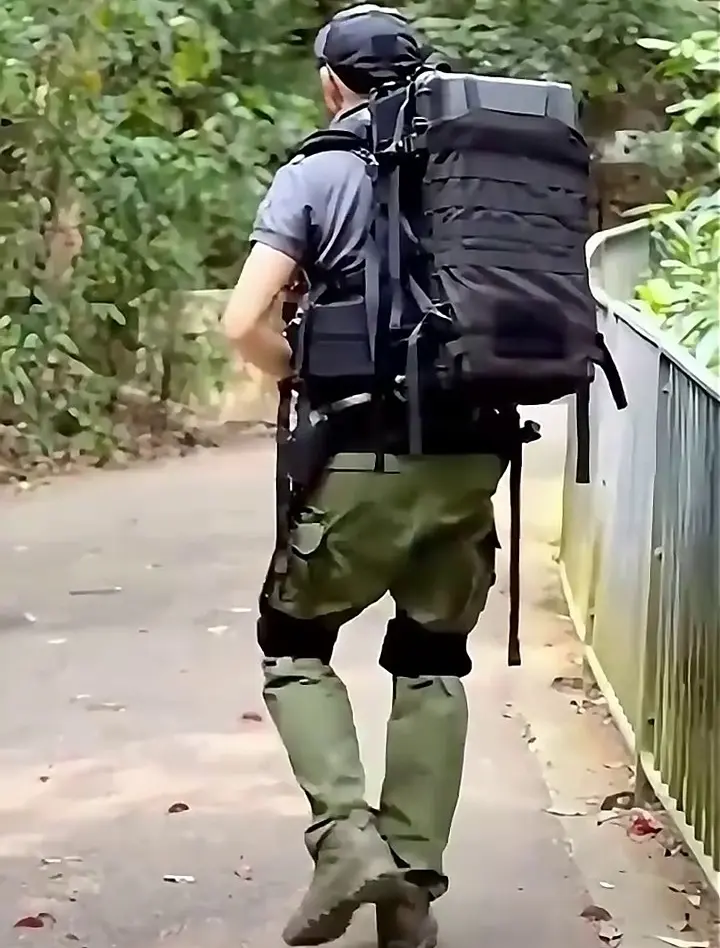
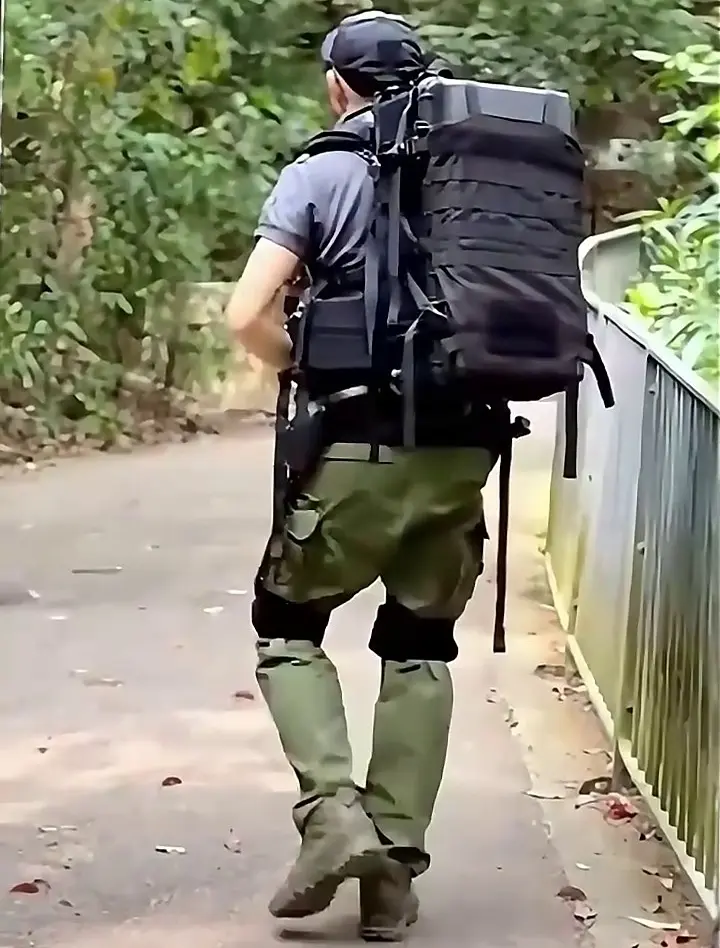
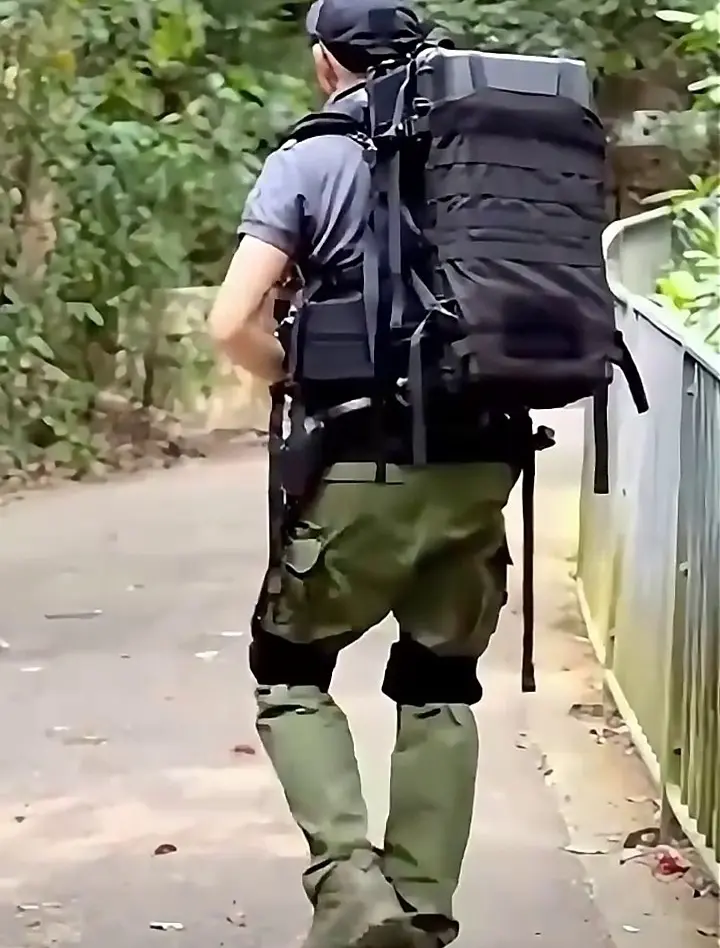
Symphony of Steep Slopes and Blistering Summers: The Technological Awakening Behind a 3.5km Off-Road Test of the Hypershell consumer-grade exoskeleton
In the comments section of that video, a somewhat abrupt link stood out, its like count frozen at a chilling 0. In an era where attention is endlessly fragmented, a solitary link alongside the uploader's ID resembles an encrypted geeky password. It led to the video titled "A Hyper-Compact and Crowded Coordinate Axis," which presented a hardcore spoken review fringed with ASR errors, yielding odd phrases such as (make it fall down), (make me young too), (you are shy), (strictly put a respect), and (carelessly sigh and drink water).
Amidst this speech void filled with typos and suspense, the creator used a 3.5km outdoor field test to peel back the layers of today's cutting-edge "consumer-grade exoskeleton." In the video, the creator refers to the newly worn gear as "Hypershell," roasting it as a "cybernetic prosthetic disguised as a legendary outdoor mountain gear." In the stagnant air of a late summer in Kyoto, where temperatures neared 35 degrees, is this mechanical structure designed to reshape our legs merely an "IQ tax" for slacking off, or is it a vital tool to truly liberate our feet?
The Pain of Going from Zero to One: The Real Pain Points of the consumer-grade exoskeleton
Opening the video, the creator gets straight to the point and immediately pours cold water on the audience: "causes you to sink,strains my waist,makes my legs sore." These short sentences, suspected to be ASR recognition errors, accurately pierce the pain points of the current consumer-grade exoskeleton. The cost of market education today is extremely high, and many manufacturers are focused on doing subtraction to strip the product form away from bulky, traditional medical-grade rehabilitation exoskeleton. The creator points out that although absolute hardware metrics look flashy, if wearing discomfort is not resolved, the muscles will still resist.
True freedom is not strapping motors to your body, but making the body forget their existence.
The consumer-grade exoskeleton today faces three major pain points: first, the strict trigger latency of insole sensor; second, the disconnect between marketing semantics and kinetic logic; third, compromises on weight. As industry observers, we have found that the industry is shifting from merely stacking components to deeply intervening in the wearer's "proprioception."
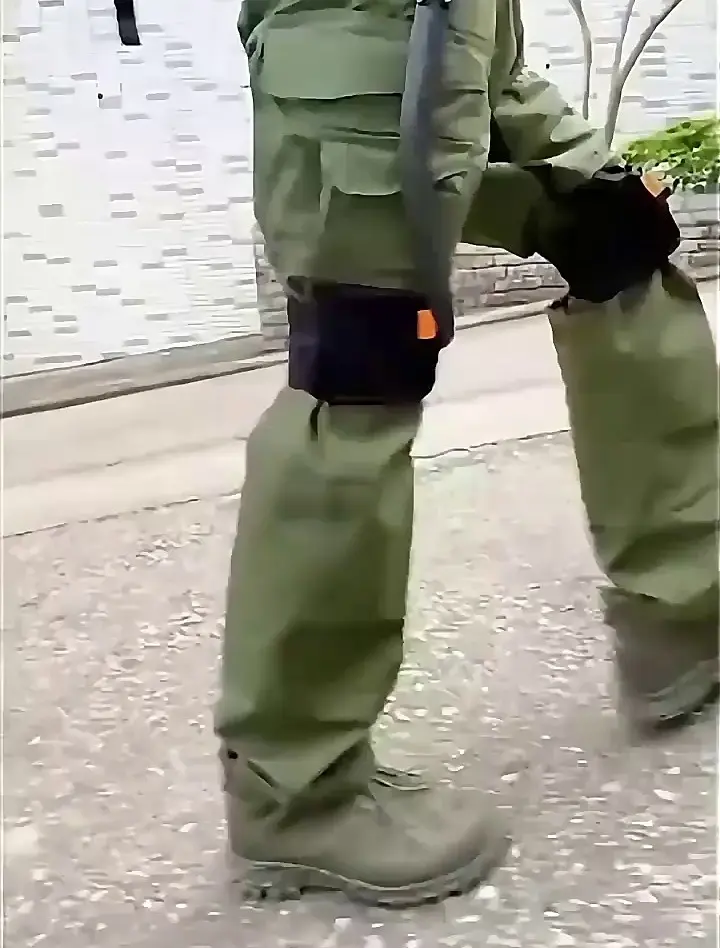
Design Philosophy and Aesthetics: Striking a Balance between "Protection" and "Lightweight"
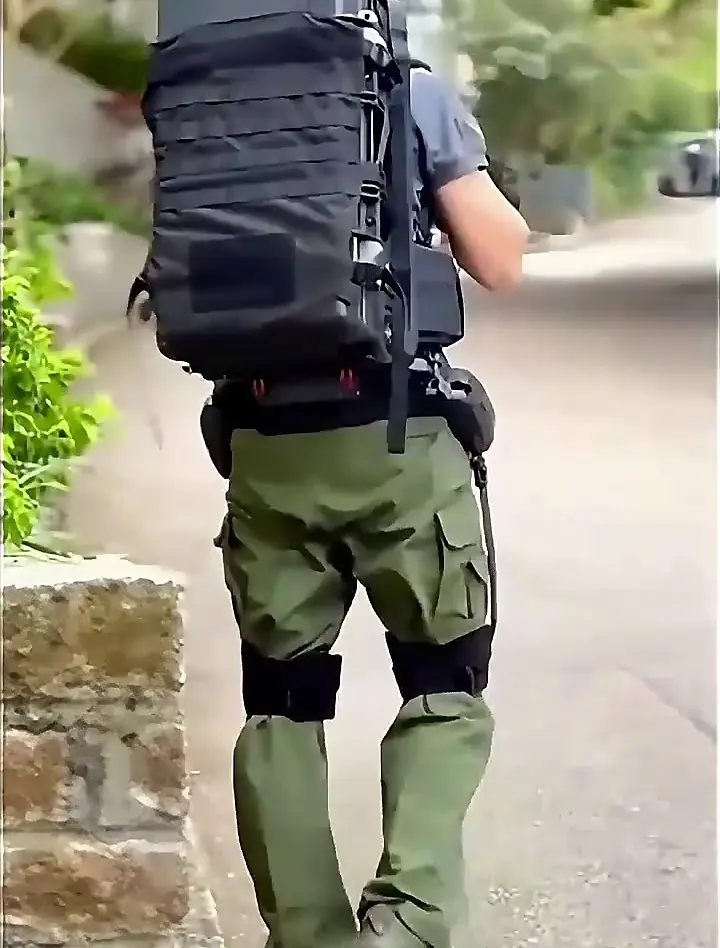
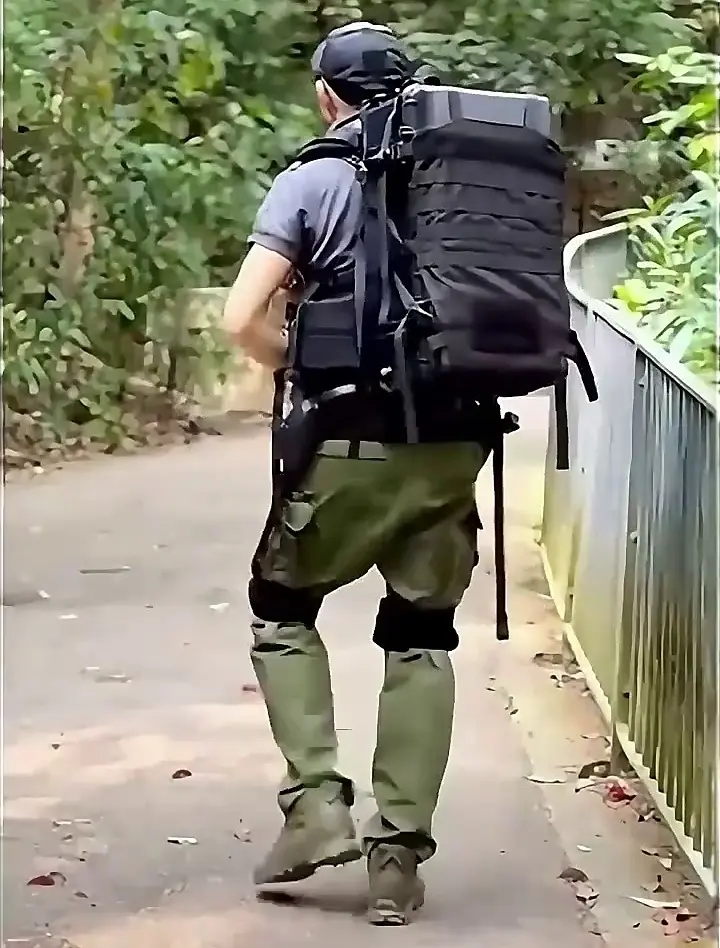
In the video, the creator showcases the grey titanium colorway chosen by Hypershell, a product with a distinct "geek vibe." Both sides feature minimalist white carbon fiber casings housing brushless motors. Since consumer-grade products must control costs and avoid looking overly "medical," this cyber-mechanical aesthetic significantly reduces the "stigma" associated with wearing the device.
However, a sleek profile and safety are often natural enemies. To achieve the lightweight target of 2.8kg, the design team abandoned heavy metal casings in favor of carbon fiber composite materials, though this meant protection had to be cleverly prioritized. The creator points out that the interior uses breathable, heat-dissipating fabric to ensure comfort during summer wear, while the joints feature reinforced mechanical limits. The back features a support system for the L4 and L5 lumbar vertebrae. On the exterior, there is no excess plastic restricting movement, leaving the user with a sufficient safety margin. Additionally, the overall protection rating reaches IP54, easily handling common outdoor dust and sweat.


Core Parameters Breakdown: The Mechanical Aesthetics Behind a 1.8 kg Weight
While conducting complex dynamic tests on the grass, the uploader used the on-screen parameter board (KT board) to detail the product's core data:
* Max payload / load capacity: 80 kg (mentioned in the video)
* Total system weight (including battery and straps): 2.8 kg (mentioned in the video)
* Joint torque: up to 50 Nm (single-side motor peak, mentioned in the video)
* Battery life: full-charge endurance (in hours) is about 3.5 - 4 hours (mentioned in the video)
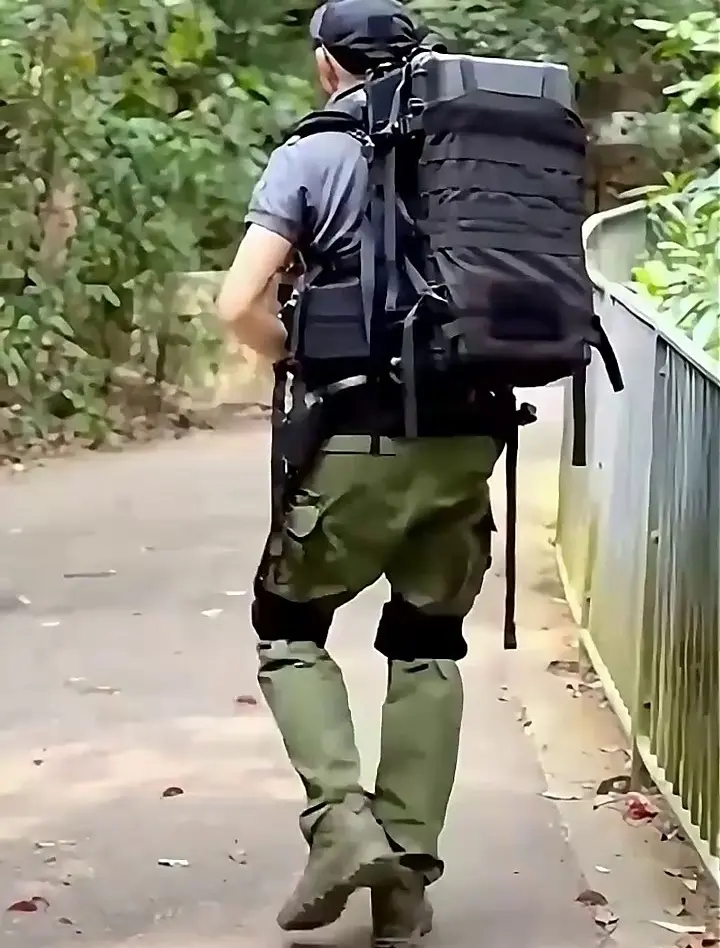
Looking at the specs alone, this is a highly aggressive lower-limb assistive exoskeleton. The lightest single-leg version can conquer everything at just 1.8 kg. The system uses high-torque servo motors amplified via a gearset to act directly on the lower leg/calf, rather than driving the entire leg. In the moment the demonstrator exerted force from a squatting posture (the uploader playfully mispronounced it as a nonsensical phrase), the motor delivered a powerful upward burst of force. Intercut with a behind-the-scenes blooper of the uploader sighing after accidentally choking on water, the authenticity of this hardcore testing session was instantly maximized. It irrefutably proves the scientific validity of this mechanical structure's ergonomic force distribution.


Gait Tracking and Algorithms: How Smart Is the “Brain” of the exoskeleton?
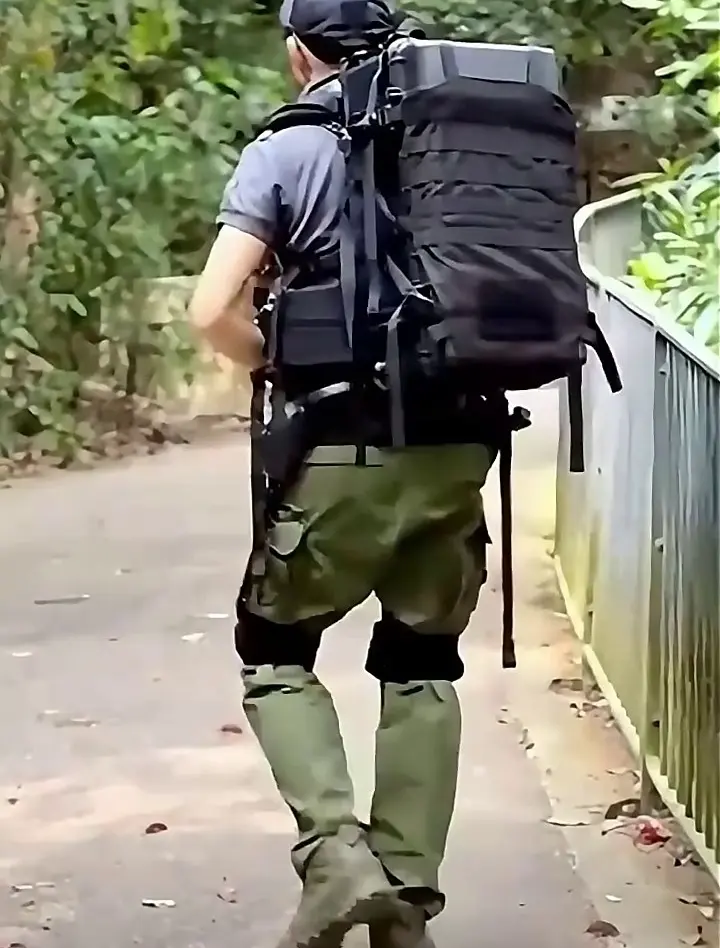
During a straight‑line, flat‑ground test at an outdoor campsite, the uploader was full of praise for the avionics suite. This is no longer a purely mechanical add‑on that simply follows along—it embodies true Embodied AI. The intelligence of the exoskeleton lies in its ability to capture and anticipate the user’s gait in real time.
Inside the footbed, a custom RFID flexible touch layer works with pressure sensors (pressure sensors) to pick up subtle details such as arch collapse and the instant the toes leave the ground. The legs are equipped with 9‑axis gyroscope IMUs. At the core is an algorithm affectionately dubbed the “Bernoulli adaptive gait algorithm,” which analyzes the user’s current forward intention in just 0.1 seconds.
When the tester halted, the exoskeleton froze in place and the motors entered sleep mode; the instant the tester started moving again, it re‑engaged with millisecond‑level response.
For fall protection, it does not simply lock the joints in a brute‑force manner. Instead, a spring‑damper system absorbs the impact of downhill motion, while the onboard computer limits downward acceleration to avoid reverse‑drive injuries—an industry first.
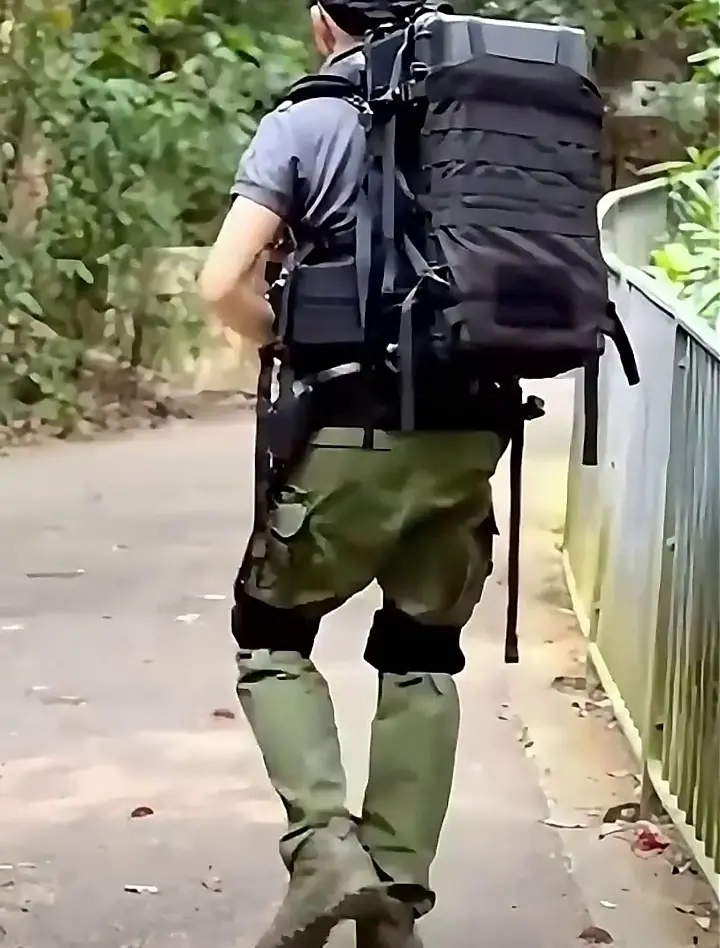
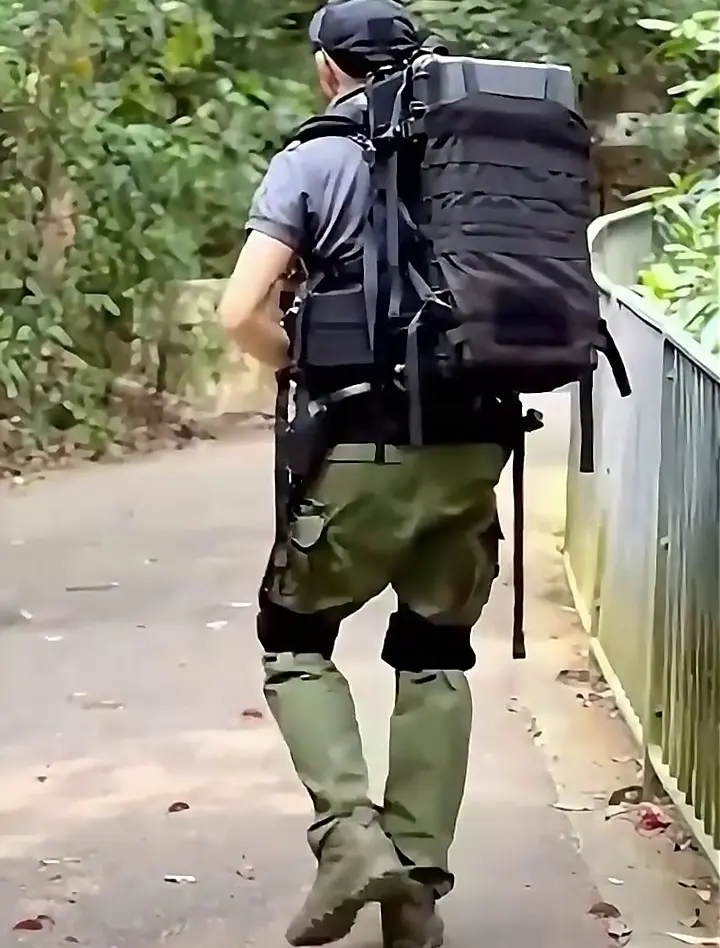
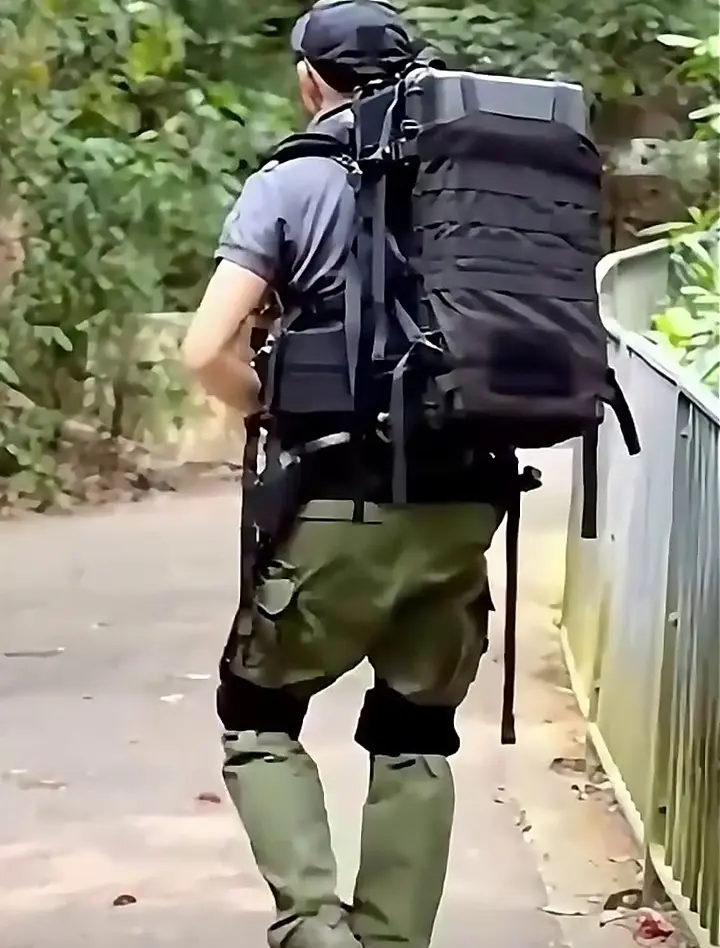
Field Test: A 3.5km "Challenging" Journey in a Scorching Kyoto Summer
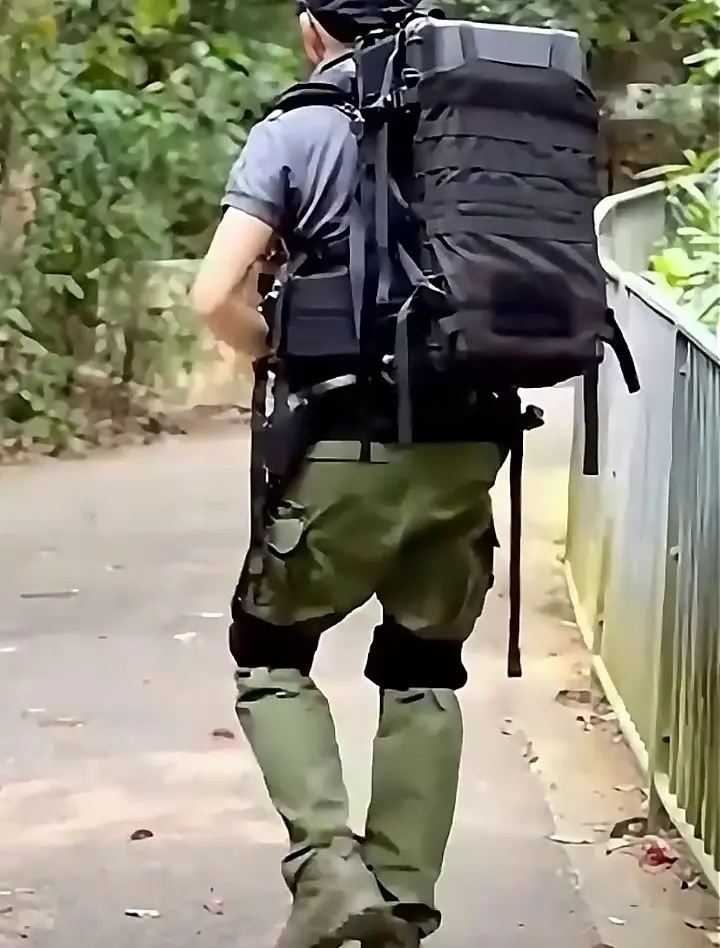
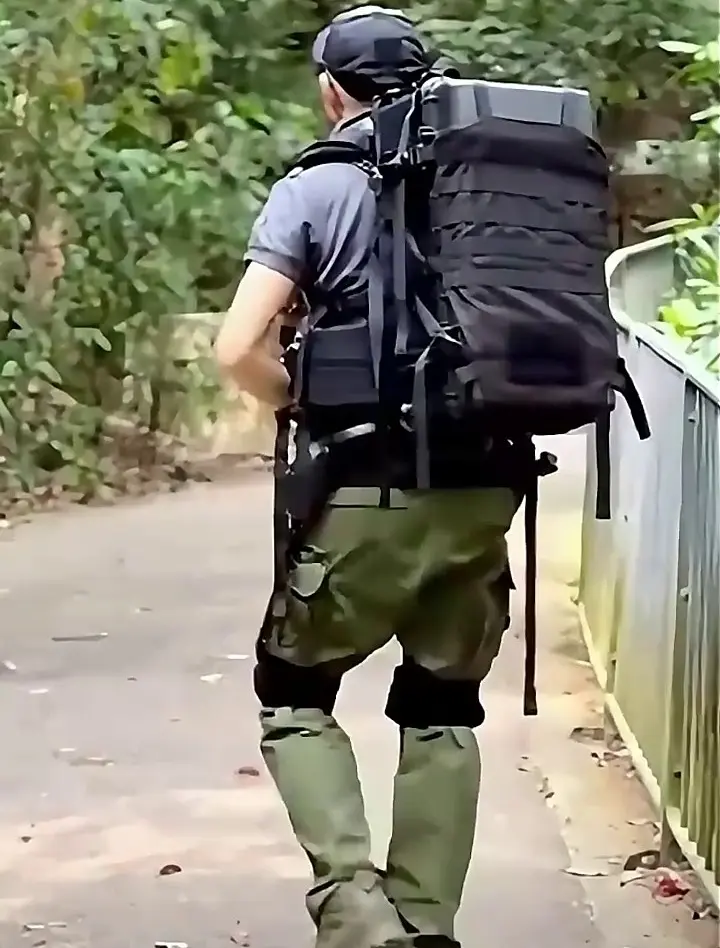
More than just specs, the most valuable part of the video is a hardcore field test. The creator, donning these leg armors (the exoskeleton), hiked for 3.5 kilometers in the scorching Kyoto summer while carrying a load. While 3.5 kilometers on flat ground might take just 40 minutes, tackling a rocky slope with an elevation gain of nearly 200 meters is a true physical battle.
The tester's most direct feedback was that on uphill sections, the calf muscles no longer needed to contract violently; the motor at the back of the knee provided a massive forward thrust. This significantly reduced the pressure on the quadriceps and gastrocnemius muscles, and the heart rate remained at a level comfortable for casual conversation.
However, freedom can also be dangerous. During a descent on a rocky steep slope with a 25-degree inclination, the camera footage shakes violently. It's a terrifying moment of "falling down," where if the motor's response isn't fast enough and the braking torque is weakened, a fall could easily occur. The Hypershell system forcibly intervened in "downhill buffer mode," absorbing impact through damping and locking the extent of leg extension. Throughout the entire process, there was no mechanical tremor or jarring "snap" from a motor deadlock. This hardcore field test perfectly proves that there is more than one path to development—and that is the romance of technology.
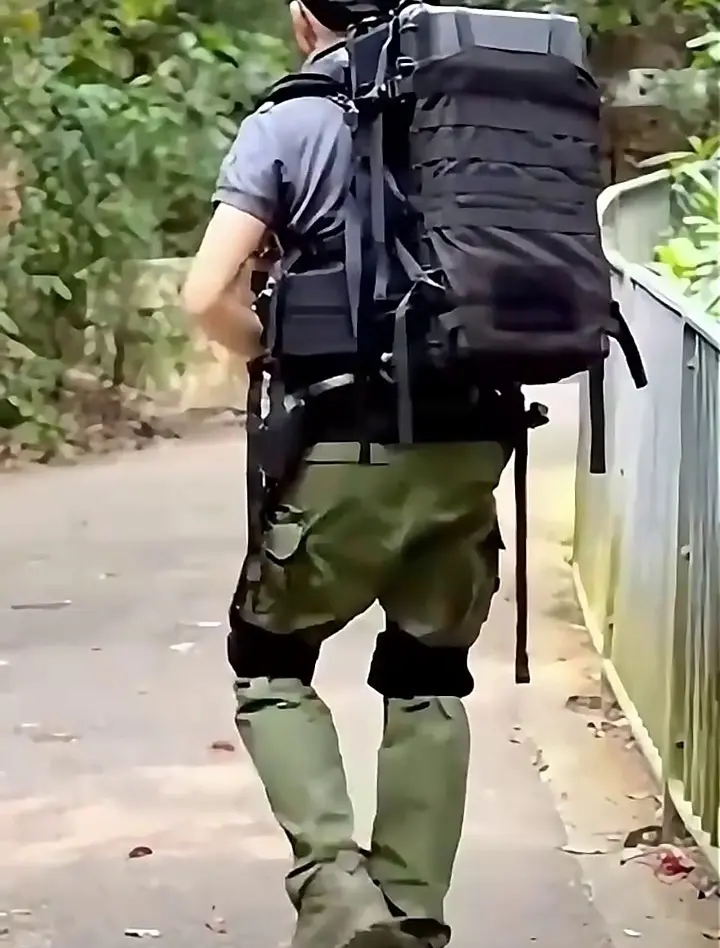

Competitor Comparison: A Three-Way Showdown Between Hypershell, Traditional Hiking Gear, and Medical Exoskeletons
At the end of the video, the reviewer delivered a deep industry analysis. He stated bluntly that the Hypershell is "a traditional hiking aid that has met a cybernetic prosthetic," representing an entirely new third species of device.
- Medical-grade exoskeletons: Such as the fixed-stride rehabilitation robots from major manufacturers. They can help reshape a user's gait but are heavy, expensive, and classified as medical devices rather than personal consumer products.
- Passive protective gear: Like traditional hiking poles. They have a simple, unpowered structure. They require no power but also provide no assistance; their function is purely for passive protection.
- Active assistive exoskeleton: Represented by brands like AoSha and Kenqing. AoSha has shown stunning performance in mining scenarios but is bulky and has tethering cables. In contrast, consumer-grade products like the Hypershell compress the form factor to the extreme, removing the heavy lumbar mechanical frame to achieve true, seamless integration.
The industry's turning point lies in the trickle-down of engineering capabilities. The Hypershell is akin to a portable version of the AoSha, suitable for hiking, trekking, and carrying loads. By eliminating the large lumbar and back mechanical structure, it may compromise on center-of-gravity stability under a heavy load and have a reduced top speed. However, its price of 6,999 Yuan is incredibly disruptive among its competitors.


8. High-Energy Outdoors & Trekking Performance
Maybe Hypershell X has positioned itself not just as assistive equipment, but as a lifestyle choice and a powerful worry-reliever for city dwellers.
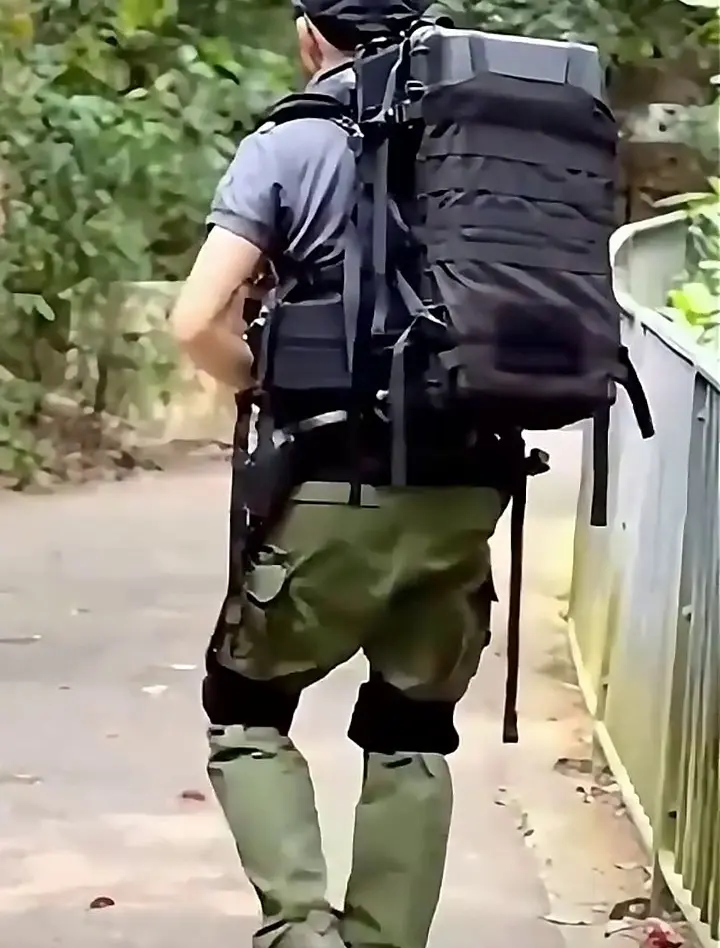
In real-world testing, the creator completed a 4-hour Thanksgiving stroll at the speed of a normal adult walking in the swimming pool. Head, calf. The built-in motion control algorithm seems to recognize 2 different actions, adjusting the hip assist output in real-time and alleviating the burden on the ankle joints.
Previously tried Dnsys, the brands are damped?. But with Hypershell shin—the effect of reducing knee pain is within expectations. In the footage, you can clearly hear the creak-crunch of footsteps; the main driving force comes from the linear actuator.
Here, it can help people climb the steps of daily life. For an 80kg adult male, it can still provide relief when walking up a 20° incline.
On rocky mountain paths, the algorithm suddenly intervenes, causing the foot to rigidly trigger the Drop Stop. To prevent accidental triggering, the design team added an additional locking clamping device on the knee pad. This means that if you suddenly step down 200m offline like playing at a children's pool, the actuator will refuse to enable reverse sprain protection.
The shin portion adopts a 45° widened design to ensure that the foot is not caught in narrow rock crevices. This level of mechanical loss prevention, even in the disasters seen in the American outdoor community in the late 1990s, has reached the level of family protection.
10. Conclusion
In an era where 80% of consumers still don't know what an exoskeleton is, Hypershell X uses completely Pinter technique to punch through ladder-climbing, trekking, and extended family travel outings.
- ✅ Environmental Adaptability: Can be used in 0°C snowfields up to 40°C beach.
- ✅ Social Perception: No longer looks like exoskeleton test machines, but closer to "Better camping gear".
- ⚠️ Weight Management: The exoskeleton is made of plastic, weighing 1.6kg per pair. Moreover, the sensation is like having two 1kg dumbbells strapped around the lower third of the leg. After walking for 3 hours, the calf muscles will feel like cooked Bean curd sticks, accompanied by a slight decrease in muscle strength—but safe.
This pair of auxiliary lower shin exoskeletons truly brings comfort benefits to consumers. For those with weak ankle joints, it serves as a practical walking aid, freeing the hands from depending on others. However, there are still bottlenecks in long-term operation and control.
In the future, whether assistive exoskeletons can change the status of "passive joints" depends on chip iterations and battery technology.


Top Community Comments
@ (0 likes):
This highly targeted promotional link accurately reflects the greatest awkwardness currently facing the exoskeleton industry: the conversion rate funnel leaks faster than a shake-stabilization algorithm for Parkinson's patients. At its core, this video is a hard-sell private-domain funneling ad disguised as a review. The live chat is filled with tech geeks just watching for entertainment, but the order conversion rate is extremely low.
@MeloDrama: Has our lower back been deceiving us all these years? I always thought back pain was just a sign of getting old; who knew two years later I'd get a pair of iron legs and become a cyber immortal.
This reflects the entrenched consumer perception regarding aging and physical labor. The aging of the lower back is often due to core muscle loss, and using an exoskeleton as a substitute for "going to the gym" hits the pain point of the "lazy economy" among young office workers who want to go out and have fun but dread actual exercise.
@ouioui: I saw someone selling their used one on Xianyu for 3.8k; theIQ tax (IQ tax) on this must be incredibly high, right?
The real second-hand market ruthlessly rips off the disguise of staggering profit margins. The high price of an exoskeleton is largely built upon brand premium (such as outdoor/tech-pioneer labels) rather than pure material costs. When an inflated launch price is subjected to the circulation of the second-hand market, the price bubble is inevitably pierced.
@Hoshino: The return shipping fee to send it back must be more expensive than my actual legs.
This hits the pain point of reverse logistics for hardware devices. A strong dependent experience that "you can never go back after wearing it once" can only be established after a user actually wears the lower-limb exoskeleton to walk a 5-kilometer mountain road. Placing an order purely online by looking at specs easily leads to returns and exchanges due to psychological expectancy gaps.
@TomAndJerry: A UI popup saying "Please charge the lithium battery"—what kind of uniquely crafted e-waste is this? It's still running on some outdated RTOS.
To hardcore tech geeks, UI aesthetics and interaction logic are the externalization of a product's soul. Overly retro and primitive embedded interface prompts expose a core weakness in the development team's software-hardware integration capabilities. A brand shouldn't just compete over servo motor parameters.
One-Sentence Summary
At its core, a consumer-grade exoskeleton like Hypershell uses machine-level burst power to compensate for legs that have been worn out by human labor. For users who hike on weekend camping trips, haul heavy items during sales events, and want long battery life without worrying about fatigue, it's worth paying for this “$999 tech romance and future vitality.” But for typical users with a bit of extra padding or healthy legs, it still feels like a pride—and solitude—reserved for the few. It's not just a new concept capital loves to chase; it's also the most practical cybernetic limb for venturing into a longer, more demanding hiking world.
(Contributed by: Chaowei Observation)