The "Invisible Companion" on Your Calf: Hypershell XUltra S Hands-on Review — What Is It Like to Be Pushed Uphill by an Exoskeleton at Yinggexia, Chongqing?
A Long-Awaited Update: Two Unlikely Devices in One Trip
Long time no see. Due to work commitments, I haven't been able to shoot videos for you all for quite a while. This rare update comes because I recently have two very interesting devices in hand, and they happen to fit perfectly into the same scenario —
For this trip, I brought along two things: one is the trendy, must-have DJI Pocket 4 Pro you see here, and the other is a product category I've almost never interacted with before — a consumer-grade exoskeleton from Hypershell.
So, we managed to find some free time this weekend, headed to a place called "Yinggexia" near Chongqing, and picked a short, beginner-friendly trekking route. We plan to spend the whole day testing exactly how well these two devices perform together. When we set off, the weather gods weren't on our side and it was still raining, but luckily, the forecast for the next day is clear — fingers crossed that the skies will be kind to us.

First Impressions of Yinggexia: Itinerary and Positioning
Located in Fuling, Chongqing, Yinggexia is a short hiking spot that is extremely friendly to beginners. While it is called hiking, it is actually closer to light outdoor recreation in the urban suburbs. The route is not long, consisting mainly of steps and mountain trails, with views of the Wu River visible from afar along the way. This type of route is precisely the perfect scenario to test an assistive exoskeleton: the gradients are real, but not so steep that professional gear is required, making it ideal for observing the device's real-world performance in daily scenarios.


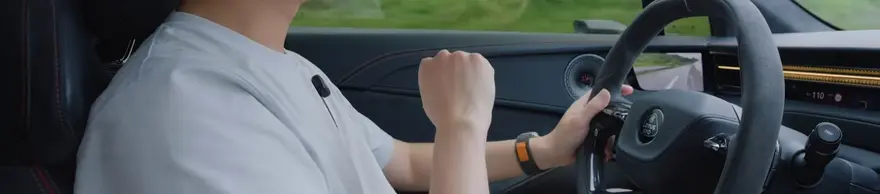
The gear strategy at departure was simple: the Pocket 4 Pro handled the video recording for the entire journey, while the Hypershell took on the core role of this experience. As seen in the footage, even a light drizzle did not dampen our spirits.


Initial Wearing Experience: The Correct Way to Put on the Exoskeleton
Right now, we have in our hands Hypershell's flagship product—the Hypershell XUltra S. To be honest, as someone encountering this product category for the first time, I didn't have many preconceptions. However,judging from the packaging and the initial handling, this is undoubtedly their top-tier version.
In terms of materials, it utilizes carbon fiber for the core load-bearing components, while the rear features structural parts with alloy. This results in a relatively lighter overall weight and stronger performance. The wearing process isn't actually complicated; you can get it on by following these core steps:


- First, adjust the lumbar scale. There is a scale adjustment mechanism on the back. I can follow the prompts on the mobile app to set the scale to a suitable position—in my case, setting it to 2 is perfect.
- The fixing straps for the back and waist should be moderately loose initially. Once tightened, they provide a high degree of fit without feeling loose or sloppy.
- Next is securing the calf portion: you need to fasten the two points below onto your calves (at a position roughly two fingers above the bottom of the knee). Here is an important wearing detail: the height cannot be too low. It needs to be approximately two fingers above the bottom of the knee to ensure the assist actuator does not hinder the bending and stretching of the knee joint.
However, I did discover a practical issue during the initial setup:
The two straps on the calf completely block the pants pockets. You absolutely cannot fit your phone in your pockets. If you are used to wearing sweatpants with side pockets, that space will be entirely occupied. I suggest either pairing it directly with a pair of supportive knee-pad pants or using the official storage accessories.
Fortunately, the manufacturer has considered this issue, and the package includes corresponding accessories, allowing you to store personal items like your phone directly onto the device. The button logic is quite simple: press once, then press and hold to turn it on. The moment it powers up, you can feel a distinct force on your calves—
“I can feel a bit of force.” Once fitted, from the moment you start walking on flat ground, you clearly feel a force propelling you forward. It feels very much like an invisible companion has been added to your walk on flat terrain.



Appearance and Hardware: Carbon Fiber Deployed, Even the exoskeleton Engages in Weight Reduction
If you are encountering the Hypershell XUltra S for the first time, there are a few details worth pausing to observe.
First is the cost and trade-off regarding materials. Its extensive use of a carbon fiber chassis makes it significantly lighter than traditional alloy materials while providing an extremely high strength margin. For an assistive exoskeleton that must be worn for long periods, the overall weight reduction is often just as important as the max payload capacity—if the weight you carry is too heavy, the joy of the assist is significantly diminished.


Secondly, the overall structure is divided into three segments: upper, middle, and lower—a lower back main unit, actuators on the calves, and straps. All areas involving adjustments have sufficient scale margin, meaning users with different waist and leg circumferences can all find a relatively comfortable setting.



Overall, the Hypershell XUltra S is the least exoskeleton-like exoskeleton I have seen so far. It is sufficiently light and sufficiently sleek, making it look very much like a consumer-facing digital product rather than a bulky, 'ancient' exoskeleton existing in factories and laboratories. One could say it is more like a microcosm of wearable hardware moving from the laboratory to the public eye.


Real-World Experience: On Mountain Trails, the Boost Feels Like Someone Pushing You From Behind
Once we set off, the first thing we did was dig into the companion app. After pairing, the settings screen lays out the full interaction logic at a glance.
The software already ships with classic adaptive motion recognition—an on-device AI algorithm detects your movement intention in real time. It tells whether you’re hiking, climbing stairs, or cycling, then pulls your power-generation cues straight at the algorithm level, delivering walking assist that feels precise and seamless.


This shows up immediately on the trail. We cranked the assist level to “Extreme” (or, more accurately, the top tier within the comfort range—around 50 percent output) and prepared for a real challenge.


The uphill experience is honestly stunning:
It’s not the sort of feel where straps crudely yank your legs upward, but rather a sensation where, the instant you lift a leg, a force swaps in to lift it another notch. Sometimes, you’ve only half-stepped forward and you can practically feel the assistive exoskeleton giving you a push from behind. Honestly, if I hadn’t seen the gradient myself, I’d rarely bother to hike this section, but wearing it feels like someone just gave me a firm boost at the back.

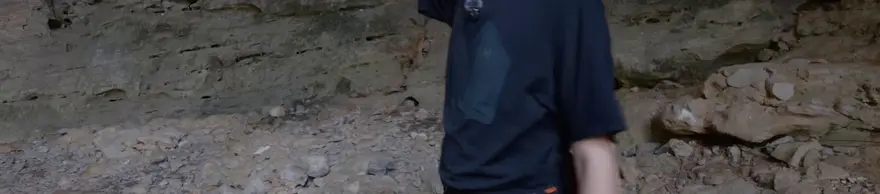
That almost magical drive filled me with anticipation for the rest of the trek. The next stretch was steep and wild—cliffside edges, broken wooden planks, a few exposed steel bars, and the Wu River’s wind rising from below. The path was dicey, yet the self-balancing support and fall-protection logic in the hip assist exoskeleton gave me the confidence to keep moving.



Downhill, however, the device changes its personality: it almost “leaves you alone.” That means when you truly need to hike, its intervention is something you choose—not something that fights your rhythm.



A Bug That Needs to Be Seen: It Still Pushes You When You Stop
However, I discovered an issue while walking downhill across a boardwalk. When you finish a flat section and want to stop to rest or enjoy the scenery:
"When you try to stop, it feels like the device anticipates your movement. It senses that your left leg is about to lift again, so when you try to stop, you will feel your left leg pulling forward on its own—the motor will twitch a bit."
In other words, there is a lag in the algorithm's recognition of the "stopping" action. The initial phase of lifting the leg to stop is mistakenly identified as a step preparation. Improving this scenario is not difficult—by introducing more boundary conditions into the algorithm or directly increasing the weight of the "stopping" determination. For users like me who only occasionally use the device, this is just a minor issue. However, I recommend that potential buyers upgrade their firmware to the latest version.



Recording with the Pocket 4 Pro: A Seamlessly Intertwined Downhill Trek
Another thread woven through the entire recording experience was the DJI Pocket 4 Pro. As the most polished pocket gimbal camera currently on the market, it demonstrated excellent stability on the mountain trail. Meanwhile, wearing the exoskeleton on the downhill trek, my biggest takeaway was a state of mental "flow."
For a steep downhill trail of merely one kilometer, the exoskeleton felt more like a "portable power unit" rather than a complex piece of hardware requiring a steep learning curve. Of course, the experience isn't completely flawless yet, and there is still room for software optimization. However, from a product logic perspective, this direction has been completely validated.
This also highlights the target demographic established by Hypershell: they are likely not stereotypical tech geeks, but rather individuals who value a high quality of life and want to enjoy the outdoors more effortlessly. For them, having the assistance provided by an assistive exoskeleton, alongside a device ready to capture the moment in your pocket, represents the quintessential travel style of this era.


Data Recap: How Far Can It Really Go?
Due to heavy wind and rain, as well as filming requirements, we made a brief stop here today. Next is a review of several objective, hard specs.
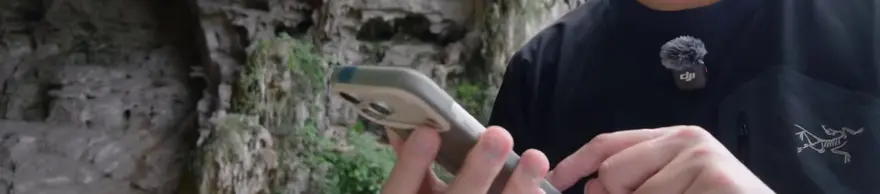
According to the data from the day, we covered a total of 1 km and gained 73 meters in elevation. The distance data shows 927 km remaining (clearly indicating 91% battery level left).
“If we calculate based on today’s heavy usage intensity and route, 10 km of hiking per battery is definitely not an issue. The kit also includes a spare battery, so by rough everyday logic, roughly 20 km of continuous hiking is entirely achievable.”
From an energy-consumption standpoint, the exoskeleton’s endurance (in hours) is genuinely surprising. In our real-world scenario—uphill extreme mode plus frequent stop-and-go on mountain trails—power draw still stayed within an acceptable range. At a typical hiker’s pace, using two batteries for a 15-km mountain route means you don’t need any extra power source. In other words, it has a clear “long-distance hiking” quality.
After the descent: the feeling of being bound, and a few memories
The way down the mountain was effortless, the terrain’s undulations gradually softening. At this moment, Skylark says off-camera:
“I feel like I’ve been abducted by something. I can’t stop—it keeps pushing me onward.”
This “being pushed up the mountain” sensation is still oddly enjoyable in retrospect. On non-professional trails, Hypershell delivers a wholly positive experience: it’s not a complicated contraption you need to “understand”—it’s an assistive system you slip on, start walking, and gradually forget you’re wearing.
Looking back at the grey stone walls, remnants of the timber walkway, and the distant Wu River, it really was a day closer in spirit to a “test drive.” If you’re searching for a new way to experience the outdoors, this is worth a try.
Top Community Comments
@HeySiriSayHey-YouSay: Haven’t seen Weiyang in a video this long for a while—missed her. I really love hearing you talk on camera.
Do viewers missing the creator’s upload cadence mean they want a more regular, more polished release schedule? Or are they hoping for more relaxed, near-city outdoor content like this?
@kaxifafa: Did you borrow this from the neighbor?
It’s a typical joke, but taken seriously, it shows that the audience is still unfamiliar with consumer-grade exoskeletons—borrowing “from the neighbor” tends to imply some cool tech that hasn’t become mainstream. This comment actually points to an industry threshold: products like these are still quite far from becoming everyday gear.
@PiantianQiwuNongxin: Bro, I gave you a one-tap triple support. If you have time, take me along next time.
Behind that one-tap triple support often sits an interaction driven by a desire for companionship. For fans curious about the “tethered” experience, they want to check in at the Eagle Song scene in person and use it while walking. At this stage, the audience for this type of gear is indeed concentrated among people with high tolerance for the “new and novel” and who have real outdoor scenarios within their daily radius.
One-Sentence Summary
The performance of the Hypershell XUltra S this time represents an unlikely "dimensionality reduction strike" by a consumer-grade exoskeleton on real mountain trails—leveraging its lightweight design and assistive experience, it brings the assist that could previously only be found in medical or industrial contexts into the weekends of ordinary people. This time, it has at least proven that an "invisible companion" worn on your feet can genuinely help you outdoors. The target audience for this content primarily consists of light trekking enthusiasts, as well as tech geeks who are curious and willing to try new things.
About this article: part of Chinese-Made Exoskeleton Review Archive — an independent, regularly updated English archive of reviews of consumer exoskeletons made in China, edited from publicly available video transcripts. Not an official manufacturer page.
For inquiries and purchasing, contact lonlonago@foxmail.com. More in Reviews · All articles.