Turning the exoskeleton into a "joint parts library": Dnsys breaks down the concept of "reducing leg burden" with the X1+Z1
When was the last time you felt your legs were a bit heavy? After climbing three floors, walking ten thousand steps, or hearing a slight pop from your knee when crouching down?
The video opens with a question: In the current dual explosion of the silver economy and hiking/camping, who should be responsible for reducing the burden on the lower limbs? Traditional knee pads only provide support without power, while consumer-grade exoskeletons often equate being "heavy" with being "clumsy". Dnsys’s solution is to split the exoskeleton into two independent parts—the X1 (hip joint) and the Z1 (knee joint)—allowing users to purchase and combine modules for specific joints as needed, just like assembling a PC. Below, we will break down these experiences one by one, following the six segments of the experience chain shown in the video.
1. The Complete Product Picture: One System, Three Lineups, Two User Groups
Dnsys actually divides its product matrix into two main lines: home-use consumer models and medical rehabilitation models, both built on a shared "wear-free ergonomic architecture" and a "modular combination design." This means what you are buying is not just a finished product, but an assembly-ready parts library.
The brand positions itself as a "lightweight smart lower-limb exoskeleton device," not a robot or a walking machine, but a tool designed to "assist your walking."
The first lineup is the "lightweight series" aimed at everyday households. The fully assembled X1 hip version has a total weight of about 1.6 kilograms, and the Z1 knee version is about 2.0 kilograms. In the consumer-grade exoskeleton space, this weight class leans toward the lighter end of the spectrum. It targets a very specific demographic: seniors with leg fatigue, individuals with hip joint strain, and post-orthopaedic surgery patients who need recovery. The scenarios are equally everyday: strolling, grocery shopping, walking up inclines, and short outdoor trips.
The second lineup is a professional model stationed in the rehab departments of top-tier hospitals. The video explicitly states it holds "Class II medical device certification" and has already been adopted by major hospitals such as 301 Hospital, Xiangya Hospital, and Xuanwu Hospital. This positioning creates a clear boundary with the consumer-grade line—it is not designed simply to "save effort," but to "rebuild gait."
The third lineup is the combined configuration of the X1 and Z1. If you are experiencing tightness or strain in both your hip and knee joints simultaneously, the X1 and Z1 can be used together to form a complete dual-joint power chain. This is arguably the most insightful takeaway from the entire video: it deconstructs the concept of an "exoskeleton" from a "single monolithic whole" into an "assembly of joints," allowing users to configure their own lower-limb exoskeleton as easily as selecting hardware specs for a PC.
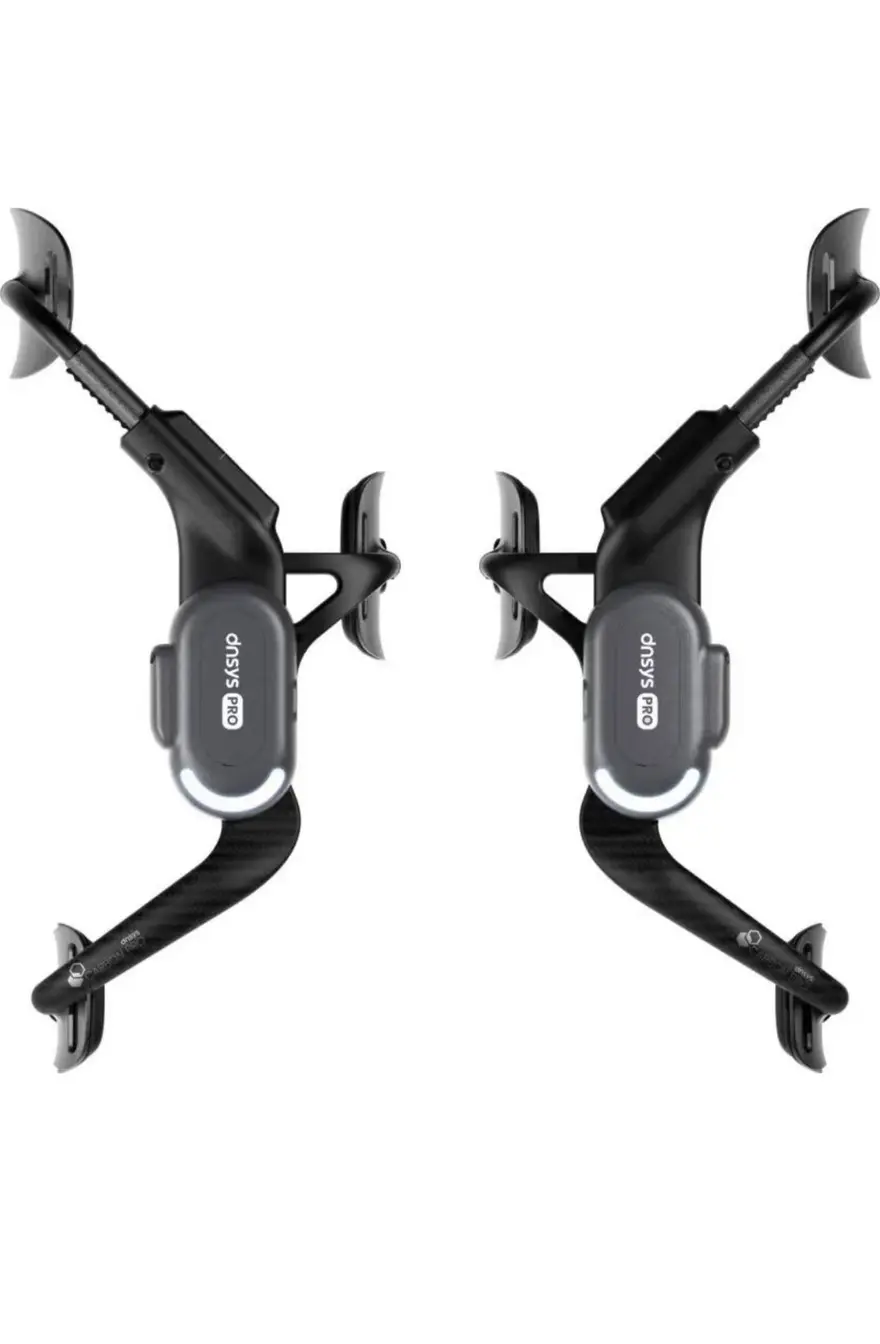


2. X1 Hip Joint Edition: 1.6 kg of "Lifting Assist" — Can It Cut Your Effort by Half?
The core selling point of the X1 is simple: it helps the user lift their legs. The video mentions that it "effectively assists with lifting legs to walk and hiking / trekking assist," claiming it "can save 50% effort" and "reduce the load pressure on the lower-limb." However, we need to adjust the phrasing here: the video uses terms like "save effort" and "reduce load," and does not make an absolute promise like "50% lighter in weight." But in the consumer-grade exoskeleton field, "saving 50% effort" is a parameter that needs to be reinterpreted — it doesn't make you lighter in weight, it simply means you exert half the effort when lifting your legs.
The entire device has a weight of about 1.6 kg, which the official description calls a "lightweight wearable assistive device." This weight class is quite competitive in its category — traditional full-leg lower-limb exoskeletons often weigh 4-5 kg, and wearing one for just ten minutes makes you start questioning your life choices.
Two versions, two orientations. The XE Scaven carbon fiber lightweight model uses carbon fiber to keep the weight low, making it suitable for long periods of wear; the XE Standard conventional version places more emphasis on structural rigidity. If choosing by "usage intensity": the lightweight version is for those primarily walking on flat ground, while the standard version is for situations requiring climbing or carrying a load.
The key phrase for the wearing experience is "unrestrained wear." The video describes it as having "no binding restraints, with a tight waist fixation that clings to the body." The design logic is clear — the exoskeleton's force doesn't rely on straps tightening harshly, but rather fits closely to the body through waist fixation, transmitting power to the hip joint. When actually wearing it, you feel like you're putting on a pair of pants with a motor, rather than being strapped to a machine.
On the intelligent assist front, the video mentions "AI adaptive gait adjustment" and "intelligent gait recognition." This indicates that it isn't a rigid assist where "it moves even if you don't," but rather one that can recognize the gait rhythm you are currently walking at and match your effort rhythm with power. This is the biggest difference between a consumer-grade exoskeleton and a toy: the ability to "read your feet."
 | Overall appearance of the X1 Hip Joint Edition, with the waist fixation structure clearly visible | image_path
 | Schematic of the X1 wearing effect, with tight waist fixation clinging to the body | image_path
 | Comparison between the X1 carbon fiber lightweight model and the conventional standard version | image_path
3. Z1 Knee Edition: 20 kg Assist to Make Your Knees "Able to Bend" (Squat-Ready)
If X1 solves the problem of being "able to lift your legs," Z1 solves the problem of being "able to bend your knees."
The video presents a rather impressive figure: it can provide up to 20 kg of lift assist. This number needs to be understood in context: it is not a sustained pulling force, but rather a burst of assist that kicks in when your joint bends to a certain angle, helping to share the pressure that your knee bears. The video describes this as "sharing the knee's weight-bearing load,easily assisting squat-to-stand," and "walking up and down stairs." Translated, it means: it makes it less painful for your knees when you squat down and stand back up.
Z1 comes in two versions: the Z1Single, which provides independent assist for a single knee, and the Z1Dual, a dual-knee linked, wide-knee combined assist version. This distinction is quite practical: if only one knee is problematic, you don't need to pay for the other side. If both need assistance, the dual-knee linked mode ensures left-right gait symmetry. This basically conveys the modular approach the video wants to communicate: you are not forced to pay for joints you don't need.
The usage limitations were also clearly filmed: "It cannot be worn when the knee is completely immobilized after surgery or when the joint cannot move freely." This is a crucial warning—an exoskeleton is an assistive device, not a stationary brace. If you need strict immobilization post-surgery, wearing this could actually be risky. It is suitable for the stage where your "knee is usable but feels strenuous to use," not for the stage where it "cannot move at all."
Weight is Z1's weak point. At 2kg, it is heavier than the X1's 1.6kg, and wearing it on both knees for a long time will cause a noticeable sense of downward pull. However, considering it provides knee joint assist, the center of gravity is toward the front, so the actual physical feeling might not be as exaggerated as the specs suggest. This still needs to be verified upon handling the actual device.
 | Z1 knee exoskeleton close-up, mechanical structure concentrated behind the knee
 | Z1Single single-knee assist and Z1Dual dual-knee linked version display
 | "Squat-to-stand assist" demonstration, schematic of knee force curves
 | Action demonstrations of walking up and down stairs
4. Medical Rehabilitation Version: The Answers from 301 Hospital and Xiangya Hospital Are Not the Same Species as Consumer-Grade Devices
The video switched here to key information: Dnsys's medical rehabilitation exoskeleton holds "Class II medical certification" and has been adopted by multiple tertiary hospitals, including 301 Hospital, Xiangya Hospital, and Xuanwu Hospital. This certification and the hospital channel placement directly set the product's ceiling — it is not an exoskeleton that "can enter hospitals," but one that is "in clinical use."
"It is primarily used for professional rehabilitation training for people with lower-limb hemiplegia, mobility impairments, and severe lower-limb injuries." It can monitor walking data and scientifically help patients restore limb mobility.
The differences between the medical version and the home-use version are structural. Home-use exoskeletons aim to "reduce effort," making it easier for healthy users to walk and helping those with mild fatigue walk farther. Medical rehabilitation exoskeletons aim at "reconstruction" — helping patients literally relearn how to walk by reshaping neural pathways through repetitive gait training and progressive exercise on the affected side. In terms of specifications, the medical version has higher motor output, higher joint torque, and higher sensor accuracy, and it also emphasizes traceability for clinical records.
This reveals an industry reality: many online products sold as "rehabilitation exoskeletons" cannot even use the word "rehabilitation" — they are "assistive devices," not "medical devices." Dnsys's decision to explicitly separate the medical version is itself a statement of product confidence. The unit you see at 301 and the unit you can buy on an e-commerce page are two different species under the same system.
 | Image of a medical rehabilitation exoskeleton in clinical application
 | A patient wearing the medical version during rehabilitation training
 | Monitoring interface for walking data from the exoskeleton
 | Tertiary hospital setting, within the rehabilitation department
5. Customized Setups: Match the Joint, Not the Model
The most practically valuable part of the video is its presentation of three combined setups. It essentially serves as a practical toolbook for making product decisions.
Setup 1: Hip Joint Discomfort Only / Post-Operative Hip Recovery
Use the X1 Hip Edition alone. This user profile typically describes someone who has "no problem walking, but experiences fatigue when climbing, stepping up, or walking for long periods." The X1 targets the leg-lifting action without interfering with knee bending. The video mentions it "effectively assists in lifting the leg for stepping and climbing," saving up to 50% of the effort required — meaning half the effort, not necessarily half the weight.
Setup 2: Knee Joint Discomfort Only / Post-Operative Knee Recovery
Use the Z1 Knee Edition alone. This user profile typically describes someone who "can walk, but struggles with squatting or climbing stairs." The Z1’s 20 kg lifting assist engages precisely during this phase.
Setup 3: Wear and Tear in Both Hip and Knee / Post-Operative Recovery for Both Areas
Use the X1 and Z1 in tandem. This represents the complete configuration and the ultimate form of the modular approach. When both your hip and knee require assistance, the standalone X1 and Z1 can work synergistically to form a complete power chain for the lower limbs.
This logic is actually quite similar to the thinking behind graphics card SLI or DDR, M.2 expansion cards: You don’t need to buy the most expensive setup right away; instead, start "on-demand" and add components incrementally. While consumer-grade exoskeletons are still attempting to appeal to everyone with a frail, "all-in-one" design, Dnsys has chosen a "modular" path. The trade-off for this approach is that it requires more powerful kinematic algorithms for coordination, which conversely places serious emphasis on the challenge of "dual-joint synergy."
 | Schematic for Setup 1: Hip Joint Only
 | Schematic for Setup 2: Knee Joint Only
 | Diagram of X1 and Z1 Combined Synergy
 | Kinematic Curve Chart of Simultaneous Dual-Joint Actuation
6. Wearing Experience and the Product's Overall Core Advantages
In its experience wrap-up, the video breaks the exoskeleton's strengths down into four points, which we'll examine one by one.
First, comfortable fit. "Strap-free design — the shoulder straps don't press against the neck or shoulders, and limb movement stays flexible." This description matters, because many exoskeletons fail for the simple reason that "putting them on is more tiring than wearing them to work" — the securing straps dig in and become a nuisance. Dnsys instead fixes the device snugly against the body at the waist, without relying on shoulder straps to carry the weight. This design logic is closer to "hanging" than "binding," so theoretically, long-term wearing comfort should beat that of traditional full-leg exoskeletons.
Second, buy what you need. "Clear single-joint and dual-joint versions — no unnecessary extra weight, and a better cost-performance ratio." This is the natural dividend of modular design. If you only need hip assist, there's no reason to pay for a knee joint module you'll never use. This logic hasn't yet been fully absorbed by mainstream brands in the consumer-grade market — many products still impose the hidden tax of a "one size fits all" approach.
Third, smart assistance. "AI-adaptive gait adjustment that matches the body's natural walking rhythm." This is where the technology gets deep. The real difficulty isn't "being able to exert force," but "exerting the right force at the right moment." Gait is a high-frequency, phase-sensitive movement — if the motor applies force too early or too late, the user feels "someone is holding them back." The "smart gait recognition" mentioned in the video suggests the sensor chain includes at least an IMU plus a pressure sensor array, and that the algorithm is already being optimized for everyday gait.
Fourth, wide range of scenarios. "It covers multiple uses — daily home outings, outdoor walking, post-operative rehabilitation, and professional medical training." This is the kind of language you expect at the product-positioning level, but it does map a genuine product coverage radius: from the food market to the orthopedics clinic, from brisk park walks to the rehabilitation training center.
Weighing all four strengths, I'd say the product's One-Sentence Summary is: it turns the exoskeleton from "one whole piece" into "the sum of its parts" — a solution rarely seen in the industry.
 | Exploded view of the core leg-joint assist structure
 | Motor and reducer installation positions
 | "Strap-free" design that leaves the shoulders and neck pressure-free while worn
 | IMU sensor and plantar pressure sensor placement map
 | AI-adaptive gait algorithm flowchart
 | Everyday walking scenario
 | Outdoor walking scenario
 | Close-up of the upper-limb and lumbar securing structure
 | The three configuration tiers of modular purchasing
 | Joint torque curves during squat-assist
 | Movement sequence for going up and down stairs
 | Gait curve synthesis during dual-joint coordinated torque output
7. Product Boundaries and Future Possibilities
Of course, there are quite a few aspects not covered in the video. For instance, the battery life and endurance (in hours) (no specific hours mentioned in the video), max payload / load capacity (no specific weight rating given), charging time, IP rating for water and dust resistance, noise levels, and potential skin marks from long-term wear. If these specifications are missing, they will become questions for potential buyers during their purchasing decision.
There's also a crucial boundary: the Z1 is explicitly not for post-operative cases involving "complete immobilization and a lack of freedom in the joints." This demonstrates that an exoskeleton is fundamentally an assistive device, not a replacement device. If you expect that putting it on will instantly "heal your legs," you're looking at it the wrong way. The correct way to perceive it is as an "external muscle" for your knees, helping to share the workload that should otherwise be handled by your own muscles.
Another area for industry imagination is what will happen when this modular approach is combined with large AI models. Dnsys has already created a digital twin of "joint torque patterns." Their next step will most likely be "personalized gait pre-adaptation." For example, by using two weeks of wearable data, the device could automatically generate a profile of the most suitable assist parameters for each individual user. This would be far more advanced—and valuable—than a factory-preset "default mode."
 | Future concept: AI-driven personalized gait adaptation
 | Home storage and charging scenario for an exoskeleton
__IMG2 | Conceptual image of the exoskeleton in hiking / trekking scenarios
__IMG3 | A vision for the future path of lower-limb exoskeletons in orthopedic rehabilitation
8. Modular Exoskeletons Are Reshaping the Consumer-Grade Exoskeleton Market
After watching the entire video, my strongest impression of Dnsys is this: they are a remarkably clear-headed company.
Instead of trying to please everyone with a heavy "all-in-one" solution, they adopted a modular approach, turning their product into a "joint parts library." Behind this lies a harsh reality: in the consumer-grade exoskeleton industry, the blind pursuit of being "bigger, stronger, and fully covering the body" simply doesn't work—users don't need a heavy 4-kilogram walking machine; they need "a precise, timely boost on the joint, exactly at the split second it is needed."
Another sign of their clear-headedness is their persistence in medical certification and clinical channels. While many companies making consumer-grade exoskeletons choose to bypass hospitals and launch directly on platforms like Douyin and JD.com, Dnsys first introduces their medical version to institutions like Hospital 301 before rolling out the consumer version. The benefit of this is that the product gains "clinical validation" as professional credentials, but the downside is slower volume growth in the medical sector and longer commercial cycles. It's an honest, yet arduous path.
The third clear-headed decision is "no all-in-one." They know perfectly well that obsessively pursuing precise assist for every single step presents massive engineering challenges. Simply being "good enough" is the right path to consumer-grade productization.
 | The "Parts Library" Concept of Modular Exoskeletons
 | Industry Comparison: Traditional Exoskeletons vs. Modular Exoskeletons
| Future Home Scenarios: Exoskeletons Entering the Living Room
| Visualized Summary of Core Product Specifications
| Brand Vision: "Empowering Freedom of Movement"
| The Next Decade in the Exoskeleton Sector
Top Community Comments
"After watching this, I started seriously thinking about getting one for my mom. She says her knees feel uncomfortable after walking for a long time."
This shows that the video actually triggered a "purchase decision" rather than mere curiosity. This comment reflects the real pain point of "daily walking discomfort for middle-aged and elderly people"—especially knee soreness—which is exactly the user segment that consumer-grade exoskeleton targets.
"Would a 1.6 kg device dangle or shake when worn? Are there any mockups or visuals from the video to check out?"
Weight anxiety is the most common concern among all comments regarding exoskeletons. This indicates that the numbers on the spec sheet only convey half the information; the other half must be supplemented by hands-on experience.
"To what extent can a joint assist device 'unload' the knee? Will it actually make my own muscles lazy?"
This reflects a collective wariness of "over-dependence." When we push the "assist" to a 20 kg lifting force, does it mean the muscles are slacking off? This is the users' deepest underlying concern.
"If something is used in Hospital 301, how expensive must it be?"
Consumer perception of price is often constrained by the "medical label." Coupled with the keyword "Class II medical device," many users subconsciously attach a whole set of high price tags to it.
"Has the perception that 'exoskeleton = IQ tax' been broken?"
This comment is the most noteworthy because it maps a technical industry issue to the level of social perception. When hospitals start using them, products launch consumer-grade versions, and modular options for "on-demand purchasing" emerge, it shows that consumer-grade exoskeletons are rendering the "IQ tax" label obsolete.
"I feel the logic of AI recognizing gait is more worth explaining clearly than the exoskeleton itself."
This points to the core differentiator, but ordinary people might not care about this—they care about "will wearing it make me walk more easily," not "whether the underlying algorithm is a gait ↔ motor mapping or a gait ↔ lib model."
"I only care about one thing: can it save me from 'getting leg soreness after walking 10,000 steps'?"
The most unadorned sentence actually cuts closest to the product's essence. The core turning point in consumption upgrades is shifting from "I need" to "I want," and this comment perfectly illustrates that this phrase struck right at the users' hearts.
"It didn't even tell me the battery life / runtime."
This sentence points out a structural omission in the video. The weight distribution among parameters ultimately boils down to simple questions like "how much battery is left after endless use." This segment of the video spent time on "parameter stacking" rather than answering "you need to tell me, how long can it actually last?"
One-Sentence Summary
Instead of attempting to solve every problem with a single universal exoskeleton, Dnsys has utilized a modular approach to the concept of joint offloading, delivering two standalone products. This strategy itself represents a significant directional statement for the consumer-grade exoskeleton field. It targets not the tech geeks, but rather those willing to pay for genuine joint relief.
About this article: part of Chinese-Made Exoskeleton Review Archive — an independent, regularly updated English archive of reviews of consumer exoskeletons made in China, edited from publicly available video transcripts. Not an official manufacturer page.
For inquiries and purchasing, contact lonlonago@foxmail.com. More in Tech & Design · All articles.