The Truth Behind the "Critical Acclaim but Poor Sales" of Exoskeletons: Can Online Rentals and Trials Break the Trust Knot in the Consumer-Grade Market?
Recently, the consumer-grade exoskeleton market has exhibited a starkly fragmented landscape. On one hand, promotional videos for various assistive exoskeletons routinely garner millions of views on social media. From structural teardowns of lower-limb exoskeletons to close-ups of hip assist modules, these clips leave tech geeks exhilarated. Yet, on the other hand, conversion rates on major e-commerce platforms continue to decline. The purchasing power of early adopters—who initially bought on impulse—has been largely exhausted, leaving remaining potential consumers in a prolonged state of wait-and-see. A common question persists: are these mechanical suits, packed with brushless motors and capable of generating astonishing joint torque, truly a genuine demand or just a false one?
1. Praise but No Sales: The Reality of the Exoskeleton Market
In the era of online traffic, meticulously produced product promotional videos are no longer mere windows to show off strength; they are mirrors that magnify consumer wariness. When the exoskeleton stepped from sci-fi movies into the real consumer market, the first challenge it faced was extreme distrust.
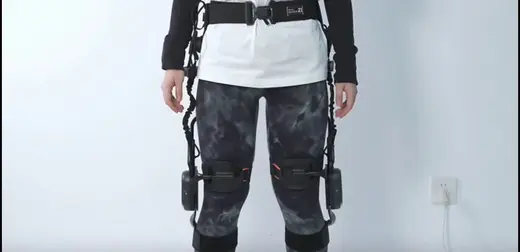
On major short-video platforms, we constantly see polished videos released by various exoskeleton brands: practical demonstrations of users walking effortlessly on flat terrain wearing a lower-limb exoskeleton, alongside hardcore explanations of the principles behind carbon fiber frames and high-precision sensor (IMU / pressure sensor) technologies. These videos garner immense viewership and public enthusiasm, with comment sections filled with exclamations of "the future is here." However, beneath the superficial prosperity of online traffic, very few consumers are actually willing to spend significant money to shoulder the hefty price tag, which can easily exceed ten thousand RMB.
"High conversion rates from exoskeleton videos are a thing of the past. The current market is a classic case of 'watching but not buying'."
Why does watching these videos make consumers hesitate to purchase at such high prices? The reason is very clear: due to the complexity of the human body, everyone's gait and strength habits differ vastly. The actual assistive effect of the device cannot be judged from the video alone, and consumers have no way of knowing if the equipment truly suits the conditions of their legs and waist. This "blind box" shopping experience clashes psychologically with the high price and medical-device nature of the product.
[Insert here: Top-liked screenshots from a brand's exoskeleton promotional video]

[Insert here: Screenshot of an exoskeleton product detail page on an e-commerce platform and its dismal transaction conversion data]
II. A False Premise: The Anti-Tamper Seal Trap Behind "7-Day No-Reason Returns"
In an era where consumers are full of hesitation, "7-day no-reason returns" theoretically provides the utmost peace of mind on e-commerce platforms. However, buried within the purchase terms of some exoskeleton products, this policy has been carefully packaged as a marketing trap.
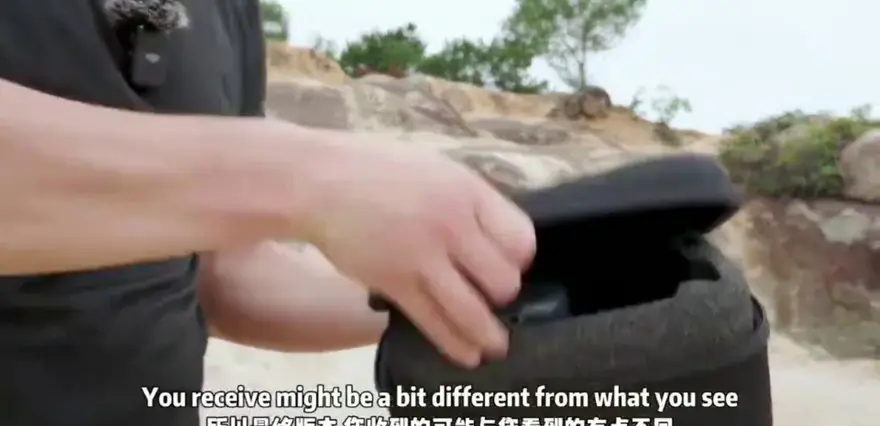
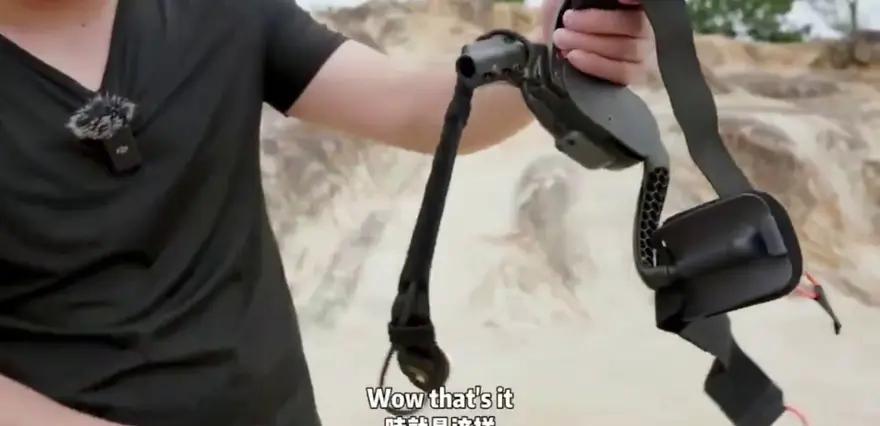
A close examination of the return policies on certain brands' official websites reveals extremely harsh restrictions. While some brands apply an "anti-tamper seal" to the packaging box, ostensibly allowing customers to unbox and inspect it, exclusive machine seals are attached directly to the device's battery strap or core body. If a customer finds the product ill-fitting upon delivery, they are forced to tear off this seal just to try it on. Once the seal is broken, the right to a so-called "no-reason return" is immediately invalidated.
[Insert here: Close-up of the exclusive anti-tamper seal on an exoskeleton packaging box]
[Insert here: Detailed photo of the fragile tamper seal on the device's battery strap]
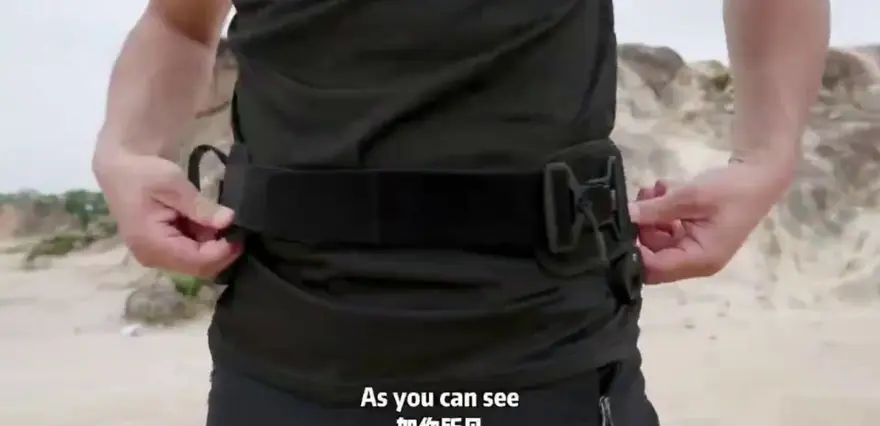
There is an even more covert approach: the device exterior looks perfectly clean with no visible seals, but it features an internal activation system tethered to an online database. The moment the machine is powered on and the motor activates, the system silently logs an activation record in the background. If such a record exists, the 7-day no-reason return is no longer applicable—even if the product appears physically flawless.
[Insert here: Demo animation of an exoskeleton product displaying a backend activation record notification]
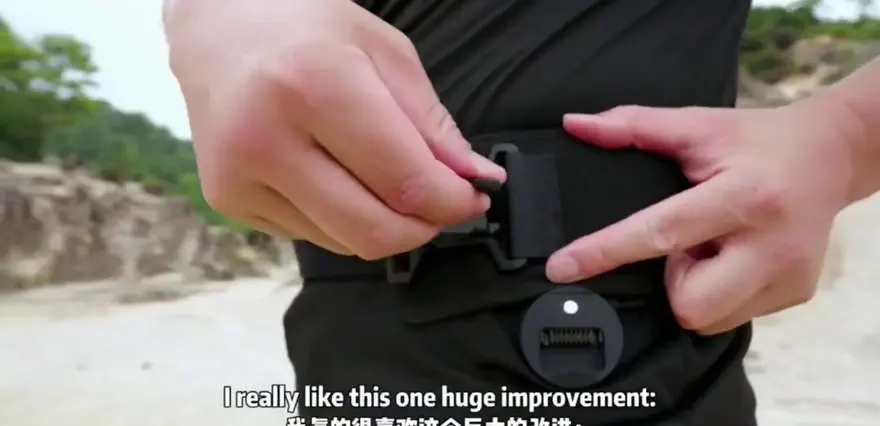
On major content platforms, numerous failed return and consumer-rights cases shared by exoskeleton buyers stand as stark evidence of this deepening trust crisis.
[Insert here: Screenshots of user complaints on social media platforms expressing frustration over being unable to return an exoskeleton]
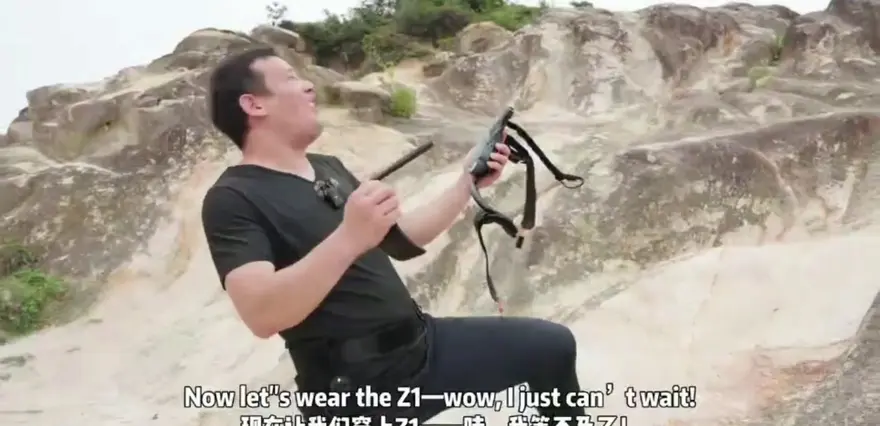
In the face of such bad-faith practices, some honest manufacturers appear much more transparent, explicitly stating that no-reason returns are not supported and only promising replacements for quality issues within a short timeframe. Regardless of the approach, the outcome remains identical: consumers purchasing a high-end exoskeleton online are denied the ability to comfortably wear and experience it at home, and are left unable to decide whether to keep it after confirming it fits their body.
"Tearing off the seal implies a try-on has been completed. However, from the merchant's logic, a broken seal equals a waiver of return and exchange eligibility, which is fundamentally an unfair monopolistic clause."
<<<TRANSLATION_START>>>
3. Physical Stores and Exhibitions: The Limits of "Armchair Tactics"
Given the risks of purchasing online, why not simply visit a physical store or exhibition for a try-on? While this sounds like a perfect compromise, the offline experience for assistive exoskeletons suffers from fatal natural shortcomings.
Users who have visited exoskeleton showrooms know that these experiences often boil down to a formality. With extremely cramped showroom spaces, staff typically just have you put on the device and walk back and forth a few steps on flat ground simply to feel the assist provided by the servo motor. This brief initial experience is far from sufficient to gauge the device's true capabilities in complex environments.
[Insert: Live photo of a user taking tentative steps in place within a cramped showroom] 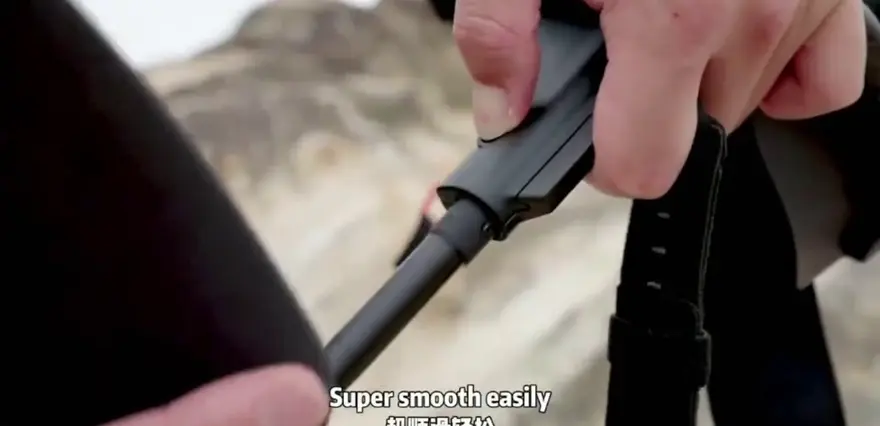
[Insert: Comparison table of exoskeleton parameters, highlighting max payload and battery life] 
For users seeking lower-limb assist or hiking/trekking assist, critical metrics include peak joint torque output when climbing or descending stairs, the comfort of the fit, and whether long-term wear adds extra load to already vulnerable joints. However, most stores not only prohibit taking demo units outside the facility, but even if you enjoy the trial and wish to purchase one immediately, you will often face the embarrassing reality of out-of-stock inventory.
[Insert: Sign at store reception reading "Please Return Equipment After Trial"] 
[Insert: Map of offline exoskeleton experience store distribution across China, showing extremely limited and sparse coverage] 
Moreover, with the vast majority of exoskeleton manufacturers concentrated in first-tier or new first-tier cities, the high costs involved mean that most users in lower-tier markets across the country never even get the chance to touch a demo unit. <<<TRANSLATION_END>>>
IV. Breaking the Deadlock: Online Rental and Home Try-On for Full-Scenario Use
Since online shopping carries high trial-and-error costs and offline experiences often feel out of touch, a new model has emerged—online rental with home try-on. Rather than being swayed by marketing battles from various brands while watching videos, users can simply rent a unit delivered straight to their door.
After the device arrives by courier, users can conduct deep testing in their most familiar daily environment: whether doing household chores in casual clothes, moving frequently between the living room and bedroom, or walking to the residential underground garage to experience real uphill and downhill movement; on weekends, they can even wear it to squeeze onto buses, ride the subway, and feel how well the device supports the pelvis and knees during actual commuting, as well as how effective its self-balancing and fall protection mechanisms truly are.
[Insert: Home footage of a user walking in a lower-limb exoskeleton in real home scenarios]
[Insert: Real photo of a packaged exoskeleton device box delivered to a customer's doorstep]
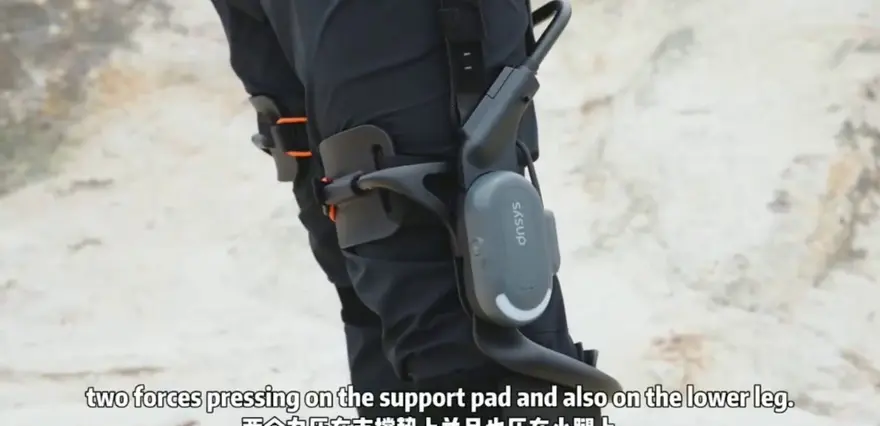
[Insert: Exoskeleton structural diagram showing the distribution of IMU (Inertial Measurement Unit) and pressure sensors]

A simple review captures the essence: "Don't just test on flat ground—go climb two flights of stairs to see if this thing really works." Under real gait testing, even subtle differences in assistive exoskeleton parameters can be keenly detected. Only this kind of immersive, full-scenario experience can fully replace the fleeting, fashion-show-style trials offered by brick-and-mortar stores.
[Insert: Real photo of a user wearing an exoskeleton testing up and down stairs in a residential complex]

[Insert: Field test photo of a young employee wearing an exoskeleton for a long walk on a park trail]

[Insert: Commuting photo of a user wearing an exoskeleton swiping a card to enter a crowded subway station]

This home try-on scenario not only neatly avoids the return trap of "tearing the seal to activate," but also provides the most authentic data feedback on the device's core joint torque and battery life capabilities. As users complete comprehensive scenario testing and discover that it not only shares the burden of gravity when climbing stairs but also delivers powerful lumbar / back assist during load-bearing, their purchase intent will undergo a qualitative transformation.
[Insert: Daily photo of a user wearing an exoskeleton successfully carrying heavy items in a community supermarket]
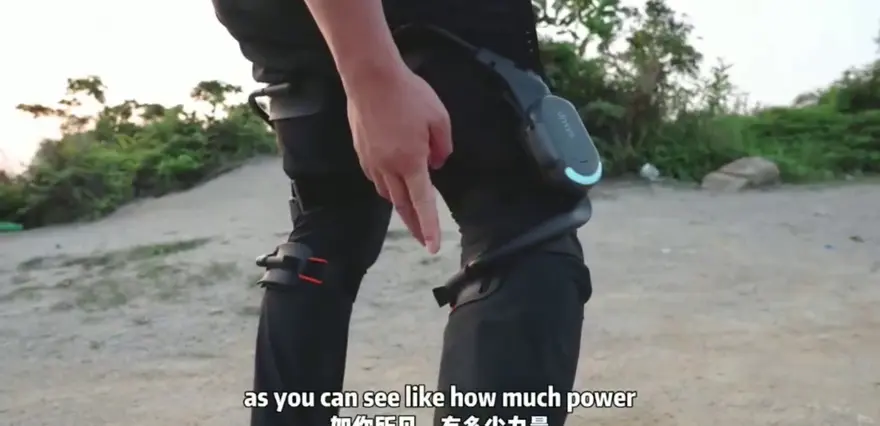
[Insert: Computer backend data model showing force feedback from the sensors at the bottom of the exoskeleton]

5. The Ultimate Strategy: A Customer-Locking Business Model of "Rent-to-Own"
On the surface, online rental and trial sessions solve the problem of limited user experience. But at a deeper level, the business logic is actually a proactive strategy for precise customer acquisition. Many people wonder: Can you really make money by offering rentals alone?
The answer is: It is extremely difficult to profit from rental fees alone. Costs add up quickly—return shipping, equipment depreciation, sanitization and inspection, and manual operations. Running a platform that only offers "trial rentals" would not provide real profit margins; in fact, such a platform could quickly bleed money because of the massive costs of depreciating expensive devices. Rental trials are simply an entry point, while closing the sale of a brand-new device is the real goal of this business.
[Insert: Infographic showing the rules and process of the rental-fee deduction policy]
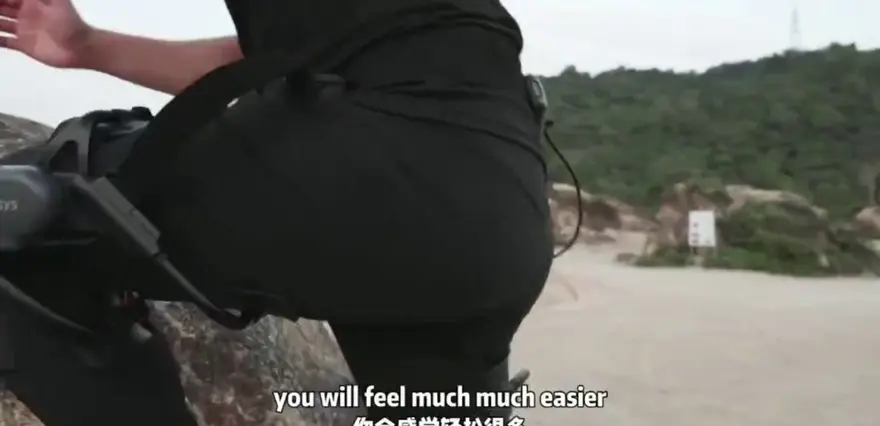
[Insert: UI screenshot showing rental fees being converted into a purchase discount at checkout]

Today, smart platforms have adopted a customer-locking policy—"rental fees can be deducted from the purchase price." If a user rents a device from the platform and is satisfied after the trial, that rental fee can be fully deducted from the price of a brand-new device purchased on the same platform store.
From the consumer's perspective, this rental fee is no longer a pure sunk cost—it becomes the price of an in-depth "trial period." For the rental platform, without a deduction policy in place, users might try the device at home and then immediately buy from the brand's official store or a major e-commerce platform. That means the rental platform would have spent a fortune running real-world product tests for the manufacturer, only to lose the customer at the last moment.
"Without the deduction policy to lock them in, rental platforms basically become free showrooms for official e-commerce stores."
With this deduction policy, customers are firmly locked into the platform channel. It reduces the psychological barrier of making a mistake while also ensuring a high sales conversion rate. This "extract value from every transaction" business model may be tough to operate in the early stages, but the returns on the back end are highly precise.
[Insert: Photo of the return shipping label for the rental device and the shipment notice for the newly purchased device]

VI. The Business Calculus: Brand-built Experience Stores vs. Platform Rental Operations
To fully appreciate the superiority of the online rental model, it helps to look at a real-world case study and crunch the numbers. Taking a prominent Beijing brand specializing in a lumbar / back assist exoskeleton, they initially invested heavily in building their own offline trial experience system, capitalizing on consumer demand to try before they buy.
However, they quickly realized this was a massive capital burden. Renting a decent central location in Beijing for trials runs at least 20,000 RMB a month. Hire a full-time staff member to manage the space, and you're adding another 20,000 RMB in labor and social security. The math is simple: over 40,000 RMB in unavoidable fixed costs every month just to acquire customers for experiential trials.
[Insert: Real-world view of the offline independent experience venue leased and funded by a Beijing exoskeleton brand]  /IMG0.jpg)
[Insert: On-the-spot shot of foreign tourists touring the exhibition hall guided by a professional docent] 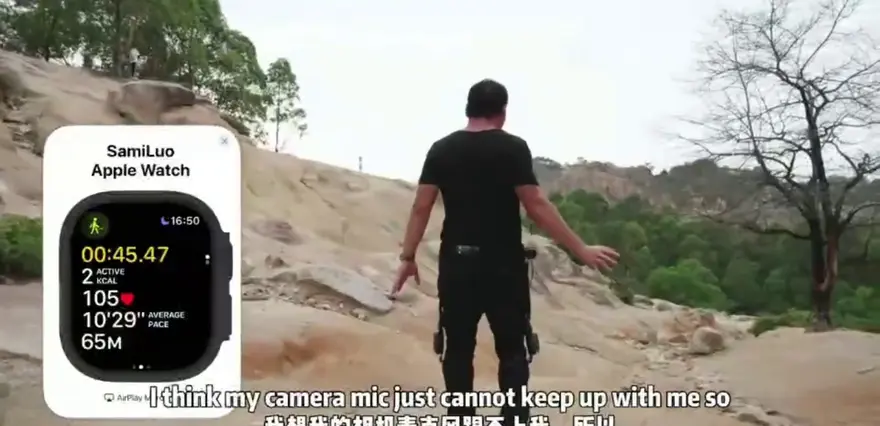 /IMG1.jpg)
This heavy-asset approach has serious limitations. Many offline stores in the autonomous driving and robotics sectors have been crushed by these recurring high costs. In contrast, rental platforms deliver a massive advantage. As third-party platforms, they leverage shared operations and warehousing infrastructure to stock multiple brands at once.
[Insert: Tech setup of a highly profitable offline store featuring 4WD robots and collaborative robotic arms]  /IMG2.jpg)
[Insert: Photo showing offline exhibition hall exoskeleton prototypes left gathering dust in a corner due to scheduling disarray]  /IMG3.jpg)
When weighing efficiency against cost, the difference is stark. As pointed out in a livestream room:
"Building offline experience stores is simply a fatal trap of heavy assets."
Brands often find themselves bogged down by internal inertia and exorbitant customer acquisition costs, making offline experiences incredibly cost-inefficient. Online rental platforms, however, can centralize trial operations for multiple brands through nationwide sales and home-delivery rentals. A single team can handle it all, unlocking exceptional economies of scale and steep reductions in marginal costs.
[Insert: Highly efficient logistics fleet dispatching and shipping packages nationwide directly from a major warehouse]  /IMG4.jpg)
[Insert: Panoramic group photo of the daily operations team of an online rental platform made up of flexible workers]  /IMG5.jpg)
7. Industry Reshuffle Looms: How Long Will the Window for Rental Try-ons Remain Open?
Every business has its lifecycle, and no demand is permanent. From a broader industry perspective, the current online rental model is actually a specific product of the chaotic pre-boom era of the industry.
The current consumer-grade exoskeleton market is a mixed bag, with an endless stream of brands emerging, whether they are pivoting from rehabilitation exoskeletons to the consumer market or offering walking assist devices that are more gimmick than substance. However, within the next five to six years, a major market shakeout is an inevitable outcome. The surviving top brands will undoubtedly be those with genuine assistive effects, a comfortable wearing experience, and the ability to build a dominant position through user word-of-mouth.
[Insert here: A line chart predicting the evolution of the future consumer-grade exoskeleton market landscape]

[Insert here: Screenshot from a comparative review of real-world wearing experiences with multiple consumer-grade exoskeletons on overseas short-video platforms]
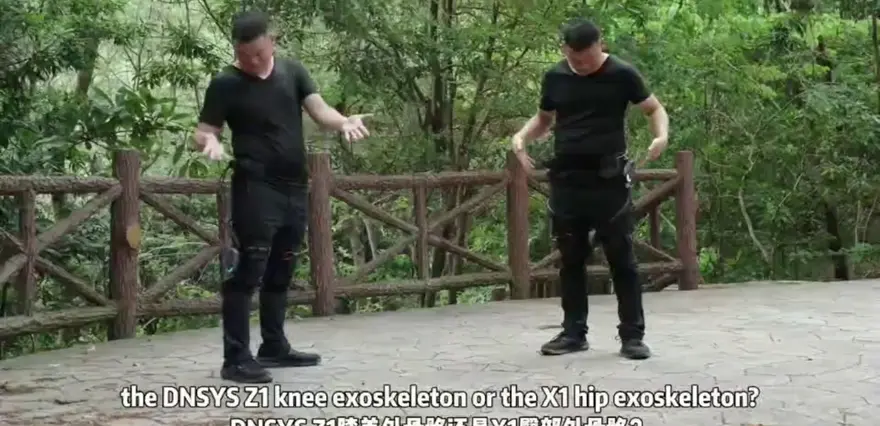
It is foreseeable that as the industry gradually matures and the competitive brand landscape begins to stabilize, consumers' perceptions of their target products will become increasingly clear. At that time, clear purchase consensuses will form among consumers regarding which brand offers the best assist for going downstairs and which model is suitable for daily business trips or long commutes.
[Insert here: A conceptual design image of a personal life record after future exoskeleton products achieve extremely simple wearability]
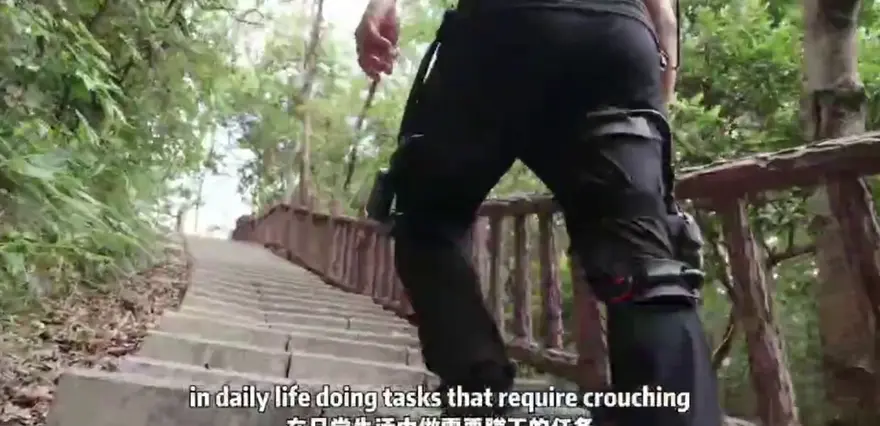
By that stage, the consumer demand for comparative trial-and-error will plummet, and the market value of the rental experience business will naturally decline accordingly. However, evaluation experience from provincial-level tech media tells us: "The rental model is currently in a window of opportunity, but technological dividends will always erase the barriers of business models." Facing the impending elimination round, the solution offered by this online rental model is flexible maneuvering and controlled risk.
VIII. The Bottom Line After the Tide Recedes: Prototype Depreciation, Repositioning, and Product Strategy
The greatest risk in the rental business lies in inventory, but that risk can be fully managed through operational strategy. This business model doesn't require heavy fixed-asset commitments; teams can scale or pause expansion whenever market conditions shift. A key driver of efficiency in these rental platforms is their savvy adoption of flexible operations and outsourced staffing. Retirees are hired on-demand, allowing platforms to scale workforce up or down at minimal cost when demand fluctuates.
In terms of device turnover, when platforms expand into new rental categories, idle prototype units are never left to gather dust. These units are depreciated to 30-40% of original value and channeled as second-hand products—targeted at cost-conscious enthusiasts in lower-tier markets or used for entry-level trial experiences. Far from posing a risk of stagnant inventory, this approach becomes an alternative retail channel that drives revenue recovery.
[Insert: Financial cycle model report chart for new category expansion with constrained budgets]

[Insert: Financial record showing successful fund recovery through discounted resale of idle devices]

The current surge in online rental demand is driven by a fundamental mismatch: the hype in marketing from major exoskeleton brands often overshadows the actual performance gaps, which are hard to expose in simple in-store demo videos.
[Insert: Comparison chart of actual volume and weight of mainstream exoskeleton products worn in street scenarios]

[Insert: Exploded-view diagram of internal sensor layout and core joint module for lumbar / back assist]

[Insert: Multi-brand comparison table of donning and doffing time across scenarios]

[Insert: Real-world interaction footage of an elderly woman attempting to use a walking assist device without a cane]

[Insert: Panoramic indoor photo of a customer unboxing a rented exoskeleton shared on social media]
[Insert: Screenshot of online news report on regulatory inspections targeting “unreasonable return policies” of rental merchants]
Top Community Comments
"Why not just try them on at offline stores? I did, and walking a few steps on flat ground felt okay. But I have no idea how they'd perform when I take them home for my chores, plus they are already out of stock."
Analysis: This comment highlights the most severe issues: the lack of offline offline experiences and the supply chain struggles of out-of-stock equipment. A simple trial walk on flat ground fundamentally cannot validate the relationship between complex human biomechanics and daily working conditions.
"So if you peel off that yellow tamper-evident sticker, you can't return it? Are no one going to step in and regulate this kind of tyrannical policy?"
Analysis: This reflects consumers' outrage over the unreasonable spread of digital-product logic into medical rehabilitation devices. Tying a mechanical tampering mechanism to specific fit requirements is essentially a buck-passing tactic by vendors to avoid trial-and-error costs.
"The older generation absolutely refuses to wear motorized mechanical gear. Just teaching them how to connect to a smartphone could take a whole week."
Analysis: This points out the interpersonal chasm faced when using a consumer-grade exoskeleton for home care. If the wearing process (and APP pairing) is not friendly to middle-aged and elderly users, it will completely become a toy for young people, losing its greatest essential demand.
"Is the lease reliable? Who pays for the shipping back and forth? If you discover it's pretty worn after using it, will they charge you a depreciation fee when you return it?"
Analysis: This exposes the potential fulfillment pain points of the online rental model. Although leasing solves the problem of at-home real-world testing, failing to properly handle high reverse logistics costs and depreciation will prevent the entire chain's revenue from closing the loop.
"What the boss said is the honest truth. I actually rented one during a Special Forces style trip. After wearing it out all day, the strain on the soles of my feet was definitely maxed out, but I can't possibly spend over 20,000 RMB on something I'll only use for a freshman-level weight."
Analysis: This reflects the cyclical behavioral traits ordinary consumers face when dealing with 10,000-yuan-level digital gear. For many young people, exoskeletons remain a "big toy" for short-term novelty, and stable purchasing power for an essential need has not yet formed.
"After watching this video, I called the customer service hotline immediately to cancel my order. I want that feeling of wearing it to stroll around the hospital area, not the dead-heavy lump of iron I bought before."
Analysis: This illustrates the massive expectation gap among different users regarding assistive exoskeletons. What some really crave is the scenario of an urban stroll close to a normal person, rather than pure lower-limb lifting assistance.
One-Sentence Summary
Online rental try-on serves as an advanced channel that combines short-term commercial monetization with long-term health screening objectives. Particularly during rental seasons or when bundled with trade-in discounts for new models, it is highly recommended for independent consumers who are undecided on a specific brand and wish to truly validate the assist effect in real-life, full-cycle scenarios before making a final commitment.
About this article: part of Chinese-Made Exoskeleton Review Archive — an independent, regularly updated English archive of reviews of consumer exoskeletons made in China, edited from publicly available video transcripts. Not an official manufacturer page.
For inquiries and purchasing, contact lonlonago@foxmail.com. More in Industry · All articles.