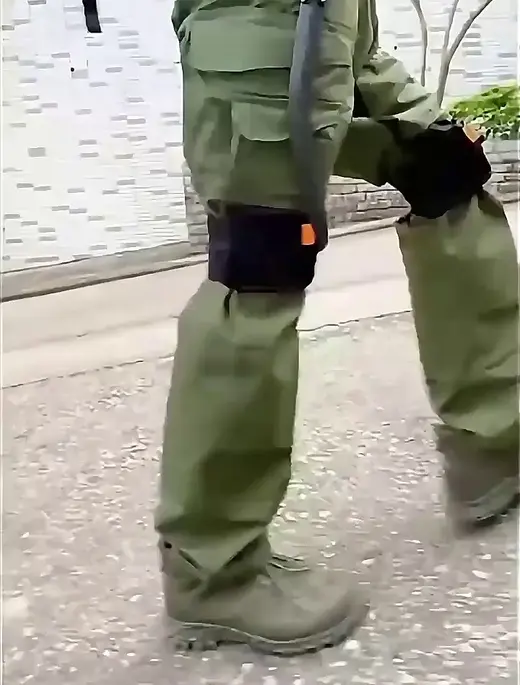
"Three to four jin" on the legs, double-tap assist +25%: This consumer-grade hip assist exoskeleton "has something," but Wutong Mountain is its real testing ground
In the opening half minute, the creator Fengge skipped the unboxing, skipped rattling off specs, and instead long-pressed for two seconds to cut straight into Extreme Mode. Over the next six minutes, he got shoved forward by the assist, couldn't figure out "how to stop," tore down the linkage and motor on camera, threw out a soul-searching question—"how does it know I only want to take a 20-centimeter step this time?"—and finally landed on his verdict: pretty fun, I'll buy one and try it for myself.
In between, there was a livestream-style mystical banter—a viewer asked about getting tangled in a legal dispute over their business and whether they'd win the case in November. Fengge thought for a second: "Sure, hope you win." The entire hands-on unfolded wrapped in that kind of chill vibe.
But strip away the variety-show filter, and this video actually walked a complete review chain for a consumer-grade exoskeleton: the assist feel is real, the interaction is rough, the principle is clear, and the real testing ground—irregular mountain gait—hasn't even opened its exam.
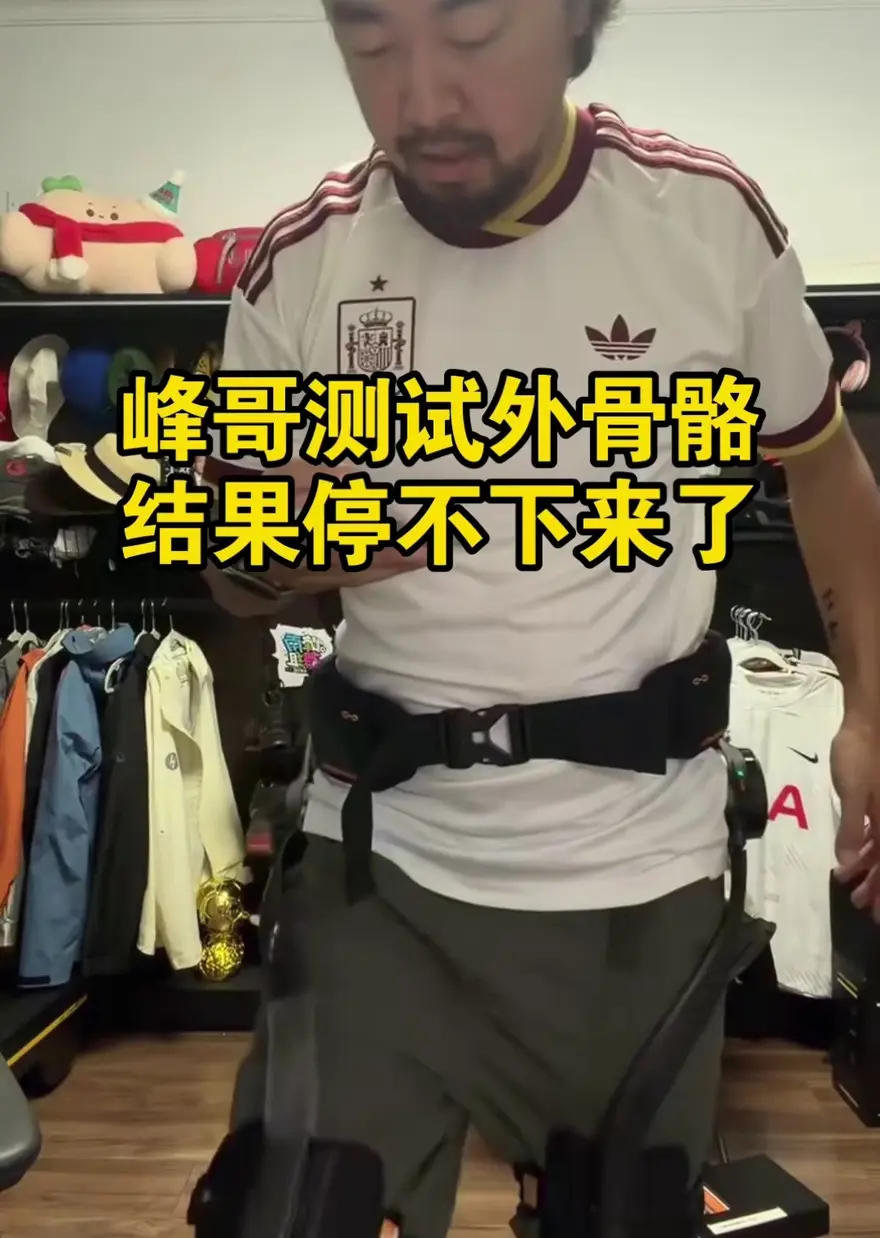
Hands-On Straight Into "Extreme Mode": This Thing "Has Substance"
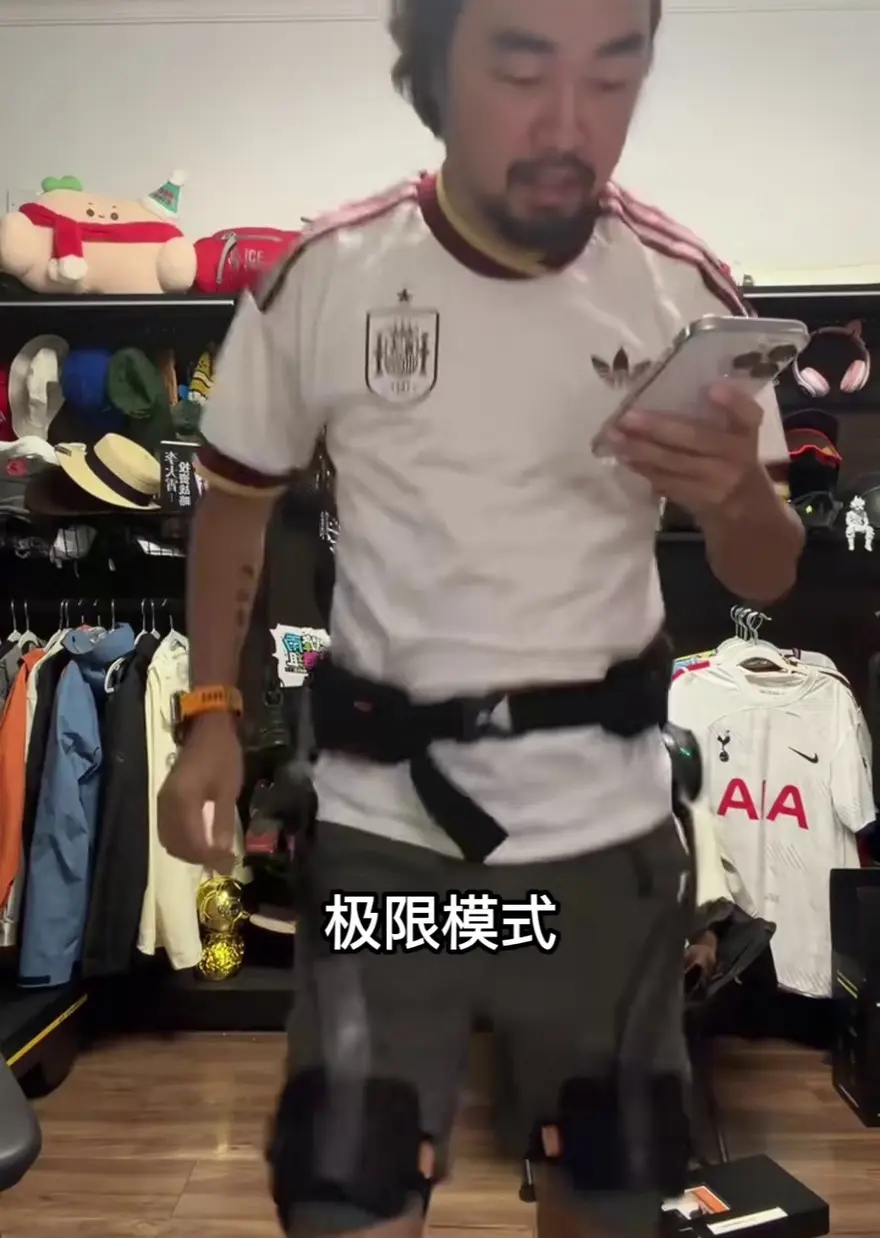
The video didn't follow the usual "unboxing—putting it on—walking slowly" pacing; the very first step plunged straight into "Extreme Mode." After a two-second long-press to enter it, Feng-ge's first reaction wasn't analysis—it was the instinct of his body being pushed forward:
"Whoa, here we goThis is so powerfulPretty good, it really assists a lotOkay okay, this thing actually works" (mentioned in the video)
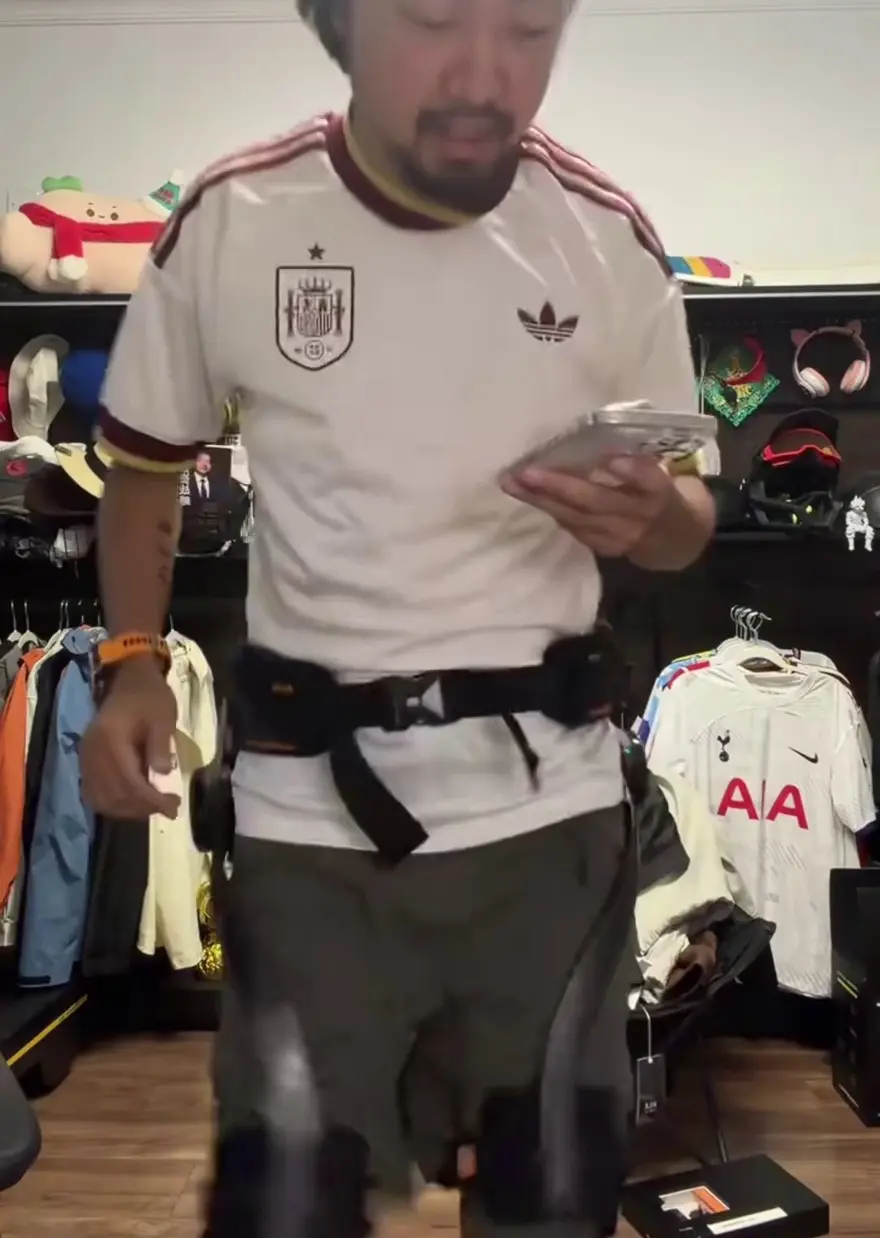
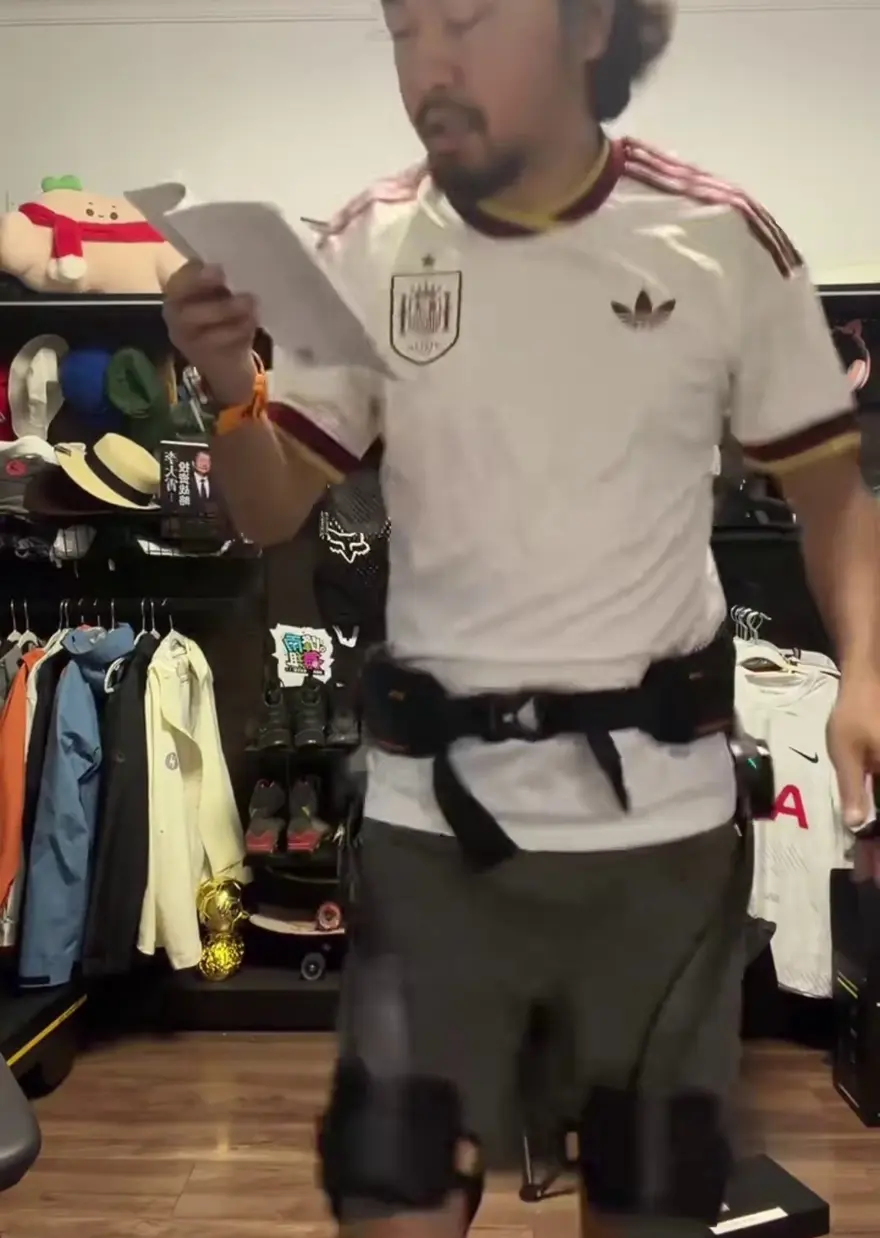
After fiddling for a while and finally getting it to "stop," he gave a more grounded assessment: pretty light, about 1.5 to 2 kg.
For an assistive exoskeleton, the key to a first impression is never the spec sheet—it's the perceived assist gain. Your legs are the most honest review instrument there is. When a machine lets you clearly feel that "lifting your legs takes less effort," it has crossed the hardest psychological threshold for any consumer-grade product: the shift from "toy" to "gear."
Two details are worth noting: first, after the initial round of testing he took the device right off, saying "I'll study it more later"; second, after powering down he added, "Pretty fun, I'll buy one myself to try first." Going from "borrowed for a test" to "paying out of his own pocket"—that might be a tougher endorsement than any benchmark score.

Interaction Lesson One: Between +25% and -22%, "How Do I Stop?" Becomes the First Hurdle
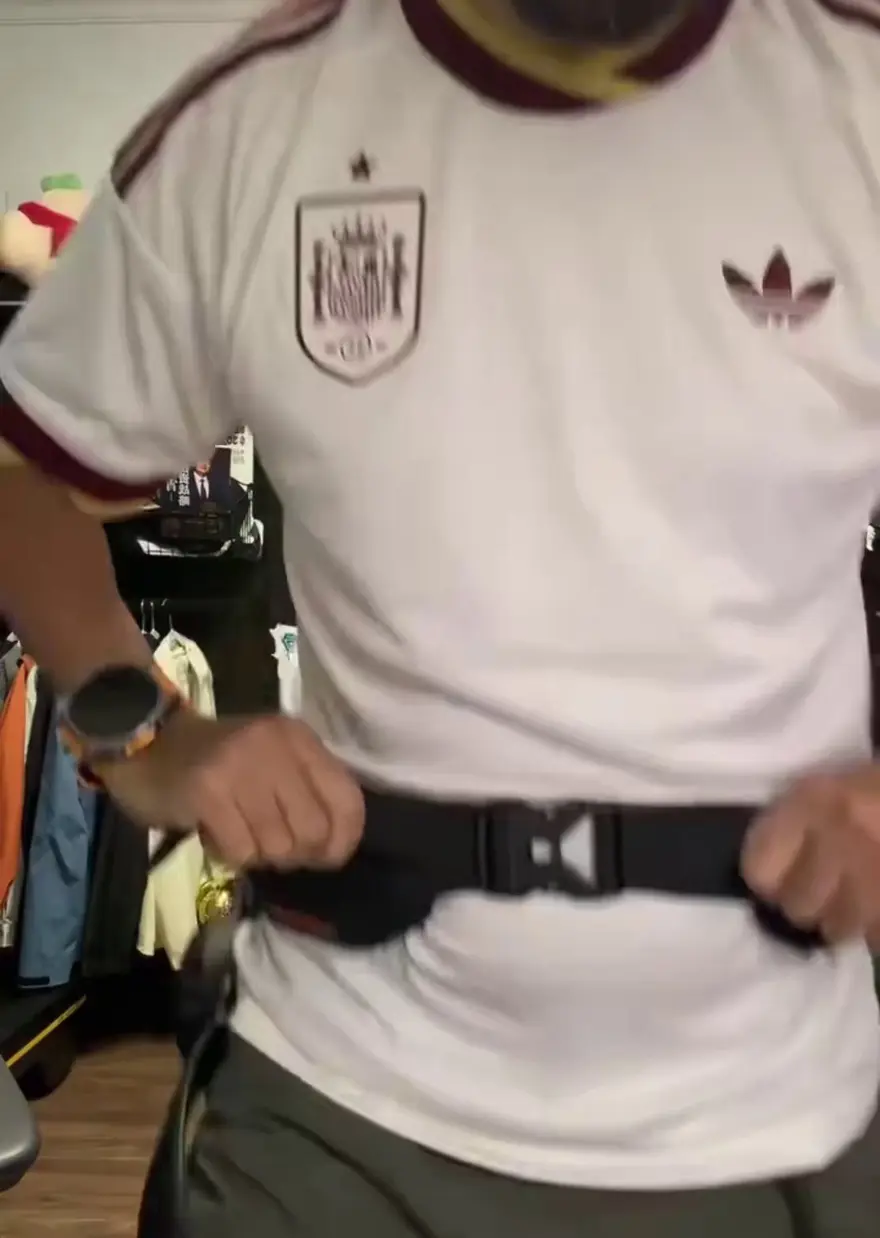
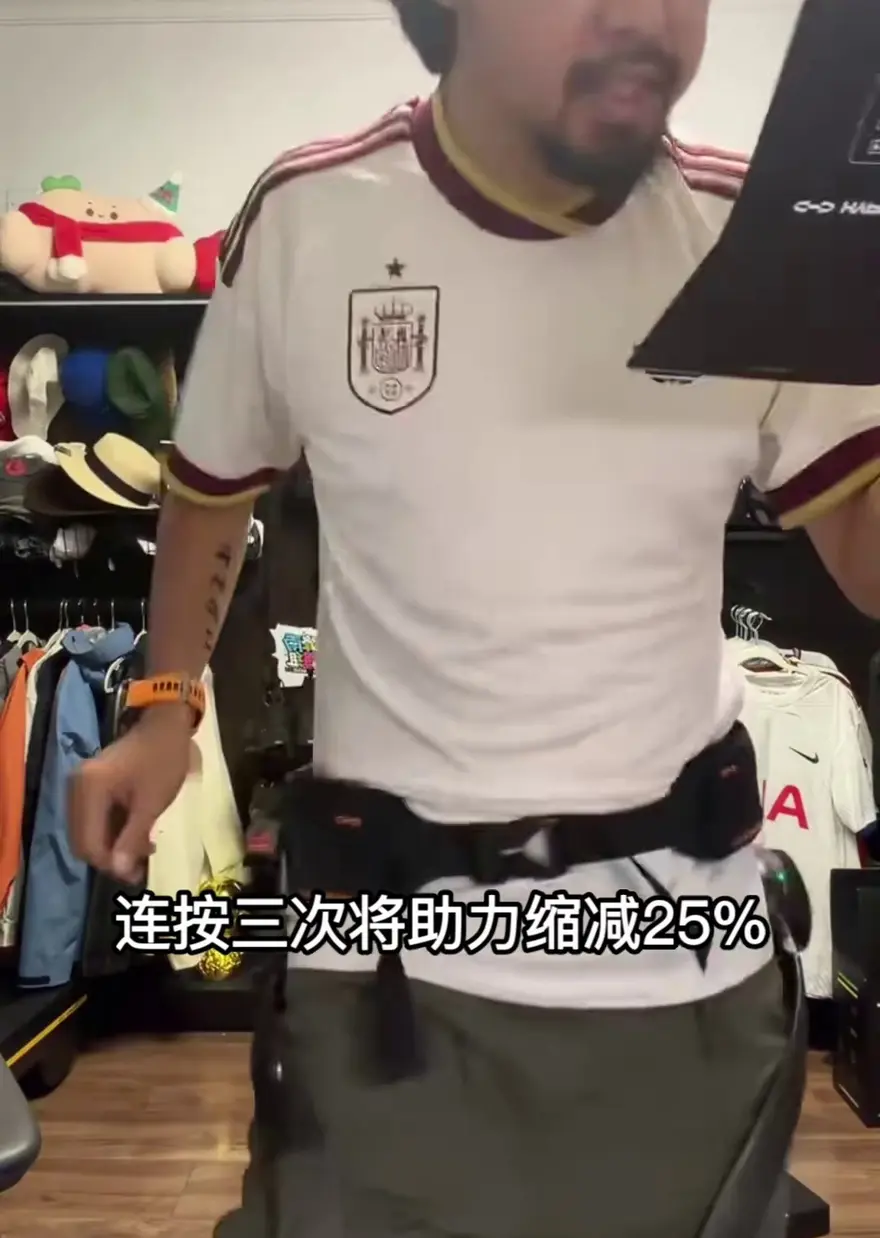
After the wow factor came the hurdle right away: Brother Feng wanted to stop the assist but couldn't figure out how. "How do I stop this?" he asked twice within just a few seconds. The button logic of this machine, he tested each one in front of the camera:
Two quick presses: assist increases 25%; three quick presses: assist decreases 22%; long press two seconds: switches between modes (mentioned in the video)
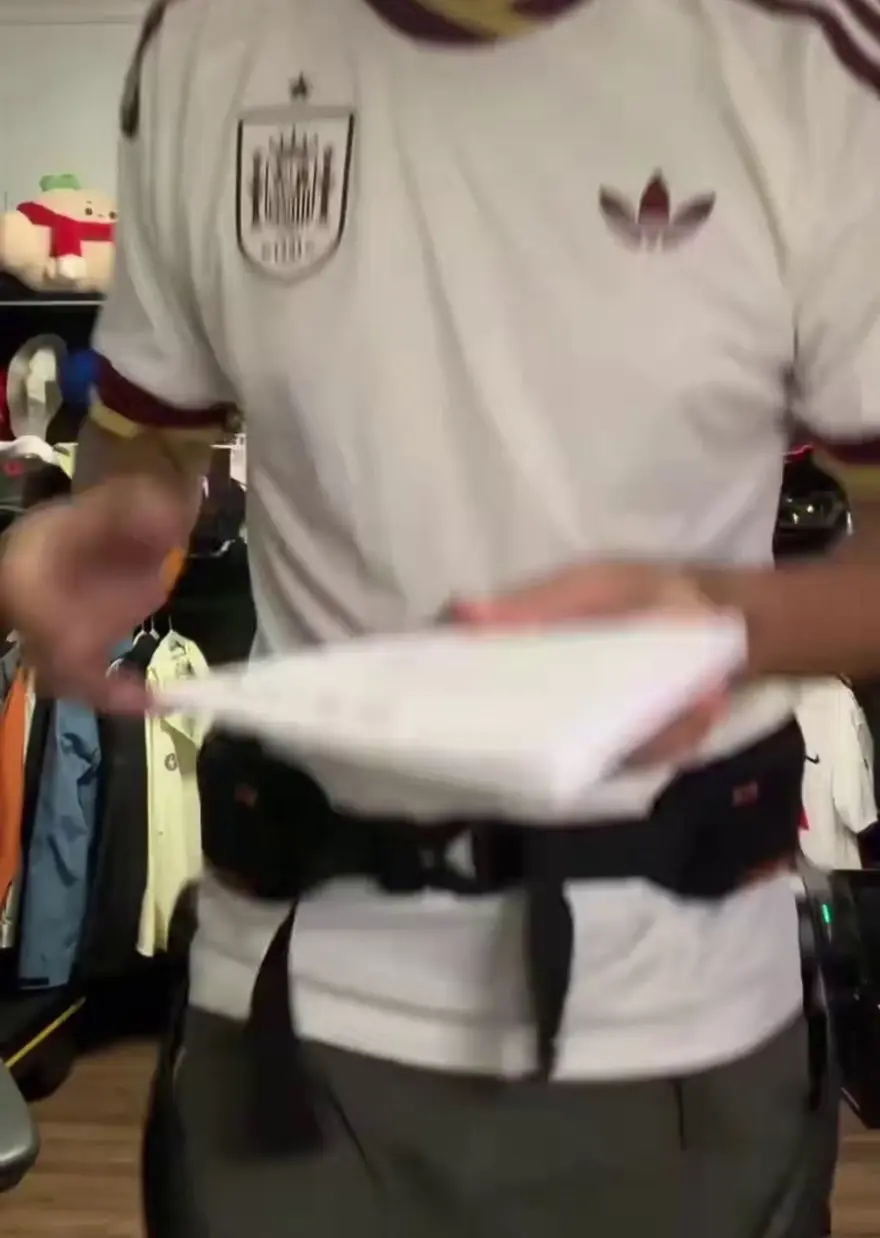
The function of a single short press left him baffled — "What the heck is this?" Power-off also came with a threshold: it required the combo of "one short press + long press two seconds." Brother Feng recited the incantation to the camera twice before successfully shutting it down. In between, the device also voice-announced "Operation abnormal, restored to initial state," which was the fallback logic kicking in.
There are three points worth chewing on:
First, the asymmetry between +25% and -22% is most likely not set at random, but the result of assist level calibration — the gain and attenuation very likely don't follow the same joint torque curve.
Second, the direction of physical buttons for blind operation is right (in outdoor sweating or with gloves on, touchscreens are unreliable), but "stop/exit," the highest-frequency action, shouldn't be the hardest one for users to guess. A machine strapped to the leg needs a "one-key exit," even an emergency stop, that can be reached without a second thought. App tuning can be rich; core operations must stay on the buttons.
Third, voice announcement is a good thing, but machine language like "Operation abnormal, restored to initial state" leaves ordinary users unable to understand what happened or whether they should be nervous. The interaction lesson for consumer-grade exoskeletons is one that industrial-grade products have never made up — now it has to be learned from scratch.
Tearing Down the Principle: Not "Electrical Stimulation" — Brushless Motors + Linkages Are Lifting Your Legs for You
During the hands-on phase, Feng Ge once suspected: "It seems to rely purely on electrical stimulation, with no visible mechanical support?" — this is a very typical first-glance misconception. There are indeed product routes on the market that use electrical muscle stimulation (EMS) to "deliver force from a distance."
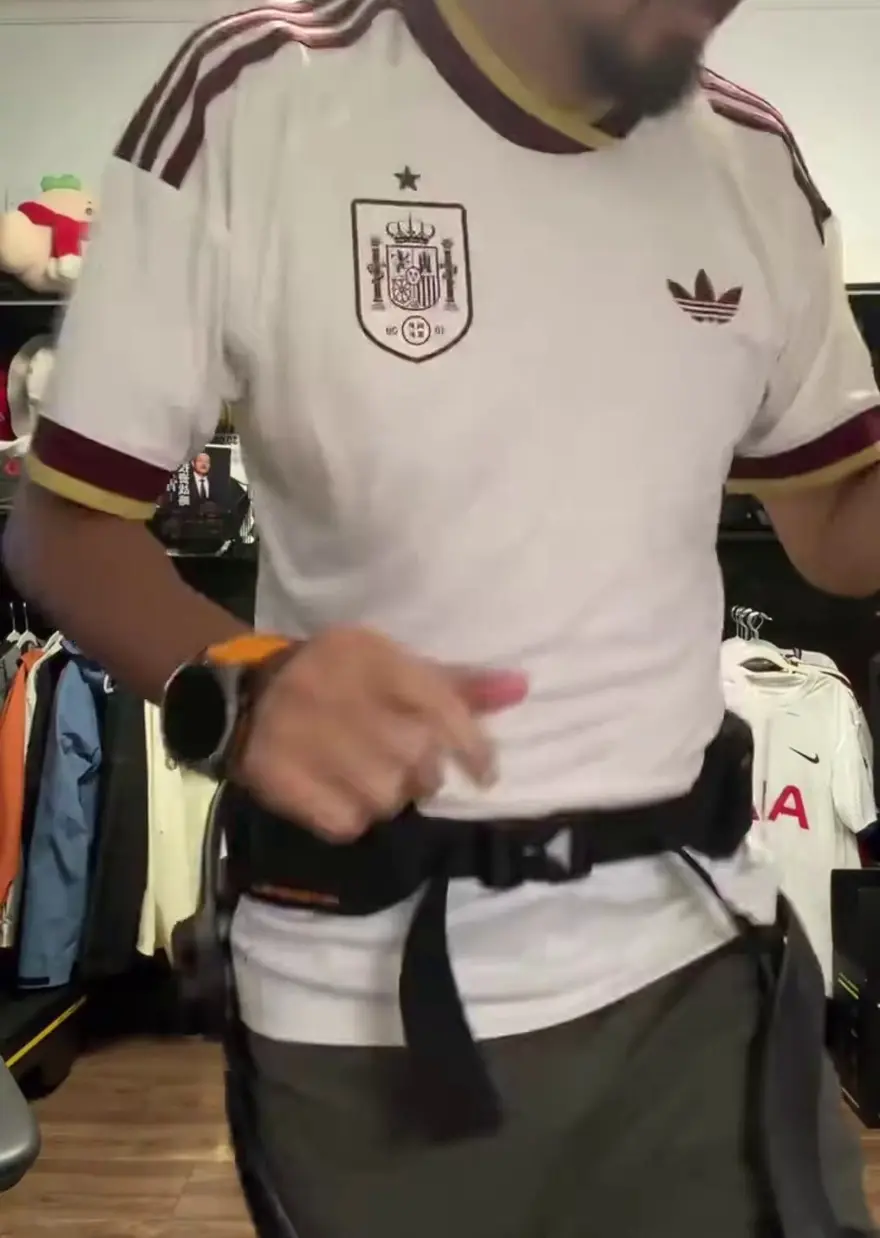
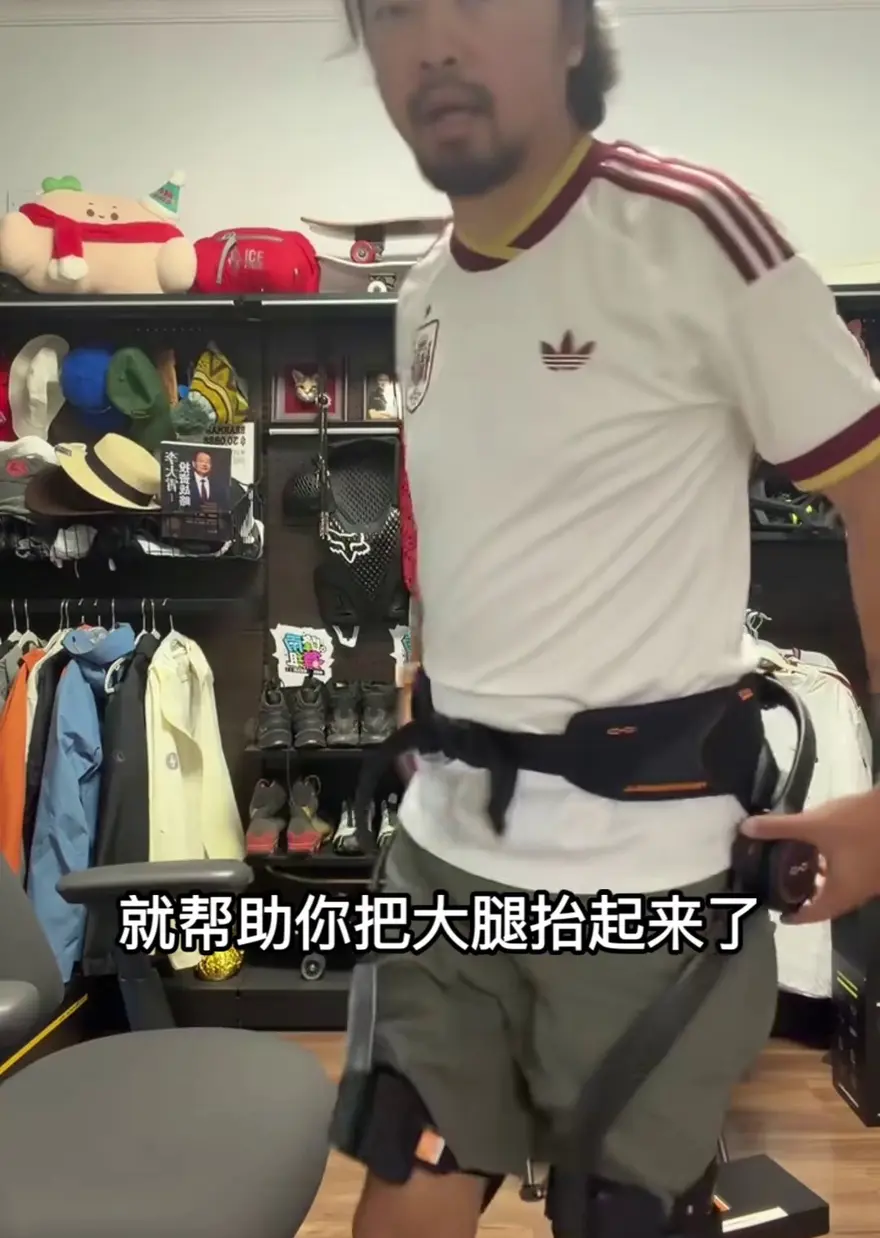
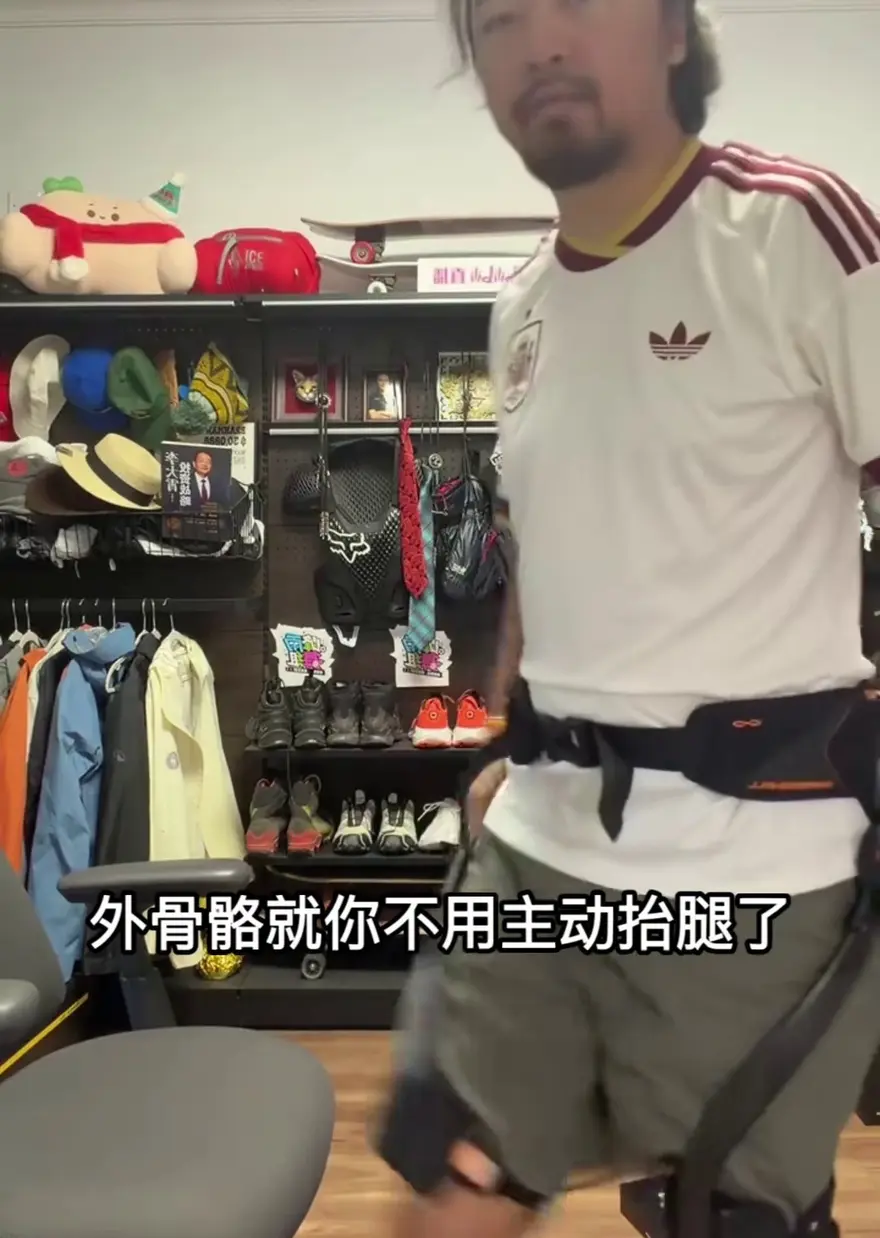
The answer came quickly: there IS mechanical support. Pointing to the hip area, he walked through the core structure:
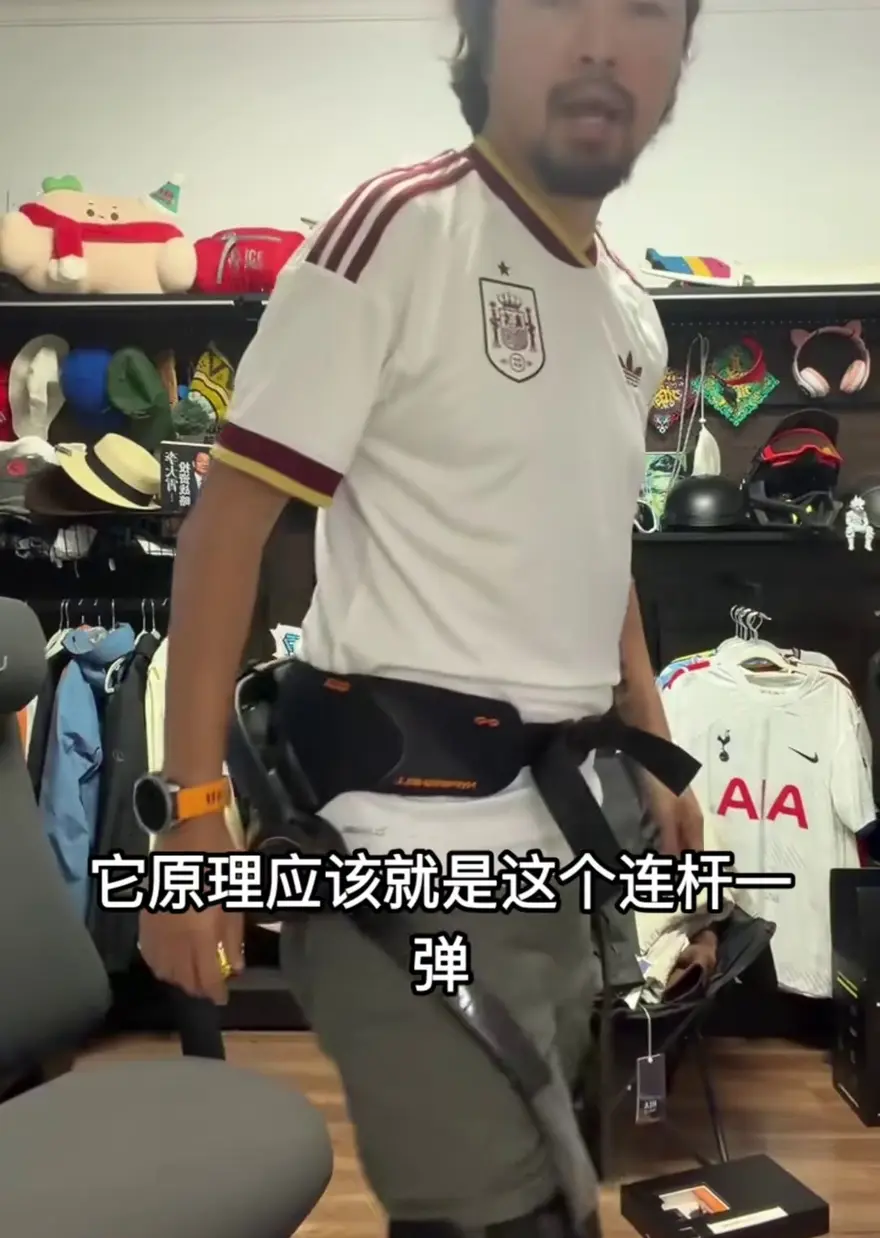
The principle should be this linkage: the motor sits here, and once the motor actuates, it lifts this linkage, helping you raise your thigh. (Mentioned in the video)
Even more crucial is his description of the control logic:
Essentially, when you lift your leg, as long as you provide an initial velocity, it actively helps raise your thigh — you don't have to actively lift; it can do it for you. (Mentioned in the video)
Translated into industry language, this is a classic intent-triggered control scheme: the IMU and pressure sensor recognize the onset of the leg-lift (that "initial velocity"), and the brushless motor takes over to deliver joint torque, "boosting" the thigh upward. The human provides intent; the machine provides force. Each side has its own actuator set — Feng Ge confirmed "two brushless motors."
Some viewers in the live chat spammed "lever principle," and Feng Ge fired back: "What lever principle? The Pythagorean theorem — three, four, five, right?" Jokes aside, the motor-plus-linkage transmission is indeed a close cousin of lever geometry: the swing-arm length directly dictates the assist stroke and the torque amplification ratio.
Let me also clarify two pieces of industry common sense. First, the hip is the mainstream drive position for consumer-grade exoskeletons — the hip joint is one of the most work-intensive joints in the gait, and it sits away from the limb extremities, with low inertia and relatively controllable failure consequences; by comparison, a lower-limb exoskeleton that directly drives the knee joint delivers a more direct assist, but its control difficulty and safety risk are an order of magnitude higher. Second, this kind of hip assist exoskeleton does not handle self-balancing: it only provides force, not steering — balance is always your own responsibility, which is also one of its most fundamental differences from a medical-grade lower-limb exoskeleton.
One more piece of information brushed past but very important: downhill hasn't been tried yet. The "leg-lift, labor-saving" logic of hip assist is clear for uphill and flat terrain, but downhill mainly relies on the knee joint's eccentric contraction for shock absorption, where hip assist can't help much and may even disrupt the rhythm — this is a shared unsolved problem across all hip assist solutions.

Wearing Experience and Weight: Three to Four Jin on the Legs, "Nothing Unusual" for Now
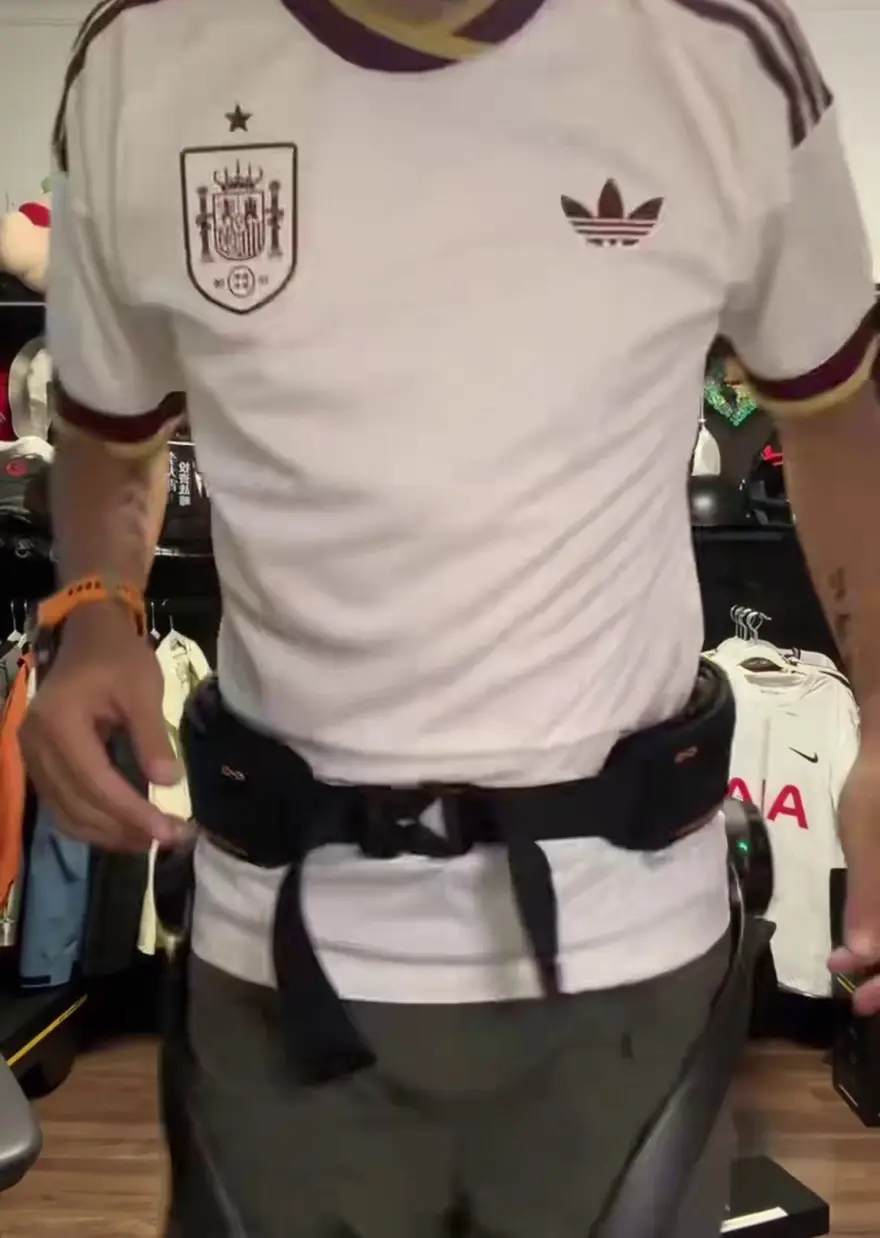
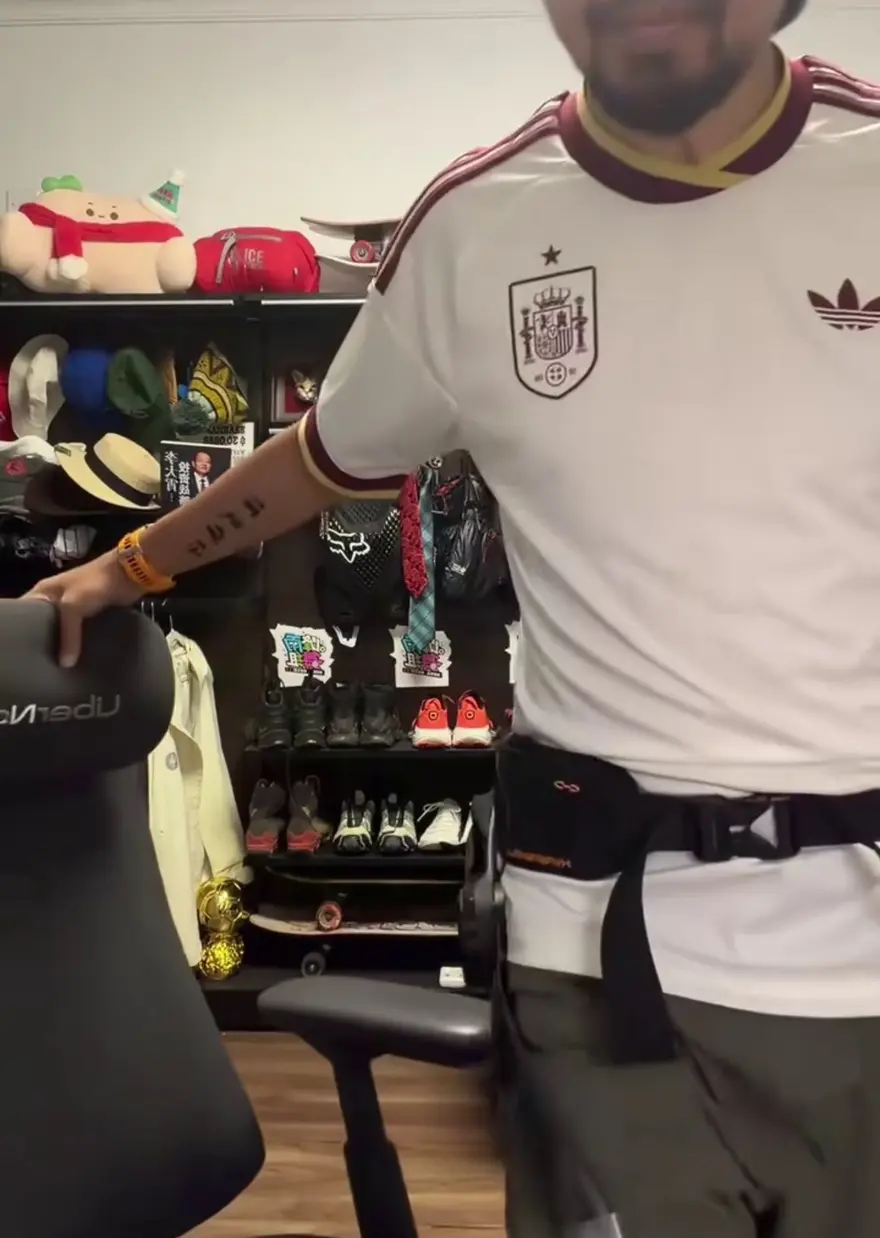
"Pretty light, roughly three to five jin... three to four jin." (Mentioned in the video, approximately 1.5–2 kg)
Where does this weight stand? Currently, mainstream consumer-grade hip assist exoskeletons typically keep the whole unit right around 2 kg, shaving weight through aluminum alloy frames paired with carbon fiber structural components. Three to four jin lands above the passing mark.
Why is weight so unforgiving for this category? Because an exoskeleton is not a backpack: a backpack's weight rides on the shoulders, while an exoskeleton's weight hangs near the hip swing axis, demanding an extra share of swing inertia with every step. Every extra jin of weight chips away at the "net assist."
On the wearing front, Brother Feng's feedback was "Comfortable for now? Nothing unusual so far," and he also noted "the back is useful"—the fixation and support at the lower back has a tangible presence. Whether that's passive support or active lumbar / back assist, the video didn't make clear; we'll leave a question mark for real-world testing.
One thing worth calling out is information transparency: across the entire video, not a single hard spec was given—no model, no joint torque, no battery life, no price. Yet endurance is precisely the make-or-break line for hiking / trekking assist scenarios: a three-hour summit push is the perfect litmus test for a single battery, and on the mountain nobody's lending you a power bank.




The Tough Question: How Does It Know I Only Want to Step 20 cm This Time?
The most valuable segment of this video isn't about "having power"—it's the thought experiment Brother Feng threw out:
Say there's a cliff ahead, and I don't want to lift my leg, but it just hoists my leg up, forcing me to take a big step forward—I fall off. How does it know how high I want to lift my leg? How does it know how far I want to step forward? (mentioned in the video)
He then ran the numbers: when hiking, stride length isn't uniform—on flat ground a step might be 40 or 50 cm, while on a mountain trail it might only need 20 cm—"so how does it know I want to step 20 cm forward?" His conclusion: "So this thing still needs verification. I'll have to go up the mountain myself and test it."
This question lands squarely on the soft spot of the consumer-grade exoskeleton. Fire-escape stairs, treadmills, and paved walkways are all regular-gait scenarios, where the algorithm is bound to shine; hiking is an irregular scenario—scree, uneven steps, obstacles you have to step over at any moment—and the stride length, leg-lift height, and force timing of every step keep shifting. Gait adaptability (intent-recognition latency, joint-torque curve calibration, stride-following speed) is the real moat for this category of product, and it's where each company's algorithm starts to pull apart.
One layer deeper lies safety: when "extreme mode" drives a person forward with high joint torque, the upper-limit calibration of joint torque and swing angle becomes the safety baseline. Consumer-grade products currently have virtually no active fall protection—balance is on the human, braking is on the human, and the bigger the assist, the higher the cost of a loss of control. Brother Feng's "fall off the cliff" hypothetical sounds like a quip, but "a machine forcing the human body into unintended movements" is an engineering proposition that human-machine coupled devices must take seriously.

The Testing Ground Is in the Mountains: A Three-Hour Summit Plan for Wutong Mountain, and the "Everest Question"
Feng's take on usage scenarios is unambiguous: "Using it indoors is pointless." A viewer suggested trying it out in a fire-exit stairwell. His reply: you still have to take it outdoors, because this thing is mainly meant to face irregular terrain — "Regular terrain is naturally easy to handle; mountain climbing is what's irregular."
His validation plan is also specific:
After the National Day holiday passes, I'll round up a few friends and go test it on Wutong Mountain. Normally when I climb Wutong Mountain via the main gate, it takes me about three hours to summit — let's see if it can give me a hand. (Mentioned in the video)
Avoiding the holiday is because visiting Wutong Mountain during the holiday is "a complete disaster" — a shoulder-to-shoulder trail won't measure anything. He also agreed to viewers' requests to shoot video during the hike.
Along the way, a viewer tossed out the question that was bound to surface: "Can an exoskeleton help me summit Mount Everest?" Feng didn't take it head-on. Instead, he offered a frame of reference: he'd seen many international trail runners already using this kind of gear — "Isn't trail running more dangerous? So if trail runners can use this thing, I think summiting Wutong Mountain isn't that hard."
The answer to the Everest question is actually quite clear: the brutal toll that low temperatures take on battery life, the extreme stress that icy-slope gait places on the algorithm, and the way high altitude strips away physical capacity — each one falls outside the capability envelope of a consumer-grade exoskeleton. But the "trail runners can use it" reference is genuinely informative — if a hip assist exoskeleton can keep up with the cadence and terrain variation of trail running, Wutong Mountain really is just a warm-up.
By the end of the video, Feng had already done the math in his head: if a three-hour hike can be made noticeably less effortful thanks to it — "that would actually be pretty nice."




Who It's For, Where It's Headed: From "Extreme Mode" to Walking Assist — The Industry Coordinates of Consumer-Grade Exoskeletons
A comment popped up in the live chat: "Not suitable for the elderly." Brother Feng rebutted on the spot:
"This is exactly for the elderly. One version is for athletes, running in the mountains; another is for the elderly whose legs need walking assist." (Mentioned in the video)
This rebuttal is worth unpacking. Within the consumer-grade exoskeleton market, there have always been two routes for target users: one is sport enhancement, serving trail running, mountaineering, and hiking/trekking assist players, with the selling point being performance headroom like "Extreme Mode"; the other is walking assist exoskeletons, serving the elderly whose legs are weakening and who need daily walking assist, with the selling point of "one more step, one more flight of stairs." The two routes demand completely different products: the former must be light, powerful, and responsive; the latter must be stable, easy to don and doff, and offer fall protection. Covering both with a single product line remains wishful thinking at this point.
A boundary also needs to be drawn here: rehabilitation exoskeletons are a different species — mostly medical-grade devices used primarily for gait rehabilitation training within rehab institutions. Their price, regulatory oversight, and usage threshold are entirely different from consumer-grade ones, so don't conflate them just because "both help people walk."
Plotted on industry coordinates: the medical rehab tier is being pursued by companies like Chengtian; industrial-grade scenarios (lumbar/back assist for logistics and production lines) have players like Aoshark; while in the consumer-grade hip assist lane, brands such as Hypershell and Dnsys have been making noise in crowdfunding markets over the past two years, and outdoor brands like TOREAD along with teams such as Yuanye Technology working on lumbar/back assist have all camped nearby. From the "Extreme Mode" naming to the "dual brushless servo motor + linkage" hardware approach, this machine treads exactly the mainstream route of today's consumer-grade hip assist products — what everyone will be competing on next is gait algorithms, battery life/endurance, weight, and price.
Which product line this machine belongs to and how it's priced — the video offers no answers. But the line "Sounds fun, I'll buy one to try myself" has already cast a vote for the consumer-grade market: