Turning this interview into an in-depth review: From "jagged lab prototypes" to Iron Man on the peak, how close are we to the consumer-grade exoskeleton?
Grinding a sword for ten years: An engineer's "cyborg" dream-building journey
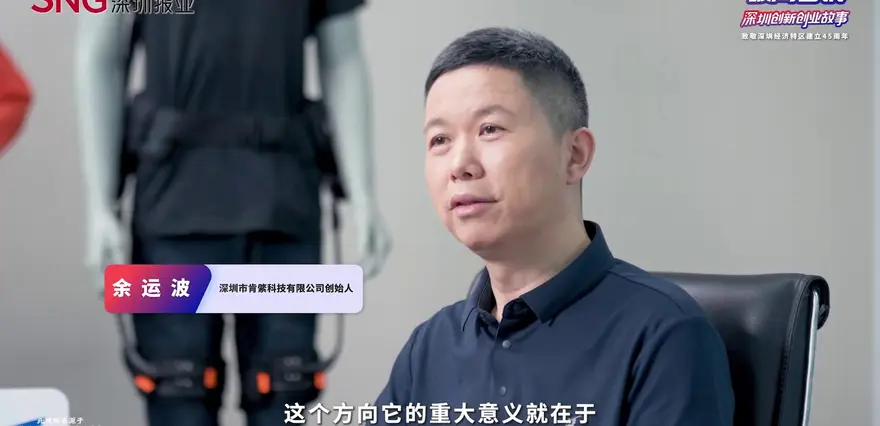
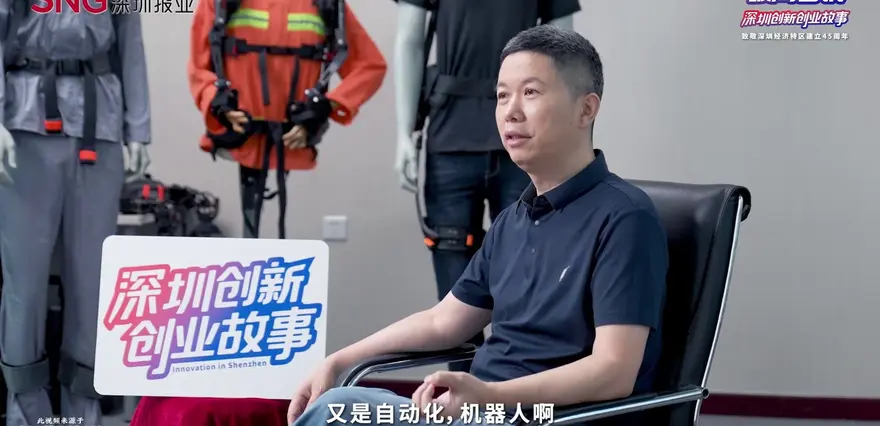
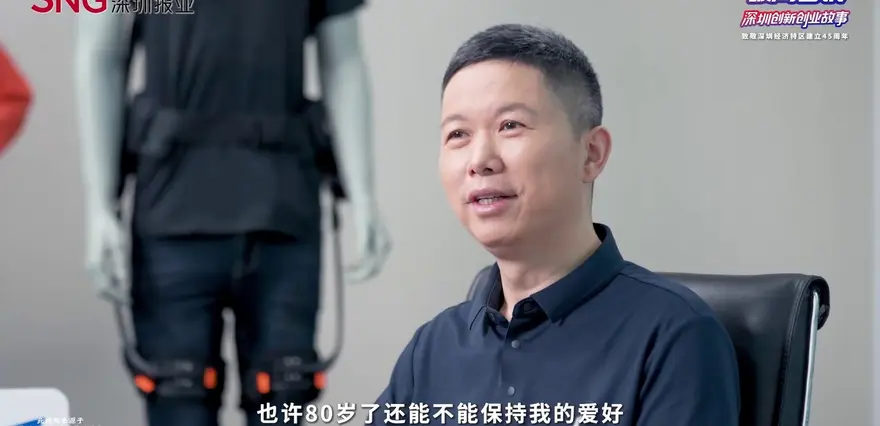
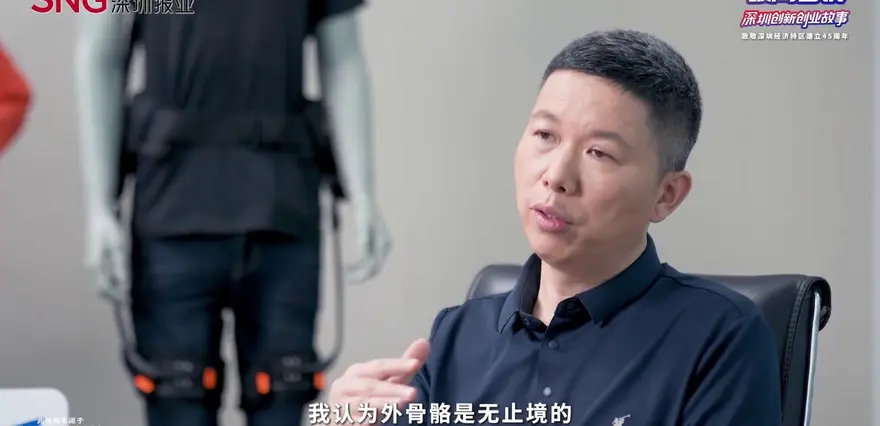
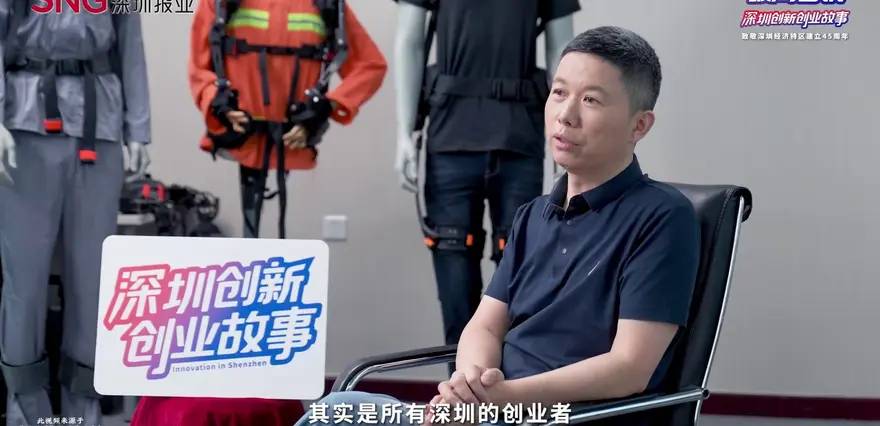
Ten years ago, if you told someone you were going to build a consumer-grade exoskeleton, you would most likely be considered a sci-fi fan with wild fantasies. But this hardcore Shenzhen entrepreneur believed in one thing: **Aging is an inevitable trend, and the immense significance of the exoskeleton lies in its ability to extend human "active time.To make people's active time longer and amplify human physical energy. I majored in automation, and robotic automatic control is my profession, but I am also a sports enthusiast. I often think, for example, when I go hiking in the outdoors, could I still maintain my hobby at age 80?"
It was precisely to answer this engineering question with deep humanistic care that he chose an extremely niche and difficult track: building a consumer-grade exoskeleton that can enhance human physical energy. The starting point of the story is in Shenzhen, a place that has witnessed countless technological miracles and manufacturing myths.



The "Iron Beast" in the Lab: The Dread of Being Dominated by Weight and Bugs
Moving the exoskeleton from the movie screen of Iron Man to reality is a head-to-head contest of physics and algorithms. On this entrepreneurial journey, the team vastly underestimated the brutality of engineering implementation.
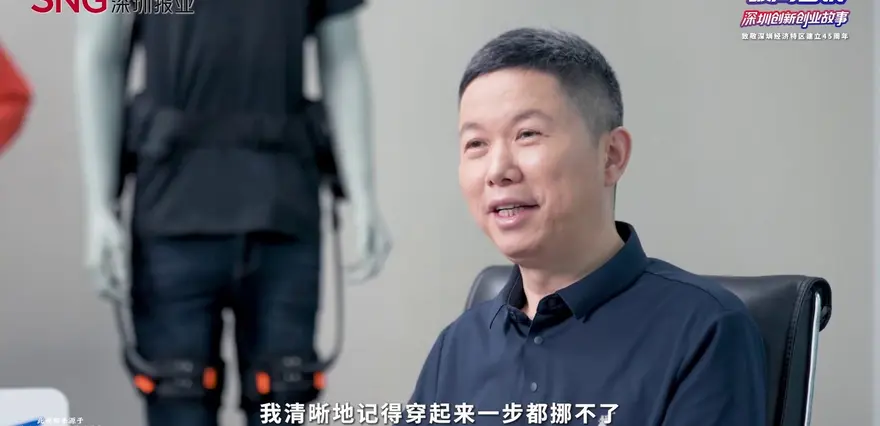
As early as 2016, they built their first prototype. It was an "iron monster" weighing over 20 kilograms.
"The first machine weighed over 20 kilograms back then. Wearing it, you couldn't even move a single step. How could anyone walk with such weight? It was better not to wear it at all."
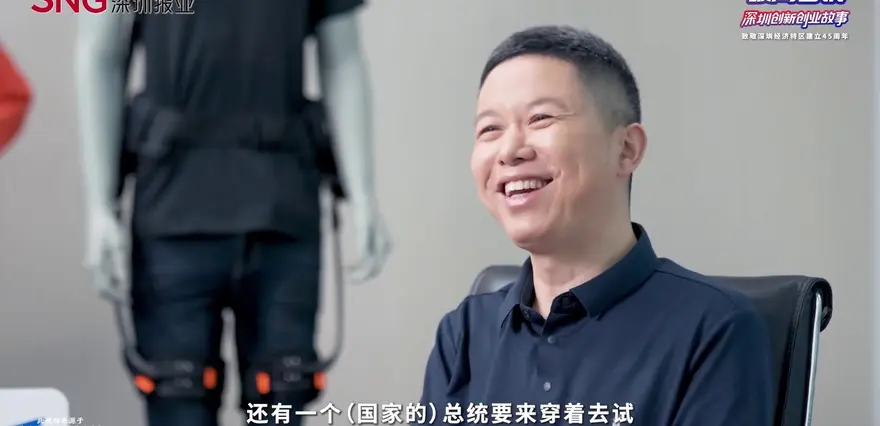
The following years were marked by lengthy hardware prototyping, algorithm iterations, and countless disappointments. To participate in various exhibitions and competitions, the prototype frequently crashed during live demonstrations. The most absurd incident occurred when a high-level foreign dignitary personally tried it on, only to find the device had failed to boot up due to a malfunction.
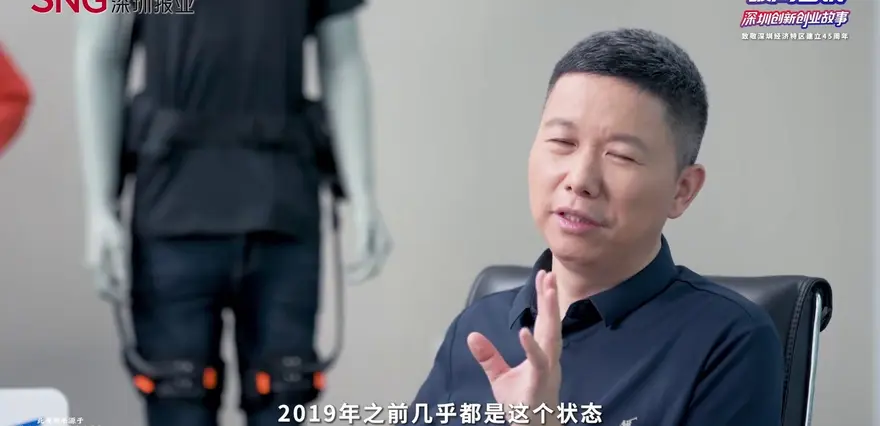
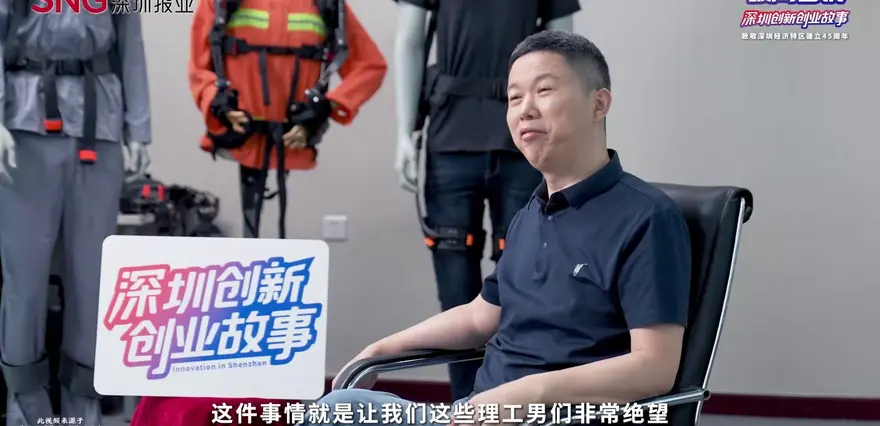
"Before 2019, things were almost always in this state. During our demos or competitions, we frequently faced the embarrassing predicament of the machine suddenly freezing or throwing errors. At the time, some people even thought we were just putting on an act at home. This sense of helplessness left our group of engineering guys utterly despairing."
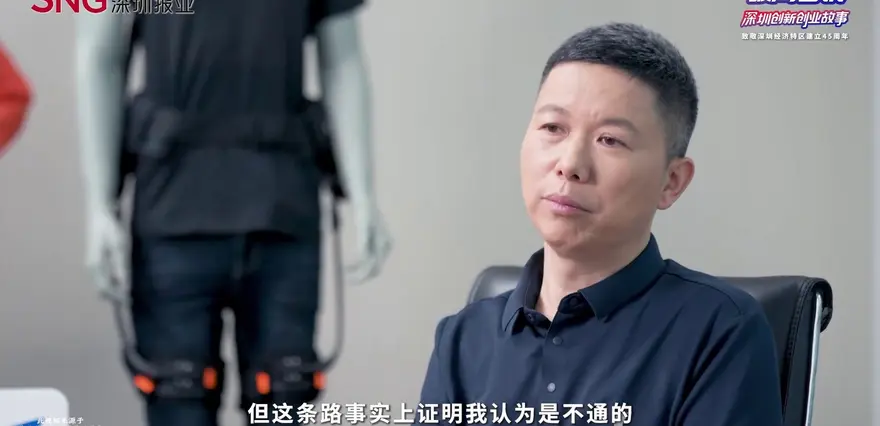
For a tech startup, falling into the predicament of "stacked lab failures" means potentially losing the company at any moment. This also brought them to a stark realization: piling up technology just for the sake of being "cool" to build a full-body Iron Man suit is simply unviable in the current consumer-grade exoskeleton market.
From "Heavy Full-Body" to "Targeted Joints": The Breakthrough Point That Broke Conventional Thinking
True breakthroughs often stem from challenging common sense. By late 2019 and early 2020, the team made a painful yet remarkably correct decision: abandoning the obsession with full-body frameworks and fully pivoting to the development of localized joint assistance.
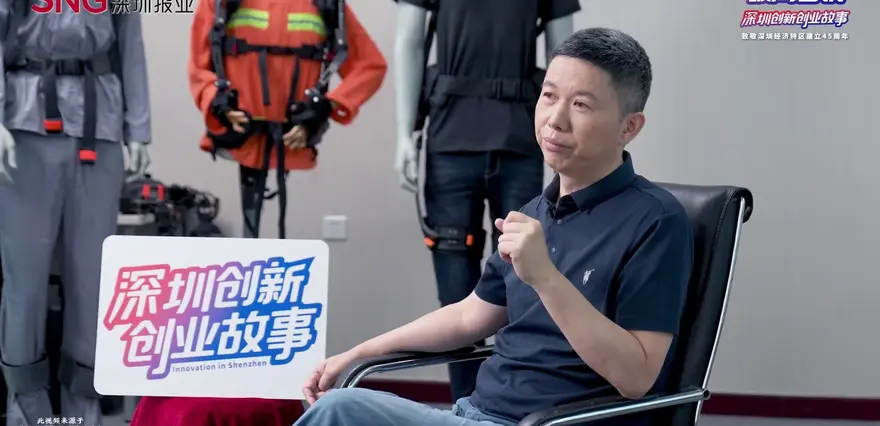
Giving up the full-body exoskeleton meant forgoing the most visually spectacular presentation, but it brought the dawn of engineering feasibility. The team set its sights on the most critical actuated joints—launching a lower-limb walking assist exoskeleton that emphasized "wide-range joint assist robots."
Its core principle is not complicated:
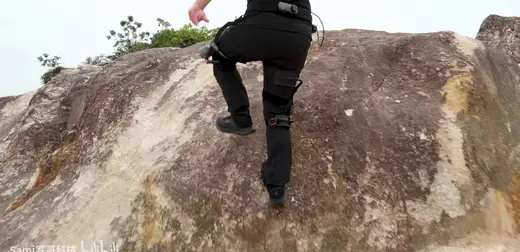
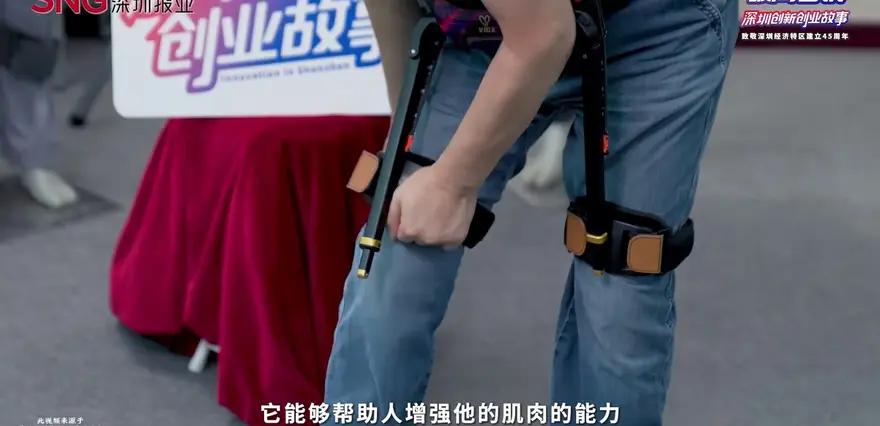
"It helps users enhance their muscle strength. It's equivalent to sensing human motion intent and providing walking assist: when the user exerts one part of the effort, the device might supply an extra 1.5 parts of power. Putting it on to climb stairs or hike feels like someone gently pulling or pushing you from behind."
This "flexible synergy" assistive mechanism allows the device not to rigidly "replace" human walking, but to "comply with" natural human gait, flexibly amplifying the joint torque output. This approach not only significantly reduces the equipment weight but also resolves the fatal flaw of early exoskeletons that disrupted users' natural gait. The brain is honest; when the assistive force is sufficiently natural, the body will unreservedly accept it.

Mount Tai on the Second Day of the Lunar New Year: The Unexpected Viral "Hit" and Crossing Demographic Boundaries
If the pivot in technical strategy was the "cause" behind the meticulous product development, then the 2020 Mount Tai excursion was the ultimate "effect" that triggered the comprehensive explosion of the consumer-grade exoskeleton.
During the pandemic, the team focused entirely on closed-door R&D. A major military enterprise in Shandong recognized the potential of their lower-limb assistive exoskeleton, quickly purchasing a batch of units for internal testing.
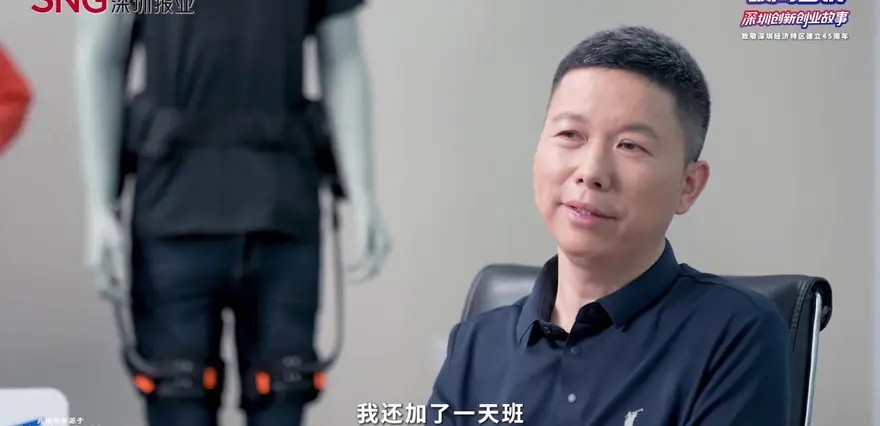
"Right after the Spring Festival, I actually worked an extra day, rushing to assemble twenty or so power units. We specifically sent an employee to Mount Tai to deliver the products and provide training."
No one could have predicted that this seemingly routine product delivery and testing session would become a landmark event in the history of the consumer-grade exoskeleton.
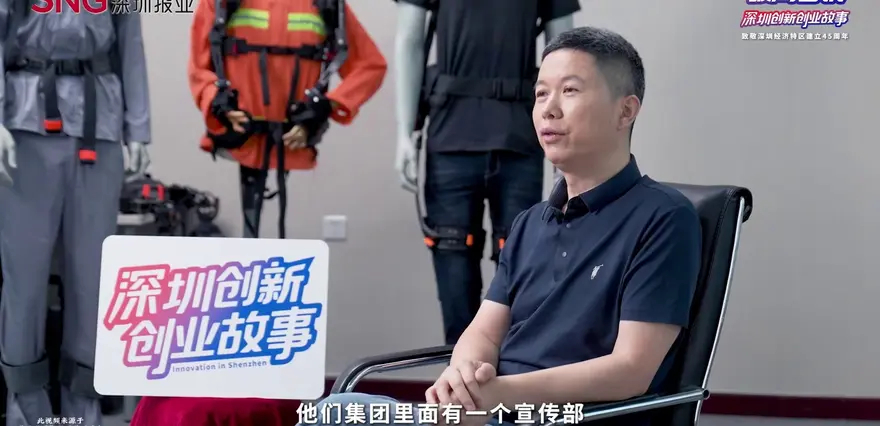
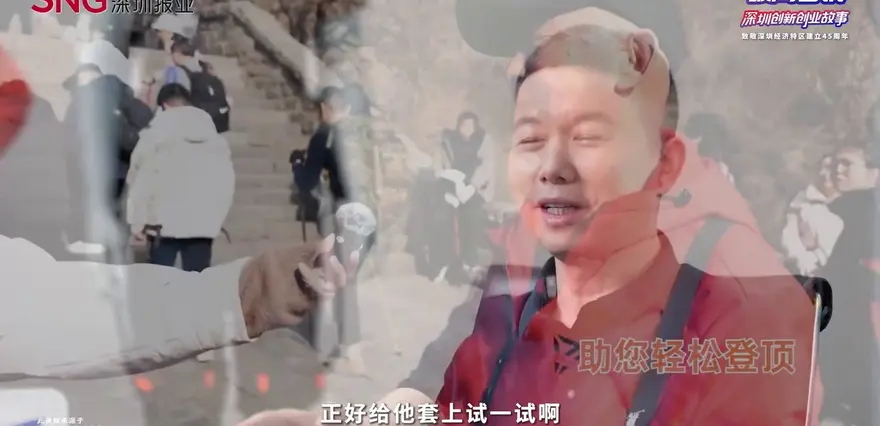
"On the second day of the lunar new year, the group's PR department was shooting a video of people climbing the mountain wearing the exoskeletons. A gentleman in a red jacket walked over, asked 'What is this?', and decided to try it on. Once he had it strapped on, he bounded up the stairs in just a few strides. By the time the camera crew realized what was happening, he was already halfway up the slope and out of sight."
This highly dramatic experience instantly sparked a viral sensation across the web. Within just two weeks, over 3,100 media reports mentioning the "Mount Tai exoskeleton" had surfaced, generating over a hundred million views.
"I think this event sparked a new imagination for humanity. People suddenly saw the true potential of this robot actually being applied in daily life. It was no longer just a giant toy sitting in a laboratory."
An elderly man with ailing mobility suddenly unleashed superhuman physical strength after donning this mechanized gear weighing over ten kilograms. This intense visual impact, combined with the public's craving for such a sudden "performance boost", instantly penetrated the mainstream demographic, making the technology famous across five continents globally.
Chinese Smart Manufacturing in Exoskeletons: A Structural Advantage From the Coupling of Supply Chain and R&D
The explosive popularity of Tai’an’s Mount Tai is no accident; it is the inevitable outcome of China’s mature robotics supply chain and deep accumulation of capability. The founder spoke with pride, noting that in the consumer-grade exoskeleton space, China holds an unmatched edge—speed of execution coupled with rapid market feedback and refinement.
“Our orders are indeed outstripping supply. The products have shipped to all five continents—even in towns you wouldn’t expect, people have already used them.”
Compared with earlier-mover regions in Europe and North America and Japan, China’s strength lies in a powerful chemistry of industrialization and real-world deployment:
“They may have started earlier than us overseas, but they don’t have the same tight coupling between application feedback and R&D. There’s no efficient closed-loop iteration, which means they can’t iterate products quickly.”
In the consumer-grade hardware arena, Chinese companies are showcasing a commanding structural advantage—driven by mature industrial design, cost-effective and high-performance brushless motors, the widespread adoption of lightweight carbon fiber materials, and the Shenzhen engineers’ culture of “small steps, fast runs” with round-the-clock iteration. They are leaving global competitors far behind.

Strip the Label: The Hardcore Truth Behind Today's Benchmark Consumer-Grade Exoskeletons
Strip away the mysterious alchemy of "riding wind wheels" on Mount Tai—what is the true form of a consumer-grade lower-limb exoskeleton? Looking at the top products currently exported globally (represented by brands like Hypershell, Dnsys, and their peers), it is certainly not the airtight power armor of Iron Man.
Today’s benchmark consumer-grade exoskeletons (such as knee/leg exoskeletons) usually keep the weight in the range of 2 to 3 kilograms. They adopt an aerospace-grade carbon fiber frame, embedding precision IMU sensors and pressure-sensing insoles to capture the user’s movement intent in real time. Their core power comes from micro high-performance servo motors mounted at the waist and flexible joint modules; when you need to exert force, they instantly provide a joint torque up to 80 Nm.
Safety and practicality are the core principles. Note that these products are very different from the strictly controlled machines found in hospitals. This type of product is not a rehabilitation exoskeleton. Medical-grade devices are mostly used for gait reconstruction in paralyzed patients, whereas this product aims to be an assistive exoskeleton.
You don’t need to learn to operate a complex console; the wearing process is as simple as sliding on a pair of pants. Once turned on, it silently follows your steps. The built-in microprocessor performs thousands of calculations per second, accurately determining whether you are on flat ground, going uphill, or climbing stairs, and synchronizes the output of appropriate assistance. To cope with complex outdoor environments, current products generally add a "fall protection" safety mechanism—once the sensor detects a sudden change in posture or loss of balance, the internal system instantly locks the joints before you fall to the ground, assisted by a self-balancing module, greatly reducing the risk of secondary injury from vibration or falling. In terms of battery life, a high-density lithium battery can typically provide about 8 hours of endurance for hiking assist. It is not magic that lets you fly, but a scientific "cheat code" that helps you save energy and extend your workout time.
This industry-acclaimed classic hit precisely defines the travel scenarios of the next decade. From pure physical amplification to ultimately extending your living radius, it has completely shattered the stereotype that "exoskeleton = heavy industry."



A Tangible Manifestation of the "Shenzhen Spirit": The Vast Expense of Exoskeletons
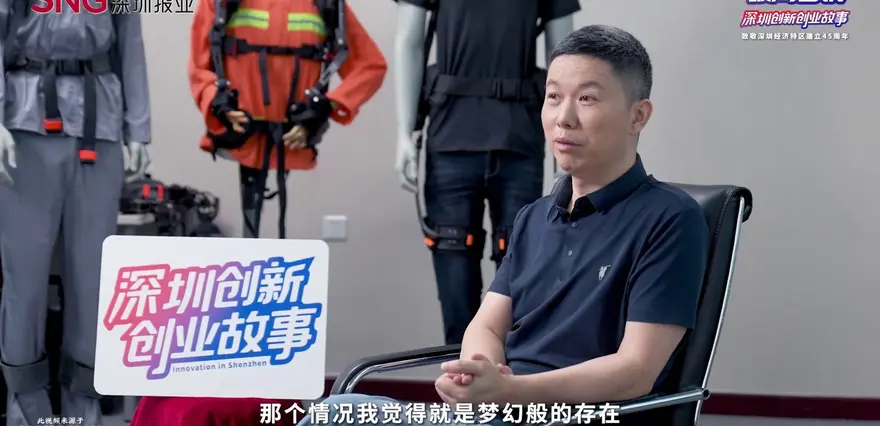
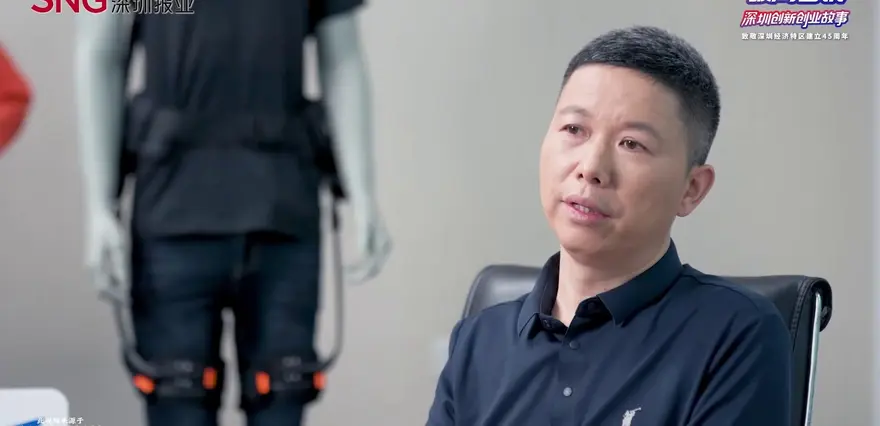
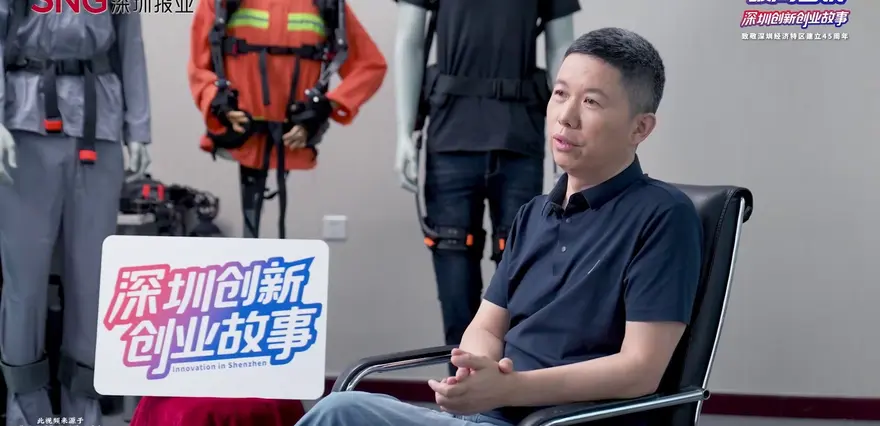
As the conversation drew to a close, this highly successful serial entrepreneur discussed his original aspirations and ultimate vision. He was once the co-founder and second-largest individual shareholder of the first A-share listed chip design company (based on historical context, this may refer to Goke Microelectronics, although it is not actually the first A-share listed chip design company). Armed with substantial capital and psychologically prepared to "burn money for five years," he dove headfirst into the robotics sector, ultimately persisting for a full decade.
A decade of sharpening one’s sword; its tip points not only to a multi-billion-dollar market, but also to humanity's expansion of its own physical limits.
"Our core value is that exoskeletons are meant to empower humans, not to replace them. Our philosophy is to enable seniors to remain as mobile as possible, encouraging them to exercise more and sustain their physical hobbies for longer; for those engaged in heavy manual labor, it serves to reduce their physical strain. I believed this technology could absolutely be built, and that was the foundational logic that sustained us for ten years."
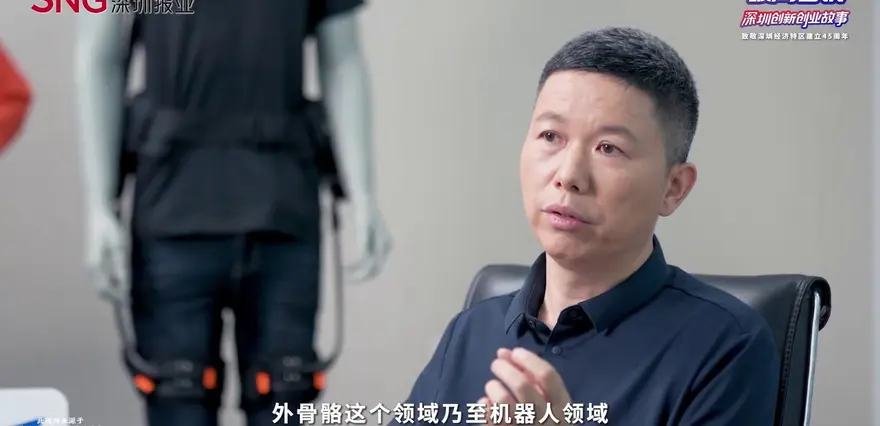
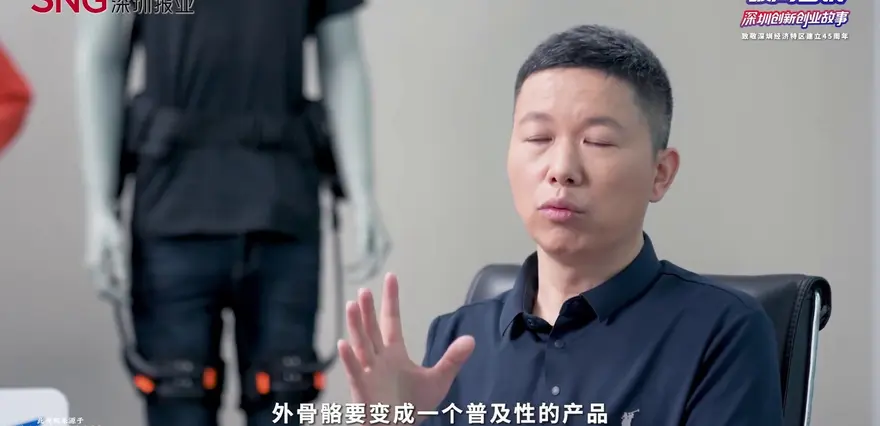
Speaking of the future, his ambition already extends far beyond bipedal locomotion.
"Our goal is to transform exoskeletons into ubiquitous products within five years. In the next phase, exoskeletons might provide us with an extra pair of arms, or even a pair of wings. The imagination of exoskeletons in enhancing human capabilities is boundless."
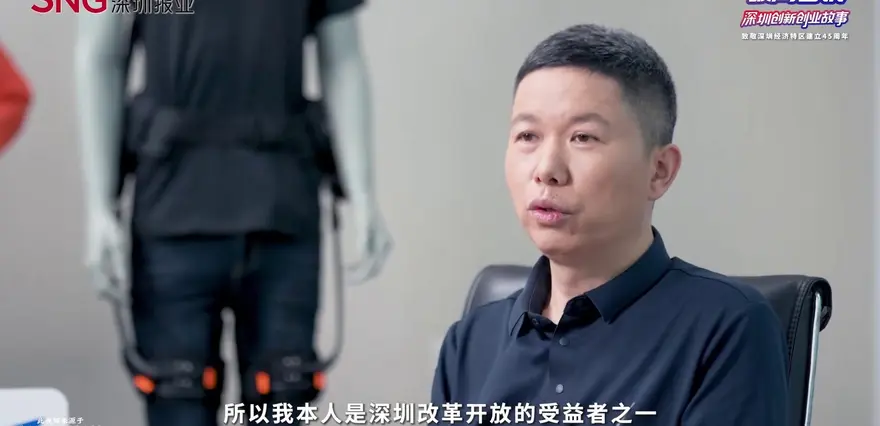
From an ordinary engineer who arrived in Shenzhen twenty years ago with just 1,000 yuan in his pocket, to a leading figure standing at the pinnacle of global technology. Watching an advertisement at Shenzhen Airport depicting an individual who built wings as a child and eventually took to the skies, the founder felt he was looking at a mirror image of himself.
"I believe he is telling my story. On this fertile land of Shenzhen, I have realized the value of an engineer. In a sense, this is the Shenzhen spirit."
Indeed, as long as the romance of hardcore engineering remains undiminished and the supply chain in Shenzhen keeps roaring, everyone has the potential to experience their very own "Iron Man" moment through the extension provided by exoskeletons.
Top Community Comments
"Elderly people often have weak leg muscles and limited mobility. I think this could find a market."
-- @Reader Interpretation: This comment cuts straight to the most essential, high-demand audience with major social value. For older adults facing Sarcopenia and joint degeneration as they age, a lower-limb assistive exoskeleton for walking assist can truly improve independent living and expand the range of everyday mobility—this is the core demand base of the consumer-grade market.
"Many manual laborers get old and end up with meniscus damage in their knee joints. They can barely stand up—would wearing this even help?"
-- @Reader Interpretation: This is a highly typical technical question. A common misunderstanding needs to be corrected: an exoskeleton is an assistive device, not a load-bearing support structure. It amplifies the user's muscle output rather than mechanically supporting a damaged meniscus. For those with severe meniscus damage and loss of basic joint function, a rehabilitation exoskeleton (medical-grade) or joint supports may be more appropriate. A consumer-grade lower-limb exoskeleton is better suited to people who are "willing but unable"—those who can still walk but need extra help.
"Forward-thinking."
-- @Reader Interpretation: Three simple words confirm a key shift in public perception. While many still think of exoskeletons as "industrial mechanical suits," recognizing their long-term value as a "human performance amplifier"—and connecting that to the pain points of an aging society—requires a forward-looking perspective that goes well beyond the present.
One-Sentence Summary
This episode is more than the hardcore entrepreneurial journey of a lone developer spending a decade of relentless R&D on the consumer-grade exoskeleton; it is also a manifesto for bringing human enhancement to the general public.
Recommended audience: Robotics geeks and tech enthusiasts interested in exoskeleton technology applications, industry observers looking for new breakthrough tracks in business and technology, and general readers concerned with mobility in an aging society.
About this article: part of Chinese-Made Exoskeleton Review Archive — an independent, regularly updated English archive of reviews of consumer exoskeletons made in China, edited from publicly available video transcripts. Not an official manufacturer page.
For inquiries and purchasing, contact lonlonago@foxmail.com. More in Reviews · All articles.